Understanding Research in Emergency Medicine–Internal Medicine (EM-IM)
Building a strong research profile for an EM IM combined residency application can feel intimidating, especially when you’re balancing board exams, clinical duties, and extracurricular activities. Yet for competitive programs—particularly academic EM-IM tracks—your scholarly work is one of the clearest signals of your commitment, curiosity, and potential for leadership.
Emergency medicine internal medicine combined programs attract applicants who are interested in critically ill patients, systems of care, and complex, longitudinal problems that span the ED and inpatient wards. These dual-trained physicians often become leaders in quality improvement, clinical research, health systems innovation, and medical education. Programs want to see evidence that you can think critically, ask good questions, and follow projects through to completion—skills that research and scholarly activity naturally develop.
This guide will walk you through:
- What “research” really means for EM-IM residency applications
- How many publications or projects you actually need (and how they’re evaluated)
- High-yield research and scholarly niches ideal for EM-IM
- Concrete steps to start, build, and showcase your research profile
- How to talk about your projects effectively during interviews
You do not need to be a first-author on a randomized controlled trial to match EM-IM. You do need to show curiosity, follow-through, and at least some meaningful engagement with scholarship.
What Counts as Research for EM-IM Residency Applications?
Many applicants underestimate how broadly programs interpret “research.” Especially in EM IM combined programs, faculty appreciate a wide spectrum of scholarly work because it mirrors the breadth of the specialty itself.
Traditional Research Activities
These are the most frequently recognized and easily “counted” components of a research profile:
Original clinical research
- Prospective or retrospective chart reviews (e.g., sepsis protocols in the ED, 30-day readmission patterns).
- Cohort or observational studies.
- Clinical trials (as a student or RA, you might consent patients, collect data, or manage databases).
Basic or translational science
- Lab-based projects (e.g., inflammation pathways in sepsis, biomarkers in cardiac disease).
- Often less directly tied to EM-IM, but still strongly valued if you can connect the skills and mindset to your career goals.
Health services and outcomes research
- ED crowding and boarding studies.
- Transitions of care from ED to inpatient floor.
- Utilization of diagnostic testing across ED and inpatient settings.
Epidemiology and public health research
- Substance use disorders, homelessness, or social determinants of health in ED and hospitalized populations.
- Community interventions that impact ED utilization and inpatient outcomes.
Broader Scholarly Activities That Also Count
Emergency medicine internal medicine faculty care less about labels and more about the habits of mind that scholarship cultivates. These activities can legitimately strengthen your research profile:
Quality improvement (QI) projects
- Reducing time to antibiotics in sepsis from triage through admission.
- Improving communication between ED and inpatient teams at handoff.
- Decreasing 72-hour ED returns or unplanned ICU transfers from the floor.
If systematically designed (with data, interventions, and evaluation), QI projects are research-adjacent scholarship and highly valued.
Case reports and case series
- Rare presentations that cross ED and inpatient care (e.g., unusual endocrine emergencies, toxicology cases requiring ICU admission).
- Patterns of missed diagnoses or diagnostic challenges.
Narrative reviews, systematic reviews, and meta-analyses
- Summarizing evidence on topics like chest pain evaluation, sepsis bundles, or ED-initiated addiction treatment.
- Great for students without easy access to prospective patient data.
Medical education research and curriculum projects
- Simulation-based curricula for ED-to-ward handoffs.
- Novel teaching tools for managing acutely decompensating inpatients.
- Studies assessing EM-IM-specific competencies.
Data science and informatics projects
- Decision-support tools for sepsis, DKA, or PE recognition.
- Predictive modeling for readmissions originating in the ED.
Public health / community projects with systematic evaluation
- ED-based HIV or hepatitis C screening programs.
- Buprenorphine initiation with follow-up in IM clinics.
If you systematically collect and analyze data, seek to answer a question, and aim to disseminate results, you are doing research—even if you never set foot in a wet lab.
How Many Publications Are Needed for EM-IM? Quality vs. Quantity
Applicants often ask, “How many publications needed for a strong EM-IM application?” There is no magic number, and different programs weigh publications differently. Still, there are patterns.
Typical Ranges for Competitive EM-IM Applicants
For many successful EM IM combined applicants (especially at academic centers), you might expect to see:
1–3 substantive research or QI projects with:
- Clear personal contribution, and
- Some form of dissemination (abstract, poster, oral presentation, or publication).
0–2 peer-reviewed publications
- Could be original research, case reports, or reviews.
- Not all will be first-author, and that is acceptable.
2–5 total scholarly outputs
- Abstracts, posters, oral presentations, published manuscripts, educational products, or publicly available QI toolkits.
Strong candidates often have at least one project they can speak about in depth, ideally connected in some way to EM-IM themes such as critical care, systems of care, chronic disease management in acute settings, or transitions between ED and inpatient care.
How Programs Actually Evaluate Research
Programs do not simply tally publications for match decisions. They look at:
Relevance
- Does your work connect logically to your stated interests (e.g., emergency medicine internal medicine, critical care, health systems, public health)?
Depth of involvement
- Can you clearly explain the project’s question, methods, findings, challenges, and limitations?
- Did you help design the study or only collect data? Both are fine if you understand the broader picture.
Evidence of follow-through
- Did the project lead to a poster, presentation, or manuscript submission?
- Did you stay engaged beyond the initial phase?
Trajectory
- Are your projects evolving in complexity or responsibility over time (e.g., from data collector to co-author to primary author)?
A single well-executed, first-author project that you know intimately often impresses more than a long list of shallow involvements where you cannot describe the study’s core question.
When You Have Limited Research
If you’re late in medical school and your research for residency feels thin:
- Focus on shorter-cycle projects: case reports, small chart reviews, or QI initiatives that can realistically be completed or presented before applications or interviews.
- Emphasize process and learning, even if the project is incomplete:
- What question did you ask?
- How did you design the approach?
- What did you learn about research methods, collaboration, and time management?
You do not need a publication in a top-tier journal to match EM-IM, but you do need a plausible, coherent story around your scholarly activity.

High-Yield Research Areas for EM-IM Applicants
The beauty of EM IM combined training is that it sits at the intersection of acute and longitudinal care. You can use this to your advantage by choosing research topics that naturally align with EM-IM practice.
1. Critical Illness and Emergency Care of Medical Patients
Examples:
- Predictors of ICU transfer for patients admitted from the ED with pneumonia.
- Outcomes of ED-initiated sepsis bundles in medical inpatients.
- Early goal-directed therapy vs. contemporary sepsis protocols in real-world settings.
These projects highlight skills that both EM and IM value: rapid assessment, risk stratification, and evidence-based management of acutely ill adults.
2. Transitions of Care and Systems-Based Practice
This is one of the most EM-IM-relevant themes and highly fertile for QI and research:
- Standardized ED-to-inpatient handoff tools and their impact on medical errors.
- Reducing “bounce-backs”: characteristics of patients who return to the ED within 72 hours of discharge from IM services.
- Handoffs from ED to observation units vs. general medicine floors and their effect on outcomes.
Projects in this domain show that you are thinking beyond isolated encounters and toward systems improvement—a core expectation for EM-IM graduates.
3. Diagnostic Strategy and Risk Stratification
Examples:
- Evaluating chest pain pathways that span ED triage to inpatient workup.
- D-dimer and imaging strategies for suspected pulmonary embolism between ED and medicine floors.
- Use of high-sensitivity troponin: ED disposition decisions and inpatient downstream testing.
These topics are ideal for retrospective chart reviews using existing EHR data.
4. Chronic Disease Management in Acute Settings
EM-IM physicians often care for high-acuity chronic disease patients. Consider:
- ED-initiated interventions for heart failure patients and their effect on readmissions.
- Management of diabetic complications across ED and inpatient stays.
- COPD exacerbations: ED therapies, inpatient management, and post-discharge outcomes.
These projects underscore the dual nature of EM-IM—handling acute exacerbations while considering long-term disease trajectories.
5. Substance Use, Mental Health, and Vulnerable Populations
Areas such as addiction medicine, homelessness, and mental illness are especially relevant:
- Outcomes of ED-initiated buprenorphine with linkage to IM clinics.
- Patterns of ED and inpatient utilization among unhoused individuals.
- Integrated care models for patients with co-occurring substance use and chronic medical conditions.
This work signals a commitment to vulnerable populations and complex systems-level problems.
6. Education and Simulation
Many EM-IM graduates become educators and program leaders. Potential projects:
- Simulation training for medical residents managing ED-level emergencies on the floor.
- Interprofessional education between emergency nurses, internal medicine housestaff, and EM-IM residents.
- Evaluating the impact of a dedicated EM-IM boot camp on resident performance or confidence.
These are excellent options if you have limited access to patient-level data but strong faculty mentors in medical education.
Step-by-Step Plan to Build Your EM-IM Research Profile
Even if you are starting late, you can craft a coherent and credible research story by working strategically.
Step 1: Clarify Your Interests and Constraints
Ask yourself:
- Which broad EM-IM themes appeal to you most?
- Critical care, sepsis, cardiology, pulmonary, addiction, health systems, education?
- What are your realistic time constraints?
- 3–6 months, 6–12 months, more than a year?
- What resources do you have?
- Home institution EM or IM departments, existing databases, prior mentors, research electives, summer blocks?
This assessment guides what projects are feasible before residency applications.
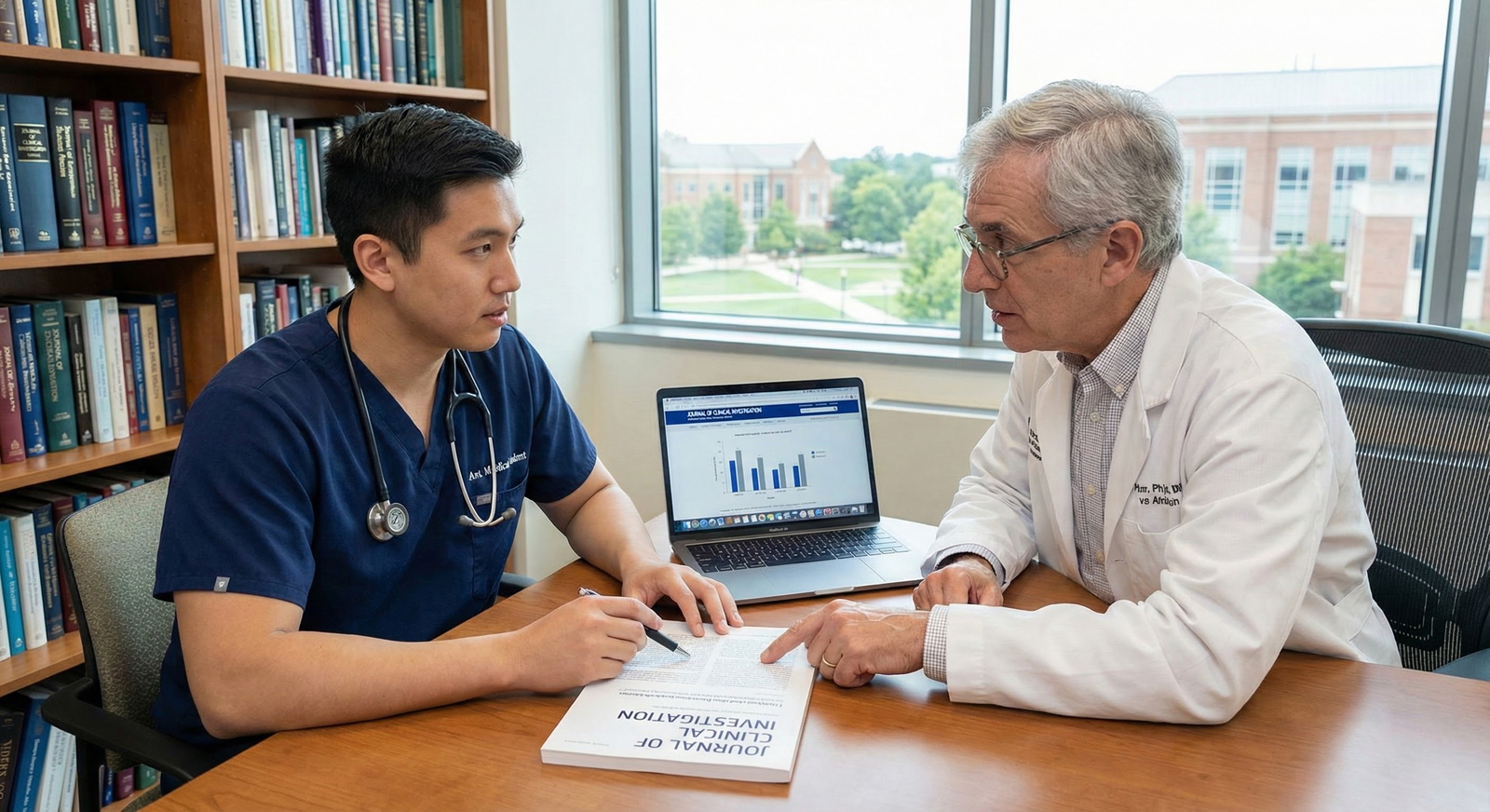
Step 2: Find the Right Mentors (Plural)
For EM-IM research, think in terms of a small mentor network, not just a single person:
- Primary clinical mentor
- Could be an EM, IM, or EM-IM attending with a track record of scholarship.
- Methodology or QI mentor
- A hospitalist, EM researcher, or epidemiologist who can help with study design, IRB, and statistics.
- Career-oriented mentor
- Someone who understands the EM-IM landscape and can help you position your work for residency.
Approach potential mentors with:
- A concise 1–2 paragraph email: who you are, your interest in EM-IM, and any initial ideas or willingness to help on ongoing projects.
- A CV attached, highlighting any prior research or relevant skills (e.g., data analysis, coding, teaching).
When you meet, be explicit:
“I’m interested in EM IM combined residency and want to build a strong but realistic research profile over the next X months. What ongoing projects could I contribute to, and is there room for me to take ownership of a sub-question or poster?”
Step 3: Select Projects That Match Your Timeline
For different timeframes, consider:
3–6 months (late application timeline or busy schedule)
- Case reports or small case series.
- Secondary analysis of existing datasets (with IRB approval already done).
- QI projects with simple outcomes (e.g., compliance with an order set).
- Narrative or scoping reviews on EM-IM topics.
6–12 months
- Retrospective chart reviews (ED admissions for a specific diagnosis, boarding times, ICU transfers).
- Prospective observational studies if infrastructure already exists.
- Curriculum or simulation projects with pre/post evaluation.
12+ months
- More complex projects, multi-site studies, or larger database work.
- Systematic reviews or meta-analyses.
- Projects that could realistically lead to a full first-author manuscript.
Prioritize at least one project where you can be a major contributor or first author, rather than many minor roles spread across multiple teams.
Step 4: Learn the Basics of Research Methods
You do not need a PhD in biostatistics, but you should understand:
- Fundamental study designs: cohort, cross-sectional, case-control, randomized trials, QI cycles (Plan-Do-Study-Act).
- Core concepts: bias, confounding, p-values, confidence intervals, basic regression.
- What your study actually did and why.
Free or low-cost resources:
- Institution’s clinical research or QI workshops.
- Online modules from professional societies (ACEP, SAEM, SGIM, SHM, etc.).
- Texts like Users’ Guides to the Medical Literature (great for self-study).
Being methodologically literate allows you to speak convincingly about your research during interviews.
Step 5: Aim for Dissemination: Abstracts, Posters, and Publications
Programs care about your ability to finish the story. Even if you cannot fully publish by application time, you can:
Submit abstracts to national or regional conferences:
- SAEM (Society for Academic Emergency Medicine)
- ACEP (American College of Emergency Physicians)
- SGIM (Society of General Internal Medicine)
- SHM (Society of Hospital Medicine)
- Local institutional research days.
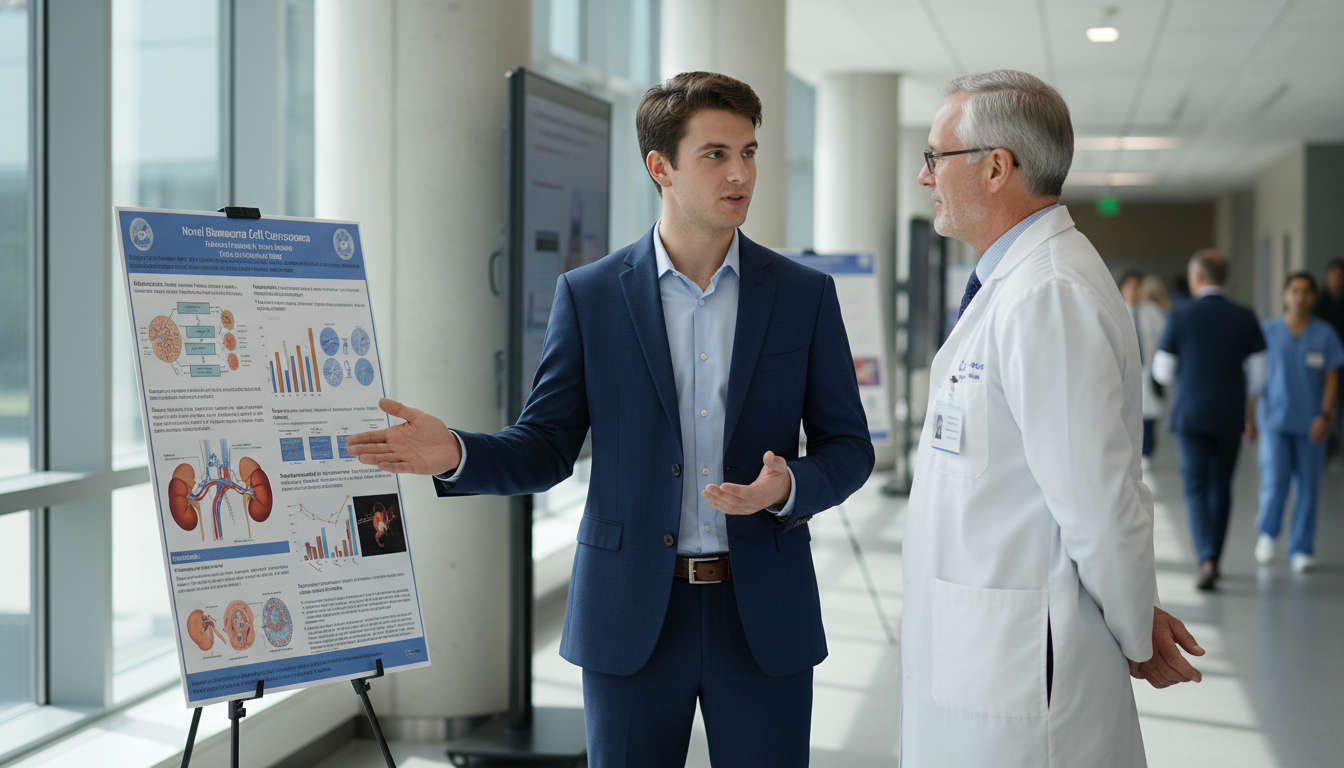
Create posters and oral presentations:
- These count as “publications for match” in the ERAS “Presentations/Posters” section.
- They demonstrate productivity and communication skills.
Start manuscripts early:
- Even if “submitted” or “in preparation,” be honest in ERAS and ready to discuss current status.
Your goal is a portfolio where each significant project has at least one tangible product attached to it.

Presenting Your Research Effectively in Applications and Interviews
Your research profile is not just a list of titles—it is a central part of your narrative as an EM-IM applicant.
Integrating Research into Your Personal Statement
You do not need to write a “research statement,” but you should:
- Show how research shaped your understanding of EM-IM.
- Briefly highlight 1–2 key projects and what they taught you about:
- Caring for complex patients across ED and inpatient settings.
- Systems of care, teamwork, or quality improvement.
- Your own strengths: curiosity, persistence, critical thinking.
Example angle:
“Working on a project evaluating ED-to-inpatient handoff quality, I saw how a single unclear recommendation in the ED could translate into a delayed intervention on the floor. That experience cemented my interest in EM-IM, where physicians are uniquely positioned to bridge these gaps across settings.”
Framing Your Contributions in ERAS
In your ERAS “Experiences” and “Publications” sections:
Be specific about your role:
- “Designed data collection tool and abstracted 250 charts.”
- “Performed statistical analysis under mentorship and drafted methods section.”
- “Led IRB submission and created poster for regional conference.”
Avoid inflating responsibilities; faculty can tell when descriptions are vague or exaggerated.
Link experiences to skills: leadership, collaboration, problem-solving, communication.
Answering Common Research-Related Interview Questions
Be ready to respond to questions such as:
- “Tell me about your main research project.”
- “What did you learn from your research experience?”
- “What were the biggest challenges or limitations?”
- “How do you see research fitting into your EM-IM career?”
When describing a project, use a clear structure:
- Question – “We wanted to know whether …”
- Methods – “So we designed a retrospective chart review including X patients from Y period.”
- Findings – “We found that …”
- Implications – “This suggests that … and made me think about … in EM-IM practice.”
- Your Role – “My role was … and I learned …”
Programs are not testing whether you discovered something earth-shattering; they’re probing how you think.
Planning for Research During Residency
Many EM-IM programs emphasize resident scholarship. Demonstrate you’ve considered this:
- Mention interest in:
- Resident scholarly tracks (e.g., research, QI, education).
- Ongoing involvement in your current projects during residency.
- Future EM-IM-focused projects (e.g., critical care outcomes, transitions of care).
Programs want applicants who will thrive in their scholarly environment, not just tolerate it.
FAQs: Research Profile Building for EM-IM Applicants
1. Do I need formal research to match an EM-IM combined program, or will strong clinical performance be enough?
For many EM-IM programs—especially those at academic centers—some form of research or scholarly activity is expected, though not necessarily extensive. Strong clinical performance and board scores are essential foundations, but EM-IM tracks actively seek residents who are curious about systems, evidence, and innovation. At minimum, try to have one meaningful project (research, QI, education, or public health) that you can describe in depth. Community-oriented EM-IM programs may be more flexible, but a complete absence of scholarship can be a disadvantage in the current match environment.
2. How many publications needed to be “competitive” for EM-IM?
There is no universal threshold. Many successful applicants have 0–2 peer-reviewed publications and 2–5 total scholarly products (including abstracts, posters, and presentations). What matters more is the substance of your involvement and your ability to articulate what you did and learned. One strong, well-understood project with a poster presentation can be more impactful than several superficial co-authorships you cannot explain.
3. Does non-EM/IM research (e.g., basic science or another specialty) help for EM-IM applications?
Yes—if you can connect it to skills and attitudes relevant to EM-IM. Basic science or non-EM/IM projects still demonstrate critical thinking, persistence, and collaboration. In interviews, emphasize the transferable skills (study design, data analysis, problem-solving) and how the experience shaped your interest in evidence-based patient care. If possible, supplement with at least one clinically or systems-focused project more directly aligned with emergency medicine internal medicine themes.
4. I’m a late starter—what can I do in 6–9 months to strengthen my research profile before applications?
Focus on shorter-cycle, high-yield projects with clear endpoints:
- Join an ongoing retrospective study and help with data abstraction and analysis.
- Write a case report or small case series connected to EM-IM (e.g., a complex ED case that required prolonged inpatient management).
- Start a focused QI project on handoffs, sepsis bundles, or readmissions, with clear outcome metrics.
- Collaborate on a narrative review around an EM-IM-relevant topic.
Set a realistic goal: at least one project that progresses to an abstract, poster, or manuscript submission by the time you apply, and be prepared to explain your process and contributions clearly.
By choosing EM-IM-relevant topics, finding supportive mentors, and aiming for tangible research products, you can build a credible, compelling research profile that strengthens your residency application and lays the groundwork for a career at the intersection of emergency medicine and internal medicine.