Why Research Matters in Emergency Medicine Residency Applications
Emergency medicine (EM) is often viewed as a clinically focused specialty where fast thinking, procedural skill, and teamwork dominate. While that’s largely true, research has become an increasingly important component of a competitive emergency medicine residency application—especially at academic and university-based programs.
For EM residency applicants, a thoughtful research profile does three key things:
Signals genuine interest in EM and critical thinking skills
Program directors want to see you can ask good questions, interpret evidence, and practice evidence-based medicine in a high-stakes environment.Differentiates you in a crowded EM match
With many applicants sharing similar board scores and clerkship grades, research—especially EM-focused or clinically relevant projects—can help you stand out.Opens doors at academic and hybrid programs
Academic EM departments value residents who will contribute to scholarly work, quality improvement (QI), and medical education. Your research experience is a predictor of future contributions.
You don’t need a PhD-level portfolio to match well in emergency medicine. But you do need a deliberate, coherent research profile that makes sense for your goals, resources, and timeline.
This guide will walk you through what “enough” research looks like for EM, how many publications are realistic, how to find and complete projects, and how to strategically present your work during the EM match process.
Understanding the Role of Research in the EM Match
What Do EM Programs Actually Look For?
Most EM residency programs prioritize:
- Strong clinical performance (especially on EM rotations)
- Solid USMLE/COMLEX scores (or equivalent)
- Enthusiastic Standardized Letters of Evaluation (SLOEs)
- Professionalism, communication, and teamwork
Research sits just behind these top-tier factors, but it becomes more important if:
- You’re aiming for highly academic or research-heavy EM programs
- You have weaker areas (e.g., modest board scores) and want a compensatory strength
- You’re a non-traditional, IMG, or reapplicant needing extra signals of commitment and capability
- You’re interested in fellowship (e.g., critical care, ultrasound, toxicology, EMS, pediatric EM, research fellowship, medical education)
How Many Publications Are “Enough” for EM?
There is no official cutoff for how many publications needed to match EM. But based on program director surveys and applicant trends:
0–1 publications
Common and acceptable for many community and hybrid EM programs, especially if you have:- Strong EM rotations and SLOEs
- Some involvement in scholarly activity (e.g., poster, QI, case reports)
1–3 publications or national presentations
Competitive for many academic EM residencies if:- At least one item is EM-related, or
- Your contributions are substantial (first author, main data analyst, etc.)
3+ publications / significant scholarly output
Particularly helpful if:- You’re targeting top academic centers
- You’re interested in a future academic career
- Some work is clearly connected to EM or acute care
Quality and coherence matter more than raw numbers. A thoughtful research portfolio that tells a consistent story about your interests in emergency medicine, systems of care, or acute illness is far more valuable than a scattered list of minor contributions.
What Counts as “Research” for Residency?
Most EM programs consider a broad array of “scholarly activities” as research for residency:
- Original clinical research (chart reviews, prospective studies)
- Quality improvement and patient safety projects
- Simulation or education research
- EMS, disaster, or global emergency care projects
- Toxicology, ultrasound, or critical care-related projects
- Systematic reviews or meta-analyses
- Case series and case reports (especially if published)
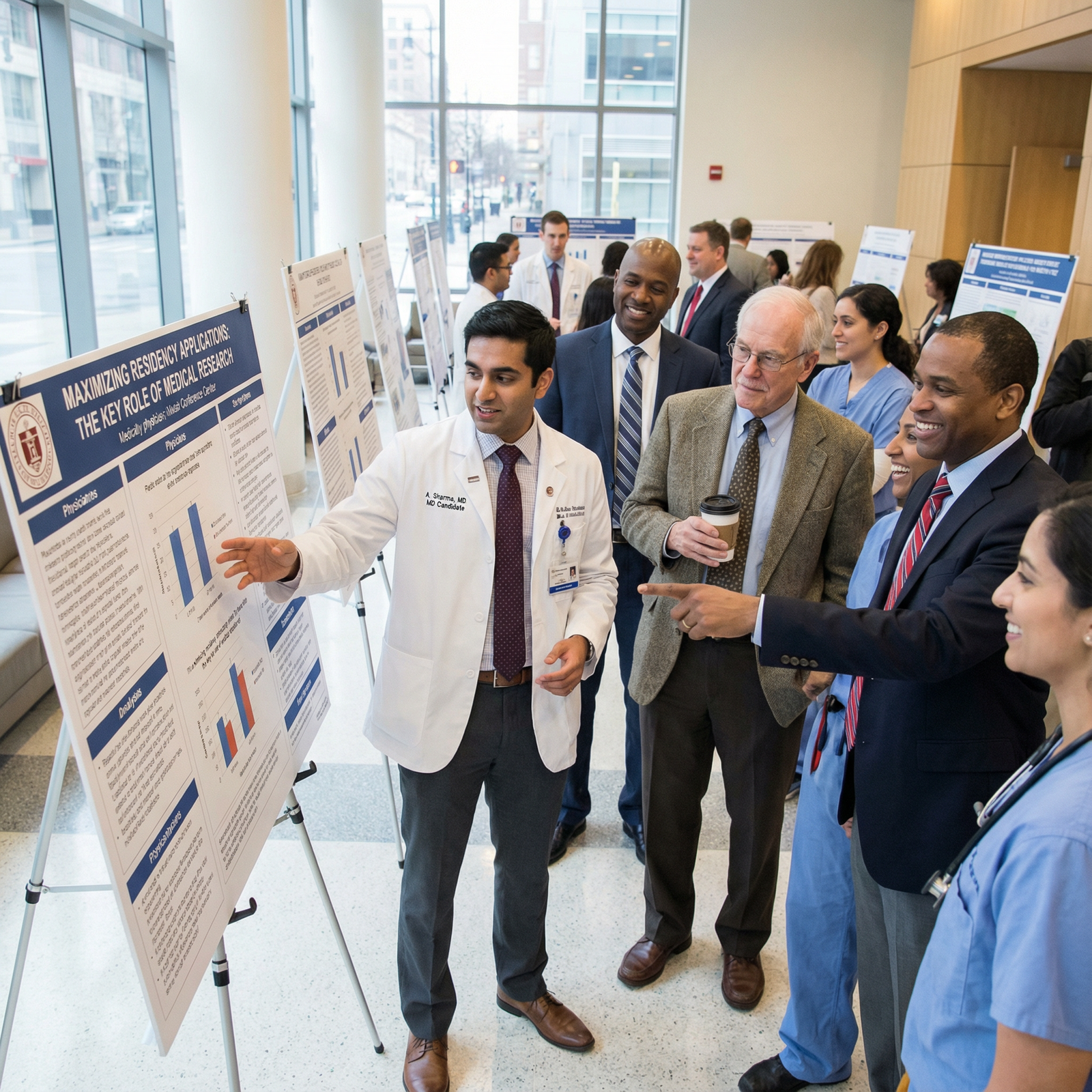
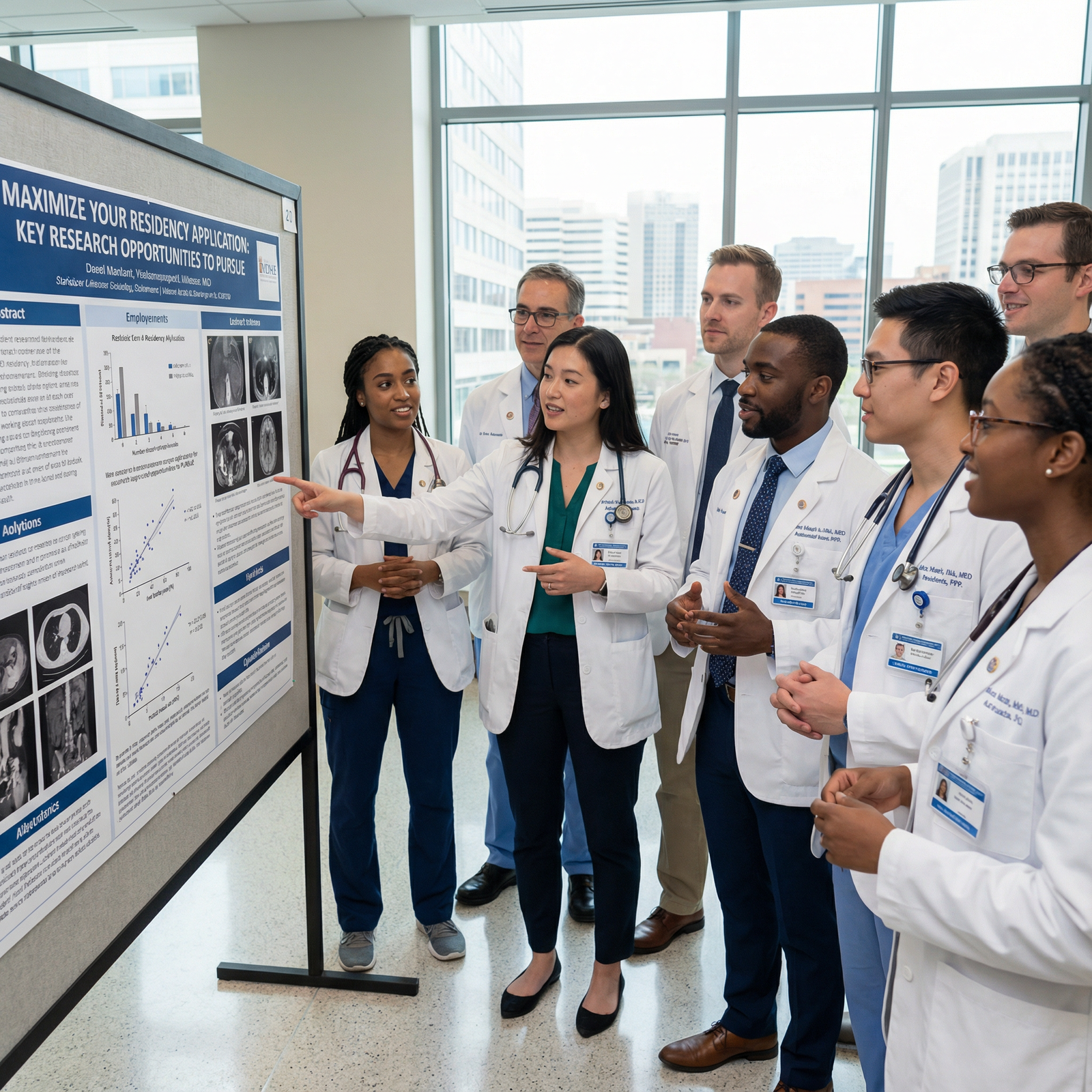
- Conference abstracts, posters, and oral presentations
- Non-EM research (basic science, other specialties), if you can explain its relevance
Your goal is to assemble a mix of experiences that show you can:
- Identify a relevant question
- Work on a team
- See a project through to completion
- Communicate your findings (poster, paper, presentation)
Types of Research That Fit Well with Emergency Medicine
Not all research is equally accessible or equally impactful for EM applicants. The best projects balance feasibility, mentorship, and alignment with emergency medicine.
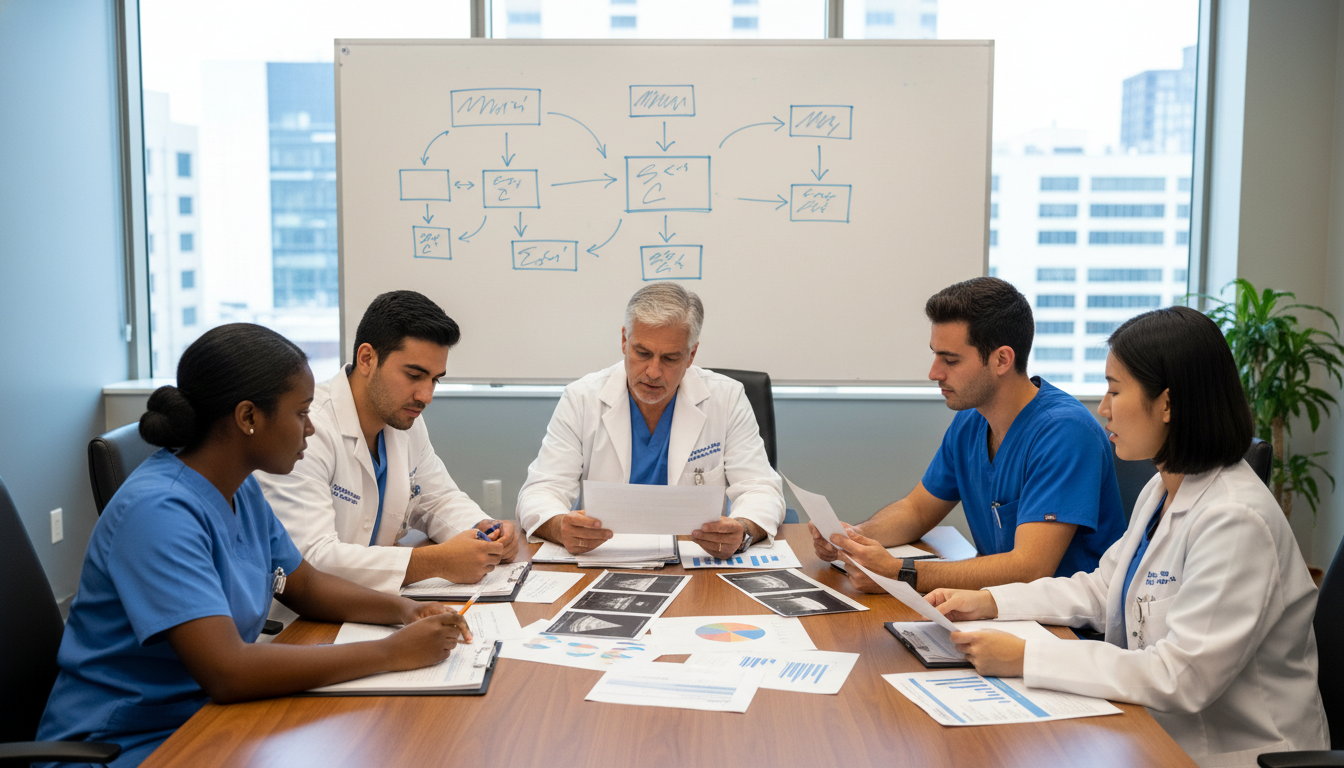
High-Yield Project Categories for EM Applicants
1. Clinical EM Research
These projects use patient data from the ED to study:
- Diagnostic strategies (e.g., workup of chest pain or syncope)
- Risk stratification tools (e.g., decision rules for imaging)
- Management of common ED complaints (abdominal pain, shortness of breath)
- Outcomes (e.g., return visits, length of stay, adverse events)
Pros:
- Directly aligned with emergency medicine residency
- Often impressive to EM program directors
- Can lead to strong publications or abstracts
Cons:
- Requires mentorship, IRB approval, and data access
- Timelines can be long—sometimes longer than the residency application cycle
2. Quality Improvement (QI) & Patient Safety
QI projects in the ED might focus on:
- Reducing door-to-needle or door-to-balloon times
- Improving sepsis bundles or stroke protocols
- Enhancing triage accuracy
- Streamlining discharge instructions or follow-up
Pros:
- Highly relevant to EM practice and systems-based care
- Often faster to implement and present than large clinical trials
- Can yield posters, institutional recognition, or internal awards
Cons:
- Not always publishable in high-impact journals
- Requires understanding of QI methodology (but this is learnable)
3. Medical Education & Simulation
Education and simulation research includes:
- Creating or testing simulation curricula (e.g., trauma resuscitation)
- Studying novel teaching methods in the ED (bedside teaching, feedback models)
- Assessing competency (e.g., ultrasound, airway skills)
Pros:
- Ideal for those interested in academic EM and teaching
- Often manageable to complete within a medical school timeline
- Can yield both local and national presentations
Cons:
- May be viewed as slightly less “hard science” by some programs (though still very valuable)
- Needs a strong faculty mentor to guide study design and evaluation
4. Case Reports and Case Series
These describe:
- Unusual presentations of common conditions
- Rare diseases seen in the ED
- Complications, diagnostic challenges, or imaging/performance pearls
Pros:
- Shorter timeline from idea to submission
- Great entry point if you’re new to research
- Helps build writing and submission skills
Cons:
- Lower academic weight than original clinical research
- Not all journals accept case reports; peer review can still be rigorous
5. Non-EM Research (Basic Science, Other Specialties)
Many EM applicants have prior work in:
- Neuroscience, cardiology, or pulmonary research
- Epidemiology or public health
- Trauma surgery, critical care, or anesthesiology
- Basic science (cell, molecular, genetics)
Pros:
- Still valuable—shows persistence, analytic skills, and scientific curiosity
- Often easier to build on if you already have a mentor or lab
Cons:
- Needs a clear narrative to connect to your EM interests in your personal statement and interviews
Step-by-Step Strategy to Build an EM-Oriented Research Profile
Step 1: Clarify Your Goals and Constraints
Before you start, answer:
What kind of EM programs am I aiming for?
- Primarily community programs → research is helpful, but not the central focus
- Academic/university programs → research becomes more significant
How much time do I realistically have?
- Preclinical vs. clinical years
- Upcoming board exams, rotations, and personal obligations
Do I want an academic career or fellowship?
- If yes, prioritize more substantial, EM-focused projects
Knowing your goals keeps you from overcommitting to projects you can’t finish.
Step 2: Find the Right Mentors in Emergency Medicine
Strong mentorship is the most important factor in getting research for residency completed and meaningful.
Where to find mentors:
- EM department website: look at faculty bios for interests in ultrasound, toxicology, EMS, critical care, ED operations, or medical education
- Clerkship or sub-I directors: ask who works with students on research
- EM interest group: often has a faculty advisor engaged in scholarship
- EM residents: many are working on projects and may welcome help
How to approach potential mentors:
Send a brief, professional email:
- Who you are (year, school)
- Your interest in emergency medicine
- Any prior research experience (if none, that’s fine—be honest)
- What you’re hoping for (e.g., “I’m hoping to get involved in one or two EM-relevant projects that I can realistically see through to completion before residency applications.”)
Attach a CV and suggest a short meeting. Show up prepared with:
- A sense of your available time
- A willingness to learn methods, do grunt work, and follow through
- Openness to different types of projects
Step 3: Choose Projects You Can Actually Finish
An unfinished project helps your learning but does not help your ERAS application unless you can list tangible outputs.
When choosing projects, consider:
Timeline
- Do you need something completed (poster, submission) before ERAS opens?
- Case reports, QI projects, and retrospective chart reviews often have faster turnarounds than prospective studies.
Your role
- Are you first author or one of many?
- More responsibility = more work, but also more impact.
Feasibility
- Is the dataset already collected?
- Has the mentor successfully published similar work?
- Are there clear next steps with deadlines?
Aim for a mix:
- One shorter-term project (e.g., case report or single QI intervention)
- One moderate project (e.g., retrospective chart review, education project)
- Optional: one longer-term project if you start early in medical school
Step 4: Do High-Quality Work and Follow Through
To get meaningful publications for match, train yourself to be the student every mentor wants:
- Respond to emails promptly
- Keep a shared to-do list or project tracker
- Learn basic statistics or software as needed (Excel, R, SPSS, REDCap)
- Ask for feedback on drafts and integrate it carefully
- Offer to take on unglamorous tasks (data cleaning, reference formatting)
The goal is to become a reliable collaborator who mentors are eager to recommend in SLOEs or direct emails to program directors.
Step 5: Turn Projects into Tangible Outputs
Program directors care about products, not just effort. Always ask:
“What is our intended endpoint for this project—poster, abstract, publication?”
Common outputs, roughly in order of perceived weight:
- Peer-reviewed publication (especially first/second author)
- National conference oral or poster presentation (e.g., SAEM, ACEP, CORD)
- Regional or institutional conference poster/presentation
- Accepted abstracts, online publications, or blog posts (FOAMed, EM blogs)
- Works in progress with clear milestones (IRB approved, data complete, manuscript drafted)
It’s perfectly appropriate to list accepted abstracts, “submitted” manuscripts, and well-defined works in progress on ERAS—just be accurate about status.
Presenting Your Research in ERAS and EM Interviews
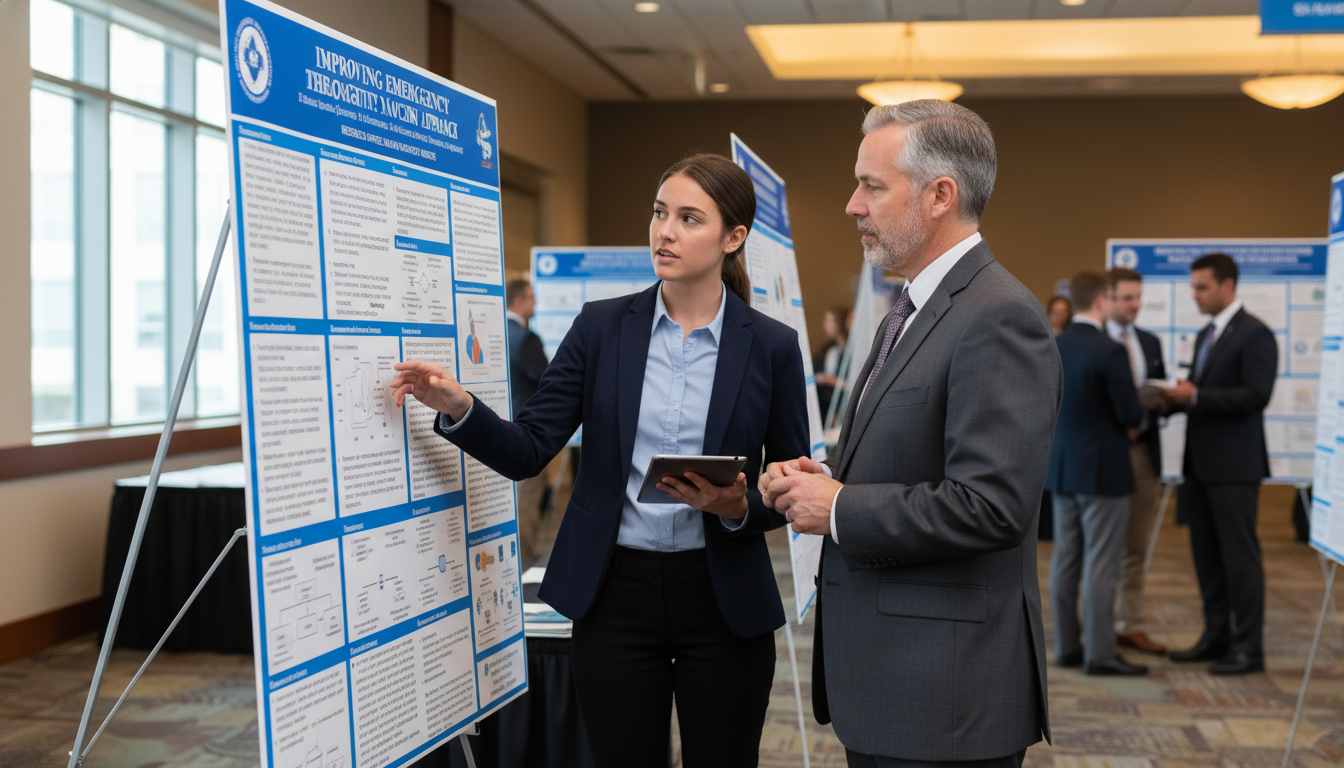
How to List Research on ERAS
When filling out ERAS:
- Be precise about your role (first author, data collector, analyst)
- Accurately report status:
- “Published,” “In press,” “Accepted,” “Submitted,” or “In preparation”
- Use consistent citation format for publications
- For ongoing projects, describe:
- Your responsibilities
- Current stage (e.g., “Data collection completed; manuscript in draft”)
Avoid padding your application with:
- Projects where your involvement was minimal
- Vague descriptions (“Assisted with research” without details)
- Overstating your role or current status
Framing Your Research Story
On paper and in person, your research portfolio should tell a cohesive story that aligns with emergency medicine. You might say, for example:
- “I’m drawn to emergency medicine because of its interface with systems of care and public health, so many of my research projects focused on ED operations and QI.”
- “I previously worked in pulmonary and critical care research, which complements my interest in resuscitation and critical illness in the ED.”
- “I became very interested in ultrasound during my sub-I, which led to a project on ultrasound-guided IV placements in difficult-access patients.”
Make it clear:
- Why you chose your projects
- What you learned about EM from them
- How you’ll bring those skills (data literacy, QI, teaching) into residency
Common EM Interview Questions About Research
Be ready for:
“Tell me about your research.”
Prepare a 2–3 minute, jargon-light overview of your main project. Focus on:- The question
- Your role
- What you found
- What it means for patient care or systems
“How does this relate to emergency medicine?”
Draw out the connection—even if tangential—through:- Acuity, decision-making under uncertainty, system improvement, or teaching
“Do you plan to continue research in residency?”
Be honest, but specific:- If yes, mention interests (ED operations, ultrasound, education)
- If unsure, say you’re open but primarily focused on becoming an excellent clinician
“What was the biggest challenge in your research?”
Highlight:- Obstacles (IRB, data limitations, time management)
- How you adapted and what you learned about perseverance and teamwork
Tailoring Your Research Strategy to Your Background
If You’re Early in Medical School (MS1–MS2)
You have time to build a strong research foundation:
- Join the EM interest group and ask about projects
- Shadow in the ED to generate ideas
- Consider a summer research program in EM or acute care
- Start one substantial project plus a smaller one (e.g., case report)
Focus on skill-building:
- Reading and critiquing EM literature
- Basic statistics and study design
- Abstract/manuscript writing
If You’re in Clinical Years (MS3–MS4) and Behind on Research
You still have options to improve your research profile before the EM match:
- Seek short-term projects:
- Case reports from interesting ED encounters
- QI steps already underway where you can help collect or analyze data
- Ask EM faculty if any existing studies need:
- Additional chart reviews
- Literature review or writing support
- Target at least one tangible product (poster, abstract submission) prior to ERAS submission
Be realistic: you probably won’t start and finish a large prospective trial before applications, but you can still add meaningful lines to your CV.
If You’re an IMG or Reapplicant
Research can be particularly helpful for you because it:
- Demonstrates sustained interest in emergency medicine
- Shows you can function in a U.S. academic environment (if done in the U.S.)
- Provides potential letter writers within EM
Strategies:
- Seek opportunities at academic centers, research fellowships, or volunteer research assistant roles
- Emphasize completion (published or presented work) more than sheer number of “ongoing” projects
- Use your personal statement and interviews to tell a clear narrative tying your background to EM through your research
Frequently Asked Questions (FAQ)
1. Do I need research to match into emergency medicine?
No, research is not absolutely required to match EM, especially at community-focused or less academically oriented programs. However, some level of scholarly activity (even a single case report, QI project, or poster) is increasingly common among successful applicants and can help you:
- Demonstrate curiosity and engagement with evidence-based practice
- Stand out in a competitive EM match
- Show readiness for academic environments
If you’re targeting university-based or research-heavy EM programs, research becomes significantly more important.
2. How many publications do I need to be competitive?
There is no fixed number for how many publications needed to match EM. For most applicants:
- 1–2 meaningful outputs (e.g., a publication, a national or regional presentation, or a well-defined QI project) is enough to show engagement.
- Applicants to very academic programs or interested in fellowships may aim for 2–4 substantial projects, with at least one EM-related.
Program directors focus more on:
- The quality and relevance of your work
- Your role and ownership
- Your ability to talk intelligently about your projects
than on raw counts.
3. Does non-EM research help, or does it have to be emergency medicine-specific?
Non-EM research absolutely still helps. It shows you can:
- Think critically
- Work on teams
- See projects through to completion
If possible, frame your work in ways that connect to EM—for example:
- ICU or cardiology research → ties to resuscitation, shock, acute MI
- Public health or epidemiology → ties to population health, ED as a safety net
- Neuroscience research → ties to stroke, TBI, or altered mental status
That said, having at least one EM-aligned project is ideal if you can arrange it, especially for more academic residencies.
4. What should I do if my projects won’t be published before ERAS opens?
That is very common and completely acceptable. You can still:
- List projects as “submitted,” “in preparation,” or “ongoing” with clear descriptions
- Highlight conference abstracts, posters, and oral presentations—even at institutional or regional meetings
- Discuss your role and what you’ve learned in your personal statement and interviews
Just be precise and honest about the status of each project. Program directors value transparency and maturity more than artificially polished portfolios.
Building a research profile for emergency medicine residency is not about accumulating an impressive-sounding list of projects. It’s about demonstrating that you can think critically, work collaboratively, follow through, and connect your scholarly work to better care for acutely ill patients. Whether you end up in a purely clinical environment or a research-intensive academic center, a coherent, well-executed research story will strengthen your EM match application and your future career.