Understanding the Role of Research in Family Medicine Residency
Many MD graduates aiming for a family medicine residency underestimate how impactful a well-constructed research profile can be. While family medicine is often considered “less research-heavy” than some subspecialties, program directors consistently report that scholarly activity strengthens an application and differentiates candidates—especially in competitive allopathic medical school match cycles.
For an MD graduate residency applicant in family medicine, research matters in three main ways:
Signals intellectual curiosity and academic discipline
Even basic projects (QI, chart reviews, case reports) demonstrate you can formulate a question, gather data, and follow a project to completion.Shows alignment with primary care and community health
Research focused on population health, health equity, chronic disease management, behavioral health, or systems-based practice directly reflects the mission of many family medicine residency programs.Creates talking points and depth in interviews
A strong research narrative gives you concrete examples to discuss when asked about problem-solving, teamwork, persistence, and interest in academic medicine.
You do not need an R01-level NIH-funded portfolio. But you do need a coherent, honest, and well-presented record of scholarly activity that matches your story as a future family physician.
How Much Research Do You Need for Family Medicine?
A frequent question from MD graduates is: “How many publications are needed?” The answer is nuanced.
1. Program Expectations in Family Medicine
In the context of an allopathic medical school match, typical US MD graduates who successfully match into family medicine show:
- At least 1–3 pieces of scholarly work (can include QI or educational projects)
- Many have 0–1 peer-reviewed publications but multiple abstracts, posters, or presentations
- Top academic programs or those with strong research tracks may favor applicants with:
- 2–5 total scholarly outputs
- At least 1 peer-reviewed publication or strong QI/health systems project
This is not a strict requirement but a pattern seen in successful applications.
2. Interpreting “How Many Publications Needed”
When people ask “how many publications needed” for family medicine, what they really want to know is what’s competitive versus bare minimum.
- Baseline competitiveness (especially for US MDs):
- 1–2 tangible research products (abstract, poster, or publication)
- At least one project relevant to primary care or patient outcomes
- More competitive or academic-leaning profile:
- 2–4 scholarly products, including:
- At least 1 peer-reviewed publication (original research, case report, review)
- 1–2 posters/abstracts at regional or national meetings
- A completed QI project with measurable impact
- 2–4 scholarly products, including:
But quantity is less important than your role, understanding, and story:
- A single project where you were highly involved (proposal, data, analysis, writing) and can discuss in depth can outweigh several “minor author” publications where you barely participated.
3. US MD vs. International MD Context
As an MD graduate from an allopathic medical school:
- Family medicine residency programs generally consider you lower risk and more likely to match, even with modest research.
- However, research can still:
- Help you access stronger programs, research tracks, or university-affiliated residencies
- Offset borderline metrics (e.g., average Step scores, lack of AOA, no home program)
For international medical graduates, expectations for research in family medicine are often higher, but as a US MD graduate you are typically held to a more moderate standard.
Bottom line: For an MD graduate residency applicant targeting a family medicine residency, aim for at least one solid, completed scholarly project plus any additional smaller outputs you can reasonably complete before applications.
Types of Research That Matter in Family Medicine
You do not have to be a bench scientist to build a respectable research profile. In fact, for the FM match, certain types of research and scholarly projects are often more relevant and feasible for MD graduates.
1. Clinical Research
These projects are directly tied to patient care:
Retrospective chart reviews
Examples:- Evaluating diabetes control before and after a clinic intervention
- Assessing rates of colorectal cancer screening by age, insurance, or language
Prospective observational studies
- Monitoring blood pressure trends in a teaching clinic after introducing home BP monitoring
- Following adherence to guideline-based asthma therapy
Clinical research is highly relevant to family medicine: it reflects the kind of questions you will ask in residency.
2. Quality Improvement (QI) Projects
QI projects are often the easiest entry point for MD graduates in primary care settings:
- Examples:
- Increasing rates of depression screening in a continuity clinic
- Reducing unnecessary imaging orders for back pain
- Improving vaccination rates in adult or pediatric populations
QI fits squarely into family medicine’s emphasis on systems-based practice, patient safety, and practice transformation.
QI can count as “research for residency” in many program directors’ views, especially if:
- You collect baseline and follow-up data
- Use a recognized framework (e.g., Plan-Do-Study-Act cycles)
- Present or publish your findings locally, regionally, or nationally
3. Case Reports and Case Series
These are particularly accessible for MD graduate residency applicants:
- Single or small numbers of interesting cases (rare disease, unusual presentation, important diagnostic or management lesson)
- Often easier to write and publish compared to full original research
- Good venues:
- Case-oriented journals
- Specialty society journals
- Online case report platforms
Case reports clearly demonstrate you can identify a question, review literature, and write scientifically.
4. Systematic/Scoping Reviews or Narrative Reviews
These can be valuable if you have mentorship and time:
Systematic/scoping reviews (more rigorous):
- Require formal search strategies, inclusion/exclusion criteria, and structured analysis
- Strong evidence of research capability
Narrative reviews or topic reviews:
- Summarize current knowledge on a clinical topic
- Particularly useful to demonstrate expertise in common FM topics (e.g., hypertension management, multimorbidity, chronic pain, obesity)
For MD graduates, a well-written review article can be a high-impact way to gain a first or second author publication.
5. Educational or Curriculum Research
Family medicine residencies value education and teaching. Educational research can include:
- Designing a new teaching module (e.g., motivational interviewing, point-of-care ultrasound)
- Evaluating the impact of a new curriculum on student confidence or OSCE performance
- Creating and studying simulation-based scenarios for chronic disease counseling
These projects elevate your profile if you’re interested in an academic or educator track.

Step-by-Step: Building a Research Profile from Where You Are Now
Whether you’re an M4, a recent MD graduate, or in a research or gap year, you can still strategically build your research portfolio before the FM match.
Step 1: Inventory Your Current Scholarly Assets
List everything you already have, even if informal:
- Completed or ongoing projects (QI, clinical, basic science, education)
- Elective or required scholarly tracks
- Posters or presentations (local, regional, national)
- Draft manuscripts or case reports
- Data you’ve collected but not analyzed
- Faculty who know your work and might become recommenders
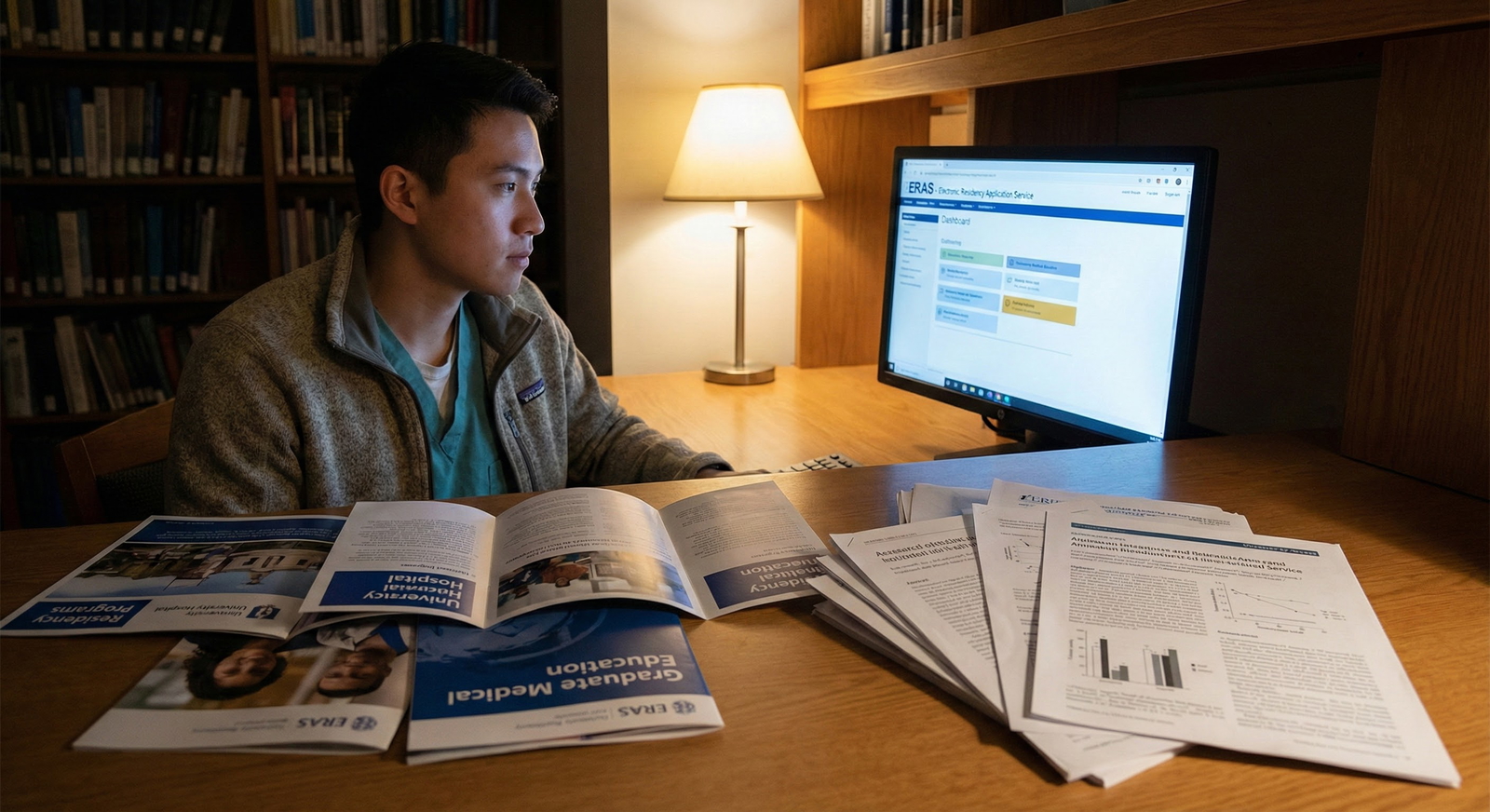
Translate each into how it can appear on your ERAS CV:
- Publication (peer-reviewed article, case report, review)
- Oral presentation
- Poster presentation
- Institutional presentation
- QI project (with measurable outcomes)
Even non-published work can often be turned into posters or local presentations if you act before applications.
Step 2: Clarify Your FM-Focused Narrative
Your research profile should support your story as a future family physician.
Ask yourself:
What aspects of family medicine are you most drawn to?
- Chronic disease management
- Behavioral health
- Women’s health
- Geriatrics
- Rural or underserved care
- Health disparities and population health
How can your past and current projects be framed to reflect these interests?
For example, if you did cardiology research, emphasize:
- Relevance to hypertension, heart failure, or primary prevention in outpatient care
- How this background will help you manage chronic conditions as a family doctor
You’re not changing the facts—just connecting the dots for program directors.
Step 3: Identify High-Yield Opportunities for New or Continued Work
For a family medicine residency applicant, focus on projects that can realistically reach completion or tangible output before application submission.
High-yield options:
Case reports/series
- Timeline: 4–12 weeks to manuscript submission if a clear case and dedicated mentor
- Action: Talk to residents/attendings on rotations, ask about unusual or educational cases worth writing up
QI projects in outpatient clinics
- Timeline: 3–6 months for a small project with baseline and post-intervention data
- Action: Join or propose a QI initiative in the family medicine or primary care clinic (screening rates, guideline adherence, patient portal use, etc.)
Secondary analysis or chart review
- Timeline: 4–9 months depending on IRB and data access
- Action: Ask faculty if there are existing datasets or ongoing studies where a motivated MD graduate could lead a subproject or analysis
Review article or educational research
- Timeline: 4–9 months with good mentorship
- Action: Offer to collaborate on a clinically relevant review that a faculty member has been considering but hasn’t had time to start.
Be strategic: one completed, presentable project is better than three unfinished ones.
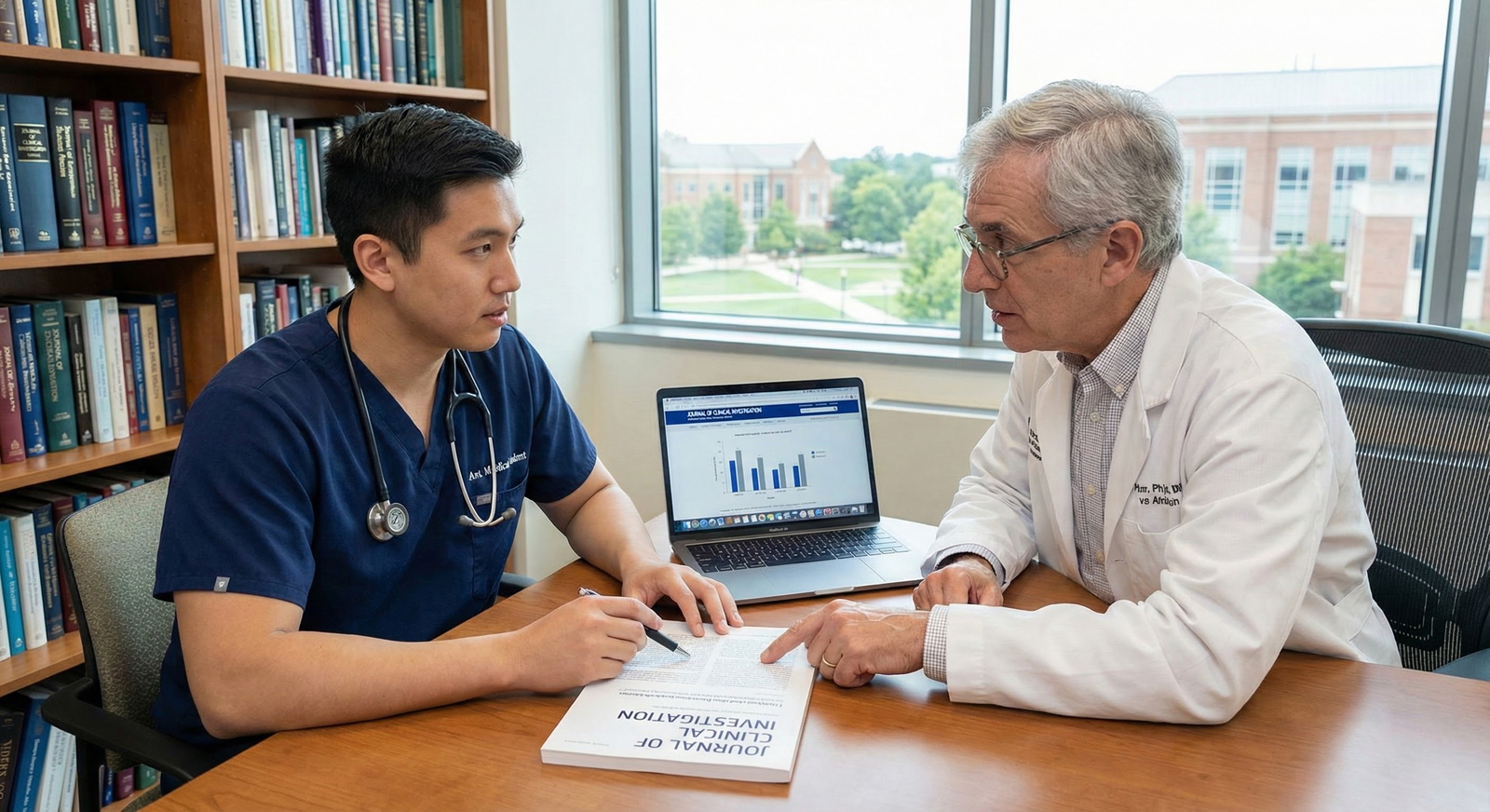
Step 4: Find and Work with Strong Mentors
For research aimed at the allopathic medical school match in family medicine:
- Look for mentors who:
- Are family medicine or primary care faculty (ideal), or
- Are clinicians/researchers in fields like internal medicine, pediatrics, public health, or epidemiology but conduct primary care-relevant research
- Prioritize those with:
- A tract record of publications
- Prior experience mentoring students
- Projects already in progress (easier to plug into)
How to approach:
Prepare a short email:
- Who you are (MD graduate, your institution)
- Your interest in family medicine residency
- Your research interests (briefly)
- What you’re asking: “Do you have active projects where I could contribute meaningfully and potentially earn authorship if I work hard?”
Be specific about your timeline (e.g., “I hope to have at least one completed project or abstract by [month/year] before the FM match.”)
Once involved, be reliable and responsive. For MD graduates, your professional reliability and productivity often matter more than prior experience.
Step 5: Execute Efficiently and Aim for Tangible Outputs
Time is often short before the residency application cycle. Prioritize steps that move a project toward something you can list:
For QI/clinical projects:
- Get IRB or QI approval as early as possible (if needed)
- Predefine data collection forms
- Focus on a clear, narrow primary outcome
For case reports:
- Confirm patient consent and IRB/ethics requirements
- Write a structured outline:
- Introduction (why this case matters)
- Case description
- Discussion (literature review + what’s unique)
- Conclusions/teaching points
- Target a journal early to guide word count and formatting
For reviews:
- Define a specific clinical question
- Systematically search literature (documenting strategy)
- Use a citation manager
- Aim first to complete the manuscript, then refine to journal style
Remember: for the purposes of a family medicine residency application, even an “accepted” or “in press” manuscript will significantly strengthen your profile, even if it’s not yet fully published online.
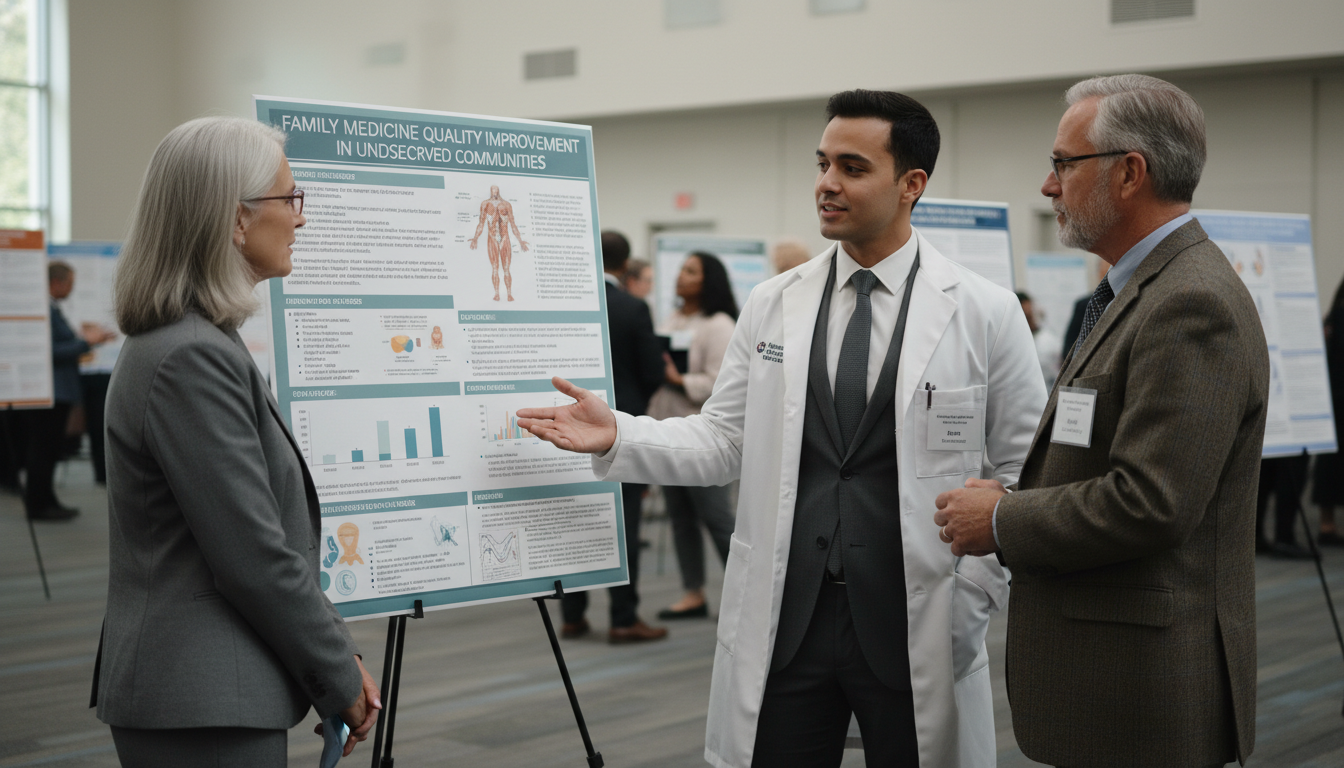
Presenting Your Research Effectively in ERAS and Interviews
A strong research profile isn’t just about doing research; it’s about communicating it clearly to residency programs.
1. Documenting Research in ERAS
When listing research experiences:
Use clear, non-technical titles
- Instead of: “PDSA-driven multidisciplinary intervention for antihypertensive regimen optimization”
- Try: “Quality improvement project to improve blood pressure control in a primary care clinic”
Specify your role
- “Designed data collection instrument; collected and analyzed data; drafted results section”
- “First author; performed literature review and wrote majority of manuscript”
Separate research and publications
- List ongoing projects under “Experiences”
- List completed outputs under “Publications/Presentations”
Be honest about status:
- “Manuscript submitted”
- “Manuscript in preparation” (only if genuinely near submission, and be ready to discuss)
- “Abstract accepted for oral/poster presentation at [Conference, Year]”
2. Using Research to Strengthen Your Personal Statement
Weave research into your narrative without turning your personal statement into a scientific CV.
For a family medicine-focused statement, you might:
- Reference a QI project that changed how you think about continuity of care
- Describe how working on a health disparities study shaped your commitment to underserved populations
- Explain how research in behavioral health or chronic disease management reinforced your decision to pursue family medicine
Your goal is to show that research has deepened your understanding of what it means to provide comprehensive, longitudinal care.
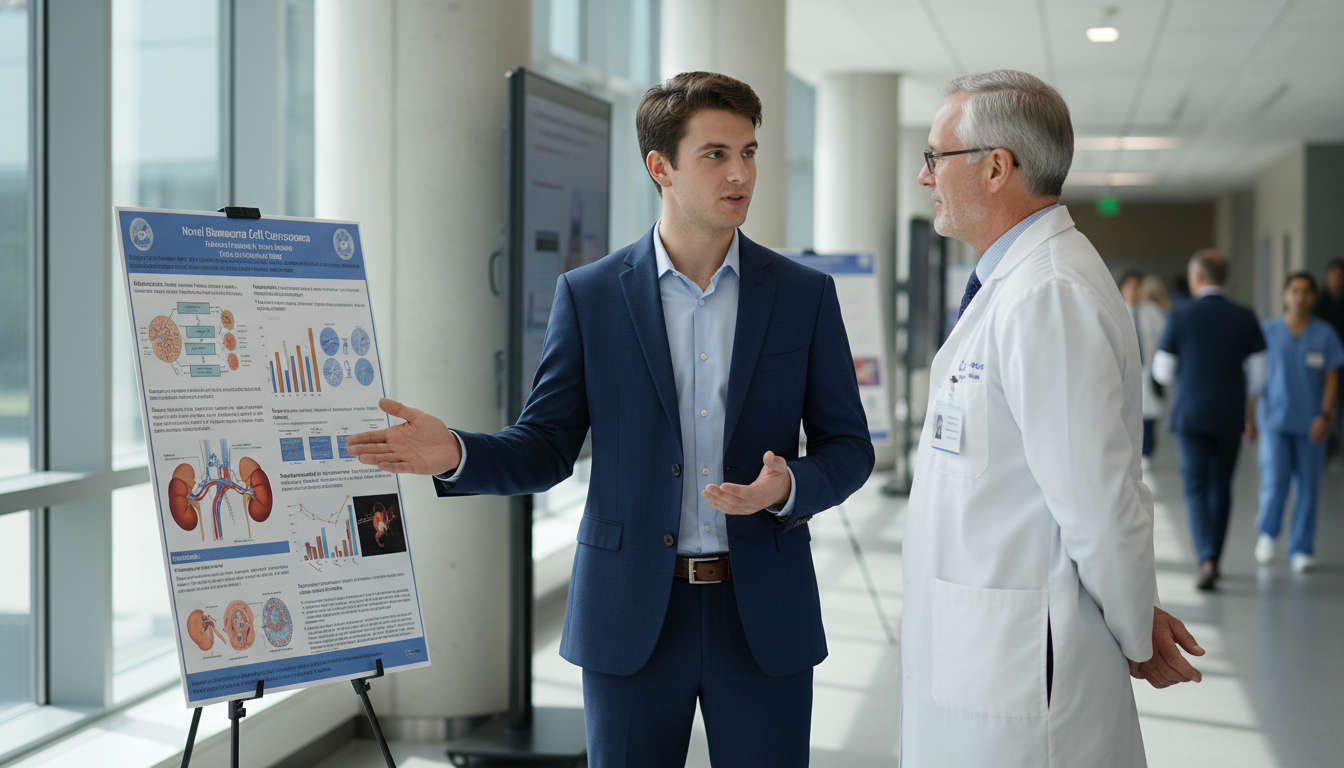
3. Discussing Research in Interviews
Program directors in the FM match will often ask:
- “Tell me about your research.”
- “What did you learn from your research experience?”
- “How do you see research fitting into your future as a family physician?”
Prepare:
A 2–3 minute overview of your most significant project:
- Why the question mattered (clinical relevance)
- Your specific role
- Key findings
- What you learned (e.g., about teamwork, data interpretation, practice improvement)
An answer on future plans:
- For community-focused programs: Emphasize QI, practice transformation, and applying evidence in real-world clinics
- For academic programs: Highlight interest in resident or faculty research, teaching, or curriculum development
Always connect back to how this experience will make you a better family doctor.
Common Pitfalls and How to Avoid Them
When MD graduates ask how to build research for residency, they often fall into predictable traps. Avoid the following:
1. Chasing Quantity Over Quality
Adding your name to many projects with minimal involvement is transparent in interviews. Program directors will quickly see if you can’t explain basic details of a project you “authored.”
Instead:
- Aim for at least one project where you can articulate:
- The research question
- Methods
- Limitations
- Clinical implications
2. Misalignment with Your Stated Interests
If your entire research record is basic science unrelated to human health and you claim passionate dedication to community-based family medicine, there’s a disconnect.
It’s fine to have non-FM research, but you should:
- Explain what you learned that’s transferable (critical thinking, scientific literacy, perseverance)
- Show at least one project or activity that bridges toward population health, primary care, or clinical work
3. Overstating Your Contributions
Do not exaggerate your role. A skeptical interviewer may probe details:
- “How many patients did you enroll?”
- “What statistical test did you use and why?”
- “What were the main limitations of your study?”
If you can’t answer, it undermines your entire application.
4. Neglecting Deadlines and Practicalities
For the residency match, timing is everything:
- Don’t start highly ambitious projects that can’t possibly produce tangible outputs before ERAS deadlines.
- Don’t wait until the last month before application season to try to throw something together; most mentors won’t have bandwidth.
Working backward from your intended application date will help you choose realistic, focused research goals.
Putting It All Together: Strategic Blueprint for an MD Graduate in Family Medicine
Here’s a condensed strategy you can adapt if you’re 6–18 months from applying:
If You Have 12–18 Months Before the FM Match
Aim for:
- 1 QI or clinical research project (target: presentation + potential publication)
- 1 case report or small series
- Optional: 1 review article or educational project
Prioritize:
- Seeking a dedicated FM or primary care mentor
- Targeting journals and meetings aligned with family medicine or primary care
If You Have 6–12 Months Before Applying
Focus on:
- 1 case report (if you identify a strong case quickly)
- 1 QI project with a simple, measurable outcome in a clinic
- Contributing to an ongoing project where data is already collected
Goal:
- At least one submitted abstract or manuscript
- Solid description of your contributions in ERAS
If You’re Within 6 Months of Application
Realistic goals:
- Turn existing work into:
- Posters or presentations
- A short report or case report
- Finalize manuscripts that are close to submission
- Turn existing work into:
Focus intensively on:
- How you present your existing research in ERAS and interviews
- Ensuring your story is coherent and aligned with your family medicine interests
FAQs: Research Profile Building for MD Graduates in Family Medicine
1. Do I need publications to match into family medicine residency as a US MD graduate?
No, publications are not strictly required for the FM match, especially if your other metrics and clinical performance are strong. However, having at least one tangible scholarly product (e.g., a QI project, poster, or case report) strengthens your application and is increasingly common among MD graduate residency applicants. Publications for match purposes are most impactful when you can clearly explain your role and what you learned.
2. What type of research is most valued by family medicine residency programs?
Programs particularly value:
- Quality improvement work in primary care settings
- Clinical research relevant to outpatient care (chronic disease management, prevention, health disparities)
- Case reports with clear teaching points
- Educational or curriculum research related to primary care training
These show a direct connection between your scholarly work and real-world family medicine practice.
3. I did basic science research in medical school. Is that useful for a family medicine application?
Yes—if you frame it appropriately. While it’s not directly clinical, it still demonstrates:
- Ability to handle complex information
- Persistence in long-term projects
- Familiarity with the scientific method
In interviews and your personal statement, emphasize transferable skills and, if possible, show that you’ve added at least one project with more direct relevance to primary care or patient outcomes.
4. How should I balance research efforts with other application components (Step scores, clinical grades, volunteering)?
For family medicine, research is one part of a holistic evaluation. You should:
- Prioritize strong clinical performance and solid Step scores
- Ensure you have meaningful primary care exposure and service/volunteering experiences
- Use research to complement—not replace—clinical excellence and patient-centered activities
If your metrics are average, a well-presented research profile can still help differentiate you within the allopathic medical school match, particularly for more academic or university-based family medicine residency programs.
By choosing research activities that are realistic, relevant, and well-mentored, you can build a convincing research profile that supports your journey toward an FM match and sets you up for a meaningful career in family medicine.