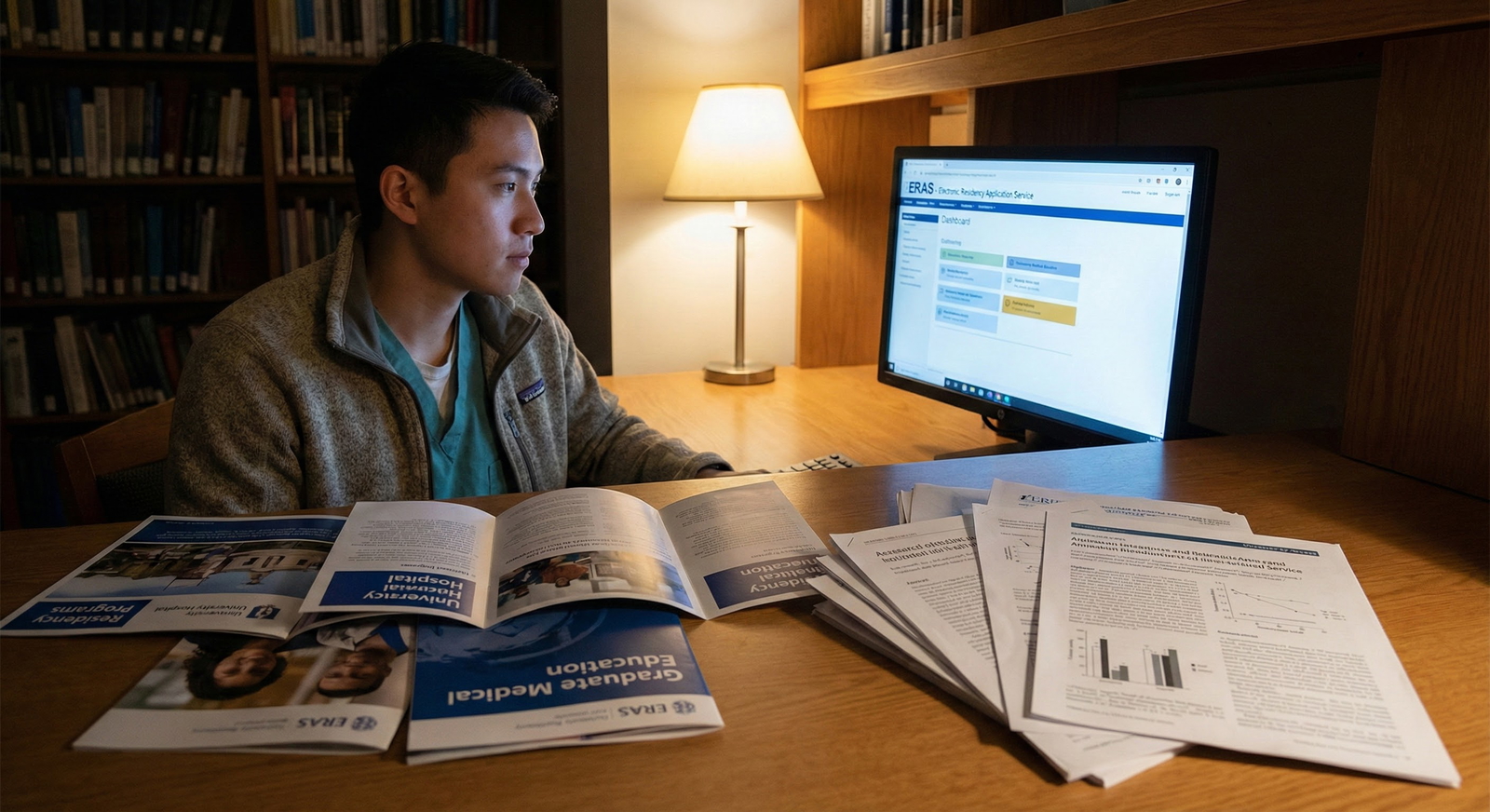
Why Research Matters for the Internal Medicine Residency Match
Research is no longer “optional” for most competitive internal medicine residency programs. Even for categorical internal medicine residency positions that emphasize clinical training, program directors increasingly view scholarly activity as evidence of:
- Intellectual curiosity and critical thinking
- Ability to work in teams and meet deadlines
- Familiarity with evidence-based medicine and literature appraisal
- Potential for academic or subspecialty careers (cardiology, GI, heme/onc, etc.)
How Programs Actually Use Research in the IM Match
Program directors rarely choose applicants only because of high research productivity, but research can be a powerful tie-breaker, especially at academic programs.
They often look at:
- Type of research: Clinical, quality improvement (QI), outcomes, basic science, medical education
- Role and ownership: First-author vs middle-author, leadership in design/analysis
- Consistency: Ongoing involvement vs a single short project
- Fit: Research aligned with internal medicine or your intended fellowship
Research signals that you will:
- Read and apply literature well at the bedside
- Contribute to the department’s scholarly output
- Be competitive for fellowship later on
How Many Publications Are “Needed” for Internal Medicine?
There is no single magic number. But realistically:
Community-based IM programs:
- Zero publications can be okay if you have strong clinical metrics, good letters, and USCE
- 1–2 meaningful projects (even posters, QI, or case reports) strengthen your file
Mid-tier academic IM programs:
- Aim for a mix of 2–5 scholarly works: posters, abstracts, case reports, or manuscripts
- First-author work or clear leadership role is more important than raw counts
Top academic and research-heavy IM programs (and those feeding into competitive fellowships):
- Many successful applicants have multiple abstracts, posters, and at least 1–2 peer-reviewed publications
- Evidence of longitudinal research engagement (e.g., 1–3 years with a lab or clinical research group)
USMLE performance, clinical grades, and letters still matter more than any single research metric. But for competitive internal medicine residency and fellowship pathways, a solid research profile is increasingly part of the expected portfolio.
Understanding the Types of Research That Count
Not all scholarly work looks the same. For internal medicine residency applications, multiple forms of research can be valuable.
1. Clinical Research
Clinical research is usually the most accessible and most directly relevant to internal medicine:
- Retrospective chart reviews
- Prospective cohort studies or randomized trials (often as a sub-investigator or coordinator)
- Outcomes or health services research
- Observational studies of disease presentations, risk factors, or treatment patterns
Why it’s strong:
- Directly applicable to patient care
- Common at academic IM departments
- Easier to link to your clinical interests (cardiology, hospital medicine, ID, etc.)
2. Quality Improvement (QI) and Patient Safety
QI projects are highly valued in internal medicine because they directly improve patient outcomes and hospital operations:
- Reducing hospital readmissions
- Improving glycemic control in inpatients
- Enhancing antibiotic stewardship
- Increasing appropriate screening or vaccinations
QI often leads to:
- Posters or presentations at local/regional meetings
- Manuscripts in QI or hospital medicine journals
- Tangible systems-level change you can describe in interviews
Key point: Many applicants underestimate QI as “not real research.” Program directors disagree. Well-done QI is excellent research for residency applications, especially in internal medicine.
3. Case Reports and Case Series
Case reports can be a practical entry point for students or recent grads:
- Interesting presentations of common illnesses (e.g., unusual cause of GI bleed)
- Rare diseases or rare complications of common procedures
- Diagnostic dilemmas that highlight reasoning and literature review
They are relatively low-barrier, but often:
- Require close faculty mentorship
- Need IRB or institutional permissions depending on the journal/hospital policy
- Are more competitive when tied to a teaching point or literature gap
While a portfolio full of only case reports is not ideal, a few well-written case reports can be very helpful early in your research journey.
4. Basic Science and Translational Research
Basic or translational research can be valuable for internal medicine, especially if you:
- Have prior laboratory experience
- Are considering physician-scientist pathways or a research track residency
- Work on topics clearly linked to IM (cardiovascular physiology, immunology, oncology, etc.)
However, laboratory work can:
- Take longer to produce publications
- Be harder to complete if you have limited time or access to labs
- Require stronger mentorship and infrastructure
For a typical IM match applicant, basic science is a bonus, not a requirement—but if it’s your strength, highlight it.
5. Medical Education, Health Policy, and Other Scholarly Work
Internal medicine departments increasingly value:
- Medical education research (curriculum design, simulation, assessment tools)
- Health policy or public health projects (access to care, cost-effectiveness, population health)
- Informatics or AI projects (decision support, clinical prediction tools)
These can be just as impactful as traditional clinical research if:
- They are rigorous and methodologically sound
- You present and/or publish them
- You can clearly explain your role and the study’s relevance to IM practice
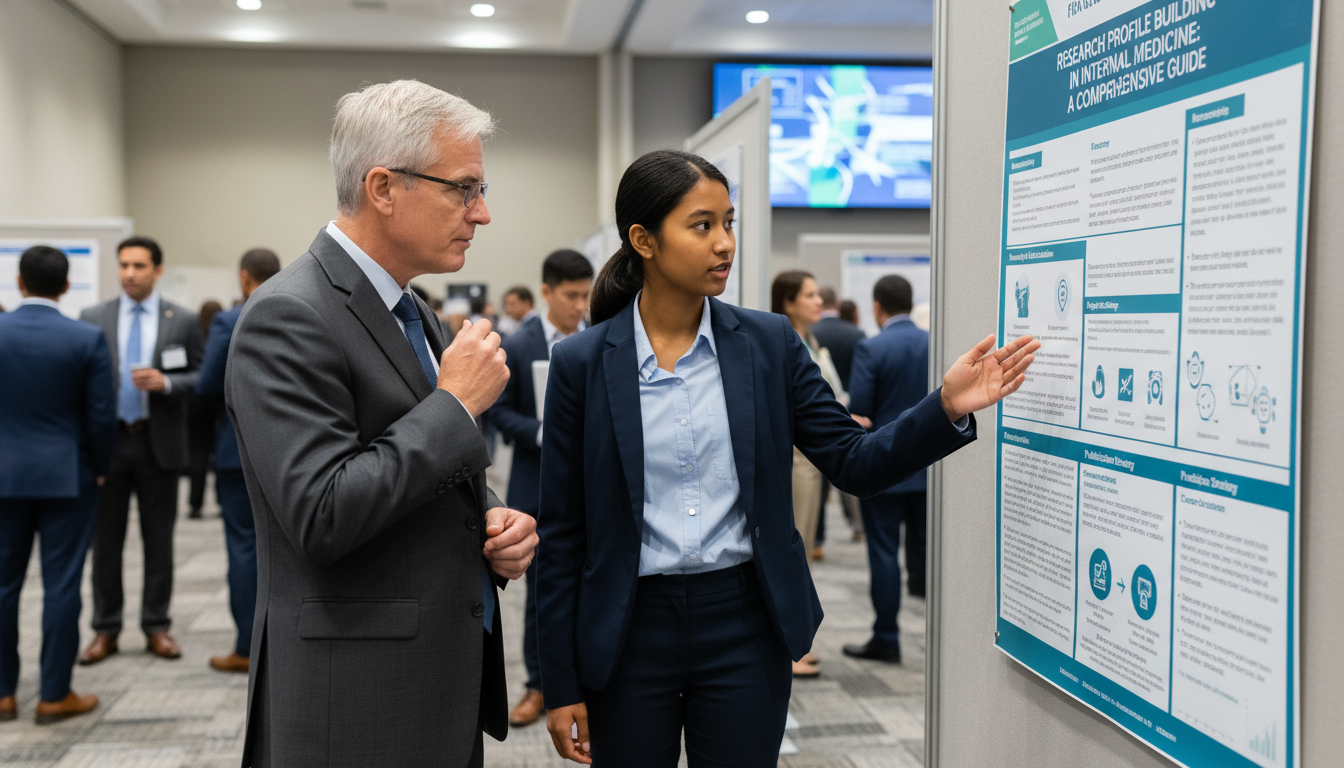
Step-by-Step: How to Build a Strong IM Research Profile
This section walks through a practical pathway for building your research for residency—whether you’re an early MS2, late MS4, or international medical graduate.
Step 1: Clarify Your Goals and Timeframe
Your strategy depends on where you are in training and how long you have before applying.
Ask yourself:
- How many months remain before my ERAS submission?
- Am I primarily aiming for:
- Any internal medicine residency, or
- Research-heavy academic IM programs?
- Do I plan to pursue a fellowship that is very research-sensitive (e.g., cardiology, GI, heme/onc, PCCM)?
Short timeline (6–9 months before ERAS):
- Focus on projects that can realistically yield:
- Posters, abstracts, or case reports
- QI projects with presentable data
- Aim for visible output (conference presentations, manuscript submissions), not just “ongoing” projects
Longer timeline (12–24 months):
- Seek more complex retrospective or prospective projects
- Consider involving yourself in multiple projects at different stages
- Target at least one first-author manuscript, if feasible
Step 2: Find the Right Mentors and Environments
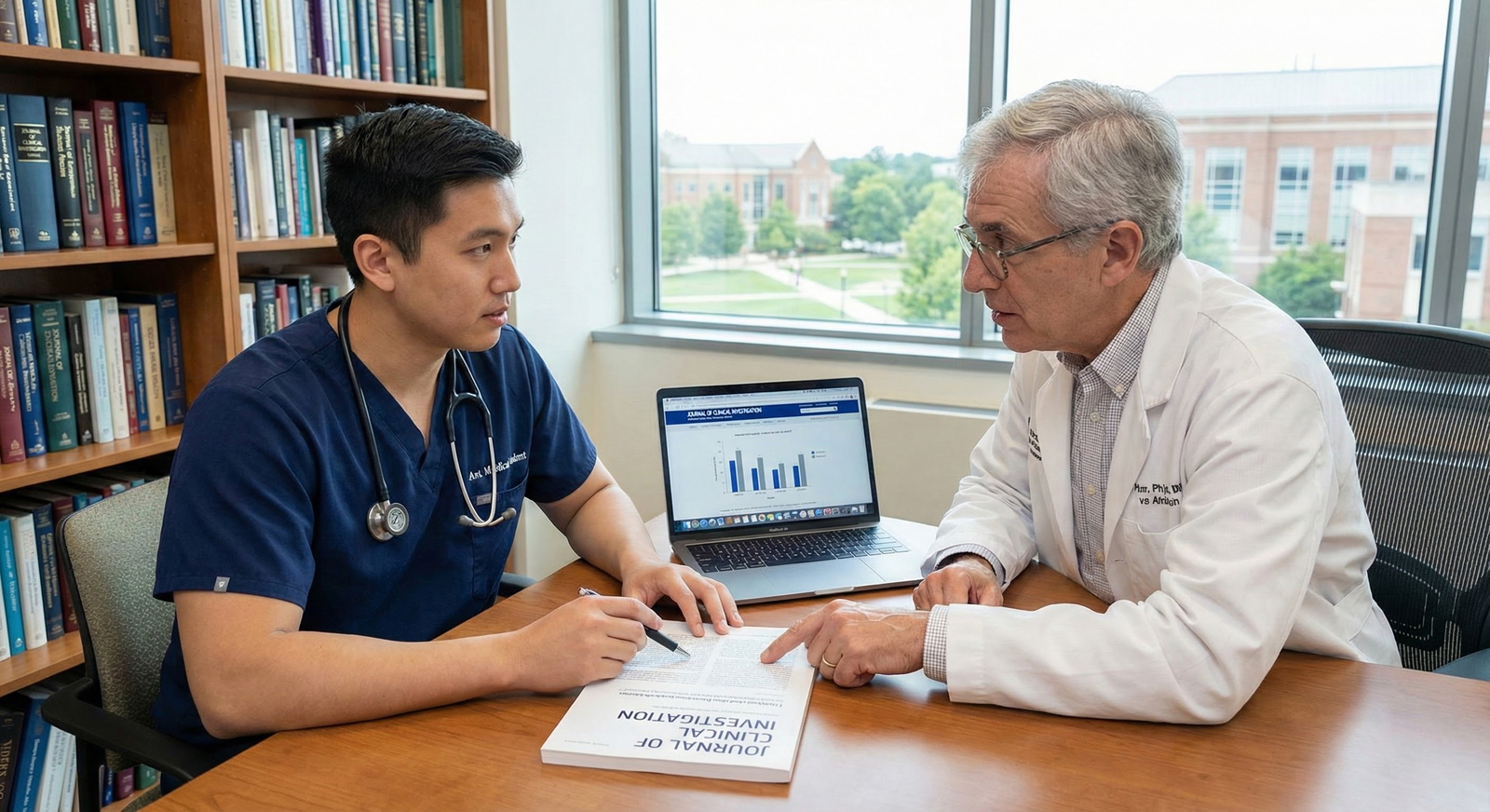
Strong mentorship is probably the single most important factor in building a credible research profile.
Look for:
- Faculty in internal medicine or your subspecialty of interest
- Established publication history (PubMed search)
- Experience mentoring students or residents (ask around)
- A reputation for being responsive and supportive
Where to find mentors:
- Internal medicine departments and subspecialty divisions (cardiology, endocrine, rheum)
- Hospitalist or QI departments
- Your medical school’s research office or academic affairs office
- Conference presentations—introduce yourself to speakers afterward
- Alumni or seniors who can connect you to productive groups
How to approach:
Send a concise, professional email:
- Introduce yourself (year, institution, interest in IM)
- Briefly mention your research interests and goals (e.g., applying for IM match in 2026, interested in hospital medicine and QI)
- Attach a 1-page CV
- Ask specifically:
- “Do you have any ongoing projects where a motivated student could help?”
- “Would you be open to discussing possible research opportunities in internal medicine?”
Be honest about your time availability; overcommitting and then disappearing is far worse than starting modestly and delivering consistently.
Step 3: Choose Projects Strategically
Given limited time before the IM match, you need a blend of:
- Short-term wins: Case reports, chart reviews with simple endpoints, small QI initiatives
- Longer-term investments: Larger retrospective studies or collaborative projects that could result in a full-length paper
Prioritize:
- Projects with clear output (poster, abstract, or manuscript plan from day one)
- Realistic timelines given your schedule
- Defined roles for you (data collection, analysis, writing)
- Relevance to internal medicine or your future subspecialty
Example project path for a busy MS3/MS4:
- Month 1–2: Identify two potential mentors in cardiology and hospital medicine
- Month 2–4:
- Work on a case report and submit to a conference
- Begin data collection for a small QI project (e.g., improving DVT prophylaxis adherence)
- Month 4–9:
- Present case report at a local/regional meeting
- Analyze QI data and draft a manuscript or abstract
- By ERAS submission:
- 1–2 presentations, 1 manuscript submitted or in preparation
Step 4: Learn the Basics of Research Methods and Writing
You do not need to be a statistician, but you do need to understand:
- Study design basics (cross-sectional, cohort, case-control, RCT, QI models like PDSA cycles)
- Common biases and limitations
- Interpreting p-values, confidence intervals, and effect sizes
- How to frame a research question (PICO format is helpful)
Useful resources:
- Free online courses (Coursera, edX) in clinical research methods or biostatistics
- Your institution’s research workshops or journal clubs
- Texts like “Users’ Guides to the Medical Literature”
For writing:
- Read high-quality IM journals (Annals of Internal Medicine, JAMA Internal Medicine, Journal of Hospital Medicine) and notice structure and style
- Ask mentors for example manuscripts or templates
- Use checklists (e.g., CONSORT, STROBE, SQUIRE) when writing
Even if you don’t become first author on many projects, the ability to read and discuss papers confidently will greatly help in interviews and on wards.
Step 5: Aim for Visible Outputs: Posters, Abstracts, and Publications
Programs look at both quantity and trajectory of your research outputs. Prioritize:
Abstract submissions to conferences
- Local and regional IM meetings (ACP chapters, state societies)
- National meetings (ACP, Society of General Internal Medicine, subspecialty meetings)
- Hospital or medical school research days
Poster and oral presentations
- Excellent talking points in interviews
- Visible indicators of your engagement
- Often the fastest route from “data” to “product”
Peer-reviewed publications
- Case reports, brief reports, full articles, QI papers, reviews
- Even “submitted” or “accepted” status is valuable in your ERAS application
Important: Be honest on ERAS:
- List status accurately (submitted, provisionally accepted, in press, published)
- Be prepared to explain what your specific role was in each project

Tailoring Your Research Strategy to Your Background
Different applicant categories face distinct constraints and opportunities. Here is how to adapt your research for residency strategy.
For U.S. MD/DO Students
You typically have more built-in access to:
- Faculty with active research portfolios
- Structured research electives or summers
- Student research offices and training programs
To maximize this:
- Start early (M1–M2 summer is ideal)
- Join 1–2 stable research groups rather than many scattered projects
- Use clerkship years to identify clinically relevant QI or educational projects
- For those targeting top academic IM residency programs, strongly consider:
- At least 1 year of continuous involvement
- 1–2 first-author works if possible
For International Medical Graduates (IMGs)
Research can be especially valuable for IMGs to:
- Demonstrate familiarity with U.S. academic culture
- Show productivity despite barriers
- Build strong letters from U.S.-based faculty
Practical steps:
- Secure observerships or research positions at U.S. institutions if possible
- If not in the U.S., do rigorous projects at your home institution (proper design, IRB approvals, publications)
- Be especially meticulous in documentation and output (posters, papers)
If you have a gap period:
- A structured research fellowship or a 6–12 month research position in an internal medicine department can significantly strengthen your application
- Aim to show a clear arc: starting, progressing, and producing tangible outcomes
For Non-Traditional or Career-Change Applicants
If you come from a prior career (engineering, public health, another graduate degree):
- Leverage prior research or analytics skills (statistics, data science, public health evaluation)
- Highlight how those skills translate to clinical research or QI in IM
- You may be particularly attractive for outcomes research, informatics, or health services projects
Focus on demonstrating:
- Recent, clinically relevant participation in projects
- Clear connection between your previous experience and internal medicine practice
Presenting Your Research Effectively in ERAS and Interviews
Research only helps you if programs understand what you did and why it matters.
On Your ERAS Application
When listing research experiences and publications for match:
Experiences section:
- Emphasize your role: conceptualization, data collection, analysis, writing
- Include supervisor’s name, department, and location
- Briefly state the project’s aim and outcome (abstracts, posters, manuscripts, QI changes)
Publications and presentations:
- Use correct citation formats
- Clearly mark publication status (in press, accepted, submitted)
- Include conference names and levels (local, regional, national)
Avoid:
- Overinflating your contributions
- Listing projects with no realistic product or that you barely participated in
In Your Personal Statement
Use your personal statement to:
- Explain why you pursued research (intellectual curiosity, improving systems, specific patient encounters)
- Highlight one or two projects that shaped your understanding of IM
- Reflect on what you learned: dealing with setbacks, understanding bias, applying evidence to care
Do not turn the personal statement into a research CV. Focus on narrative and insight.
In Interviews
Be prepared to:
Clearly and succinctly explain 1–2 key projects:
- “What was your research question?”
- “What methods did you use?”
- “What did you find?”
- “What surprised you?”
- “What would you do differently?”
Link your research to clinical practice:
- How did it change how you think about patient care or systems?
- Did it influence your interest in a subspecialty or academic career?
Honestly acknowledge limitations:
- Small sample size, retrospective design, confounding
- What you learned from those limitations
Program directors are less interested in you reciting statistical details and more interested in your ability to think and communicate like a thoughtful clinician.
Putting It All Together: A Realistic Action Plan
Below is a sample roadmap you can adapt to your situation.
If You Have 18–24 Months Until IM Match
Months 1–3
- Identify 1–2 mentors in IM or subspecialties
- Join 1 clinical research project and 1 QI/education project
- Take a short course in clinical research methods
Months 4–9
- Lead a sub-project or subset analysis if possible
- Write and submit at least one abstract to a regional/national meeting
- Begin drafting manuscript sections (methods, results)
Months 10–18
- Present at conferences
- Aim to submit 1–2 manuscripts (case reports, original research, or QI papers)
- Take on small additional projects (case reports, secondary analyses) for diversity
Before ERAS Submission
- Have 2–4 posters/abstracts and 1–2 manuscripts submitted/accepted/published
- Prepare clear, 1–2 minute explanations of each major project for interviews
If You Have 6–9 Months Until IM Match
Month 1–2
- Secure at least one active IM mentor
- Identify quick-turnaround projects: case reports, retrospective reviews with existing data, small QI projects
Month 3–6
- Write and submit case reports and/or abstracts
- Conduct and analyze a small QI intervention
- Target local or regional meetings with shorter review cycles
By ERAS Submission
- Aim for:
- 1–3 abstracts/posters (submitted or presented)
- 1–2 manuscripts in progress or submitted (even if not yet accepted)
- Aim for:
This is still meaningful and can positively influence internal medicine residency programs’ perception of your application.
FAQs: Research Profile Building for Internal Medicine Residency
1. How many publications are needed for a strong internal medicine residency application?
There is no fixed number, but approximate benchmarks:
- Community IM programs: Research is helpful but not mandatory. 0–2 modest outputs (posters, case reports) can still make you stand out.
- Academic IM programs: Aim for a handful of tangible activities—2–5 total scholarly products (posters, abstracts, publications).
- Highly competitive, research-heavy IM programs: Multiple presentations plus 1–3 publications (not necessarily all first-author) are common among successful applicants.
Quality, relevance to internal medicine, and your specific role are more important than chasing a raw count.
2. Does QI or case report work count as “real” research for the IM match?
Yes. Well-designed QI and well-written case reports are absolutely valid forms of research for residency. Many internal medicine program directors emphasize QI and patient safety because they lead to immediate improvements in care, and case reports often demonstrate clinical curiosity and literature synthesis. Be sure to:
- Use rigorous methods (e.g., PDSA cycles, meaningful metrics) for QI
- Choose case reports with a clear teaching point or diagnostic dilemma
- Aim for presentations or publications whenever possible
3. I’m an IMG without access to major U.S. research centers. What can I do?
You can still build a strong research profile:
- Conduct clinically relevant projects at your home institution (chart reviews, QI, observational studies) using proper design and ethics approvals.
- Collaborate remotely: reach out via email to faculty or centers with overlapping interests; some are open to remote data analysis, systematic reviews, or co-authorship on ongoing projects.
- Focus on tangible outputs: local conference presentations, peer-reviewed manuscripts, even if the journals are regional or specialty-specific.
- If possible, spend 6–12 months in a structured research position or observership in the U.S., especially within an internal medicine department.
4. I started a project but it won’t be finished before ERAS. Should I still list it?
Yes, as long as:
- You are genuinely and actively involved.
- The project is substantial and likely to produce a product (abstract, poster, publication, or implemented QI change).
- You clearly label its status accurately (e.g., “ongoing project” in Experiences; “manuscript in preparation” only if a draft truly exists).
Be ready to describe your specific contributions and what you’ve learned so far. Programs understand that not all research completes on a residency application timeline; they value the process as much as the product.
Building a research profile for internal medicine residency is about strategy, mentorship, and consistency—not just accumulating publication numbers. If you understand how programs use research in the IM match, select projects wisely, and convert your work into visible outputs, you can present yourself as a thoughtful, evidence-driven future internist—regardless of where you are starting from today.