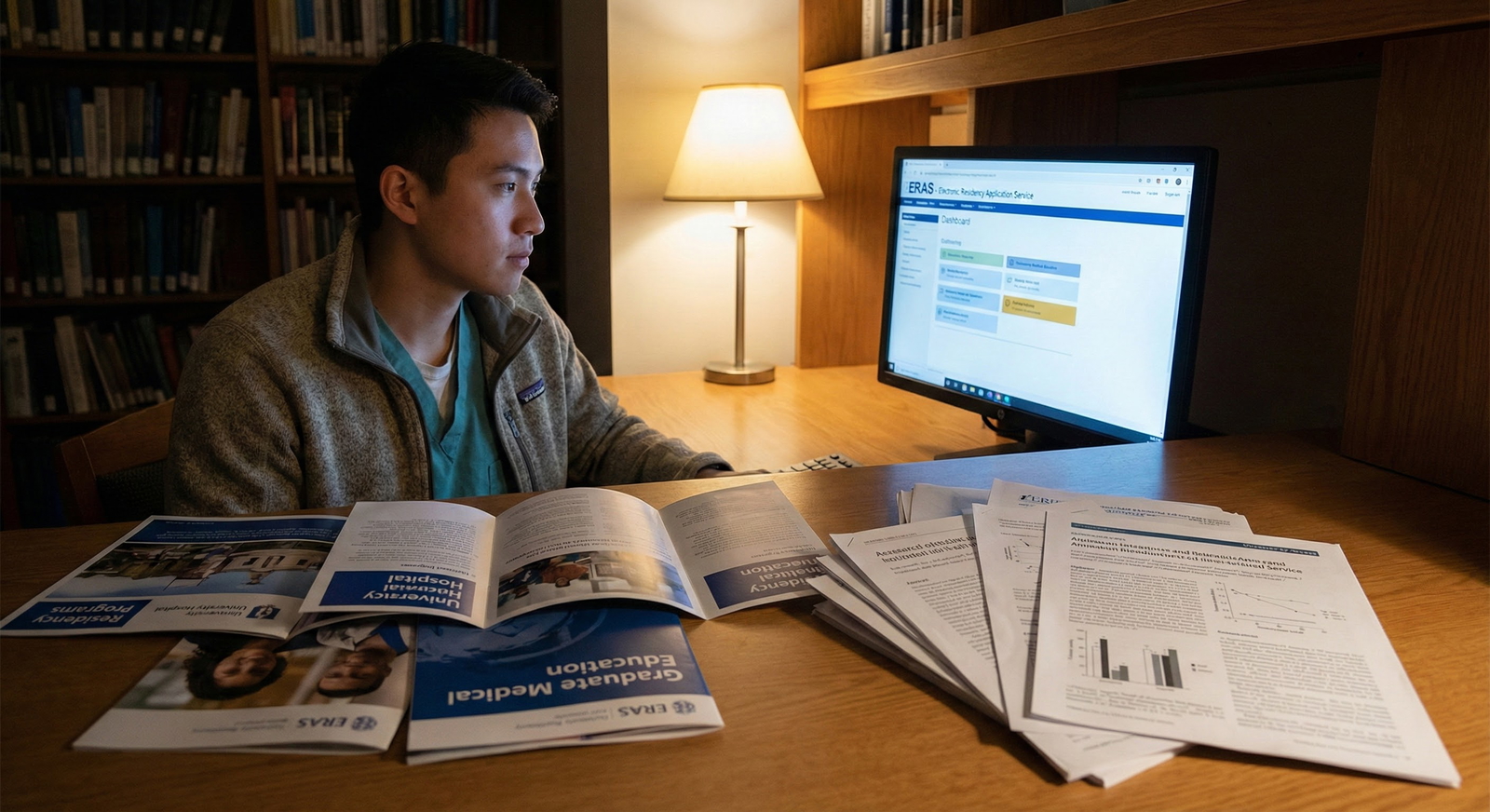
Understanding the Role of Research in a Med-Peds Residency Application
For an MD graduate targeting a Medicine-Pediatrics (Med-Peds) residency, your research profile is an important—though not exclusive—part of your allopathic medical school match strategy. Program directors look for evidence that you can think critically, interpret data, and contribute to evidence-based practice across the lifespan.
Med-Peds uniquely combines two research-intensive fields: Internal Medicine and Pediatrics. This dual perspective means that your research can come from either side—adult medicine, pediatrics, quality improvement, global health, health services research, or any area that touches both. The key is that you can clearly articulate what you did, what you learned, and why it matters to Med-Peds.
Common questions MD graduates ask:
- “How many publications are needed to be competitive for a Medicine-Pediatrics match?”
- “Does research in adult medicine ‘count’ for Med-Peds?”
- “If I didn’t do much research in medical school, is it too late before ERAS?”
The reassuring answer: It is rarely “too late.” A smart, focused strategy can still significantly strengthen your application, even in the months before you apply.
This article will help you:
- Understand what types of research “count” for Med-Peds.
- Decide where to focus (clinical, QI, educational, or community-based projects).
- Build a research portfolio that makes sense for an MD graduate residency application.
- Present your work effectively in ERAS, your personal statement, and interviews.
Research Expectations for Med-Peds: What Actually Matters
1. How Important Is Research for Med-Peds?
Compared with some procedure-heavy specialties, Med-Peds tends to value:
- Intellectual curiosity and critical thinking.
- Commitment to underserved or complex patient populations.
- Versatility and lifelong learning.
Research is one of the clearest ways to demonstrate those qualities. That said, research is usually not as absolute a gatekeeper as in dermatology, plastics, or neurosurgery. You can match into Med-Peds with modest research, especially if you have:
- Strong clinical performance.
- Solid Step scores (or strong pass performance with good narrative evaluations).
- Genuine commitment to primary care, chronic disease management, or subspecialty goals (e.g., combined Med-Peds infectious disease, cardiology, etc.).
- Strong letters of recommendation.
Think of research as a multiplier: it elevates your application, showcases your thinking, and can compensate for some mild weaknesses—but it does not usually replace major deficits elsewhere.
2. What Types of Research “Count” for a Med-Peds Residency?
For an MD graduate residency in Med-Peds, program directors care more about skills and depth of engagement than about a specific research “type.” Valuable activities include:
Clinical research (adult or pediatric)
- Retrospective chart reviews
- Prospective cohort studies
- Outcomes research (e.g., readmissions, adherence, transitions of care)
Quality improvement (QI) projects
- Improving vaccination rates in adolescents with chronic illness
- Reducing 30-day readmissions for heart failure or asthma
- Standardizing transition-of-care notes between pediatric and adult services
Health services / population health research
- Access to care for adolescents with complex chronic conditions
- Social determinants of health in adult vs. pediatric populations
- Comparative use of emergency services in young adults vs. older adults
Medical education research
- Curriculum for teaching residents about pediatric-to-adult transition of care
- Simulation training for adolescent medicine scenarios
Community-based or global health projects
- Community interventions for childhood obesity and later adult metabolic outcomes
- Vaccination outreach bridging school-age children and their families
Basic or translational science
- While less directly connected to day-to-day Med-Peds practice, it still shows intellectual rigor, persistence, and analytical skills.
Each of these can strengthen a Medicine-Pediatrics match application if you:
- Understand the question/hypothesis.
- Can clearly describe your role and contributions.
- Can articulate how this experience informs your approach to Med-Peds.
3. MD Graduate vs. Student: How Are You Evaluated?
As an MD graduate (rather than a current third- or fourth-year student), programs may expect a bit more maturity and ownership in your projects. They might ask:
- Did you help design the study/question?
- Did you take initiative in data analysis or manuscript drafting?
- Did you see a project through to presentation or publication?
You do not need to have high-impact, first-author publications in NEJM, but as a graduate, having some tangible output (poster, presentation, paper, or formal QI intervention) looks particularly strong.

Building a Strategic Research Portfolio: Step-by-Step
Step 1: Clarify Your Med-Peds Narrative
Before you chase research just to add lines to your CV, determine your personal Med-Peds story:
- Are you interested in chronic disease across the lifespan (e.g., cystic fibrosis, congenital heart disease, sickle cell disease)?
- Do you see yourself in primary care, hospital medicine, or a combined Med-Peds subspecialty?
- Are you passionate about transitions of care, community health, or global health?
Once you know your likely path, you can choose research areas that reinforce that narrative.
Example narratives and aligned research areas:
“I want to focus on complex chronic disease across the lifespan.”
- Aligning research: Transition clinics, readmissions for chronic illness, continuity of care, adherence interventions.
“I’m passionate about primary care and underserved populations.”
- Aligning research: Community-based interventions, social determinants of health, vaccination/hypertension/diabetes control in underserved settings.
“I’m leaning toward a Med-Peds subspecialty (e.g., cardiology, ID, rheumatology).”
- Aligning research: Disease-specific projects that may start in either adult or pediatric populations but are conceptually applicable across ages.
Step 2: Inventory Your Existing Research
Before starting new projects, inventory what you already have:
- Published papers (first-author, co-author, case reports, reviews).
- Posters and oral presentations at local, regional, or national meetings.
- Ongoing but unfinished projects (data collected but not analyzed; manuscript drafted but not submitted).
- Informal projects that could be formalized as QI or educational scholarship.
For each item, document:
- Your role (design, data collection, analysis, writing).
- The current status (idea, data, abstract, manuscript, submitted, accepted, published).
- How clearly you can explain the research question and findings.
Often, the fastest way to strengthen your research profile is to bring an existing project to completion: converting a “nearly done” study into a submitted abstract or paper.
Step 3: Identify Gaps and Opportunities
Once you know your narrative and your current portfolio, look for:
Content gaps:
- If you’re aiming for Med-Peds transition care but only have bench research in cardiology, consider a small QI or clinical project that connects to continuity, adherence, or health systems.
Skill gaps:
- If you’ve never done data analysis, try a project where you can learn basic statistics with a mentor.
- If you’ve never presented at a conference, aim to submit an abstract for a regional or national meeting (e.g., ACP, AAP, Med-Peds-specific organizations).
Time constraints:
- As an MD graduate approaching the allopathic medical school match cycle, prioritize projects with realistic timelines: case reports, chart reviews, QI interventions, or retrospective analyses with existing data.
Step 4: Choose High-Yield Project Types for Your Timeline
Depending on how far you are from your ERAS submission date, different project types are more realistic:
9–12+ months before applying
- Prospective studies with defined endpoints.
- Larger QI projects that may require multiple PDSA (Plan-Do-Study-Act) cycles.
- Multi-author manuscripts, including systematic reviews.
4–8 months before applying
- Retrospective chart reviews (data often already available).
- Shorter clinical studies.
- Systematic or narrative reviews (if you have a committed mentor).
- Single-center QI projects that can demonstrate measurable change.
0–4 months before applying
- Case reports or case series (particularly for unusual or educational Med-Peds-relevant conditions).
- Abstracts/posters from existing data, even if the final paper is not ready.
- Formal write-ups of completed QI projects.
Your application does not require all projects to be fully published. For the medicine pediatrics match, in-progress work (properly labeled as such) is acceptable, especially if you can clearly describe your contributions.
Publications, Abstracts, and Presentations: What Is “Enough”?
“How Many Publications Needed” for a Competitive Med-Peds Application?
There is no fixed number that guarantees success. Program directors typically view research on a spectrum:
Minimal research
- 0–1 minor projects, no tangible outputs.
- Still acceptable at many Med-Peds programs if clinical metrics and fit are strong, especially for primarily community-focused residencies.
Moderate research (common and competitive)
- 1–3 publications (case reports, retrospective studies, reviews)
- A few abstracts or posters at local/regional conferences
- Clear description of your contributions
- Very appropriate for most Med-Peds programs, including many academic ones.
Robust research profile
- Multiple publications (including first-author pieces)
- National presentations in internal medicine, pediatrics, or Med-Peds forums
- Evidence of leadership in projects or research groups
- Particularly beneficial for applicants targeting highly academic Med-Peds programs or combined subspecialty tracks down the line.
Programs know that not every MD graduate residency applicant had identical research opportunities. They consider your context: school resources, mentorship, and any career interruptions. Your goal is to show consistent engagement and growth, not to hit a specific numeric target.
Quality vs. Quantity
A focused, coherent research story is stronger than a scattered CV with many unrelated, superficial entries. For Med-Peds, prioritize:
- Depth of involvement (did you help design or write?).
- Relevance to your future practice (even conceptually).
- Clear explanation of what you learned.
Example
Applicant A:
- 6 minor poster presentations, none related to Med-Peds, minimal involvement (“helped collect data”).
Applicant B:
- 1 first-author QI project on improving transition-of-care communication from pediatric to adult inpatient services; poster at a regional meeting; manuscript in progress.
Applicant B is often more compelling for a Med-Peds program, even with fewer total items.
Allopathic Medical School Match and Research Counting Rules
In ERAS, for the allopathic medical school match:
- You can list peer-reviewed articles, abstracts, and presentations separately.
- You must accurately label the status: Published, Accepted, Submitted, or In Progress.
- Do not inflate your role—misrepresentation is a serious professionalism issue.
For MD graduates, it’s common to have:
- 1–5 total publications (including case reports or reviews).
- 2–8 presentations or abstracts.
But applicants with fewer research entries can still match strongly if their other application components are robust and they can discuss their work thoughtfully.

Finding Mentors, Projects, and Opportunities as an MD Graduate
1. Identifying the Right Mentors
Effective mentorship is the single most important factor in building a strong research profile.
Look for mentors who:
- Are active in Internal Medicine, Pediatrics, or Med-Peds.
- Have a track record of publications or QI work.
- Are realistically available to meet with you and provide feedback.
- Understand the Medicine-Pediatrics match and what programs value.
Potential sources:
- Med-Peds faculty or division chiefs at your institution (if available).
- Internal Medicine or Pediatrics faculty who work with adolescents, young adults, or chronic disease across the lifespan.
- Hospitalist groups, primary care clinics, or subspecialists (e.g., cardiology, ID, rheumatology) with Med-Peds-friendly research.
When you approach a mentor:
- Send a concise email with your background, goals, and CV.
- Explicitly state your interest in Med-Peds and research for residency.
- Ask if they have ongoing projects where you can take an active role.
2. Types of Projects You Can Propose or Join
If you’re proactive and specific, faculty are often receptive. Possible proposals:
Retrospective chart review:
- “I’m interested in transitions from pediatric to adult care. Could we review admissions for young adults with congenital heart disease over the last five years and examine readmission rates or follow-up completion?”
QI project:
- “I’d like to work on improving vaccination rates in adolescents with chronic disease. Could we design a PDSA cycle in our clinic and track changes over 6 months?”
Case reports or series:
- “I came across a rare adult presentation of a traditionally pediatric disease. Would you be open to co-authoring a case report with me?”
Review article:
- “I’m reading a lot about long-term outcomes in childhood cancer survivors. Would you be interested in supervising a narrative review on this topic with a Med-Peds lens?”
Be clear that you’re willing to do the legwork—literature search, data collection, first draft writing—within ethical and institutional guidelines.
3. Remote and Collaborative Options
If you’re between institutions, doing a research year, or working outside of a traditional academic center:
- Reach out to Med-Peds programs or faculty via email, especially those with publicly listed research interests that align with yours.
- Consider virtual collaboration on reviews or multicenter retrospective projects.
- Attend virtual research meetings or journal clubs offered by national organizations (e.g., NMPRA, ACP, AAP) and network.
Always be transparent about your location, status as an MD graduate, and your timeline for the medicine pediatrics match.
Presenting Your Research Effectively in ERAS, Personal Statements, and Interviews
1. Documenting Research on ERAS
When listing research for residency in ERAS:
- Use clear, jargon-free titles that convey the project’s relevance.
- List all authors in correct order, as they appear on the manuscript or abstract.
- Mark the status accurately (e.g., “Manuscript submitted to Journal X,” “Data collection in progress”).
- Include QI and educational projects, even if not published, under appropriate sections (e.g., “Work Experiences,” “Research Experiences”).
For each experience, briefly describe:
- Objective or research question.
- Your specific role (e.g., “Designed data collection form,” “Performed chart review,” “Drafted introduction and discussion,” “Led PDSA cycles”).
- Key outcomes (e.g., “Reduced missed follow-up appointments by 15% over 6 months”).
2. Integrating Research into Your Personal Statement
Your personal statement should not be a mini-CV, but research can powerfully support your narrative.
Ways to integrate:
- Use a research experience as a story that illustrates your curiosity and Med-Peds mindset.
- Show how your work revealed gaps in care, transitions, or outcomes that you want to address as a Med-Peds physician.
- Reflect on skills gained—teamwork, persistence, humility in the face of negative or inconclusive results.
Example integration:
“While analyzing readmissions among young adults with congenital heart disease, I saw the human cost of fractured transitions between pediatric and adult care. Interviews with patients revealed not only medical gaps, but fear and uncertainty. This project solidified my desire to train in Medicine-Pediatrics, where I can help bridge those divides for patients across their lifespan.”
3. Discussing Research During Interviews
Program directors and faculty might ask:
- “Tell me about your most meaningful research experience.”
- “What did you learn from your research?”
- “How does your research inform your interest in Med-Peds?”
- “Do you see yourself continuing research as a resident?”
Prepare concise, conversational answers:
- Summarize the question in 1–2 sentences.
- Explain your role, a key challenge, and what you learned.
- Link it back to Med-Peds practice or training.
Even if your project is not Med-Peds-specific, highlight transferable skills:
- Critical appraisal of evidence.
- Comfort with uncertainty and complex data.
- System thinking in QI.
- Understanding of barriers to care for vulnerable populations.
Frequently Asked Questions (FAQ)
1. I’m an MD graduate with minimal research. Can I still match into a Med-Peds residency?
Yes. Many Med-Peds programs, particularly those with a strong clinical or community focus, will consider applicants with little research if they show strong clinical ability, authentic interest in Med-Peds, and solid letters. However, even one or two well-executed projects (a QI project, case report, or small retrospective study) can significantly strengthen your application and demonstrate your initiative.
2. Does my research need to be specifically Med-Peds to help my application?
No. Research in either Internal Medicine or Pediatrics is valuable. What matters is how you connect the experience to a Med-Peds mindset. For example, a purely adult heart failure study can still show your interest in chronic disease management, systems-based practice, and transitions of care—key themes for a Medicine-Pediatrics match.
3. How many publications are needed to be competitive for an academic Med-Peds residency?
There is no magic number, but for more academic programs, applicants often have:
- At least 1–3 peer-reviewed publications (including case reports or reviews).
- A few conference presentations or posters.
If you have fewer publications but you’ve led a major QI project or have a highly relevant first-author study, you can still be very competitive. Focus on depth and relevance, and be ready to discuss your work in detail.
4. I have projects that are not yet published. Should I still list them?
Yes, as long as you are accurate and honest about their status. In ERAS, clearly label them as:
- “In progress – data collection”
- “Manuscript in preparation”
- “Manuscript submitted to [Journal]”
Programs understand that research often extends beyond the application cycle. For MD graduate residency applicants, in-progress work still demonstrates active engagement, especially if you can articulate the project’s question, design, and potential impact.
By building a focused research portfolio aligned with your Med-Peds story, seeking strong mentorship, and presenting your work clearly, you can significantly enhance your Medicine-Pediatrics match prospects. Whether you’re just starting or polishing ongoing projects, deliberate choices now can shape how program directors see your potential as a future Med-Peds physician-scholar.