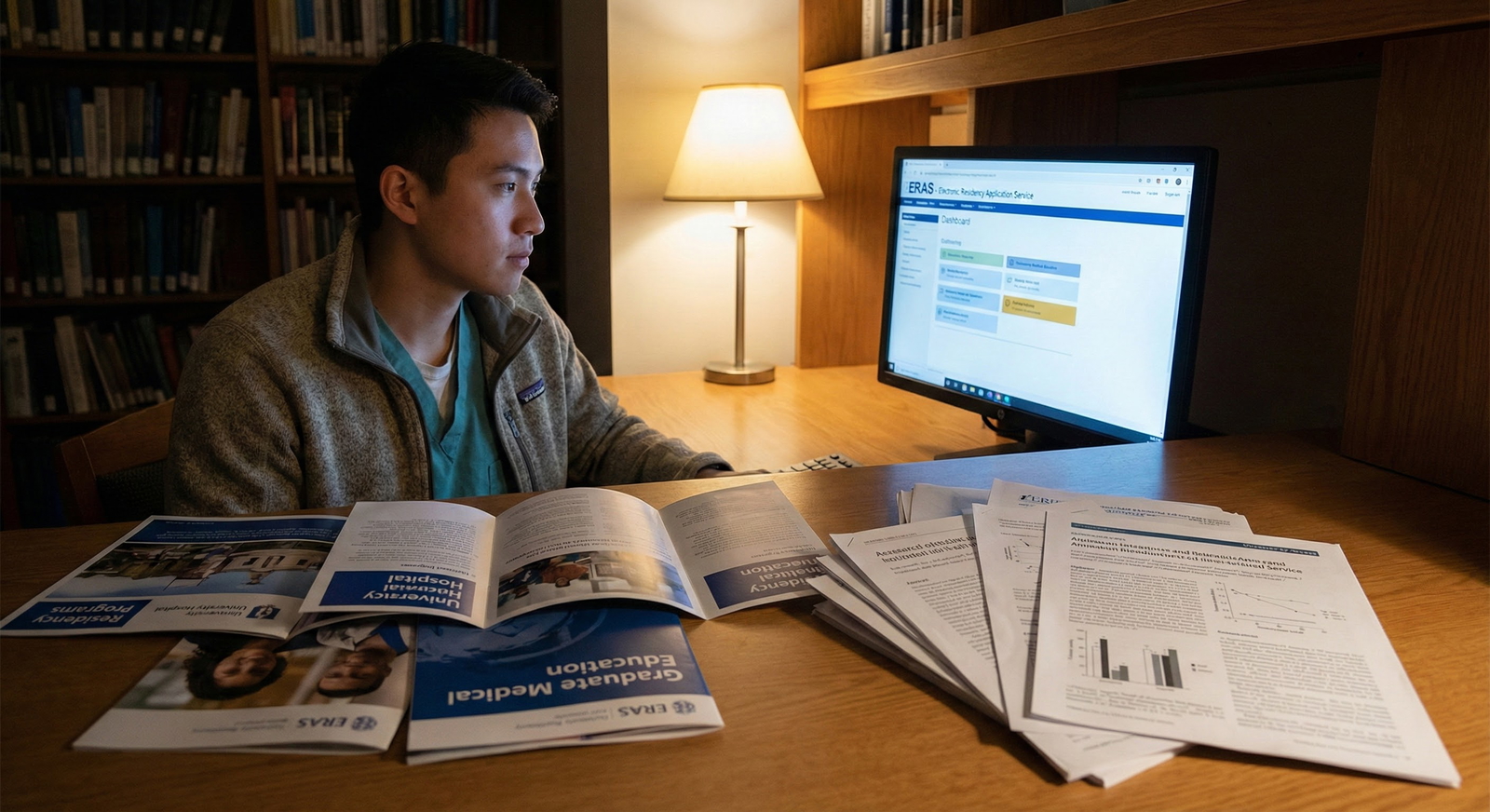
Understanding Research in Medicine-Pediatrics
Medicine-Pediatrics (Med-Peds) attracts applicants who value breadth, complexity, and continuity of care across the lifespan. Research in Med-Peds mirrors this: it’s often interdisciplinary, spanning internal medicine, pediatrics, transitions of care, chronic disease management, health services research, and quality improvement (QI).
For residency applicants, a strong research profile serves several purposes:
- Demonstrates intellectual curiosity and critical thinking
- Shows you can complete long-term projects (a key predictor of success in residency)
- Signals readiness for academic or leadership careers
- Differentiates you in the competitive medicine pediatrics match
Contrary to common myths, you do not need a Nobel Prize–level CV to match into Med-Peds. Programs vary widely in emphasis on research. Some are intensely academic with NIH-funded faculty; others are primarily community-focused but still value scholarly activity.
Your goal is to build a coherent, credible, and upward-trending research profile that matches your interests and the types of programs you are targeting.
How Much Research Do You Actually Need for Med-Peds?
Understanding “how many publications needed”
Applicants often ask: “How many publications needed to match Med-Peds?” The honest answer is: there is no universal number. Selection committees look at research in context:
- Your school’s opportunities and resources
- Your career goals (academic vs. community)
- The consistency and ownership you show in projects
- The quality and relevance of your work
That said, general patterns can help you benchmark:
For most Med-Peds applicants:
- 1–2 meaningful scholarly projects (published or presented) is very solid
- 3–5 total items (abstracts, posters, oral presentations, publications) is common among applicants targeting academic programs
- A smaller number can still be competitive if your experiences are substantial and you excel in other domains (USMLE/COMLEX, clinical grades, letters)
For highly research-oriented academic Med-Peds programs:
- Multiple abstracts/posters and at least one first-author or co-author publication can be very helpful
- Evidence of ongoing work (manuscript in preparation, prospective projects) is valuable
- A clear narrative tying your research to your future goals (e.g., health services, global health, transitions of care, medical education research)
If you have no research at all, you can still match Med-Peds, especially at community or less research-intensive programs. But having some scholarly work—even a QI project or case report—strengthens your application significantly.
Types of Research and Scholarly Work That Count
Many applicants underestimate what “research for residency” can include. Scholarship is broader than bench science or randomized controlled trials. For Med-Peds, diverse forms of scholarship are highly relevant and valued.
1. Clinical Research
Clinical research is common and accessible for students interested in Med-Peds.
Examples:
- Retrospective chart reviews comparing disease patterns in adolescents vs. young adults
- Studies on transition of care outcomes for patients with childhood-onset chronic disease
- Medication adherence in young adults with congenital heart disease or cystic fibrosis
- Readmission or complication rates in chronic pediatric conditions followed into adulthood
Why it fits Med-Peds:
These projects directly connect to the Med-Peds mission—continuity, transitions, and complex, chronic care across ages.
2. Quality Improvement (QI) and Patient Safety
Many Med-Peds programs place a strong emphasis on systems-based practice and quality care. QI projects are high-yield and very approachable.
Examples:
- Improving vaccination rates in young adults with chronic pediatric conditions
- Streamlining handoff processes for adolescents admitted to adult medicine services
- Reducing missed primary care appointments among patients transitioning from pediatric to adult clinics
- Increasing screening rates (depression, substance use) in adolescent/young adult clinics
QI work can lead to:
- Local presentations (departmental or institutional)
- Posters at regional or national meetings (e.g., ACP, AAP, Med-Peds–specific conferences)
- Manuscripts in QI-focused or specialty journals
These are absolutely valid publications for match and often more feasible than large clinical trials.
3. Case Reports and Case Series
Case reports are often the easiest entry point for students without prior experience.
Ideal Med-Peds–relevant topics include:
- Rare conditions that manifest differently in childhood vs. adulthood
- Complex chronic pediatric conditions with adult complications
- Unusual presentations of common diseases in young adults with pediatric-onset disorders
- Diagnostic or management challenges that highlight Med-Peds decision-making
Case reports can be:
- Published in peer-reviewed journals
- Submitted as posters or oral presentations
- Turned into educational materials (teaching cases, clinical images)
This is a great strategy if you’re starting in your third or even fourth year and feel “late” to research.
4. Health Services and Outcomes Research
Med-Peds is uniquely positioned at the intersection of systems, populations, and transitions. Health services research is particularly aligned with Med-Peds values.
Examples:
- Utilization of preventive services in young adults with chronic childhood diseases
- Insurance and access issues during transition from pediatric to adult care
- Hospital readmission or emergency department use in transitional age youth
- Population health interventions that span pediatric and adult clinics
Programs with strong Med-Peds divisions often have faculty doing this work—excellent potential mentors.
5. Medical Education Research and Curriculum Development
If you enjoy teaching and education, consider MedEd research. This is especially relevant for applicants aiming at academic careers.
Examples:
- Designing and evaluating a Med-Peds–focused curriculum for students or residents
- Teaching interventions to improve handoffs between pediatric and adult services
- Simulation-based curricula for adolescent medicine or complex care
- Evaluating learners’ preparedness for managing transitional age youth
Education projects can produce:
- Curriculum materials
- Local teaching awards or leadership roles
- Abstracts, workshops, or publications in education journals
6. Bench / Basic Science Research
Bench research is less directly Med-Peds-specific but still valuable, especially if:
- It relates to diseases commonly managed by Med-Peds physicians (e.g., diabetes, asthma, congenital heart disease, cystic fibrosis)
- You can articulate how the skills (study design, data analysis, scientific reasoning) translate to clinical research and patient care
If your background is strong in lab research, that can still support a successful medicine pediatrics match, particularly at academic centers.

Step-by-Step: Building Your Med-Peds Research Profile
Step 1: Clarify Your Goals and Timeline
Before jumping into any project, ask:
- Do I see myself in an academic or community Med-Peds career?
- Am I early (M1/M2), mid (M3), or late (M4, gap year) in training?
- What topics genuinely interest me (e.g., chronic disease, global health, health equity, education)?
- What realistic time and bandwidth can I invest?
Your answers shape your research plan:
- Early (M1/M2): Aim for longer-term projects that may lead to full manuscripts, multiple abstracts, and deeper mentorship.
- Mid (M3): Focus on focused projects with clear, achievable endpoints (case reports, smaller QI projects, retrospective chart reviews).
- Late (M4 or post-grad): Target short-cycle projects (case reports, systematic reviews, manuscripts from completed data) that can be completed before applications.
Step 2: Find the Right Mentors and Environment
For Med-Peds–focused research, mentors might be:
- Med-Peds faculty (ideal, if available)
- General internal medicine or general pediatrics faculty with an interest in transitions, chronic disease, QI, or population health
- Subspecialists who follow patients across pediatric and adult care (e.g., cardiology, endocrinology, pulmonology)
- Medical education leaders (for curriculum and education research)
Strategies to find a mentor:
- Check your institution’s Med-Peds division or Med-Peds residency website
- Browse faculty profiles for “transitions of care,” “adolescent and young adult,” “complex care,” “health services research,” or “quality improvement”
- Ask residents (especially Med-Peds residents) which faculty actively involve students in research
- Use departmental research days or grand rounds to identify projects that interest you
When you meet a potential mentor:
- Come prepared with a brief introduction, your interests, and your goals for the medicine pediatrics match
- Ask about ongoing projects that may be feasible for your level and timeline
- Clarify expectations (time, meetings, authorship, deliverables)
Step 3: Choose Projects Strategically
You do not need to join every project offered. Pick 1–3 projects that you can finish well.
Prioritize projects that:
- Have clear, defined endpoints (e.g., “submit abstract by X date,” “draft manuscript by Y date”)
- Have accessible data or a realistic recruitment timeline
- Align with Med-Peds themes (transitions, chronic disease, adolescent/young adult care, dual-board-relevant conditions)
- Provide concrete roles for you (data collection, analysis, writing, presenting)
Example strategy for an M2 aiming for an academic Med-Peds program:
- Join a retrospective chart review on outcomes of young adults with cystic fibrosis transitioning to adult care
- Lead a QI project in a combined adolescent/young adult clinic targeting missed appointments
- Write a case report on a complex congenital heart disease patient with adult complications
This combination offers varied experiences, multiple potential abstracts, and a strong Med-Peds narrative.
Step 4: Develop Core Skills That Impress Programs
Regardless of project type, certain skills are universally valued:
- Literature review: Being able to summarize and critically appraise evidence
- Basic statistics and data handling: Using tools like Excel, R, or SPSS at an introductory level
- Scientific writing: Drafting introductions, methods, results, and discussion sections
- Professional communication: Regular updates to mentors, timely responses, respect for deadlines
- Project management: Keeping IRB, data collection, and writing on track
These skills help you stand out in interviews and are crucial for success in residency and beyond.
Step 5: Turn Work into Tangible Outputs
Research is only as visible as its outputs. For residency applications, meaningful outputs include:
- Peer-reviewed publications (original research, QI, reviews, case reports, medical education)
- Conference posters or oral presentations (local, regional, national)
- Abstracts in conference proceedings
- Institutional presentations (research day, M&M, QI rounds)
Prioritize:
Submissions to national Med-Peds–relevant meetings, such as:
- The National Med-Peds Residents’ Association (NMPRA) meetings
- AAP, ACP, SGIM, SHM, or subspecialty societies
Manuscripts, even if they are case reports or small studies. A well-written case report in a reputable journal is typically more impactful than a project that never leaves your hard drive.
Continuity: If you have an abstract accepted, use the feedback to refine a manuscript for submission afterward.

Presenting Your Research in the Med-Peds Application
Building a Coherent Narrative
Research for residency is not just about quantity. It should help tell your career story.
Ask yourself:
- How do my projects connect to each other?
- What do they reveal about how I think and what I care about?
- How do they support my interest in Med-Peds specifically?
Example narrative:
“I became interested in transitional care early in medical school after working with adolescents with type 1 diabetes. This led me to join a retrospective study on young adults with diabetes who transitioned from pediatric to adult clinics, where I helped design the data collection tool and analyze outcomes. Recognizing the high no-show rates in our transition clinic, I then led a QI project that introduced text reminders and a dedicated transition navigator. Through these experiences, I saw how Med-Peds physicians are uniquely positioned to bridge gaps in care. I hope to continue this work in residency, focusing on systems-level interventions to improve outcomes for youth with chronic disease as they move into adult care.”
This kind of narrative works powerfully in:
- Your personal statement
- ERAS experiences descriptions
- Interview answers (“Tell me about your research” or “Why Med-Peds?”)
How to List Research in ERAS
In ERAS:
- Use the “Experiences” section to highlight major research roles (especially if long-term or leadership-heavy)
- Use the “Publications/Presentations” section to list:
- Peer-reviewed papers
- Book chapters
- Abstracts
- Posters and oral presentations
Tips:
- Be honest and accurate about authorship and status (e.g., “submitted,” “in preparation,” “accepted”)
- Avoid overinflating minor roles; instead, emphasize what you did specifically
- Group smaller projects under one mentor if they’re related, to show continuity
Discussing Research in Interviews
Programs will often ask you to:
- Describe your most meaningful project
- Explain your role and contributions
- Reflect on challenges and lessons learned
- Connect your research to future plans
Prepare:
- A 2–3 minute summary of your primary project (background, question, methods, findings, implications, your role)
- One or two examples of obstacles (IRB delays, data issues, conflicting responsibilities) and how you handled them
- A clear statement of whether you want research to be a major, moderate, or minor part of your future career
For med peds residency programs with strong research infrastructures, showing thoughtful engagement—whether or not you want to be a full-time investigator—goes a long way.
Tailoring Your Strategy to Different Med-Peds Program Types
Different Med-Peds programs vary in how much they emphasize research vs. clinical training. Align your profile with the programs you’re applying to.
Research-Intensive Academic Med-Peds Programs
Characteristics:
- University-based, often with NIH-funded faculty
- Strong Med-Peds division with multiple clinician-investigators
- Dedicated research tracks, scholarly concentrations, or protected resident research time
What helps:
- Multiple research experiences, ideally including:
- At least one publication (first- or co-author)
- Several abstracts/posters at regional/national meetings
- Clear interest in academic or leadership careers
- Comfort discussing research design, interpretation, and long-term goals
If you’re committed to this path and feel your CV is light, consider:
- A dedicated research year between medical school years or before residency
- Additional projects with high likelihood of publishable output
- Statistical or research methodology coursework
Clinically-Oriented or Community Med-Peds Programs
Characteristics:
- Strong emphasis on patient care and community engagement
- Less infrastructure for large-scale research, more for QI and local initiatives
What helps:
- 1–2 meaningful scholarly experiences (QI, case reports, small clinical projects)
- Evidence that you can contribute to practice improvement, teaching, and patient care
- A credible interest in community health, primary care, or underserved populations
In these settings, exhaustive research credentials are less critical. A focused, feasible research profile plus strong clinical performance can be ideal.
Common Pitfalls and How to Avoid Them
Chasing quantity over quality
- Do not join 8 projects you can’t finish. Two completed projects are better than eight abandoned ones.
Starting too late without adjusting scope
- If you begin in M4, focus on case reports, existing datasets, or manuscript development rather than multi-year prospective studies.
Poor communication with mentors
- Schedule regular check-ins; send brief updates; clarify deadlines early.
Overstating your role or status
- Programs can often distinguish genuine ownership from superficial involvement. Be transparent.
Ignoring Med-Peds relevance entirely
- Even if your earlier research isn’t Med-Peds-specific, try to connect your skills and lessons learned to Med-Peds practice and your future goals.
FAQs: Research Profile Building for Med-Peds Applicants
1. Do I need Med-Peds–specific research to match a med peds residency?
No, but it helps to have at least some thematic alignment. Programs understand that medical students often join whatever projects are available. If your work is in unrelated areas (e.g., orthopedic biomechanics), focus on:
- The skills you gained (critical thinking, data analysis, perseverance)
- How those skills will help you as a Med-Peds physician
If possible, add at least one Med-Peds–relevant project (even a case report or small QI initiative) before applying. This strengthens the link between your research and your commitment to the field.
2. How many publications needed to be competitive for Medicine-Pediatrics?
There is no fixed number, but some practical guidelines:
For most applicants:
- 0–1 publication, plus a few posters/abstracts, can still be competitive—especially with strong clinical metrics.
- 1–3 total publications or peer-reviewed outputs (including case reports and QI papers) is a solid target.
For research-intensive academic programs:
- One or more first- or co-author publications, plus several conference presentations, is typical of strong candidates.
Remember: programs look at trajectory, substance, and fit, not just raw counts.
3. I started research late—can I still improve my chances for the medicine pediatrics match?
Yes. Focus on shorter-cycle projects:
- Case reports or small case series (from interesting patients you’ve seen on rotations)
- Analysis and manuscript drafting from an existing dataset
- Completing and presenting a QI project already underway in your institution
Be proactive with mentors, clear about your timeline, and realistic about what you can finish before ERAS submission. Even one well-executed, Med-Peds–relevant project completed late can significantly strengthen your application.
4. Does research for residency matter if I want to be a primarily clinical Med-Peds physician?
Yes, but for reasons beyond just matching:
- Research teaches you to interpret evidence, understand guideline development, and identify system gaps, all crucial for high-quality patient care.
- Many community and clinically oriented programs require residents to complete at least a scholarly or QI project; prior experience will make this easier.
- A basic research foundation gives you flexibility if your interests shift toward education, leadership, or quality improvement later in your career.
For primarily clinical goals, you don’t need an extensive research portfolio; a small number of well-chosen, completed projects is enough.
A thoughtful, coherent research profile can substantially enhance your Medicine-Pediatrics application. Focus on meaningful participation, aligned interests, and visible outputs rather than chasing an arbitrary number of publications. When presented well, your research becomes not just a line on your CV, but compelling evidence of the kind of Med-Peds physician you are becoming.