Why Research Matters for a Non‑US Citizen IMG in Family Medicine
For a non-US citizen IMG, research is often the difference between being “just another applicant” and becoming a memorable, competitive candidate for family medicine residency. While family medicine is sometimes perceived as “less research-heavy” than other specialties, program directors increasingly value applicants who can read, apply, and even generate evidence to improve primary care.
As a foreign national medical graduate, you face additional challenges: visa sponsorship, perceived unfamiliarity with the US healthcare system, and competition from US graduates. A well-structured research profile can:
- Demonstrate your academic ability and work ethic
- Show commitment to family medicine as a scholarly field
- Compensate (to a degree) for weaker areas such as older YOG or lower scores
- Provide US-based mentors who can write strong, targeted letters of recommendation
- Signal that you understand quality improvement, population health, and evidence-based care
This article will walk you step-by-step through research profile building for non-US citizen IMG in family medicine, focusing on what actually moves the needle for the FM match rather than generic research advice.
You’ll learn:
- What kinds of research matter most in family medicine
- How many publications and projects are realistically needed
- How to find research and scholarly opportunities from overseas
- How to prioritize your time if you are also studying for exams or doing observerships
- How to effectively present your research for residency applications and interviews
Understanding “Research” in Family Medicine: What Really Counts
When many IMGs think of research for residency, they picture basic lab work, pipettes, and cell cultures. In family medicine residency, that type of research is less common and often less relevant. Program directors are more interested in research that connects to clinical practice, primary care, and community health.
The Types of Research That Fit Family Medicine
You can think of research in family medicine as a spectrum:
Clinical Research (Most Relevant)
- Retrospective chart reviews
- Prospective observational studies
- Studies about chronic disease management (e.g., diabetes, hypertension)
- Research on mental health in primary care
- Telemedicine in primary care settings
- Outcomes research, e.g., readmissions, emergency department utilization
Quality Improvement (QI) and Patient Safety (Extremely Valuable)
- Clinic-level projects to improve vaccination rates, screening uptake, medication reconciliation, or follow-up rates
- Implementation of new protocols (e.g., depression screening, fall risk assessment) and measuring outcomes
- Electronic health record (EHR) workflow changes to improve patient care
Public Health, Community and Population Health
- Studies of social determinants of health in specific communities
- Screening and prevention programs (cancer, cardiovascular risk, STI screening)
- Health education interventions in underserved or rural areas
Educational and Behavioral Research
- Evaluating teaching methods for medical students or residents
- Patient education strategies for lifestyle modification
- Adherence and behavior change interventions in chronic illness
Case Reports and Case Series
- Interesting primary care presentations
- Unusual or delayed diagnoses initially seen in clinic
- Management challenges in outpatient settings
Systematic Reviews and Narrative Reviews
- Evidence summaries related to common primary care topics (e.g., diabetes in older adults, multimorbidity management, polypharmacy)
- These are more accessible for IMGs outside the US and still valued if well done and published.
What About Basic Science Research?
Basic science research still counts and demonstrates analytical skills, perseverance, and academic ability. For family medicine, however, it is more impactful if you can:
- Explain the clinical relevance of your basic science work
- Show how it improved your skills in data analysis, critical thinking, and literature appraisal
If you already have basic science research from your home country, don’t discard it. Instead, integrate it into a broader narrative of your growth as a physician scholar.

How Many Publications Are Needed? Setting Realistic Targets
The question “how many publications needed” or “how many publications needed for FM match” does not have a single correct number. Instead, think in terms of tiers of competitiveness and overall scholarly engagement.
What Program Directors Actually Look At
Program directors usually consider:
- Have you engaged in any research or scholarly activity at all?
- Is at least some of it relevant to family medicine or primary care?
- Is the work completed and tangible (presentations, posters, manuscripts, QI reports)?
- Can you explain your role and what you learned from it?
- Are there US-based components (mentors, institutions, conferences, or publications)?
A Practical Framework for Non-US Citizen IMGs
Use this as a rough (not absolute) guide:
Minimum Baseline (Not Ideal, but Acceptable)
- 1–2 scholarly activities total
- Examples:
- One case report in a family medicine or general medical journal
- One QI project in your local or US observership clinic
- Suitable if you are targeting mostly community programs, have strong exam scores, and recent YOG.
Solid, Competitive Profile for Many Family Medicine Programs
- 3–5 distinct scholarly activities, including:
- At least 1–2 family medicine–relevant projects (QI, clinical research, or community health)
- 1–2 publications (articles, case reports, or reviews) OR
- 1–2 national/regional conference presentations/posters
- Not all must be in high-impact journals. Small journals still count if legitimate and peer-reviewed.
- 3–5 distinct scholarly activities, including:
Strong Academic or University-Program-Oriented Profile
- 5+ activities, including:
- Multiple FM-relevant projects, ideally with US co-authors
- 3+ publications (including at least one related to primary care / family medicine / population health)
- Several presentations, posters, or workshops
- Possible involvement in grant-funded work or multicenter studies
- 5+ activities, including:
Remember: quality and relevance outweigh raw quantity. Three meaningful, well-understood projects will be more impressive in interviews than ten superficial entries you barely remember.
Step-by-Step Plan: Building a Research Profile from Any Starting Point
Whether you are still in your home country, doing observerships, or already in the US on a visa, you can build a research portfolio with a structured plan.
Step 1: Clarify Your Constraints and Timeline
As a non-US citizen IMG, your constraints may include:
- Need for visa sponsorship (H-1B, J-1)
- Financial limitations
- Limited time due to USMLE preparation or full-time work
- Distance from potential US mentors
First, map out:
- When you plan to apply (e.g., 1 or 2 cycles from now)
- How many hours per week you can realistically commit to research
- Whether you can travel to the US for observerships or research positions
Then choose a strategy:
- If you are 2+ years before applying: You can pursue longer-term research assistant roles, multiple projects, and more robust publications.
- If you are 1 year or less from applying: Focus on projects that can produce tangible outputs quickly—case reports, QI projects, short retrospective studies, review articles.
Step 2: Target Family Medicine‑Relevant Themes
Select 1–3 core themes connected to family medicine:
- Chronic disease management (diabetes, hypertension, COPD, heart failure)
- Mental health and primary care integration
- Women’s health, prenatal and postpartum care
- Geriatrics, multimorbidity, and polypharmacy
- Preventive care, vaccinations, and screening
- Rural medicine, telehealth, and access to care
- Social determinants of health and underserved communities
Align at least some of your projects to these areas. This makes your research output directly relevant to family medicine residency and strengthens your narrative of genuine interest.
Step 3: Find Research for Residency from Overseas
If you’re outside the US, you can still build a strong research profile.
A. Use Your Home Institution
- Approach faculty in family medicine, internal medicine, community medicine, or public health.
- Propose:
- Chart reviews on chronic disease outcomes
- Simple prospective surveys on health behaviors or screening knowledge
- Small QI initiatives in outpatient clinics
Example:
You work in a primary care clinic in your country. You propose a project to measure the proportion of eligible women who receive cervical cancer screening and test an intervention: reminder calls, patient education leaflets, or physician prompts. Even if this is outside the US, it is highly relevant to family medicine and can lead to a poster or publication.
B. Online & Remote Collaborations
- Look for global or multi-center studies where data collection can happen remotely.
- Reach out respectfully to US-based faculty who publish in primary care, asking if they need help with data extraction, literature reviews, or manuscript preparation.
When emailing potential mentors:
- Briefly introduce yourself (non-US citizen IMG, career goals in FM).
- Highlight any prior research skills (statistics, manuscript writing, software such as SPSS/R, systematic review experience).
- Propose how you can add value (literature search, data entry, drafting sections of a paper).
- Be specific about your availability and interests.
C. Systematic and Narrative Reviews
These are accessible from anywhere with internet and journal access. You can:
- Partner with peers in your home country or online networks.
- Choose topics central to primary care (e.g., adherence to antihypertensive medications; depression screening tools in primary care; telehealth for diabetes management).
- Follow PRISMA guidelines for systematic reviews where possible.
Even if you cannot secure a big journal, smaller peer-reviewed journals in family medicine, general medicine, or community health can be good targets.
Step 4: Use US Clinical Experiences Strategically
If you have or are planning to obtain US clinical experience (USCE)—observerships, externships, pre-residency fellowships—use them to build research for residency:
Ask About Ongoing QI or Research Projects
- Most residency-affiliated family medicine clinics have QI requirements.
- Ask your preceptor or chief resident if you can help with:
- Data collection for a QI project
- Literature search for a guideline update
- Drafting a case report of an interesting clinic patient
Propose a Small, Doable QI Project
- Example projects:
- Improve influenza vaccination rates in diabetic patients over a 3-month period
- Increase the completion of PHQ-9 depression screening in patients with chronic pain
- These rarely require IRB review if they qualify as QI (check institution policies).
- Aim for output such as:
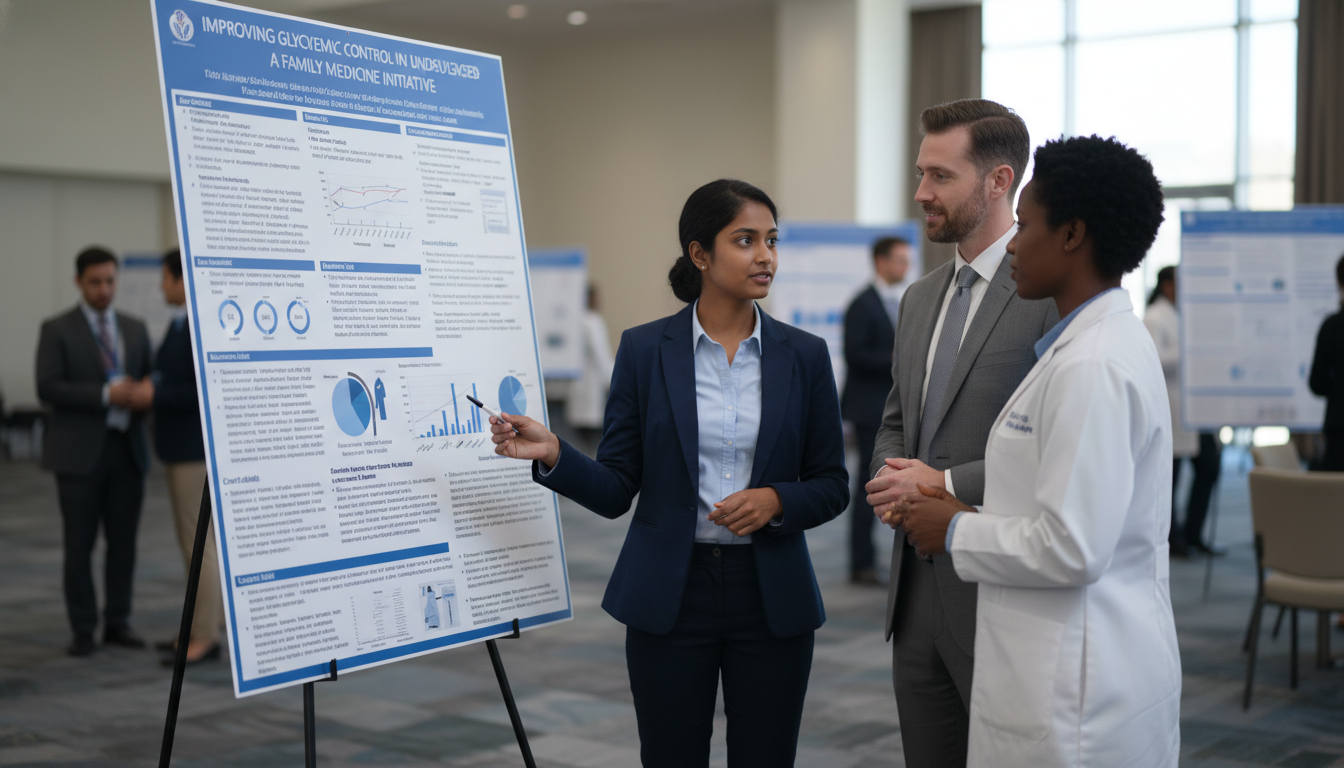
- Poster at a departmental or regional meeting
- Presentation at morning conference
- Internal report you can list under “Scholarly Activity”
- Example projects:
Convert Clinical Encounters into Case Reports
- Discuss unusual or instructive cases with your supervisor.
- If they agree, help perform the literature review and draft the manuscript.
- Target case-report-friendly journals (some in family medicine, many in general medicine).
Structuring Your Research Portfolio for Maximum Impact
Once you have projects underway or completed, you need to present them in a way that convinces family medicine program directors that you are a strong scholarly candidate.
Prioritize Family Medicine–Relevant Entries
In ERAS and your CV:
- List family medicine or primary care–relevant projects first, even if they are smaller than older basic science projects.
- Group similar projects (e.g., all QI projects; all chronic disease management papers).
This creates a clear visual narrative: you are not just a foreign national medical graduate, you are a future family physician with an evidence-based mindset.
Be Transparent About Your Role
For each project, be prepared to state:
- Your exact contributions (e.g., data collection, statistical analysis, writing introduction/discussion, creating figures).
- How you developed skills in literature search, critical appraisal, and EHR use.
- Any challenges you overcame (multi-center coordination, limited resources, time pressure).
Program directors are skilled at detecting inflated or superficial involvement. Honesty plus depth of understanding will earn more respect than overstating your title.
Include Non-Published but Substantial Work
In family medicine, not all valuable scholarly work ends as PubMed-indexed articles. You can include:
- Completed but unpublished QI projects (with documented outcomes)
- Accepted posters and oral presentations
- Institutional research reports
- Educational curriculum development or patient education modules, if evaluated and measured
Label entries clearly as:
- “Manuscript in preparation”
- “Poster presented at [Conference, Year]”
- “Internal quality improvement project, [Institution]”
Avoid listing weak or speculative items like “Idea for review article” or “Data collection may start next year.” Focus on things you can talk about concretely.
Linking Research to Your Family Medicine Story
During interviews and in your personal statement:
- Show how your research changed your approach to patient care.
- Example:
- A QI project on medication reconciliation made you more aware of polypharmacy and adherence issues in older adults.
- A community health project on vaccination hesitancy taught you communication, cultural sensitivity, and practical strategies to address misconceptions.
Connect each major project to a key theme in family medicine: continuity, prevention, community orientation, holistic care, or multidisciplinary teamwork.
Common Pitfalls and How to Avoid Them
1. Chasing Quantity Over Substance
Listing 15 tiny, low-quality projects (especially in predatory or non-peer-reviewed journals) can hurt your application. Program directors may question your judgement or perceive CV padding. Instead:
- Aim for 3–7 meaningful, legitimate entries.
- Verify journal integrity using tools like DOAJ, COPE membership, and indexing status.
2. Ignoring Family Medicine Relevance
If all your research is in unrelated fields (e.g., orthopedic biomechanics, oncology lab work) and you never connect it to primary care:
- Reviewers may wonder whether you truly want FM or are applying only as a backup.
- Address this by:
- Choosing at least a few FM-aligned projects.
- Explaining how your research skills translate into evidence-based practice in primary care.
3. Overcommitting and Burning Out
Non-US citizen IMGs often juggle USMLE prep, clinical work, family obligations, and research. Overcommitting can lead to unfinished projects, broken promises to mentors, and low-quality work.
Avoid this by:
- Taking on one major and one minor project at a time.
- Negotiating realistic deadlines.
- Communicating early with supervisors if you face delays.
4. Misrepresenting Your Role
Exaggerating authorship, claiming “first author” without actually leading the project, or adding your name to a paper you barely worked on is unethical and risky. Program directors may contact mentors or ask detailed questions you cannot answer convincingly.
Maintain integrity by:
- Accurately reflecting your position on author lists.
- Being ready to discuss methods, results, and conclusions in depth.
Putting It All Together: Example Roadmaps for Different Starting Points
Scenario 1: You Are 2 Years from Application, Still in Home Country
Goal: Build a strong, FM-focused profile.
Year 1:
- Start a clinical or community health project in your home institution (e.g., hypertension control program).
- Begin one systematic or narrative review on a primary care topic.
- Submit at least one project as a poster to a regional or international conference.
Year 2:
- Convert the clinical project into a manuscript.
- Complete and submit the review article.
- Do at least one QI or education-related mini-project.
- Seek remote collaborations with US family medicine faculty if possible.
Expected output:
- 2–3 publications (case reports/reviews/original articles)
- 1–2 presentations
- 1–2 QI or community projects
Scenario 2: You Are 1 Year from Application, Planning Short USCE
Goal: Build a realistic but meaningful research presence.
Before USCE:
- Finish at least one case report or small retrospective project in your home institution.
- Prepare to discuss this during observerships.
During USCE (3–4 months):
- Join an existing QI project in the clinic.
- Identify and support at least one case report with your preceptor.
- Help with literature search for a faculty member’s FM-related manuscript.
After USCE (6–8 months before ERAS):
- Finish writing case report(s) with supervising physician.
- Help complete QI project analysis and prepare a poster.
- Submit your work to conferences or journals.
Expected output:
- 1–2 publications or accepted manuscripts
- 1–2 QI projects (even if unpublished)
- 1–2 posters or presentations
This will give you a respectable scholarly profile for many family medicine programs, especially when combined with strong USCE and letters.
FAQs: Research Profile Building for Non‑US Citizen IMGs in Family Medicine
1. As a non-US citizen IMG, is research mandatory to match into family medicine?
Not strictly mandatory, but increasingly important. Some community programs still accept applicants with minimal research if other elements are strong (scores, USCE, communication skills). However, having at least a few scholarly activities—especially QI or FM-focused projects—significantly improves your chances, particularly if you need visa sponsorship.
2. How many publications needed to be competitive for the FM match as a foreign national medical graduate?
There is no fixed number. For many family medicine programs, 1–3 meaningful publications or conference presentations, combined with QI or community projects, is sufficient—especially if at least one is FM or primary care related. Academic or university programs may favor applicants with 3+ publications and clear scholarly engagement, but strong clinical and interpersonal skills remain crucial.
3. Do publications from my home country or non-US journals still count?
Yes. Program directors value legitimate, peer-reviewed work regardless of location. Research done in your home country is especially valuable if it:
- Involves primary care or community settings
- Addresses common FM issues (chronic disease, preventive care, mental health)
- Demonstrates your active role and understanding of methodology
Be sure to choose reputable journals and be prepared to explain local context during interviews.
4. What if I have only basic science research unrelated to family medicine? Will that hurt my application?
It will not hurt, but it may not strongly support your FM interest by itself. In your personal statement and interviews, clearly explain:
- What skills you gained (critical thinking, statistics, teamwork)
- Why you shifted your focus to primary care and family medicine
If possible, add at least one FM-relevant research or QI project to your profile, even if smaller, to connect your scholarly background with your chosen specialty.
By strategically planning your research for residency, focusing on family medicine-relevant topics, and presenting your work clearly, you can transform research from a weakness into a core strength of your application as a non-US citizen IMG.