Why Research Matters So Much for Non‑US Citizen IMGs in Global Health
For a non-US citizen IMG interested in global health–focused residency programs, your research profile is often the deciding factor between a good application and a truly competitive one. This is especially true if you are targeting programs with a global health residency track, international medicine electives, or partnerships with NGOs and ministries of health.
Program directors know that:
- Global health work is complex and resource‑limited.
- Residents on global health or international medicine tracks must be able to evaluate evidence, design feasible projects, and measure impact.
- Foreign national medical graduates may have strong clinical exposure but variable access to formal research training.
A solid research portfolio signals that you:
- Can ask meaningful questions relevant to underserved or international populations.
- Understand basic research methods and ethics.
- Are capable of finishing what you start—an essential trait for both research and residency.
- Will contribute to the academic mission of their program (abstracts, posters, QI projects, publications).
For non-US citizen IMGs in particular, research can:
- Compensate partially for older year of graduation or mid‑range scores.
- Demonstrate integration into the US academic system, if done with US-based mentors.
- Strengthen visa sponsorship justification (you are bringing academic value to the institution).
- Open doors to global health residency track positions and fellowship opportunities later on.
In global health, your research profile is not just about numbers—it’s also about relevance and continuity. Projects that intersect with:
- Infectious diseases (HIV, TB, malaria)
- Maternal and child health
- Health systems strengthening
- Non-communicable diseases in low‑resource settings
- Refugee/migrant health will align particularly well with the mission of global health programs.
Understanding “Research” in the Residency Context
Before building your profile, it helps to clarify what “research” means for residency applications in the US—especially for a foreign national medical graduate who might come from a system where only large, formal studies are recognized as “real” research.
Types of Scholarly Activities That Count
Most US programs consider all of the following as valid research or scholarly activity:
Clinical research
- Observational studies (retrospective chart review, cohort studies, case-control)
- Interventional/clinical trials (less common for students but possible as sub‑investigator)
- Outcomes research (e.g., mortality, readmissions, adherence)
Epidemiological and global health research
- Disease burden studies in specific populations
- Community surveys and KAP studies (knowledge, attitudes, practices)
- Program evaluation for NGOs or ministry of health projects
Quality Improvement (QI) and implementation science
- Process improvement in clinics or wards (e.g., improving vaccination rates)
- Developing and testing care bundles, checklists, or protocols
- Evaluating implementation of WHO or national guidelines
Educational research
- Curriculum development and evaluation in resource‑limited settings
- Training community health workers or primary care staff
- Assessing impact of tele‑education or e-learning for rural providers
Case reports and case series
- Rare presentations or conditions seen in your country
- Classic diseases with unusual features or management challenges
- Globally relevant conditions (e.g., neglected tropical diseases)
Public health, policy, and health systems studies
- Health financing and access issues
- Task shifting or mid‑level provider roles
- Policy implementation (e.g., vaccination mandates, HIV guidelines)
All of these can be framed as part of an international medicine or global health narrative—especially if they relate to low‑ and middle‑income country contexts, rural/underserved US populations, or cross‑border health issues.
What “Counts” in ERAS and to Program Directors
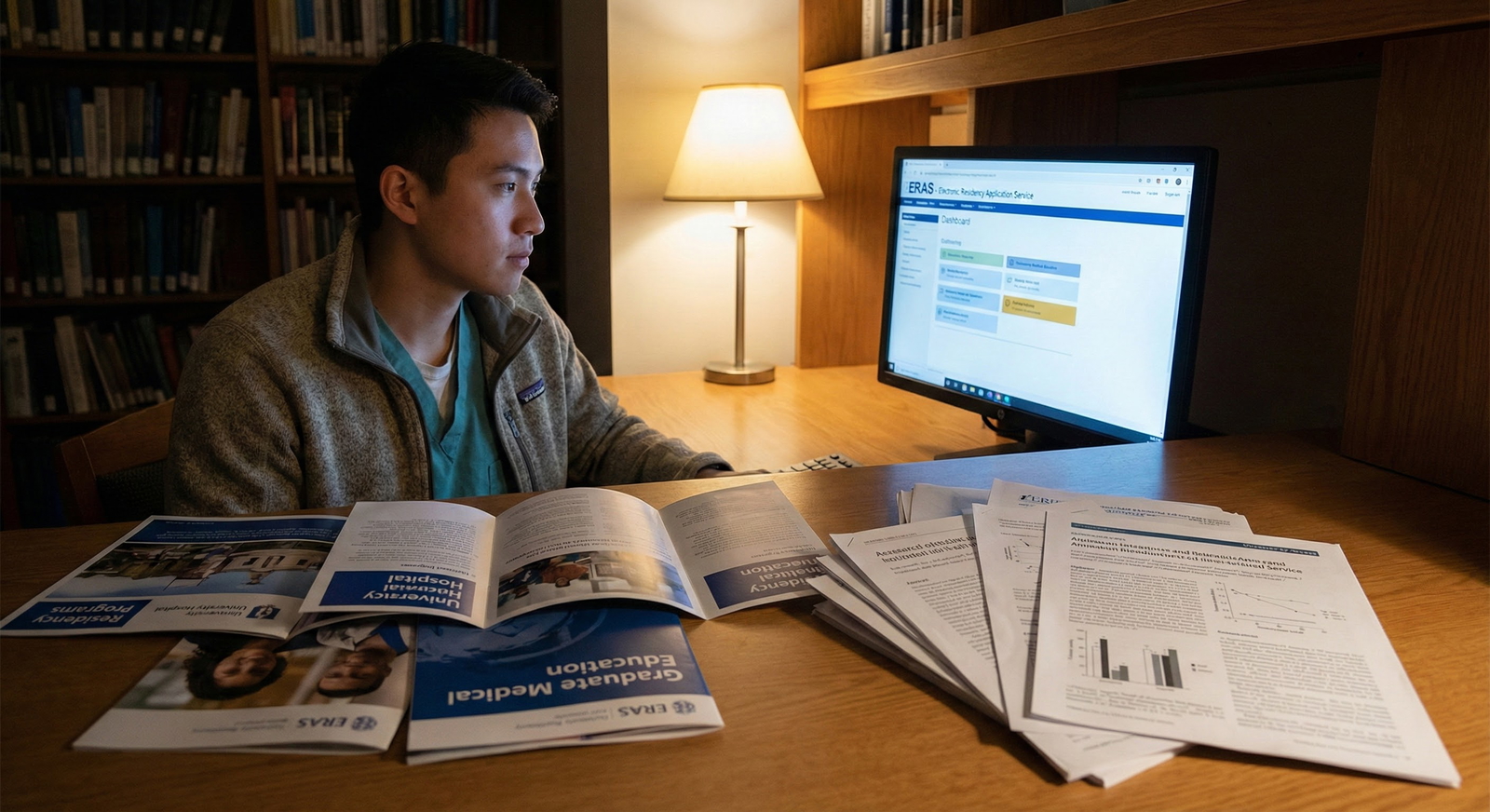
When you list research in ERAS, you can include:
- Peer‑reviewed journal articles
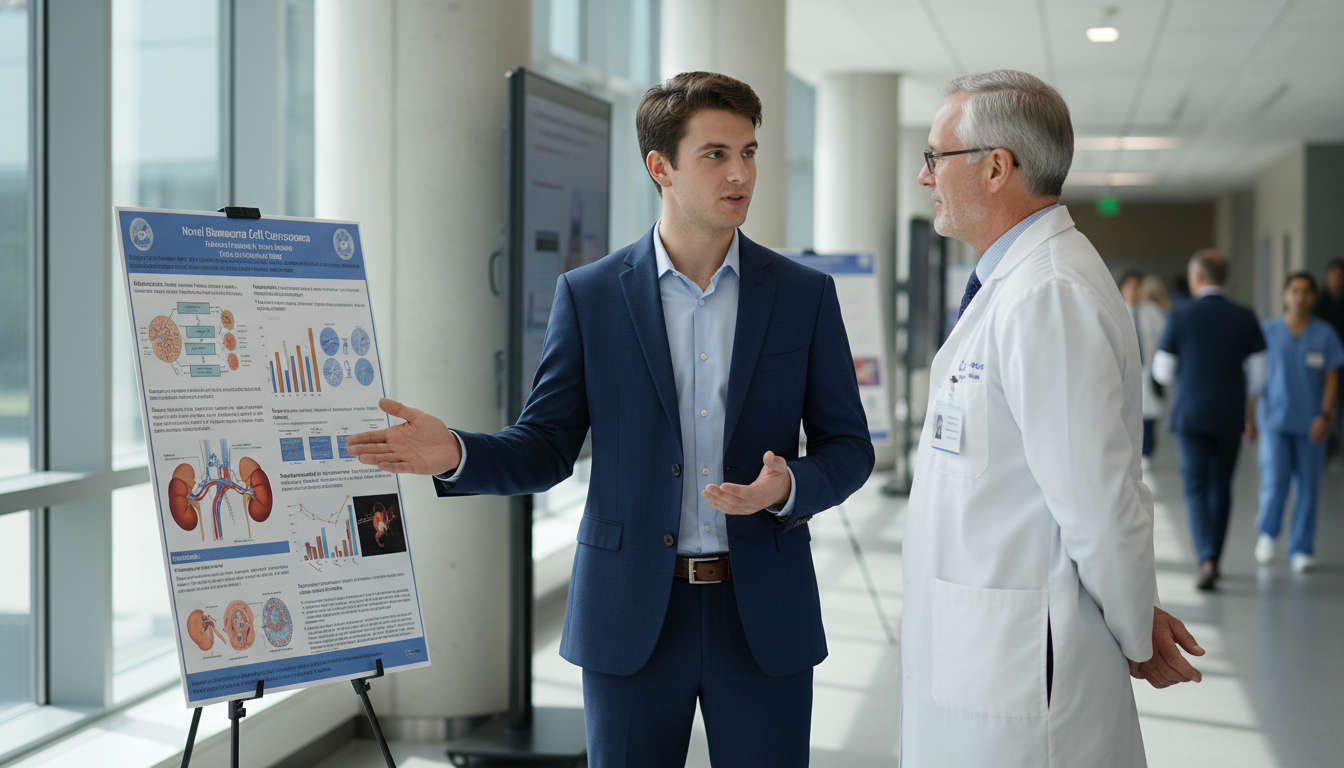
- Conference abstracts and presentations (poster or oral)
- Book chapters or review articles
- Quality improvement projects (especially with measurable outcomes)
- Non–peer-reviewed publications (e.g., local journals, institutional reports, NGO reports)
- Works in progress (manuscripts submitted or under peer review; posters accepted for future conferences)
While prestige matters, consistency and completion are even more important. A small, well‑completed project with a clear result and nicely written abstract can be more powerful than an ambitious but incomplete trial you can’t explain confidently in interviews.
How Many Publications Do You Really Need as a Non‑US Citizen IMG?
Many applicants obsess over “how many publications needed” to match. There is no single magic number, but there are patterns and realistic benchmarks, especially for IMGs interested in global health.
Typical Ranges and What They Mean
For a non-US citizen IMG targeting internal medicine, family medicine, or pediatrics with a global health focus:
0–1 publication / presentation
- Possible to match at community programs without a strong academic or global health emphasis
- Harder to convince global health–focused programs of your scholarly potential
2–4 publications or conference presentations
- Competitive for many academic and mid‑tier programs
- Stronger if at least one is clearly related to global or underserved health
5+ publications / scholarly items
- Begins to stand out, especially if:
- At least 1–2 are in international or US-based journals
- There is a coherent theme (e.g., HIV, TB, maternal health, migrant health)
- You can speak meaningfully about your role and methodology
- Begins to stand out, especially if:
Remember: for publications for match, you can count:
- Original articles
- Case reports
- Reviews
- Conference abstracts and posters
- QI projects with poster presentations
If your portfolio includes 2–3 solid, global health–linked outputs and a few additional smaller items, you will be in a strong position compared with many other non-US citizen IMGs.
Beyond Quantity: What Programs Look For
Program leaders, especially in global health tracks, will assess:
Relevance
- Does your work connect to global health, health equity, or international medicine?
- Example: A study on TB treatment adherence in rural settings is highly relevant.
Continuity
- Do your projects tell a coherent story (e.g., repeated themes of infectious disease in low‑resource settings, primary care for refugees, maternal health)?
- Or are they scattered across unrelated topics?
Role and responsibility
- Did you design the study?
- Collect and analyze data?
- Draft or revise the manuscript?
- Or were you only a name on the author list?
Ability to discuss your work
- Can you explain your hypotheses, methods, results, and limitations clearly in English?
- Can you connect the project to your future goals in global health residency and beyond?
Step-by-Step Strategy to Build a Strong Research Profile in Global Health

This section walks through a concrete, action-oriented approach tailored for a non-US citizen IMG starting from variable levels of research experience.
1. Clarify Your Global Health Focus
You don’t need a narrow subspecialty, but you do need recognizable themes. Common global health interest areas that are highly relevant include:
- Infectious diseases (HIV, TB, malaria, neglected tropical diseases)
- Maternal and child health
- Primary care in resource‑limited settings
- Non-communicable diseases in low-income countries
- Refugee, migrant, or asylum‑seeker health
- Health systems and workforce (task shifting, CHWs)
- Climate change and health, environmental exposures
Pick 2–3 themes that:
- Align with your past experiences (e.g., rural rotations, volunteer work).
- Match the priorities of global health programs you’re targeting.
- Have feasible research opportunities where you are.
This helps you prioritize which projects to accept and how to present them in your personal statement and interviews.
2. Audit Your Current Research Profile
Make an honest inventory of your existing scholarly output:
Completed:
- Published papers (peer‑reviewed and non–peer-reviewed)
- Case reports
- Posters and oral presentations
- QI projects with measurable outcomes
In progress:
- Ongoing projects where you are currently collecting data
- Drafts that could realistically be completed in 3–6 months
For each item, note:
- Your role (lead author, co‑author, data collector, analyst)
- Relevance to global health or underserved populations
- What remains to be done (submission, revision, converting to a manuscript)
Identify low‑hanging fruit:
- Case reports that could be written from unusual patients you’ve seen.
- Data already collected that haven’t yet been written up.
- Projects with an almost-complete dataset that just need organization and analysis.
3. Secure Mentors with Global Health and Research Experience
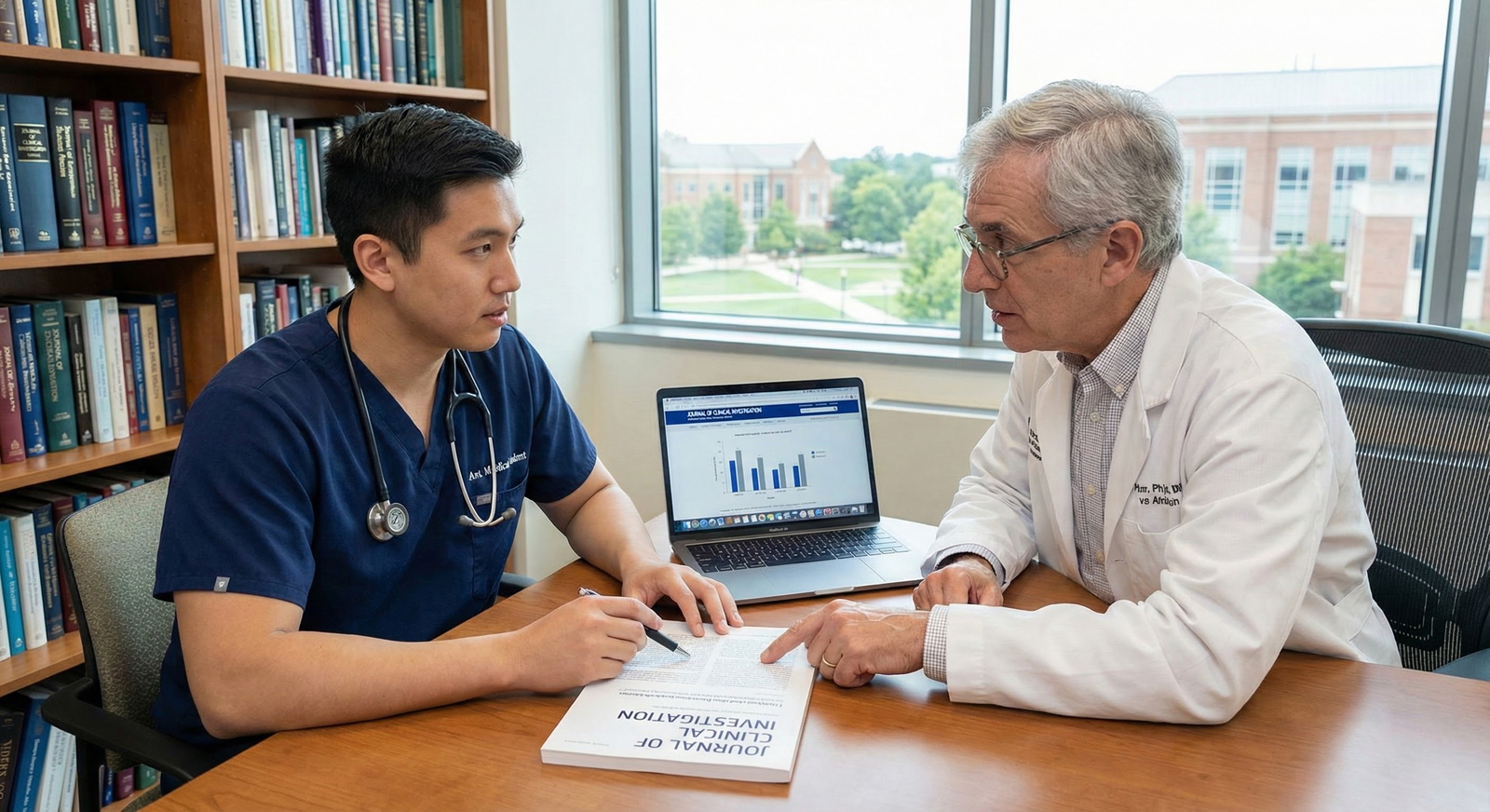
As a foreign national medical graduate, you may lack built‑in access to US faculty. You can still actively build mentorship:
Potential mentor sources:
- Professors from your home medical school who publish in international or regional journals.
- Faculty in public health, epidemiology, or biostatistics departments.
- Supervisors from NGOs or hospitals with ongoing projects or reports.
- Global health centers at US universities (via email, virtual electives, or research internships).
- Alumni from your medical school who are now in US residencies or fellowships (especially in internal medicine, family medicine, pediatrics, or ID).
How to approach mentors (email example structure):
- Brief introduction: who you are, where you trained, non-US citizen IMG aiming for US residency.
- Specific interests in global health.
- Clear ask: “I am seeking opportunities to assist with ongoing research in [X area]. I can help with data collection, literature review, manuscript drafting, or data entry.”
- Attach a 1–2 page CV highlighting any prior research, languages, and technical skills (Excel, SPSS, R, Stata).
Even if you are remote, you can still:
- Perform systematic literature reviews.
- Clean and code data.
- Help draft sections of manuscripts and abstracts.
- Assist with survey design and pilot testing.
4. Choose the Right Types of Projects
Not all projects are equally feasible or high-yield for residency applications. As a non-US citizen IMG with limited time before applications, prioritize:
High-yield, realistic projects (3–12 months horizon):
- Retrospective chart reviews (e.g., TB outcomes at your hospital over 5 years).
- Simple cross-sectional surveys (e.g., KAP surveys among pregnant women about antenatal care).
- Case reports/series (especially rare diseases in your setting).
- QI projects (e.g., improving hand hygiene compliance in a ward).
- Secondary data analysis using existing datasets from NGOs or ministries.
Be cautious about:
- Large prospective cohorts that will take years to complete.
- Trials where you have minimal role or control over timelines.
- Projects that depend heavily on funding that is not secured.
You want at least 1–2 projects you can realistically bring to publication or conference presentation before you apply.
5. Learn the Basics of Research Methods and Ethics
To build a credible research profile, you must understand basic methods and ethics, even if you are primarily assisting.
Key areas to cover:
- Study design (cross-sectional, case-control, cohort, RCTs, QI).
- Bias and confounding.
- Sample size and power (at least conceptually).
- Basic statistics (e.g., t-tests, chi-square, regression at a conceptual level).
- Research ethics, informed consent, and confidentiality.
- IRB/ethics committee processes, especially in your country.
Free or low-cost resources:
- Coursera, edX, or FutureLearn courses on:
- Global health research methods
- Epidemiology
- Biostatistics
- WHO and CDC online global health training modules.
- University “Responsible Conduct of Research” or GCP (Good Clinical Practice) online modules.
Completing these and listing them in your CV signals deliberate preparation and gives you vocabulary for interviews.
6. Turn Clinical Experiences into Scholarly Output
Many non-US citizen IMGs already have rich clinical exposure in low‑resource settings, but they never convert it into scholarship. Examples of how to do that:
Case report example
- A 23‑year‑old with disseminated TB and HIV co‑infection in a resource-limited ICU.
- Write a case report focusing on diagnostic challenges and treatment modifications in low‑resource settings.
- Submit to a global health–oriented or case-report journal.
QI project example
- Your clinic has frequent stock-outs of essential medications.
- Implement a simple tracking system and periodic inventory audit.
- Measure pre- and post-intervention medication availability.
- Present at a local conference or as a poster in a regional global health meeting.
Program evaluation example
- An NGO’s mobile clinic serves a refugee camp.
- Evaluate patient volume, common conditions, and lost-to-follow-up rates over 6–12 months.
- Write up as a brief report focusing on service gaps and system-level recommendations.
All of these experiences can be framed around international medicine and global health systems, which resonates strongly with global health residency tracks.
7. Aim for Visibility: Conferences and Journals
To maximize the impact of your research for residency, think about where your work will be seen:
Conferences:
- International global health meetings (ASTMH, CUGH, MSF/Doctors Without Borders webinars).
- Regional or national conferences in your home country.
- Specialty‑specific global health conferences (ID, maternal health, primary care).
Journals (examples by category):
- Global health–focused:
- BMJ Global Health, Global Health: Science and Practice
- The Lancet Global Health
- Journal of Global Health
- Specialty plus global health:
- International Journal of Infectious Diseases
- Tropical Medicine & International Health
- Regional or national journals:
- Your country’s medical journal or regional public health journal.
- These may be more accessible and still count meaningfully in your ERAS profile.
Don’t underestimate smaller or regional journals—especially for non‑US citizen IMG authors, they are often the most realistic first step to build a track record.
Presenting Your Research Story for a Global Health–Focused Match

Even with strong research content, your impact depends on how you present your work in ERAS, your personal statement, and interviews.
Structuring Your ERAS Application
Experience section
- For each research experience, clearly state:
- Project title or topic.
- Setting (e.g., tertiary hospital in [country], NGO clinic, ministry of health).
- Your role and specific tasks.
- Key outcomes (abstract, poster, manuscript submitted/published).
- Use action verbs and concrete achievements:
- “Designed data collection tools…”
- “Performed literature review and drafted introduction and discussion…”
- “Analyzed 500-patient dataset using SPSS…”
- For each research experience, clearly state:
Publications section
- List all publications for match in standard citation format.
- Include:
- Published articles
- Accepted abstracts/posters
- Manuscripts under review (clearly marked as such)
- Group repetitive items (e.g., multiple conference presentations on the same dataset) logically.
Personal statement
- Connect your research to:
- Your personal story (e.g., growing up in a resource-limited setting).
- Your global health goals (e.g., improving primary care for rural communities).
- The specific features of a global health residency track you are seeking:
- Overseas electives
- Health systems training
- Community‑based participatory research
- Show how your research prepared you to work in:
- Multidisciplinary teams
- Culturally diverse environments
- Limited-resource settings with imperfect data
- Connect your research to:
Handling Research Questions in Interviews
Common research-related questions you should be ready for:
- “Tell me about your most significant research project.”
- Be concise: 1–2 minutes summarizing the clinical question, method, key results, and impact.
- “What challenges did you face in this project?”
- Discuss limited resources, ethical considerations, data quality, regulatory issues.
- “What was your role specifically?”
- Be honest and precise; never claim roles (e.g., PI) you did not hold.
- “How does this project connect to your interest in global health?”
- Draw lines between your project’s context and the health inequities you want to address.
Practicing answers aloud (or with peers/mentors) will help ensure you can confidently present your work in English, which is crucial for trust-building with program directors.
Demonstrating Future Research Potential
Global health–oriented programs often want residents who will continue research during training. Convey that you:
Intend to participate in:
- Ongoing departmental or division projects (e.g., global health sections, ID divisions, primary care centers).
- QI projects in safety‑net or community clinics.
- Collaborations with international or domestic partners in underserved communities.
Have practical future ideas such as:
- Implementing a simple intervention to improve chronic disease follow‑up among refugees.
- Evaluating telemedicine for rural clinics in your home country in partnership with your residency institution.
- Scaling up a small QI project you began before residency.
This positions you as a long-term asset to the program’s global health mission.
Common Pitfalls and How to Avoid Them as a Non‑US Citizen IMG
Pitfall 1: Overemphasizing Quantity over Quality
Having your name on many projects where you did very little is risky:
- Interviewers can quickly detect vague, superficial understanding.
- It may raise concerns about ethics or “honorary authorship.”
Focus on a manageable number of projects where you can clearly describe background, methods, results, and your contribution.
Pitfall 2: Neglecting Ethical and Regulatory Requirements
Foreign national medical graduates sometimes complete projects without proper:
- IRB or ethics committee approval
- Informed consent where needed
- Data protection practices
This can be problematic if discovered. Whenever possible:
- Obtain formal ethics approval.
- Use anonymized data.
- Maintain documentation of approvals and protocols.
If a project did not require IRB (e.g., certain QI projects), be prepared to explain why, based on local or institutional guidelines.
Pitfall 3: Poor Documentation and Organization
You will likely work across multiple institutions and countries. Keep:
- Copies of protocols and ethics approvals.
- Datasets and codebooks (appropriately de‑identified).
- Final PDFs of published articles and conference acceptance emails.
- A running CV and a spreadsheet tracking:
- Project title
- Role
- Status (ongoing/submitted/accepted/published)
- Co-authors and mentors
This prevents confusion and allows you to quickly update ERAS and answer questions precisely.
Pitfall 4: Not Linking Your Work to Global Health Clearly
Even if your project is not labeled “global health,” you can highlight its relevance:
- Underserved or rural populations
- Health disparities
- Access to care issues
- Implementation of guidelines in resource‑limited settings
Framing your narrative appropriately is crucial, especially if your dream is a global health residency track.
FAQs: Research Profile Building for Non‑US Citizen IMGs in Global Health
1. As a non-US citizen IMG, can I still be competitive for global health–focused residencies without US-based research?
Yes, you can. Strong, well-executed research projects from your home country or region—especially those addressing infectious diseases, maternal/child health, or health systems in low‑resource settings—are highly valued. However, if possible, adding even one collaboration with a US-based mentor or institution (e.g., joint abstract or online research internship) strengthens your integration into the US academic environment and signals your ability to work across systems.
2. How many publications are realistically needed for me to be competitive for a global health residency track?
There is no fixed number, but for most non-US citizen IMGs:
- 2–4 meaningful publications or conference presentations with clear roles and relevance to global or underserved health make you competitive for many programs.
- More is beneficial, but only if you can clearly articulate your involvement and the project’s impact. One strong global health–related project you can discuss in depth is more valuable than five superficial author credits.
3. I only have case reports and no original research. Is that a problem?
Case reports are a valid and useful start, particularly if they demonstrate:
- Rare or neglected diseases
- Unique management challenges in low‑resource settings
However, for a robust research profile, especially if you are targeting academic or global health–intense programs, aim to add at least one small original research or QI project (e.g., a retrospective review, survey study, or simple QI intervention). This shows you can handle study design, data analysis, and implementation—not just observations.
4. My research is in a non–global health field (e.g., basic science, cardiology imaging). Does it still help my application?
Yes. Any rigorous research for residency demonstrates critical thinking, perseverance, and scholarly ability. Basic science, imaging, or other fields are still valuable, particularly if you:
- Clearly describe your role and methods.
- Show what skills you gained (data analysis, literature review, scientific writing).
To enhance your global health narrative, consider adding at least one activity—clinical, research, or QI—that connects more directly to international medicine, health equity, or underserved populations. Then, in your personal statement and interviews, explain how your general research foundation will help you address complex problems in global health during residency and beyond.
By carefully choosing feasible projects, securing supportive mentors, and presenting your scholarly work thoughtfully, you can build a compelling research profile as a non-US citizen IMG and stand out as a strong candidate for global health–oriented residency programs in the US.