Why Research Matters So Much for Non‑US Citizen IMGs in OB‑GYN
For a non-US citizen IMG aiming for an OB GYN residency in the US, research is not just a “nice-to-have”—it is often a crucial differentiator.
Program directors in Obstetrics & Gynecology see hundreds of applications with strong scores and similar clerkship narratives. For a foreign national medical graduate, a strong research profile:
- Demonstrates academic curiosity and initiative in a new system
- Shows potential to contribute to scholarly activity and quality improvement
- Compensates (partly) for perceived disadvantages like being trained abroad, visa needs, or fewer US clinical experiences
- Signals that you understand evidence-based practice and can communicate clearly in English
In the obstetrics match, especially in university-affiliated and academic programs, research is highly valued. Community programs may emphasize clinical performance more than publications, but they still appreciate documented scholarly work, especially if it relates to patient safety, quality improvement, or health disparities.
Think of your “research profile” as a portfolio consisting of:
- Research experiences (projects you actually worked on)
- Outputs (publications, posters, presentations, abstracts)
- Skills (statistics, data management, scientific writing, critical appraisal)
- Narrative (how you present this experience in your CV, ERAS, and interviews)
The goal of this article is to help you, as a non-US citizen IMG, build that portfolio strategically and realistically—even if you’re starting from zero.
Understanding What Counts as “Research” in OB‑GYN Applications
Many IMGs think only randomized controlled trials or high-impact journal articles “count.” That is not true. Programs value a wide range of scholarly activities.
Types of Research and Scholarly Work That Count
Clinical Research in OB‑GYN
- Retrospective chart reviews (e.g., risk factors for postpartum hemorrhage)
- Prospective cohort studies (e.g., outcomes of VBAC vs repeat C‑section)
- Clinical trials (e.g., new induction methods)
- Registry-based studies (e.g., outcomes in women with preeclampsia)
Epidemiologic / Public Health Research
- Maternal mortality and morbidity in low-resource settings
- Contraceptive access and utilization patterns
- Cervical cancer screening outcomes in different populations
Quality Improvement (QI) and Patient Safety
- Reducing C‑section infection rates
- Improving time-to-antibiotics in chorioamnionitis
- Standardizing postpartum hemorrhage bundles
These can be powerful projects if clearly described and measured.
Educational Research
- Simulation training for shoulder dystocia
- Interventions to improve resident ultrasound skills
- Patient education tools for gestational diabetes
Case Reports and Case Series
- Rare OB complications (e.g., uterine rupture in unscarred uterus)
- Unusual gynecologic oncology presentations
- Novel surgical approaches or complications
These are often the easiest way to get an early publication, especially if you’re working clinically and can identify interesting cases.
Systematic Reviews / Narrative Reviews
- Systematic review of induction methods in obese patients
- Narrative review of management of placenta accreta spectrum
These are particularly feasible if you are overseas and don’t have direct patient data access.
Basic/Translational Science (if available)
- Reproductive endocrinology labs
- Placental biology, preeclampsia pathophysiology
While less common for many IMGs, this still counts strongly.
All of these activities are valid “research for residency,” especially when they lead to tangible outputs.
What Programs Look For Beyond Titles
Program directors don’t only count how many lines are on your CV—they look for:
- Consistency: A record of engagement over time, not one rushed project
- Relevance to OB‑GYN: At least some work that clearly connects to women’s health
- Role and responsibility: Did you design, collect data, analyze, or mainly help with minor tasks?
- Impact and ownership: First-author or significant contributions carry more weight
How Many Publications Are “Enough” for OB‑GYN as a Non‑US IMG?
Many applicants obsess about a number: how many publications needed to match in obstetrics. There is no universal threshold, but some realistic guidance helps.
Typical Ranges (Not Rules)
From trends and program director surveys (NRMP, APGO, etc.):
- Matched OB‑GYN applicants (US seniors) often report:
- Total research products (abstracts, posters, oral presentations, pubs) in the range of 5–10
- Competitive non-US citizen IMG applicants who match OB GYN often have:
- 3–10+ research items (not all full publications)
- At least 1–2 items clearly related to OB‑GYN or women’s health
But what matters more than the raw number:
- At least one or two substantive experiences you can describe in detail in an interview
- Evidence of completion—projects that led to submission, presentation, or publication
- A coherent story: “I became interested in maternal morbidity, joined a QI project on postpartum hemorrhage, then expanded to a chart review on anemia in pregnancy…”
Quality vs. Quantity
If you are a foreign national medical graduate with visa needs, high-tier academic OB‑GYN programs may have many applicants with multiple first-author publications. That does not mean you must match them. Programs look at your context:
- Coming from a resource-limited background with 2–3 meaningful projects and 1–2 publications/posters can be very impressive.
- Ten superficial authorships where you can’t explain the methods often help less than two projects you clearly understand.
Target goal for a realistic, well-rounded profile:
- 1–3 OB‑GYN or women’s health-related projects
- 2–6 scholarly outputs (publications, abstracts, poster/oral presentations, book chapters)
- At least one first-author or primary-role project if possible

Step‑by‑Step Strategy to Build a Strong Research Profile as a Non‑US Citizen IMG
Step 1: Clarify Your Constraints and Timeline
Your strategy should match your situation.
Key questions:
- Are you currently:
- In medical school overseas?
- A recent graduate abroad?
- In the US on an observership / research position?
- When are you aiming to enter the obstetrics match?
- 1 year away?
- 2–3 years away?
- Do you need a visa (J‑1 or H‑1B)?
Some programs may be more selective; strong research can help offset this.
If you are 2–3 years from applying, you can aim for:
- Multiple projects, possibly including a systematic review, a QI study, and a case series
If you are 6–12 months from applying:
- Focus aggressively on finishing and submitting existing work
- Seek smaller, quicker projects (case reports, brief reviews, cross-sectional surveys) that can realistically be completed before ERAS opens
Step 2: Understand the US Research Environment and Expectations
As a non-US citizen IMG, you must show you can function in a US-style research environment:
- IRB (Institutional Review Board) / ethics approval
- Data confidentiality (HIPAA rules)
- Clear authorship standards (no “gift authorship”)
- Professional communication and email etiquette
Learn basic research vocabulary so you can converse fluently:
- Retrospective vs prospective
- Case-control, cohort, randomized trial
- P-values, confidence intervals, multivariate regression
- Primary and secondary outcomes, inclusion/exclusion criteria
Free resources:
- Coursera / edX: basic biostatistics and epidemiology courses
- NIH “Protecting Human Research Participants” training
- Online tutorials from major universities on research methods
Step 3: Find Research Opportunities—Inside and Outside the US
A. If You Are in the US or Planning a Research Year
Research Fellowships / Scholars Programs
- Many academic OB‑GYN departments offer paid or unpaid research positions for IMGs.
- Titles may include “Research Fellow,” “Research Scholar,” or “Postdoctoral Fellow.”
- Search:
- Department websites (Maternal-Fetal Medicine, Gynecologic Oncology, REI)
- Keywords: “OB-GYN research fellow IMG,” “women’s health research scholar”
Application tips:
- Well-structured CV highlighting any prior research or QI work
- Concise email to faculty with your goals, timeline, and visa needs
- Emphasize your commitment to women’s health and residency goals
Contacting Faculty Directly
- Find OB‑GYN faculty with active research:
- PubMed search by institution
- University department directories (MFM, Family Planning, Gyn Onc, REI)
- Send targeted emails:
- 1–2 paragraphs only
- Attach CV
- Highlight any shared interests (e.g., their paper on preeclampsia, your prior project on hypertensive disorders in pregnancy)
Example opening line:
“I am a non-US citizen IMG from [country] with a strong interest in Maternal-Fetal Medicine and prior experience in retrospective chart review. I plan to apply for OB‑GYN residency in the US in [year] and would be grateful for an opportunity to contribute to your research on [specific topic].”- Find OB‑GYN faculty with active research:
Within Observerships or Externships
- During US clinical experiences, ask:
- “Are there any ongoing QI or research projects I can assist with?”
- “Do you have any case reports we could work on together?”
- Be very reliable; small opportunities can lead to expansions and letters.
- During US clinical experiences, ask:
B. If You Are Still Overseas
Even without US access, you can build a strong research record:
Local University or Hospital Projects
- Collaborate with an OB‑GYN department where you train:
- Maternal morbidity or cesarean section rate audits
- Small observational studies (e.g., anemia in pregnancy, gestational diabetes patterns)
- Turn audits/QI into formal research with:
- Defined hypothesis
- Data collection plan
- Simple statistical analysis
- Collaborate with an OB‑GYN department where you train:
Systematic or Narrative Reviews
- These are feasible with only literature access.
- Choose clinically relevant OB‑GYN topics:
- “Management of placenta previa in low-resource settings”
- “Outcomes of adolescent pregnancy in LMICs”
- Follow PRISMA guidelines for systematic reviews.
Online / Remote Collaborations
- Join online networks:
- Global health research groups
- Specialty interest groups for OB‑GYN and women’s health
- Offer your help for:
- Data extraction
- Literature review
- Manuscript drafting
- Join online networks:
Case Reports from Your Clinical Work
- Keep an eye out for rare or instructive cases.
- Obtain proper patient consent and IRB/ethics clearance per local regulations.
- Target case-report–friendly journals or platforms (e.g., Cureus, BMJ Case Reports—although some have fees).
Step 4: Choose Projects That Are Feasible and High-Yield
Balance ambition with realistic completion.
High-yield, realistic projects for a non-US citizen IMG:
Case Reports / Case Series
- Pros: Fast, clear authorship, clinically relevant
- Cons: Lower impact factor; some journals have fees
- Strategy:
- Aim for 2–3 high-quality case reports in OB‑GYN
- Use them to demonstrate attention to detail and understanding of pathophysiology
Retrospective Chart Review
- Example:
- “Maternal outcomes in women with severe preeclampsia in [your hospital] over 5 years”
- Pros: Feasible in many settings, strongly valued in applications
- Cons: Requires data access, ethics approval, and basic statistical skills
- Example:
Survey-Based Studies
- Example:
- Knowledge and attitudes about HPV vaccine among medical students or pregnant women
- Pros: Methodologically simpler, can be conducted even as a student
- Cons: Need careful questionnaire design and good response rate
- Example:
Systematic / Scoping Reviews
- Pros: High educational value; often publishable; can be leading or co-author
- Cons: Time-consuming; must follow strict methods
When choosing projects, ask:
- Can it realistically be completed (data collection and manuscript submission) before ERAS?
- Is there a clear path to at least one scholarly output?
- Will I learn skills I can describe meaningfully in my application?
Step 5: Develop Concrete Skills That Programs Recognize
Residency programs in OB‑GYN value applicants who can:
- Frame a clear research question
- Understand basic statistics and study design
- Critically appraise literature
- Communicate clearly in writing and presentations
Action steps:
Take at Least One Online Course in Research Methods/Stats
- Coursera/edX: introductory biostatistics or clinical research design
- Keep certificates; mention them in your CV under “Courses & Certifications”
Learn a Basic Statistical Tool
- SPSS, R, Stata, or even advanced Excel
- Know how to:
- Run descriptive statistics
- Compare means/proportions
- Perform simple logistic/linear regression (ideally)
Practice Writing
- Draft sections of manuscripts: Introduction, Methods, Discussion
- Ask mentors for feedback on clarity and scientific English
- Use papers in good journals as templates
Build Presentation Skills
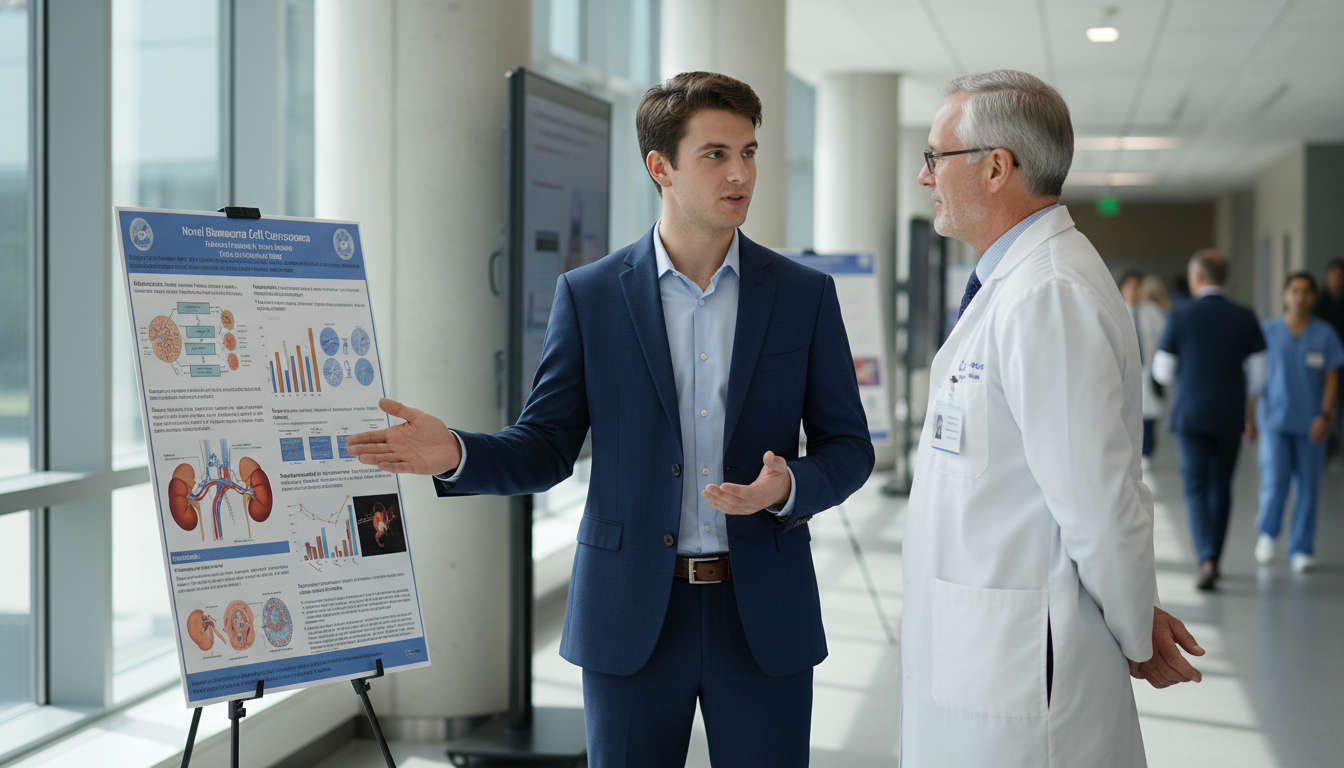
- Present at local departmental meetings, student conferences, or online symposia
- Save copies of slides and certificates—these are “presentations” to list in ERAS

Presenting and Packaging Your Research for the Obstetrics Match
Doing research is only half the task. The other half is presenting it effectively so that program directors immediately see your value.
Structuring Your CV and ERAS Entries
Separate Research Experiences and Publications
Under “Research Experience”:
- List positions (e.g., “Research Fellow, Maternal-Fetal Medicine, [Institution], dates”)
- Use bullet points to describe:
- Study type, patient population, your responsibilities
- Skills gained (data analysis, IRB submission, manuscript writing)
Under “Publications and Presentations”:
- Use a consistent citation format
- Include:
- Peer-reviewed articles
- Abstracts
- Conference posters or oral presentations
- Book chapters or online publications (clearly labeled)
Be Honest and Specific About Your Role
- Clarify:
- First author vs co-author
- Primary data collector vs minor contributor
- In interviews, be ready to answer:
- “What was your exact role?”
- “What challenges did you face?”
- “What did you learn from this project?”
- Clarify:
Highlight OB‑GYN Relevance
- Even if you did research in another specialty (e.g., internal medicine), connect it:
- “My work on hypertension management directly informs my interest in preeclampsia…”
- However, at least some of your work should be clearly in women’s health or OB‑GYN.
- Even if you did research in another specialty (e.g., internal medicine), connect it:
Talking About Research in Your Personal Statement and Interviews
Use research to strengthen your narrative:
In your personal statement:
- Briefly mention 1–2 key projects that shaped your career goals
- Focus on what you learned about patient care, critical thinking, or teamwork
In interviews:
- Prepare 1–2 research projects you can explain in simple, clear language:
- What was the question?
- What was your methodology?
- What were your main findings?
- Why does this matter for OB‑GYN patients?
- Prepare 1–2 research projects you can explain in simple, clear language:
Example explanation:
“I worked on a retrospective chart review of 400 women with severe preeclampsia in our tertiary-care center. We found that delayed referral was associated with significantly higher rates of maternal ICU admission. This reinforced my interest in systems-based care and the importance of early recognition and referral, which I hope to study further in residency.”
Program directors are less interested in p-values and more interested in whether you think like a clinician-researcher and understand implications for patient care.
Letters of Recommendation Linked to Research
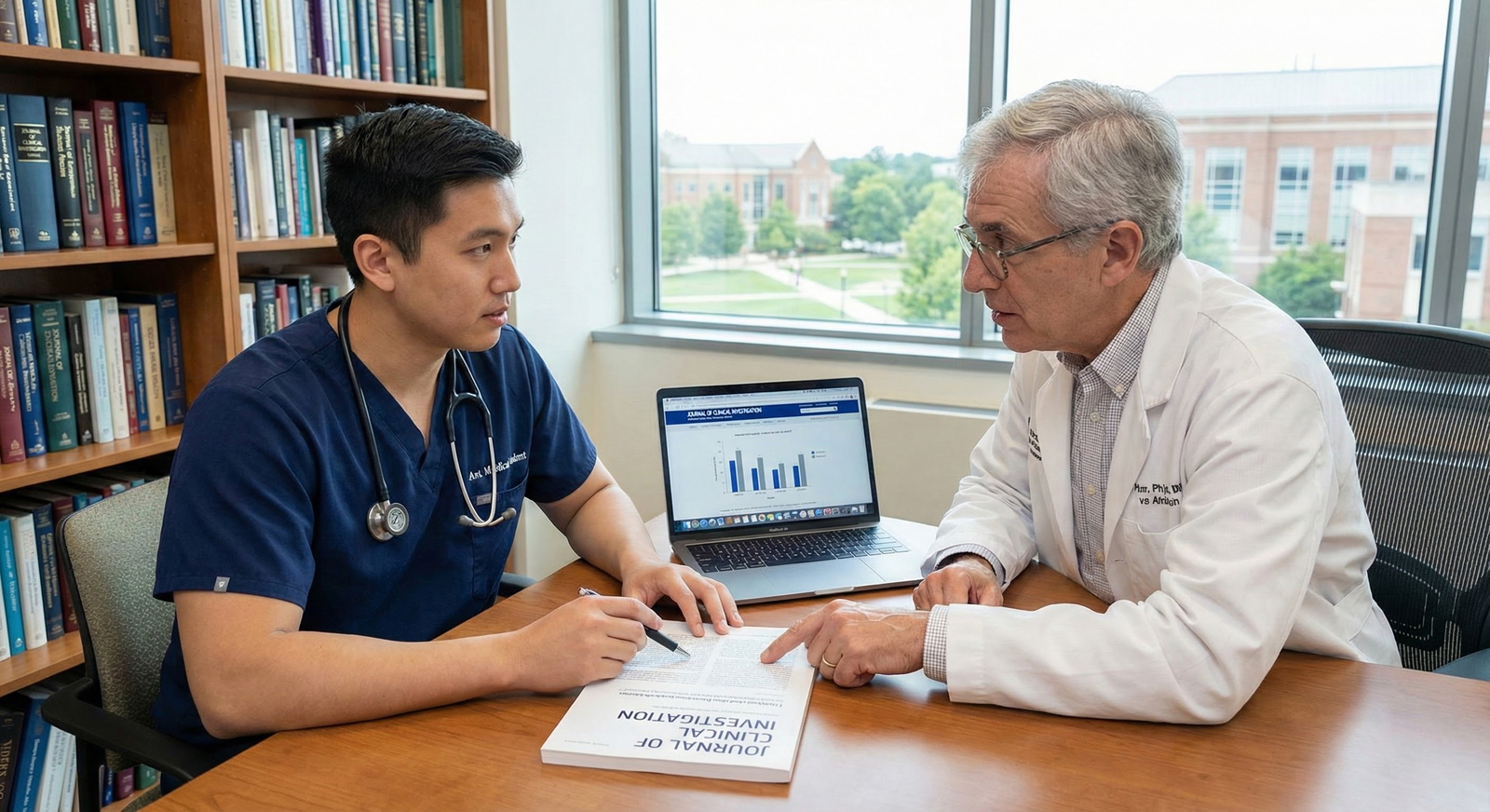
If you have a research mentor, especially in a US OB‑GYN department:
- Request a letter of recommendation that:
- Describes your work ethic, critical thinking, and reliability
- Connects your research performance to future success in residency
- Comments positively on your communication skills and professionalism
This is extremely valuable for a non-US citizen IMG because it shows that someone in the US system has directly supervised you and vouches for you.
Common Pitfalls for Non‑US Citizen IMGs—and How to Avoid Them
Chasing Quantity Over Ownership
- Many low-impact, multi-author papers where you did very little can look superficial.
- Prioritize projects where you have clear, describable contributions.
Misrepresenting or Exaggerating Contributions
- Never claim work you did not do.
- Program directors and faculty can quickly detect when you cannot explain a project you claim as first author.
Starting Too Many Projects and Finishing None
- It is better to complete two projects than to start five that never result in abstracts or publications.
Ignoring English Language Quality
- Poorly written abstracts or manuscripts reflect negatively on your communication skills.
- Use mentors, peers, or writing centers to proofread your work.
Not Tailoring Projects to Time Constraints
- If ERAS opens in two months, you cannot realistically complete a large retrospective study. Instead, refine and submit a case report or abstract from completed data.
Putting It All Together: Sample 1–2 Year Plan
Scenario: You are a foreign national medical graduate, currently overseas, planning to apply for OB‑GYN in two years.
Year 1: Foundation and First Outputs
- Take an online course in research methods/biostatistics
- Initiate a small retrospective chart review in your local OB‑GYN department
- Start a narrative or systematic review on a relevant topic (e.g., placenta previa management in low-resource settings)
- Write and submit 1–2 case reports from interesting OB‑GYN patients
Goals by end of Year 1:
- 1–2 submitted or accepted case reports
- 1 narrative or systematic review near completion or submitted
- One ongoing retrospective project with data collection underway
Year 2: Consolidation and Visibility
- Finish and write up the retrospective study; submit to a journal
- Present findings at a local or regional conference (poster or oral)
- Seek remote collaboration or a short-term research observership in a US OB‑GYN department
- Use your review and original data as talking points in your personal statement and interviews
Goals by ERAS application:
- 3–6 research outputs (mix of case reports, review, original research, and presentations)
- Strong letter from at least one research mentor (ideally OB‑GYN, preferably US-based if possible)
- Clear, confident ability to discuss at least two projects in detail
This trajectory positions you as an engaged, evidence-oriented candidate for the obstetrics match, even as a non-US citizen IMG.
Frequently Asked Questions (FAQ)
1. As a non‑US citizen IMG, do I absolutely need OB‑GYN–specific research to match OB GYN residency?
Not “absolutely,” but it helps significantly. Many strong applicants have some research in other fields (internal medicine, surgery, public health). However, having at least one or two projects clearly related to obstetrics and gynecology or women’s health makes your interest more credible and gives you relevant topics to discuss in interviews. If you already have non-OB research, keep it—but try to add at least a couple of OB‑GYN–oriented projects.
2. If I have no publications yet, is it too late to start?
It is rarely “too late,” but your strategy must match your timeline. If you are more than a year away from applying, you can realistically complete a small original project plus a couple of case reports or a review. If you are only a few months away, focus on finishing ongoing work and seeking smaller, fast-turnaround projects (e.g., case reports, brief reviews, conference abstracts). Even a well-structured abstract or accepted poster before ERAS can strengthen your application.
3. How many publications needed to be competitive as a non-US citizen IMG in OB‑GYN?
There is no strict number, but a realistic, competitive profile often includes:
- 1–3 meaningful OB‑GYN or women’s health–related projects
- Around 2–6 total scholarly outputs (publications, abstracts, posters, oral presentations)
What matters more is that you can clearly explain your role and what you learned. Some applicants match with fewer formal publications but very strong, in-depth research experiences and excellent letters.
4. Does research help compensate for needing a visa?
Research does not replace minimum requirements (scores, clinical performance), but it can absolutely offset some of the perceived risk of taking a foreign national medical graduate who needs a visa. When a program sees that you have successfully navigated research expectations, contributed to publications, and earned strong recommendations from academic mentors, they are more likely to view you as a safe investment despite visa complexities—especially in academically oriented OB GYN residency programs.
By building a thoughtful, realistic research plan and clearly presenting your accomplishments, you can transform your status as a non-US citizen IMG into an asset: someone who brings global perspective, proven academic curiosity, and a commitment to evidence-based women’s health care to any OB‑GYN residency program.