Understanding the Role of Research for a Non-US Citizen IMG in Preliminary Medicine
For a non-US citizen IMG aiming for a preliminary medicine year (prelim IM) in the US, research can significantly strengthen your application—but it functions differently than it does for categorical Internal Medicine or highly competitive specialties.
A prelim IM year is often used by:
- Future neurologists, anesthesiologists, radiologists, ophthalmologists, PM&R residents, etc. who need a medicine intern year
- Candidates who want US clinical experience and letters to reapply for categorical Internal Medicine or another specialty
- Foreign national medical graduates who want to enter the US system, build networks, and improve their portfolio
In all of these pathways, a focused research profile helps you:
- Demonstrate academic curiosity and commitment to medicine
- Show evidence of scholarly productivity and perseverance
- Compensate, to some extent, for weaker parts of the application (older graduation year, borderline scores, limited US clinical experience)
- Improve your chances at categorical positions later, not just the preliminary medicine year
However, you do not need the same heavy research portfolio as an aspiring academic cardiologist. Your strategy should be realistic, efficient, and tightly aligned with your goals and constraints as a non-US citizen IMG.
This article explains, step-by-step, how to build and present a research profile that meaningfully strengthens your prelim IM application and sets you up for future categorical training.
How Much Research Do You Actually Need?
Many IMGs worry excessively about “how many publications” they must have. Programs rarely publish rigid cutoffs, but we can discuss practical benchmarks.
“How many publications needed” – honest perspective
There is no universal answer, but trends exist:
For Preliminary Internal Medicine positions:
- Many matched applicants have 0–3 PubMed-indexed publications
- Strong profiles often include a combination of posters, abstracts, and QI projects, not just full manuscripts
- Programs care more about overall application coherence (scores, letters, clinical performance) than raw publication count
For future categorical IM or competitive specialties after a prelim year:
- Aiming for at least 1–2 first- or co-authored PubMed-indexed papers is very helpful
- Having 3–6 total scholarly items (case reports, posters, abstracts, reviews) is common among competitive IMGs
What matters more than the number is the story your research tells:
- Do your projects show consistent interest in internal medicine or your eventual specialty?
- Do your mentors or PIs write strong letters highlighting your work ethic and contribution?
- Have you taken a project from start to completion (even a small one like a case report)?
For a non-US citizen IMG applying to a preliminary medicine year, a reasonable target is:
- 1–2 completed projects by application time (case report, case series, retrospective chart review, or review article), ideally with:
- At least one PubMed-indexed output, OR
- Multiple conference abstracts/posters if publication timelines are slow
- Ongoing involvement in at least one active project to show continuity
This is achievable even if you are still overseas, provided you plan strategically.
Types of Research That Matter for Prelim IM and Future Steps
Not all research is equally valued. For a foreign national medical graduate, you must balance feasibility, credibility, and impact.
1. Clinical Research (Retrospective, Outcomes, Chart Review)
- High yield for IMGs—commonly available in teaching hospitals and university centers
- Often involves:
- Chart review
- Data extraction and cleaning
- Basic statistics or collaboration with a biostatistician
- Manuscript writing and literature review
Relevance for prelim IM:
Shows real-world understanding of inpatient medicine, outcomes, risk factors, and quality of care—directly relatable to internal medicine training.
Actionable advice:
- Look for projects in:
- Hospital medicine
- Cardiology, nephrology, pulmonology/critical care
- Infectious disease
- Aim to be listed as an author by contributing in a defined way (data collection, drafting sections of manuscript, tables/figures).
2. Quality Improvement (QI) and Patient Safety Projects
Quality improvement is highly valued by Internal Medicine programs and integrated deeply into residency training.
Examples of QI topics:
- Reducing 30-day readmission rates in heart failure
- Improving documentation of medication reconciliation
- Increasing vaccination rates in admitted patients
- Standardizing DVT prophylaxis ordering
Why QI is ideal for IMGs:
- Often easier to start and complete within months
- Highly practical and appreciated by program directors
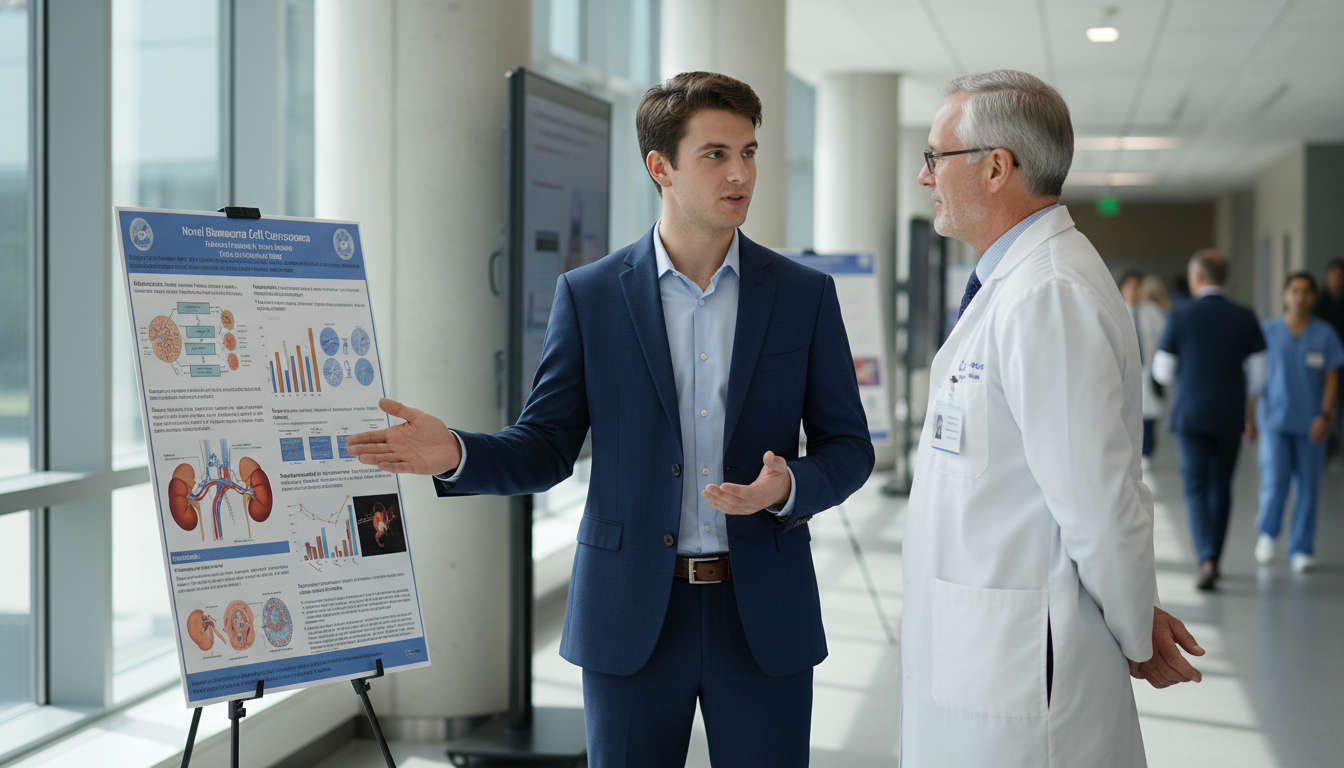
- Frequently leads to posters, presentations, and QI abstracts at institutional or regional meetings
Tip:
If you are doing US observerships or externships, ask explicitly:
“Does your department have any ongoing QI projects that a visiting trainee could help with? I would love to contribute even if my role is small.”
3. Case Reports and Case Series
These are a classic entry point for a non-US citizen IMG building a research portfolio.
Advantages:
- Feasible even during short clinical rotations
- Teaches you about:
- Structured writing
- Literature review
- Formatting and submission process
Best practices:
- Identify rare presentations or uncommon complications with your supervising physician
- Promptly review the literature to confirm novelty
- Make a clear outline (abstract, intro, case description, discussion, conclusion)
- Target reputable journals that regularly accept case reports (e.g., Cureus, BMJ Case Reports, Journal of Medical Case Reports)
Do not underestimate case reports; several strong portfolios are built from 2–3 well-executed case reports plus QI or retrospective work.
4. Review Articles and Narrative Reviews
For IMGs without easy access to patients or datasets (especially if still abroad), review articles can be realistic.
- Systematic reviews and meta-analyses are time- and method-intensive, but strong if done correctly
- Narrative reviews are more accessible but require:
- Good scientific writing skills
- Careful literature search
- Clear structure
You must collaborate with someone experienced in academic publishing to avoid low-quality or predatory journals.
5. Basic Science and Laboratory Research
If you already have a strong bench research background, it is still valuable. However:
- For a prelim IM program, clinical or outcomes research is usually more directly relevant
- If your basic science projects are ongoing or incomplete:
- Highlight your skills (data analysis, experimental design, statistics)
- Try to secure at least one abstract, poster, or manuscript submission
If you are starting from zero, basic science is typically less efficient for a short-term research profile before residency applications.
Finding and Securing Research Opportunities as a Non-US Citizen IMG
Access is the single biggest challenge for many foreign national medical graduates. You may be outside the US, lack direct contacts, or face visa constraints. Strategic networking is crucial.
1. Use Existing Connections Aggressively but Professionally
Start with:
- Former professors from your medical school who have US collaborators
- Alumni from your school who matched into US residencies
- Attending physicians you met during:
- Electives
- Observerships
- Online conferences or webinars
Sample outreach email:
Subject: Interested in Contributing to Research or QI Projects
Dear Dr. [Name],
I am a [non-US citizen IMG / graduate of X University, Class of 20XX], currently preparing for a preliminary medicine application in the US. I am very interested in gaining experience in [clinical research / QI / case reports] related to internal medicine.
I would be grateful for any opportunity to assist with ongoing projects, even with data collection, chart review, or literature review. I am comfortable with [SPSS/Excel/R] and have flexible hours to work remotely.
If you have any projects where an extra pair of hands might be useful, I would be honored to contribute.
Sincerely,
[Name, credentials, contact info]
Consistency is key—you might need to email 20–40 people to get 1–2 solid responses.
2. Target Institutions That Welcome IMGs
Some academic centers and community hospitals are known for actively engaging IMGs in research. You can:
- Search PubMed for papers with authors from hospitals known to host IMGs
- Check their department or hospital websites for “Research volunteer programs” or “International scholar programs”
- Look for programs where faculty have multiple publications on topics like:
- Hospital medicine outcomes
- Epidemiology
- Health disparities
When you reach out, highlight that you:
- Are comfortable with remote work
- Do not require a salary for short-term collaboration (if that is acceptable in your situation)
- Are serious and reliable, with clear availability
3. Leverage Observerships and Externships as Research Entry Points
If you are doing a US observership or externship, you have a major advantage. Use it actively:
- At the start of your rotation, tell faculty that:
- You are very interested in research and QI
- You are willing to work on evenings/weekends for a project
- Ask during mid-rotation feedback:
- “Do you know of any case reports or quality improvement projects that I might be able to assist with?”
Be ready with concrete skills when they ask:
- Ability to write first drafts of introductions or discussions
- Experience with Excel or basic statistics
- Familiarity with referencing software (Zotero, Mendeley)
4. Remote and Online Research Collaborations
In recent years, more collaborative research groups have formed online. Be cautious but open-minded:
- Look for:
- Student research networks
- International IMG research groups
- Specialty-focused collaborative groups (neurology, cardiology, etc.)
- Verify:
- The group’s prior output (PubMed or conference posters)
- That authorship criteria are transparent
Avoid any group that:
- Guarantees first authorship for payment
- Only publishes in predatory or unknown journals
- Pressures you for fast submission without quality review
5. Formal Research Fellowships (Optional but Powerful)
Some IMGs pursue 1–2 years of formal research fellowships in the US (often unpaid or modestly funded). This can:
- Translate into multiple publications for match
- Provide strong US letters of recommendation
- Build long-term networks for future categorical positions
However, this path requires:
- Visa planning (often J-1 research scholar or other options)
- Financial planning (cost of living without full salary)
- Clear expectation that a research fellowship is not a guarantee of residency, but significantly improves prospects
For a prelim IM year alone, such a long fellowship may be excessive unless you are targeting competitive downstream specialties.
Designing a Coherent Research Narrative for a Prelim IM Application
Beyond accumulating titles and abstracts, your research story must align with your application goals.
1. Align With Internal Medicine and Your Future Specialty
If you know you ultimately want Neurology, Radiology, Anesthesiology, or another field after prelim medicine, your research can reflect this while still being relevant to IM.
Example alignments:
- Future Neurology:
- Stroke outcomes in hospitalized patients
- Delirium prevention in internal medicine wards
- Future Anesthesiology:
- Perioperative risk scores in medicine patients
- Postoperative complications related to chronic diseases
- Future Radiology:
- Imaging patterns in pneumonia, PE, or heart failure
- Diagnostic accuracy of imaging modalities in internal medicine conditions
In your personal statement and interviews, connect the dots clearly:
- “My research on [X] in hospitalized patients deepened my understanding of [Y], which I will apply as a medicine intern and in my chosen specialty.”
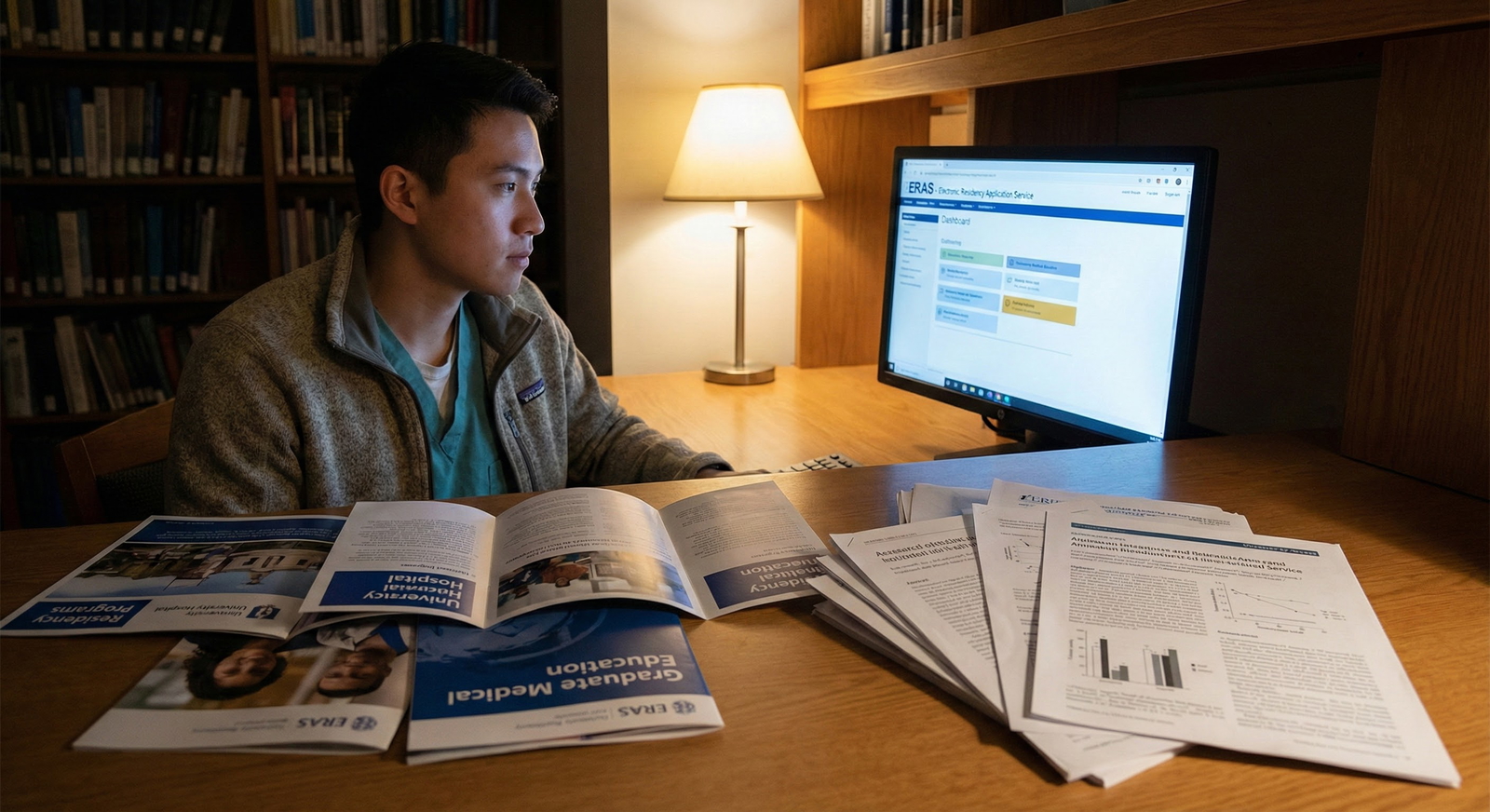
2. Presenting Your Research in ERAS Effectively
On ERAS, you will list:
- Peer-reviewed journal articles
- Abstracts, posters, and presentations
- Oral presentations at conferences
- Book chapters or other scholarly work
For each item:
- Use clear, standardized citation format
- Mark your role accurately:
- “First author”
- “Co-author”
- “Data analyst” (explain in description if needed)
- In the description (if space allows), briefly mention:
- Your specific contributions
- Skills you gained (e.g., literature review, data analysis, manuscript drafting)
Avoid overinflating your role—programs can detect this during interviews.
3. Discussing Research in Your Personal Statement
For a prelim medicine year, your personal statement should:
- Emphasize your desire to build a strong foundation in internal medicine
- Explain briefly how your research informs your clinical thinking
Example paragraph:
“During my clinical research on readmission rates among patients with decompensated heart failure, I observed how small differences in discharge planning and medication reconciliation significantly influenced outcomes. This experience reinforced my interest in internal medicine as the foundation of my training and motivated me to pursue a preliminary year where I can strengthen my clinical judgment while continuing to engage in quality improvement.”
Keep it ~1–2 paragraphs about research, focusing on impact on your clinical development, not only scholarly curiosity.
4. Preparing for Common Research-Related Interview Questions
Be ready to discuss:
- “Tell me about the research project you are most proud of.”
- “What was your specific contribution to this paper/poster?”
- “What challenges did you face during this project?”
- “How do you see research fitting into your future career?”
Tips:
- Pick one main project to describe in-depth
- Use a simple structure: background → your role → what you found → what you learned
- Emphasize teamwork, perseverance, and clinical relevance
Common Pitfalls and How to Avoid Them
1. Chasing Quantity Over Quality
Submitting to predatory journals or rushing low-quality manuscripts just to increase your count can hurt you:
- Faculty may recognize questionable journals
- Poorly written work reflects badly on your professionalism
- Low-impact but respectable journals are preferable to unknown, pay-to-publish outlets
Before submitting, ask a mentor:
- “Is this journal recognized in the field?”
- “Is it indexed in PubMed, Scopus, or Web of Science?”
2. Overcommitting to Too Many Projects
As a non-US citizen IMG, you often juggle USMLE exams, observerships, visa planning, and applications. Taking on 6–7 projects simultaneously usually leads to:
- Burnout
- Several unfinished manuscripts
- Frustration on both your and your mentor’s side
Instead:
- Prioritize 2–3 active projects that are realistically completable
- Track progress in a simple spreadsheet with milestones (data collection, analysis, drafting, submission)
3. Misrepresenting Your Contribution
Never list “first author” if you aren’t. Never claim you did data analysis if someone else did. Misrepresentation is a serious red flag.
Programs can (and do) ask:
- “What statistical methods did you use in this study?”
- “How did you design the data collection form?”
- “What were the inclusion criteria?”
If you cannot answer basic questions, your credibility suffers.
4. Ignoring the Time Lag of Publications
From project start to publication can take 6–18 months. For IMGs with an application deadline, this is critical.
Mitigate this lag by:
- Prioritizing projects with short timelines (case reports, QI, retrospective chart reviews with available data)
- Aiming for posters and abstracts that can be listed on ERAS even before full publication
- Starting early—ideally at least 12–18 months before your intended Match cycle
5. Not Using Research to Build Relationships
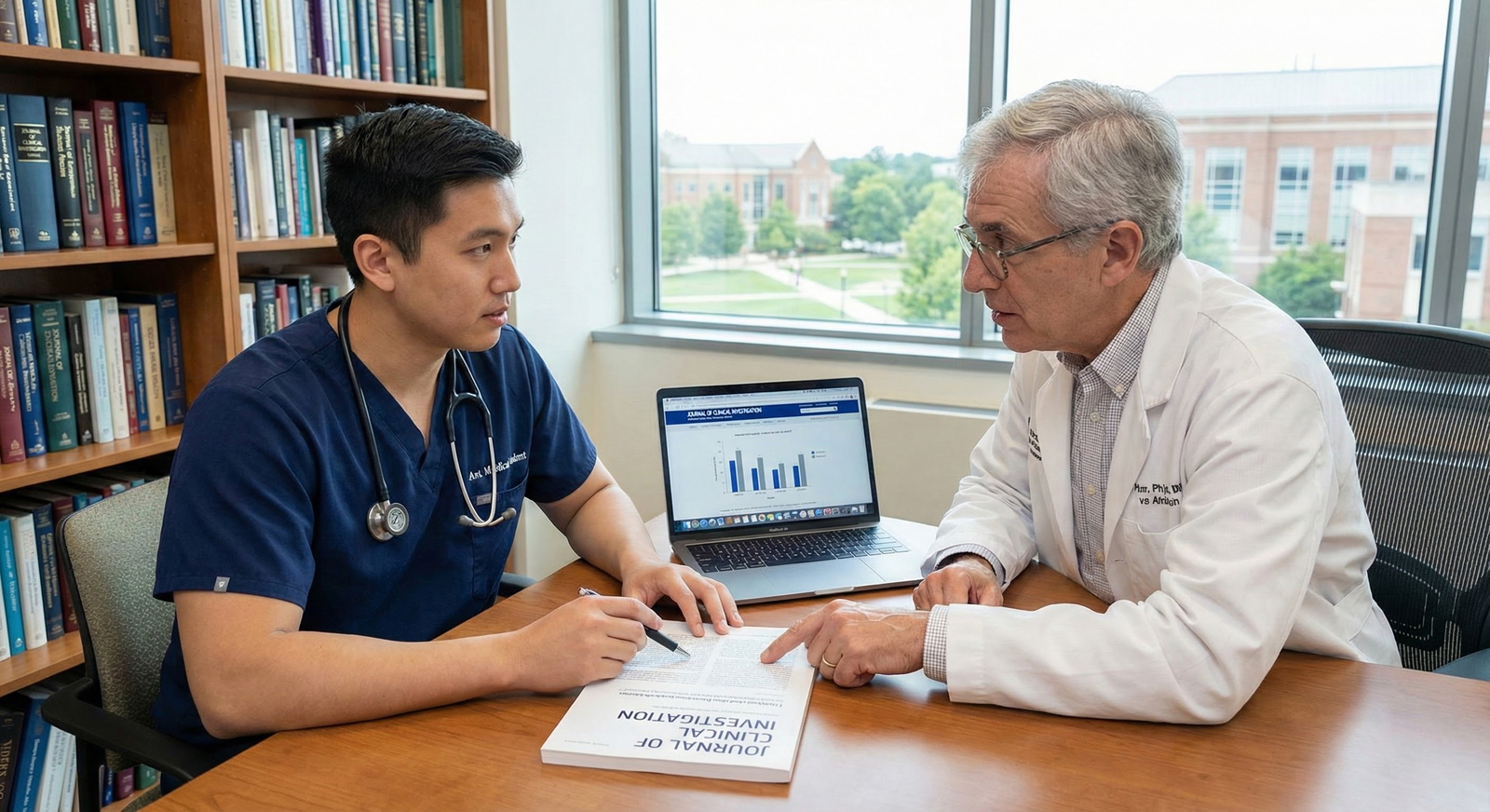
Research is not just about your CV. It is also about mentorship and advocacy.
A faculty member who has worked with you closely on a project is more likely to:
- Write a detailed, supportive letter of recommendation
- Advocate for you with the program director
- Connect you with colleagues in other specialties or institutions
Stay in touch with mentors:
- Send updates on exam results, applications, and match outcomes
- Offer to help with future projects, even after you start residency
- Express genuine gratitude for their time and mentorship
Strategic Roadmap: A 12–18 Month Plan for Building Your Research Profile
Here is a sample timeline for a non-US citizen IMG targeting a preliminary medicine year, which can be adapted to your situation.
Months 1–3: Foundation and Outreach
- Finalize major USMLE exams or schedule them
- Learn basic research tools:
- Reference managers (Zotero, Mendeley)
- Data handling in Excel, SPSS, or R (basic level)
- Send 20–40 targeted emails to potential mentors (as described above)
- Join at least one serious research or QI project
Months 4–6: Deep Engagement
- Take ownership of part of the project:
- Data collection or cleaning
- Literature review
- Drafting sections of the paper
- Identify at least one possible case report from clinical rotations (if applicable)
- Start drafting one manuscript or abstract
Months 7–9: First Outputs
- Submit:
- One case report or short communication OR
- One abstract for a poster presentation
- Ensure your name appears on at least one tangible product by now
- Continue working toward full manuscript submissions
Months 10–12: Application Preparation
- Finalize ERAS entries:
- List all submitted manuscripts (clearly marked as “submitted” or “in preparation,” being honest)
- List accepted abstracts or posters
- Request letters of recommendation from research mentors who know you well
- Practice discussing your research concisely for interviews
Months 13–18: During the Match Cycle
- If unmatched or applying for categorical positions after prelim:
- Continue existing projects
- Aim for at least one accepted publication
- Maintain contact with mentors and update your CV regularly
This roadmap is flexible; adjust based on your graduation year, exam schedule, and available opportunities. But having a structure prevents the common IMG pitfall of “thinking about research” without ever completing a project.
FAQs: Research for Non-US Citizen IMGs Applying to Preliminary Medicine
1. As a non-US citizen IMG, can I match into a prelim medicine year without any research?
Yes, it is possible to match into a preliminary medicine year without research, especially if:
- Your USMLE scores,
- Clinical performance, and
- Letters of recommendation
are strong, and you have some US clinical experience.
However, research improves your competitiveness, especially at university-affiliated and academic prelim programs, and is particularly valuable if you later apply for categorical IM or competitive specialties.
2. What type of research is best if I am still in my home country?
If you are still abroad, focus on projects that can be done remotely:
- Retrospective chart reviews through international collaborations
- Review articles or narrative reviews with a US or local mentor
- Remote data analysis or literature review for an ongoing US-based project
- Case reports from your own clinical work (if allowed by your institution and ethical guidelines)
You do not need to be physically in the US to start building a credible research profile.
3. Does the research have to be in internal medicine if I plan to enter another specialty after prelim?
Not strictly—but it should be clinically relevant and, ideally, related either to:
- Internal medicine, or
- Your future specialty (e.g., neurology, anesthesiology, radiology)
For example, stroke outcomes, perioperative medicine, or cardiac imaging are all reasonable for someone doing a prelim IM year with a future specialty goal. In interviews, you should be able to explain how your research connects to both your intern year and your long-term career.
4. How do program directors view publications for match—do they read my papers?
Program directors usually do not read every paper in detail, but they do look at:
- Number and type of scholarly activities (journal articles, abstracts, posters)
- Quality and recognizability of journals or conferences
- Your role (first author vs. middle author)
- Letters of recommendation from research mentors
They value research that shows consistent effort, teamwork, and academic curiosity, not just a large number of low-quality publications. Well-presented, modest research can meaningfully strengthen your application, especially for a foreign national medical graduate aiming for a solid prelim IM position and future categorical training.
By understanding the real expectations, choosing feasible projects, and aligning your work with your clinical goals, you can build a strategic and credible research profile as a non-US citizen IMG. This not only supports your preliminary medicine application but also lays the foundation for long-term success in US residency and beyond.