
Building a strong research profile is one of the most powerful ways a non-US citizen IMG can become competitive for radiation oncology residency in the United States. Radiation oncology is a small, research-intensive specialty; program directors expect applicants to demonstrate academic curiosity, comfort with scientific literature, and preferably some tangible scholarly output.
Below is a detailed roadmap tailored specifically to foreign national medical graduates aiming for radiation oncology residency. It focuses on how to strategically build a research portfolio—from your home country or within the US—that genuinely strengthens your rad onc match prospects.
Why Research Matters So Much in Radiation Oncology
Radiation oncology sits at the intersection of clinical medicine, physics, and oncology research. The field evolves quickly—new fractionation schemes, novel systemic agents, immunotherapy combinations, adaptive planning, AI-driven contouring, and proton therapy are constantly being studied.
For a non-US citizen IMG, research plays several critical roles:
Compensating for Structural Disadvantages
- You may lack US clinical experience, home-program advocacy, or a US MD diploma.
- A strong research record—especially at a known US institution—helps program directors see you as someone who can function in the US academic environment.
Signaling Long-Term Academic Potential
- Many radiation oncology departments are strongly research-oriented.
- A track record of publications for match, conference abstracts, and ongoing projects tells PDs you can contribute to the department’s academic mission.
Differentiating Yourself in a Small Applicant Pool
- Radiation oncology has relatively few positions nationwide, and applicant quality is generally high.
- Research experiences (especially first-author work, physics collaborations, or outcomes research) become key differentiators.
Building Essential Connections
- Research gives you access to mentors who can:
- Write strong, detailed letters of recommendation.
- Advocate for you directly to selection committees.
- Introduce you to other investigators and programs.
- Research gives you access to mentors who can:
Understanding Expectations: What Does a “Competitive” Research Profile Look Like?
Many IMGs ask: “How many publications are needed?” or “What do programs expect from a foreign national medical graduate?” There is no single number, but you can think in terms of tiers.
Typical Research Expectations in Radiation Oncology
Most successful applicants (US and IMGs combined) have:
- Several scholarly products total (often 5–15+ line items on ERAS), including:
- Peer-reviewed publications
- Abstracts and conference posters
- Book chapters
- Case reports
- Quality improvement (QI) projects
- At least some of these specifically in oncology or radiation oncology.
For a non-US citizen IMG, to stand out, you ideally want:
- 1–2 first-author peer-reviewed publications in oncology, cancer biology, radiation oncology, or closely related fields (outcomes research, medical physics, radiation biology).
- Several co-authorships on additional papers, especially if they are:
- Radiation oncology-specific
- In reasonably recognized journals (they don’t all need to be top-tier)
- Multiple conference abstracts/posters (ASTRO, ASCO, regional oncology meetings).
- Evidence of sustained involvement (1–3+ years) in one or more projects, not just scattered short-term work.
Answering the Key Question: How Many Publications Needed?
There is no fixed threshold, but as a practical target for a non-US citizen IMG specifically targeting radiation oncology:
Minimum realistic baseline to be taken seriously:
- 1–2 oncology-related papers (even if not rad onc)
- 2–4 abstracts/posters
- Consistent research activity
Strong/Competitive profile:
- 3–6 peer-reviewed publications total (at least one clearly relevant to radiation oncology or cancer)
- 4–10 abstracts/posters, including at least one national or international conference (e.g., ASTRO)
- Additional scholarly productivity (chapters, QI projects, invited talks)
Exceptional profile (often needed for pure research-track, PhD-level candidates, or for compensating major weaknesses):
- 8–15+ publications, including multiple first-author works
- Multiple ASTRO/ASCO abstracts
- Potentially a Master’s or PhD, or a dedicated 1–2-year US research fellowship
The key is not just how many publications needed, but also:
- Relevance to oncology/radiation oncology
- Role (first-author vs middle-author)
- Continuity of work with a coherent narrative
Stepwise Strategy: Building a Research Profile from Where You Are
Your path will depend on whether you are still in medical school, post-graduation, or already in another specialty. Below is a phased approach that works for many foreign national medical graduates.

Phase 1: Foundation – Learn the Landscape and Basic Skills
1. Understand the Field’s Research Priorities
Common radiation oncology research domains include:
- Clinical outcomes (local control, survival, toxicity)
- Novel fractionation schemes (hypofractionation, SBRT)
- Radiosensitizers and systemic therapy combinations
- Radiation and immunotherapy
- Radiobiology and molecular mechanisms of radiation response
- Medical physics, dosimetry, and imaging
- Health services research, disparities, and cost-effectiveness
Action steps:
- Read major journals: International Journal of Radiation Oncology • Biology • Physics (“Red Journal”), Radiotherapy and Oncology, Practical Radiation Oncology, Advances in Radiation Oncology.
- Follow ASTRO, ESTRO, and ASCO guidelines and educational materials.
- Create a simple reading log (article title, methods, results, your takeaway).
2. Master Basic Research Skills
For a non-US citizen IMG, your credibility increases dramatically if you show:
- Understanding of study design (retrospective cohort, RCT, non-inferiority, meta-analysis)
- Comfort with basic statistics
- Ability to use tools:
- Reference managers (Zotero, EndNote, Mendeley)
- Data tools (Excel, R, SPSS, Stata, Python—any one is a plus)
- Literature search (PubMed, Embase, Google Scholar, clinicaltrials.gov)
Practical actions:
- Take free online courses (Coursera, edX) on:
- Biostatistics
- Epidemiology
- Research methods
- Practice summarizing one paper per week using a structured template:
- Background
- Objective
- Methods
- Results
- Limitations
- Clinical relevance for rad onc
Phase 2: Start Locally – Research in Your Home Institution or Country
If you are currently outside the US, you can still develop strong research for residency at your local institution.
1. Identify Potential Mentors
Look for:
- Oncologists, radiation oncologists, or surgeons interested in cancer.
- Faculty with any English-language publications.
- Younger attendings often have active projects and need help.
How to approach:
- Send a concise email:
- 3–4 sentences about who you are (non-US citizen IMG, interest in radiation oncology)
- 1–2 sentences on relevant skills (statistics course, literature review experience)
- Express willingness to help with ongoing projects (data collection, chart review, manuscripts).
- Attach a 1-page CV focusing on:
- Grades, prior research, language skills, any previous publications.
2. Focus on Feasible Projects
Given limited infrastructure, prioritize projects you can realistically complete:
Case reports/series:
- Good starting point, especially for rare tumors, unusual toxicities, or novel techniques.
- Learn the journal’s case-report format; aim for oncology or rad onc case-report journals.
Retrospective chart reviews:
- Example: “Outcomes of cervical cancer treated with concurrent chemoradiation in XYZ hospital.”
- Work with your mentor to:
- Secure IRB/ethics approval.
- Design a data collection form (Excel or REDCap).
- Plan simple statistical analyses (survival curves, toxicity rates).
Review articles and narrative reviews:
- Topic ideas: “Radiation therapy for locally advanced rectal cancer in low-resource settings,” “Hypofractionation in breast cancer.”
- Coordinate with a faculty co-author; journals are more likely to consider if a known senior author is involved.
3. Convert Work into Tangible Output
Your goal: concrete CV entries, not just “helped with research.”
Target outputs:
- At least 1–2 peer-reviewed articles (even in regional or mid-tier journals).
- 2–3 posters or presentations at local or national meetings.
For each completed project, ask:
- Can we submit this as an abstract to a regional oncology society?
- Can we adapt it for an international meeting (e.g., ASTRO Global Health, ASCO)?
Phase 3: Transition Into US-Based Research (If Possible)
For a non-US citizen IMG, US-based research is often the single most transformative step for your rad onc match competitiveness.
Routes to US-Based Radiation Oncology Research
1. Dedicated Research Fellowship (1–2 Years)
Some large academic rad onc departments host non-US graduates as research fellows. These positions:
- May be funded or unfunded.
- Typically involve:
- Outcomes research
- Database work (SEER, NCDB, institutional registries)
- Clinical trials coordination
- Manuscript writing and submission
How to find them:
- Explore department websites at major academic centers.
- Look specifically for “Research fellow,” “Postdoctoral fellow,” or “Visiting scholar” positions in radiation oncology or cancer outcomes.
- Cold-email faculty with a focused message:
- Subject: “Prospective research fellow – international medical graduate interested in radiation oncology”
- State your goal clearly: gaining research experience to prepare for US radiation oncology residency.
2. Short-Term Observership + Remote Research
If full-time relocation isn’t possible:
- Arrange a 1–3-month observership in a US rad onc department (if they accept observers).
- During/after observership, ask:
- “Are there any retrospective projects or database analyses I can help with remotely?”
- Offer to:
- Perform literature reviews
- Draft background/intro sections
- Help with data cleaning and analysis
3. Remote Collaboration from Your Home Country
If visa or funding is a barrier:
- Identify US-based rad onc researchers whose work aligns with your interests.
- Email offering help with:
- Systematic reviews/meta-analyses
- Survey-based projects
- Database work that can be done remotely
While not all will respond, even one positive collaboration can result in:
- Co-authorship in peer-reviewed articles
- Strong letters of recommendation from US faculty
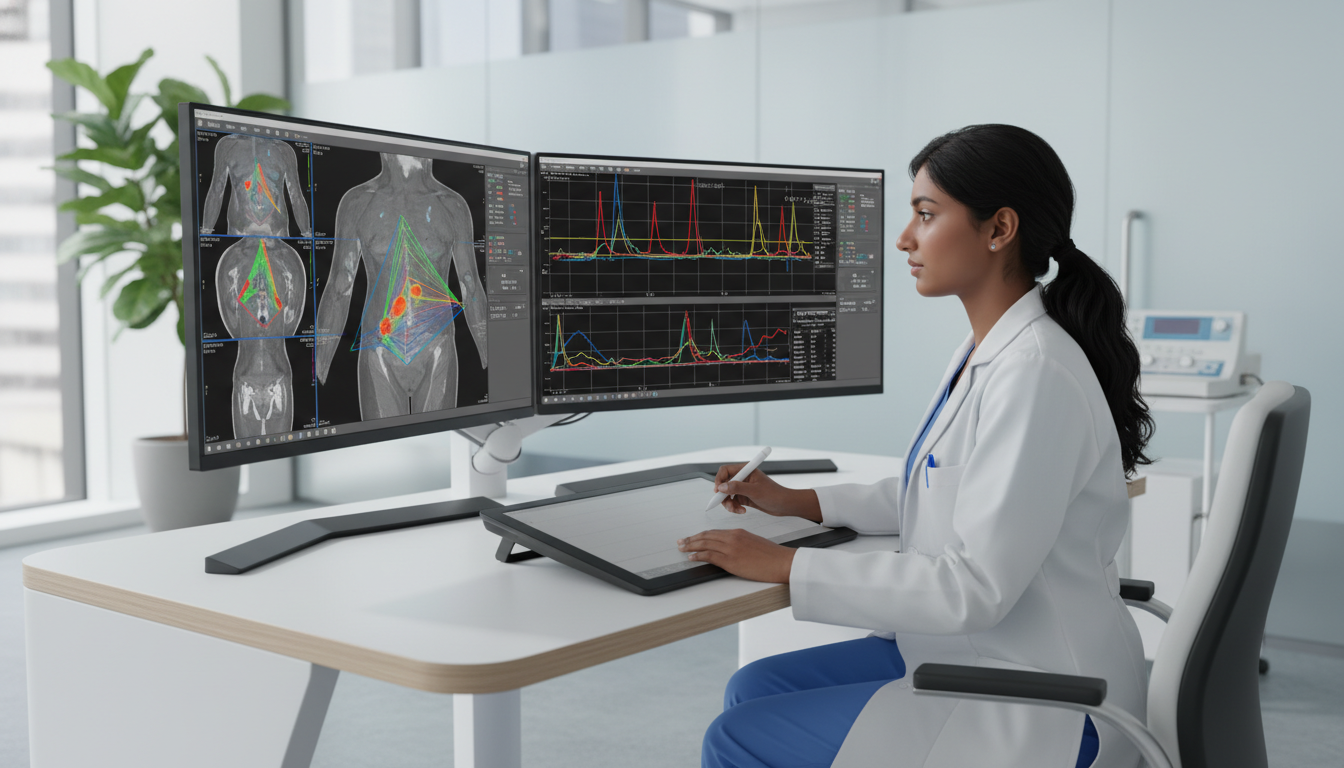
Types of Radiation Oncology Research You Can Realistically Do as an IMG
1. Retrospective Clinical Outcomes Studies
Typical structure:
- Population: Patients treated with radiation for a specific cancer (e.g., prostate, breast, head and neck).
- Question: Outcomes, toxicity profiles, impact of specific techniques (IMRT vs 3D-CRT), hypofractionation, etc.
- Methods:
- Extract data from charts or electronic medical records.
- Analyze survival, local control, toxicity, quality of life.
Why ideal for IMGs:
- Feasible in many settings.
- Clearly relevant to clinical practice.
- Publication potential is high with good design and analysis.
2. Systematic Reviews and Meta-Analyses
These are particularly accessible if:
- You have strong literature search and organizational skills.
- You can collaborate with a statistician for meta-analysis.
Examples:
- “Comparative outcomes of SBRT vs surgery for early-stage NSCLC.”
- “Meta-analysis of hypofractionated vs conventional fractionation for whole-breast radiotherapy.”
Benefits:
- High citation potential.
- Useful to show conceptual understanding of the literature.
3. Radiobiology / Translational Research
If you have access to a lab:
- Projects may involve:
- Cell line or animal models of radiation response.
- Radiosensitizers, radioprotectors.
- Immune modulation with radiation.
For non-US citizen IMGs:
- Translational work is impressive, but time-consuming and technically demanding.
- It may be best if you have at least 1–2 years and strong lab support.
4. Medical Physics and Dosimetry Projects
Even without a physics background, you can collaborate with:
- Medical physicists, dosimetrists, and residents on:
- Plan comparison studies
- Dosimetric analyses (e.g., organ-at-risk sparing with IMRT vs VMAT)
- QA-related research
These can lead to:
- Posters at physics and rad onc meetings.
- Co-authorships on clinical physics papers.
5. Health Services, Equity, and Global Oncology
As a foreign national medical graduate, you bring a valuable global perspective:
- Evaluate access to radiation in low- and middle-income countries.
- Study disparities in treatment completion, delays, or toxicity in specific populations.
- Collaborate with global oncology groups, which often welcome highly motivated IMGs.
These topics are attractive in the US context because:
- They align with institutional priorities on diversity, equity, and global health.
- They allow you to combine your background with rad onc interests.
Crafting Your Narrative and Presenting Your Research on Applications
Building the research is only half of the work; you must also present it effectively in your ERAS application and interviews.
Organizing Your CV and ERAS Entries
List all publications for match clearly as:
- Published
- In-press
- Submitted (only if legitimately submitted)
Provide full citations:
- Authors (your name in bold if possible in your personal CV)
- Title
- Journal
- Year
- DOI/PMID when available
Clearly differentiate:
- Peer-reviewed journal articles
- Conference abstracts/posters
- Book chapters
- Non-peer-reviewed pieces or institutional reports
Emphasizing Your Role in Each Project
Program directors want to know what you actually did:
- “Designed study protocol, performed chart review, did initial data analysis, wrote first draft of manuscript.”
- “Contributed to data collection and literature review; co-authored results and discussion sections.”
- “Led systematic review; coordinated with statistician on meta-analysis.”
Be ready to discuss:
- Study design choices
- Limitations
- What surprised you in the results
- How the findings might influence clinical practice
Integrating Research Into Your Personal Statement
For a non-US citizen IMG targeting radiation oncology:
- Use 1–2 paragraphs to explain how your research:
- Sparked your interest in rad onc.
- Trained you to think critically about evidence.
- Prepared you to contribute to an academic career.
Example framing:
- “Working on outcomes of hypofractionated radiotherapy for breast cancer in a resource-limited setting revealed how treatment decisions intertwine biology, technology, and patient context—this experience solidified my commitment to a career in radiation oncology.”
Practical Tips, Common Pitfalls, and Time Management
Practical Tips
Aim for Depth Over Sheer Quantity
- One well-constructed project where you are first author is more valuable than scattered minor co-authorships you barely understand.
Keep Detailed Records
- Maintain a research log with:
- Project titles
- Roles
- Dates
- Co-authors
- Outputs (abstract, manuscript, presentation)
- Maintain a research log with:
Regular Check-Ins With Mentors
- Agree on a schedule for updates (every 2–4 weeks).
- Show initiative by sending drafted sections or preliminary analyses.
Treat Deadlines Seriously
- Conference abstract deadlines (ASTRO, ASCO) can be major motivators to complete analyses and writing.
Leverage Each Dataset for Multiple Outputs (Ethically)
- Example: a breast cancer dataset could generate:
- One paper on treatment outcomes
- Another on toxicity profiles
- An abstract on a subgroup analysis
- Example: a breast cancer dataset could generate:
Common Pitfalls to Avoid
Predatory Journals
- Be cautious of low-quality journals that:
- Guarantee acceptance for a fee.
- Lack proper peer review.
- These may dilute your CV rather than strengthen it.
- Be cautious of low-quality journals that:
Gift Authorship or Misrepresentation
- Only list work where you genuinely contributed.
- Misrepresentation can be discovered during interviews when you cannot discuss the project in detail.
Spreading Yourself Too Thin
- It’s better to bring 2–4 projects to completion than to start 10 and finish none.
Ignoring the Specialty Context
- Try to ensure at least some of your projects are clearly linked to radiation oncology or at least oncology/imaging.
Frequently Asked Questions (FAQ)
1. As a non-US citizen IMG without any prior publications, how should I start if I want radiation oncology?
Begin locally:
- Approach oncology or radiation oncology faculty at your current institution and volunteer to help with ongoing research.
- Start with manageable tasks such as:
- Literature reviews
- Data collection for retrospective projects
- Drafting introduction or discussion sections
- Take online courses in biostatistics and research methods to quickly build competence. Aim for 1–2 completed projects (even small ones) within 6–12 months, then consider applying for a US-based research position if feasible.
2. Is it absolutely necessary to have radiation oncology-specific publications for the rad onc match?
Not absolutely, but strongly preferred:
- Oncology, cancer biology, or imaging research is valuable and can help.
- However, at least one publication, abstract, or substantial project directly related to radiation oncology makes your application much more aligned with the specialty. You can still be competitive if your earlier work is in general oncology or another field, as long as you clearly show a transition into rad onc research over time.
3. How many publications do I realistically need as an IMG to be competitive for radiation oncology residency?
There is no fixed number. For a foreign national medical graduate, a reasonable target to be strongly considered would be:
- 3–6 peer-reviewed papers total (with at least one clearly related to oncology/radiation oncology, and hopefully one first-author).
- Several abstracts/posters (4–10), ideally including at least one presented at a recognized oncology or radiation oncology meeting. More important than the raw number is:
- Evidence of sustained research involvement.
- Your ability to thoughtfully discuss the work.
- Clear relevance to radiation oncology.
4. I have strong research in another specialty (e.g., internal medicine, cardiology). Does that still help me for a radiation oncology residency?
Yes, it still helps:
- It shows that you know how to do research, work on teams, and complete projects.
- You can frame it as evidence of your scientific maturity and discipline. To strengthen your rad onc candidacy:
- Add at least 1–2 oncology-related or radiation oncology-focused projects if possible.
- In your personal statement and interviews, explain why you are transitioning to radiation oncology and how your prior research experience prepares you for this field.
For a non-US citizen IMG, research is not just an optional enhancement—it is often the central pillar of a successful application to radiation oncology residency. With strategic planning, targeted mentorship, and consistent effort, you can build a research portfolio that tells a coherent, compelling story and substantially elevates your chances in the rad onc match.