Understanding the Role of Research in Orthopedic Surgery Residency
For an MD graduate targeting orthopedic surgery, a strong research profile is no longer optional—it is increasingly expected. Orthopedic surgery residency is one of the most competitive specialties in the allopathic medical school match, and programs routinely use scholarly activity as a differentiating factor among otherwise similar applicants.
Why research matters in the ortho match
Program directors in orthopedic surgery often look to your research record as evidence of:
- Intellectual curiosity – Will you question, analyze, and improve current practices?
- Persistence and follow-through – Can you take a complex project from idea to publication?
- Academic potential – Are you someone who might contribute to the department’s scholarly output and reputation?
- Understanding of evidence-based practice – Do you know how evidence is generated and applied?
Even if you are not planning an academic career, demonstrating comfort with research signals that you can interpret orthopedic literature and practice at a high level throughout your career.
How important is research compared to other factors?
For an MD graduate residency applicant in ortho, your application is evaluated holistically, but typical priorities for many programs might look like:
- Board scores and clinical performance
- Letters of recommendation (especially from orthopedists)
- Rotation performance and “fit”
- Research portfolio
- Extracurriculars, leadership, and personal background
However, for top-tier orthopedic surgery residency programs and academic departments, your research profile can move you from the “maybe” to the “interview” pile. It is particularly critical if:
- Your Step scores or grades are average for ortho
- You attend a lesser-known medical school
- You are trying to break into a highly academic or research-heavy program
- You are a reapplicant attempting to strengthen your file
Research alone won’t compensate for very weak clinical metrics, but a strong research portfolio can absolutely tip the scales in your favor.
How Many Publications Do You Really Need?
One of the most common questions MD graduates ask is: “How many publications are needed to match ortho?” The honest answer: there is no magic number—but there are realistic ranges and strategic targets.
The current landscape: general expectations
For orthopedic surgery applicants in the U.S., successful candidates often report double-digit “scholarly works” on ERAS when you combine:
- Peer-reviewed publications
- Abstracts
- Posters
- Oral presentations
- Book chapters
- Preprints and in-progress manuscripts
However, that total often includes many small contributions. What actually influences your application is:
- The quality and relevance of your work
- Your role (first author vs minor co-author)
- Evidence of consistent involvement over time
A practical target range for MD graduates
Use these ranges as guidance, not rigid rules:
- Minimum competitive baseline (broad range of ortho programs):
- 1–2 orthopedic-related projects
- At least 1 peer-reviewed publication or a combination of posters/abstracts at regional/national meetings
- Stronger profile for mid-to-high tier academic programs:
- 3–5+ orthopedic-focused projects
- 2–4 peer-reviewed publications (ideally with you as first or second author on at least 1–2)
- Multiple posters/abstracts at recognized conferences (AAOS, subspecialty societies, regional meetings)
- Highly academic / research-intensive programs:
- 5–10+ scholarly products, including:
- Multiple peer-reviewed ortho publications
- A clear “research narrative” or specific niche (e.g., sports medicine, trauma, spine)
- Evidence of advanced involvement (e.g., study design, statistics, IRB submissions)
- 5–10+ scholarly products, including:
If you’re asking how many publications are needed to be taken seriously at most programs: 1–2 solid ortho publications plus several other scholarly activities is usually enough to demonstrate serious engagement, as long as the rest of your application is strong.
When quantity matters—and when it doesn’t
Quantity matters more when:
- Applying to surgeon-scientist or research-track programs
- Offsetting weaker board scores or pedigree
- You’re aiming for a program famous for its academic output
Quality and story matter more when:
- Your projects show ascending responsibility (assistant → co-author → first author)
- You can speak in-depth about your work during interviews
- Your letters of recommendation can vouch for your contribution and potential
One well-executed first-author clinical study in ortho can be more memorable to interviewers than five tiny, unrelated case reports where you played a minimal role.
Choosing and Structuring Orthopedic Research Projects
To build a meaningful research portfolio for the allopathic medical school match in orthopedic surgery, you need to be strategic about what you work on and how you structure your involvement.
Step 1: Clarify your goals and constraints
Before you commit to any project, define:
- Time horizon: Are you preclinical, in clinical years, in a dedicated research year, or a graduate taking a gap period?
- Time capacity: How many hours/week can you reliably give? 3–5 hours is realistic during busy rotations; 20–40 hours during a research year.
- Outcome goals:
- Need something fast for this cycle? → Case reports, retrospective chart reviews, or secondary analyses
- Building a deeper academic profile over 1–2 years? → Prospective studies, biomechanical projects, or multi-center collaborations
- Skill development goals: Do you want:
- Basic exposure to literature review and writing?
- Stronger skills in statistics, data management, or study design?
- Experience presenting at national meetings?
Knowing your constraints helps you select projects that are both feasible and impactful.
Step 2: Select the right mentors and environments
The best predictor of successful research for residency is not the project type—it’s the mentor and environment.
Look for faculty who:
- Are actively publishing in orthopedic surgery
- Have a track record of successful MD student/resident mentees
- Are known for being accessible and responsive
- Work in your area of interest (sports, trauma, spine, joints, hand, peds, oncology, foot/ankle, etc.)
Strategies to find them:
- Browse department websites and PubMed for orthopedic faculty with recent publications
- Ask residents which faculty are good to work with
- Email multiple surgeons with a short, clear message:
- Express your interest in their field
- Mention your background and time availability
- Attach a concise CV
- Ask directly: “Do you have any ongoing or upcoming projects where an MD graduate could help and realistically work towards authorship?”
You can—and often should—work with more than one mentor, but avoid spreading yourself too thin across many low-yield projects.

Step 3: Prioritize high-yield project types
For an orthopedic surgery residency application, consider the following project types:
1. Retrospective clinical studies
- What they are: Chart reviews using existing patient data, often comparing outcomes, complications, or techniques.
- Pros:
- Fastest route to a publication-level project
- Teaches data extraction, basic statistics, and clinical outcomes research
- Cons:
- Dependent on IRB approval and data quality
- Can be tedious; risk of stalling if not well managed
Example: Evaluating complication rates after a particular fixation method for distal radius fractures over the past five years at your institution.
2. Case reports and case series
- What they are: Descriptions of unusual cases, rare complications, or novel techniques.
- Pros:
- Short timeline
- Good introduction to writing and literature review
- Cons:
- Lower “academic weight” than larger studies
- Increasingly difficult to publish in top journals
Ideal use: Supplement your portfolio, especially early in your research journey, but don’t rely on case reports as your only work.
3. Systematic reviews and meta-analyses
- What they are: Structured reviews of the literature, often with pooled quantitative data.
- Pros:
- High educational value (you learn a topic deeply)
- Can be feasible without physical patient data
- Cons:
- Methodologically complex
- Risk of duplication (many topics already heavily reviewed)
Tip: Do these with a mentor experienced in reviews and ideally with institutional library support.
4. Prospective or multi-center studies
- What they are: Data collected going forward, sometimes across multiple sites.
- Pros:
- High academic value
- Strong talking point in interviews
- Cons:
- Long timelines (often >1 year)
- Harder to see completion before you apply
These are excellent when you have a longer time horizon (e.g., research year) or you are joining a study that is already enrolling.
5. Biomechanical or basic science projects
- What they are: Lab-based work involving cadavers, models, implants, or cellular/molecular research.
- Pros:
- Strong fit for research-focused ortho programs
- Unique set of skills and perspectives
- Cons:
- Typically requires specialized labs and support
- Longer learning curve
If you’re interested in being a surgeon-scientist, a substantial basic science/biomechanics experience can be a standout part of your story.
Step 4: Build a coherent research “story”
Rather than a random mix of unrelated projects, try to cultivate a theme in your work:
- Sports medicine (ACL injuries, shoulder instability, return-to-play)
- Trauma (fracture fixation techniques, outcomes of high-energy trauma)
- Arthroplasty (joint replacements, implant design, revision surgeries)
- Pediatric ortho, spine, hand, ortho-oncology, or foot/ankle
You don’t have to commit to a single subspecialty for life, but a focused cluster of projects in a particular area:
- Makes you more memorable in interviews
- Strengthens your case when expressing interest in certain programs
- Signals to mentors that you’re genuinely engaged in their field
Executing, Finishing, and Showcasing Your Research
The biggest weakness in many MD graduate residency applications is not lack of projects, but unfinished projects. Learning how to execute efficiently is critical for the ortho match.
Habits that turn projects into publications
Start with a clear timeline and deliverables
- Define: Who does what, and by when?
- Ask: “What needs to happen for this to be ready for submission before ERAS opens?”
Schedule regular check-ins
- Short meetings (15–30 minutes) every 1–2 weeks keep momentum
- Always come prepared with updates and specific questions
Own a distinct piece of the project
- Data collection for a subset of patients
- Drafting the introduction and methods
- Running preliminary analyses under supervision
Learn just enough stats and software
- Basic familiarity with Excel, SPSS, R, or Stata
- Understanding of common tests: t-tests, chi-square, regression
- Many free online courses can get you to a functional level quickly
Write early, not after data collection
- Draft background and methods while the IRB is processing or data is being pulled
- Keep a running document of references and key findings from the literature
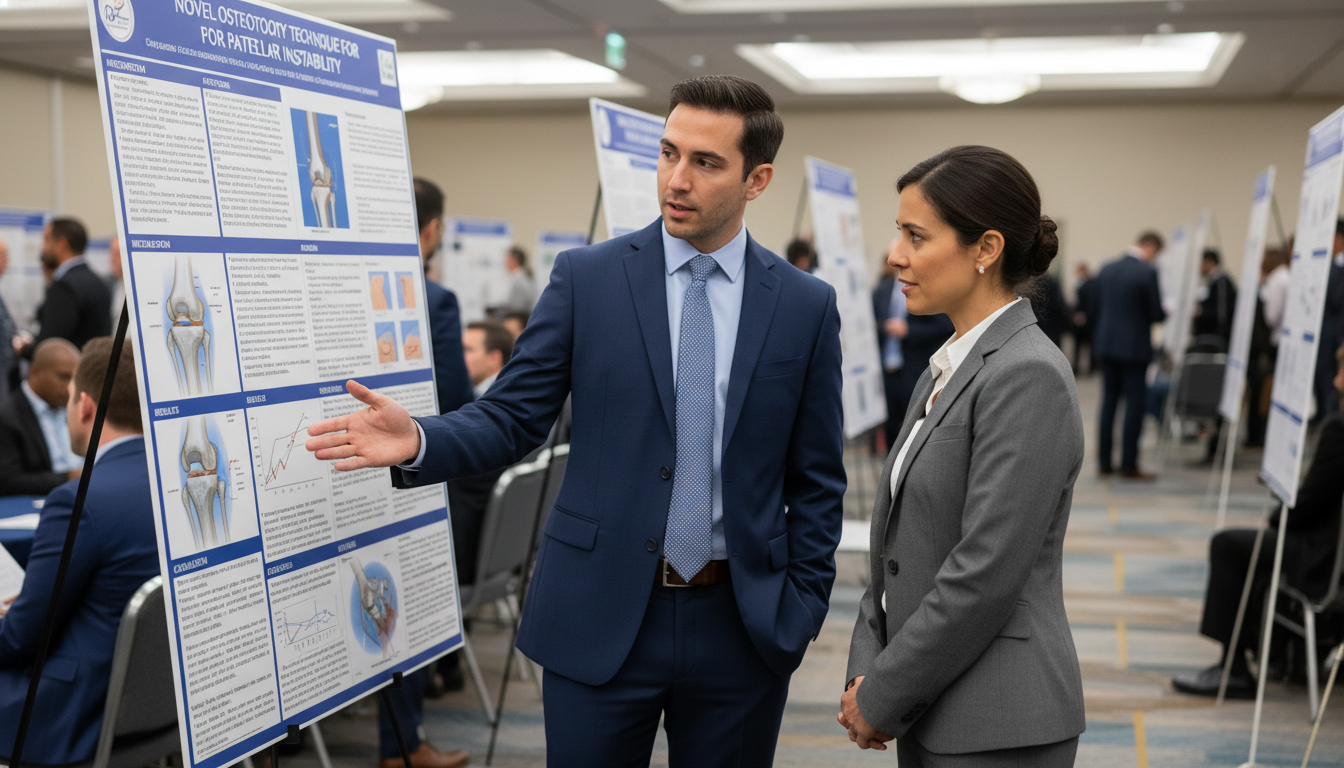
Presentations and conferences: underrated boosters
Presentations are often easier to achieve quickly than full publications and still count as research for residency:
- Poster presentations
- Easier to obtain, good for early-career work
- Aim for recognized meetings (AAOS, subspecialty societies, regional/national conferences)
- Oral presentations
- More competitive, but more impressive
- Great material for interview discussions
Prepare to talk about:
- Your study question and why it matters clinically
- Your role in the project
- Key results and what they might change in practice
- Limitations and potential next steps
How to list research on ERAS effectively
When you document your research in the ERAS application for orthopedic surgery residency:
- Use accurate titles and roles
- Don’t overstate your position (e.g., say “data collection and drafting of methods” instead of “designed and led the study” if that’s not accurate)
- Include all scholarly products
- Published or in-press peer-reviewed articles
- Submitted manuscripts (clearly labeled as “Submitted” or “Under review”)
- Abstracts, posters, oral presentations
- Book chapters or invited reviews
- Highlight ortho-related work
- If you have research outside orthopedics (e.g., cardiology, oncology), list it, but make sure your primary focus for interview discussions is on your orthopedic projects
Talking about your research during interviews
Interviewers will often ask you:
- “Tell me about your most meaningful research project.”
- “What was your role?”
- “What did you learn from this experience?”
- “How would you improve the study if you could do it again?”
Prepare concise, confident 1–2 minute responses for 1–3 key projects that cover:
- Background: The clinical problem and why it matters
- Methods: The approach (retrospective review, prospective cohort, etc.)
- Your role: Specific responsibilities, challenges, and how you overcame them
- Results/impact: Main findings and their clinical significance
- Reflection: What you learned about research, orthopedics, and yourself
Strategic Pathways for Different Applicant Scenarios
Every MD graduate approaches the orthopedic surgery match from a unique starting point. Below are tailored strategies depending on where you are and what you need.
Scenario 1: Strong metrics, little to no research
If you have strong board scores and clerkship performance but minimal research:
- Goal: Build a credible, focused research profile in 6–12 months.
- Strategy:
- Immediately join 1–2 ongoing retrospective or review projects that can reach submission quickly.
- Aim for at least one first- or second-author manuscript and one or two posters before ERAS.
- Focus on a single subspecialty (e.g., sports, trauma) to create a coherent narrative.
Scenario 2: Average scores, strong passion for ortho
If your metrics are average for ortho but you are committed:
- Goal: Use research to demonstrate dedication and academic potential.
- Strategy:
- Consider a dedicated research year if feasible, especially at an institution with a strong orthopedic department.
- Aim for multiple ongoing projects with at least 2–3 tangible outputs (submitted or published).
- Cultivate strong letters from research mentors who can highlight your work ethic and growth.
Scenario 3: Reapplicant or career changer
If you are reapplying to orthopedic surgery or switching from another specialty:
- Goal: Clearly show growth, maturity, and sustained interest in orthopedics.
- Strategy:
- Focus on substantial, visible projects—not just padding your CV.
- Ensure your research timeline clearly shows continued commitment to ortho after your previous cycle.
- Use your personal statement and interviews to connect your research experience with what changed in your perspective and preparedness.
Scenario 4: Limited access to orthopedic research at your home institution
If your medical school has few ortho faculty or low research output:
- Goal: Build a research record despite institutional limitations.
- Strategy:
- Seek remote collaborations through:
- Emailing faculty at nearby institutions
- National organizations’ mentorship programs
- Residents/fellows you meet on away rotations
- Focus on projects that can be done with publicly available data or literature-based studies (systematic reviews, meta-analyses).
- Use your application to explain briefly that you sought out opportunities beyond your institution, which can be viewed positively.
- Seek remote collaborations through:
Frequently Asked Questions
1. Do I need a dedicated research year to match into orthopedic surgery?
Not necessarily. Many MD graduates match into orthopedic surgery without a dedicated research year, especially if they:
- Have strong board scores and clinical performance
- Start research early in medical school
- Accumulate several meaningful ortho-related projects over time
A research year becomes more valuable if:
- You are targeting highly academic or research-heavy programs
- You need to significantly strengthen a weak or nonexistent research profile
- You are a reapplicant or coming from a less well-known school and need to stand out
2. How many publications are needed to be considered “research-strong” for ortho?
There is no universal threshold, but as a general guide:
- Competitive for most programs: 1–2 ortho-focused publications + several posters/abstracts
- Research-strong candidate: 3–5+ orthopedic publications with at least 1–2 as first or second author, and multiple conference presentations
More important than the absolute number is the coherence of your research story, your actual contribution, and your ability to discuss your work intelligently in interviews.
3. Does non-orthopedic research help my application?
Yes—non-orthopedic research still demonstrates:
- Ability to complete projects
- Familiarity with the scientific process
- Skills in data analysis and writing
However, for an orthopedic surgery residency, it is ideal to have at least some orthopedic-specific research. If you already have substantial non-ortho research, add 1–2 ortho-focused projects to create a bridge between your past experience and your current specialty interest.
4. How late is too late to start research before applying?
Ideally, you’d begin research by early MS2 or the start of clinical rotations. But even if you are closer to your application year:
- You can still complete case reports, small retrospective studies, or systematic reviews within 6–9 months.
- Even in-progress work can be listed on ERAS if it is substantial and clearly described.
- Poster submissions often have shorter timelines and can still demonstrate activity.
If you’re starting late, prioritize projects with realistic timelines and strong mentorship rather than ambitious, long-term studies that won’t produce anything tangible before you apply.
By approaching research with intention—selecting the right mentors, focusing on feasible and relevant projects, and following through to publication or presentation—you can craft a research portfolio that substantially strengthens your MD graduate residency application in orthopedic surgery. The aim is not to chase an arbitrary number of publications, but to build a body of work that convincingly illustrates your curiosity, discipline, and future potential as an orthopedic surgeon.