Understanding the Role of Research in a Preliminary Medicine Year
Preliminary medicine (prelim IM) positions sit at a unique crossroads: they’re one-year internal medicine internships that often serve as a bridge to advanced specialties like neurology, anesthesiology, radiology, dermatology, PM&R, ophthalmology, and radiation oncology. Because of this transitional nature, applicants are frequently unsure how much research matters, what kind of research to focus on, and how to realistically build a research profile in such a short time.
For many of the advanced specialties that require or recommend a preliminary medicine year, research is a meaningful differentiator in the residency match. But the way you build that research profile—and how heavily it weighs—varies based on:
- Your target advanced specialty (e.g., derm vs. anesthesia vs. neurology)
- Whether you’re a US MD, DO, or IMG
- The academic vs. community focus of your desired programs
- Whether you have prior research and publications before the prelim year
This guide will walk you through:
- What “counts” as a strong research profile for a preliminary medicine applicant
- How many publications realistically matter (and what kind)
- How to get involved in research before and during your prelim IM year
- How to tell your research story effectively in your application and interviews
The goal is not to turn you into a full-time scientist. Instead, it’s to help you be strategic and efficient—so that every hour you invest in research for residency, especially in a busy intern year, actually advances your long-term career goals.
What Programs Look for: Research in the Context of a Prelim IM Application
Research expectations for a preliminary medicine year depend heavily on what comes next. Programs know that prelim IM is often a stepping stone. They implicitly evaluate your research profile through the lens of your planned advanced specialty.
1. The Baseline: For Most Prelim IM Programs Themselves
Most pure preliminary medicine programs (especially in community settings) are not primarily research-driven. For the prelim IM spot alone:
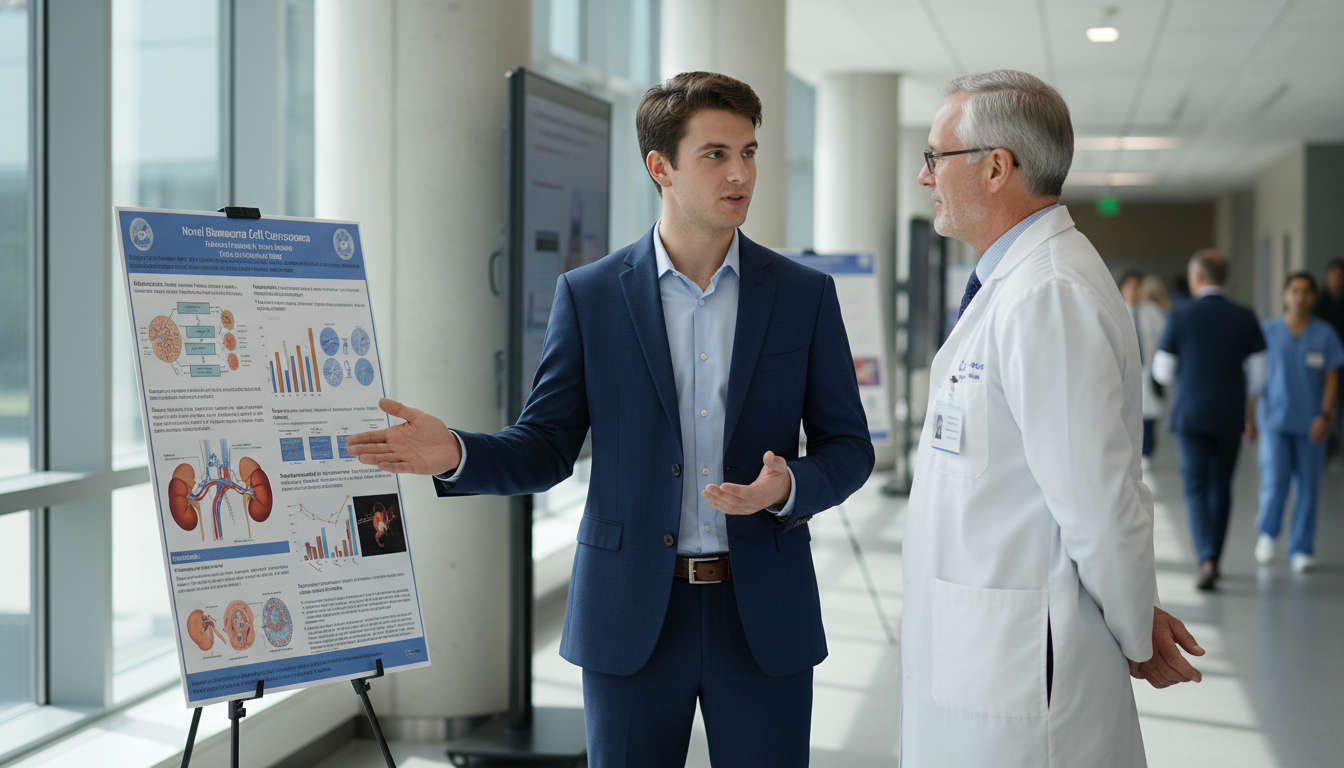
- Having some scholarly activity (e.g., a poster, quality improvement project, case report) is a plus, not a strict requirement.
- Programs are more focused on:
- Clinical performance and evaluations
- Step/COMLEX scores
- Professionalism and work ethic
- Letters of recommendation
That said, for prelim programs attached to major academic centers, your research background can:
- Signal academic interest and commitment to scholarship
- Increase your appeal if you’re trying to transition from prelim to categorical internal medicine
- Help align you with faculty mentors who can support your future specialty plans
2. The Real Driver: Your Advanced Specialty
Where research matters much more is in your advanced specialty match. For many applicants, the preliminary medicine year is just one component in a larger, research-influenced trajectory.
Broadly, in terms of research expectations:
High-research-demand specialties (often competitive):
- Dermatology, radiation oncology, ophthalmology, radiology, neurology (academic tracks), some subspecialty-track IM pathways
- Here, a solid research profile—especially with publications—is often a key filter.
Moderate-research-demand specialties:
- Anesthesiology, PM&R, neurology (community-focused programs), some transitional and preliminary-based tracks
- Research is helpful and differentiating, but not mandatory at all programs.
Lower-research-demand specialties:
- Some community-based anesthesiology, radiology, and PM&R programs still value research, but it is usually not a make-or-break factor.
3. “How Many Publications Needed” for a Strong Profile?
There is no universal number. Programs rarely think in such rigid terms. But you can think in tiers of competitiveness:
Minimal research profile
- 0–1 poster or abstract, maybe a case report
- Adequate for many prelim IM spots, especially community programs
- May be enough for less research-heavy advanced specialties if other metrics (scores, letters, clinical performance) are strong
Moderate research profile
- 1–3 posters/abstracts, 1+ manuscript (co-author), possibly QI involvement
- Very reasonable for many applicants to anesthesia, neurology, PM&R, radiology at a broad range of programs
- Strong for most prelim medicine programs, even at academic centers
High research profile
- Multiple publications (especially first- or second-author), a coherent theme, national presentations, maybe a research year
- Competitive edge for derm, rad onc, ophthalmology, and top academic programs in other specialties
- Particularly helpful if you are an IMG or if your test scores are average or slightly below the mean
Rather than ask “how many publications needed,” ask:
- Do I have evidence of sustained scholarly interest?
- Do my experiences form a coherent narrative that fits my target specialty?
- Can I confidently discuss the methods, results, and clinical relevance of my work?
Types of Research and Scholarly Work That Matter (and How to Prioritize)
In a busy prelim IM year, you can’t do everything. You need to prioritize high-yield, realistic research opportunities. Not all scholarly activities are equal in time cost or impact, but many can contribute to a strong research for residency profile.
1. Clinical Research (Retrospective, Observational, Prospective)
Why it matters:
Clinical projects are directly aligned with internal medicine and many advanced specialties. They demonstrate ability to ask clinically relevant questions, handle data, and interpret outcomes.
Examples:
- Chart reviews: outcomes of stroke patients admitted to your facility
- Predictors of ICU transfer among ward patients
- Comparative outcomes of two treatment pathways for a common condition
Pros:
- Directly relevant to clinical practice
- Highly valued in academic programs
- Tangible output: abstracts, posters, manuscripts
Cons:
- Requires data access and IRB approval (often months)
- Hard to start from scratch during a busy intern year
Strategic advice:
- If you’re entering prelim IM and already matched (or planning to match) into a research-heavy advanced specialty, try to start or join projects in medical school or during your application year, so the prelim year is used to finish, analyze, and publish rather than initiate everything.
2. Case Reports and Case Series
Why it matters:
Case-based scholarly work is often the most feasible for interns. It requires fewer resources and can still lead to publications for match.
Examples:
- A rare adverse reaction to a commonly used medication
- Unusual presentation of a common disease (e.g., MI presenting with atypical symptoms)
- A cluster of similar unusual cases forming a small case series
Pros:
- Fast turnaround compared with large clinical projects
- Realistic for a busy intern: you’re literally surrounded by potential cases
- Good way to learn medical writing and literature review
Cons:
- Individually lower “weight” than large clinical trials or systematic reviews
- Some journals charge fees or have lower impact
Strategic advice:
- When you see a unique case, flag it early to your senior or attending:
- “This seems unusual—would you be open to working on a case report with me?”
- Keep a simple template for case report notes: history, hospital course, relevant labs/imaging, outcome, and key teaching points.
3. Quality Improvement (QI) and Patient Safety Projects
Why it matters:
QI is deeply embedded in modern residency education and is particularly relevant to prelim IM since interns are on the front lines of system processes.
Examples:
- Reducing unnecessary lab draws on a medicine ward
- Improving handoff quality between night and day teams
- Increasing guideline-concordant anticoagulation in atrial fibrillation
Pros:
- Often built into residency curricula—easy on-ramp
- Can lead to posters, local presentations, and sometimes publications
- Highly valued in applications because it shows systems thinking and leadership
Cons:
- Not always easily publishable without rigorous methodology
- Time-consuming to design, implement, and measure outcomes
Strategic advice:
- Seek out existing QI initiatives that need help with data collection, analysis, or writing.
- Even if the project doesn’t get published, it can still be compelling on your CV and in interviews if you clearly describe your role and impact.
4. Systematic Reviews, Narrative Reviews, and Book Chapters
Why it matters:
Review work is well-suited to applicants who may not have direct access to patients or data (e.g., awaiting the start of prelim IM, or during research electives). They can be completed remotely with a good mentor.
Pros:
- Flexible schedule, can work at your own pace
- Can demonstrate deep knowledge of a specific clinical domain
- Often lower barrier to entry for co-authorship
Cons:
- Systematic reviews require strong methodology and time
- Narrative reviews may be harder to publish in higher-impact journals without a recognized expert as senior author
Strategic advice:
- If you already know your advanced specialty, target a topic aligned with that field (e.g., imaging trends in stroke for neurology-rads, sedation practices for anesthesiology).
- Ask faculty:
- “Are you working on any review articles where I could assist with literature search, screening, or drafting sections?”
5. Basic Science and Translational Research
Why it matters:
For some applicants—especially those targeting highly academic or research-intense specialties (rad onc, derm, ophthalmology)—prior basic science work can be a powerful asset.
Pros:
- Shows depth of scientific training and technical skills
- Can yield multiple high-quality publications
Cons:
- Very difficult to initiate from scratch during a prelim IM year
- Often not directly related to daily clinical work
Strategic advice:
- If you already have basic science experience, leverage it:
- Maintain collaborations from medical school or a previous research year.
- Focus your prelim IM time on finishing, analyzing, or writing up existing data.
When and How to Build Your Research Profile Across the Prelim Timeline
Your research profile is not built in just one year. Ideally, it evolves across several phases:
- Pre-application (late med school / pre-residency gap)
- Applying for prelim IM and advanced specialty simultaneously
- During the preliminary medicine year itself
1. Before Applying: Laying the Foundation
This is often the most flexible time for research, before the demands of intern year.
Actions to take:
- Join one or two ongoing projects with clear roles and timelines (e.g., data collection, manuscript drafting).
- Aim to get at least:
- One or two abstracts/posters for meetings
- Possible manuscripts in progress or under review
- Clarify your specialty direction; this helps give coherence to your research efforts.
If you’re still unclear about your final specialty, consider:
- Working on broad internal medicine topics (e.g., heart failure, sepsis, stroke) that are relevant to many future paths.
- Prioritizing skill-building: literature review, basic statistics, academic writing.
2. While Applying: Presenting Your Existing Research
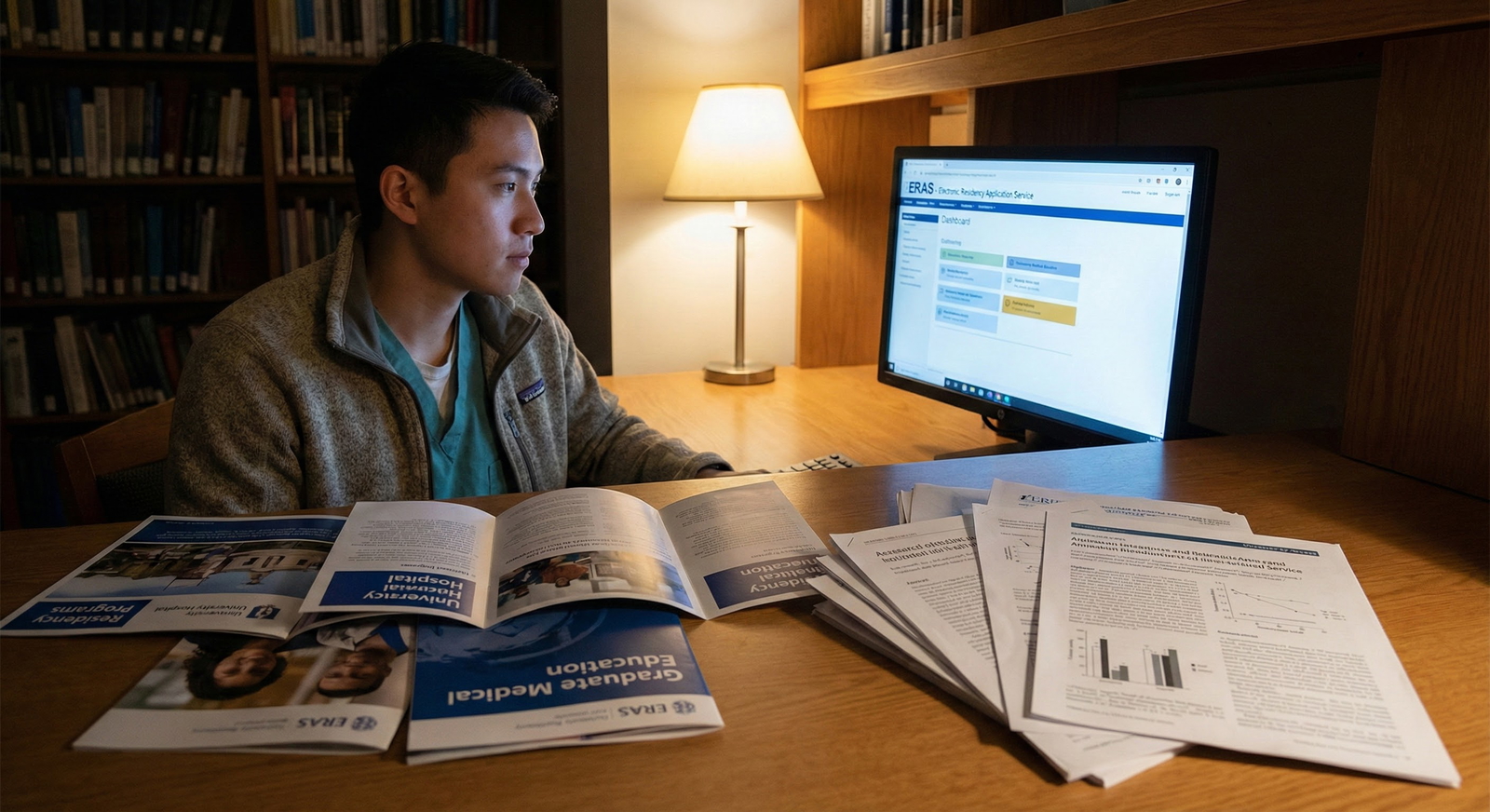
When you submit ERAS for both prelim IM and your advanced specialty:
Ensure your CV clearly lists:
- Accepted manuscripts (even if in press)
- Submitted manuscripts (label as “submitted” or “under review”)
- Posters, oral presentations, and QI projects
In your personal statements:
- For prelim medicine, highlight how research has trained you to think critically, but keep focus on your clinical internship goals.
- For the advanced specialty, tie your research trajectory to the future field.
EMPHASIZE:
- What did you actually do (not just your title)?
- What did you learn that will make you a better resident and physician?
3. During the Prelim IM Year: Tactical, Not Heroic
Once internship begins, your time becomes your greatest limiting factor. The goal is focused, tactical moves, not massive new projects.
Realistic goals during prelim IM:
- Finish projects started in medical school: editing drafts, responding to reviewers, finalizing abstracts.
- Identify 1–2 feasible new opportunities, such as:
- A case report or small case series
- Contributing to an ongoing QI project
- Helping with data analysis/writing for a senior resident’s or faculty member’s study
Key principles:
- Time-box your commitment:
- For example: “I can commit 3–4 hours per week and a few weekend sessions over the next 3 months.”
- Be transparent with mentors about your schedule and call burden.
- Protect your clinical performance—poor evaluations are far more damaging than a slightly lighter research portfolio.

Finding Projects and Mentors as a Prelim Medicine Resident
Strong research begins with the right mentorship and environment. As a prelim IM resident, you are often new to the institution and there for only one year, which can make it harder to identify and join projects. You’ll need to be proactive and strategic.
1. Mapping the Local Research Landscape (First 1–2 Months)
Early on, invest time to learn:
- Which departments are research-active related to your intended specialty.
- Which attendings are known for mentoring residents on projects.
Concrete steps:
- Ask co-residents and seniors:
- “Who here is most involved with research in neurology/anesthesiology/radiology/IM?”
- Attend:
- Research seminars, grand rounds, and departmental conferences
- Residency or department research meetings if open to prelims
- Check:
- Department websites for faculty research bios
- PubMed for your hospital’s name and target specialty keywords
2. Approaching Potential Mentors Effectively
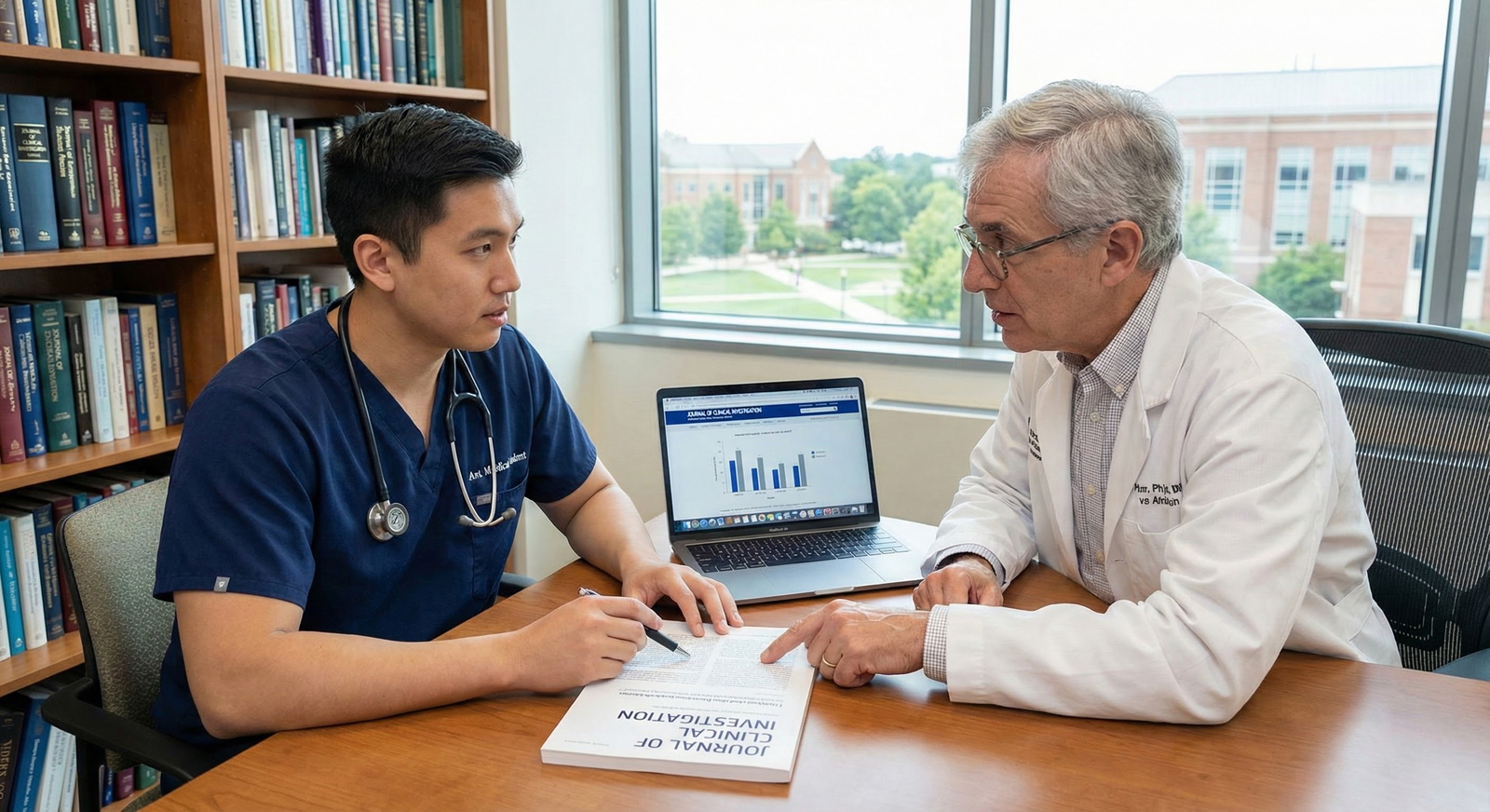
Faculty are often open to working with motivated residents—especially if you show that you’ve done your homework.
When you email a potential mentor:
- Keep it brief, specific, and respectful of time.
Example template:
Dear Dr. [Name],
I am a preliminary internal medicine resident with an interest in [target specialty/topic]. I read your recent work on [specific paper or area] and am very interested in getting involved in research during my prelim year. I can realistically commit about [X hours per week] and would be happy to help with data collection, literature review, or manuscript preparation.
If you are currently working on any projects that could use additional support, I’d greatly appreciate the opportunity to discuss how I might contribute.
Sincerely,
[Your Name], PGY-1 Internal Medicine (Preliminary)
Be explicit about:
- Your time constraints
- Your skills (e.g., prior experience with data collection, stats, reference managers, basic coding)
- Your timeline (you’re only at the institution for a year)
3. Choosing Projects Wisely
When deciding what to say “yes” to, consider:
- Timeline feasibility:
- Is there a realistic chance this project can reach at least an abstract or poster stage within 6–9 months?
- Your role clarity:
- Is your role well defined (e.g., data collection, literature review, writing specific sections)?
- Mentor track record:
- Has this mentor successfully guided residents to publications before?
If a project seems overly ambitious for your timeframe—multicenter prospective trials, de novo basic science—it might be better as a longer-term collaboration beyond your prelim year, rather than your primary focus during it.
4. Remote and Cross-Institution Collaborations
If your prelim institution is limited in research infrastructure, consider:
- Continuing projects with mentors from your medical school or prior institution.
- Joining multi-institution online collaborations, for example:
- Student/resident research networks
- Specialty-specific collaborative groups (often advertised via national societies)
Remote contributions that still count:
- Data abstraction into shared databases
- Literature reviews and reference management
- Drafting introduction, methods, or discussion sections under supervision
These efforts can still generate publications for match and show continued engagement during your prelim year.
Showcasing Your Research in Applications and Interviews
Even a modest research portfolio can have a big impact if presented effectively. Programs care less about raw numbers and more about your understanding and application of what you did.
1. On Your CV/ERAS
Make your research section:
- Accurate and honest: clearly distinguish accepted, submitted, and in-progress work.
- Complete but not inflated: do not list “submitted” manuscripts that are not actually submitted.
- Organized: group by type (peer-reviewed publications, abstracts, presentations, QI projects).
Highlight:
- First- or second-author roles
- Reputable conferences and journals
- Relevance to your target specialty
2. In Your Personal Statement
For prelim IM:
- Show how research helped you:
- Develop critical thinking and an evidence-based approach
- Appreciate the complexity of clinical decision-making
- Connect your scholarly background to being a thoughtful intern—not just future subspecialist.
For advanced specialty applications:
- Describe a coherent story:
- What sparked your interest in the field?
- How did your research deepen that interest?
- How do you plan to integrate research into your career (academic vs. clinically focused, QI vs. clinical trials, etc.)?
3. During Interviews
Be prepared to discuss any project on your CV in detail. Interviewers often ask about your most significant research.
Prepare in advance:
- A 1–2 minute “research elevator pitch” for your main project:
- The question: “We wanted to know whether…”
- Methods: “We reviewed X charts / surveyed Y patients / implemented Z intervention.”
- Results (main findings): concise, not overly technical
- Impact: how it might change practice or inform further research
Common pitfalls:
- Overstating your role—interviewers can often tell when details are vague.
- Getting lost in jargon without being able to explain clinical relevance.
Aim to communicate:
- Your grasp of the big picture
- The skills you gained (e.g., data analysis, teamwork, writing, critical reading of literature)
Frequently Asked Questions (FAQ)
1. Do I really need research to match into a preliminary medicine year?
Not strictly. Many prelim IM programs, especially community-based ones, do not require research for match. Strong clinical performance, exam scores, and letters typically matter more. However, for prelim positions at academic centers—and especially if you are also targeting a competitive advanced specialty—having at least some structured research or scholarly work definitely strengthens your application and signals academic interest.
2. How many publications do I need for competitive advanced specialties if I’m doing a prelim IM year?
There is no fixed number. For highly competitive specialties (dermatology, rad onc, ophthalmology, some academic neurology/radiology programs), successful applicants often have multiple publications and presentations, sometimes 5–10 or more, especially if including all abstracts and posters. But quality, relevance, and your actual role matter more than just counts. For anesthesiology, PM&R, and many neurology or radiology programs, 1–3 solid scholarly outputs (e.g., a publication and a couple of posters) plus strong clinical performance can be very competitive.
3. I’m an IMG aiming for an advanced specialty. How should I prioritize research during my prelim IM year?
As an IMG, research can be a powerful way to offset unfamiliarity with your training background and to demonstrate academic rigor. During your prelim year:
- Focus on finishing and publishing any ongoing projects from before residency.
- Try to join 1–2 projects that have a realistic chance of reaching at least abstract or manuscript stage within a year (case reports, QI, retrospective reviews).
- Make sure you also excel clinically—programs will not overlook poor intern performance, no matter how strong your research is.
4. My prelim program doesn’t seem very research-oriented. Do I still have options?
Yes. Even in less research-heavy environments, you can:
- Seek case reports and QI projects tied to everyday clinical work.
- Reach out to research-active departments or faculty at your institution’s main academic affiliate, if applicable.
- Continue remote collaborations with prior mentors from medical school or other institutions.
- Leverage online multi-institution research collaboratives or specialty society initiatives.
Your research profile for residency does not have to rely solely on your prelim program; it can be built across institutions and over time, as long as your contributions are genuine and clearly documented.
By approaching research for residency and the prelim IM year with a strategic, realistic plan, you can build a compelling research profile without compromising your core responsibility: becoming a strong, reliable, and clinically excellent intern.