Why Your Research Profile Matters So Much as a Non‑US Citizen IMG
If you are a non-US citizen IMG or foreign national medical graduate aiming for US residency, your research profile is no longer optional—it is a strategic asset.
Program directors increasingly use research productivity to differentiate among large numbers of applicants. For IMGs, especially those who are non-US citizens and may not have US clinical experience or US letters of recommendation initially, a solid research portfolio can:
- Demonstrate academic excellence beyond exam scores
- Show commitment to a specialty and long-term involvement
- Provide US-based connections and letters of recommendation
- Help offset disadvantages like visa status, older graduation year, or lower school reputation
You do not need to be a “superstar scientist” with dozens of high-impact publications. But you do need a deliberate strategy to build a credible, coherent research profile that supports your residency goals.
This guide focuses on practical, realistic strategies tailored to the constraints faced by non-US citizen IMGs: geographic distance, visa barriers, limited US exposure, and sometimes financial limitations.
Understanding What Counts as Research in Residency Applications
Before you start chasing “more publications,” understand what residency programs actually mean by “research.”
In ERAS and in program director surveys, research experience is broader than just original bench or clinical studies.
Types of Research That Count
Original Research (Clinical or Basic Science)
- Prospective or retrospective clinical studies
- Chart reviews and database studies
- Lab-based basic science projects
- Outcomes research or quality improvement (QI) with a hypothesis and methods
Quality Improvement (QI) and Patient Safety Projects
- Structured Plan–Do–Study–Act (PDSA) cycles
- Interventions to improve workflow, reduce errors, or enhance patient outcomes
- Increasingly valued in Internal Medicine, Surgery, EM, Pediatrics, etc.
Scholarly Outputs and Knowledge Synthesis
- Systematic reviews and meta-analyses
- Scoping reviews or narrative reviews (if methodologically sound)
- Clinical guidelines, protocol development
Educational Research and Curriculum Projects
- Designing and evaluating a teaching module
- Studying impact of a new training method
Case Reports and Case Series
- Especially if rare, educational, or associated with a strong literature review
- Less impactful than original research, but good entry point and still respectable
Types of Publications That Matter
When programs scan your CV, they look at both quality and quantity. Recognized categories include:
- Peer‑reviewed journal articles (original research, reviews, meta-analyses)
- Case reports and small case series in reputable journals
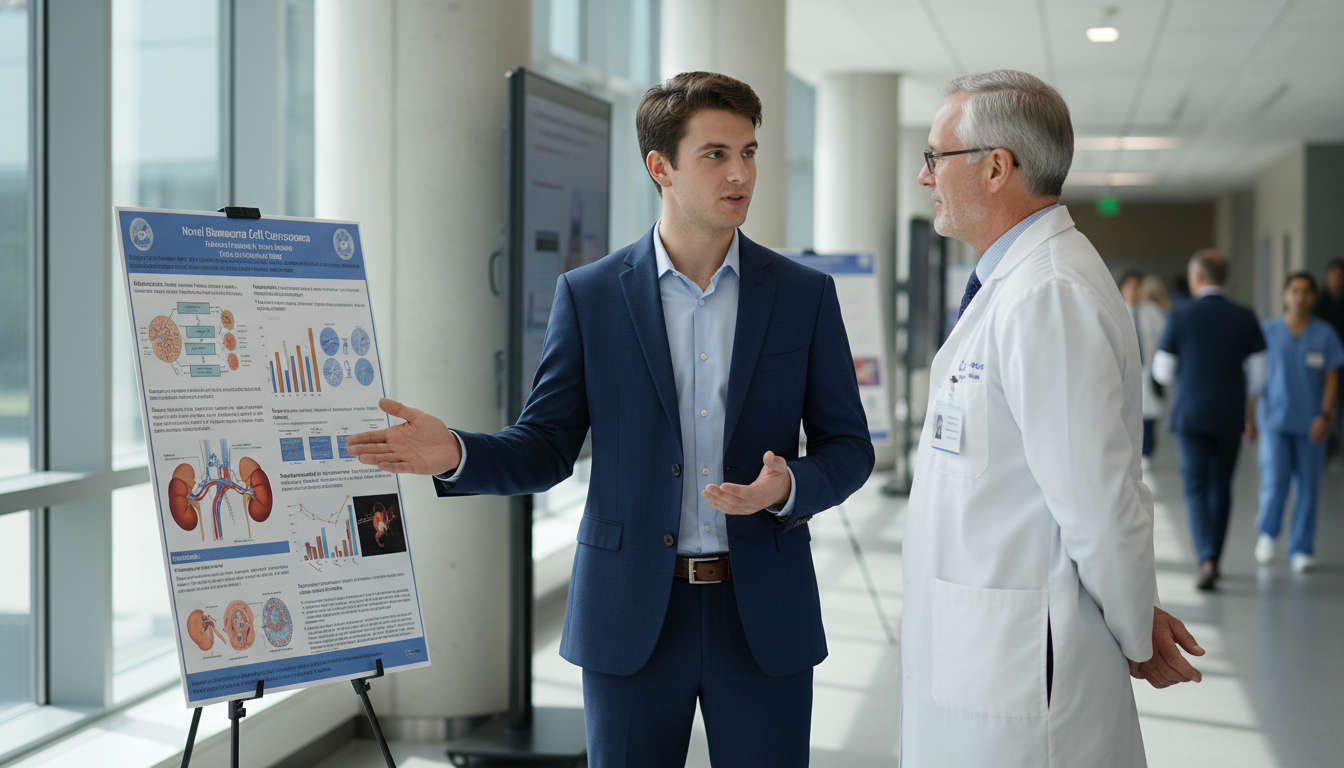
- Conference abstracts and posters (national or international meetings)
- Oral presentations at conferences or institutional symposia
- Book chapters in recognized academic texts
Predatory or low-quality journals still “count” in a technical sense, but program directors may recognize them. Aim for sound, legitimate journals whenever possible, even if they are not high-impact.
How Many Publications Are “Enough”?
There is no single magic number. Instead, think in terms of tiers and your overall profile:
- Highly competitive specialties (Dermatology, Plastic Surgery, Radiation Oncology, Neurosurgery, some academic Internal Medicine programs):
- It is common to see applicants with 10–20+ entries (including abstracts and posters).
- Moderately competitive specialties (Internal Medicine, Pediatrics, Neurology, General Surgery, Anesthesiology):
- Many successful non-US citizen IMGs have 3–8 scholarly items, with at least 1–2 peer‑reviewed journal articles.
- Less competitive or community-focused programs:
- Even 1–3 meaningful projects or publications can significantly strengthen your file.
Instead of asking “how many publications needed,” focus on this formula:
Depth (sustained involvement) + Relevance (aligned with your specialty) + Visibility (publications/presentations) + US Connection (if possible)
For a non-US citizen IMG, 3–5 well-executed, clearly described projects related to your specialty can be more effective than 15 superficial or obscure items.

Step 1: Clarify Your Specialty Focus and Time Horizon
Your research profile should not look random. It should tell a story:
“I am committed to [specialty X] and have explored it deeply through research, clinical experiences, and mentorship.”
Choose a Clear Primary Specialty
Even if you’re uncertain, pick a primary path early because your research portfolio should mostly align with it:
- Internal Medicine
- Pediatrics
- General Surgery
- Psychiatry
- Neurology
- Family Medicine
- Others (e.g., Pathology, Radiology, etc.)
You can have some cross-specialty work (e.g., general public health, global health, education research), but try to ensure at least half or more of your projects relate clearly to your intended specialty.
Example:
- You aim for Internal Medicine.
- Strong projects: diabetes management, heart failure outcomes, hospital readmissions, hypertension control, COVID outcomes in adults.
- Less aligned: pediatric otitis media study (still useful but secondary).
Define Your Realistic Timeline
Research for residency needs to be backward-planned from your target Match year:
- If you are 2–3 years from applying
- You can aim for multiple original projects, possibly a meta-analysis, and several conference presentations.
- If you are 12–18 months from applying
- Prioritize shorter-turnaround projects: retrospective chart reviews, systematic reviews, case reports, and joining ongoing projects.
- If you are less than 12 months from applying
- Focus on contributions that might still be submitted or accepted in time: case reports, literature reviews, single-center QI projects, abstracts and posters.
Programs value work in progress too—“submitted” or “in preparation” is acceptable on ERAS if honestly labeled. But aim to have at least some completed outputs (accepted or published) before you apply.
Step 2: Finding and Securing Research Opportunities as a Non-US Citizen IMG
This is where many foreign national medical graduates struggle: you are often abroad, need visa support, and have limited direct access to US hospitals. But there are workable pathways.
Strategy A: Remote Collaboration with US or International Institutions
You can meaningfully contribute to research from your home country.
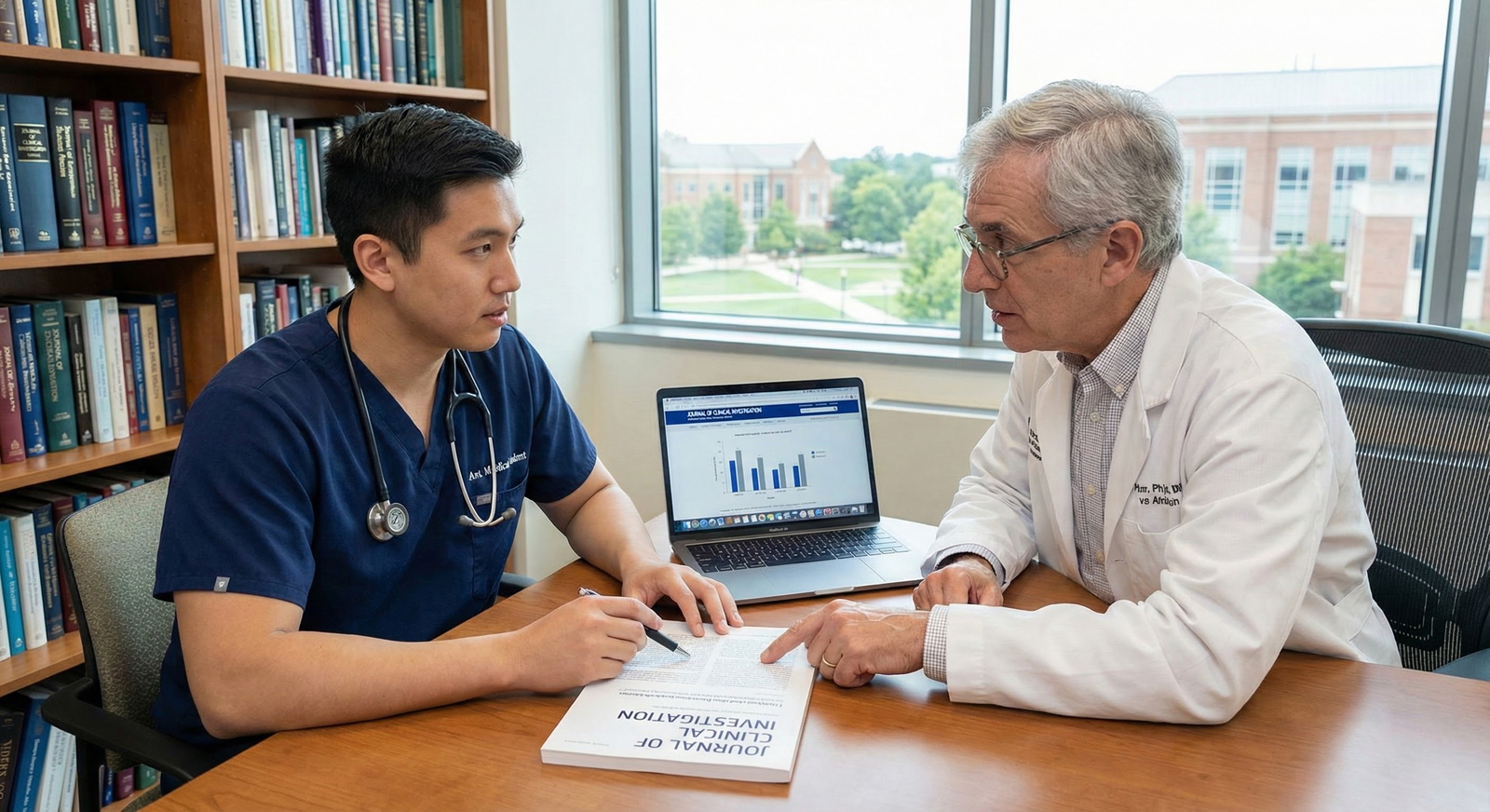
How to Identify Potential Mentors
Target Academic Departments in Your Chosen Specialty
- Visit department websites of US universities (and other English-speaking countries).
- Look at faculty profiles: research interests, recent publications, ongoing projects.
- Prioritize junior or mid-career faculty—they often have active projects and may be more open to help.
Use PubMed and Google Scholar
- Search for topics you’re interested in (e.g., “heart failure readmissions” or “pediatric epilepsy outcomes”).
- Identify authors who publish frequently in that area.
- See if they are based in US institutions.
Leverage National/Regional Societies
- Many specialty societies have student/trainee sections or collaborative networks.
- Some host multi-center studies needing data collectors and coordinators—even remotely.
How to Write Effective Cold Emails
Your email must be brief, respectful, and clearly show you can handle real work.
Key elements:
- Specific subject line:
- “Prospective IMG applicant interested in cardiology outcomes research”
- 1–2 sentences introducing who you are (non-US citizen IMG, country, graduation year)
- Mention your USMLE status briefly if strong (e.g., “Step 1 24X, Step 2 CK 25X”)
- Explain your research interests and why you are reaching out to this particular mentor
- Offer concrete skills: data collection, literature review, statistics (if applicable), systematic review tasks, basic coding, etc.
- Suggest flexible, remote involvement and emphasize reliability and time availability
- Attach a 1-page CV optimized for research (highlight any prior work, even if local or small)
Send many of these emails (20–50+) in a targeted, customized way. Low response rates are normal. Consistency matters.
Strategy B: Research Positions and Observerships in the US
If you can travel to the US, a structured research role can dramatically strengthen your profile.
Common Pathways
Volunteer Research Assistant or Research Fellow
- Some labs or departments accept unpaid volunteers for 6–12 months.
- Sometimes labeled as “research scholar,” “unpaid research fellow,” or “visiting research trainee.”
- You need to secure your own funding (family support, savings, scholarships).
Paid Research Positions
- Harder to obtain without prior US experience or visa.
- Often require specific visas (e.g., J-1 Research Scholar, H-1B if very specialized).
- Some institutions hire IMGs as full-time research coordinators.
Integration with Observership or Clerkship
- Some observership programs include a research component or at least exposure to research teams.
- Even if not formal, you can ask attendings if you may assist on small projects or help write case reports.
Caution about Visas:
As a non-US citizen IMG, you must be clear on your visa limitations. Many volunteer positions are okay with B1/B2, but not all. Paid roles require appropriate work authorization (J-1, H-1B, etc.). Always confirm with institutional HR and immigration advisors.
Strategy C: Home-Country and International Research
Research done outside the US still counts and can be highly respected if:
- Methodology is sound
- Topic is relevant to your chosen specialty
- Work is published in recognized or indexed journals
- You can clearly present your role and impact
Examples:
- Conducting a retrospective study on outcomes of stroke patients in your hospital.
- Doing a systematic review and meta-analysis of tuberculosis treatments in low-income countries.
- Designing and leading a QI project to reduce antibiotic overuse in your local clinic.
If local resources are limited, focus on low-cost, high-impact designs:
- Chart reviews
- Surveys (online or paper)
- Simple QI interventions (e.g., new protocol, educational handouts, checklists)
Step 3: Designing a High-Yield Research Portfolio (Even with Limited Time)
Instead of jumping into random projects, think in terms of a portfolio—a set of projects chosen intentionally to maximize impact and feasibility.
Core Principles for Non-US Citizen IMGs
- Feasibility over ambition
A completed simple project is better than an unfinished complex RCT. - Alignment with your specialty
Projects should “speak the same language” as your intended field. - Progression over time
Try to show growth—from data collector to co-author, to primary author or project leader. - Visibility and dissemination
Aim for posters, oral presentations, and publications, not just “experience.”
A Sample High-Yield Portfolio Plan (18–24 Months)
Assume you plan to apply in 2 years to Internal Medicine:
Months 1–3
- Secure mentorship (preferably US-based, but local is fine if that’s what is available).
- Start a retrospective chart review in your local hospital (e.g., diabetic control outcomes).
- Begin a systematic review on a relevant topic (e.g., “Hypertension control strategies in low-resource settings”).
Months 4–9
- Complete data collection and analysis for the chart review.
- Submit an abstract to a regional or national conference.
- Draft and submit the systematic review to a peer-reviewed journal.
- Seek involvement in a senior mentor’s ongoing project (even if small contribution).
Months 10–18
- Transform the chart review into a full manuscript and submit it.
- Present your abstract at a conference (in person or virtually).
- Work on 1–2 case reports from interesting clinical cases you encounter.
- If possible, start a small QI project in your clinic or hospital.
Months 19–24
- Focus on finalizing and submitting all manuscripts.
- Follow up on revisions and resubmissions.
- Ensure accurate documentation of all work for ERAS (status: submitted/accepted/published).
By the time you apply, you might have:
- 1–2 accepted or in‑press journal articles (original work or systematic review)
- 1–2 conference presentations (poster or oral)
- 1–2 case reports
- Evidence of QI involvement
For a non-US citizen IMG, this portfolio is strong, especially when combined with solid USMLE scores and some US clinical exposure.
Step 4: Turning Research Experience into Strong ERAS Application Content
Research alone does not guarantee interviews. You must present it effectively in your CV, personal statement, and interviews.
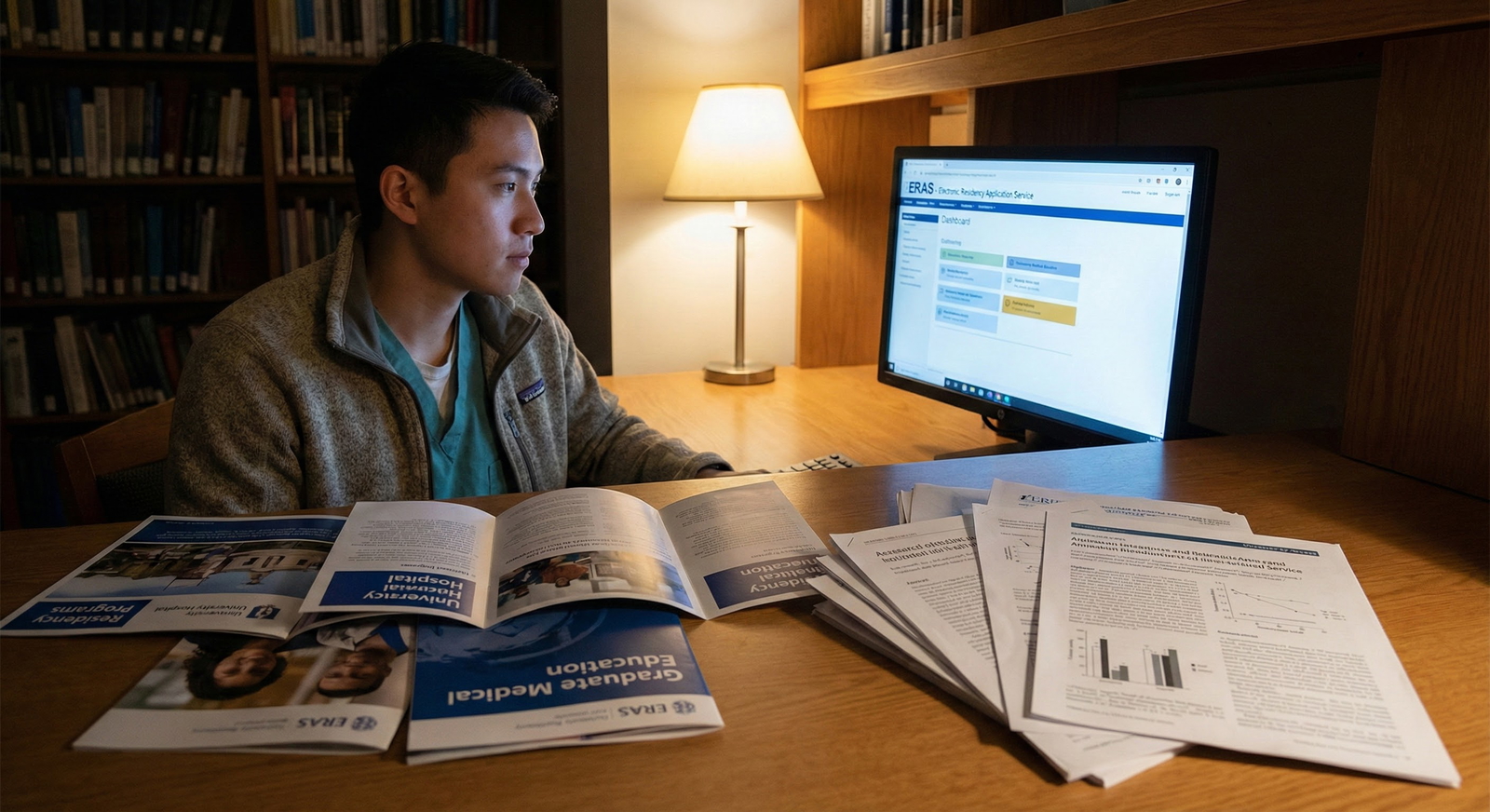
Documenting Research on ERAS
Each experience entry allows you to specify:
- Type of experience (research, leadership, etc.)
- Organization and location
- Dates and hours per week
- Supervisor/mentor
- Description of your role and contributions
Use action verbs and be specific:
- “Designed data collection tools and collected data from 120 patient records”
- “Performed literature search and assisted with systematic review methodology”
- “Conducted basic statistical analysis using SPSS (chi-square, t-tests, logistic regression)”
- “Drafted introduction and discussion sections for manuscript; co‑first author”
Avoid vague phrases like “helped with research” or “was involved in multiple projects” without details.
Highlighting Publications and Presentations
In the Publications section of ERAS, categorize correctly:
- Peer-reviewed journal articles
- Conference abstracts and posters
- Book chapters
- Other scholarly works
Label the status honestly:
- Published
- Accepted/In Press
- Submitted
- In Preparation (use sparingly; only if substantial work has been done)
Program directors can spot inflated or misleading entries. Integrity is crucial.
Framing Your Research in the Personal Statement
Use 1–2 short paragraphs to show how your research:
- Deepened your interest in your chosen specialty
- Taught you skills (critical thinking, evidence-based practice, teamwork)
- Prepared you for an academic or clinical career in US medicine
Example (Internal Medicine applicant):
“While leading a retrospective study on heart failure readmissions at my home institution, I realized how system-level factors and social determinants profoundly impact patient outcomes. Analyzing our data and presenting the results to our department not only strengthened my commitment to Internal Medicine but also sparked my interest in quality improvement and outcomes research, which I hope to continue in residency.”
Discussing Your Work in Interviews
Be prepared to talk intelligently about any research listed on your CV—especially if you are first or second author.
You should confidently explain:
- The research question and why it matters
- Methods (study design, sample, data collection, analysis)
- Main findings and implications
- Your specific role and challenges you overcame
If you only contributed a small part, be honest, but still show understanding of the overall project.
Step 5: Common Pitfalls and How to Avoid Them
Pitfall 1: Chasing Quantity Without Quality
Many non-US citizen IMGs think they must accumulate as many “publications for match” as possible.
Problems this creates:
- Poorly written case reports in predatory journals
- Papers where your role was minimal or unclear
- Projects that you cannot explain during interviews
Instead, aim for fewer, better projects where your contribution is genuine and defensible.
Pitfall 2: Ignoring Ethical and Authorship Standards
As competition increases, some trainees are tempted to cut corners:
- Gift authorship without real work
- Data reuse or manipulation
- Submitting to journals that don’t practice legitimate peer review
Residency programs take research integrity seriously. Any suspicion of misconduct can seriously damage your chances—and your future career.
Always:
- Agree on authorship roles early with your mentor.
- Keep organized records of your contributions.
- Follow institutional and journal ethical guidelines.
Pitfall 3: Overcommitting Without Delivering
Accepting too many projects and then failing to complete tasks will harm your reputation and may cost you letters of recommendation.
As a non-US citizen IMG, your mentors are often your strongest advocates. Protect those relationships by:
- Being realistic about your time
- Meeting deadlines or communicating early if you cannot
- Producing high-quality work consistently
Pitfall 4: Waiting Too Long to Start
Many IMGs postpone research until after finishing all USMLE steps. This can be a mistake if you have several years of potential research time that go unused.
Ideal approach:
- Begin research during medical school or immediately after graduation.
- Combine exam preparation and research where feasible (e.g., lighter research workload during intense exam periods).
If you are already behind, focus on fast-track, feasible projects but still maintain quality.
Frequently Asked Questions (FAQ)
1. As a non-US citizen IMG, do I need research to match into residency?
It depends on the specialty and programs you target, but for most non-US citizen IMGs:
- For academic and university programs: Research is extremely helpful and often expected.
- For community programs: Not always mandatory, but still beneficial and may distinguish you from other IMGs.
In highly competitive specialties, a strong research profile is almost essential. In less competitive ones, even a small number of meaningful projects can improve your chances substantially.
2. How many publications are needed for a competitive application?
There is no official number, but ranges for many successful non-US citizen IMGs are:
- Moderately competitive specialties (IM, Pediatrics, Neurology, General Surgery, Anesthesiology):
- Target 3–8 items (including abstracts and posters), with 1–2 peer‑reviewed articles if possible.
- Highly competitive specialties (Derm, Neurosurgery, etc.):
- Often 10+ total scholarly items, sometimes much more.
More important than “how many publications needed” is: Are they relevant, credible, and can you clearly describe your contribution?
3. Does research done outside the US count less than US-based research?
Not necessarily. Programs value good research regardless of location. However, US-based work has added benefits:
- Provides US mentors who can write letters of recommendation
- Demonstrates ability to function in US academic systems
- May carry more weight at certain institutions
If you can’t access US research easily, focus on producing high-quality studies or reviews in your home country, and aim to publish in internationally visible journals.
4. I graduated several years ago and have a gap. Can research help explain this?
Yes. For an older foreign national medical graduate, research can be a powerful way to:
- Demonstrate ongoing engagement with medicine
- Show academic productivity during the “gap” years
- Provide recent experiences and letters of recommendation
If you have time between graduation and application, using it to build a thoughtful research portfolio is far better than having unexplained inactivity.
Building a strong research profile as a non-US citizen IMG is challenging, but it is achievable with clear strategy, persistence, and ethical work. Focus on feasible, specialty‑aligned projects; cultivate mentorship; and present your work effectively in your application. Done well, your research profile can transform your residency prospects and open doors that might otherwise remain closed.