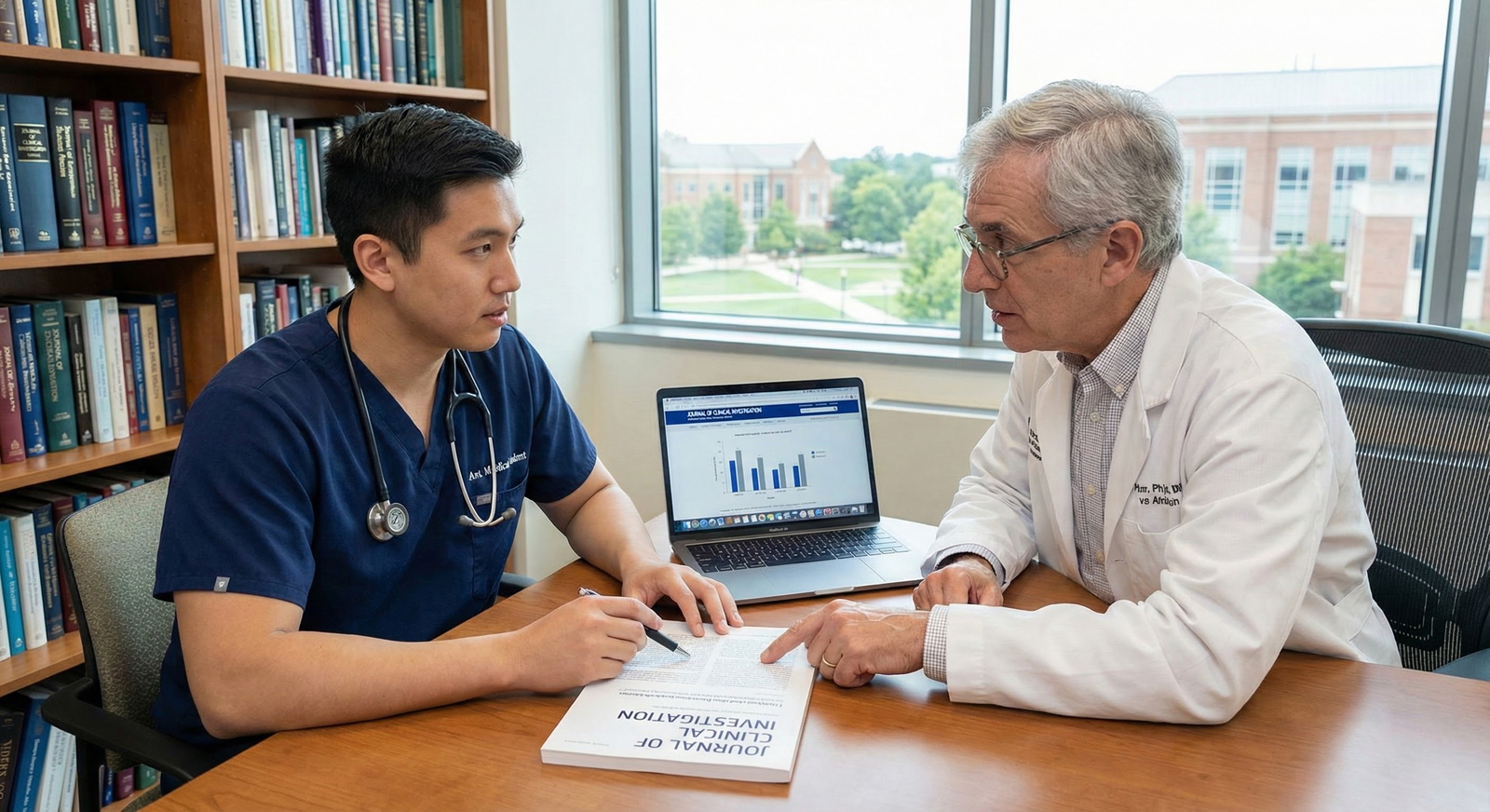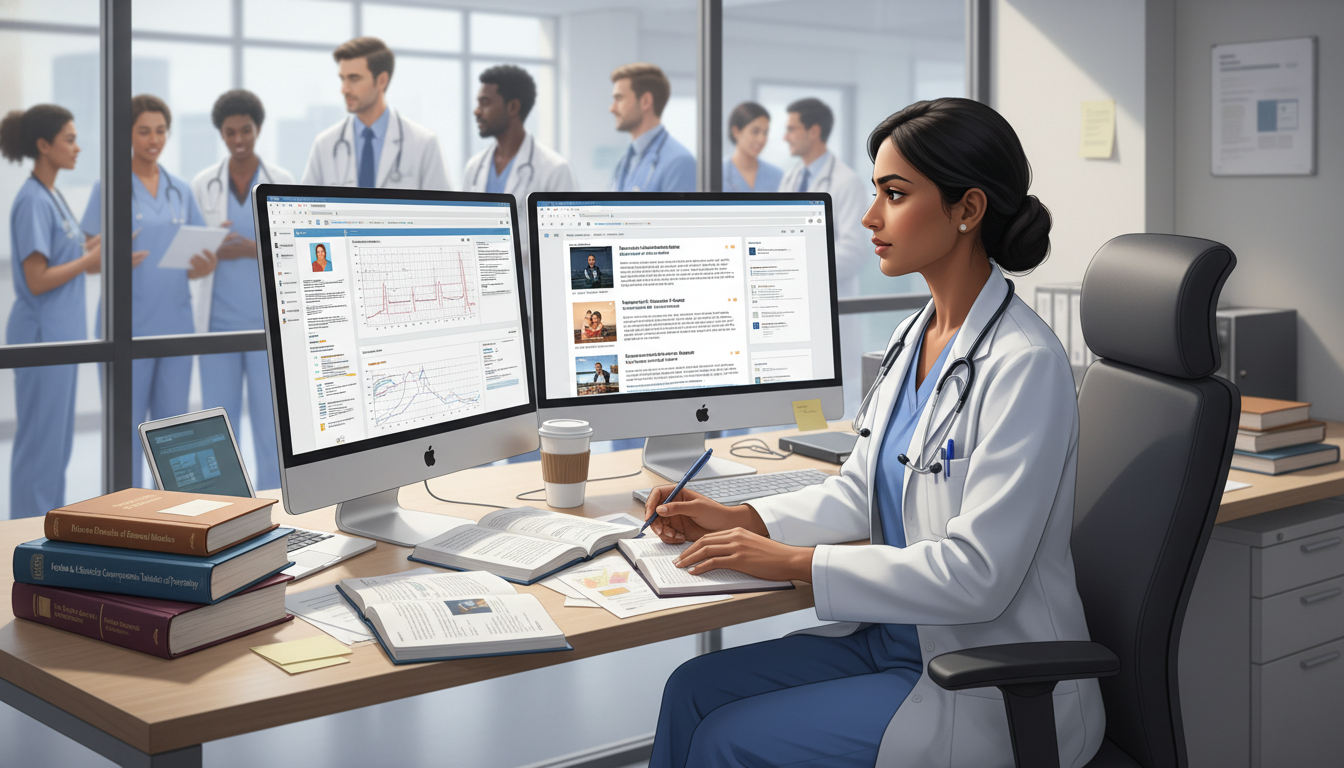
Why Research Matters So Much for US Citizen IMGs
For a US citizen IMG (American studying abroad), a strong research profile is often the difference between a marginal and a competitive residency application—especially in fields like internal medicine, neurology, radiology, anesthesia, and any of the competitive subspecialties.
Programs frequently use research output as a proxy for:
- Academic curiosity and work ethic
- Comfort with scientific literature and evidence-based medicine
- Ability to work in teams and see projects to completion
- Potential as a future educator or academician
As a US citizen IMG, you are often competing directly with US MD and DO graduates who may have built-in research pathways at their home institutions. That does not mean you are at a disadvantage; it means you must be more intentional and strategic about building your research profile.
In this guide, we will cover:
- How many publications are realistically needed and what “counts”
- How to start research if your overseas school has limited opportunities
- Practical strategies to find US-based research and mentors
- How to convert work-in-progress into CV-ready items
- How to present your research for the Match
Throughout, assume you are starting with little or no research experience and may have limited access to US hospitals while abroad. The strategies here are built for that reality.
Understanding What “Counts” as Research for the Match
Before you spend time chasing every possible project, you need clarity on what residency programs actually value.
Types of Research Outputs That Matter
Programs care most about scholarly productivity—any serious, structured contribution to the medical knowledge base. Common categories include:
Peer-Reviewed Journal Articles
- Original research (prospective or retrospective studies)
- Case reports or case series
- Review articles or systematic reviews
- Meta-analyses
- These usually carry the most weight, especially if indexed (PubMed, Scopus).
Conference Presentations
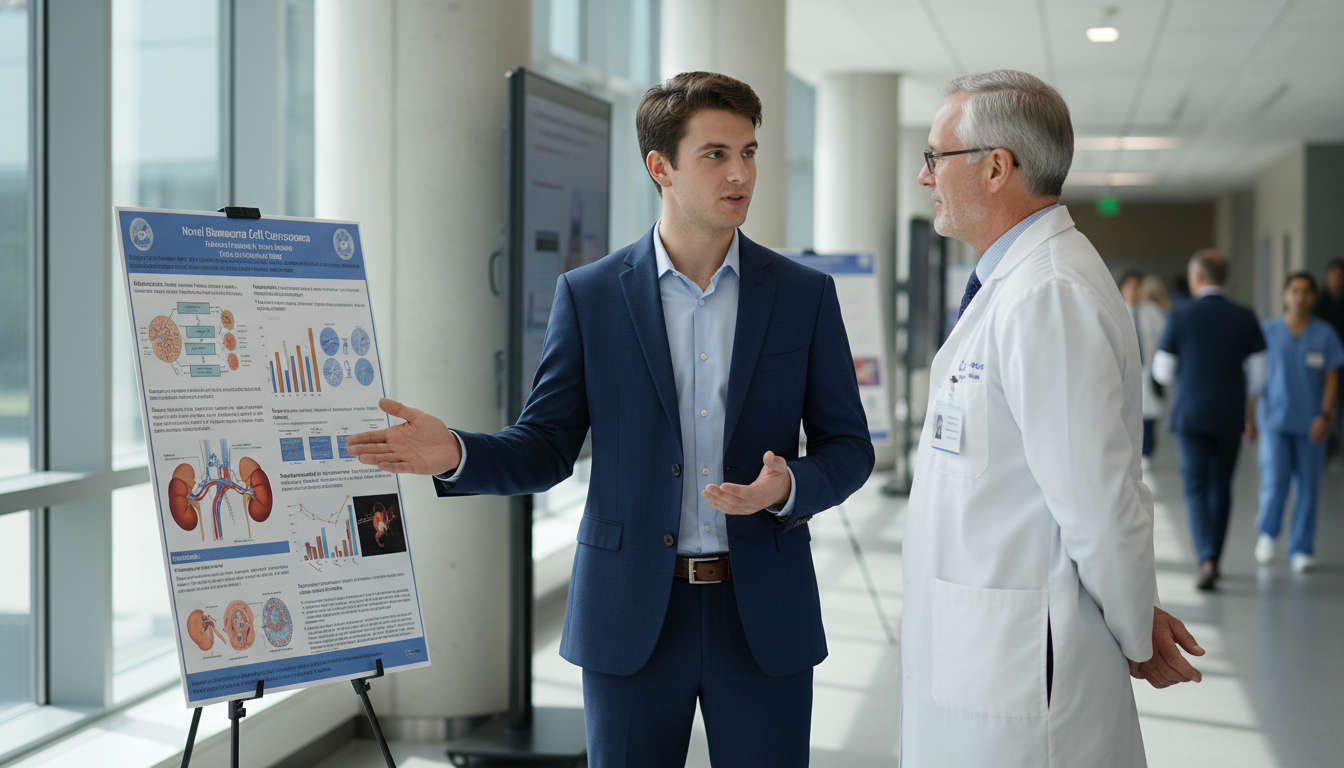
- Oral presentations and poster presentations at:
- National conferences (e.g., AHA, ACP, ATS, ASCO, specialty-specific)
- Regional/local conferences (state or institutional symposia)
- Abstracts often get published in conference supplements, which can be listed as publications.
- Oral presentations and poster presentations at:
Quality Improvement (QI) and Clinical Projects
- Structured QI projects with:
- Problem statement
- Intervention
- Measurable outcomes
- These can be presented at conferences or published as short reports.
- Structured QI projects with:
Other Scholarly Work
- Book chapters
- Educational materials, curricula
- Preprints (medRxiv, Research Square)—still emerging but increasingly recognized
- Non–peer-reviewed articles (e.g., blogs, newsletters) — lower impact but can show interest and initiative.
First vs. Middle vs. Last Author: Does It Matter?
Authorship order does matter, but having work is more important than your position—especially early in your career.
- First author: Shows you led the project—high value.
- Middle author: Still useful, especially if on multiple projects or in reputable journals.
- Last or corresponding author: Typically reserved for senior or supervising faculty.
As a student or recent graduate, you will most commonly be first or middle author. Aim to have at least a few first-author items, but do not reject middle-author opportunities just because they are not first-author.
How Many Publications Are “Needed” for the Match?
There is no universal cutoff, but for a US citizen IMG, expectations are often higher than for US MDs at the same level of competitiveness.
Use this as a rough, non-binding framework (for core specialties like IM, peds, FM; not ultra-competitive ones):
Minimum to not appear empty:
- 1–2 posters or abstracts
- Possibly 1 case report or short paper
Solid, competitive profile (academic-leaning IM, neuro, etc.):
- 3–6 total items (mix of publications and presentations)
- At least 1–2 peer-reviewed articles (even case reports or reviews)
- Several conference abstracts/posters
Highly competitive fields or academic programs (e.g., radiology, anesthesia, subspecialty-leaning IM):
- 6–10+ items
- Multiple peer-reviewed papers (not necessarily all as first author)
- Evidence of longitudinal engagement with a mentor or research group
When people ask, “how many publications needed?”, the actionable answer is:
Enough to show a clear pattern of scholarly engagement over time—typically more than 3–4 solid items for a US citizen IMG aiming at strong academic programs.
Remember: quality, relevance, and coherence (a narrative) matter more than raw numbers.

Getting Started When You Have Little to No Research
Many Americans studying abroad feel stuck because their international school may have limited infrastructure, few active researchers, or no easy access to US study populations. You can still build a strong profile if you approach it systematically.
Step 1: Clarify Your Goals and Timeline
Ask yourself:
- When do you plan to apply? (e.g., September 2026 Match)
- How many months do you realistically have to devote to research?
- Are you abroad full-time, or will you be in the US for any blocks (electives, Step prep, research year)?
Then, map backward:
- If you’re 18–24 months from application:
- You have time for more substantial projects (reviews, retrospective studies, multi-case case series, QI with measurable outcomes).
- If you’re 6–12 months from application:
- Prioritize shorter-turnaround projects like case reports, letters, small retrospective chart reviews, conference abstracts.
Step 2: Exploit What Your School Already Has (Even If Limited)
Even resource-poor environments have clinical activity and interesting patients. Common starting points:
Case reports:
- Identify rare or instructive cases during clinical rotations.
- Approach the attending: “This case may be publishable as a case report—would you be open to supervising if I draft it?”
- Use journals like BMJ Case Reports, Cureus, or specialty-specific case journals.
Mini retrospective reviews:
- Example: “Outcomes of patients admitted with diabetic ketoacidosis at our hospital over the past year.”
- Even simple descriptive studies can be publishable in regional or international journals.
Student research office or dean’s office:
- Ask if they track student research, have templates, or can connect you with faculty who’ve published.
Step 3: Use Remote and Data-Based Opportunities
You do not always need to be physically in the US to do research for residency.
Potential remote-friendly projects:
Systematic or narrative reviews:
- Ideal if you have good literature search and writing skills.
- You can collaborate with US-based mentors who provide topic guidance and name recognition.
Survey-based projects:
- Online surveys targeting physicians, residents, or medical students.
- Can be run from anywhere if you have IRB approval and a network.
Retrospective chart reviews (if you have HIPAA-compliant access):
- Some US institutions allow secure remote access; others require physical presence.
- Many international hospitals have their own ethics committees.
Finding Research in the US: Cold Outreach, Networking, and Structured Programs
For American students studying abroad, securing US-based research is particularly valuable because it:
- Connects you with US faculty who may write letters
- Familiarizes you with US healthcare systems and expectations
- Demonstrates commitment to returning to and thriving in the US
Strategy 1: Email Outreach to US Faculty (Cold and Warm Emails)
This is the backbone for many US citizen IMGs.
Target Faculty Strategically
Prioritize:
- Academic IM, neurology, psych, FM, pediatrics, or your target specialty at:
- University hospitals
- Safety-net or county hospitals
- VA medical centers
- Faculty with:
- Recent publications (last 3–5 years)
- Positions like “Director of Research,” “Program Director,” or “Core Faculty”
Use department websites and PubMed to identify those whose work aligns with your interests, for instance in hospital medicine, cardiology, nephrology, etc.
Write a Focused 7–10 Line Email
Key elements:
- Clear subject line: “US citizen IMG seeking remote research opportunity in [field]”
- Introduce yourself: year of graduation, school, US citizenship
- Express specific interest in their work
- Offer concrete time commitment (e.g., 10–15 hours/week for 6–12 months)
- Attach: CV + Step scores (if strong)
Example template (condensed):
Subject: US citizen IMG seeking remote research in hospital medicine
Dear Dr. [Name],
I am a US citizen international medical graduate from [School, Country], currently [finishing my clinical rotations/preparing for Step 2]. I am very interested in [hospital medicine/your work on sepsis outcomes], and I read your recent paper on [specific topic] with great interest.I am seeking an opportunity to contribute to ongoing projects (data collection, literature review, manuscript drafting) and can commit 10–15 hours per week remotely. I am particularly interested in [briefly state goals: academic internal medicine, QI in inpatient care, etc.].
I have attached my CV [and Step scores, if appropriate]. I would be very grateful for any chance to work with you or your team, or for any colleagues you might recommend.
Sincerely,
[Name]
[Contact information]
Expect a low response rate (5–15%). The key is volume and persistence—send dozens of emails, targeted but broad.
Strategy 2: Leverage Any US Clinical Electives or Hands-On Experience
If you will be in the US for electives or observerships:
Before the elective:
- Email the clerkship director expressing your interest in research or QI.
- Ask if any residents or faculty are currently looking for help on projects.
During the elective:
- Ask residents: “Does your team have any ongoing QI or research projects where a student could help?”
- Prepare to contribute quickly—data entry, literature searches, drafting introductions.
After the elective:
- Stay in touch by email.
- Follow up every 4–6 weeks with updates: “I’ve finished the draft of X; what are the next steps?”
- This is how you convert a 4-week rotation into a multi-year research relationship.
Strategy 3: Structured Research Fellowships and Positions
Some institutions offer:
- One-year research fellow positions (often unpaid, sometimes paid) targeted at IMGs.
- Formal research tracks in certain departments (particularly neurology, radiology, oncology, cardiology).
Pros:
- High yield for multiple publications/presentations
- Deep integration into a research group
- Strong letters of recommendation
Cons:
- May require being in the US full-time (visa, cost-of-living considerations)
- Competitive; may prefer applicants with some prior research
If you can afford it, a dedicated research year in the US is one of the most powerful ways to build a strong research profile as a US citizen IMG.
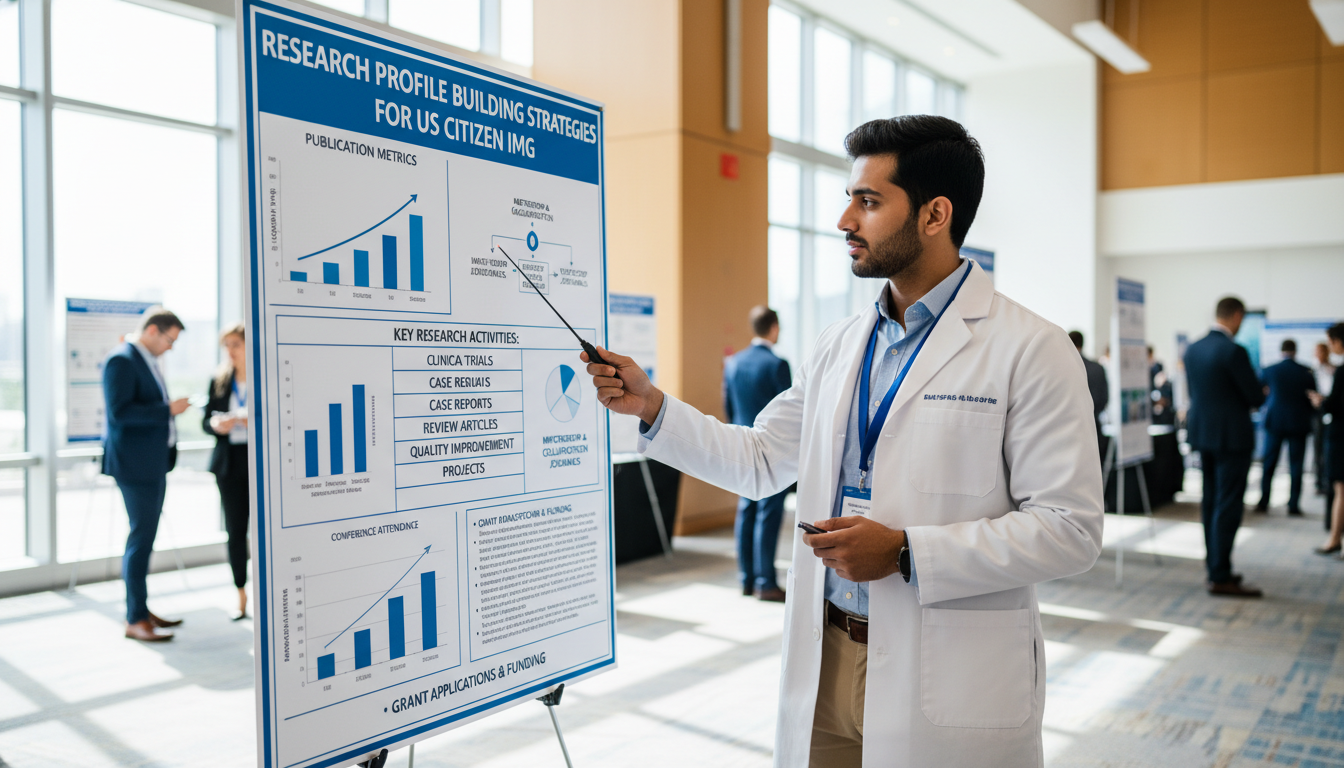
Maximizing Output: From Work-in-Progress to Match-Ready CV
Many US citizen IMGs end up with half-finished projects that never reach publication. To make your research count, you must be deliberate in pushing projects to completion and packaging them properly.
Choose Projects with a Realistic Path to Completion
When you’re offered new opportunities, ask:
- Is there a clear plan and timeline?
- Who is the supervising author and how responsive are they?
- Has this team successfully published similar projects before?
Red flags:
- Projects with no clear endpoint (“We’ll see what happens”)
- Faculty who are notoriously non-responsive or overcommitted
- Overly ambitious designs that are unrealistic for a student without funding
Better to complete three modest projects (case reports, small studies, QI abstracts) than be stuck on a single grand project that never finishes.
Turn Every Project Into Multiple Outputs
Think in terms of research for residency as a pipeline:
- Initial idea / data →
- Abstract (local or regional conference) →
- Poster →
- Journal submission (case report, original article) →
- Secondary analyses (subgroup, educational spin-offs, QI follow-up)
Example:
- You work on a QI project to reduce unnecessary telemetry in a hospital.
- First, you present baseline data as a poster at a local hospital conference.
- Then, you present intervention + outcomes at a regional society meeting.
- Finally, you publish a short article in a hospital medicine journal.
- Parallel to that, you help build an educational module on telemetry use (poster or MedEd portal).
From one core project, you might gain:
- 2 posters
- 1 publication
- 1 educational product
All of these are fair game to list in your ERAS application.
Accurately and Effectively Presenting Research on ERAS
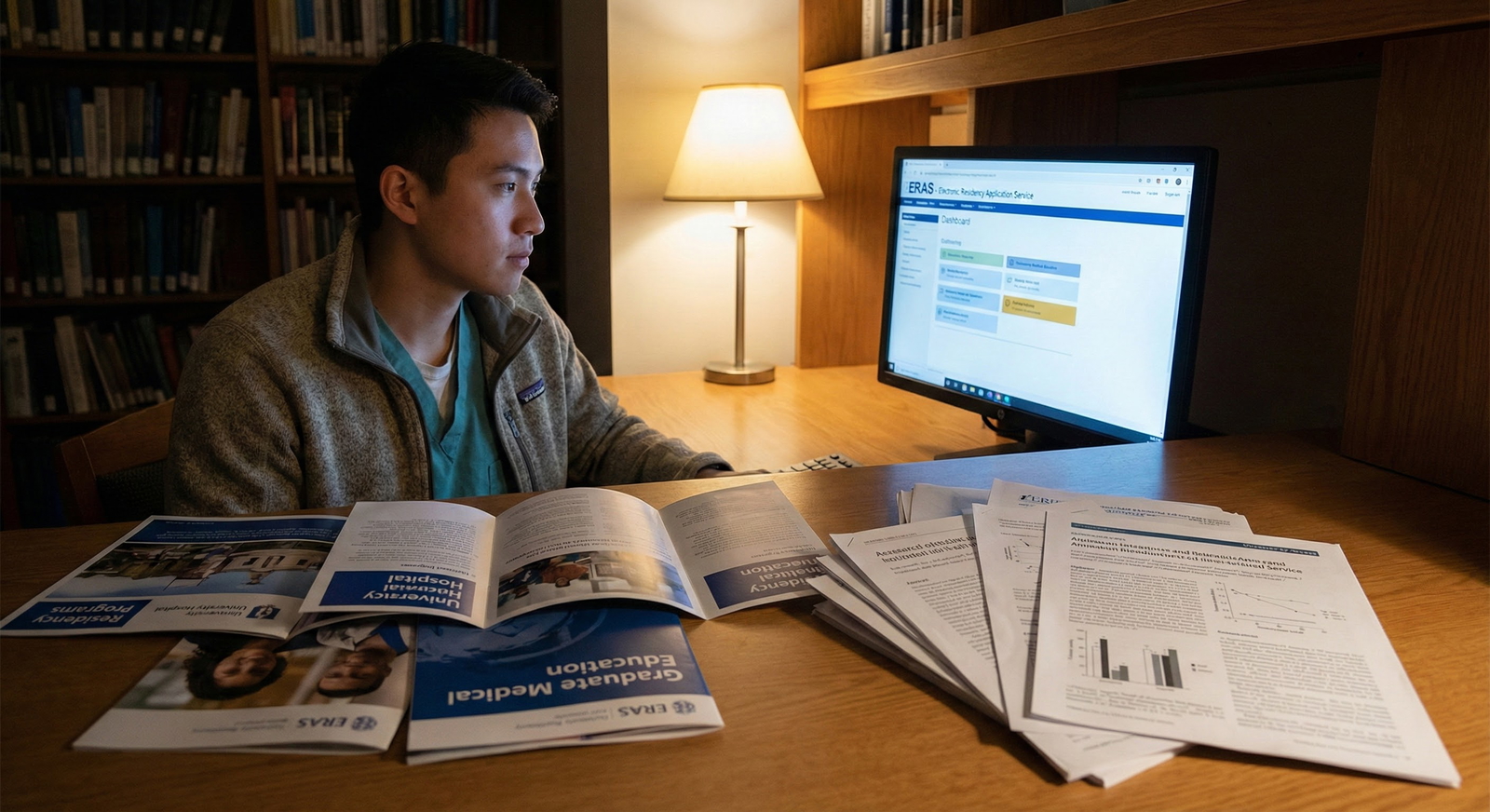
ERAS allows you to categorize scholarly work as:
- Peer-reviewed articles/abstracts
- Oral presentations
- Posters
- Other research activities
Key tips:
Be honest about status
- Use categories like:
- Published
- Accepted
- Submitted
- Avoid listing “planned” or “in preparation” as publications; these can be briefly mentioned in personal statements or interviews, but not as completed items.
- Use categories like:
Use clear, consistent formatting
- Follow a standard citation style (e.g., AMA)
- Include:
- Full author list (with your name highlighted in bold if allowed)
- Title
- Journal or conference name, year
- Status (published/accepted/online ahead of print)
Highlight your role
- If you did data collection, analysis, and drafting, mention: “Primary data collector and first author.”
- This can be explained in the experience description section.
Connect research to specialty interest
- If you’re applying to internal medicine and neurology but have research in dermatology, you can still frame it as:
- Evidence of scientific rigor
- Experience in patient-oriented research
- However, try to have at least some research aligned with your intended specialty.
- If you’re applying to internal medicine and neurology but have research in dermatology, you can still frame it as:
Building a Coherent Research Narrative as a US Citizen IMG
Research for residency is not just about checking boxes; it’s about presenting a coherent narrative of who you are as a future physician.
Align Research with Your Specialty and Personal Story
If you are an American studying abroad and aiming for internal medicine:
- Emphasize work in:
- Hospital medicine
- Cardiology
- Endocrinology
- Pulmonology/Critical Care
- QI (readmissions, LOS, sepsis bundles, etc.)
In your personal statement and interviews, connect the dots:
- “I became interested in hospital medicine during my clinical rotations, which led me to join Dr. X’s project on sepsis outcomes. This experience taught me how structured QI and data-driven decision-making can improve patient care. I hope to continue similar work in residency.”
Use Research to Compensate for Other Weaknesses
If you have:
- Slightly lower Step scores
- Gaps in medical education
- Multiple attempts on an exam
- Lack of US clinical experience (USCE)
Then, a robust and well-presented research portfolio can:
- Show that you can perform at a high academic level
- Give faculty specific achievements to focus on rather than your weaknesses
- Provide strong letters from US mentors attesting to your discipline and growth
Build Long-Term Mentorship Relationships
For a US citizen IMG, letters from US faculty can carry tremendous weight. Use research to build those relationships:
- Be consistent, responsive, and reliable on projects.
- Take initiative—suggest next steps, draft sections without always being told.
- Periodically update your mentor on your progress in exams and applications.
- When the time comes, request:
- A detailed letter of recommendation
- Inclusion in their ongoing or future studies
- Advice on where to apply based on your profile
Strong letters from research mentors often emphasize traits highly valued in residency: curiosity, resilience, teamwork, and follow-through.
FAQs: Research Profile Building for US Citizen IMGs
1. I have zero publications. Can I still match as a US citizen IMG?
Yes, it is possible, especially in less competitive specialties or community-based programs. However, your odds improve significantly if you have at least some research or scholarly activity. If you’re within 12–18 months of your intended application, prioritize:
- 1–2 case reports
- 1–3 posters or abstracts (local or regional conferences)
- Any QI or small retrospective projects you can realistically complete
Even a modest research portfolio signals initiative and can strengthen your application.
2. How many publications do I realistically need as a US citizen IMG applying to internal medicine?
There is no formal cutoff. For a solid, competitive internal medicine application, many successful US citizen IMGs have:
- 3–6 scholarly items total
- At least 1–2 peer-reviewed papers (including case reports/reviews)
- Multiple abstracts/posters
For more academic-oriented IM programs or those in highly desirable locations, having more than 5–6 items, especially with US-based mentors, is highly advantageous.
3. Does research outside my chosen specialty still help?
Yes. While specialty-aligned research is ideal, any rigorous scholarly work helps demonstrate:
- Ability to handle data and literature
- Teamwork and perseverance
- Academic mindset
If your research is in a different field (e.g., dermatology but you’re applying to IM), frame it as foundational experience in critical thinking and evidence-based practice. Still, aim to secure at least some research that is directly related to your target specialty.
4. I am abroad with limited access to US hospitals. How can I get US-based research?
Focus on:
- Remote collaborations:
- Cold email US faculty with clear, concise requests and a defined time commitment.
- Systematic reviews or meta-analyses:
- These can often be done remotely under US-based mentorship.
- Timing US research blocks:
- If possible, plan a research year or 3–6-month block in the US before applying.
- Leveraging any US contacts:
- Former attendings, alumni, or friends in residency can often connect you to research-active faculty.
With persistence and strategic outreach, many US citizen IMGs successfully build US-based research portfolios even while primarily studying abroad.
By approaching research for residency as a structured, multi-year strategy—rather than a last-minute scramble—you, as a US citizen IMG, can transform a potential disadvantage into a powerful asset. Focus on realistic projects, build genuine relationships with mentors, and consistently push your work to completion and presentation. Over time, your research profile will not just help you match; it will define you as a thoughtful, evidence-driven physician ready to contribute meaningfully to your future residency program.