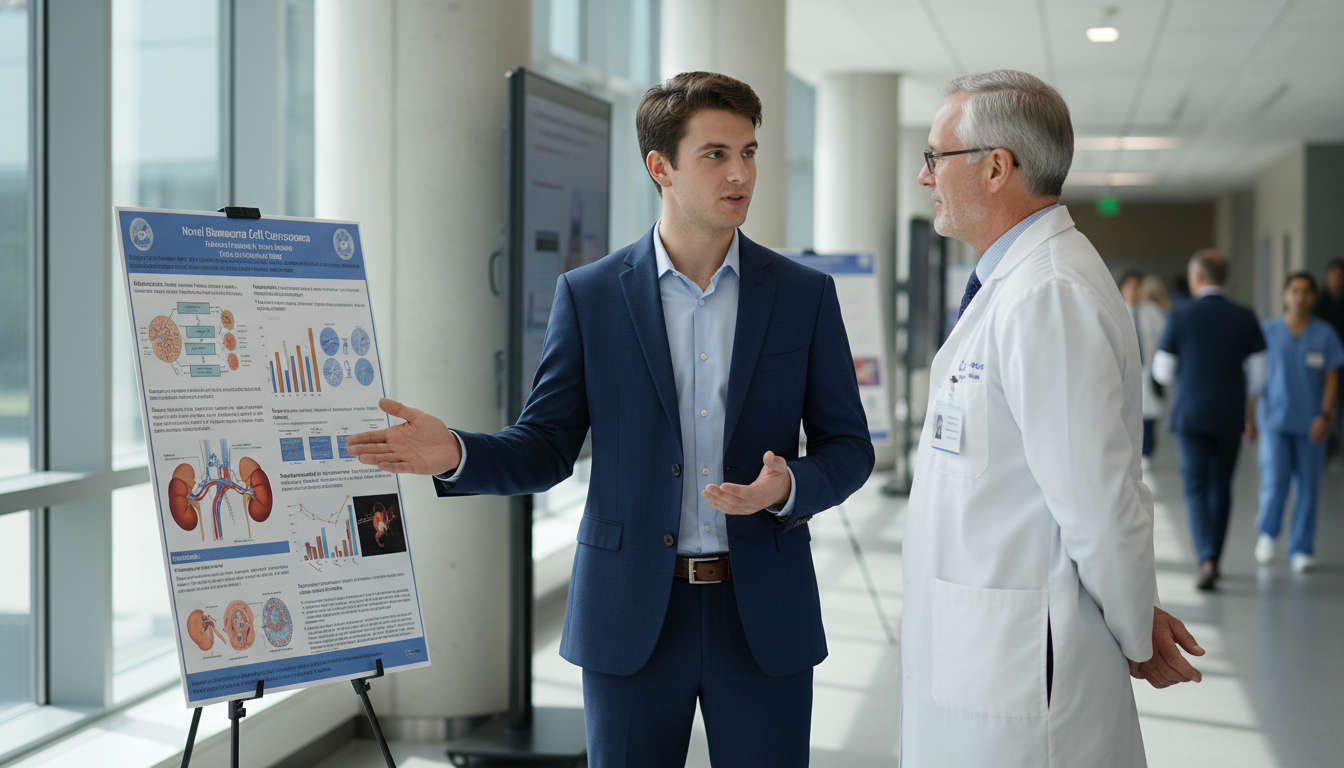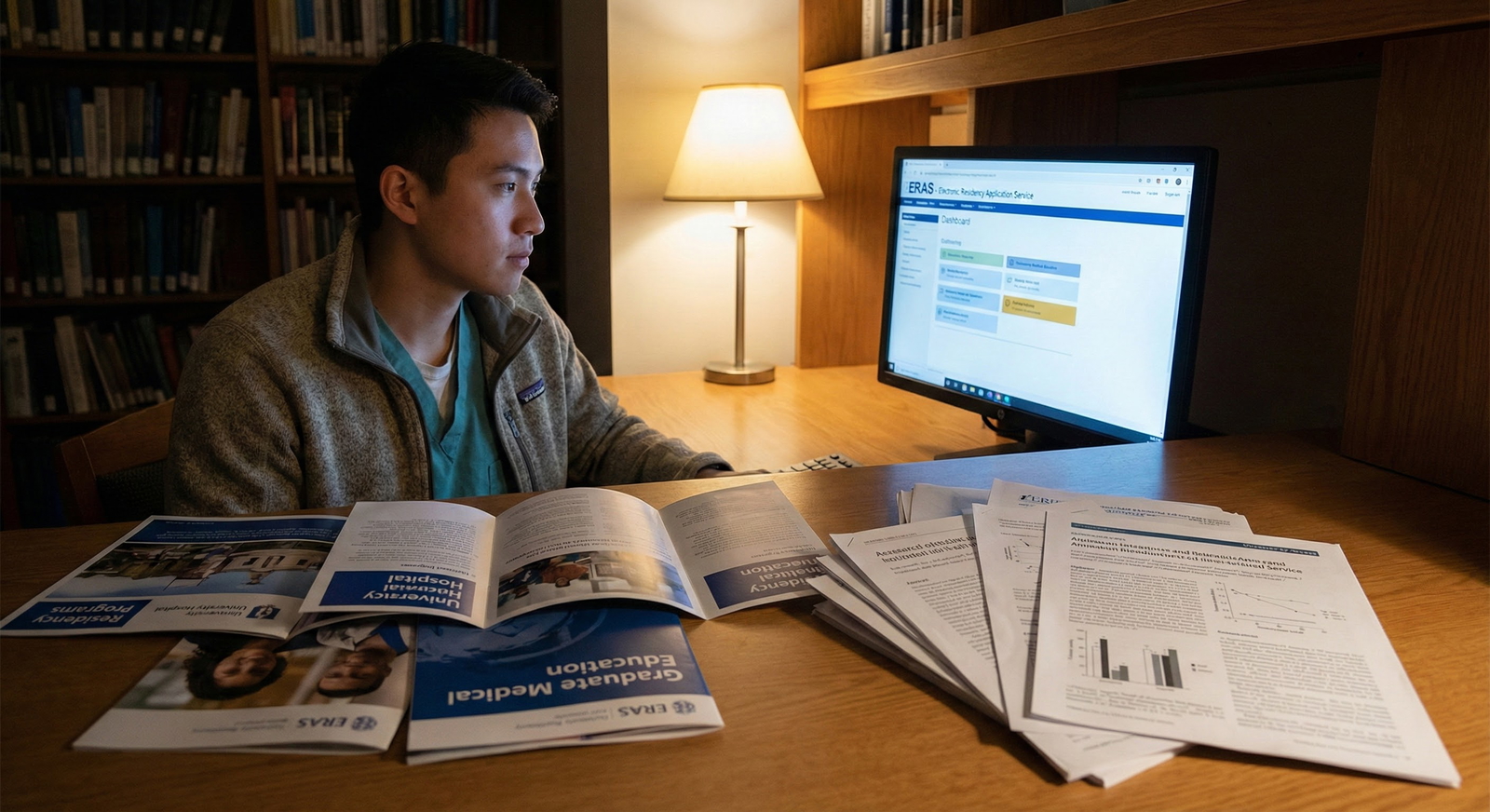
Why Research Matters So Much for Caribbean IMGs in Urology
Urology is one of the more competitive specialties in the United States, and as a Caribbean IMG, you start with additional hurdles: program bias, visa issues, and less name recognition of your school. A strong research profile is one of the few levers you can actively pull to narrow this gap.
Research serves several critical functions for Caribbean IMGs targeting a urology residency:
- Signals academic rigor despite attending a Caribbean medical school.
- Differentiates you from other IMGs with similar scores and clinical experiences.
- Demonstrates commitment to urology as a long-term career path.
- Builds relationships with academic urologists who can advocate for you with strong, specialty-specific letters.
- Provides talking points for interviews and away rotations.
- Shows program directors you can handle academic expectations such as quality improvement, data analysis, and scholarly writing.
For many Caribbean graduates—especially from well-known institutions like SGU, Ross, AUC, Saba—a robust research track record has been a key factor in securing interviews and matching. When you review SGU residency match lists for urology, you’ll often see that matched graduates had substantial research for residency, including multiple abstracts, presentations, and publications.
Your goal is not simply “do some research.” Your goal is to build a coherent, urology-leaning research profile that convinces program directors you are a serious, trainable academic-minded future urologist.
Understanding the Urology Match Landscape as a Caribbean IMG
Before building your research profile, you need realistic context about the urology match as an IMG.
Competitiveness and Filters
Urology is a small specialty with:
- Fewer residency spots compared to internal medicine or family medicine
- Many applicants with high Step scores, strong home institution support, and robust research backgrounds
Program directors often use research and academic activity as a secondary filter, especially once USMLE scores and clinical performance are screened.
For Caribbean IMGs, the following are particularly influential:
- Specialty-specific involvement (urology-focused research, membership in urology societies)
- Quality and quantity of scholarly work
- Visibility through urology conferences and networks
- Strong letters from urologists who know you through research
How Many Publications Are “Enough”?
There is no magic number, but you should understand expectations.
When Caribbean IMGs ask “how many publications needed for urology match?” the honest answer is:
- Aim for at least 3–5 urology-related scholarly items by the time you apply:
- This can include peer-reviewed papers, conference abstracts, posters, oral presentations, or meaningful quality improvement (QI) projects.
- More is better if quality and relevance are maintained. Ten weak, non-urology abstracts are less helpful than three strong urology projects where you had a major role.
- Program directors often value:
- 1–2 peer-reviewed publications (especially if urology-related)
- Multiple urology conference abstracts/posters
- Evidence you understand the full research process (idea → data → analysis → presentation/publication)
Remember, your research profile is evaluated in context: as a Caribbean IMG, research can’t completely overcome poor exams or weak clinical performance, but it can significantly boost a solid application.
Strategic Planning: Building Your Urology-Focused Research Plan
You cannot build a strong research portfolio in a few months. You need a 12–24 month plan, especially as a Caribbean IMG who may be off-cycle or doing clinical rotations outside large academic centers.
Step 1: Clarify Your Timeline
Work backwards from the application cycle you’re targeting:
- Ideally start 18–24 months before applying to the urology match.
- If you’re later in training, compress your efforts but increase intensity and focus.
Rough timeline example (for a third-year Caribbean student):
- Months 1–3: Learn basics of research, identify mentors, join ongoing projects.
- Months 4–9: Take meaningful roles, finish data collection and analysis, prepare abstracts.
- Months 10–15: Submit to conferences and journals, start additional projects.
- Months 16–20: Present posters/orals, finalize manuscripts, update ERAS.
- Months 21–24: Application and interview season; continue small projects and follow-up.
Step 2: Choose Your Primary Research Angle
As a Caribbean IMG, you want your research to signal both competence and passion for urology. That doesn’t mean every project must be urology-specific, but there should be a recognizable pattern.
Potential focus areas:
- Clinical urology research
- Outcomes of prostate cancer treatments
- Kidney stone management quality improvement
- Urinary tract infection treatment patterns in elderly patients
- Translational/basic science
- If you can join a lab (rare during Caribbean clinical years but possible through dedicated research fellowships)
- Health services / outcomes research
- Disparities in PSA screening
- Access to urologic care in underserved or Caribbean populations
- Quality improvement (QI)
- Reducing catheter-associated urinary tract infections (CAUTIs)
- Improving postoperative follow-up after endourology procedures
Aim for at least one project clearly, unmistakably urology-focused that you can talk about as “your main project” on interviews.
Step 3: Align with Your Clinical Rotations
Caribbean schools often place students at multiple affiliated hospitals. Use this to your advantage:
- Identify which hospitals have active urology departments (even if small).
- Ask about:
- Morbidity and mortality data
- Procedure logs
- Quality metrics (catheter days, UTIs, readmission rates)
- Propose projects that leverage existing data rather than starting from scratch—this is faster and more feasible with limited time onsite.
Finding and Securing Urology Research Opportunities as a Caribbean IMG
This is often the hardest step: getting your foot in the door. You may not have a home academic urology department, but you have more options than you think.

Option 1: Leverage Your Clinical Sites and Preceptors
During your core and elective rotations:
Ask every attending and senior resident:
- “Do you or your department have any ongoing research projects where a motivated student could help?”
- “Is there anyone in urology I can contact about research opportunities?”
If your current hospital doesn’t have a urologist:
- Ask the internal medicine or surgery departments if anyone collaborates with urology at neighboring institutions.
- Look for QI projects that intersect with urologic issues (e.g., catheter use, hematuria work-up, postoperative care).
Keep your ask modest and clear:
- “I can help with chart review, data entry, literature reviews, and draft sections of manuscripts. I am committed and can work evenings and weekends to move projects forward.”
Option 2: Cold Outreach to Academic Urologists
Many Caribbean IMGs successfully secure projects through well-crafted cold emails. To maximize your chances:
Identify target institutions:
- Mid-tier academic centers or community programs with academic ties are often more open than top 10 programs.
- Look at smaller programs’ faculty pages, especially faculty publishing in topics that interest you.
Study potential mentors:
- Read 1–2 of their recent urology publications.
- Note any ongoing trials, registries, or clinical interests.
Send focused, personalized emails (no generic mass-emailing):
- Subject line: “Caribbean IMG Seeking Remote Urology Research Experience (Chart Review/Lit Review)”
- Keep it to 2–3 short paragraphs:
- Who you are (Caribbean IMG, year, school).
- Why urology and why them (mention specific paper or project).
- What you offer (time commitment, skills, willingness to learn).
- Attach a 1-page CV highlighting any research experience, exam scores (if strong), and urology involvement.
Send to 20–30 carefully chosen faculty:
- A 10–20% positive response rate is excellent.
- Follow up politely once after 7–10 days if no reply.
Option 3: Dedicated Research Fellowships or “Gap Year” Positions
For some Caribbean IMGs, especially those without any prior research, a 1–2 year dedicated urology research position can be transformational.
- Common titles:
- Research fellow
- Research associate
- Postdoctoral research fellow (even if you’re “just” an MD)
- Where to find them:
- Program websites (urology departments often list research fellows).
- Academic job boards.
- Word-of-mouth from residents and attendings.
- Pros:
- Immersive exposure to urology.
- Multiple projects and potential publications.
- Strong letters from urologists.
- Cons:
- Requires time and often relocation.
- May be unpaid or low-paid.
- Delays residency start.
For Caribbean IMGs in highly competitive fields like urology, this route is often worth it if you can manage the finances.
Option 4: Remote and Collaborative Projects
If you cannot relocate:
- Seek:
- Retrospective chart review projects where data extraction can be done remotely.
- Systematic reviews and meta-analyses in urology topics.
- Database studies using public datasets (e.g., SEER) with mentorship.
- Collaborate with:
- Other IMGs or medical students interested in urology (forming small research teams under one faculty mentor).
- Online research collaboratives or student urology interest groups.
Types of Research Projects That Work Well for Caribbean IMGs in Urology
Not all projects are equal in feasibility or impact, especially given the time constraints and institutional limitations Caribbean IMGs often face. Choose strategically.

1. Retrospective Chart Reviews
Often the most accessible entry point for Caribbean IMGs.
Examples:
- Outcomes of patients with kidney stones treated with ureteroscopy vs shockwave lithotripsy.
- Complication rates after transurethral resection of the prostate (TURP) at a community hospital.
- Patterns of CT vs ultrasound utilization in hematuria work-ups.
Advantages:
- Uses existing data.
- Can be done in a shorter timeline.
- Often leads to abstracts, posters, and sometimes publications.
Key skills to learn:
- IRB basics and patient confidentiality.
- Data extraction and cleaning.
- Basic statistics (with or without a statistician).
2. Case Reports and Case Series
Not high-impact, but very achievable.
Examples:
- Rare urologic tumors.
- Unusual presentation of testicular torsion.
- Unique management approaches for recurrent urinary stones.
How to leverage them:
- Aim to present them at regional urology meetings.
- Use them as “building blocks” while you develop more robust projects.
3. Systematic Reviews and Meta-Analyses
Feasible even without direct patient access, but require discipline and mentorship.
Examples:
- Systematic review of outcomes after minimally invasive partial nephrectomy.
- Meta-analysis of antibiotic prophylaxis regimens for prostate biopsy.
Considerations:
- Learn PRISMA guidelines.
- Use reference management tools (Zotero, EndNote, Mendeley).
- Partner with a statistician for the meta-analysis portion.
4. Quality Improvement (QI) in Urologic Care
QI is often undervalued by students but highly relevant to residency.
Examples:
- Reducing catheter-associated UTIs on a medical or surgical floor.
- Improving documentation of post-void residuals in BPH patients.
- Standardizing perioperative antibiotic use for urologic procedures.
QI projects can yield:
- Posters at quality or urology meetings.
- Talking points about patient safety and systems-based practice.
5. Basic or Translational Science (If Available)
More demanding, but impressive if you can meaningfully contribute.
- Requires:
- Regular lab presence.
- Technical skills and supervision.
- Longer timelines.
- More realistic during a dedicated research fellowship than during busy clinical years.
From Project to Publication: Maximizing Output and Visibility
Doing the research is only half of the battle. You must learn to convert work into tangible outcomes—abstracts, posters, and publications for the match.
Prioritize Projects With a Clear Path to Output
Before fully committing to a project, clarify:
- Is the mentor committed to submitting the work to a conference or journal?
- Are you allowed to be first or second author if your contribution is significant?
- What is the realistic timeline for abstract and manuscript submission?
As a Caribbean IMG, you cannot afford projects that drag on indefinitely without output.
Target Urology-Specific Venues
For the urology match, specialization matters. Try to have at least some of your outputs in urology-focused venues:
- Urology-specific conferences (e.g., AUA sections, local/regional urologic societies).
- Urology journals (even smaller or regional ones).
- Urology-focused poster sessions or resident research days.
This directly supports your narrative: “I’m committed to urology, and here’s the evidence.”
Authorship Strategy
Common questions include “How many publications needed?” and “Does first authorship matter?”
- First-author papers/posters:
- Very valuable, show leadership and major contribution.
- Even one first-author urology paper or major abstract can stand out.
- Middle-author:
- Still helpful, especially if you’re on multiple collaborative projects.
- Shows you can be a reliable, contributing team member.
As an IMG, having a mix of first-author and co-author works is ideal. But don’t obsess over first authorship at the cost of jeopardizing relationships; reliability and professionalism matter deeply to mentors.
Learn Basic Data and Writing Skills
To be genuinely useful (and earn authorship), invest in:
- Basic statistics:
- Understanding p-values, confidence intervals, common tests.
- Using software like SPSS, R, or even Excel for basic analysis.
- Scientific writing:
- Read well-written urology articles and model your style.
- Practice writing introductions, methods, and discussion sections.
- Use templates for abstracts and posters.
Coursera, edX, and institution-based workshops often offer free or low-cost courses in biostatistics and research methods you can do alongside rotations.
Keep a Detailed “Research Tracker”
Maintain a spreadsheet with:
- Project title and brief description
- Type (urology vs non-urology; clinical vs QI vs basic)
- Role (first author, co-author)
- Status (idea, data collection, analysis, drafting, submitted, accepted, published)
- Target conference and journal
- Mentor name and contact
This will help you:
- Populate the ERAS application efficiently.
- Update your CV accurately.
- Speak clearly about your work during interviews.
Integrating Research with the Rest of Your Urology Application
Research alone will not match you into urology, but for a Caribbean IMG, it is often the tiebreaker that earns you interviews at programs that might otherwise overlook your application.
Tell a Coherent Story
Make sure your:
- Personal statement
- ERAS experiences
- Letters of recommendation
- Research portfolio
All point in the same direction: a long-standing, thoughtful commitment to urology.
Example narrative for a Caribbean IMG:
“I became interested in urology during my third-year surgery clerkship, where I rotated with a community urologist in Brooklyn. That experience led me to pursue a retrospective study on outcomes of shockwave lithotripsy vs ureteroscopy at that same hospital. Over the next 18 months, I joined a remote urology research team focusing on PSA screening patterns, resulting in two abstracts submitted to regional urology meetings. These projects have solidified not only my interest in urology, but also my desire to contribute to improving access to urologic care in immigrant and underserved communities.”
Leverage Research for Strong Letters
Mentors who have worked closely with you on projects are often:
- Best positioned to write detailed letters about your diligence, curiosity, and academic potential.
- More likely to advocate directly on your behalf (emails, calls to PDs).
As a Caribbean IMG, a strong letter from an academic urologist who states “I would be happy to have this applicant as a resident” can carry enormous weight, especially when paired with a visible track record of scholarly work.
Use Research to Anchor Away Rotations and Interviews
During away rotations and interviews:
- Be ready to:
- Explain your projects’ objectives, methods, and key results in simple, clear language.
- Discuss what you learned about patient care, ethics, teamwork, and systems-based practice.
- If rotating at a program where you’ve collaborated with a faculty member, ask:
- “Is there time I could meet in person to discuss our ongoing projects?”
- This strengthens relationships and shows follow-through.
Frequently Asked Questions (FAQ)
1. As a Caribbean IMG, how many publications do I need for a competitive urology match?
There is no fixed number, but as a Caribbean IMG you should aim for at least 3–5 scholarly outputs by application time, with a preference for urology-specific projects. These can include:
- 1–2 peer-reviewed articles (urology if possible).
- Several abstracts/posters at urology or general medical conferences.
- Meaningful QI projects that you can present.
More is helpful if your contributions are genuine and your time allows, but quality, relevance to urology, and your actual role matter more than raw quantity.
2. I have no research experience and I’m already in my clinical years. Is it too late?
It’s late, but not too late. You have several options:
- Start with small, high-yield projects (case reports, small retrospective studies, QI) that can be completed within months.
- Consider a dedicated research year in urology if your finances and visa situation allow.
- Seek remote collaborations and systematic reviews while on rotations.
- Even 1–2 focused projects with clear output can strengthen your application and open doors for letters and networking.
3. Does research have to be in urology, or will any specialty help my urology residency application?
Non-urology research still demonstrates academic ability and is definitely better than none. However, for a urology residency:
- At least part of your portfolio should be urology-related to demonstrate genuine interest in the field.
- If you have prior research in another area (e.g., cardiology, oncology), frame it as how you learned key research skills that you are now applying to urologic questions.
- Ideally, ensure that your most recent projects before applying are urology-focused.
4. My Caribbean medical school doesn’t have strong research infrastructure. How can I realistically build a solid research profile?
You will need to be proactive and creative:
- Use your clinical sites to identify local mentors and data sources.
- Rely heavily on cold outreach to academic urologists for remote or collaborative projects.
- Target feasible project types (retrospective chart reviews, systematic reviews, QI) that don’t require a large lab or extensive funding.
- Consider a research fellowship year at a US institution if you are serious about urology and can manage the logistical challenges.
- Consistently nurture mentor relationships; strong letters plus a steady record of research productivity can overcome limitations of your home institution.
By approaching research strategically—selecting feasible projects, prioritizing urology relevance, securing solid mentorship, and converting work into visible outputs—you can transform a potential weakness (being a Caribbean IMG) into a relative strength in your urology residency application.
Your research profile, when thoughtfully built, can make the difference between being filtered out and becoming a serious, interview-worthy candidate in a highly competitive urology match.