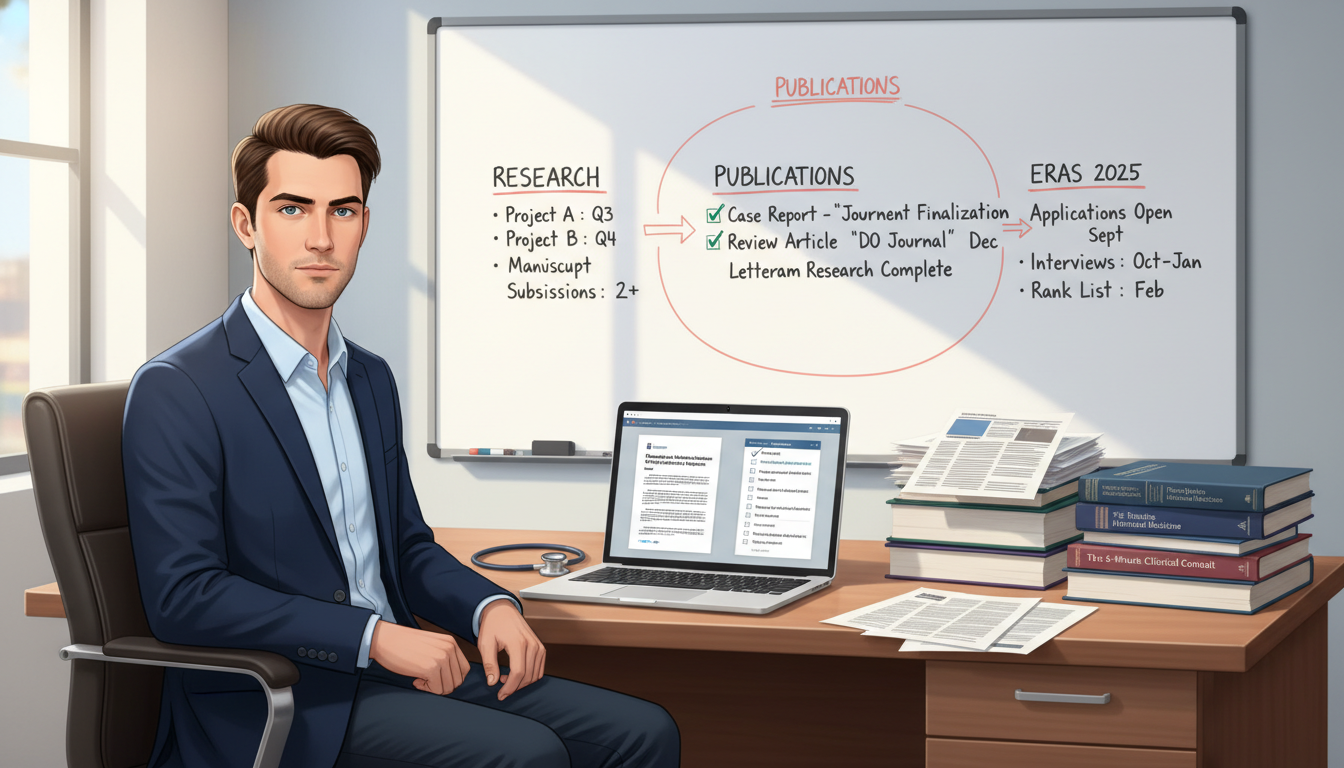
Understanding the Role of Research for a DO Applying to a Transitional Year
For a DO graduate targeting a Transitional Year (TY) program, “research profile building” can feel confusing. TY programs sit at the intersection of preliminary training and career exploration, and their research expectations are quite different from categorical specialties like dermatology or radiology. Yet, research still matters—especially if you are:
- Planning a competitive specialty after Transitional Year
- Applying to academic or university-affiliated TY programs
- Coming from a school or background with limited scholarly exposure
This article focuses on helping a DO graduate residency applicant strategically build a research for residency profile tailored to Transitional Year goals—without losing sight of your future specialty plans.
We’ll cover:
- How program directors view research in TY and osteopathic residency match contexts
- What types of research and scholarly work are realistic and valuable for DO graduates
- How many publications are truly needed (and what counts)
- Step-by-step strategies to build your portfolio during med school, gap years, and TY itself
- How to present your research in ERAS and interviews as a DO applicant
How Transitional Year Programs View Research for DO Graduates
Transitional Year vs Categorical Specialties: Different Expectations
Transitional Year residencies are often:
- Broad-based, with rotations in medicine, surgery, EM, and electives
- Designed as a bridge year before advanced specialties (e.g., radiology, anesthesiology, PM&R, neurology)
- Offered by both community and academic institutions
In general, research is not the top selection factor for many TY programs. Program directors usually place higher priority on:
- USMLE/COMLEX scores
- Medical school performance (MSPE, clerkship grades)
- Professionalism and teamwork
- Strong letters of recommendation
However, research becomes more important when:
- You are applying to academic TY programs at university hospitals
- Your post-TY specialty is highly competitive (dermatology, radiology, anesthesia at top centers, ophthalmology)
- You need a way to differentiate yourself from other DO and MD applicants
DO Graduate Residency Context: Overcoming Perception Gaps
As a DO graduate, you may face:
- Assumptions that DO curricula emphasize clinical skills and OMM more than bench or translational research
- Fewer built-in research opportunities at some osteopathic schools
- Less exposure to large academic health systems
Thoughtful research involvement helps counterbalance these issues by:
- Demonstrating academic curiosity and scholarly ability
- Showing that you can contribute in an academic or hybrid academic-community environment
- Providing tangible evidence you can design, complete, and communicate scholarly work
For Transitional Year residency directors—especially those in university settings—a DO who brings organized, clinically relevant scholarly activity can stand out among both DO and MD peers.
How Many Publications Are Needed—and What Actually Counts?
The Real Answer to “How Many Publications Needed?” for TY
For most Transitional Year programs, there is no strict threshold. Realistically:
- 0–1 peer-reviewed publications is common among matched TY residents, especially in community programs
- 1–3 publications or strong abstracts/posters become more common in academic or competitive TY programs
- For DOs targeting highly competitive advanced specialties after TY, you should aim to meet or approach the norms of that specialty—even if the TY itself is less demanding research-wise
So, if your question is literally “how many publications needed” for a TY program alone, the answer is:
For the majority of Transitional Year programs, any solid, completed scholarly work (even without multiple publications) is an asset, not a requirement.
But for a DO planning radiology, anesthesia, dermatology, ophthalmology, or PM&R at an academic center, your research portfolio during medical school, gap years, and TY should be built with that future specialty in mind.
What Counts as “Research” and “Scholarly Activity” in ERAS?
The osteopathic residency match and ACGME programs recognize a broad spectrum of scholarly work. Value is not only in PubMed-indexed, first-author, randomized trials.
Common categories that count on ERAS and in program director eyes:
- Peer-reviewed publications
- Original research
- Systematic reviews
- Meta-analyses
- Case series
- Case reports
- Particularly meaningful for DOs with robust clinical case exposure
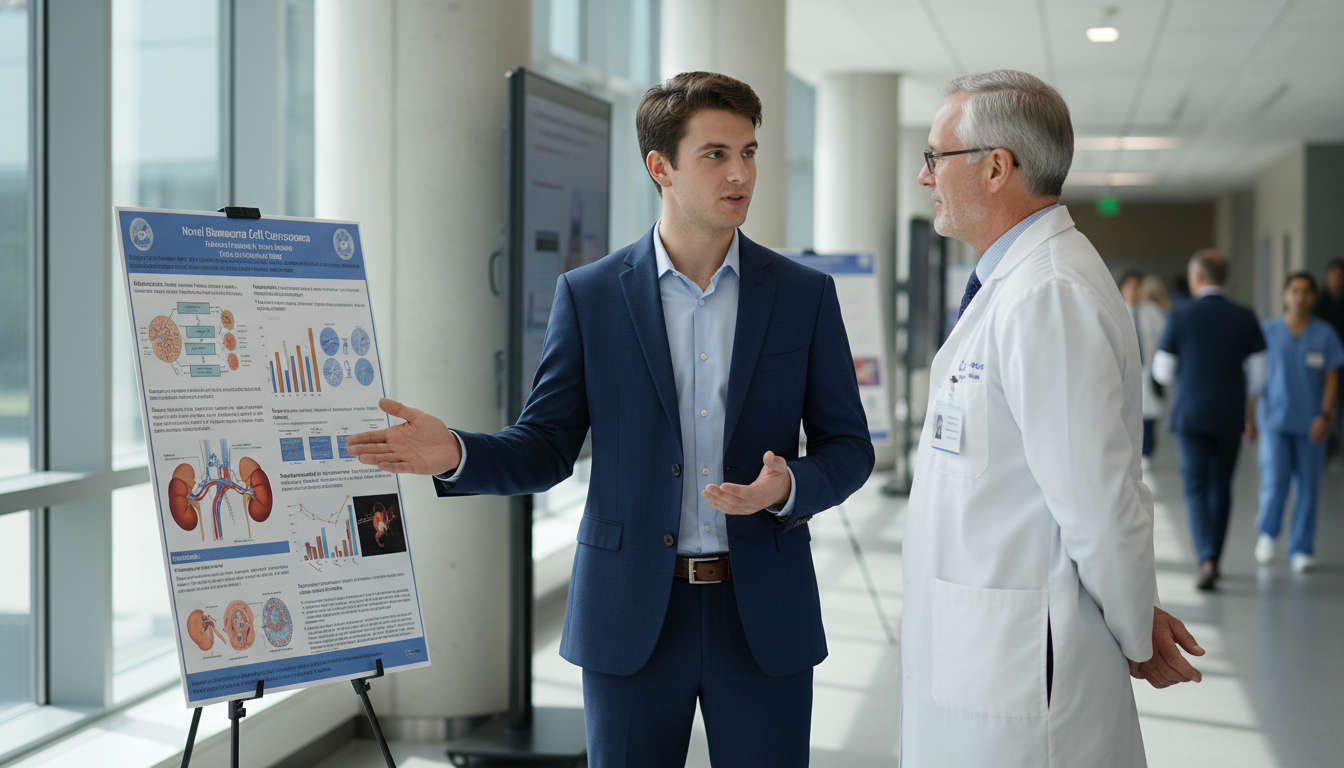
- Conference abstracts and posters
- National (e.g., ACP, ACOI, ACEP, AAN, specialty-specific societies)
- Regional or institutional research days
- Oral presentations
- Research symposia
- Grand rounds, resident conferences (if formal and documented)
- Quality improvement (QI) projects
- Hand hygiene initiatives
- Readmission reduction projects
- Order-set optimization
- Antibiotic stewardship projects
- Educational scholarship
- Curriculum development with evaluation
- Simulation-based projects with outcome assessment
- Published clinical or procedural teaching modules
For a Transitional Year applicant—especially a DO—QI and clinical projects are often the most realistic and powerful avenues to showcase your initiative and ability to improve patient care systems.
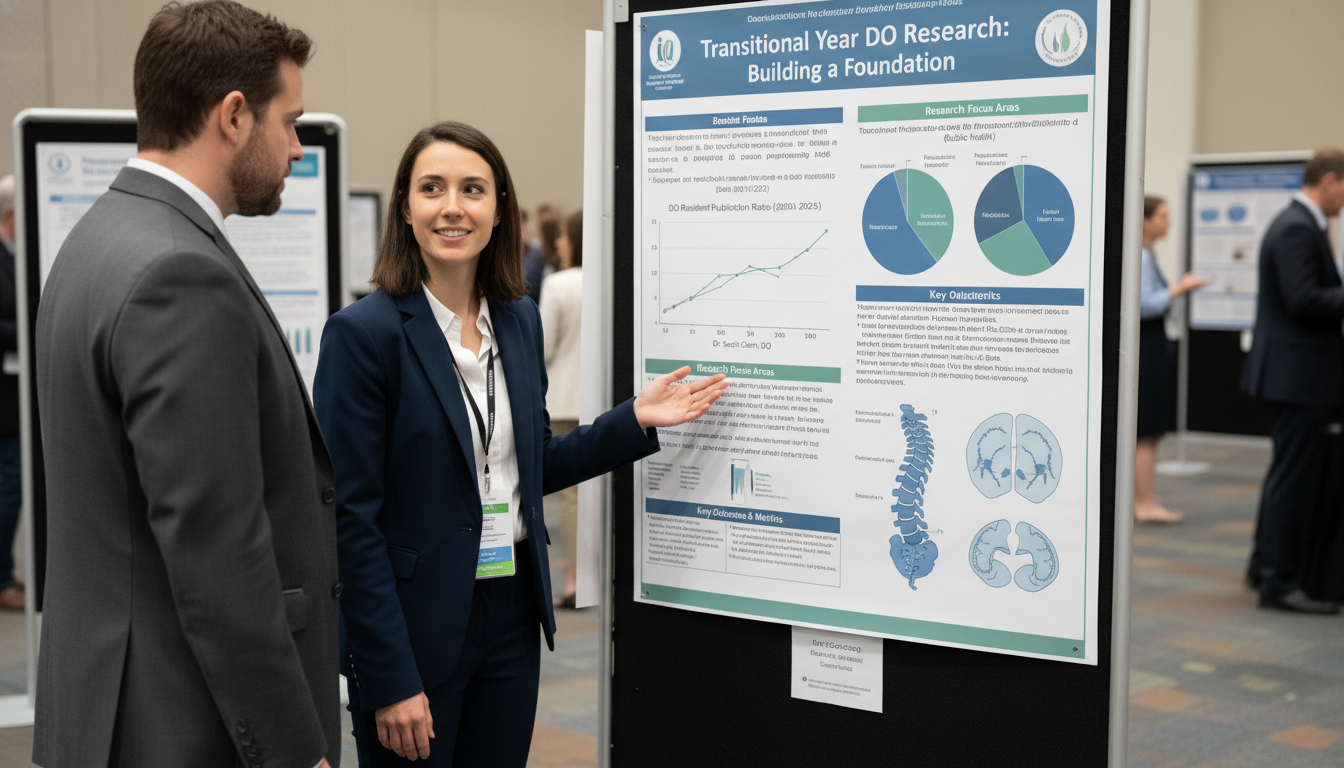
Strategic Types of Research for DO Applicants Targeting a Transitional Year
1. Clinical Research: High Yield and Accessible
Clinical research is often the most accessible for DO graduates and highly relevant for TY programs.
Examples:
- Retrospective chart reviews on:
- Hospital readmission predictors
- ED utilization patterns
- Outcomes of OMT in hospitalized patients
- Prospective observational studies:
- Pain control strategies post-surgery
- Patient satisfaction with telemedicine vs in-person visits
Why this helps you as a DO applicant:
- Aligns with patient-centered training and whole-person care emphasized in osteopathic education
- Transferable across specialties and supports your future advanced program applications
- Provides opportunities for co-authorship and collaboration with internal medicine, surgery, or EM faculty
Actionable steps:
- During late 3rd year or early 4th year, ask your medicine or EM faculty:
- “Do you have any ongoing chart review or clinical projects where you need help with data extraction or analysis?”
- Show up consistently; offer to help with IRB paperwork, data collection, or literature review
- Aim for 1–2 clinical projects where you are at least a middle author and can see the project to completion
2. Quality Improvement (QI): Perfect Fit for Transitional Year
TY programs are deeply rooted in inpatient medicine and systems-based practice. QI is therefore extremely relevant.
Example QI projects for a DO Transitional Year applicant:
- Reducing unnecessary daily labs in stable inpatients
- Streamlining discharge instructions to reduce 30-day readmissions
- Improving documentation of OMM/OMT use in hospital notes
- Standardizing sepsis bundle initiation time in ED or floor patients
Why QI is particularly smart for a TY-bound DO graduate:
- QI is often faster to implement and complete than full-length clinical trials
- It directly demonstrates skills in:
- Systems-based practice
- Interprofessional collaboration
- Patient safety and cost-conscious care
- Many hospitals require resident participation in QI; starting early makes you a strong candidate and a ready leader
Actionable steps:
- During core rotations, note recurring problems (delayed orders, communication breakdowns, documentation lapses)
- Approach your attending or chief resident:
- “I’ve noticed X; would you be open to a small QI project to address this? I’d be happy to draft a PDSA cycle and collect baseline data.”
- Even if the project doesn’t reach publication, document it as QI scholarly activity and present it at a local or regional meeting.
3. Case Reports and Case Series: DO-Friendly, Highly Feasible
Case reports are sometimes underestimated by students, but for DO applicants and TY programs they offer:
- A realistic entry point into publications
- A way to showcase your clinical observation skills
- A vehicle to highlight osteopathic principles (e.g., unique OMT applications, whole-person management of complex cases)
Example topics:
- Unusual presentation of a common disease in the ED
- Rare complications of common procedures
- Novel integration of OMT with conventional management in hospitalized patients
Actionable steps:
- When you encounter an interesting patient, ask:
- “Would this case be publishable?”
- Ask your attending if they would co-author and help with journal selection
- Write the case early (while the details are fresh), and learn standard case report structure:
- Introduction
- Case description
- Discussion (including brief literature review)
- Conclusion
4. Osteopathic-Focused Research (If Available)
If your school or hospital has OMM faculty with active scholarly projects, this is an excellent niche as a DO applicant.
Potential projects:
- OMT in postoperative pain control
- OMT effects on length of stay or opioid requirements
- Attitudes of residents toward OMT in internal medicine or family medicine
Such work can be uniquely appealing to certain TY programs, especially those affiliated with osteopathic institutions or those with an interest in integrative care.
Building a Research Profile Timeline: From MS3 to TY and Beyond

Phase 1: Late MS2–MS3 – Laying the Foundation
Goals:
- Gain exposure to research
- Learn basic skills (literature search, reading papers, data entry, basic statistics)
- Join 1–2 ongoing projects, even in supporting roles
Steps:
Audit your interests and constraints
- Are you leaning toward radiology, anesthesia, PM&R, EM, or undecided?
- How much time can you realistically commit each week?
Find mentors
- Ask clerkship directors, OMM faculty, or research office staff:
- “Which attendings regularly work with students on research or QI?”
- Look for faculty who understand and support DO trainees
- Ask clerkship directors, OMM faculty, or research office staff:
Join existing projects first
- Being a helpful middle author is better than planning an overly ambitious, doomed solo project
- Focus on getting at least one project to a poster stage
Phase 2: MS4 – Converting Work into Tangible Output
Goals:
- Complete 1–3 tangible outputs:
- Poster presentations
- Submitted or accepted abstracts
- Draft manuscripts (even if in review)
Key priorities:
During away rotations or sub-internships (especially at potential Transitional Year sites or future advanced specialty programs):
- Express your interest in participating in clinical or QI work
- Ask if they have ongoing projects you can help finalize
Aim to submit at least:
- One abstract to a regional or national meeting
- One manuscript to a journal (acceptance may not happen before ERAS, but “submitted” still counts)
How to list in ERAS:
- If a manuscript is submitted but not yet accepted:
- List it as “Submitted” (do not list as “Published” or “In Press” unless officially accepted)
- Be honest and precise with dates and your role.
Phase 3: Pre-Graduation / Gap Time – Consolidation and Expansion
If you have a brief gap period or lighter schedule before starting your Transitional Year, use it strategically:
- Finalize pending manuscripts
- Transform your QI projects into abstracts/posters
- Reach back out to mentors for follow-up projects or secondary analyses
- Take a short online course in statistics or research methodology (e.g., Coursera, edX, or institutional offerings)
Phase 4: During Your Transitional Year – Align Research with Future Specialty
TY years can be demanding, but they also offer rich clinical exposure and institutional resources.
Goals during TY:
- Align your research with your intended advanced specialty (if decided)
- Complete at least one new scholarly project centered around:
- QI in inpatient medicine or ED
- Specialty-specific clinical questions (e.g., perioperative issues for anesthesia-bound applicants)
Strategies:
- Early in your TY (first 2–3 months), meet with:
- Program director
- Chief residents
- Hospital QI or research office
- State your plan clearly:
- “I plan to apply to [advanced specialty]. I’d like to complete one meaningful QI or clinical project this year. Are there ongoing initiatives I can join, or would you support a small project of my own?”
Important:
Don’t overcommit. A small, well-executed project that leads to a poster or abstract is more valuable than several unfinished ideas.
Positioning Your Research as a DO TY Applicant in ERAS and Interviews
How to Frame Your Research in Personal Statements
For a Transitional Year personal statement, research is usually supporting, not center stage. Emphasize:
- How your projects improved patient care, systems, or your understanding of medicine
- What you learned about teamwork, communication, and dealing with imperfect data
- How your research experiences prepared you to function in a busy, interdisciplinary environment
If you are DO applying to an advanced specialty separately, adapt your specialty personal statement to highlight the content relevance of your projects (e.g., perioperative medicine for anesthesia, neuroimaging for radiology).
How to Talk About Research as a DO in Interviews
You will commonly be asked:
- “Tell me about your research.”
- “What was your role in this project?”
- “What did you learn from that experience?”
Prepare:
- A 2–3 minute succinct story for each major project:
- Clinical question or problem
- Your role (data extraction, study design, writing, presenting)
- Main result or takeaway
- How it changed your approach to patient care
For DO applicants, there is added value in articulating how your osteopathic training shaped:
- The questions you chose (whole-patient outcomes, functional status, pain management)
- The outcomes you cared about (not just mortality, but function, satisfaction, cost)
Handling Limited Research Experience Honestly but Strategically
If your research experience is limited:
- Acknowledge the reality briefly:
- “My institution had relatively few formal research opportunities, and I focused heavily on clinical and OMT training; however, I sought out smaller QI and case-based projects and plan to expand on these during my TY year.”
- Emphasize:
- Curiosity
- Willingness to learn
- The steps you’ve already taken (poster, QI cycle, small manuscript attempts)
Most TY program directors, especially inclusive of DO graduates, understand variability in research resources. What they want to see is effort, follow-through, and integrity.
Practical Tips and Common Pitfalls for DO Graduates
High-Yield Tips
- Start small and finish something. A completed poster > three half-finished manuscripts.
- Document everything. Keep a running CV and list of:
- Project titles
- Mentors
- Your specific roles
- Abstract submission dates and conference locations
- Leverage osteopathic strengths. Integrate OMT, whole-person care, and function-based outcomes into QI and clinical questions when appropriate.
- Network at conferences. Introduce yourself as a DO planning a Transitional Year and future specialty; ask potential mentors about collaborative projects.
- Use institutional resources. Many hospitals (even community sites) have:
- QI coordinators
- Medical librarians
- Statistical support services
Common Pitfalls to Avoid
- Overinflating your role. Misrepresenting authorship or contributions can be fatal if discovered.
- Last-minute projects. Starting a brand-new project 2–3 months before ERAS rarely leads to meaningful output.
- Ignoring your future specialty. If you know you’re heading into radiology or anesthesia, structure your projects to be relevant—even if you’re applying to a generic Transitional Year now.
- Neglecting follow-up. Many projects stall because students don’t follow up with mentors; set recurring reminders and be politely persistent.
FAQs: Research Profile Building for DO Graduates in a Transitional Year Track
1. Do I need multiple publications to match into a Transitional Year program as a DO?
No. Most Transitional Year programs—especially community-based ones—do not require multiple publications to rank you highly. Even zero publications is not uncommon. However, any research or QI activity you can show is a plus, and if you’re targeting competitive advanced specialties after TY, you should aim to meet that specialty’s research norms, not just the TY’s.
2. What types of research are most realistic and useful for a DO planning a TY?
For DO graduates, the most realistic and impactful scholarly activities usually include:
- Quality improvement projects related to inpatient care
- Clinical research, often retrospective chart reviews
- Case reports and small case series, especially if involving OMT or unique presentations
- Educational or curricular projects with measurable outcomes
All of these are valued in the osteopathic residency match and by ACGME programs.
3. I have no research yet and I’m about to start my Transitional Year. Is it too late?
It’s not too late, especially if your main goal is the TY itself. Early in your TY:
- Meet your program director and hospital QI staff
- Join an ongoing QI or clinical project that can be completed during the year
- Aim for a poster presentation or abstract submission before or during your advanced specialty application cycle
For highly competitive specialties, you may need to be more aggressive and focused, but even a single well-executed project during TY can enhance your application.
4. How should I balance time between research and studying during my TY year?
During TY, clinical performance and exams (if applicable) come first. Plan your research to fit:
- Choose one primary project, not several
- Set realistic monthly milestones (e.g., literature review this month, data collection next month)
- Use lighter rotations (e.g., outpatient electives) to push projects forward
- Communicate with mentors about your call schedule and duty hours; most will be flexible if you’re honest and consistent
By understanding how Transitional Year programs and advanced specialties view research—and by tailoring your efforts to your strengths as a DO graduate—you can build a credible, focused, and authentic research profile that supports both your TY match and your long-term career goals.