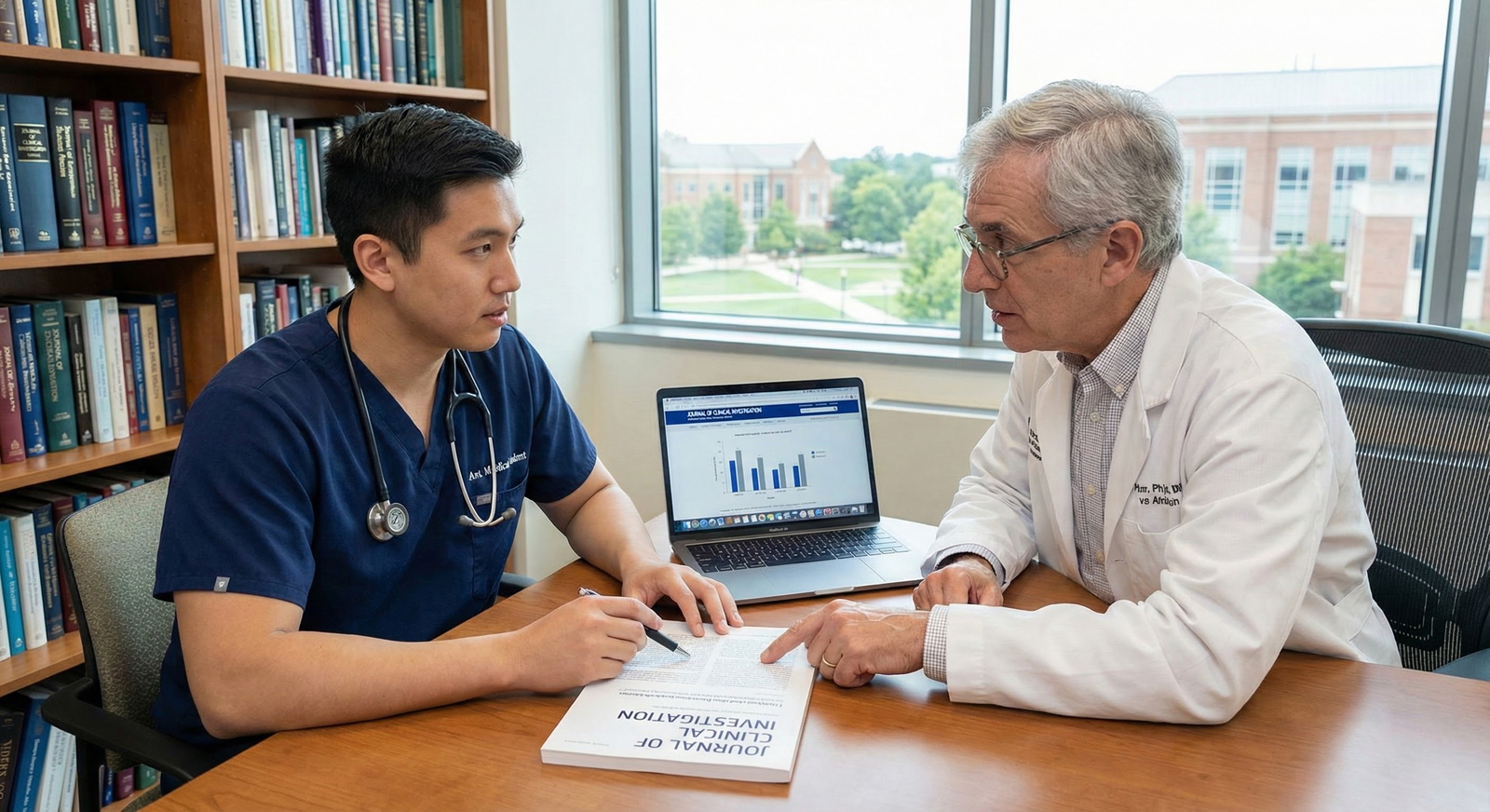
Understanding the Research Expectations for a DO Graduate in Cardiothoracic Surgery
Cardiothoracic surgery is among the most competitive surgical specialties, and for a DO graduate residency applicant, research is no longer “nice to have”—it is a major differentiator. Program directors in cardiothoracic surgery residency and integrated thoracic surgery programs frequently use research productivity, publications, and scholarly engagement as a proxy for academic potential, persistence, and genuine interest in heart surgery training.
As a DO graduate, you may face additional hurdles: less built-in research infrastructure at some osteopathic schools, fewer local cardiothoracic surgeons, and lingering biases about DO vs MD training. A strategic, well-executed research plan can help counter these challenges and showcase that you are prepared for advanced cardiothoracic surgery residency training.
This guide will walk you through:
- What a competitive research portfolio looks like for cardiothoracic surgery
- How many publications are realistic and “enough” for the osteopathic residency match landscape
- Concrete steps to find projects, mentors, and collaborative opportunities
- How to strengthen your application even if you are starting late or have limited resources
Throughout, we’ll focus on practical strategies specifically tailored to a DO graduate targeting cardiothoracic surgery.
What a Competitive Research Profile Looks Like in Cardiothoracic Surgery
Why research matters so much in cardiothoracic surgery
Program directors in cardiothoracic surgery and integrated thoracic surgery often work in academic centers where research productivity is part of their own job description. They look for residents who:
- Demonstrate curiosity and intellectual rigor
- Can contribute to clinical outcomes research, quality improvement, or basic science
- Are comfortable reading and critiquing literature
- Know how to design, conduct, and present projects
For a DO graduate residency applicant, a strong research record also helps:
- Counteract any perceived differences between DO and MD training
- Signal that you can succeed in academically intense environments
- Show long-standing, focused interest in cardiothoracic surgery rather than a late “switch”
Typical research benchmarks in competitive applicants
Exact numbers vary year to year and by program, but for integrated cardiothoracic surgery and CT-heavy general surgery tracks, successful applicants often have:
- Multiple research experiences (not just one summer project)
- Several presentations (posters/oral talks) at regional or national meetings
- Multiple publications, sometimes including first-author papers
How many publications are needed?
There is no universal cutoff; “how many publications needed” depends on quality, relevance, and your role in the work. That said, broad guidance for a DO graduate targeting cardiothoracic surgery:
Minimum competitive range:
- 2–3 peer-reviewed publications in any field, with at least one surgical or cardiothoracic related
- Several abstracts/posters or presentations
Stronger profile:
- 4–8 publications, ideally at least 2–3 clearly related to surgery or cardiovascular disease
- Mix of first-author and co-author works
- National or specialty-specific conference presentations (e.g., STS, AATS, ACS, AOA/ACOS)
Top-tier/academic track profile (aspiring to highly ranked programs):
- 8+ publications, with several in cardiothoracic or closely related areas
- At least 2–3 first-author manuscripts
- Evidence of longitudinal involvement with one or more cardiothoracic mentors
- Possibly dedicated “research time” (e.g., a research year)
These ranges are descriptive, not prescriptive. Quality, impact, and clarity of your role often matter more than raw publication count, especially in the osteopathic residency match.
Mapping Out Your Research Strategy as a DO Graduate
Step 1: Define your narrative within cardiothoracic surgery
Before chasing every opportunity, clarify the story you want your research profile to tell:
- Disease or domain focus:
- Adult cardiac (e.g., coronary artery disease, valve disease, aortic disease)
- Thoracic oncology (lung cancer, esophageal cancer)
- Congenital heart disease
- Mechanical circulatory support and transplantation
- Outcomes and quality improvement in heart surgery training and care
You do not have to commit permanently, but a visible through-line—e.g., multiple projects on valve disease or lung cancer—helps demonstrate depth.
Ask yourself:
- What kind of cardiothoracic practice do I imagine for myself?
- Which patient populations or diseases genuinely fascinate me?
- Do I lean more toward clinical outcomes research, basic/translational work, or education/quality improvement?
Use these answers to prioritize projects that reinforce your emerging “brand” as a future cardiothoracic surgeon.
Step 2: Take inventory of your starting point
Your strategy will differ based on where you stand now:
- Early MS years / preclinical DO student: You have time to build longitudinally. Start small, focus on learning methods and building relationships with mentors.
- Clinical years / approaching graduation: You need quick-turnaround projects (retrospective reviews, chart-based studies, case reports, systematic reviews).
- Post-graduation / in gap year or preliminary surgery position: Consider a formal research year or research fellowship in cardiothoracic surgery or cardiac outcomes, especially if your current portfolio is limited.
Be brutally honest:
- How many completed projects do you currently have?
- How many in progress with realistic chance of submission before application season?
- How many mentors can credibly vouch for your research work in letters?
Step 3: Decide whether to pursue a dedicated research year
For many DO graduates, a dedicated research year can be transformative and help bridge resource gaps. It may be especially valuable if:
- You have 0–1 publications by late third year
- Your school has limited cardiothoracic exposure
- You’re aiming for integrated cardiothoracic surgery residency at a major academic center
- You want to shift your profile from “weak research” to “research-focused”
Pros:
- Time to generate multiple papers and abstracts
- Deep immersion with a cardiothoracic team
- Strong letters from research mentors at name-recognition institutions
Cons:
- Additional year of training
- Financial and logistical considerations
- No guarantee of match, though your odds usually improve if you use the year well
If you choose this path, target programs with established cardiothoracic surgery research fellowships or robust cardiac outcomes research centers.

Finding and Securing High-Value Research Opportunities
1. Start local: maximize your osteopathic institution’s resources
Even if your home DO school does not have a cardiothoracic surgery department, you can still:
- Identify related departments:
- General surgery (especially vascular, thoracic, or cardiac-adjacent cases)
- Cardiology (heart failure, structural heart, interventional cardiology)
- Pulmonology or oncology (lung cancer, thoracic malignancies)
- Critical care or anesthesia (cardiac ICU, perioperative outcomes)
Many cardiothoracic topics intersect with these specialties (e.g., perioperative management for CABG, ECMO, lung cancer staging, post-op ICU protocols).
Action steps:
- Search your institution’s website for faculty with titles like “cardiac,” “thoracic,” “aortic,” “valve,” “lung cancer,” “heart failure,” “transplant,” “ECMO.”
- Review their recent publications (PubMed/Google Scholar) and note repeated themes.
- Draft concise emails expressing interest in helping with ongoing projects, emphasizing your goal of a cardiothoracic surgery residency and willingness to start at any level (data entry, literature review, etc.).
Keep your message:
- Short and respectful (2–3 small paragraphs)
- Clear about your time availability and timeline (e.g., “I hope to submit at least one manuscript before ERAS opens next September.”)
- Specific about what you bring (statistics exposure, coding in R/Python, strong writing ability, etc., if applicable)
2. Seek external cardiothoracic mentors if local options are limited
DO graduates sometimes lack direct access to cardiothoracic surgeons, but you can create these connections:
- Use national societies and mentor programs:
- Society of Thoracic Surgeons (STS)
- American Association for Thoracic Surgery (AATS)
- American College of Osteopathic Surgeons (ACOS) – Cardiothoracic section
- American College of Surgeons (ACS) – CT surgery committees
Many have student and resident sections, mentorship programs, or young surgeon committees eager to support motivated learners.
Practical approaches:
- Attend virtual or in-person meetings and network during student/resident breakout sessions
- Join society listservs or Slack/Discord communities
- After a talk that aligns with your interests, send a follow-up email to the speaker, mentioning specific details you found interesting, and ask if there might be opportunities to help with a project
Even if you are out-of-state, some mentors are open to remote collaboration on chart reviews, multi-center registries, systematic reviews, or database projects (e.g., STS National Database, NSQIP, Medicare datasets).
3. Target “high-yield” project types for residency applications
Some projects are better suited to DO graduate residency timelines and constraints:
Retrospective chart reviews
- Feasible within 6–12 months
- Good for learning basic stats and EHR navigation
- Examples: postoperative complications after CABG; outcomes of minimally invasive valve repairs; readmissions after lung resection
Systematic or scoping reviews and meta-analyses
- Great for remote work and if IRB/patient data access is limited
- Require careful methodology but can be done with small teams
- Examples: outcomes of robotic thoracic surgery vs VATS; long-term survival after TAVR vs surgery in low-risk patients
Case reports and case series
- Fastest to complete but lower impact individually
- Best used as stepping stones, especially if the case is highly unusual or technically innovative
- Focus on cases that highlight surgical decision-making or complex perioperative management
Quality improvement (QI) projects
- Align well with hospital priorities and can sometimes lead to publications
- Examples: implementing a new post-op atrial fibrillation prevention protocol; reducing post-sternotomy infection rates
Aim for a mix: a few faster-turnaround projects (case reports, small retrospective series) plus 1–2 more robust projects (systematic review or larger retrospective study) that can significantly strengthen your application.
4. Be explicit about authorship and deadlines
To translate “research for residency” into actual publications for match, you must manage expectations and timelines:
- At project start, clarify:
- Your role (data collection, analysis, writing, etc.)
- Authorship expectations (are you a likely first author or co-author?)
- Target conferences/journals and deadlines
Example script:
“Given my goal to apply for cardiothoracic surgery this upcoming cycle, would it be realistic to aim for an abstract submission by [specific date] and a manuscript draft by [later date]? I’m happy to contribute heavily to data collection and manuscript writing if there might be an opportunity for first authorship.”
You will not always get first-author positions, but knowing early avoids disappointment and helps you distribute your time across multiple projects.
Building Skills That Make You Indispensable to Research Teams

Core competencies to develop
To thrive in cardiothoracic research and stand out as a DO applicant, work systematically on:
Literature review and critical appraisal
- Regularly read key journals (e.g., Journal of Thoracic and Cardiovascular Surgery, Annals of Thoracic Surgery, JTCVS Techniques, Annals of Surgery).
- Practice summarizing key papers in 1–2 paragraphs: question, methods, findings, limitations.
Study design and basic statistics
- Understand common designs: retrospective cohort, case-control, randomized trial, registry-based studies.
- Learn statistical basics: p-values, confidence intervals, multivariable regression, Kaplan–Meier survival analysis.
- Use free resources such as online courses in biostatistics (Coursera, edX, Khan Academy).
Data management and analysis tools
- At least one platform: SPSS, Stata, R, or Python. R and Python are free and powerful.
- Comfort with Excel/Google Sheets for initial data handling.
Scientific writing and figure preparation
- Practice writing IMRaD (Introduction, Methods, Results, Discussion) structure.
- Look at published cardiothoracic papers and model your structure and flow after them.
- Learn basic figure creation (Prism, R, or even PowerPoint for simple diagrams).
Presentation skills
- Present your work at local research days, regional and national conferences.
- Practice 10-minute oral presentations and 2–3 minute poster “pitches.”
Your goal is to evolve from “extra pair of hands” to indispensable collaborator—someone who can help move projects from idea to publication.
Concrete ways to build these skills
- Online courses and certificates in clinical research, biostatistics, or epidemiology (can be listed on your CV).
- Journal clubs: volunteer to lead CT-surgery-relevant article discussions.
- Mentored reading plans: ask your mentor for 10 “must-read” articles in your focus area and discuss 1–2 per month.
- Write practice abstracts: take completed projects (even if unpublished) and write conference-style abstracts to refine your summarizing skills.
Showcasing Your Research Effectively in the Application
Curating your ERAS research entries
When listing research on ERAS:
- Be honest and precise—do not exaggerate your role.
- Clearly identify peer-reviewed publications, abstracts, posters, and oral presentations.
- For each entry, briefly describe your specific contributions (e.g., data collection, statistical analysis, writing first draft, IRB application).
For works “submitted” or “in preparation,” list only genuine projects with real progress:
- “Submitted” should mean the manuscript is fully written and actually submitted to a journal.
- “In preparation” should be limited; if you have many of these, it may look like padding.
Integrating your research story into your personal statement and interviews
Your research profile should reinforce your motivations for cardiothoracic surgery:
In your personal statement, highlight 1–2 key projects:
- What question you explored
- What you learned about the patients or the field
- How it confirmed or shaped your interest in CT surgery
In interviews, be ready to:
- Explain your project aims and main findings in simple terms
- Discuss any limitations or next steps
- Reflect on what excited or challenged you during the work
- Connect your research skills to how you’ll contribute as a resident (e.g., to ongoing departmental trials, quality improvement, or outcomes studies)
Leveraging mentors for strong letters
Letters from research mentors carry weight—especially if they are cardiothoracic surgeons or recognized researchers. To set them up for success:
- Provide a one-page summary of your contributions to each project.
- Share your updated CV and personal statement draft.
- Gently remind them of specific instances where you showed initiative (e.g., reworking tables overnight, helping with IRB revisions, presenting confidently at a meeting).
A strong research-focused letter should ideally highlight:
- Your reliability, work ethic, and intellectual curiosity
- Your ability to learn complex surgical concepts and clinical reasoning
- Specific contributions to one or more publications or presentations
- Their belief that you will be a successful cardiothoracic surgery resident
Common Pitfalls and How to Recover If You’re Behind
Pitfall 1: Spreading yourself across too many low-impact projects
It’s tempting to say yes to every case report or minor project, but this can lead to:
- Many incomplete “in progress” works
- Few actual publications submitted before applications
- Burnout and frustration
Solution:
Prioritize 2–4 projects with the highest likelihood of resulting in publications before match, including at least one CT-surgery-related project. It’s better to have 3 finished products than 10 unfinished ones.
Pitfall 2: No cardiothoracic-specific research by application time
If your work is mainly in unrelated areas (e.g., dermatology, psychiatry):
- You may look unfocused or late to decide on CT surgery.
Solution:
- Quickly pursue one or two cardiothoracic or cardiovascular projects (systematic review, retrospective study, or even high-quality case report).
- In your narrative, frame earlier research as having built transferable skills (critical thinking, clinical research methods), while your newer CT projects demonstrate a clear and now-targeted trajectory.
Pitfall 3: Limited publications at the time of application
If you are approaching ERAS with fewer publications than you hoped:
- Focus on getting at least a couple of projects to submitted or accepted status.
- Emphasize quality and depth in your letters and interviews—be prepared to discuss what you learned from each project.
- Consider a post-match strategy if you do not match: a research year or preliminary surgery year paired with intensive research.
Pitfall 4: Underestimating the DO-specific challenges
Some programs may still hold misconceptions about DO training, particularly in highly academic cardiothoracic surgery residency pathways.
Solution:
- Use your research portfolio to show you can excel in academic environments: multi-author collaborations, podium presentations, publications in recognized journals.
- Highlight any success in mixed cohorts (e.g., projects where you collaborated with MD students/residents) to show you function at the same academic level.
- If feasible, seek research experiences at allopathic academic centers to expand your network and demonstrate that you perform strongly in those settings.
Frequently Asked Questions (FAQ)
1. As a DO graduate, do I need a dedicated research year to match into cardiothoracic surgery?
Not always, but it can be very helpful. If you already have multiple cardiothoracic-related publications, strong letters from CT surgeons, and solid board scores, you may be competitive without a research year. However, if you have limited research or no exposure to cardiothoracic surgery, a dedicated year in a CT research program can significantly strengthen your application and offset systemic disadvantages often faced by DO applicants.
2. How many publications are realistically needed for a DO graduate targeting cardiothoracic surgery?
There is no magic number, but a realistic goal is:
- Minimum: 2–3 peer-reviewed publications (at least one related to surgery/cardiovascular disease) plus several presentations.
- More competitive range: 4–8 publications with a subset clearly focused on cardiothoracic themes.
Remember that quality, relevance, and your role matter more than sheer count. A smaller number of well-executed, clearly cardiothoracic projects can be more persuasive than many marginally relevant case reports.
3. Does it matter if my research is not directly in cardiothoracic surgery?
Some non-CT research can still be very valuable, especially if it shows strong methods, substantial contribution, and scholarly productivity. However, at least a portion of your portfolio should clearly connect to cardiothoracic surgery, cardiovascular disease, thoracic oncology, or heart/lung transplantation. When possible, choose projects that you can logically link to CT surgery in your personal statement and interviews.
4. I started research late and only have time for 1–2 projects. What should I prioritize?
If you are limited by time:
- Systematic/scoping review or retrospective outcomes study in a cardiothoracic-relevant topic, so you can demonstrate focused interest.
- A high-impact case report or small series that features complex surgical decision-making or innovative CT techniques.
Aim to complete and submit at least one manuscript and one conference abstract before applications. Even a modest but clearly CT-focused body of work, paired with strong letters and a compelling story, can meaningfully improve your chances in the osteopathic residency match for cardiothoracic surgery.
By intentionally designing your research trajectory, choosing projects that align with cardiothoracic surgery, and leveraging mentorship wisely, you can build a research profile that positions you—as a DO graduate—as a serious, competitive candidate for cardiothoracic surgery residency and a future leader in heart surgery training.