As a DO graduate targeting diagnostic radiology, your research profile can be a powerful way to stand out—especially in a competitive diagnostic radiology match. Radiology is a specialty that rewards curiosity, data-driven thinking, and comfort with technology. A well-strategized research portfolio demonstrates exactly those traits.
This guide walks through how to build a competitive research profile specifically as a DO graduate applying to radiology residency, with a focus on practical, stepwise strategies.
Understanding the Role of Research in the Diagnostic Radiology Match
Diagnostic radiology is increasingly research-aware. While you can still match without a massive research portfolio, program directors routinely use scholarly activity as a signal of:
- Intellectual curiosity and initiative
- Ability to complete projects and work in teams
- Familiarity with evidence-based medicine
- Potential for academic contribution during residency
Why Research Matters Especially for DO Graduates
As a DO graduate residency applicant, a strong research narrative can:
- Demonstrate parity with MD candidates in academic environments
- Counterbalance less-known or lower-ranked school reputation
- Highlight your ability to succeed in scholarly projects despite fewer built-in resources at some osteopathic institutions
- Showcase your interest in academic or subspecialty radiology (e.g., neuroradiology, MSK, IR)
Programs evaluating osteopathic residency match applications may look carefully at scholarly work to gauge how you’ll fit into their research or quality improvement (QI) culture.
How Many Publications Are Needed for Diagnostic Radiology?
There is no magic number. Context matters more than raw count. That said, trends among matched diagnostic radiology residents—especially at more competitive programs—often include:
- 1–2 first-author publications (ideally radiology-related or clinically relevant)
- 3–5 total scholarly products (including case reports, abstracts, posters, presentations, QI projects, or educational materials)
- Multiple smaller efforts can be nearly as valuable as one major paper if they show consistency and follow-through.
If you’re asking, “how many publications needed?”, reframe the question to:
“What combination of research experiences can I realistically complete that demonstrate commitment, competence, and growth?”
For most DO applicants:
- Minimum target: 1–2 meaningful, completed projects with tangible outputs (e.g., PubMed-indexed article, national conference poster)
- Competitive target: 3–6 total scholarly items (including abstracts, posters, QI, non-PubMed publications), with at least one radiology-focused project
Types of Research and Scholarly Work That Count (and How to Choose)
You do not need to do only basic science or “high-impact” projects. For osteopathic residency match success in radiology, think broadly about scholarship.
1. Clinical Research in Diagnostic Radiology
This is often the most accessible and directly relevant.
Examples:
- Comparing diagnostic accuracy of different imaging modalities (e.g., CT vs. MRI)
- Evaluating predictive value of certain imaging findings for clinical outcomes
- Studying workflow efficiency or error patterns in a radiology department
Why it helps:
- Directly relevant to radiology residency
- Teaches data analysis, study design, IRB, and manuscript structure
- Often aligned with faculty interests, increasing chances of mentorship
2. Case Reports and Case Series
Case reports are particularly feasible for DO students with limited research infrastructure.
Examples:
- Rare radiologic presentations (e.g., unusual manifestation of metastatic disease on PET/CT)
- Classic but underrecognized imaging findings that were critical for diagnosis
- Complications of procedures seen on imaging
Pros:
- Lower barrier to entry
- Faster turnaround from idea to submission
- Good way to get your first publication
Cons:
- Lower impact individually—but can still be very valuable for your early profile
- Need a strong teaching point and good images
3. Quality Improvement (QI) and Educational Projects
Programs value residents who improve systems and teach others.
Examples:
- Reducing CT radiation exposure in pediatric imaging
- Improving adherence to contrast administration protocols
- Creating teaching files or curriculum modules for medical students on common imaging findings
Outputs could include:
- Poster or podium presentation at a local/regional meeting
- Internal hospital presentation
- Manuscript in a QI or education-focused journal
These are excellent for DO graduates whose institutions may not have large NIH-funded labs but do have busy clinical services.
4. Interdisciplinary Clinical Research Outside Radiology
Don’t dismiss non-radiology research—especially for DO students who began research earlier in another specialty.
Examples:
- Internal medicine or emergency medicine projects involving imaging utilization
- Orthopedics or neurology studies where imaging outcomes or measures are key
- Public health or outcomes research with imaging as part of the data set
These show general research aptitude and comfort with data, even if not imaging-focused. They are especially useful if combined with at least one clearly radiology-related project.
5. Non-Traditional Scholarship
Programs increasingly recognize broader forms of scholarship:
- Online educational platforms (curated radiology teaching cases, podcasts, blogs)
- Systematic reviews, narrative reviews, or book chapters
- National specialty society committee work with outputs (guidelines, white papers)
These can be particularly appealing for DO graduates who leverage osteopathic principles (e.g., holistic care, population health) in imaging-related contexts.
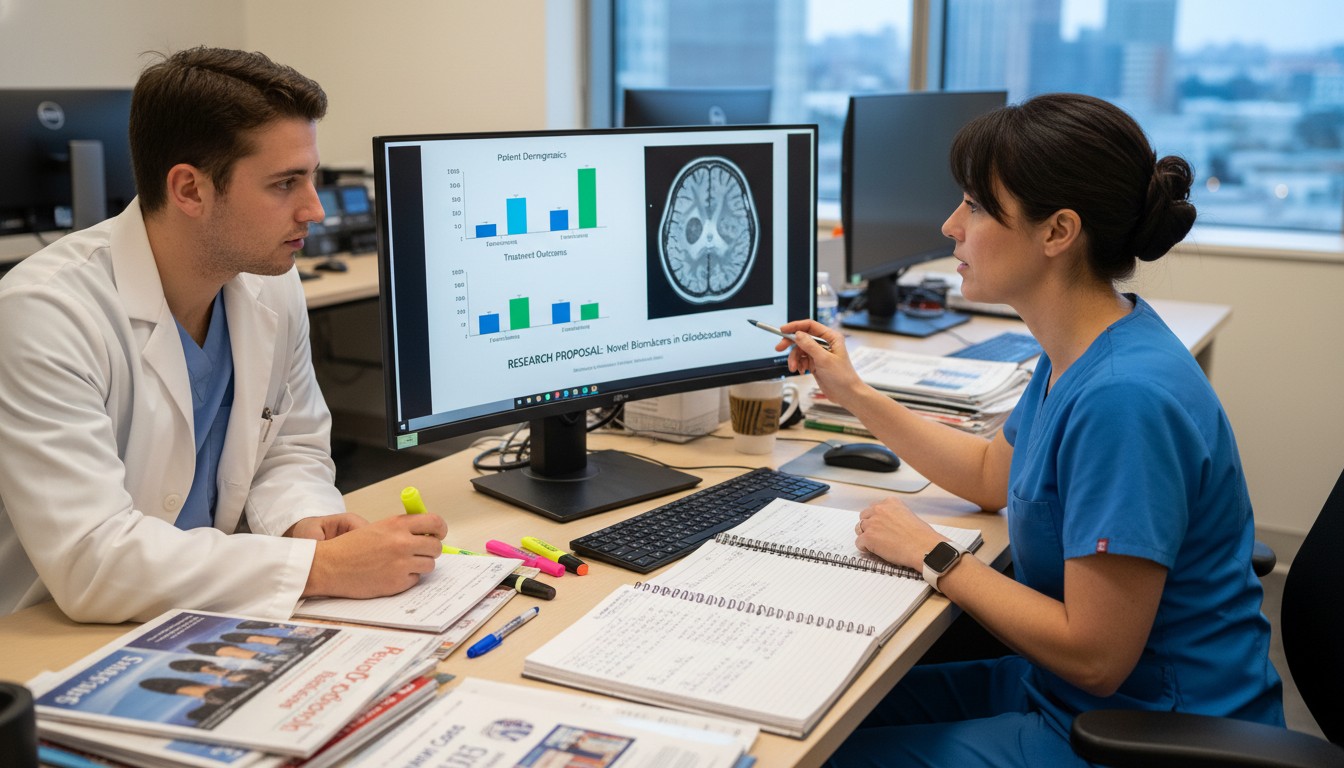
Step-by-Step Strategy to Build Your Research Profile as a DO Graduate
Step 1: Clarify Your Timeline and Goals
Your strategy depends on where you are:
- Pre-clinical (OMS1–OMS2): Focus on foundational skills and joining ongoing projects
- Early clinical (OMS3): Target smaller projects with clear deliverables before ERAS
- OMS4 / Gap year / DO graduate: Prioritize rapid, high-yield projects and formal research positions if available
Ask yourself:
- Do you need to strengthen a relatively weak application?
- Are you aiming for academic radiology or top-tier programs?
- Do you have flexibility for a dedicated research year?
For DO graduates who feel underpowered (few publications, lower board scores, or coming from a lesser-known school), a diagnostic radiology research fellowship or research year can significantly boost the osteopathic residency match chances.
Step 2: Find Radiology-Focused Mentors (Even If Your School Is Small)
Mentorship is the single strongest predictor of successful research output.
Strategies to find mentors as a DO student:
At Your Home Institution
- Identify radiologists who:
- Publish regularly (check PubMed by name and institution)
- Teach students or residents
- Run QI or clinical projects
- Attend radiology noon conferences or multidisciplinary tumor boards and introduce yourself.
- Identify radiologists who:
At Affiliated or Nearby Academic Centers
- If your osteopathic school does not have a strong radiology department, look regionally.
- Reach out to diagnostic radiology residency programs within driving distance and ask about:
- Student research projects
- Virtual research meetings
- Summer or remote opportunities
Through National Societies
- RSNA, ACR, ARRS, ASER, and subspecialty societies often have:
- Mentorship programs
- Student sections or special interest groups
- Research or abstract mentorship initiatives
- RSNA, ACR, ARRS, ASER, and subspecialty societies often have:
Cold Emailing Effectively
- Use a concise, targeted email:
- Introduce yourself as a DO student or DO graduate
- Express your specific interest in diagnostic radiology
- Mention any prior experiences or skills (statistics, programming, prior publications)
- Attach a CV
- Ask about current or upcoming projects where you can help
- Use a concise, targeted email:
You don’t need 10 mentors; 1–2 engaged radiology faculty can profoundly shape your research profile.
Step 3: Select Projects Strategically
For DO applicants, project selection should balance feasibility and impact.
Aim for a portfolio mix:
- One “anchor” project:
- Radiology-focused, with potential for a full manuscript in a peer-reviewed journal
- Ideally where you can be first author
- Several “support” projects:
- Case reports, small retrospective studies, QI projects, abstracts, or posters
- Shorter timelines and fewer barriers
When evaluating a potential project, ask:
- What’s the likely output (poster, abstract, paper)?
- Who is the supervising author, and how often do their projects get published?
- Can we reasonably finish before ERAS submission or interviews?
- What role will I have (data collection, analysis, first draft)?
If your goal is to improve your diagnostic radiology match prospects quickly, prioritize projects with short timelines and clear endpoints, such as:
- Chart-review studies with small-to-moderate sample sizes
- Single-institution retrospective imaging studies
- Case series with strong imaging components
Step 4: Learn Core Research Skills Efficiently
You don’t need a PhD, but you should demonstrate competence in:
- Literature searching (PubMed, Google Scholar)
- Basic study design (retrospective vs. prospective, cross-sectional vs. cohort)
- Understanding bias and confounding
- Basic statistics (t-tests, chi-square, regression basics)
- Using reference managers (Zotero, Mendeley, EndNote)
Free or low-cost ways to learn:
- Institution’s library workshops
- Coursera or edX courses on clinical research methods
- YouTube channels focusing on medical statistics and research
- RSNA or ACR online education modules
For DO graduates, explicitly listing these skills on your CV or in your personal statement can signal readiness for academic environments.
Step 5: Execute Efficiently and Follow Through
Common pitfalls for DO students include overcommitting and drifting away from unfinished projects. Protect your time and reputation:
Clarify expectations at project start:
- Timeline for data collection and writing
- Authorship order
- Your responsibilities and deadlines
Use project management tools:
- Shared Google Docs/Sheets
- Trello/Asana for tracking tasks
- Regular check-ins (biweekly) with your mentor
Aim to close the loop:
- Draft the manuscript or abstract promptly after data collection
- Prepare a poster version for local or regional meetings
- Push for submission rather than endlessly revising
The diagnostic radiology match values “finishers”: people who see projects through to completion.
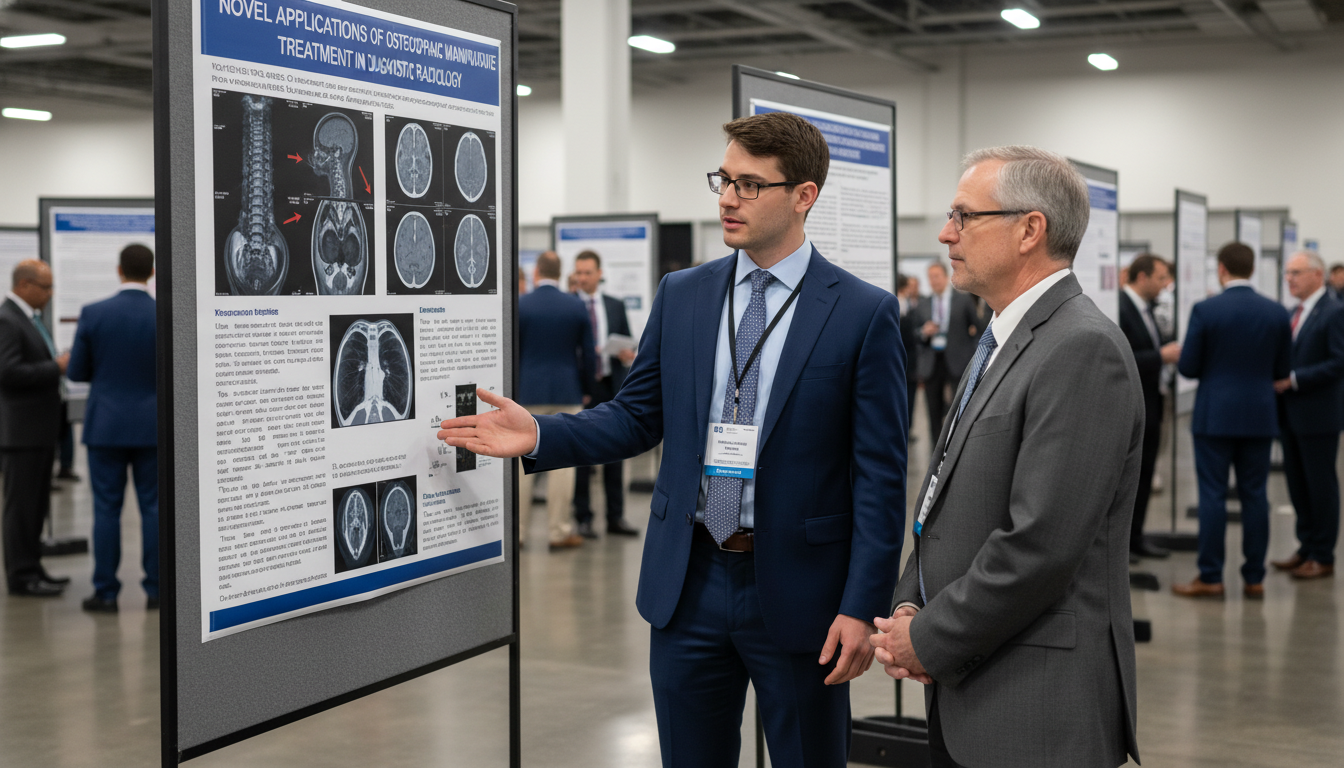
Maximizing the Impact of Your Research for the Diagnostic Radiology Match
Producing research is only half the story. You must also communicate it effectively in your residency application and interviews.
Structuring Your ERAS Application Research Section
For each item, clearly list:
- Title
- Your role (e.g., first author, data analyst, co-author)
- Type of work (original research, case report, QI, review, educational project)
- Status: Published, Accepted, Submitted, In Progress
Be honest—programs understand that not all projects will be published by application time. But avoid listing vague “in progress” items with no clear direction.
Prioritize:
- Radiology-related projects
- Peer-reviewed publications and national presentations
- Projects where you are first author
If you have many smaller works, group them logically and highlight the most meaningful ones in your personal statement or interviews.
Tailoring Your Personal Statement and Experiences
Use your research to reinforce your radiology narrative:
- Describe how a research experience led you to diagnostic radiology (e.g., exposure to imaging-based decision-making, fascination with interpretation and pattern recognition).
- Highlight specific skills: data analysis, scripting in R/Python, image-processing techniques, or familiarity with PACS and structured reporting.
- Emphasize osteopathic perspective if relevant:
- Holistic, system-level QI projects
- Imaging in preventive care or public health contexts
This shows that your work is not generic but tied to your identity as a DO graduate residency applicant who has intentionally pursued radiology.
Presentations: Low-Cost, High-Yield
Conference presentations—especially at radiology-specific meetings—are excellent signals of engagement.
Target opportunities such as:
- RSNA, ARRS, AUR, ACR meetings
- Subspecialty conferences (e.g., neuroradiology, MSK, breast imaging)
- Osteopathic-focused conferences that accept imaging-related abstracts
- Regional or institutional research days
Radiology residency programs view national presentations as evidence that your work meets a standard recognized by peers.
If travel is challenging, consider:
- Virtual conferences (now very common)
- Virtual poster or e-poster sessions
- Online abstract publication in conference proceedings
Using a Research Gap Year as a DO Graduate
A research year can be a powerful tool—especially if:
- You’re reapplying after an unsuccessful match
- You want to pivot from another specialty to diagnostic radiology
- You come from a school with limited research and want to demonstrate you can thrive in an academic environment
Key features of a strong research year:
- Affiliation with a known academic radiology department
- Multiple active projects with defined timelines
- Opportunities for authorship on manuscripts and abstracts
- Regular interaction with residents and faculty (for letters of recommendation)
Make sure you:
- Clarify expectations (funding, housing, clinical exposure) before committing
- Track your outputs at 6-month intervals
- Ask for structured mentorship and periodic feedback
For a DO graduate, a successful research year can transform your osteopathic residency match profile from average to strongly competitive.
Practical Scenarios and Example Pathways
Scenario 1: DO Student with No Prior Research, 1 Year Before ERAS
Goal: Develop a basic but credible research portfolio.
Plan:
- Identify one radiology mentor at your home or affiliate institution.
- Start a case report or case series with that mentor—aim for submission within 3–6 months.
- Join one ongoing retrospective imaging study as a data collector, aiming for middle authorship.
- Submit at least one abstract to a regional or national meeting.
Expected outputs by ERAS:
- 1 submitted or accepted case report
- 1 middle-author abstract or poster
- Possibly one manuscript under review
Scenario 2: DO Graduate Reapplying After an Unsuccessful Radiology Match
Goal: Strengthen application significantly in 12–18 months.
Plan:
- Secure a dedicated radiology research position or fellowship.
- Work with 1–2 highly productive mentors.
- Take on:
- 1–2 first-author retrospective studies
- 1–2 co-author roles on existing projects
- A QI project tied to the department
- Optional: radiology education or teaching file initiative
Expected outputs by the next application cycle:
- 1–2 first-author papers submitted (at least one accepted or in revision)
- Several abstracts/presentations at national or regional meetings
- Strong, personalized letters of recommendation from academic radiologists
Scenario 3: DO Student with Non-Radiology Research Background
Goal: Transition your profile to be radiology-aligned.
Plan:
- Maintain your prior research as evidence of scholarly ability.
- Add at least one clearly radiology-focused project:
- Could build on your previous field (e.g., imaging in cardiology, orthopedics, or neurology).
- Highlight in your personal statement:
- How your prior research trained you in critical thinking and analysis
- Why you are pivoting to radiology
- What unique perspectives you bring
Expected outputs:
- A coherent narrative connecting past research to your future in diagnostic radiology
- At least one radiology-related scholarly product (poster or paper)
Frequently Asked Questions (FAQ)
1. As a DO graduate, is research absolutely required to match into diagnostic radiology?
Not absolutely—but it is increasingly expected, especially at academic and mid-to-highly competitive programs. You can still match without extensive research if you have strong board scores, grades, letters, and rotations. However, even one or two well-executed projects can markedly improve your osteopathic residency match competitiveness, particularly if your school has limited name recognition.
2. How many publications are needed to be competitive?
There is no fixed number, but a realistic target for many DO applicants is:
- 1–2 first-author publications or accepted manuscripts (case reports count)
- 3–6 total scholarly outputs (including posters, abstracts, QI projects, and presentations)
What matters most is quality, relevance to radiology, and completion, not just raw quantity.
3. Does non-radiology research still help for a radiology residency?
Yes. Research in other clinical areas still shows that you can work in teams, collect and analyze data, and complete long-term projects. To maximize its value:
- Emphasize any imaging-related elements in your work.
- Add at least one clearly radiology-focused project if possible.
- Use your personal statement and interviews to connect your prior experiences to radiology-specific interests.
4. I come from a DO school with few research resources. How do I compete?
You can still build a strong research profile by:
- Seeking mentors at affiliated or nearby academic centers
- Using virtual or remote research collaborations
- Focusing on feasible projects like case reports, QI, and retrospective chart reviews
- Engaging with national societies that offer mentorship and student opportunities
- Considering a dedicated research year if you need a substantial boost
Programs understand that different schools have different infrastructures. They will evaluate your initiative and productivity within your environment rather than comparing you one-to-one with someone from a large research university.
By approaching research purposefully and strategically, you can build a diagnostic radiology match profile that showcases your strengths as a DO graduate: holistic thinking, resilience, and a genuine commitment to patient-centered, evidence-based imaging care.