Understanding the Role of Research in EM-IM Residency Applications
For an MD graduate residency applicant targeting Emergency Medicine-Internal Medicine (EM IM combined) programs, a strong research profile is not strictly mandatory—but it is increasingly influential. Programs in this combined pathway are small, competitive, and typically housed in academic medical centers that value scholarship.
You’re not being evaluated to become a full-time researcher; however, program directors want evidence that you can:
- Ask clinically relevant questions
- Critically appraise literature
- Work in teams and complete projects
- Communicate findings clearly
All of these are essential for an EM-IM physician who will practice across acute, inpatient, and often academic settings.
How EM-IM Programs View Research
Most EM-IM program directors prioritize:
- Clinical performance and professionalism
- Strong letters of recommendation
- Commitment to dual training (clear reasons for choosing emergency medicine internal medicine)
Research is usually a “plus” factor that can:
- Differentiate you from clinically similar applicants
- Support academic career interests (education, QI, research)
- Provide content for meaningful interview discussion
- Show sustained commitment and follow-through
What “Counts” as Research for Residency?
When people ask “how many publications needed?” for an allopathic medical school match, they often focus too narrowly on PubMed-indexed manuscripts. For residency, a broader scholarly profile is relevant:
Traditional research
- Retrospective chart reviews
- Prospective cohort or interventional studies
- Basic science (less commonly valued in EM-IM but still positive)
Clinical and educational scholarship
- Quality improvement (QI) projects
- Curriculum design and evaluation
- Simulation-based studies
- Clinical decision rule validations
Scholarly outputs
- Peer-reviewed journal articles
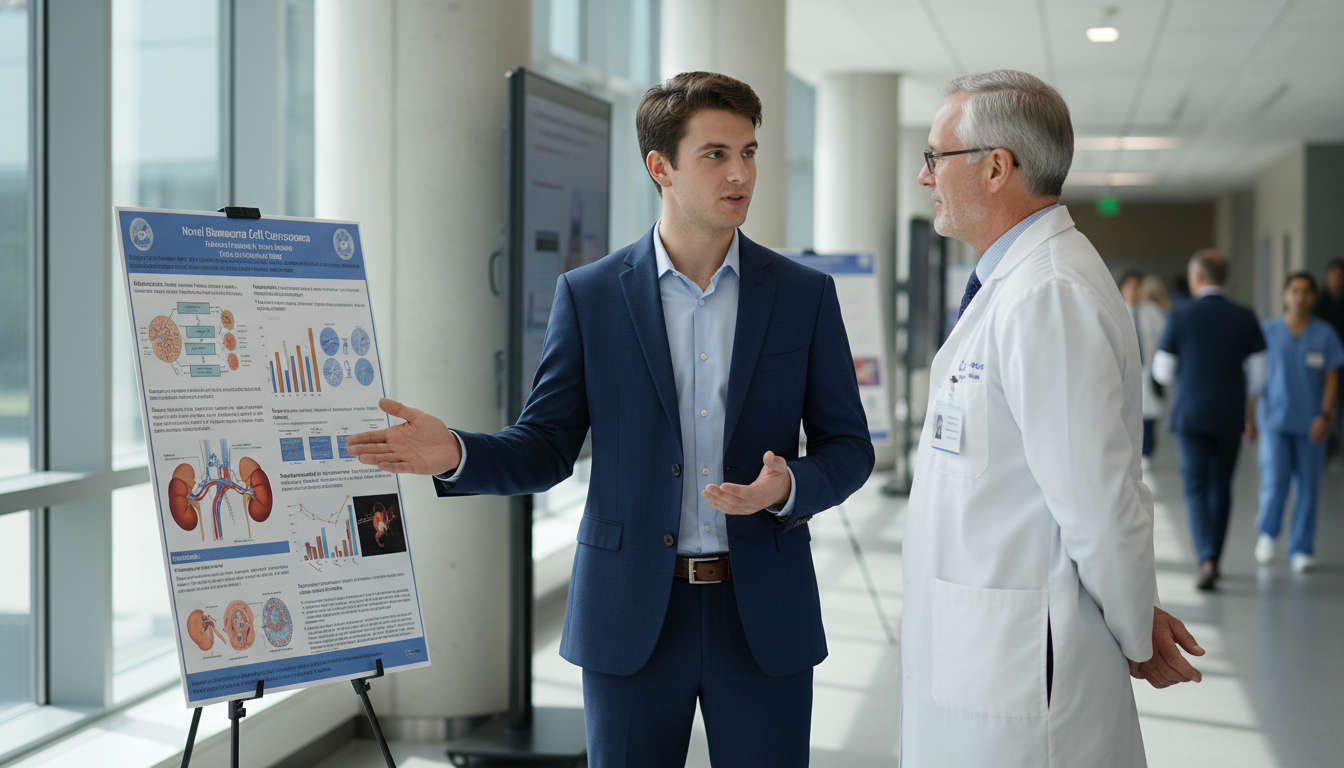
- Abstracts and conference posters
- Oral presentations
- Book chapters or review articles
- National guideline work or consensus statements (rare but high-impact)
The more your work is completed, presented, or published, the stronger your research profile appears.
Setting Realistic Research Goals as an MD Graduate
Once you’ve graduated from an allopathic medical school and are preparing for EM IM combined applications, your time and resources are different from a preclinical student. You must balance board exams, clinical work (e.g., prelim year or observerships), and application logistics.
Clarifying Your End Goal
Before launching into projects, define what you want research to accomplish:
Goal A: Strengthen overall application
- Aim for: 1–3 completed projects with at least one external presentation or publication
- Focus on: Feasible EM or IM clinical/QI projects with short timelines
Goal B: Demonstrate academic career orientation
- Aim for: Multiple projects, a coherent theme, and at least one peer-reviewed paper
- Focus on: Building a recognizable niche (e.g., sepsis in the ED, transitions of care, health systems research)
Goal C: Make up for weaknesses
- Step exam struggles or gaps in training can be partially offset by a strong scholarly profile
- Aim for: Clear, sustained productivity with completed outputs that show discipline and resilience
Most MD graduate residency applicants in EM-IM will do best with a hybrid between A and B—a clear thematic interest and tangible results, without needing a massive publication list.
“How Many Publications Needed” for EM-IM?
There is no fixed number. For most EM-IM applicants:
Competitive, academically oriented profile
- 1–2 peer-reviewed publications (any author position)
- Plus 2–4 abstracts, posters, or oral presentations
Solid, realistic profile
- 0–1 peer-reviewed publication
- 2–3 posters, abstracts, or oral presentations
- Well-described QI or scholarly projects in ERAS
Still viable profile (particularly with strong clinical performance and letters)
- Completed projects that may still be “in preparation” but are clearly described and progressing
- At least some tangible outputs (e.g., accepted poster at a regional or national meeting)
Program directors consistently value completed and disseminated work more than a long list of “in progress” items.
Choosing Research Areas That Align with Emergency Medicine-Internal Medicine
As an EM-IM applicant, you have a unique advantage: your career will span acute stabilization and longitudinal management. Your research can reflect this dual identity.

High-Yield Topic Domains for EM-IM Combined Programs
Consider these areas that naturally intersect emergency medicine and internal medicine:
Sepsis and Shock
- ED identification and resuscitation
- Inpatient management and escalation of care
- Outcomes based on early interventions
Cardiovascular Emergencies
- Chest pain risk stratification and admission decisions
- Atrial fibrillation management across ED and inpatient settings
- Heart failure exacerbation pathways
Respiratory and Critical Care
- Non-invasive ventilation use in ED vs. inpatient wards
- Early ARDS recognition and management transitions
- COPD/asthma exacerbation care across settings
Transitions of Care
- ED-to-inpatient handoffs
- Early discharge vs. observation vs. admission decisions
- Readmission reduction projects spanning ED and medicine services
Health Systems & Operations
- ED boarding and inpatient throughput
- Observation units and clinical decision units
- Rapid response team activations and code blues
Population Health and Social Determinants
- Frequent ED utilizers with chronic disease
- Access to primary care and impact on ED volumes
- Disparities in acute care and longitudinal follow-up
Education & Simulation
- Interdisciplinary resuscitation simulations
- EM-IM-oriented curricula on shock, sepsis, and complex comorbidities
- Assessment of dual training competencies
Any of these domains can be the basis for chart reviews, QI projects, educational research, or multi-center collaborations.
Example: Translating an EM-IM Interest into a Research Plan
Suppose you’re interested in sepsis care:
Focused research question
- “Does implementing a standardized sepsis handoff template from ED to medicine wards reduce time to appropriate antibiotics or ICU transfer?”
Feasible project designs
- Retrospective chart review comparing outcomes pre- and post-implementation
- QI project with PDSA (Plan-Do-Study-Act) cycles in one ED and affiliated medicine unit
Potential outputs
- Local QI report
- Abstract and poster at ACEP, SAEM, or an internal medicine society
- Manuscript in a QI or EM/IM journal
This kind of project clearly reflects your EM-IM combined perspective and is appealing to programs.
Finding Mentors, Projects, and Opportunities After Graduation
As an MD graduate (not current student), you may not have the same automatic access to institutional infrastructure, but you still have more options than you might think.

Step 1: Identify Your Academic “Home Base”
Your academic home can be:
- Your allopathic medical school (as alumni)
- A hospital where you are doing a transitional year, prelim IM, or other clinical role
- A research institute or public health department you can affiliate with
- A remote collaborator at another institution (with IRB arrangements)
Reach out to:
“Dear Dr. X,
I am an MD graduate interested in applying to EM-IM combined residency programs with a strong focus on [e.g., sepsis and transitions of care]. I’m hoping to become involved in ongoing or new projects that align with this area, especially those that are feasible to complete within the next [6–12] months. Would you be open to a brief meeting to discuss opportunities and how I might contribute?”
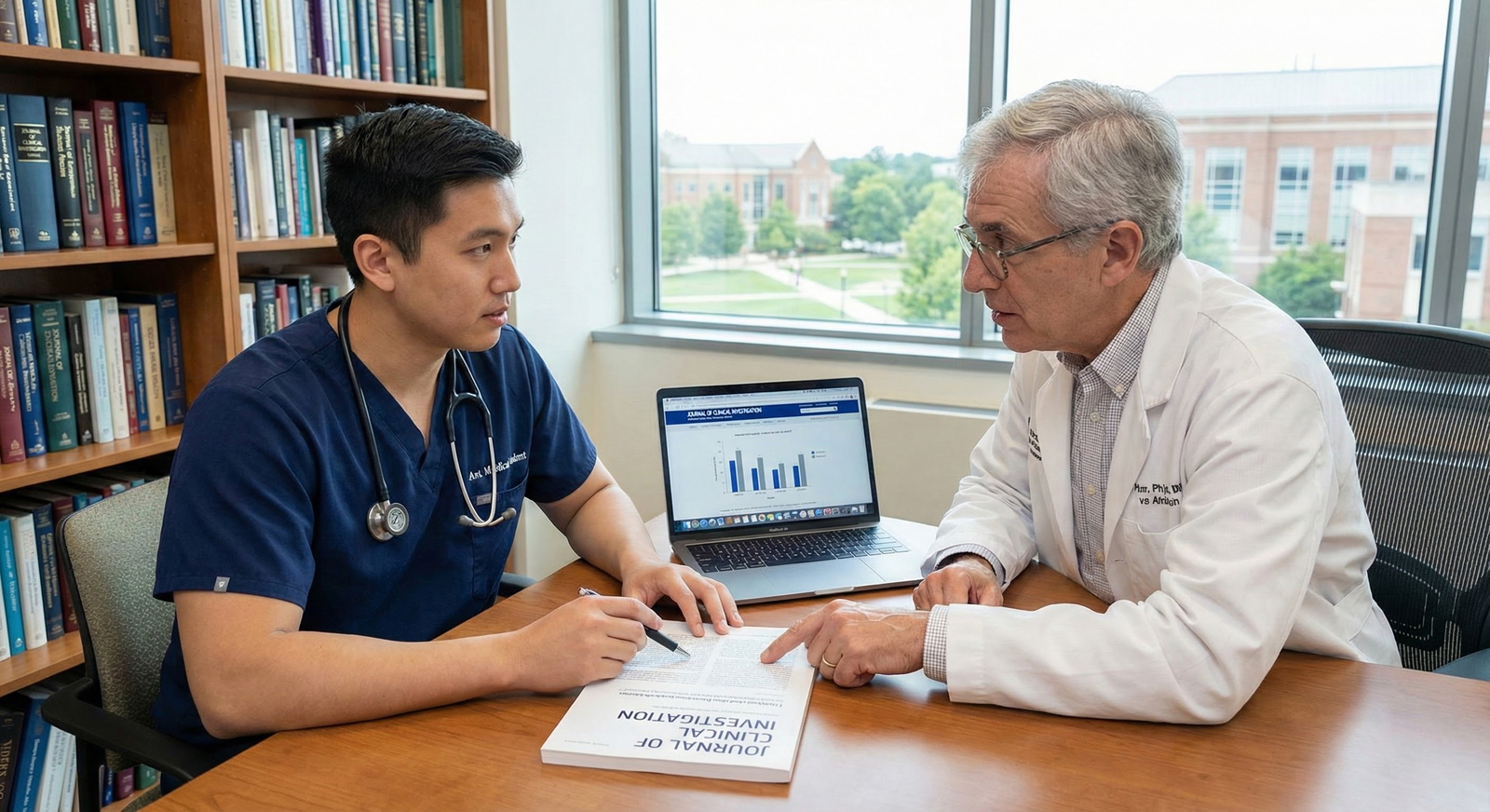
Target EM faculty with academic titles, IM hospitalists with QI roles, and physicians with dual EM-IM or EM-CCM training where possible.
Step 2: Join Existing Projects (Highest Yield)
Starting from scratch is slower and riskier. As a time-limited MD graduate residency applicant, your best move is often to join work that is already underway:
You can offer to help with:
- Data collection and chart abstraction
- Literature reviews and reference management
- Drafting background or methods sections
- Abstract submissions and poster preparation
This approach can quickly lead to middle-author publications and presentations before match season, especially if the project is already in progress.
Step 3: Propose Focused, Realistic Ideas
If no active projects are a fit, propose narrow, feasible studies, for example:
- “30-day readmissions among patients discharged from the ED with heart failure”
- “Impact of a new triage protocol for suspected sepsis on antibiotic timing”
- “Utility of early lactate measurement in non-ICU IM admissions from the ED”
For each proposed idea, come prepared with:
- A one-page concept sheet (background, question, outcomes, feasibility)
- A proposed timeline (e.g., 3 months for data collection, 2 for analysis)
- Realistic expectations for authorship and outputs
Mentors are more likely to help if you bring thoughtful, manageable questions rather than a vague desire to “do research.”
Step 4: Leverage EM and IM Societies
Professional organizations are often underused resources for MD graduate residency applicants:
Emergency Medicine
- SAEM (Society for Academic Emergency Medicine)
- ACEP (American College of Emergency Physicians)
- CORD (for education-focused work)
Internal Medicine
- Society of Hospital Medicine (SHM)
- Society of General Internal Medicine (SGIM)
- American College of Physicians (ACP)
These societies offer:
- Online research networks and listservs
- Virtual interest groups (e.g., sepsis, QI, education)
- Abstract opportunities for early-career scholars
Attending their virtual events can lead to remote collaborative projects, especially QI or multi-center surveys.
Executing and Showcasing Your Research for the Match
Having a good idea is only half the work. You need to complete, disseminate, and present your efforts strategically for the allopathic medical school match, specifically for EM-IM combined residency.
Prioritizing Feasible, High-Impact Outputs
With limited time, focus on research formats that yield visible products within 6–12 months:
- Retrospective chart review
- Usually faster than prospective studies
- Can lead to abstracts and manuscripts relatively quickly
- QI projects
- Often exempt or expedited IRB
- Highly valued for EM and IM training environments
- Structured education projects
- Simulation sessions or curricula with measurable outcomes
- Well-aligned with EM-IM academic roles
Less time-efficient (still valuable, but longer timelines):
- Large prospective clinical trials
- Complex multi-site interventions
- Basic or bench research without established infrastructure
Making Your Work ERAS-Ready
When you enter your research and publications for match applications, present them clearly and honestly:
Categorize your work properly
- Peer-reviewed journal articles
- Peer-reviewed abstracts and posters
- Non–peer-reviewed online or print publications
- QI projects and curricular innovation
Use clear, descriptive titles
- Not: “Sepsis project”
- Instead: “Implementation of a standardized ED-to-inpatient sepsis handoff tool and impact on first ICU lactate timing”
Be transparent about status
- “Published” (include full citation)
- “Accepted for publication” (include journal, anticipated date)
- “Submitted manuscript” (note journal)
- “Data collection complete; manuscript in preparation”
Avoid inflating your role. EM-IM program directors appreciate honesty over exaggerated contributions.
Talking About Research in EM-IM Interviews
Expect questions such as:
- “Tell me about your most meaningful research project.”
- “How did your research shape your interest in EM-IM combined training?”
- “What did you learn from navigating setbacks in research?”
Prepare concise narratives:
Example structured response:
Context:
- “During my post-graduate year while preparing for EM-IM combined applications, I joined a QI-focused chart review project examining ED-to-inpatient sepsis handoffs.”
Your role:
- “I helped refine the data collection tool, abstracted charts, and performed preliminary analysis under supervision.”
Findings/Impact:
- “We found that a simple standardized handoff template was associated with a significant reduction in time to first ICU lactate and fluid resuscitation. This reinforced my interest in systems-level improvements across the ED and inpatient medicine.”
Relevance to EM-IM:
- “The project highlighted exactly what draws me to EM-IM: improving the transitions and coordination between acute stabilization and ongoing medical management.”
This approach proves that you understand both the content and its relevance to your dual-specialty career.
Creating a Cohesive EM-IM Narrative
When considered together, your research activities, personal statement, and letters should tell a coherent story:
- Your projects show consistent interest in border zones between EM and IM (e.g., sepsis, admissions, handoffs, chronic disease in acute settings).
- Your mentors can attest to your reliability and scholarly potential.
- Your personal statement explicitly connects:
- Clinical experiences
- Research observations
- Future academic goals in EM-IM
This integrated narrative is more persuasive than a random assortment of unrelated projects.
Strategic Advice and Common Pitfalls for MD Graduates
As an MD graduate pursuing an EM-IM combined pathway, you face specific constraints—and opportunities.
Practical Strategies for Time-Limited Applicants
Set a modest but clear target
- For the upcoming application cycle:
- Aim for at least one accepted or submitted abstract and one clear manuscript in preparation.
- For the upcoming application cycle:
Batch your effort
- Dedicate 2–3 focused blocks of time per week (e.g., evenings or one entire weekend day) to research tasks.
Use tools to accelerate work
- Citation managers (Zotero, EndNote, Mendeley)
- REDCap or secure spreadsheet systems for data
- Statistical support if available (biostatistics department or online consults)
Be disciplined about scope
- Narrow questions beat overly ambitious projects that never finish.
- Avoid adding variables or outcomes mid-stream without a strong reason.
Common Mistakes to Avoid
Overcommitting to too many projects
- Better to have 1–2 completed projects than 5 half-finished ones.
Vague, unfocused topics
- “ED utilization” is too broad; instead focus on a specific population or intervention.
Ignoring mentor feedback
- EM-IM faculty often understand what is realistically publishable; use their guidance to refine questions.
Misrepresenting contributions
- Program directors are skilled at spotting inflated authorship claims; even perceived dishonesty can be damaging.
Neglecting non-research parts of the application
- Research will rarely compensate for poor letters, weak clinical performance, or unconvincing motivation for EM-IM.
Balancing Research with Other Application Priorities
While you strengthen your research for residency, remember to:
- Optimize your USMLE/COMLEX scores if still pending
- Choose clinical rotations that allow robust EM and IM letters of recommendation
- Engage in select leadership, volunteering, or teaching activities that align with your EM-IM interests
Think of research as a force multiplier rather than the sole pillar of your MD graduate residency application.
FAQs: Research Profile Building for EM-IM Applicants
1. Do I need a first-author publication to match EM-IM combined residency?
No. Many successful EM-IM applicants do not have first-author publications. What matters more is having completed scholarly work (posters, abstracts, co-authored papers) and being able to articulate your role and learning. A first-author paper is a strong plus, especially if you’re aiming at a research-heavy academic career, but it is not a strict requirement.
2. Is quality improvement (QI) considered “real research” by EM-IM programs?
Yes. QI is highly valued in both emergency medicine and internal medicine, especially at academic centers. Well-designed QI projects—with clear aims, methods, and outcome data—are excellent scholarly contributions. When entered into ERAS, describe them just as rigorously as traditional research, and highlight any posters, presentations, or publications arising from them.
3. I’m an MD graduate with limited access to a home institution. How can I still build a research profile?
Focus on:
- Reconnecting with your medical school mentors for remote collaborations
- Seeking roles at hospitals or departments where you can officially join ongoing projects
- Leveraging professional societies and their research networks
- Joining multi-center surveys or chart reviews that can be conducted remotely
Even a small number of carefully chosen, well-executed projects can significantly strengthen your application.
4. How should I decide between starting a new project vs. joining an existing one?
If you’re close to application deadlines, prioritize joining existing projects with data already collected or nearly so. This gives you a realistic shot at abstracts or manuscripts before the match. Starting your own project makes sense if:
- You have at least 9–12 months before applying
- You have consistent access to data/IRB support
- A committed mentor is willing to help you design, execute, and publish
In all cases, choose topics that align with your EM-IM combined interests, and ensure the project is narrow enough to complete within your available timeframe.
By choosing EM-IM research topics that sit at the interface of emergency medicine internal medicine, aligning with strong mentors, and focusing on feasible, high-yield projects, you can construct a research profile that supports your MD graduate residency goals and positions you as a thoughtful, academically engaged future EM-IM physician.