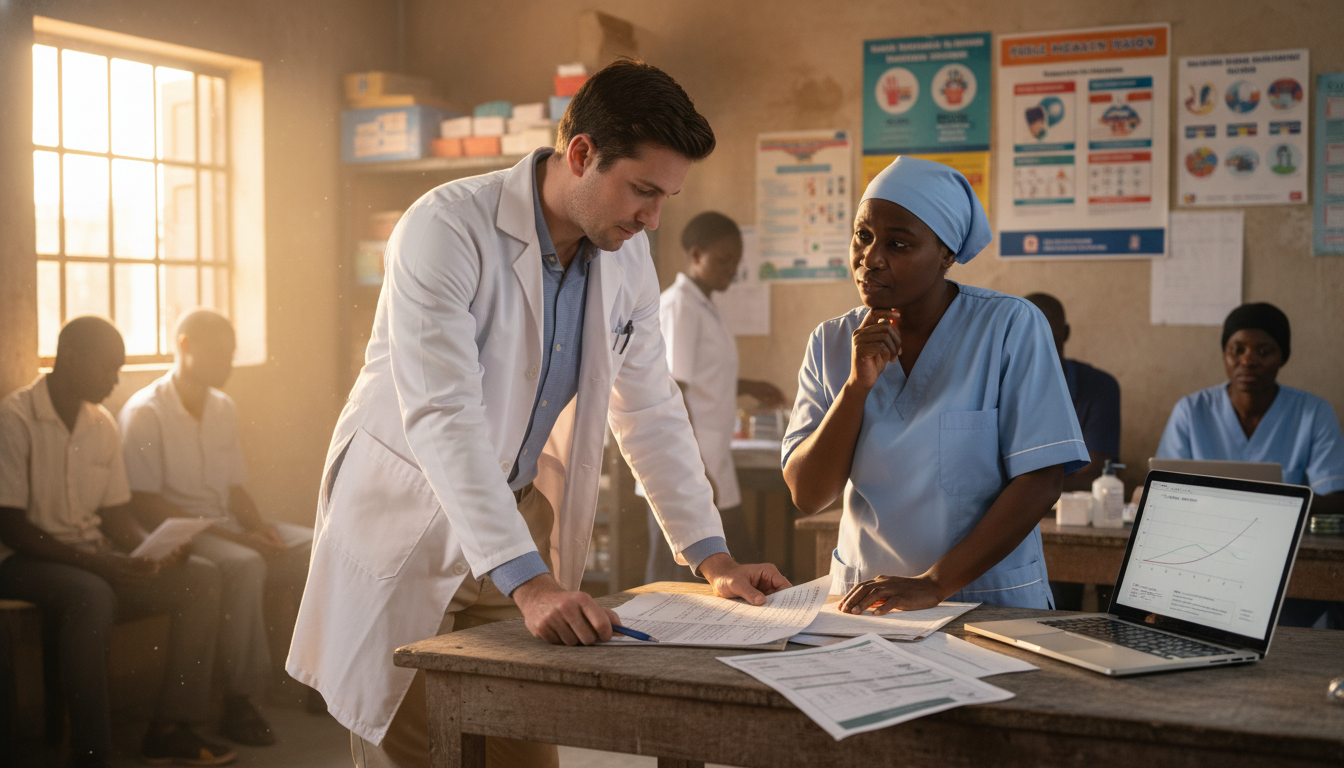
Understanding the Role of Research in a Global Health Residency Application
For an MD graduate interested in global health, a strong research profile is often the factor that transforms a solid application into a standout one. Global health residency programs—whether categorical residencies with a global health residency track or formal international medicine pathways—expect applicants to demonstrate more than clinical interest. They look for evidence that you can ask rigorous questions, work in complex systems, and turn observations into data and impact.
This matters whether you are:
- Applying from an allopathic medical school match in the U.S.
- An IMG with extensive field experience but limited formal research
- A U.S. MD graduate residency applicant pivoting into global health after core clinical training
In global health, research is not limited to bench or lab work. It includes implementation science, health systems research, epidemiology, medical education, and operational research in low-resource settings. Your goal is to build a research profile that:
- Shows sustained interest in global health themes
- Demonstrates skills valued in academic and field work (study design, data analysis, ethics, writing)
- Aligns with the priorities of the programs you’re targeting
Before you think about how many publications are needed, focus first on building quality, coherence, and clear impact in your research story.
Core Components of a Strong Global Health Research Profile

A research profile is more than a list of publications. Program directors in global health look for several core elements:
1. Thematic Consistency in Global Health
Your CV and personal statement should tell a coherent story. Even if your projects vary, they should broadly relate to:
- Infectious diseases and epidemiology
- Maternal-child health
- Non-communicable diseases in low-resource settings
- Health systems strengthening, workforce training, or policy
- Refugee health, migrant health, or humanitarian response
- Implementation science and quality improvement in low-income settings
Having all your research in entirely unrelated areas (e.g., purely bench cardiology work plus an unrelated dermatology case report) is less compelling than a smaller but thematically focused portfolio.
Example:
You completed:
- A retrospective study on tuberculosis outcomes in a safety-net clinic
- A quality improvement (QI) project on vaccine delivery in a free clinic serving a refugee population
- A literature review on task-shifting to community health workers in sub-Saharan Africa
Together, these paint a clear picture: you care about infectious disease and systems of care for vulnerable populations across different contexts.
2. Demonstrated Research Skills
Residency programs want evidence that you can:
- Formulate research questions
- Understand basic study design (cross-sectional, cohort, RCT, QI)
- Handle data (even basic statistics and using tools like Excel, R, or SPSS)
- Interpret results and translate them into practice
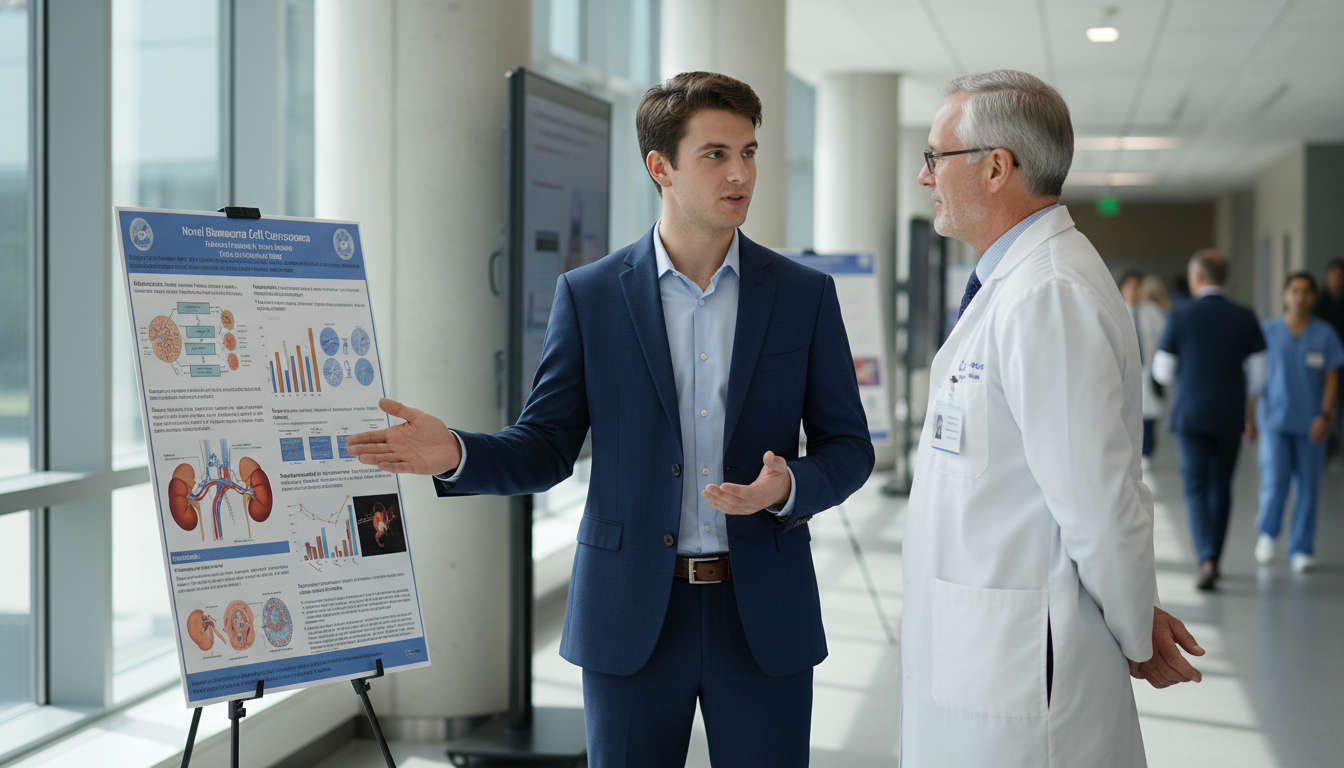
- Present findings clearly (posters, oral presentations, manuscripts)
You can demonstrate these skills with:
- Original studies (chart reviews, surveys, field-based data collection)
- Quality improvement projects with robust methodology
- Systematic or scoping reviews and meta-analyses
- Program evaluations in global health settings
- Medical education research tied to global health curricula or training
3. Progressive Responsibility Over Time
Residency selection committees value growth. Your research story should show a trajectory:
- Early: Data collection, helping with literature review
- Mid-level: Abstract writing, presenting posters, minor analyses
- Advanced: Designing projects, writing manuscripts, mentoring junior students
When describing experiences, highlight your evolving role: “Assisted with data collection” in your first year; “Led study design and IRB submission” by your last project.
4. Evidence of Dissemination and Impact
Research that never leaves your hard drive is a missed opportunity. Dissemination signals professionalism and follow-through:
- Peer-reviewed publications (strongest)
- Conference abstracts, posters, and oral presentations
- Presentations at institutional research days or global health symposia
- Policy briefs for NGOs, ministries of health, or hospital leadership
- Co-developed clinical protocols or guidelines
Programs in global health also value contextual impact—for example, a QI project that demonstrably improved immunization rates in a rural clinic—just as much as high-impact journal publications.
How Many Publications Do You Really Need for Global Health?
The question “how many publications needed” for a competitive MD graduate residency application is nuanced, especially in global health.
Realistic Expectations for MD Graduates
For most U.S. allopathic medical school match applicants interested in global health:
- 1–3 meaningful, global health–relevant projects with some form of dissemination (poster, presentation, or publication) is typically sufficient to show seriousness.
- At least 1 first-author or co-first-author project (even a case report or small original study) is ideal.
- Applicants to highly academic programs with global health tracks may have more (3–7+ publications and numerous abstracts), but this is not a strict requirement.
For IMGs or MDs applying from outside the U.S.:
- Having at least 1–2 peer-reviewed publications is particularly helpful to gain credibility in the U.S. system.
- Field-based work (e.g., NGO program evaluation) can be extremely valuable, especially if it results in a publication or conference abstract.
Quality vs Quantity
A single high-quality, global health–aligned publication—where you played a central role—can be more valuable than six minor, unrelated case reports.
Programs care about:
- Relevance: Does the topic relate to global health, underserved care, or health systems?
- Rigor: Was the methodology appropriate? Are the conclusions measured and evidence-based?
- Role: Did you design the study, collect data, analyze, write, or present?
Example Comparison:
- Applicant A: 6 dermatology case reports from an affluent private clinic; no clear global health connection.
- Applicant B: 2 projects:
- A QI project reducing medication stockouts at a district hospital, presented at a national conference
- A cross-sectional study of maternal health barriers among rural women, published in a regional journal
For a global health residency track, Applicant B is usually more compelling.
Benchmarks by Program Type
While not rigid rules, rough expectations:
- Community-focused programs with optional global health electives:
- Any research (1–2 efforts) is a plus; global health relevance is helpful but not mandatory.
- Academic residencies with a global health residency track:
- Strongly prefer applicants with 1–3 completed projects (ideally with abstracts/posters and at least 1 publication).
- Highly academic, research-intense global health or international medicine pathways:
- Often attract applicants with 3–7+ publications, several abstracts, and clear career goals in academic global health.
If you’re still early in your pathway, aim to reach that 1–3 strong, relevant projects threshold with clear evidence of dissemination before applying.
Strategic Steps to Build a Global Health–Focused Research Portfolio

Step 1: Define Your Global Health Niche and Long-Term Goals
You don’t need a perfectly defined subspecialty, but you should have a clear direction. Ask yourself:
- Which populations or regions am I most drawn to (e.g., sub-Saharan Africa, refugee camps, rural U.S. underserved)?
- Which types of problems resonate with me (infectious disease, maternal health, NCDs, health systems)?
- Do I see myself more as a clinician-educator, implementation scientist, policy-maker, or field-based researcher?
Write a 3–4 sentence “research vision statement” for yourself. For example:
“I aim to improve maternal health outcomes in low-resource settings through implementation research focused on strengthening referral systems and community health worker training.”
Use that statement as a lens when selecting projects and mentors.
Step 2: Identify and Approach Suitable Mentors
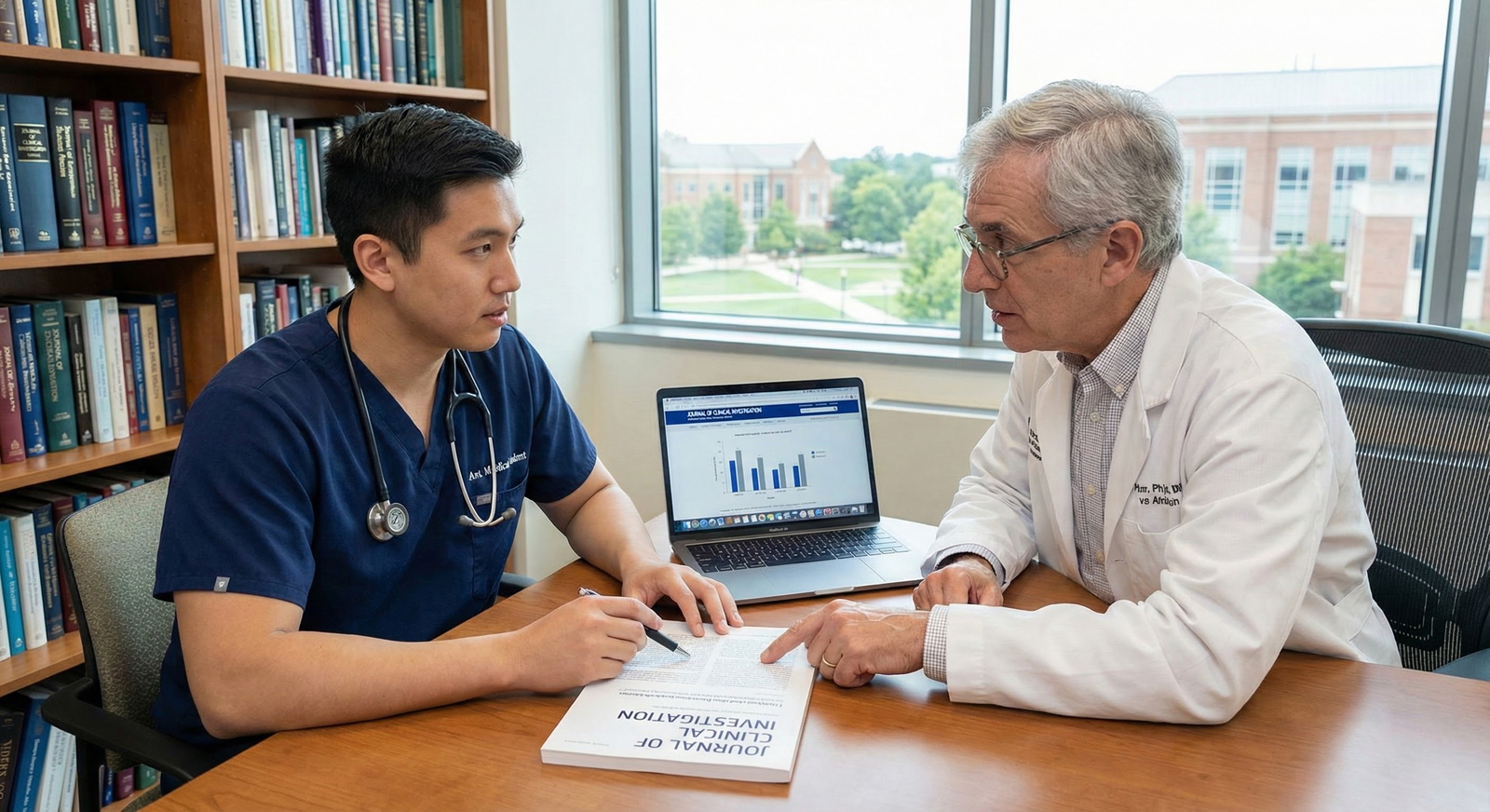
Powerful research for residency often starts with the right mentor. Look for:
- Faculty in global health centers, departments of public health, infectious diseases, or hospital global medicine programs
- Investigators with ongoing projects in international medicine partnerships or domestic underserved communities
- People who publish regularly and involve trainees in their work
When you reach out:
- Review their recent papers and projects.
- Send a concise email (4–6 sentences) introducing yourself:
- Your background as an MD graduate
- Your interest in global health
- Skills you can offer (languages, data skills, field experience)
- A short ask: “I’d love to discuss how I might contribute to your ongoing projects or related work.”
Be honest about your timeline (e.g., applying in 12–18 months), so projects can be scoped realistically.
Step 3: Start With Feasible, High-Impact Study Designs
As an MD graduate, especially close to the allopathic medical school match timeline, you may not have years for long prospective cohorts. Instead, consider:
- Retrospective chart reviews in clinics serving underserved or international populations
- Cross-sectional surveys on barriers to care, stigma, or access issues
- Secondary data analyses using existing global health datasets (DHS, WHO, local registries)
- QI projects in low-resource or safety-net settings with clear before/after metrics
- Systematic or scoping reviews on targeted global health questions
These can be completed in 6–12 months, with abstracts often ready in much less time.
Example project ideas:
- Chart review: Outcomes of patients with multidrug-resistant TB in a public hospital over five years, focusing on treatment completion and default rates.
- Survey: Assessing perceived barriers to antenatal care among migrant women in a community clinic.
- QI: Implementing and evaluating a new triage protocol in a district hospital emergency department in a low-income country.
Step 4: Build Research Skills Intentionally
Even if you have limited prior exposure, you can quickly strengthen core skills:
Study design and biostatistics:
- Take short online courses (Coursera, edX, university-based certificates) on epidemiology and biostatistics.
- Attend institutional workshops on REDCap, R, or Stata.
Ethics and IRB:
- Complete CITI or equivalent human subjects training.
- Participate in drafting IRB protocols, especially those involving international partners.
Writing and presentation:
- Volunteer to write the first draft of an abstract or manuscript section.
- Present at institutional research days to refine your communication skills.
Global health research often includes unique components like cross-cultural collaboration and power dynamics, so seek training in global health ethics and community-engaged research specifically.
Step 5: Make International or Field Experiences Count as Research
If you have already worked in international medicine or plan to:
- Coordinate with mentors before you travel to design projects that:
- Have ethical approval from local institutions
- Involve local collaborators as equal partners
- Answer questions that matter to the host community
Potential field-based research:
- Pre/post evaluation of a new training program for community health workers
- Assessment of medication stockouts before and after a supply chain intervention
- Qualitative interviews with local providers about referral barriers
Always ensure that field work is:
- Not “parachute research”
- Co-owned with local investigators
- Intentionally designed to lead to dissemination (paper, brief, local presentation)
Presenting Your Research for Maximum Impact in Residency Applications
Once you’ve built your portfolio, the next step is to frame it effectively for MD graduate residency applications, especially if you’re targeting a global health residency track.
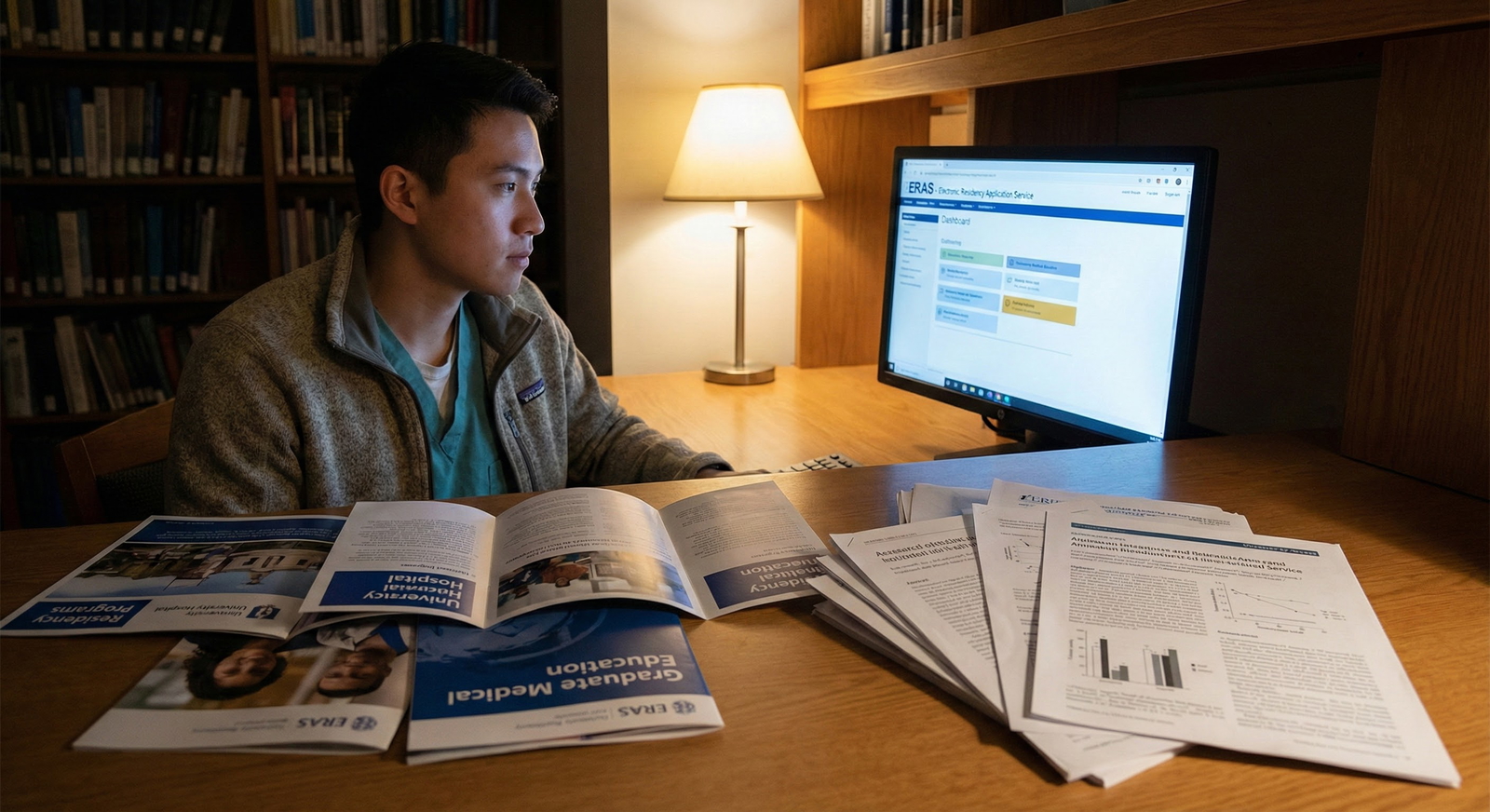
Optimize Your CV and ERAS Application
On your CV and ERAS application:
- Create a “Research Experience” section focusing on:
- Project title, your role, dates, mentors, setting (e.g., rural Uganda, refugee clinic)
- 2–3 bullet points summarizing what you did and learned
Example entry:
Research Assistant – Maternal Health Access in Rural Clinics
Global Health Center, University X, 2023–2024
Collaborated with local partners in Kenya to design and implement a cross-sectional survey on barriers to antenatal care.
Conducted data cleaning and basic statistical analyses in R for a sample of 600 participants.
Co-authored abstract accepted for poster presentation at the American Public Health Association Annual Meeting.
Highlight global health–relevant skills or content in the description even for non-international projects (e.g., work with underserved U.S. populations, resource-limited settings, or health systems).
Highlight Publications and Presentations Strategically
List peer-reviewed publications, abstracts, and posters in standard format:
- Separate peer-reviewed articles, Conference abstracts, Book chapters, etc.
- Bold your name to show your position in the author list.
- For works “accepted” or “in press,” mark clearly (Programs can verify.)
If some work is still in progress:
- Include only if submission is realistic before or during application season.
- Use “Manuscript in preparation” sparingly—too many such items can look inflated.
Tell a Cohesive Story in Your Personal Statement
Use your personal statement to connect your research with your clinical and career goals:
- Explain what specific experiences in research solidified your interest in global health.
- Reflect briefly on what you learned: about systems, culture, ethics, or implementation.
- Show how your projects have prepared you to contribute to that program’s global health efforts.
Example synthesis:
“Working with a district hospital in rural Nepal to measure delays in emergency obstetric referrals showed me how data can illuminate system failures—and how collaborative, locally led solutions can improve care. This project not only resulted in a regional conference presentation but also informed modifications in the hospital’s triage protocol. I hope to bring this lens of systems-focused, community-engaged research into my residency training and future work in global maternal health.”
Prepare to Discuss Research in Interviews
During interviews:
- Be prepared to explain your role, methods, key findings, and implications of each major project.
- Anticipate questions like:
- “What was the biggest challenge in your global health project?”
- “What would you do differently next time?”
- “How did you address ethical concerns or local priorities?”
Clarify how you hope to continue research for residency:
- Express interest in ongoing projects at that institution’s global health center.
- Ask about mentorship, protected time, and potential degree programs (e.g., MPH) that align with your trajectory.
Frequently Asked Questions (FAQ)
1. Is research absolutely required for a global health–focused residency?
Not always, but it is highly advantageous. For community-based programs with occasional international electives, clinical excellence and service might be enough. However, for academic programs with formal global health residency tracks or international medicine pathways, some research experience—especially related to global or underserved populations—significantly strengthens your application and indicates you understand the scholarly side of global health.
2. How many publications are needed to be competitive?
There is no fixed number. For most MD graduate residency applicants in global health:
- Having 1–3 substantial projects with at least one form of dissemination (poster, oral presentation, or publication) is a strong foundation.
- A single first-author paper that is relevant to global health can be more impactful than multiple unrelated minor publications.
- Highly competitive academic tracks may attract applicants with more publications, but programs also value depth, relevance, and growth over sheer quantity.
3. I don’t have access to international field sites. Can I still build a global health research profile?
Yes. Many aspects of global health can be studied through:
- Work with local underserved populations, immigrant and refugee clinics, or safety-net hospitals
- Secondary data analyses of publicly available international datasets
- Systematic reviews on global health topics
- Collaborations with faculty who have international data but are based at your institution
Global health is as much about equity, systems, and vulnerable populations as it is about physical geography.
4. I’m late in my training and only have a year before applying. What should I prioritize?
Focus on:
- One or two feasible, high-yield projects (retrospective study, QI project, or systematic review) that you can realistically complete and submit as an abstract or manuscript before or during application season.
- Finding a strong mentor in global health who can both support your project and write a detailed, supportive letter of recommendation.
- Framing any prior experiences (volunteering, clinical work with underserved populations) in a way that aligns with your chosen global health niche.
Aim to show momentum: a well-structured project in progress with clear outputs on the horizon can be as compelling as completed work, especially if your role is substantial and your goals are clearly articulated.
By building a focused, ethically grounded, and well-presented research profile, you demonstrate that you are not only committed to global health in principle, but also capable of contributing to the evidence base that shapes international medicine practice. This combination of clinical interest and scholarly rigor is exactly what the strongest global health residency programs seek in MD graduate residency applicants.