Why Research Matters So Much for a DO in Interventional Radiology
Interventional Radiology (IR) has rapidly become one of the most competitive residency pathways, and the bar is even higher for a DO graduate. While the single accreditation system has reduced some structural barriers, osteopathic applicants still often feel pressure to “prove” their competitiveness—especially in highly desired specialties like IR.
Program directors consistently report that research productivity is a key screening and selection factor, particularly for the IR match. For a DO graduate, a strong, focused research profile can:
- Demonstrate academic rigor and readiness for a cutting-edge procedural specialty
- Help offset perceived disadvantages (fewer home IR mentors, smaller academic networks, sometimes less research infrastructure)
- Distinguish you from a crowded pool of MD and DO applicants
- Support applications to both integrated Interventional Radiology residency and independent fellowship pathways
In this article, we’ll walk through how a DO graduate can strategically build a high-yield research portfolio tailored to the interventional radiology residency landscape—including how to start, what counts, how to collaborate, and how to present your work effectively.
We’ll also address critical questions like “how many publications needed”, what types of research for residency are most impactful, and how to realistically build a competitive profile even if your school or rotations had limited IR exposure.
Understanding the IR Match Landscape as a DO Graduate
Interventional Radiology is now primarily accessed through Integrated IR/DR residencies and sometimes via ESIR (Early Specialization in Interventional Radiology) pathways within Diagnostic Radiology programs. For DO graduates, the osteopathic residency match to IR has improved, but IR remains a relatively small field with limited positions and a strong emphasis on academic metrics.
How PDs View DO Applicants in IR
Program directors commonly look at:
- COMLEX/USMLE performance (including whether you took both)
- The reputation and rigor of your medical school and rotation sites
- Strength and specificity of IR letters of recommendation
- Research profile in Interventional Radiology or adjacent fields
- Evidence of commitment to IR (electives, away rotations, IR-specific experiences)
Because research is one area you can directly control and improve—even after graduation—building a deliberate, IR-aligned research footprint is one of the most practical ways to improve your competitiveness in the osteopathic residency match for IR.
What “Counts” as Research for IR
For interventional radiology residency applications, the following categories are all valuable:
- IR-specific research (clinical, imaging-based, outcomes, device-related, QI in IR workflows)
- Diagnostic radiology projects with clear procedural or interventional relevance
- Oncology, vascular surgery, cardiology, or surgery research with procedural or image-guided components
- Quality improvement and outcomes projects in procedural services or imaging departments
- Multi-disciplinary research involving IR, surgery, oncology, or internal medicine
Pure bench research (e.g., basic science) can still be impressive, but it helps if you can connect it to IR clinically (e.g., targeted therapies, embolic materials, stents, image-guided therapy).
How Many Publications Do You Really Need for IR as a DO?
There is no absolute number, but expectations have been rising across competitive specialties. When people ask “how many publications needed” for a strong IR match application, the answer depends on:
- Quality and relevance of the work
- Your level of contribution
- Whether your name appears early in the author list
- The reputation of the journal or conference
- Integration of your work into your narrative and letters
Practical Benchmarks for DO Applicants Targeting IR
These are target ranges, not rigid rules:
Highly Competitive DO IR Applicant
- 3–5+ peer-reviewed publications, with at least 1–2 clearly related to IR or image-guided procedures
- 3–8 additional scholarly products: abstracts, posters, oral presentations, case reports, book chapters, invited talks
- Involvement in ongoing, meaningful IR projects at time of application
Competitive DO IR Applicant
- 1–3 peer-reviewed publications, with at least one close to IR, radiology, oncology, or procedural medicine
- 2–5 additional scholarly outputs (posters, conference abstracts, QI project write-ups, case reports)
- A clear trajectory of involvement and productivity (e.g., not all work appearing within the final month before ERAS)
Developing Profile (Still Viable with Other Strengths)
- 0–1 publications, but several IR-related projects underway
- Multiple posters or abstracts, strong letters highlighting your research mindset and reliability
Programs are increasingly looking at the totality of the research portfolio (quality, relevance, trajectory, and your role), not just raw count. If you can show a focused narrative—“I’m building towards being an academic or clinically innovative interventional radiologist”—your profile becomes far more compelling.
Building Your IR-Focused Research Profile: Step-by-Step Strategy
Step 1: Clarify Your Goals and Timeline
As a DO graduate, you may be in one of several situations:
- Still in 3rd or 4th year with time before ERAS
- In a transitional year, prelim medicine/surgery year, or DR residency aiming for IR or ESIR
- Taking a research year while planning to apply to IR
Your time horizon shapes what’s realistic:
- 12–24 months: Aim for several substantive projects, including at least 1–2 that may reach publication before applications, plus multiple posters/abstracts.
- 6–12 months: Focus on short-cycle projects: case reports, retrospective chart reviews, QI projects, and collaborative manuscripts already in progress.
- <6 months: Emphasize posters, abstracts, case reports, and visibly active participation in ongoing projects (so mentors can speak to your contributions in letters).
Create a research roadmap with 2–3 priority projects and 2–3 “backup/fast” projects (case reports, smaller retrospective analyses).
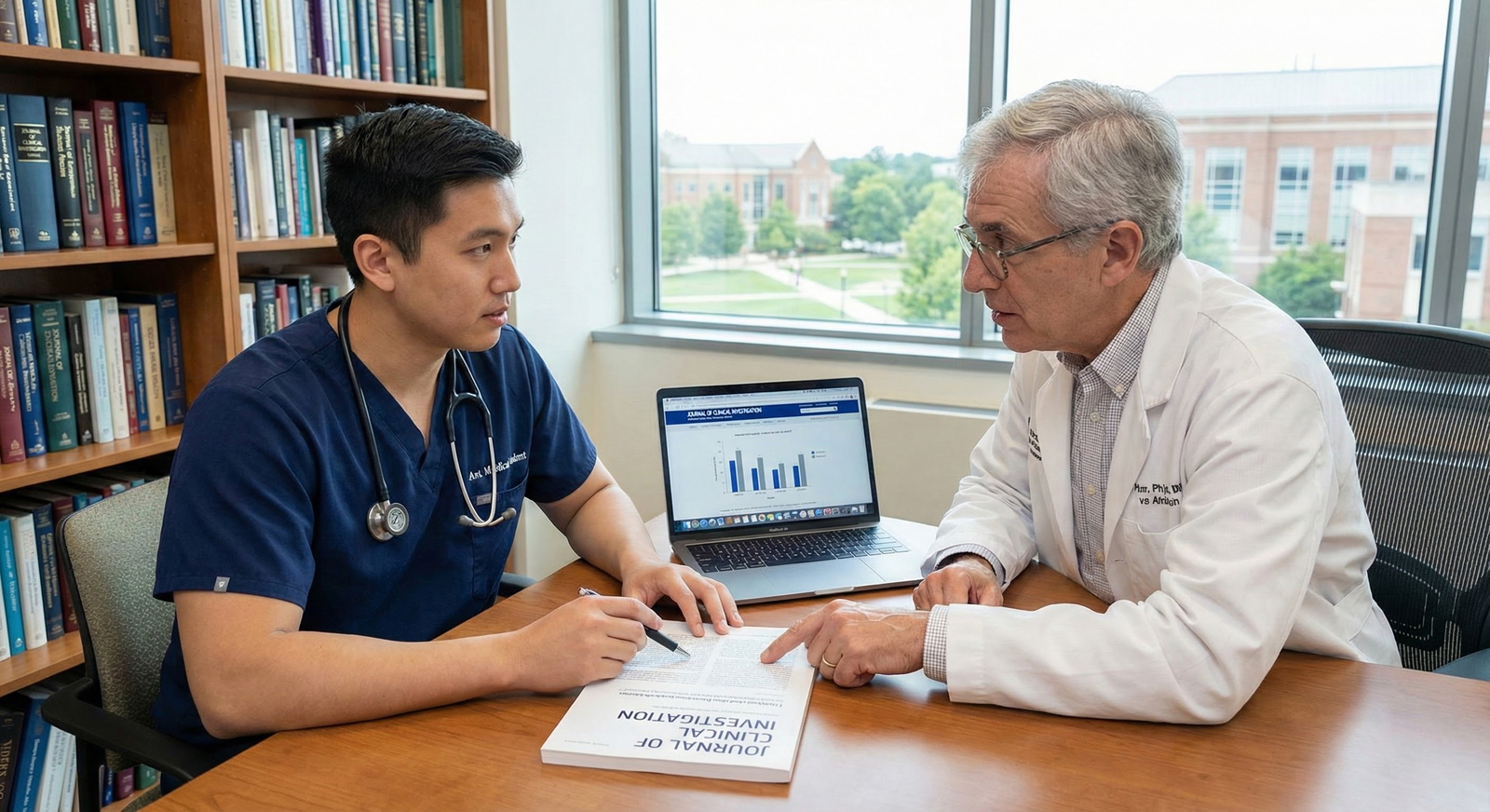
Step 2: Find and Approach IR or Related Mentors
As a DO graduate, you may not have a home academic IR department. You’ll need to be more proactive and strategic.
Where to Look for Mentors
- Affiliated academic centers where you rotate or did audition rotations
- Diagnostic radiology departments with at least one IR faculty
- Vascular surgery or interventional cardiology groups (for procedural/vascular outcomes research)
- Online or national networks:
- SIR (Society of Interventional Radiology) student/trainee sections
- DO-focused IR interest groups or alumni networks
- National osteopathic organizations with radiology or IR sections
How to Approach Potential Mentors
Keep initial outreach short, specific, and professional:
- Brief introduction: “I am a DO graduate/PGY-1 interested in IR…”
- One-sentence summary of your background (school, current role, step/COMLEX milestones if you wish)
- Specific ask: “I am very interested in IR research and would be eager to contribute to ongoing projects—especially in [embolization, oncology interventions, trauma IR, etc.].”
- Attach or link to a concise CV emphasizing prior research experience
- Offer flexibility: “I am comfortable with data collection, chart review, basic statistics, and manuscript drafting, and I’m willing to start small.”
Follow up once after 7–10 days if no response. Cast a wide but thoughtful net.
Step 3: Start With “Achievable” IR Projects
To rapidly build a research for residency profile, prioritize projects with:
- Clearly defined scope
- Feasible data access
- Realistic timeframes
- A strong chance of resulting in an abstract/poster or manuscript
High-yield project types for DO graduates targeting IR:
Case Reports and Case Series
- Example: “Unusual presentation of hepatic artery pseudoaneurysm treated with coil embolization.”
- Pros: Fast turnaround, often first-author opportunities, directly IR-relevant.
- Tips:
- Keep a log of interesting cases during IR or procedural rotations.
- Ask attendings early if a case might be publishable and if you can lead the write-up.
Retrospective Chart Reviews
- Example: Outcomes of patients undergoing Y-90 radioembolization at your institution over 5 years.
- Pros: Can yield a poster + potential paper; suitable for multi-author collaboration.
- Consider: Need IRB approval; clarify roles, timelines, and authorship expectations early.
Quality Improvement (QI) Projects
- Example: Reducing time from ED arrival to IR embolization in trauma; improving documentation of contrast allergy in IR referrals.
- Pros: Valuable to PDs, easily presented at institutional QI days or national meetings.
- Translate QI into scholarship: Poster at a regional or national meeting; manuscript describing intervention and outcomes.
Chart-Based Clinical Outcomes Research
- Example: Comparing complication rates between different access techniques or closure devices.
- Aligns well with IR’s procedural focus and can be done with strong supervision and guidance.
Multi-disciplinary Projects
- Collaborate with oncology, surgery, vascular medicine on studies where IR is integral.
- Example: IR’s role in treating portal hypertension or in palliative oncology care.
Step 4: Learn Basic Research Skills Quickly
You don’t need to be a statistician, but you should be:
- Comfortable with basic study design terminology (retrospective vs. prospective, cohort, case-control, RCT, etc.)
- Familiar with basic stats (t-tests, chi-square, p-values, confidence intervals)
- Able to read and summarize IR literature effectively
Free or low-cost resources:
- Coursera/edX courses on clinical research methods and biostatistics
- SIR educational materials and webinars
- Your institution’s clinical research office or librarian support
Knowing the language of research will also help you sound competent in interviews, especially for IR.
Step 5: Be a High-Value Collaborator
Faculty are more likely to support and promote DO graduates when they’re dependable and efficient.
Actionable habits:
- Respond to emails within 24–48 hours
- Turn around assigned tasks (e.g., literature reviews, data extraction) as promised
- Keep a simple tracking spreadsheet for all your projects and deadlines
- Send periodic brief updates to your mentors: “Here’s where we are, here’s what’s next.”
This reliability often leads to:
- Being added to additional projects
- Higher authorship positions
- Stronger, more detailed letters of recommendation
Maximizing the Impact of Your Research Portfolio for the IR Match
Producing research is only half the battle; you must also present and position your work effectively for programs evaluating DO applicants.
Prioritize IR-Relevant and First-Author Work
In ERAS and during interviews, IR program directors will quickly scan:
- Whether you have IR or IR-adjacent work
- Whether you have first-author or early-author positions
- Whether your projects form a coherent story about your interest in IR
If you have multiple options:
- Highlight IR-related projects at the top of your CV or experiences section
- Emphasize projects where you had substantial roles (study design, data analysis, manuscript drafting)
- Think ahead: propose follow-up projects to deepen a specific niche (e.g., portal interventions, trauma IR, oncologic embolization).
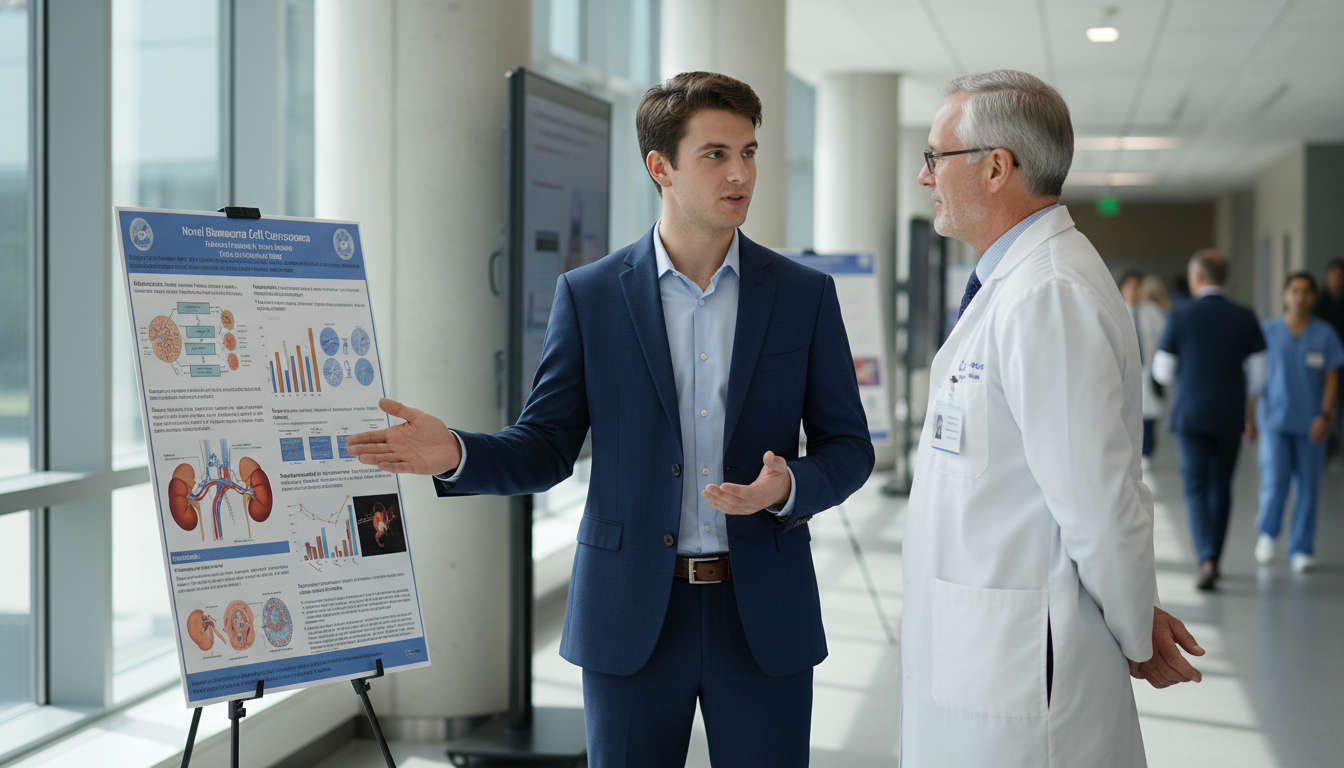
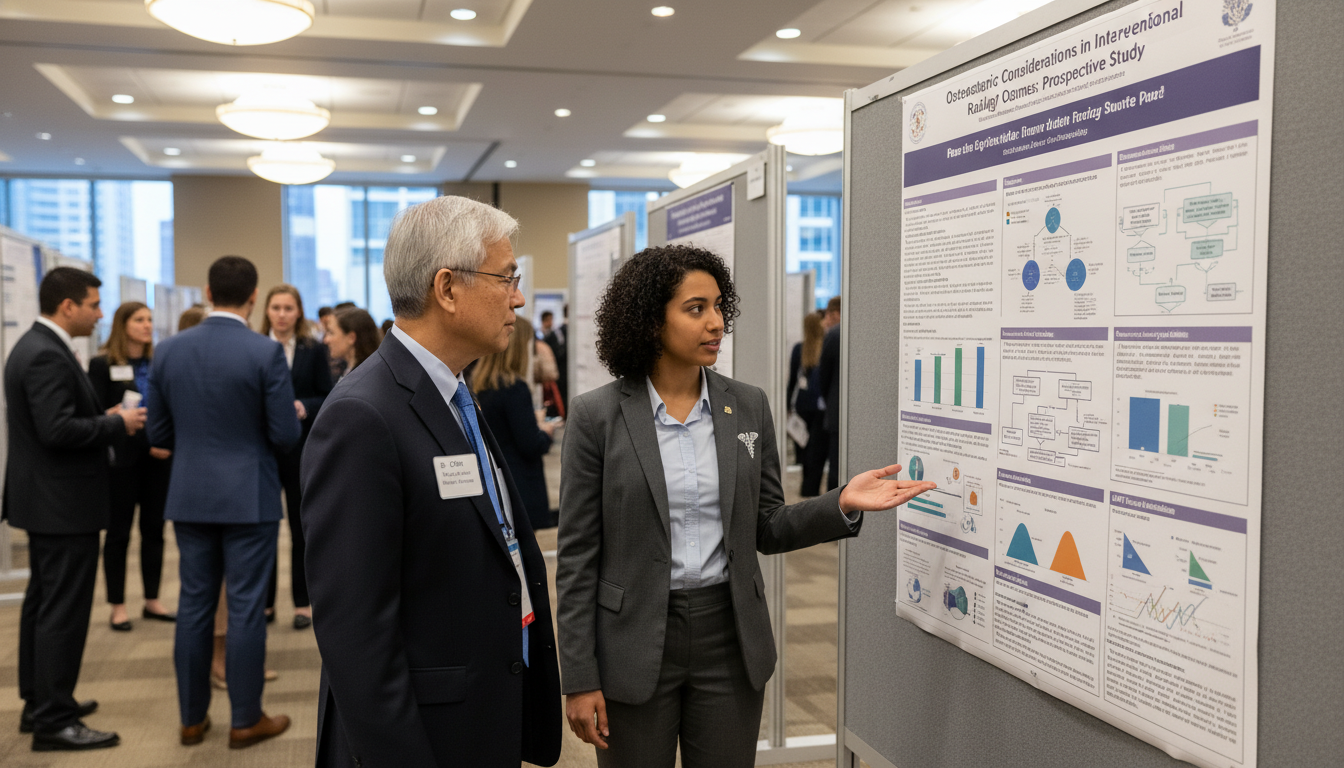
Turning Posters and Abstracts into Manuscripts
Many DO graduates stop at the abstract or poster stage. For the osteopathic residency match, having full publications is more impactful.
To move from poster to paper:
- After presenting, schedule a debrief meeting with your mentor to discuss manuscript potential.
- Use the poster as the skeleton of your paper—introduction, methods, results, conclusion.
- Aim to submit within 3–6 months of your presentation while data and context are fresh.
Even if the paper ends up in a smaller or specialty journal, the peer-reviewed status matters.
Integrating Research into Your Personal Statement and Interviews
Your research should not appear as a disconnected list of activities. It should:
- Support your narrative: “I’m committed to academic and evidence-based IR practice.”
- Show a pattern of curiosity: “I wanted to understand outcomes and improve processes in IR.”
- Demonstrate skills: critical thinking, persistence, teamwork, scientific communication.
Example integration in a personal statement:
“During my sub-internship in interventional radiology, I noticed frequent delays between ED presentation and embolization for trauma patients. This led me to develop a QI project examining our workflow, culminating in a protocol change and a subsequent abstract at our regional meeting. That experience taught me how IR can improve systems of care beyond individual procedures, and it solidified my interest in pursuing an academically oriented IR career.”
In interviews, be ready to:
- Explain each major project in 1–2 minutes, including your exact role
- Discuss what you learned, any limitations, and “what you would do next”
- Connect that learning to how you would function as an IR resident
Leveraging Publications and Research for Strong Letters
When mentors see you follow through on research, they are more likely to write:
- Letters describing your attention to detail, perseverance, and academic promise
- Comments on your ability to work with multi-disciplinary teams (vital in IR)
- Endorsements of you as a future academic or thought leader in IR
Let letter writers know:
- Which projects you worked on with them
- What roles you played (lead author, data analysis, IRB work)
- Your career aim: integrated IR residency, ESIR within DR, or independent IR path
This context helps them write letters that align with your stated goals.
Common Challenges for DO Graduates—and How to Overcome Them
1. Limited Home IR Exposure or Faculty
If your DO school or rotation sites lack robust IR resources:
- Seek away rotations at academic centers with IR; combine these with research asks.
- Use diagnostic radiology, vascular surgery, or cardiology mentors to enter adjacent projects with IR relevance.
- Join national IR organizations (e.g., SIR) and attend conferences to network.
- Consider a dedicated research year at an institution with an IR department if your timeline and finances allow.
2. Late Realization of IR Interest
If you decided on IR late in the clinical years:
- Start with fast-cycle scholarship: case reports, QI, secondary analyses, literature reviews.
- Get actively involved in ongoing IR research where much groundwork is already done.
- Don’t undersell non-IR research; use interviews to explain how the skills and methods transfer to IR.
3. Balancing Clinical Demands With Research as a DO Graduate
If you’re in a prelim or TY year while building your IR profile:
- Time-block 2–4 hours weekly specifically for research tasks.
- Prioritize 1–2 main projects; avoid spreading yourself across many projects you can’t meaningfully advance.
- Use off-service rotations or lighter months to push manuscripts across the finish line.
4. Imposter Syndrome as a DO in a Competitive Field
Many DO graduates worry they’re “behind” MD peers in research experience. Counter this by:
- Focusing on growth and trajectory rather than what you didn’t start earlier
- Documenting small wins: finished abstract, submitted IRB, completed data collection
- Seeking feedback from mentors who support osteopathic trainees and understand your path
Program directors care more about where you’re heading and what you’ve demonstrated, not just whether you had early access to name-brand institutions.
Putting It All Together: A Sample Pathway for a DO Targeting IR
Here’s an example of how a DO graduate could build a strong IR research profile over 18–24 months.
Months 0–3
- Identify 1–2 IR mentors at an academic center (possibly via away rotation).
- Join an ongoing IR outcomes project—help with data collection and literature review.
- Write 1–2 case reports from interesting IR cases you encounter.
Months 3–9
- Submit case reports to journals; present one as a poster regionally or nationally.
- Take ownership of a clearly scoped retrospective IR or QI project.
- Enroll in online statistics and research methods courses to strengthen fundamentals.
Months 9–15
- Submit abstract(s) from your main project to SIR or another national meeting.
- Draft and submit the full manuscript.
- Join a second project, ideally in a complementary IR niche (e.g., oncologic vs. trauma vs. vascular).
Months 15–24
- Ensure at least one IR-relevant publication is accepted or in late-stage review by ERAS submission.
- Update CV and ERAS with all abstracts, posters, and manuscripts (under review clearly labeled).
- Prepare to discuss each project confidently in your IR interviews.
By the time you apply, you could realistically have:
- 1–3 IR-related publications (or close to acceptance)
- 2–5 abstracts/posters
- Demonstrable longitudinal involvement in IR scholarship
For a DO applicant, that profile is credible, compelling, and clearly aligned with IR residency expectations.
FAQs: Research Profile Building for DO Graduates in Interventional Radiology
1. As a DO, do I absolutely need IR-specific research to match into an interventional radiology residency?
Not absolutely, but it helps significantly. Many successful DO applicants have a mix of IR and non-IR research. If you lack direct IR projects, emphasize work in related fields (diagnostic radiology, vascular surgery, oncology, procedural medicine) and be explicit about how the skills, methods, and questions relate to IR. Still, aim to secure at least one IR-adjacent or IR-specific project if at all possible before applying.
2. How many publications needed to be “safe” for an IR match as a DO graduate?
There is no guaranteed “safe” number. However, many competitive DO applicants to IR have 1–3 peer-reviewed publications, with at least one related to IR or imaging, plus several posters and abstracts. Ultra-competitive applicants may have 4–6+ publications. Focus on quality, relevance, and your role rather than chasing a specific number.
3. Does research in basic science or non-radiology fields still help for IR residency?
Yes. Basic science or non-radiology research can still strengthen your application by showing persistence, analytical skills, and comfort with scientific thinking. It’s more impactful if you can articulate in your personal statement and interviews how those experiences shaped your thinking and prepared you for IR. Whenever possible, try to add at least one clinically oriented or IR-linked project to tie everything together.
4. Should I consider a dedicated research year as a DO applicant if my current research profile is weak?
A research year can be valuable if:
- You have minimal or no research,
- You strongly desire an academic or research-intensive IR residency, and
- You can secure a position at an institution with active IR research and supportive mentors.
However, a research year is not mandatory for every DO applicant. Before deciding, discuss your current profile, goals, and options with IR mentors, advisors, or program directors. A focused 12–18 months of research can be transformative—but only if the setting and mentorship are high quality and you stay highly productive.
By approaching research strategically—focusing on relevance, reliability, and clear narrative—you can build a powerful, competitive research profile as a DO graduate entering the world of interventional radiology.