Understanding the Role of Research in Medical Genetics for US Citizen IMGs
For a US citizen IMG or American studying abroad, research is not just a “nice-to-have” when applying for a medical genetics residency—it is often one of the most powerful ways to stand out. Medical genetics is a relatively small but rapidly advancing specialty, driven by genomics, precision medicine, and translational research. Programs want residents who are comfortable thinking scientifically, interpreting new evidence, and sometimes even generating it.
As an American studying abroad, you may be competing against US MD/DO students from institutions with robust genetics departments. Strategic research involvement can help you:
- Demonstrate commitment to medical genetics
- Compensate for limited home‑institution exposure to genetics
- Show academic potential beyond exam scores
- Build strong relationships with mentors who can write impactful letters
- Learn the language and concepts of modern genomics
This article lays out a step‑by‑step roadmap to build a strong, realistic, and targeted research profile that improves your chances in the genetics match.
We will cover:
- What program directors look for in a research portfolio
- How many publications are typical and what “counts”
- How to find and choose research opportunities while abroad
- Strategies for US-based research, electives, and networking
- Concrete timelines and example profiles for US citizen IMGs
What Makes a Strong Research Profile in Medical Genetics?
Before you start chasing publications for the match, you need to understand what selection committees actually value. For medical genetics residency, especially combined programs (e.g., Pediatrics–Medical Genetics), directors are looking for:
1. Evidence of Genuine Interest in Genetics
Programs want to differentiate between applicants who view genetics as a backup and those who are truly committed. Research is one of the clearest signals.
Valuable indicators include:
- Projects clearly related to genetics, genomics, or inherited disease
- Longitudinal involvement in one or two focused areas, rather than many short unrelated projects
- A personal statement and CV that tell a coherent story around genetics
Examples of relevant research themes:
- Gene discovery in rare diseases
- Variant interpretation and classification
- Pharmacogenomics
- Cancer genetics and hereditary cancer syndromes
- Bioinformatics, genome-wide association studies (GWAS)
- Ethical, legal, and social implications (ELSI) of genomic medicine
- Implementation science around genetic testing access
2. Depth Over Sheer Volume
Programs know that not everyone has access to high-output labs. A focused, well-understood project where you can explain the hypothesis, methodology, and limitations is much more valuable than a long list of minor authorships you barely remember.
When committees review your application, they consider:
- Did you have a clear role (data collection, analysis, writing, study design)?
- Can you talk about the project in detail at interview?
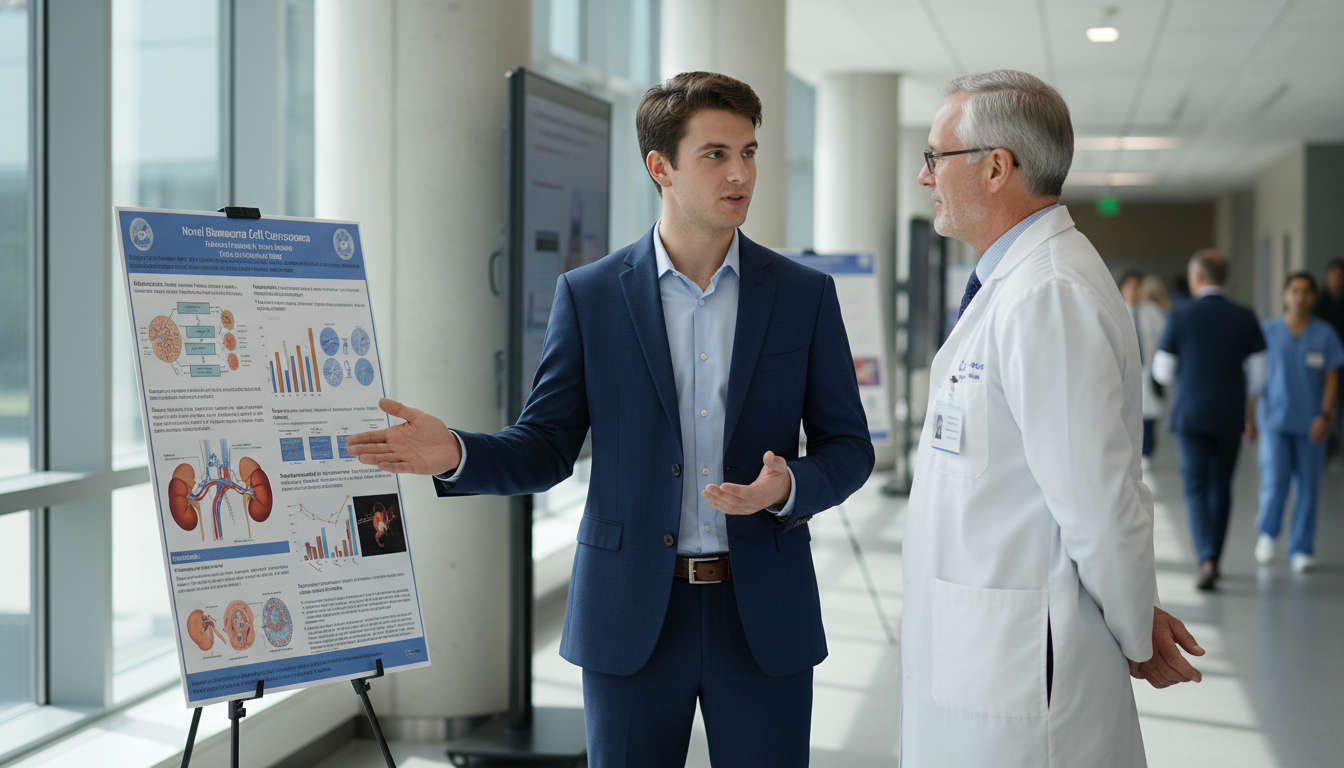
- Did the work lead to anything visible: abstract, poster, publication, protocol design?
For a US citizen IMG, a credible narrative of your work, plus at least a few visible outputs, often matters more than raw numbers.
3. Concrete Outputs: Publications, Abstracts, and Presentations
In the context of “how many publications needed” for a competitive medical genetics application, there is no fixed number. However, realistic targets for a strong US citizen IMG profile might be:
- 1–3 peer-reviewed publications (any authorship; at least one with genetics relevance is ideal)
- 2–5 abstracts or poster presentations, especially at reputable meetings (e.g., ACMG, ASHG, subspecialty genetic societies)
- Additional scholarly work:
- Case reports of interesting genetic conditions
- Review articles related to genomic medicine
- Quality improvement (QI) projects involving genetic testing workflows
Keep in mind that first-author work is impressive but not mandatory. Many successful applicants match with middle-author publications plus strong engagement and letters.
4. Clear Fit With the Program’s Academic Environment
Residency programs want trainees who can contribute to their ongoing research or at least enthusiastically participate. If your prior work aligns with a program’s strengths—such as inherited metabolic disease, neurogenetics, or cancer genomics—it immediately strengthens your candidacy.
Action step:
When planning your research, ask:
“Could this work be discussed naturally with a geneticist at a US academic center and show that I’d be a good fit for their environment?”
If the answer is yes, you’re on the right track.

Finding and Choosing Research Opportunities as a US Citizen IMG
For an American studying abroad, the biggest challenge is often access—your school may not have a strong genetics department or NIH-funded labs. But there are multiple pathways to meaningful research if you are strategic.
1. Start With What’s Available at Your Home Institution
Even if your school doesn’t have a formal genetics department, you may find:
- Pediatricians, neurologists, oncologists, or internists with an interest in inherited disorders
- Pathologists or hematologists working with molecular diagnostics
- Faculty doing epidemiology or bioinformatics projects that intersect with genomics
Strategies:
- Search your school’s website for keywords such as “genetics,” “genomics,” “hereditary,” “inherited,” “molecular,” “metabolic,” or “rare disease.”
- Ask the dean’s office or research office for a list of faculty or ongoing projects.
- Attend any local research seminars or grand rounds, then approach speakers directly.
If there are no genetics-focused labs, consider:
- Clinical research (e.g., inherited cardiomyopathies in cardiology clinics)
- Chart reviews of patients with genetic conditions (e.g., Down syndrome, Marfan, hereditary cancers)
- Quality improvement around genetic test ordering or counseling in existing clinics
These are all legitimate ways to demonstrate an interest in medical genetics.
2. Cold-Emailing Genetics Researchers in the US
As a US citizen IMG, you have an advantage: many US institutions are more open to involving you in remote or short-term collaborative projects, especially if you are clear, professional, and focused.
Steps to cold-email effectively:
Identify potential mentors.
- Search for “medical genetics faculty” or “clinical geneticist” at major academic centers.
- Look up programs you’re interested in for residency and read their faculty profiles.
- Target those whose research overlaps your interests (e.g., metabolic genetics, neurogenetics, cancer predisposition).
Read at least one of their recent papers.
- Understand the basic question, methods, and findings.
- Think about how your skills (even basic ones) might help: data extraction, chart review, literature review, basic statistics.
Send a concise, customized email. Include:
- Who you are: “US citizen IMG at [School], class of [Year], interested in medical genetics.”
- Why you’re reaching out: a brief note about your interest in their specific research area.
- What you’re asking for: “I would be grateful for any opportunity to assist with an ongoing or new project, even at the level of data collection or literature review.”
- Attach a brief CV highlighting any prior research or relevant coursework.
Example email snippet:
I am a US citizen attending medical school at [Institution] and I am strongly interested in a career in medical genetics. I recently read your paper on [topic] and was particularly interested in your findings about [specific detail]. I would be very grateful for the opportunity to contribute to any ongoing or upcoming projects in your group, even in a limited or remote capacity (e.g., data abstraction, literature review, or manuscript preparation).
Expect a low response rate; the key is volume plus personalization. Even a single positive reply can turn into a career-shaping mentorship.
3. Remote and Data-Based Research Options
Genetics research is increasingly data-driven, which creates options for remote work—ideal for an American studying abroad.
Potential remote-friendly projects:
- Chart reviews for phenotypic characterization of rare diseases
- Database studies using de-identified datasets provided by mentors
- Systematic or scoping reviews on genetic conditions or genomic testing guidelines
- Survey-based studies on genetic testing practices, patient preferences, or ethical issues
- Work related to variant classification or bioinformatics pipelines (with some training)
To stand out, invest some time in self-education:
- Online courses (Coursera, edX) in:
- Introduction to genomics and bioinformatics
- R or Python for data analysis
- Biostatistics and epidemiology
- Introductory texts or free resources from ACMG or ASHG
Being able to offer basic analytical or coding skills makes you very attractive to busy geneticists.
4. US-Based Research Years or Short-Term Positions
If you have the flexibility, a dedicated research year in the US can transform your profile. This is particularly powerful if:
- Your Step scores are average and you need another strength
- Your home institution has almost no research infrastructure
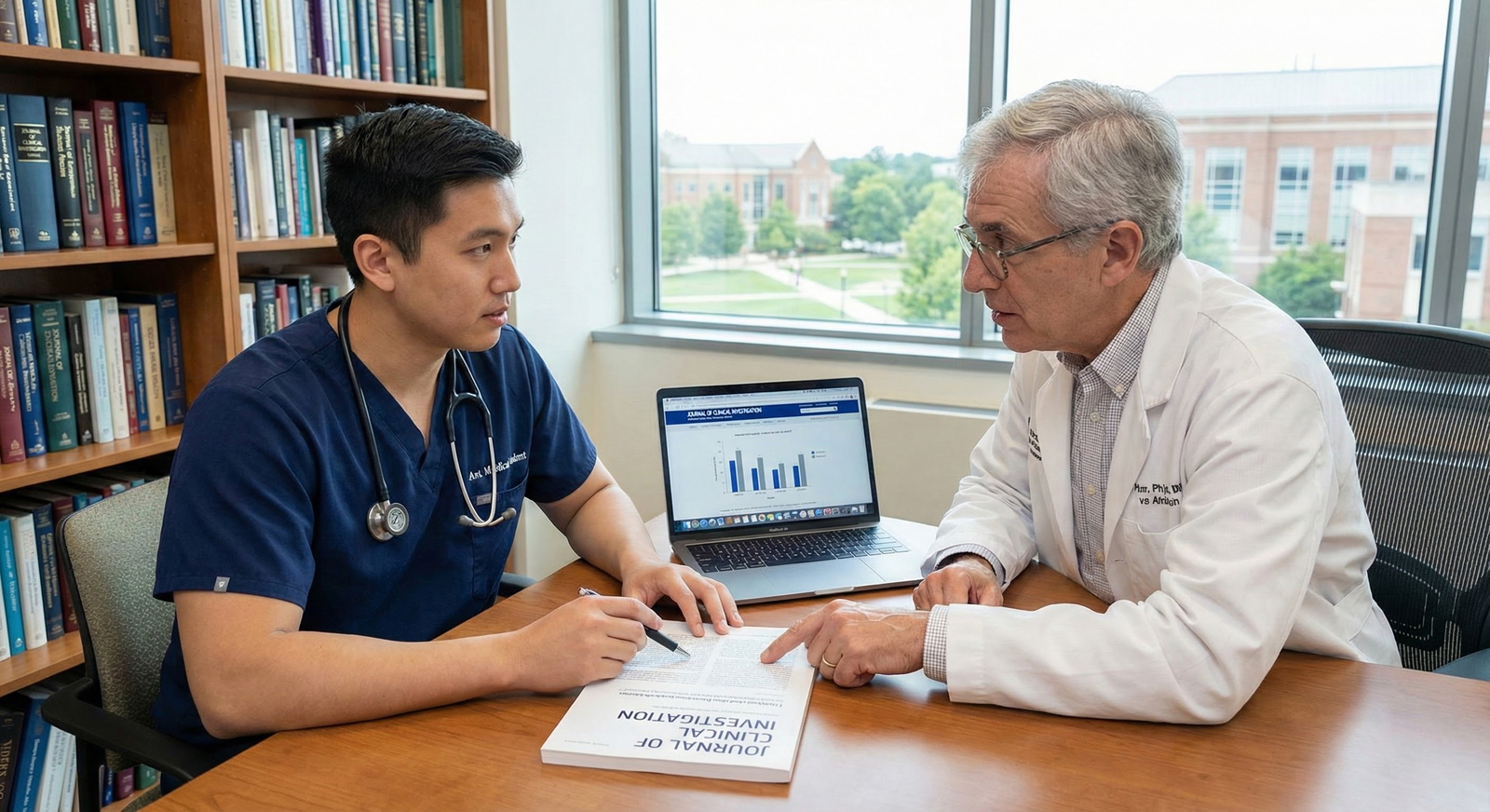
- You want US-based mentorship and letters of recommendation
Common formats:
- 1-year paid research fellow positions (often in large genetics centers or children’s hospitals)
- Unpaid or stipend-based positions supported by grants
- Structured programs connecting IMGs to research mentors (varies by institution and year)
To find them:
- Check big genetics and children’s hospitals (e.g., CHOP, Boston Children’s, Cincinnati, Texas Children’s, major academic centers) for “research fellow” or “postdoctoral research associate” positions in genetics or genomics.
- Email genetics division chiefs asking if there are open or upcoming positions for motivated medical graduates.
Even a concentrated 6–12 month period of full-time research can yield multiple abstracts and at least one publication, significantly enhancing your genetics match prospects.
Types of Research That Work Well for Medical Genetics Applicants
Medical genetics is interdisciplinary. You don’t need to be doing CRISPR experiments in a wet lab to build an excellent profile. For a US citizen IMG, some types of research are more accessible and still very impactful.
1. Clinical Genetics Research
These projects often involve:
- Chart reviews of patients with specific genetic conditions
- Evaluation of diagnostic yield of genetic testing (e.g., exome sequencing)
- Natural history studies of rare diseases
- Studying phenotypic variability among patients with the same mutation
Why it’s useful:
- Directly relevant to clinical practice in genetics
- Often feasible at institutions with patient populations but limited lab resources
- Can lead to case series, retrospective cohort studies, or case reports
Example:
A chart review of all patients diagnosed with Noonan syndrome in a hospital over the last 10 years, correlating genotype with cardiac manifestations.
2. Case Reports and Case Series
Case reports are often the most attainable gateway into research and publications for residency. In genetics, they can be especially valuable when they:
- Describe a new mutation or rare genotype–phenotype correlation
- Highlight unusual presentations of known conditions
- Demonstrate diagnostic challenges or ethical dilemmas
As a student or IMG:
- Pay attention on rotations (pediatrics, neurology, oncology, internal medicine) for patients with rare or undiagnosed conditions.
- Ask supervising physicians if they are interested in writing up the case.
- Offer to do the bulk of the literature review and initial drafting.
Even one or two well-written genetics-focused case reports can convincingly show interest in the field.
3. Translational and Laboratory Research
If you have access to bench research:
- Projects in molecular diagnostics, functional studies of variants, model organisms, or biomarkers for genetic diseases are particularly powerful.
- Demonstrate that you can handle complex scientific questions and understand the bridge between lab discoveries and clinical practice.
Examples:
- Functional characterization of a novel variant in a known disease gene
- Development of a new assay for carrier screening
- Studying molecular pathways underlying inherited metabolic diseases
This type of work is highly valued but not required to match. Don’t feel disadvantaged if your access is limited; clinical and data-based projects can be just as impactful for your application.
4. Ethics, Policy, and Implementation Science in Genomics
Medical genetics programs are increasingly engaged with:
- Access and equity in genomic testing
- Informed consent and incidental findings
- Reproductive decision-making in hereditary diseases
- Population screening programs
If you’re interested in these areas:
- You can design survey-based or qualitative studies (interviews, focus groups)
- You can collaborate with bioethics or public health faculty
- You can produce review articles or policy briefs
These topics pair well with a thoughtful personal statement and can resonate strongly with academic programs.

Building a Step-by-Step Plan and Timeline
Your approach depends on where you are in medical school or training. Below are practical, phased strategies tailored to a US citizen IMG planning a medical genetics residency.
Preclinical Years (Years 1–2)
Goals:
- Build basic knowledge in genetics and research methods
- Secure your first mentor and project
Action steps:
Learn the language of genetics and research.
- Take electives in medical genetics or molecular biology if available.
- Complete at least one basic online course in biostatistics or research methods.
Seek early mentorship.
- Identify any faculty at your school with genetics interests.
- If none, start cold-emailing US-based geneticists for remote work (as discussed above).
Start with manageable projects.
- Case reports with local clinicians
- Small chart reviews (e.g., frequency of certain genetic tests in a clinic)
- Literature reviews that could be turned into a narrative or systematic review
Target outcome by end of preclinical years:
- At least one project underway, ideally genetics-related
- A clear mentor–mentee relationship established
Clinical Years (Years 3–4 or Equivalent)
Goals:
- Convert projects into tangible outputs
- Align clinical rotations with research interests
- Prepare for US rotations and networking
Action steps:
Continue project momentum.
- Push existing projects towards abstracts, posters, and manuscripts.
- Aim to submit at least one abstract to a regional or national conference.
Choose rotations strategically.
- Prioritize pediatrics, neurology, oncology, maternal-fetal medicine, internal medicine—fields where genetic conditions are common.
- Identify rare or interesting cases and ask about case reports early.
Plan US clinical or research electives.
- Schedule electives in medical genetics or related fields at US institutions (especially ones with programs you might apply to).
- While there, express strong interest in research and ask if there are short projects you can join or initiate.
Network deliberately.
- Attend any genetics or genomics conferences you can (even virtually).
- Introduce yourself to faculty and fellows; mention that you’re a US citizen IMG hoping to pursue medical genetics.
Target outcome by end of clinical years:
- 1–3 abstracts or posters (at least one genetics-focused if possible)
- 1–2 manuscripts submitted or in preparation, with your active involvement
- At least one US-based mentor or collaborator familiar with your work
Graduation to Application (Gap Year or Early Postgraduate Time)
Goals:
- Solidify publications and strengthen US ties
- Generate strong letters of recommendation
If you have a gap year or flexibility:
Consider a full-time US research position.
- Prioritize divisions of medical genetics or genetics-related labs.
- Focus on producing measurable output within 6–12 months.
Be intentional about authorship.
- Take responsibility where possible (data analysis, preliminary drafting).
- Ask mentors clearly how authorship is decided and what you need to do to be included.
Prepare for interviews with clear research narratives.
- Be able to explain:
- The core question of each project
- Your specific role
- Key findings and limitations
- What you learned and how it shapes your interest in genetics
- Be able to explain:
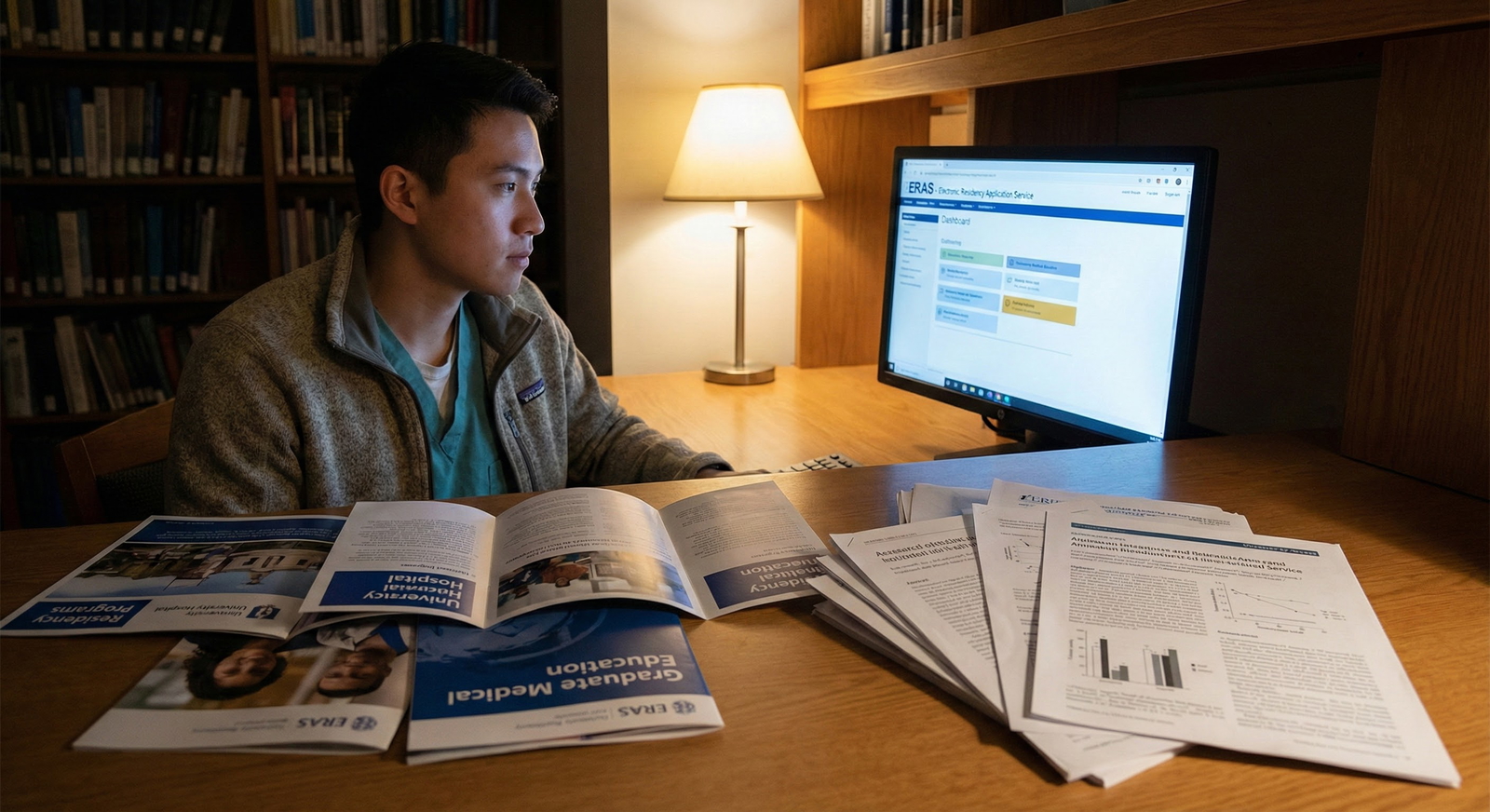
Target outcome by ERAS submission:
- A CV that shows a clear research trajectory in genetics or closely related fields
- Concrete output: ideally 1–3 publications, 2–5 abstracts/posters, and several presented projects
- Strong letters highlighting your research skills, intellectual curiosity, and commitment to medical genetics
Putting It All Together: Example Research Profiles
To make this concrete, here are example profiles of US citizen IMGs applying to medical genetics. These are illustrative, not strict requirements.
Example A: Strong, Balanced Profile
- US citizen IMG, mid-tier Caribbean school
- Research:
- 1 first-author case report on a rare inherited metabolic disease
- 1 middle-author retrospective study on diagnostic yield of exome sequencing in pediatric neurodevelopmental delay (submitted)
- 3 posters: 2 at national genetics meetings, 1 at a local pediatric conference
- Activities:
- 6-month research elective at a US children’s hospital genetics division
- Strong letter from US genetics faculty describing initiative and analytic ability
This applicant likely appears highly committed and academically promising.
Example B: Focused but Limited Output
- US citizen IMG from Eastern Europe
- Research:
- 2 middle-author abstracts in oncology (not clearly genetics-focused)
- 1 ongoing project remotely with a US cancer genetics group (data collection phase)
- Activities:
- Online genomics courses completed
- Attended ASHG virtually, networked with potential mentors
This applicant can still match, especially if they clearly communicate why they are pivoting into genetics and have at least one visible, genetics-relevant project by ERAS submission.
Example C: High Output Research Year
- US citizen IMG who took a dedicated research year in the US
- Research:
- 1 first-author original article in neurogenetics (submitted)
- 1 second-author original article published in a quality journal
- 4 abstracts/posters at national meetings
- 1 invited oral presentation at a regional conference
- Activities:
- Documented mentorship of junior students
- Strong letters from two NIH-funded geneticists
This profile is extremely competitive at most medical genetics programs, even if Step scores are average.
Frequently Asked Questions (FAQ)
1. As a US citizen IMG, how many publications are needed to be competitive for medical genetics?
There is no strict cutoff, but realistically:
- 1–3 peer-reviewed publications (any authorship) is a strong target
- At least one genetics-focused paper or case report is ideal
- Abstracts and posters also matter—2–5 looks solid
Programs care more about relevance, depth, and your understanding of the work than raw numbers. A single high-quality, genetics-relevant project you can discuss in depth often outweighs multiple superficial ones.
2. Does research outside of genetics (e.g., cardiology, surgery) still help my genetics application?
Yes, especially if:
- It shows strong methodological training or statistical skills
- You have tangible outputs (posters, papers)
- You can clearly articulate what you learned and how it prepares you for genetics
However, if all of your work is unrelated to genetics, try to obtain at least one genetics-related project before you apply, even if it’s a case report or small retrospective study.
3. Can I build a competitive research profile completely remotely while studying abroad?
It is possible, though more challenging. For a US citizen IMG, a realistic plan could be:
- Secure a remote mentor in the US (through cold-emailing and networking)
- Work on:
- Literature reviews
- Chart reviews using de-identified data
- Database or survey-based studies
- Combine this with:
- Local projects at your home institution
- At least one US clinical or research elective if feasible
Programs will primarily look at outputs and letters. If your mentor can attest to your contribution and you have concrete products (abstracts, manuscripts), remote work can be just as effective as in-person.
4. I’m late in medical school and just decided on medical genetics. Is it too late to build a research profile?
It is not too late, but you must be very focused and realistic:
- Prioritize case reports and small retrospective projects that can be completed faster
- Seek short, intensive research electives in US genetics departments
- Emphasize:
- Any prior experiences that relate to genetics (even indirectly)
- A clear explanation of your late decision and what motivated your shift
- Consider a gap year dedicated to research if your overall application is weak in US experience or academics
Even a year of well-structured, targeted research can markedly change your competitiveness for the genetics match.
By understanding what program directors value, strategically leveraging your status as a US citizen IMG, and focusing on achievable, genetics-relevant projects, you can build a research profile that not only strengthens your residency application but also lays the foundation for a meaningful academic career in medical genetics.