Why Research Matters So Much for a Non‑US Citizen IMG in EM
For a non‑US citizen IMG aiming for emergency medicine (EM), research is not just a “nice to have”—it can be one of your strongest levers to overcome structural disadvantages in the EM match.
Program directors know that:
- As a foreign national medical graduate, you may have had variable clinical exposure to U.S.-style emergency care.
- Visa and sponsorship issues may make some programs hesitant to interview you.
- You may not have home‑institution EM faculty who can call PDs for you.
A serious research profile helps counterbalance these by:
Signaling academic rigor and reliability
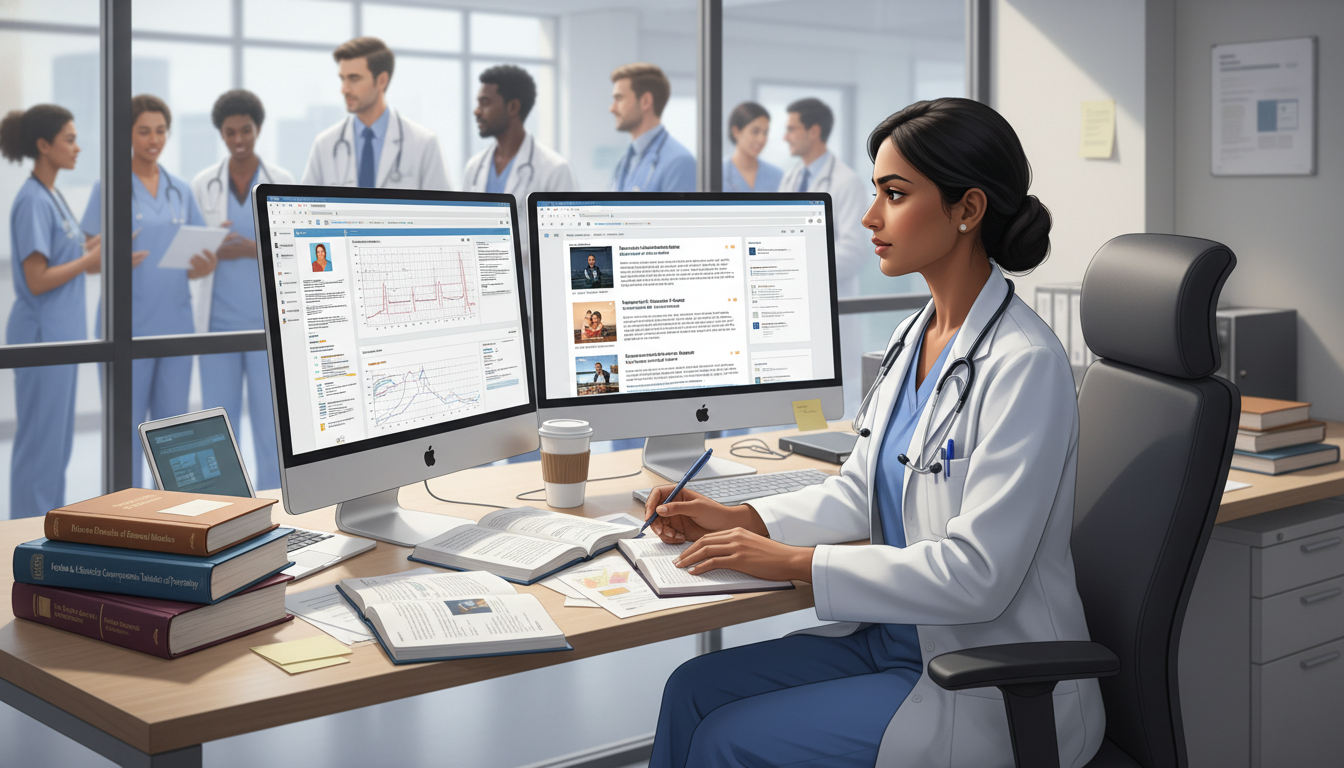
Completing research—especially in EM or acute care—proves you can work in a structured, evidence‑based environment and finish long‑term projects.Creating U.S.‑based connections
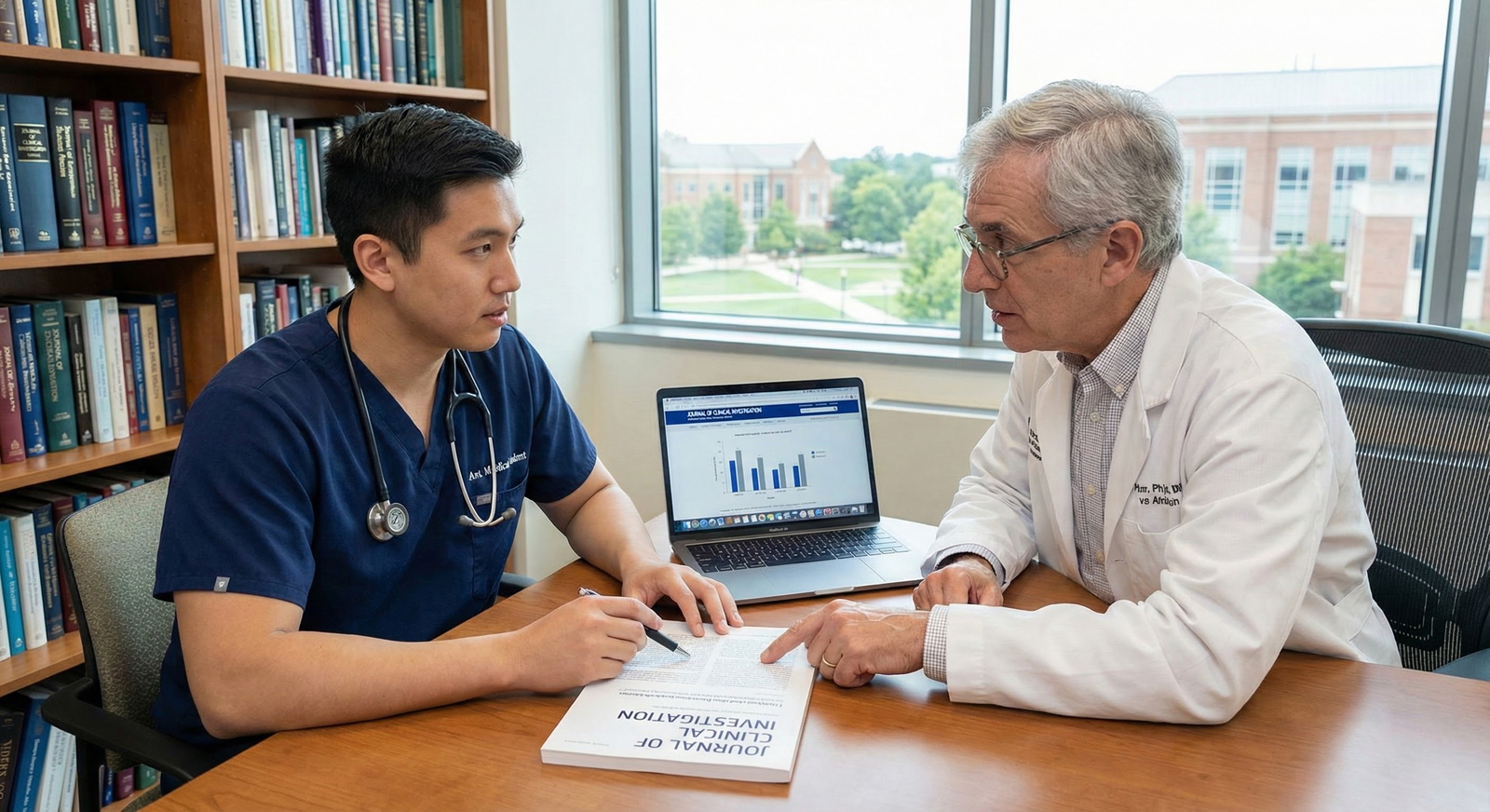
Research with U.S. faculty can lead to strong letters, insider advocacy, and word‑of‑mouth support with EM program directors.Demonstrating communication skills
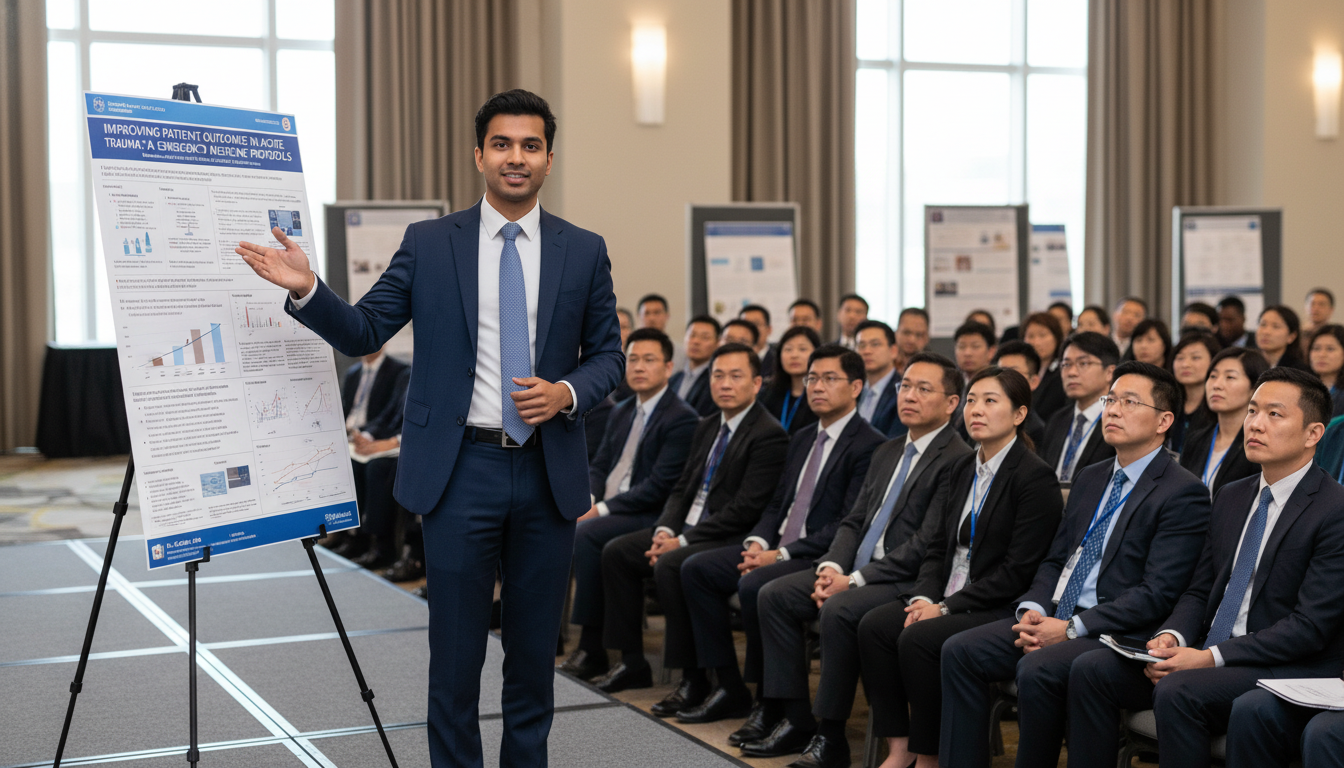
Manuscripts, posters, and presentations show you can communicate complex data clearly—an essential skill for EM physicians.Showing persistence and initiative
A non‑US citizen IMG who builds a research portfolio despite fewer opportunities stands out as driven and resilient.
How Much Does Research Really Matter in EM?
EM is not as research‑heavy as some subspecialties, but the trend is moving toward valuing scholarly work more, especially at academic programs. For non‑US citizen IMGs, research is a differentiator, not an optional extra.
- Community programs: may value strong clinical letters and USCE more, but research can still tip the scale.
- Academic programs: often expect at least some scholarly work; serious research makes you more competitive.
You don’t need to be a first author in NEJM, but you should be able to show a coherent narrative of scholarly interest and productivity.
Defining a Strong EM Research Profile as a Non‑US Citizen IMG
A research profile isn’t just a list of publications. It is the story your scholarly activities tell about your curiosity, work ethic, and fit for emergency medicine.
Core Components of a Competitive Research Profile
Clear Thematic Focus (Ideally EM‑Linked)
- Emergency medicine (e.g., sepsis, trauma, toxicology, ultrasound, resuscitation)
- Or closely related fields:
- Critical care
- Cardiology (ACS, arrhythmias)
- Pulmonary / respiratory emergencies
- Neurology (stroke, status epilepticus)
- Public health (injury prevention, prehospital medicine) This creates a narrative: “I am committed to acute care and EM‐relevant questions.”
Evidence of Productivity Program directors often think in terms of outputs, not just “doing research”:
- Peer‑reviewed publications
- Abstracts at national or regional meetings
- Posters or oral presentations
- Book chapters, review articles, or clinical guidelines
- Quality improvement (QI) projects with measurable outcomes
Sustained Engagement Over Time Preferable to have:
- 1–2 years of continuous or repeated involvement
- Several small/medium projects rather than a single large but incomplete project
U.S.‑Linked Research (When Possible) Even one U.S.‑based project:
- Provides U.S. faculty references
- Demonstrates you can function in a U.S. academic environment
- Strengthens your credibility for academic EM programs
Visible Roles and Responsibilities Stronger if you can say:
- “I led data collection and did the initial draft”
- “I designed the survey and performed basic statistics” Versus:
- “I helped with data entry only”
How Many Publications Are “Enough” for the EM Match?
Many IMGs ask very specifically how many publications are needed. There is no fixed number, but realistic benchmarks can guide you.
For a non‑US citizen IMG targeting EM:
- Minimum target to show true interest (especially if you have strong scores and USCE):
- 1–2 EM‑relevant publications or abstracts
- Stronger position, especially for academic or visa‑sponsoring programs:
- 3–5 scholarly products (can include:
- 1–2 peer‑reviewed articles
- 1–2 conference abstracts/posters
- 1–2 QI projects or review articles)
- 3–5 scholarly products (can include:
- Highly competitive profile:
- 5+ items with at least one as first author and at least one U.S.‑based project
Quality and relevance matter more than raw count. A first‑author EM paper with real clinical relevance can be more powerful than several peripheral co‑authorships in unrelated specialties.
Step‑by‑Step Strategy to Build an EM‑Focused Research Profile
Step 1: Clarify Your Starting Point and Timeline
Ask yourself:
- Where are you right now in the pipeline?
- Pre‑clinical medical student?
- Final‑year student or recent graduate abroad?
- Already in the U.S. on observerships or research?
- When do you plan to apply for the EM match?
- In 6–12 months?
- In 1–2 years?
If you are ≥18–24 months from applying, you can aim for:
- At least one substantial original research project
- Several smaller outputs (letters, reviews, QI)
If you are <12 months from applying, focus on:
- Faster projects that can produce abstracts or accepted manuscripts, even if not yet published
- Case reports, clinical images, letters to the editor (still count as publications for match)
Step 2: Identify EM‑Relevant Research Areas You Can Access
As a foreign national medical graduate, you might not have a formal EM department. Think broadly about acute and emergency care:
- Within your home institution:
- General medicine: sepsis, DKA, pneumonia, acute decompensation
- Surgery: trauma, acute abdomen, fractures
- Pediatrics: febrile seizures, bronchiolitis, dehydration
- Obstetrics: preeclampsia emergencies, postpartum hemorrhage
- Public health and systems:
- Prehospital care systems in your country
- ED overcrowding and patient flow
- Delays in presentation for stroke/MI
- Resource‑limited management of emergencies
You can frame these as EM‑relevant when you write your CV, personal statement, and ERAS application.
Step 3: Leverage Every Environment You Are In
A. While in Your Home Country
Approach Faculty Strategically Identify attendings who:
- Publish at least occasionally
- Are open to student help
- Have EM‑relevant cases
How to approach:
- Prepare a short email or in‑person pitch:
- Brief intro (non‑US citizen IMG, plans for EM)
- Clear interest in research
- Specific offer: “I can help with data collection, literature reviews, drafting manuscripts.”
Propose Practical, Low‑Resource Projects Examples:
- Retrospective chart review:
- “Outcomes of patients with sepsis in our ED before and after implementation of XYZ protocol”
- Simple cohort study:
- “Profile of patients presenting with acute chest pain to our ED over 6 months”
- Case series:
- “Uncommon causes of acute respiratory distress in young adults”
- Retrospective chart review:
Work on Case Reports and Clinical Images Especially if:
- You see unusual presentations
- You work in resource‑limited settings
These are:
- Lower barrier to start
- Often accepted in EM journals and can be written with remote mentors
B. During U.S. Visits (Electives, Observerships, Research Positions)
For a non‑US citizen IMG, this is your biggest opportunity to create U.S.‑based research for residency:
Before Arriving
- Email EM faculty or research coordinators 4–8 weeks prior:
- Attach CV
- Express interest in helping with ongoing EM research
- Emphasize you are comfortable with Excel, REDCap, PubMed search, basic stats
- Email EM faculty or research coordinators 4–8 weeks prior:
Once On Site
- Attend research meetings / journal clubs
- Volunteer for:
- Data collection
- Literature reviews
- Abstract drafting
- Ask directly:
- “Is there any project where I could take responsibility for a small part and potentially earn authorship if I do the work?”
After You Leave
- Follow up regularly via email
- Offer to help with:
- Manuscript drafting
- Reference formatting
- Responding to reviewers
- Keep yourself in the loop until the paper is submitted or accepted
Step 4: Diversify Types of Scholarly Outputs
Not all projects need to be large clinical trials. A strong EM research portfolio can include:
Original Research
- Retrospective chart reviews
- Prospective observational studies
- Database analyses
- Survey‑based research (e.g., public awareness of stroke symptoms)
Quality Improvement (QI) Highly valued in EM because it’s:
- Practical
- Impactful in real ED settings
Examples:
- Reducing door‑to‑antibiotic time in sepsis
- Improving triage documentation
- Decreasing CT scan overuse for minor head trauma
Case Reports / Case Series Ideal if:
- You have limited time or resources
- You see many unusual or resource‑limited cases
Review Articles and Narrative Reviews Especially if:
- You don’t have easy access to clinical data
- You can partner with a faculty member on EM topics
Conference Abstracts and Presentations Even if not yet fully published, these:
- Count as research for residency
- Show you are active in academic communities
- Can appear on your ERAS application
Finding and Securing EM Research Opportunities as a Non‑US Citizen IMG
Tactic 1: Use Institutions and Networks That Welcome IMGs
Formal EM Research Fellowships for IMGs A few large academic centers have:
- Research scholar / research fellow roles open to IMGs
- Some may sponsor visas (J‑1, sometimes H‑1B) Search phrases:
- “Emergency medicine research fellowship international medical graduate”
- “EM research scholar non‑US citizen”
Dedicated Research Positions Some hospitals hire:
- “Research assistants” or “clinical research coordinators”
- IMGs who want a 1–2 year research experience
Pros:
- Stable role, structured research exposure
- Strong chance of multiple publications for match
- Close relationships with EM faculty
Remote Research Collaborations If you cannot relocate:
- Reach out to EM faculty via:
- PubMed (authors on EM topics from U.S. institutions)
- Conference abstracts
- LinkedIn, Twitter/X, or professional EM networks
Offer:
- Literature reviews
- Data extraction
- Manuscript drafting
- Reference management
- Reach out to EM faculty via:
Tactic 2: Write Effective Outreach Emails
When emailing potential mentors:
Subject line examples:
- “Prospective EM Applicant IMG Seeking Research Opportunity”
- “Foreign National IMG Interested in EM Research Collaboration”
Body (concise):
- Who you are (non‑US citizen IMG, current location, graduation year)
- Clear interest in emergency medicine residency
- Brief summary of any prior research or skills (Excel, SPSS, R, REDCap)
- Specific ways you can help
- Attach CV and optionally a sample of scientific writing
Follow‑up:
- If no response in 10–14 days, send a polite reminder.
- Accept that most will not reply; your goal is a few positive responses.
Tactic 3: Make Yourself Indispensable to Your Mentor
To transform one opportunity into multiple publications for match:
- Be reliable with deadlines.
- Communicate clearly about what you can do and how long you’ll need.
- Volunteer for unglamorous tasks:
- Cleaning datasets
- Reference formatting
- Checking for errors
- Ask for authorship explicitly and professionally when appropriate:
- “If I handle the data analysis and first draft, would it be possible for me to be considered for first or co‑first author?”

Presenting Your Research Profile Effectively in the EM Application
Doing the work is only half of the challenge; you also need to frame it correctly for program directors.
How to List Research on ERAS
For each activity, include:
- Your role (e.g., “Research assistant,” “Co‑investigator,” “First author”)
- Clear description of:
- Study topic
- Your responsibilities
- Whether it is EM‑related
- Status:
- Submitted / Accepted / In‑Press / Published
- Abstract presented at [Conference Name]
Use phrases that emphasize EM relevance:
- “Emergency department‑based cohort study of…”
- “Quality improvement project in the ED aimed at reducing…”
- “Case report of a rare emergency presentation of…”
How to Discuss Research in Your Personal Statement
For a non‑US citizen IMG, research can be central to your EM narrative:
- Connect your research questions to:
- Clinical experiences in crowded/under‑resourced EDs
- Recognized gaps in emergency care in your home country
- Show how research shaped your thinking:
- “Working with ED data on sepsis taught me how system delays can impact mortality, which reinforced my desire to train in emergency medicine in the U.S.”
Avoid:
- Overly technical jargon
- Trying to sound like a lifelong researcher if you are truly more clinically oriented
Emphasize:
- Curiosity
- Reflective thinking
- Desire to bring evidence‑based practices to the bedside
Using Research to Strengthen Letters of Recommendation (LoRs)
Research mentors—especially EM faculty—can write high‑impact letters:
- Ask them early, after you have significantly contributed to a project.
- Provide:
- Your CV
- Personal statement draft
- Summary of projects you worked on with them and your role
Encourage them (tactfully) to mention:
- Your reliability, independence, and work ethic
- Ability to work in a U.S. academic setting (if applicable)
- Specific example: “He independently completed the literature review and first draft of our manuscript on ED triage delays.”
Handling Non‑EM Research in Your Portfolio
If much of your work is not in EM:
- Don’t hide it—academic productivity is still valuable.
- Draw connections in your descriptions:
- Cardiology research → “acute coronary syndromes presenting to the ED”
- Neurology research → “emergency stroke pathways”
- Infectious disease → “ED management of febrile patients”
In your personal statement and interviews:
- Acknowledge the non‑EM area.
- Emphasize what transferable skills you gained:
- Critical appraisal
- Data analysis
- Experience with high‑acuity patient populations
Common Pitfalls and How to Avoid Them
Pitfall 1: Over‑obsessing About the Exact Number of Publications
Focusing too rigidly on how many publications are needed can:
- Push you toward low‑quality or predatory journals
- Lead to burnout and scattered work
Instead:
- Aim for a balanced set of projects.
- Prioritize quality, EM‑relevance, and at least one or two U.S.‑linked works if possible.
Pitfall 2: Predatory Journals and Fake Conferences
As a non‑US citizen IMG, you may be aggressively targeted.
Red flags:
- “Guaranteed publication in 7 days”
- Very high article processing charges (APCs) with no real peer review
- Journals not indexed in PubMed or reputable databases
- Unprofessional websites or obviously fake impact factors
These can harm your credibility. When in doubt:
- Ask a mentor
- Check indexing (PubMed, Scopus)
- Prefer established EM or specialty journals
Pitfall 3: Ghost Research That Never Completes
Many IMGs start projects that:
- Never get written up
- Stall after data collection
- Remain “in progress” forever
Mitigation strategies:
- Pick fewer projects and finish them.
- Agree on timelines and division of labor with co‑authors.
- Volunteer to push the manuscript to completion—even if you must learn new skills (e.g., basic stats, reference management).
Pitfall 4: Misrepresenting Your Role
Program directors and EM faculty can detect exaggerated CVs.
- Never list yourself as first author if you are not.
- Do not claim “published” when it is only “submitted.”
- Be ready to discuss any project in detail during interviews:
- Study design
- Main findings
- Your specific contributions
Honesty is crucial; integrity issues can end your match chances.
Pitfall 5: Ignoring Time and Opportunity Costs
You still need:
- Strong board scores
- U.S. clinical experience (USCE)
- Solid LoRs
Research is powerful, but it should complement your application, not replace essential components. If you’re very close to applying, prioritize high‑yield, faster projects and don’t sacrifice exam prep entirely for research.
Final Thoughts: Building a Strategic, Realistic Path
As a non‑US citizen IMG applying for emergency medicine residency, your research profile can be a powerful tool to:
- Differentiate you from other IMGs
- Overcome biases about training background and visa status
- Demonstrate your long‑term commitment to EM and evidence‑based practice
A realistic, strong profile might look like:
- 1–2 EM‑relevant projects in your home country (case series, chart review, or QI)
- 1–2 U.S.‑based research activities (even if as co‑author or abstract)
- Several total outputs:
- At least 1–2 peer‑reviewed items
- 1–2 conference abstracts/posters
- One clearly EM‑focused project where you can articulate your role
Focus on relevance, completion, and narrative coherence. Even if you start late, thoughtful planning can convert limited opportunities into a compelling research story that strengthens your EM match chances.
FAQ: Research Profile Building for Non‑US Citizen IMGs in EM
1. As a non‑US citizen IMG, is research absolutely necessary to match into emergency medicine?
Not absolutely—but it is highly advantageous. Some community EM programs may rank strong candidates without research, especially if they have excellent scores and U.S. clinical experience. However, for a foreign national medical graduate facing visa barriers, a solid research profile can significantly improve your chances of getting interviews, especially at academic or university‑affiliated programs.
2. What if most of my research is in a field unrelated to emergency medicine?
It still counts. Emphasize transferable skills (study design, statistics, writing) and connect the content to acute care whenever possible. In your ERAS descriptions and interviews, explain how this work shaped your thinking as a future EM physician. If time allows, try to add at least one or two EM‑relevant projects before applying.
3. Is it better to have one first‑author publication or several co‑authorships?
Ideally, you want a mix, but if you have to choose, one meaningful first‑author EM‑relevant publication can be very powerful, as it shows leadership and ownership. Several co‑authorships are also valuable, particularly if they demonstrate sustained productivity with a respected research group, especially in the U.S.
4. How late is “too late” to start research before the EM match?
If you are within 6–9 months of applying, large projects are unrealistic. You should then focus on:
- Case reports
- Short retrospective studies with readily available data
- Joining ongoing projects that are near submission Even “submitted” or “accepted” status (not fully published yet) can be listed in ERAS and still strengthen your profile. Starting earlier gives you more options, but it is rarely truly “too late” to add at least some scholarly activity to your application.