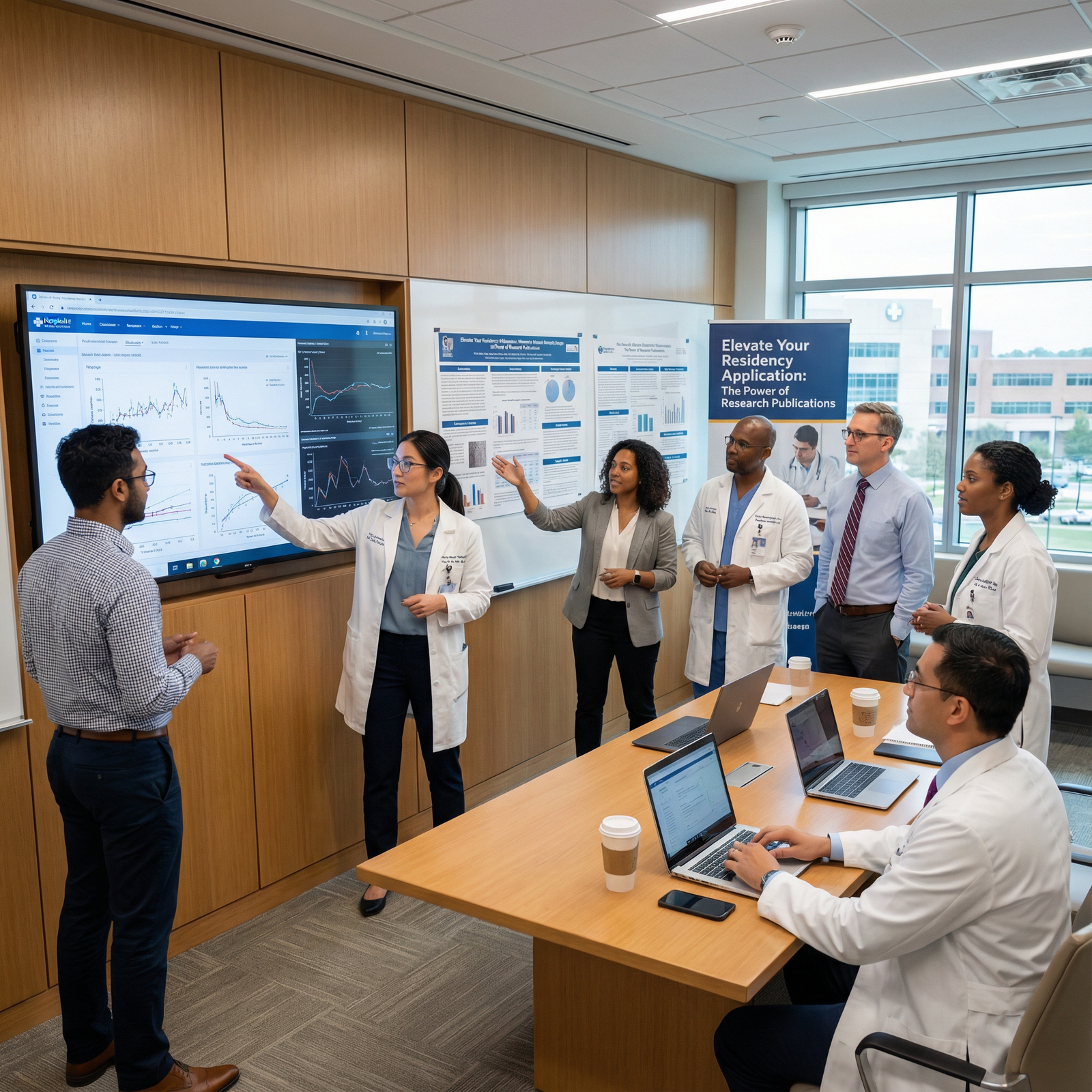
Understanding the Research Landscape in Pediatrics-Psychiatry
Pediatrics-Psychiatry is a distinct, highly specialized pathway that includes both combined pediatrics-psychiatry-child and adolescent psychiatry (“peds psych residency”) programs and Triple Board programs (pediatrics, general psychiatry, and child & adolescent psychiatry). Because these tracks are few in number and heavily academic in focus, your research profile matters more than in many other fields.
Most programs will not expect you to have a PhD-level portfolio. They will, however, expect you to show:
- Sustained scholarly curiosity about the interface of physical and mental health in children and adolescents
- Evidence that you can complete projects (not just start them)
- A coherent story tying your research to your clinical interests and long-term career goals
When building a research profile, think less about prestige and more about consistency, depth, and relevance.
Key areas that resonate strongly with peds-psych and triple board faculty:
- Developmental psychopathology (e.g., autism, ADHD, early-onset mood disorders)
- Chronic medical illness and mental health (e.g., diabetes and depression, epilepsy and anxiety)
- Systems of care: school-based mental health, integrated behavioral health in primary care
- Child abuse, neglect, trauma, and foster care systems
- Social determinants of health and child mental health
- Psychopharmacology in children, especially medically complex youth
Aligning your work with these themes helps your application stand out as targeted rather than generic.
How Much Research Do You Need? Quality vs. Quantity
One of the most common questions is: “How many publications are needed?” There is no magic number, but you can think in ranges and tiers.
Publications for Match: What Programs Actually Look For
Most programs are less fixated on raw publication counts and more on trajectory and fit. A realistic breakdown:
Competitive, research-leaning Triple Board or peds psych applicants might have:
- 1–3 peer-reviewed publications (any author position)
- 2–5 posters or oral presentations at regional/national meetings
- Additional scholarly work (QI, educational projects, case reports, or book chapters)
Solid, well-rounded applicants commonly have:
- 0–1 peer-reviewed publications
- 1–3 posters or presentations
- Some non-published scholarly work (abstracts, quality improvement projects, literature reviews)
Strong “late bloomers” may show:
- 0 publications but clear ongoing projects
- Letters from mentors attesting to active involvement and likely future productivity
- A very clear narrative that links clinical experiences with emerging research interests
How Many Publications Needed: Putting Numbers in Context
The phrase “how many publications needed” is misleading if you treat it like a cutoff. Instead, understand how programs interpret your output:
- One meaningful, on-topic publication with visible involvement (e.g., second or third author where you can explain your role in detail) often carries more weight than several “random” papers unrelated to pediatrics or psychiatry.
- Multiple posters and smaller projects can demonstrate sustained engagement even without multiple PubMed-indexed articles.
- First-author work is excellent but not required for every applicant; it mainly helps at the most research-intensive institutions.
Programs know that access to mentors and research infrastructure varies widely. They are usually forgiving about fewer formal publications if they see:
- Longitudinal involvement in one or two projects
- Clear grasp of research questions, methods, and limitations
- Initiative: you didn’t just do data entry; you helped think about the study
If you’re targeting a heavily academic Triple Board program or plan on a research career, aim to have at least one publication plus a few presentations, with ongoing projects you can discuss confidently.
Core Components of a Strong Peds-Psych Research Profile
To build a research profile that supports a peds psych residency or triple board application, focus on four pillars:
- Relevance to Pediatrics-Psychiatry
- Demonstrated Skills and Roles
- Longitudinal Engagement
- Scholarly Output Types
1. Relevance to Pediatrics-Psychiatry
Not every project needs to have “pediatrics” and “psychiatry” in the title, but your overall profile should show a clear direction. Examples of high-yield topics:
- Interface of medical and mental health
- Depression in adolescents with type 1 diabetes
- Anxiety in children undergoing cancer treatment
- Neurodevelopmental disorders
- Autism spectrum disorder and co-occurring epilepsy
- ADHD and sleep disorders in school-age children
- Trauma and adversity
- ACEs (Adverse Childhood Experiences) and onset of chronic illness
- Trauma-informed care in pediatric inpatient units
- Systems of care and integrated models
- Behavioral health integration in pediatric primary care clinics
- Pediatric emergency department protocols for behavioral crises
If you already have research outside this niche (e.g., adult cardiology outcomes), you can still incorporate it by emphasizing:
- The scientific skills gained (data analysis, study design, IRB processes)
- How the project taught you about chronic disease management, adherence, or health systems—concepts you’ll apply to youth mental health
2. Demonstrated Skills and Roles
Programs want to know what you actually did. On your CV and in interviews, be specific:
- Idea generation or protocol design
- Literature review and background research
- IRB submission and regulatory work
- Data collection (chart review, survey administration, structured interviews)
- Data analysis (e.g., SPSS, R, qualitative coding, basic statistics)
- Manuscript drafting, figure/table preparation, responding to reviewers
When describing research for residency, you might say:
“I helped design a retrospective chart review of adolescents with cystic fibrosis, focusing on rates of anxiety and depression screening. I extracted the data, performed descriptive statistics in SPSS, and wrote the results section of our poster.”
This level of detail shows more substance than a generic “Assisted in pediatric psychiatry research.”
3. Longitudinal Engagement
A year-long or multi-year project signals commitment and resilience—important traits in combined and triple board tracks that require extra training years and complexity tolerance.
Aim to have at least one project that spans 12+ months, even if you join midway as a new team member. Longitudinal work can include:
- Prospective research studies
- Multi-step projects (abstract → poster → manuscript)
- Ongoing QI initiatives with repeated cycles (PDSA cycles)
- Long-term involvement in a research group or lab
4. Scholarly Output Types: Casting a Wider Net
Not every scholarly effort needs to become an RCT or NEJM paper. Viable components of a research portfolio include:
- Peer-reviewed journal articles (original research, reviews, case reports)
- Conference abstracts, posters, and oral presentations
- Book chapters (especially in child psychiatry, developmental pediatrics)
- Quality improvement projects with measurable outcomes
- Educational scholarship (curriculum development, OSCE design, published teaching tools)
For peds psych residency and triple board, quality improvement (QI) and implementation projects related to screening, access to care, or integrated mental health services are particularly valuable because they mirror real-world clinical practice.

Step-by-Step Strategy to Build Your Research Profile
Where you are in training (preclinical, clinical, research year, or gap year) will shape your strategy, but the overall steps are consistent.
Step 1: Define Your Thematic Interests
Even if you don’t have a precise niche, pick 2–3 broad themes you care about. Examples:
- Chronic illness and mental health in children
- Early psychosis and developmental trajectories
- Autism, intellectual disability, and challenging behaviors
- Trauma, foster care, and systems-level care
Your themes will:
- Guide whom you seek out as mentors
- Help you prioritize opportunities
- Make your personal statement and interviews more coherent
You can (and will) refine these over time, but having a tentative direction helps you say “no” to projects that are too far afield.
Step 2: Find the Right Mentors in Peds-Psych
For combined or triple board tracks, mentors who sit at the intersection of pediatrics and psychiatry are gold. Look for:
- Child and adolescent psychiatrists working in children’s hospitals
- Triple board or combined peds-psych faculty (even at other institutions; cold emailing is acceptable)
- Pediatricians with behavioral health focuses: developmental-behavioral pediatrics, complex care, adolescent medicine
- Psychology or social work researchers embedded in pediatric or psychiatry departments
Practical tactics:
Search your institution’s website for terms like “pediatric psychiatry,” “developmental-behavioral pediatrics,” “integrated behavioral health,” or “child and adolescent psychiatry research.”
Ask clerkship directors, child psych attendings, and pediatric chiefs who is actively publishing in children’s mental health.
When you email, be concise and specific:
- Attach your CV
- Mention your interests and goal of exploring peds psych or triple board
- Offer flexible time commitment and ask for any role—QI, chart review, data analysis, or literature review
Step 3: Start with Achievable, Finite Projects
If you’re early in medical school or just entering research for residency planning, it’s better to complete a small project than to abandon a large one. High-yield starter projects:
- Chart reviews:
- Example: “Rates of depression screening in adolescents with inflammatory bowel disease in a pediatric GI clinic.”
- Case reports or small case series:
- Example: “Pediatric autoimmune encephalitis presenting with acute psychosis.”
- Survey-based projects:
- Example: “Pediatric residents’ comfort level managing suicidal ideation in primary care.”
- QI projects:
- Example: “Implementing routine PHQ-9 screening in a pediatric diabetes clinic.”
These often result more quickly in:
- Local or national posters
- Short manuscripts or educational presentations
- Concrete experiences to describe on your ERAS application
Step 4: Gradually Build Toward More Complex Work
Once you have basic experience, seek out roles that deepen your skills:
- Join ongoing multi-site or NIH-funded pediatric psychiatry studies
- Learn more advanced statistics or qualitative methods
- Take ownership of a sub-aim, side project, or secondary analysis
- Participate in grant writing or protocol revision
These experiences are especially important if you’re targeting highly academic peds psych residency or triple board tracks and envision a career in physician–scientist roles.
Step 5: Convert Work into Visible Products
A common pitfall: doing research for years but having little to show on paper. Make “conversion” a habit:
- Ask your mentors early: “What is the planned product from this project? Poster? Manuscript?”
- Volunteer to help with abstract or poster preparation.
- Target relevant conferences:
- AACAP (American Academy of Child & Adolescent Psychiatry)
- PAS (Pediatric Academic Societies)
- APA (American Psychiatric Association), child psychiatry sections
- AAP national conference (for behavioral/developmental pediatrics topics)
For each project, aim for at least one tangible output: poster, abstract, educational presentation, or manuscript. Even if a paper is not yet accepted, being “manuscript in preparation” plus a presented abstract still shows productivity.
Integrating Research into Your Overall Application Narrative
Doing research is only half the story. You have to integrate it meaningfully into your peds psych residency or triple board narrative.
Crafting a Coherent Story
Your experiences should add up to a storyline that might sound like:
“I became interested in how chronic illness affects mental health during my pediatrics rotation. That led me to join a QI project screening youth with cystic fibrosis for depression and anxiety. Later, I worked on a survey study examining pediatricians’ comfort managing suicidal ideation in clinic. These experiences convinced me I want to train in a setting that integrates pediatric and psychiatric care—like a peds psych or triple board program.”
This is much stronger than a scattered list of unrelated projects.
Discussing Research in Personal Statements
When writing about research for residency:
- Focus on what questions you cared about, not just methods.
- Show reflection: What did the findings mean to you? How did they shape your view of children and families?
- Tie your work directly to the structure and strengths of combined or triple board training:
- How will dual training help you tackle the questions your research raised?
- How do you imagine combining clinical duties and scholarship in your career?
Talking About Your Work on Interview Day
Interviewers may ask:
- “Tell me about your research”
- “What was your role in this project?”
- “What did you learn from your research experiences?”
Be prepared to:
- Summarize each major project in 2–3 minutes
- Explain the clinical relevance (especially for children and families)
- Acknowledge limitations and next steps
- Connect the work to why you’re pursuing peds psych or triple board
If your work is outside pediatrics-psychiatry, be explicit about transferable skills (e.g., working with vulnerable populations, longitudinal data analysis, systems-level thinking).

Common Scenarios and How to Optimize Your Profile
Scenario 1: Little or No Research Experience in Late Third Year
You’ve discovered peds psych or triple board relatively late and worry you’re behind.
Action plan:
- Immediately reach out to child psychiatry and pediatrics faculty for short, well-defined projects, such as:
- A case report from a recent rotation
- A retrospective chart review or secondary data analysis with a manageable dataset
- Aim to submit at least one abstract to a conference during fourth year, even if the meeting is after you apply.
- Emphasize in your personal statement that you are actively engaged in projects, and ask mentors to note this in letters.
Programs understand late pivots, especially if your narrative is authentic and your recent trajectory is strong.
Scenario 2: Research Experience, but Not in Pediatrics or Psychiatry
You did cardiology or oncology research and now want peds psych.
Action plan:
- Extract the conceptual connections:
- Chronic illness and quality of life
- Adherence, health behaviors, and patient/family dynamics
- Health systems and disparities
- Start at least one small, clearly pediatrics-psychiatry-related project before applications, even if only at the abstract stage.
- During interviews, show how your prior work:
- Taught you rigorous methods
- Led to questions you’re now eager to explore in child mental health
Scenario 3: Strong Clinical but Weak Research Background, Targeting Clinically Focused Programs
Some combined or triple board programs are more clinically oriented than research-heavy.
Action plan:
- Do a focused, clinically relevant QI project in your home institution’s pediatric or child psych department.
- Highlight:
- Leadership roles
- Outcomes that improved clinical care (e.g., increased screening rates, reduced ED boarding time)
- In your application, frame yourself as a future clinical leader who uses data and QI to improve integrated care for children and families.
Scenario 4: Research-Intensive Aspirations: Academic Career Path
You envision a career in academic medicine with significant research.
Action plan:
- Prioritize mentors with strong research funding and publication records in pediatric psychiatry or developmental-behavioral pediatrics.
- Seek multi-year projects and try to achieve:
- 1–2 publications (ideally one with a first- or second-author role)
- Multiple national conference presentations
- Consider a dedicated research year or scholarly concentration if your school offers it.
- During interviews, articulate specific questions you hope to pursue during residency and beyond (e.g., “evaluating the effectiveness of integrated behavioral health models in pediatric primary care for youth with complex chronic conditions”).
Frequently Asked Questions (FAQ)
1. Do I need publications specifically in pediatrics-psychiatry to match a peds psych residency or triple board program?
Not necessarily. Many successful applicants have research that is adjacent rather than directly in peds psych (e.g., adult psychiatry, general pediatrics, public health). What matters more is:
- Demonstrated ability to complete and present projects
- Clear articulation of how your prior work led to your interest in the pediatric–psychiatric interface
- At least some evidence (even a small project) that you’ve started moving toward child mental health topics
If you can, try to add at least one child-focused or integrated-care project before applying.
2. How many publications are needed to be competitive for research-heavy programs?
There is no strict cutoff, but for highly academic combined or triple board programs, a strong research portfolio might look like:
- 1–3 peer-reviewed publications (you don’t need to be first author on all)
- Several regional or national presentations
- Ongoing work with clear future output (e.g., a manuscript in progress, a planned prospective study)
Programs understand that access to research varies. Strong letters from established investigators can partially offset a smaller publication count.
3. What if my projects are ongoing and I don’t have final results yet?
Ongoing work still counts. On your CV and ERAS application, you can list:
- “Manuscript in preparation” (if you and your mentor agree there is a realistic plan)
- Presented or accepted abstracts and posters, even if the conference hasn’t happened yet
During interviews, focus on:
- Your role
- Study design and rationale
- Preliminary insights (if allowed)
- What you learned about research processes, implementation barriers, and team science
Showing that you understand the life cycle of a study is as important as having final publications.
4. How can I stand out if I don’t have access to big-name research institutions?
You can still build a compelling research profile by:
- Focusing on clinically meaningful, feasible projects (QI, chart reviews, small surveys) in pediatric or child psychiatry settings
- Presenting at regional conferences or institutional research days
- Reaching out to collaborators at other institutions for remote projects (data analysis, systematic reviews, or multi-site QI)
- Requesting strong, personalized letters from mentors who can speak to your initiative, reliability, and intellectual curiosity
Programs value applicants who are resourceful and persistent, even in limited-resource settings. A thoughtful, coherent narrative plus evidence of completed projects can be just as persuasive as a long publication list from a major research center.
By approaching research profile building with strategy and intentionality—focusing on relevance, longitudinal commitment, concrete output, and integration into your story—you can present yourself as an applicant who is not only ready for the demands of peds psych residency or triple board training, but also poised to contribute meaningfully to the evolving science of pediatric mental health.