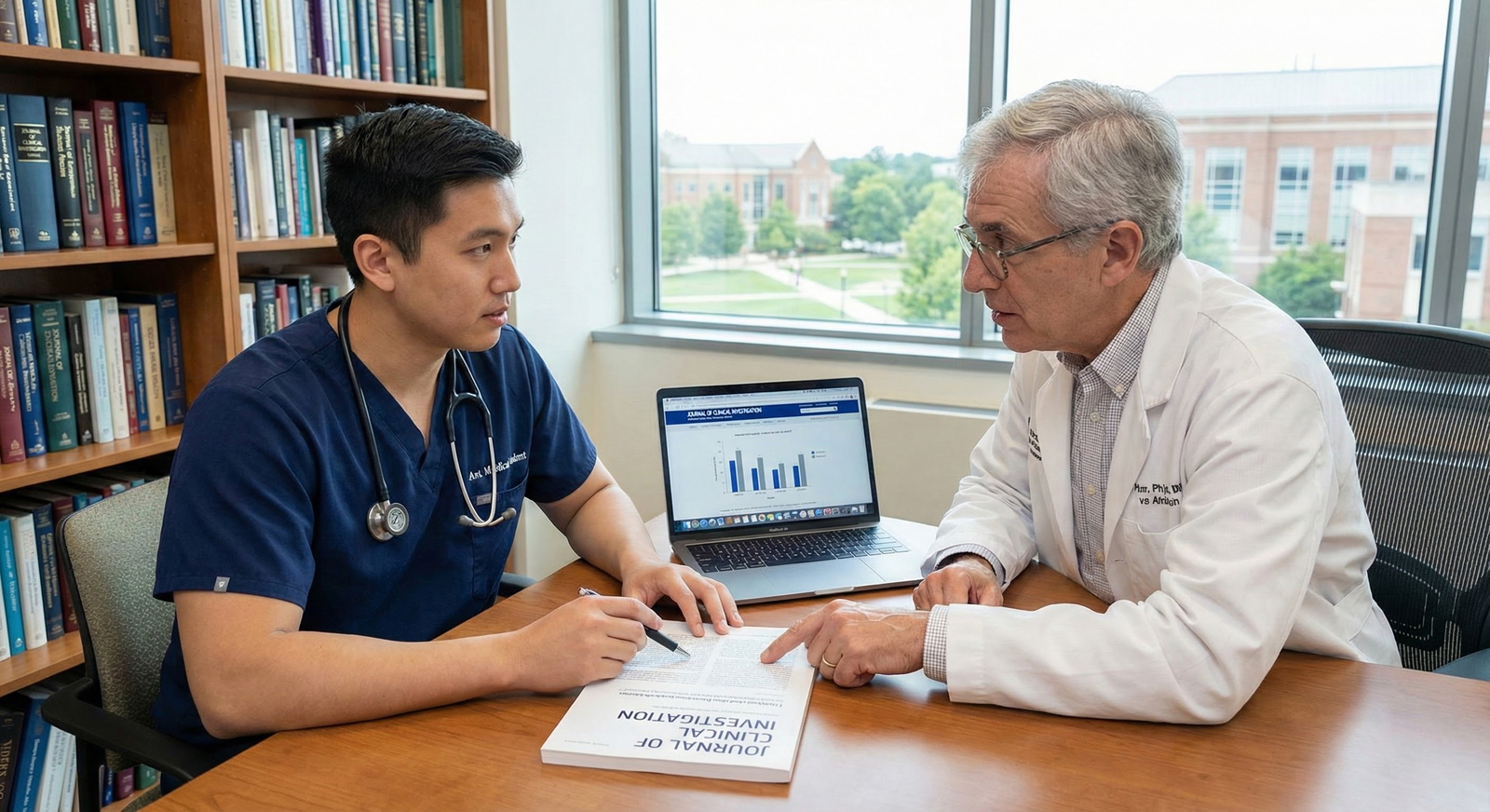
Understanding the Role of Research in a Preliminary Surgery Year
A preliminary surgery year can feel like a high‑pressure bridge: you’re working hard clinically while trying to position yourself for a categorical general surgery spot or another specialty. In that setting, your research profile can be a powerful differentiator—especially when programs are reviewing dozens of applicants with similar exam scores and clinical evaluations.
However, “do research” is vague advice. For prelim surgery residents, time is limited, your future specialty might be flexible, and the expectations for research in surgery are nuanced. This guide breaks down how to strategically build a research profile during your preliminary surgery year, even with challenging call schedules and variable mentorship.
Why Research Matters for Prelim Surgery Residents
For most programs, research is not about proving that you are a career scientist—it’s about demonstrating:
- Intellectual curiosity and engagement with the field
- Ability to complete projects and follow through
- Skills in critical appraisal of literature and evidence-based practice
- Potential to contribute academically to a department
If you are aiming for:
- Categorical general surgery: Programs tend to favor applicants with at least some scholarly output—posters, presentations, or publications.
- Competitive surgical subspecialties (e.g., plastics, ortho, ENT): Research expectations are typically higher, including multiple projects and preferably peer‑reviewed publications.
- Non-surgical specialties (e.g., anesthesia, radiology, IM) after a prelim surgery year: Your surgical research can still be valuable, especially if it shows transferable skills and interest in perioperative care, critical care, or imaging.
What Programs Look For in a Research Profile
Most selection committees are not counting citations in detail. They generally look for:
- Consistency over “one-hit wonders” – a pattern of engagement rather than one random project
- Evidence of completion – abstracts accepted, posters presented, manuscripts submitted or published
- Your role in the work – first- or second-author roles are particularly meaningful
- Relevance to your target specialty – not mandatory, but definitely helpful
- Feasibility given your context – they understand a demanding preliminary surgery residency leaves limited time
In other words, a thoughtful, realistic research portfolio is better than an ambitious list of half-finished projects.
Setting Realistic Goals: Quality, Quantity, and Timing
You have finite time and energy. The key is balancing clinical excellence—which is essential in a preliminary surgery residency—with deliberate, sustainable research engagement.
How Many Publications Are “Enough”?
The natural question: how many publications are needed to match into a categorical spot or competitive program?
There is no universal cutoff, but some general patterns:
Categorical general surgery (typical academic program)
- Competitive candidates often have:
- 1–3 meaningful outputs (e.g., posters, oral presentations, case reports, or publications)
- For a prelim surgery resident already in the system: clinical performance and fit may weigh more heavily than research quantity alone.
- Competitive candidates often have:
Highly competitive surgical subspecialties (e.g., plastics, ENT, ortho, neurosurgery)
- Successful applicants often report:
- 5–10+ scholarly items, including several peer‑reviewed publications
- Some may have a dedicated research year, but prelim surgery residents can still be competitive with targeted work.
- Successful applicants often report:
Non-surgical specialties (e.g., anesthesia, radiology, IM)
- Programs may value:
- 1–3 relevant projects that show interest in perioperative medicine, critical care, imaging, or outcomes research.
- Programs may value:
A more practical framing than “how many publications needed” is:
- Can you show progressive involvement and evidence of completion?
- Do you have at least one or two projects where you can speak in depth about your role, methods, and impact?
- Are you aiming for at least one accepted abstract/poster plus one manuscript submitted or in preparation during your prelim year?
If you can meet those marks while performing well clinically, you are in a strong position.
Setting Research Goals for Your Preliminary Surgery Year
Given the intense workload of a prelim surgery residency, consider structuring your year with staged goals:
First 2–3 months: Orientation and Positioning
- Understand your institution’s:
- Surgical research strengths (e.g., trauma, oncology, transplant)
- Active projects needing help
- Faculty who regularly publish
- Identify at least one primary mentor and possibly one secondary collaborator.
- Join 1–2 ongoing projects where data collection or chart review is needed.
Months 3–8: Execution and Output Generation
- Aim to:
- Secure at least one accepted abstract (regional or national meeting)
- Draft at least one manuscript (case report, case series, or retrospective study)
- Participate in data collection or drafting on additional group projects
Months 8–12: Consolidation and Application Prep
- Push projects towards completion:
- Manuscript submissions
- Finalizing presentations
- Update your CV and ERAS with:
- Published, accepted, submitted, and in-progress projects (clearly distinguished)
- Prepare to discuss these experiences convincingly in interviews.
This staged approach keeps you from overcommitting early or waiting too long to start.

Finding and Maximizing Research Opportunities in a Prelim Surgery Residency
One of the biggest challenges in a preliminary surgery year is locating feasible projects and plugging into existing research structures quickly.
Step 1: Map the Local Research Ecosystem
Within the first few weeks, systematically identify:
- Active research divisions: trauma, surgical oncology, transplant, MIS, vascular, critical care
- Residents who publish frequently: senior residents often know which attendings are productive and supportive
- Department research coordinator or manager: a key resource for IRB processes, databases, and active studies
- Institutional resources:
- Biostatistics or epidemiology cores
- Clinical and outcomes databases (e.g., NSQIP, trauma registry)
- Medical library and librarian support for literature reviews
Ask direct questions:
- “Which attendings have ongoing projects looking for resident help?”
- “Are there any surgical quality improvement or outcomes databases available to residents?”
Create a simple “research map” listing:
- Faculty name
- Research area
- Typical project types
- Known resident collaborators
This becomes your networking roadmap.
Step 2: Target the Right Types of Projects
Given the time constraints of a preliminary surgery year, prioritize projects that:
- Do not require starting a prospective trial from scratch
- Have data already collected or easily accessible
- Have clear timelines and realistic scope
High-yield project types for prelim residents:
Case Reports and Case Series
- Leverage unusual or instructive cases encountered during call or in the ICU.
- Talk to attendings early: “Is this an interesting case we could write up?”
- These can often be completed within a few months.
Retrospective Chart Reviews
- Examples:
- Outcomes after a specific surgical procedure
- Complications in a specific patient population (e.g., elderly trauma)
- Feasible if:
- IRB is already approved or simple to obtain
- Data can be abstracted from EMR within a few dedicated sessions
- Examples:
Quality Improvement (QI) and Patient Safety Projects
- Highly valued academically and clinically:
- Enhanced recovery after surgery (ERAS) bundles
- Antibiotic stewardship in perioperative care
- Central-line associated bloodstream infection (CLABSI) reduction in SICU
- These also integrate well with ACGME requirements for resident QI involvement.
- Highly valued academically and clinically:
Database and Outcomes Studies
- Using:
- NSQIP
- Trauma registry
- Institutional surgery outcomes data
- Often require more statistical support but can be impactful.
- Using:
Educational Research
- Projects related to:
- Surgical skills training
- Simulation
- Resident wellness
- Particularly useful if you’re interested in academic surgery or surgical education.
- Projects related to:
Step 3: Approach Potential Mentors Effectively
When initiating contact with a potential research mentor:
- Keep it concise and specific:
- Who you are: “PGY-1 preliminary surgery resident”
- What you’re seeking: “Interested in joining ongoing surgical outcomes projects”
- Your constraints: “On Q4 call but can dedicate protected time on lighter rotations”
- What you offer: prior skills (statistics, coding, systematic review experience)
Example email:
Dear Dr. Smith,
I am a PGY-1 preliminary surgery resident with a strong interest in surgical oncology outcomes research. I learned from Dr. Jones that you have several ongoing projects using our institutional cancer database. I would be grateful for an opportunity to assist with one of your current studies, particularly with data collection, chart review, or manuscript drafting.
My schedule is demanding, but I can reliably commit a few hours each week and more time during outpatient or elective rotations. I have prior experience with Excel and basic statistics, and I’m eager to learn more.
Would you have 15–20 minutes to discuss potential ways I could get involved?
Sincerely,
[Name], MD
PGY-1 Preliminary Surgery
Show reliability early—reply to emails promptly, follow through on agreed tasks, and provide regular progress updates.
Step 4: Build a Balanced Research Portfolio
Given the short timeframe, aim for a mix:
- 1 “quick win”:
- Case report or brief communication that can be drafted and submitted within a few months.
- 1–2 medium-term projects:
- Retrospective study, QI project, or database analysis that may lead to conference abstracts and potentially a publication.
- Optional: 1 collaborative/assistive role:
- Helping with data entry, literature review, or editing on someone else’s project—less “glamorous” but still valuable for experience and CV building.
This balance helps ensure you have something to show for your efforts even if the bigger projects take longer than expected.
Execution Strategy: Doing Research Amid a Prelim Surgery Schedule
The main obstacle is not motivation; it’s bandwidth. The typical prelim surgery resident juggles long hours, call, and rotations that vary significantly in workload. You need a realistic workflow.
Time Management Tactics
Protect Small, Regular Blocks
- Identify:
- Post-call afternoons
- Weekend mornings
- Lighter rotations (e.g., clinic, elective)
- Commit:
- 2–4 hours per week minimum on research, scheduled like a clinic appointment.
- Identify:
Use Micro-Tasks
- Examples of 10–20 minute tasks:
- Collect 5–10 charts
- Edit one paragraph of a manuscript
- Pull 3–5 new articles for your literature review
- Keep a running list of small tasks you can tackle when you’re mentally tired.
- Examples of 10–20 minute tasks:
Leverage Tools
- Citation managers: Zotero, Mendeley, or EndNote
- Cloud storage: Google Drive, OneDrive, or institutional drives
- Project management: Trello, Notion, or a simple spreadsheet tracking:
- Project title
- Role
- Status (idea, data collection, analysis, drafting, submitted, accepted/published)
- Target journal or conference
Building Key Skills Quickly
Even in a single preliminary surgery year, you can develop fundamental research competencies:
Literature Review and Critical Appraisal
- Practice systematically searching PubMed and screening abstracts.
- Learn to use PRISMA flow diagrams for systematic reviews (if relevant).
- Present short evidence summaries at journal clubs or to your team on rounds.
Basic Data Management
- Clean data in Excel or Google Sheets (remove duplicates, standardize variables).
- Use simple formulas and pivot tables to understand your dataset.
Introductory Statistics
- Collaborate with a biostatistician if available.
- Learn basic:
- Descriptive statistics
- t-tests, chi-square tests
- Logistic regression at a conceptual level
Scientific Writing
- Start by drafting:
- Case presentations
- Introduction and discussion sections
- Ask mentors for examples of well-written manuscripts in your area.
- Start by drafting:
The goal is not to become a statistician during your prelim year; it’s to become a reliable collaborator who understands the basics and can contribute meaningfully.

Presenting and Positioning Your Research for the Match
Doing research is only half the work; you also need to present it effectively in your application and interviews for a categorical spot or another specialty.
Structuring Your CV and ERAS for Maximum Impact
In your ERAS application and CV:
Clearly categorize outputs:
- Published/Accepted: list full citation details.
- Submitted: indicate “under review” with journal name.
- In preparation: list only if there is a real manuscript in progress and your mentor agrees.
Highlight your role:
- Use descriptors like “First author,” “Co-first author,” or “Senior author.”
- In descriptions, briefly clarify contributions: data collection, analysis, writing, study design.
Group related work:
- If you have multiple projects in trauma surgery or ICU outcomes, cluster them to show a theme.
Include non-traditional research and QI:
- QI projects, educational projects, and structured audits can be featured under “Scholarly Activities” even if not yet published.
Discussing Research During Interviews
Programs want to see that your research is more than a line item. Prepare to:
- Explain the rationale:
- “We wanted to investigate whether implementing an ERAS protocol in colorectal surgery reduced LOS and readmissions.”
- Summarize your methods and results in lay medical language:
- Avoid heavy jargon; focus on the main idea and impact.
- Describe your role concretely:
- “I abstracted data for 100 patients, worked with our statistician on the analysis plan, and drafted the methods and results sections.”
- Connect it to your future goals:
- “This project solidified my interest in outcomes research, and I hope to continue similar work as a categorical general surgery resident.”
Navigating Gaps and Incomplete Projects
If some projects are not yet published:
- Be honest about their status.
- Emphasize what you’ve learned and contributed.
- Avoid exaggeration or implying acceptance where there is none.
Programs understand that research timelines often exceed a single preliminary surgery year; they care more about integrity and follow-through than about perfect completion.
Special Scenarios: Tailoring Your Research Strategy
If You Are Pivoting to Another Specialty
If your preliminary surgery year is a stepping stone to another field (e.g., anesthesia, radiology, internal medicine):
- Leverage surgical research that crosses specialties:
- Perioperative medicine
- Critical care and sepsis
- Pain management and regional anesthesia
- Imaging in trauma or surgical oncology
- Seek cross-department collaborations:
- Anesthesia: projects on intraoperative hemodynamics or post-op pain
- Radiology: projects on imaging accuracy or protocol improvements
- Medicine: ICU outcomes, post-op complications, or co-management models
Position your work as evidence of broad clinical understanding and collaborative mindset.
If You Have Limited or No Prior Research Experience
If you’re starting from scratch:
- Begin with:
- A case report or small QI project to learn the process.
- Ask mentors for:
- Template manuscripts or previous IRB applications to guide structure.
- Focus your narrative on:
- Rapid learning
- Growth in your ability to interpret literature
- Visible contributions within a short timeframe
If You Already Have a Strong Research Background
If you enter prelim surgery with multiple publications:
- Don’t become complacent—programs still want to see engagement during residency.
- Try to:
- Add at least one new project or publication related to surgery or your target specialty.
- Highlight:
- Leadership roles (e.g., leading a project, mentoring junior trainees or students).
Frequently Asked Questions (FAQ)
1. How many publications are realistically expected from a preliminary surgery year?
There is no strict requirement, but a practical, attainable goal is:
- At least one accepted abstract or poster
- One manuscript submitted or in preparation
- Participation in one additional project (data collection or collaborative role)
More important than raw numbers is your ability to clearly explain your role and what you learned from each project.
2. What counts as “research for residency” when applying for a categorical surgery spot?
Residency selection committees generally count:
- Peer-reviewed journal articles (original research, reviews, case reports)
- Conference abstracts, posters, and oral presentations
- Quality improvement and patient safety projects with defined methodology
- Educational or curricular projects with outcomes data
Even if not published, well-structured QI or outcomes projects can be compelling if you clearly describe design, implementation, and results.
3. I’m overwhelmed by my prelim surgery schedule. Is it better to skip research and just focus on clinical work?
Clinical performance is absolutely paramount; a glowing letter and strong evaluations matter more than one extra publication. However, you don’t need to choose one or the other entirely. A focused, realistic approach—such as a single case report and participation in one small retrospective study—can significantly strengthen your application without compromising your patient care.
4. Can I list “in-progress” or “planned” projects on my ERAS application?
You may list:
- In-progress projects with a real manuscript underway or substantial data collected, clearly marked as “In preparation” or “Ongoing.”
- Submitted manuscripts as “Under review” with the journal specified.
Avoid listing vague “planned” projects with no substantial work done. Program directors value honesty and may ask detailed questions; any inflation of your research record can damage your credibility.
Building a strong research profile during a preliminary surgery year is challenging but achievable with deliberate strategy, realistic goals, and reliable follow-through. By aligning your projects with your target specialty, leveraging institutional resources, and presenting your work effectively, you can turn your prelim year into a powerful launchpad for the next step in your surgical—or broader medical—career.