Why Research Matters So Much in Plastic Surgery for US Citizen IMGs
Among all specialties, plastic surgery may be the most research‑driven and metrics‑obsessed. For a US citizen IMG or an American studying abroad, a strong research portfolio often makes the difference between getting serious consideration and not being on the radar at all.
Integrated plastics match programs receive far more applications than they can meaningfully review. When you’re coming from outside a US MD school, program directors often look at your research profile as:
- Evidence of academic ability in a high‑intensity, innovation‑driven field
- A signal that you understand US academic culture and expectations
- A way to “de‑risk” your application relative to US MD applicants
You cannot fully compensate for weak exam scores or failed attempts with research alone, but a well‑built portfolio can:
- Differentiate you among US citizen IMG peers
- Show commitment specifically to plastic surgery
- Create advocates and letter writers at US institutions
- Help you secure away rotations and research fellowships
Your goal is not just “have publications,” but to craft a coherent plastic surgery‑focused academic story that supports your long‑term career in the field.
Understanding Expectations: How Much Research Is “Enough”?
Many US citizen IMGs ask: “How many publications are needed to match plastic surgery?” or “Is there a magic number?” There is no universal cut‑off, but you should understand the landscape.
General Benchmarks in Integrated Plastic Surgery
Recent NRMP/ERAS data and program director surveys (through 2023) consistently show:
- Successful integrated plastic surgery applicants often have:
- 10–20+ total scholarly items (abstracts, posters, publications, book chapters)
- A subset of these as peer‑reviewed publications
- Top‑tier matched applicants (especially at academic powerhouses) can have:
- 20–40+ research items
- First‑author papers in plastic surgery journals
These numbers are not strict requirements, but they frame the level of competition.
For US Citizen IMG / American Studying Abroad
As a US citizen IMG, you are often held to at least the same research expectations as US MD applicants—sometimes higher, because programs see research as a major way to justify ranking you.
Realistically:
- A moderately competitive research profile for an IMG applicant might include:
- 5–10+ total scholarly outputs
- 3–5+ PubMed‑indexed papers (not necessarily all in plastic surgery)
- A strong research profile might include:
- 10–20+ total outputs
- 5–10+ PubMed‑indexed papers, with multiple in plastic surgery
- Several first‑author works and at least one in a reputable plastics journal
But quality, relevance, and continuity matter more than raw count.
Quality vs. Quantity: What Matters Most
Programs ask themselves:
Is this applicant consistently productive?
- Multiple projects over time vs. one accidental high‑yield opportunity
Is there evidence of initiative and ownership?
- First‑author or co‑first‑author work
- Leading data collection or manuscript drafting
Is the research relevant to plastic surgery or closely related fields?
- A portfolio anchored in plastic surgery topics is more persuasive than scattered, unrelated projects
Did this work generate strong letters or mentorship relationships?
- A glowing letter from a US academic plastic surgeon who supervised your research can outweigh another extra publication.
Think of the question “how many publications needed” as shorthand for a deeper goal: build a credible, coherent, and sustained research narrative in plastic surgery.

Step 1: Clarify Your Research Strategy and Timeline
Before you start chasing random projects, step back and plan. As a US citizen IMG, your time windows and geographic constraints are different from US MD students.
Map Your Training Stage and Deadlines
Your optimal strategy depends on where you are:
Pre‑clinical (early med school abroad)
- Goal: Build foundational research skills and start any research for residency early
- Flexibility: You can commit summers or gap periods to in‑person US research
Clinical years (3rd–4th year abroad)
- Goal: Shift focus to plastic surgery‑specific projects
- Start building US connections (electives, short visits, or remote work)
After graduation (or post‑match cycle)
- Goal: Dedicated research year or research fellowship in the US
- Intensive production phase to strengthen your integrated plastics match application
Also align your plan with ERAS/NRMP timelines:
- Aim to have at least some plastic surgery‑relevant outputs visible on your CV 12–18 months before applying.
- Big productivity boost (e.g., research year) ideally finishes right before you apply so that letters and momentum are fresh.
Decide on Your Research “Brand”
Even before you have many projects, think about what you want your academic identity to look like:
- Are you interested in reconstructive microsurgery, hand surgery, craniofacial, aesthetic surgery, outcomes research, or basic science?
- You don’t need to lock in a niche early, but clustering your projects around 1–2 themes helps:
- Your personal statement feel more authentic
- Interviewers remember you (“the outcomes‑research person,” “the craniofacial innovation person”)
- Mentors guide you more effectively
Write a one‑sentence academic interest statement to guide your decisions, for example:
“I am a US citizen IMG interested in outcomes and health services research in reconstructive plastic surgery and limb salvage.”
Then choose projects and mentors that roughly fit this theme.
Step 2: Finding and Securing Research Opportunities as a US Citizen IMG
Your biggest structural disadvantage is lack of proximity to US academic centers. You overcome this through targeted outreach, persistence, and willingness to start small.
Target the Right Institutions and People
Focus first on US academic programs with integrated plastic surgery residencies, especially those known to host IMGs or visiting researchers:
- Check each program’s website for:
- Research pages and labs
- Resident publications and ongoing projects
- “Research fellow” or “postdoctoral scholar” positions
Identify potential mentors:
- Plastic surgery faculty with:
- A steady track record of publications (PubMed search their name)
- Some history of publishing with medical students or early trainees
- Overlapping interests with your stated “brand”
Also consider:
- Related departments that collaborate with plastics:
- Surgery, orthopedics, ENT, dermatology, oncology, wound care, biomedical engineering
Having publications for match from adjacent fields is still valuable—especially if you can later “bridge” to plastics.
Crafting Effective Cold Emails
Cold emailing works if done well and repeated persistently. Your goal: start a conversation, not demand a publication.
A concise structure:
Subject line:
- “US citizen IMG interested in plastic surgery research – [Specific Topic/Skill]”
Introduction (1–2 sentences):
- Who you are (US citizen IMG, school, year or status)
- Your interest in plastic surgery and why you’re reaching out to this faculty
Evidence of seriousness (2–3 bullets or a short paragraph):
- Any prior research experience
- Any skills (statistics, coding, graphic design, systematic reviews, proficiency in a language for global surgery studies, etc.)
Concrete ask (1 sentence):
- “I would be grateful for the opportunity to assist on ongoing projects remotely or to discuss possible involvement in your research.”
Attachments:
- 1‑page CV highlighting education, US citizenship, exam status (if available), prior research, language and technical skills
Send many targeted emails (20–50+) over time; follow up politely after 1–2 weeks. A low response rate is normal.
Remote vs. In‑Person Opportunities
As an American studying abroad, you can blend:
Remote projects:
- Chart review (with data de‑identification and secure platforms)
- Systematic reviews and meta‑analyses
- Survey studies, online database studies (e.g., NSQIP, MarketScan)
- Manuscript drafting, editing, reference management
In‑person blocks:
- Summer research visits
- 3‑ to 12‑month dedicated research positions after graduation
- Funded or unfunded research fellowships in plastic surgery departments
In‑person research time in the US has two immense advantages:
- You become embedded in a team and naturally find more projects.
- You can earn strong, detailed letters of recommendation from US plastic surgeons.
If you’re serious about integrated plastics match, a dedicated US‑based research year (or more) is often the single most impactful step you can take.

Step 3: Types of Research Projects That Maximize Your Impact
Not all research contributes equally to your plastic surgery residency application. Aim for a balanced portfolio across several categories, chosen to match your skills and time.
1. Clinical Outcomes and Retrospective Chart Reviews
These are often the most accessible, especially for newcomers.
Examples in plastic surgery:
- Outcomes of microsurgical free flaps for breast reconstruction
- Complication rates of outpatient cosmetic procedures
- Factors predicting wound complications in lower extremity reconstruction
Why they’re ideal:
- Use existing clinical data
- Can be done in a year or less
- Yield abstracts, posters, and papers
As a remote US citizen IMG, you might be given:
- Database cleaning and organization
- Basic data analysis (if you know or are willing to learn statistics)
- Drafting introduction, methods, and discussion
2. Systematic Reviews and Meta‑Analyses
High yield when done properly, especially for starters.
Examples:
- Systematic review of nerve regeneration techniques in peripheral nerve injuries
- Meta‑analysis of outcomes for fat grafting in reconstructive vs. aesthetic settings
Advantages:
- Can often be done fully remote
- Big learning experience in research methodology
- Frequently accepted to journals if well executed
You need:
- A committed mentor to oversee clinical relevance and methodology
- Familiarity with PRISMA guidelines, databases (PubMed, Embase, Cochrane), and reference managers (EndNote, Zotero)
3. Case Reports and Case Series
Lower impact individually, but still useful:
- Demonstrates attention to detail and writing skills
- Good entry point to plastic surgery literature
- Often shorter time frame to completion
Examples:
- Rare flap reconstruction for complex trauma
- Innovative use of negative pressure wound therapy in certain defects
Use these as supplements, not the core of your publication list.
4. Prospective Clinical Studies and Trials
More challenging but high value:
- Prospective studies on patient‑reported outcomes after certain plastic surgery procedures
- Trials comparing new versus traditional wound closure techniques
For an IMG, you may not lead these initially, but you might:
- Help design protocols
- Collect follow‑up data
- Conduct literature reviews and help write manuscripts
5. Basic Science and Translational Research
Valuable but time‑intensive and often best suited to dedicated research years:
- Tissue engineering, biomaterials, nerve regeneration, scar modulation
- 3D printing in craniofacial reconstruction
Pros:
- Demonstrates high‑level academic potential
- Attractive to research‑heavy programs
Cons:
- Often slow to publication (years)
- Takes significant bench time physically present in a lab
Balance this with parallel clinical or review projects that yield faster outputs.
6. Educational and Quality Improvement (QI) Projects
Often overlooked but can stand out if well executed:
- Development of simulation curricula for microsurgery or suturing
- QI work on reducing surgical site infections in reconstructive surgeries
- Creation of patient education materials and evaluating their impact
These can generate:
- Presentations at education/QI conferences
- Publications in surgical education or quality journals
They also show leadership and systems‑level thinking.
Step 4: Executing Projects Efficiently and Ethically
Once you secure opportunities, the difference between a line on your CV and a strong publication record is execution.
Become Invaluable to Your Research Team
You want mentors to think: “When I give this IMG a task, they deliver on time and make my life easier.”
Practical habits:
Over‑communicate early, under‑communicate late:
- Clarify expectations, timelines, target journal, and roles at the start
- Provide concise updates periodically without needing to be chased
Turn around tasks quickly:
- Aim for 24–72 hour turnaround on small assignments (editing, tables, figures)
Learn tools that increase your value:
- Statistical software: SPSS, R, Stata, or even advanced Excel
- Reference managers: EndNote, Zotero
- Basic figure and graph creation (PowerPoint, Illustrator)
- Systematic review tools: Covidence, Rayyan
Authorship and Credit: Protect Yourself, But Stay Professional
As an IMG, you must be proactive but courteous about authorship:
Clarify at project start:
- Your expected role
- Whether first or second authorship is realistic
Document your contributions:
- Keep a brief log of major tasks you completed
- Use this to support authorship discussions if disputes arise
If a project stalls:
- Politely ask if you can help move it forward
- If it’s clearly dead, pivot to other projects with more momentum
Protect your time from endlessly stalled projects that never yield tangible outputs.
Ethics and Data Protection
US plastic surgery departments are strict about IRB and HIPAA:
- Never store patient data on personal devices without explicit instruction and security measures
- Make sure every project has IRB approval or exemption before data collection
- Complete institutional research ethics training (CITI or equivalent) as soon as you start
A single ethical misstep can permanently damage your reputation and kill your chances in the integrated plastics match.
Step 5: Converting Work into a Compelling Match Application
Research for residency is not only about the numbers; it’s about how your experiences support your application story.
Build a Coherent CV Structure
On ERAS and your CV, organize your scholarly work clearly:
- Separate peer‑reviewed publications, accepted/in‑press, submitted, abstracts/posters, oral presentations, book chapters, and other scholarly work.
- For each item:
- Use standard citation format
- Note your authorship position (especially first or co‑first)
Highlight:
- Plastic surgery‑specific works in bold or with clear labels (for your own tracking and talking points).
- Cross‑disciplinary work with clear relevance to plastics (e.g., wound healing, oncologic reconstruction, orthoplastic trauma).
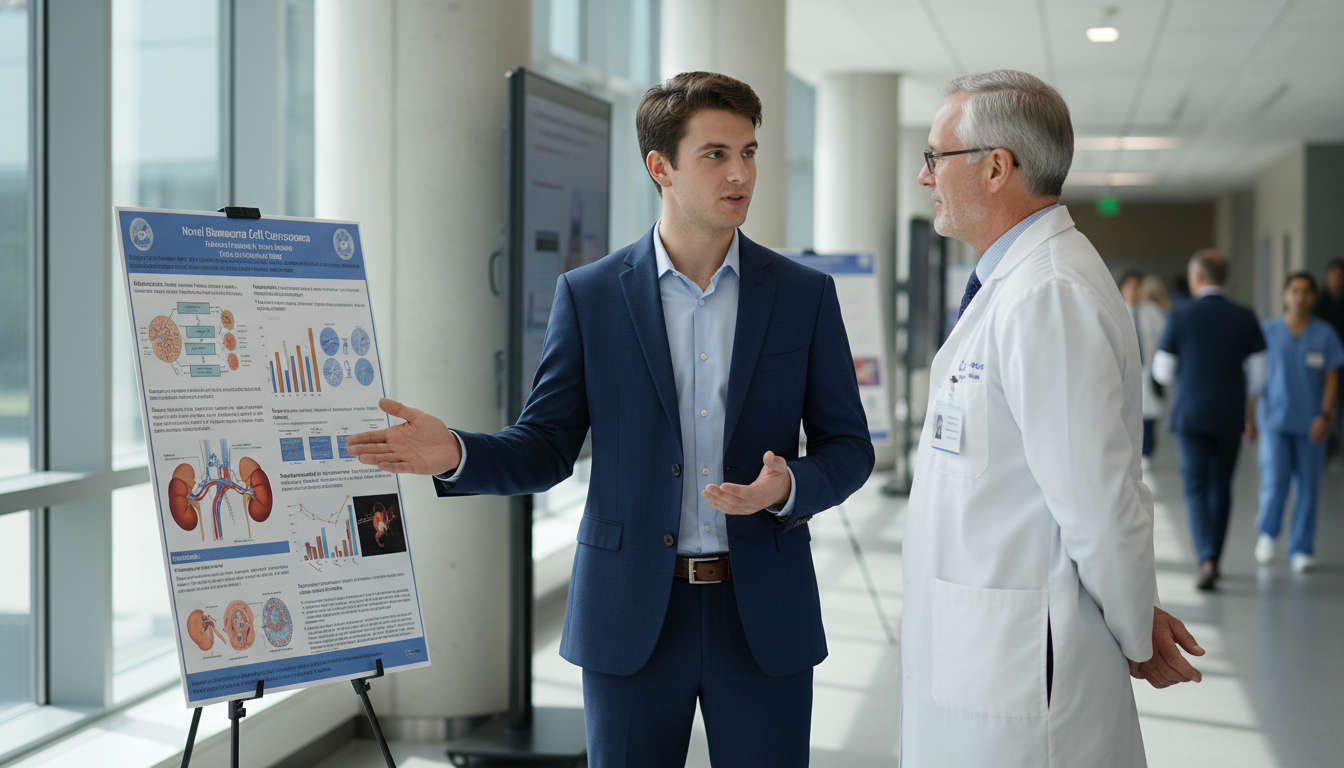
Leveraging Conferences and Networking
Meeting faculty and residents in person changes how your CV is perceived.
- Aim to present at:
- American Society of Plastic Surgeons (ASPS) meetings
- American Association of Plastic Surgeons (AAPS)
- Regional plastic surgery society meetings
- Institutional research days
Benefits:
- Face‑to‑face networking with future program directors and interviewers
- Some will remember “the US citizen IMG who presented the flap outcomes study”
- Provides material for your personal statement and interviews
Tip: When attending a conference, create a target list of programs/faculty to introduce yourself to, especially those where you’re doing or have done research.
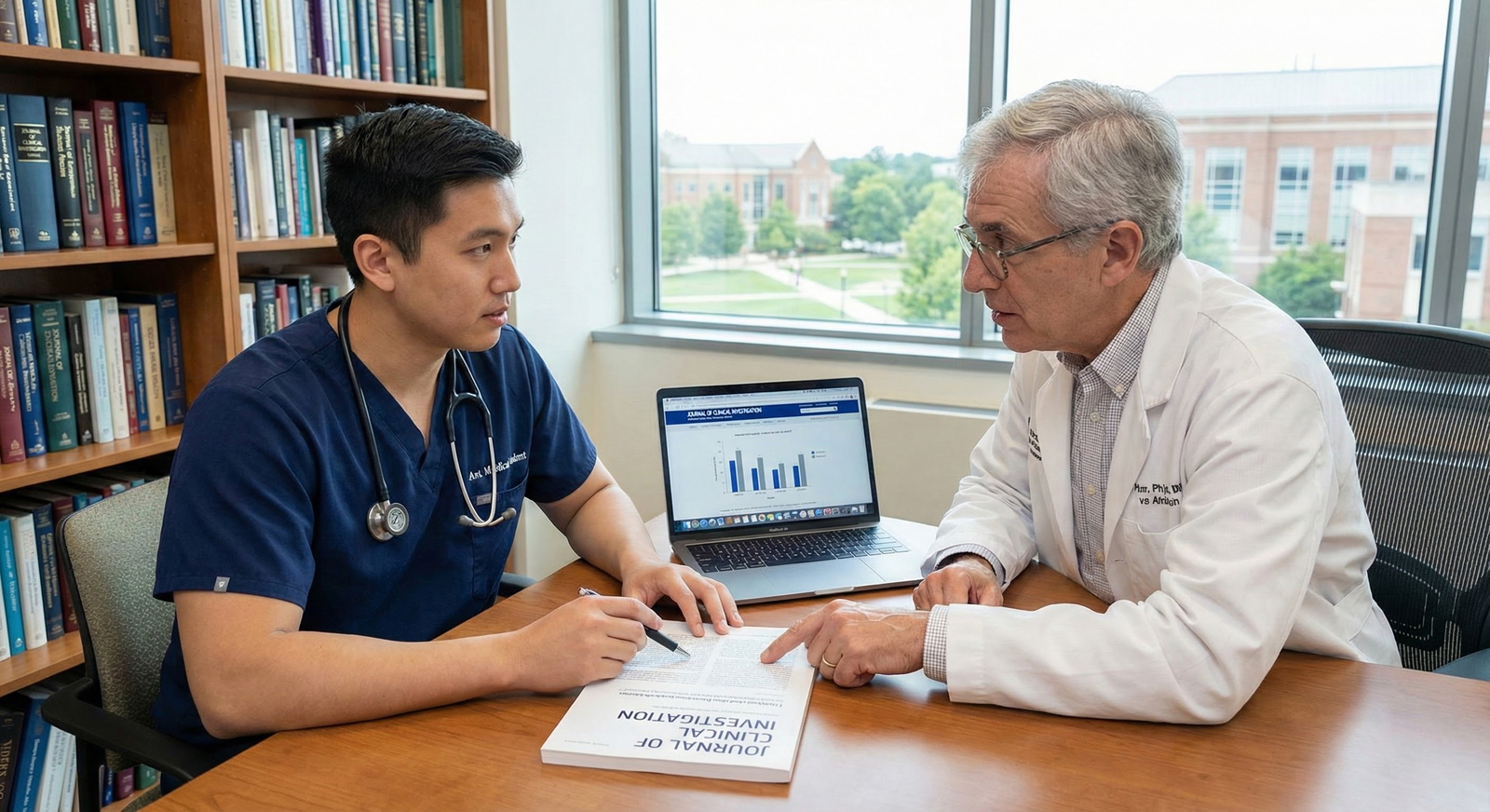
Letters of Recommendation from Research Mentors
High‑quality letters from US plastic surgeons are gold for an integrated plastics match.
To earn strong letters:
- Show reliability, intellectual curiosity, and integrity over months to years
- Ask directly if they can write a “strong letter of support for plastic surgery residency”
- Provide them with:
- Updated CV
- Personal statement draft
- Summary of your work with them, including key projects and your roles
As a US citizen IMG, these letters help offset concerns about your training location by offering first‑hand endorsements from US academic surgeons.
Present Your Research Story in Personal Statements and Interviews
Integrate your research into your narrative:
- Explain why you pursued particular projects
- Reflect on what you learned about:
- Patient outcomes
- Innovation and technology
- Health disparities and access to reconstructive care
In interviews, be ready to:
- Walk through one or two key projects in detail:
- Research question, methods, findings, limitations, and future directions
- Discuss what you would like to study during residency and beyond
This shows that your research profile is not decorative; it’s part of who you are as a future plastic surgeon.
Step 6: Example Pathways for Different US Citizen IMG Profiles
To make this more concrete, here are sample roadmaps.
Scenario A: Pre‑clinical US Citizen IMG (Years 1–2 Abroad)
Goals:
- Build basic research skills
- Start any publications for match early
- Establish first US contacts
Actions:
- Join any research at your home school (even non‑plastics) to learn fundamentals
- Spend a summer in the US with a plastic surgery department doing:
- Chart reviews
- Systematic review with local mentor
- Aim for:
- 1–2 abstracts/posters
- 1 publication (even if outside plastics)
Scenario B: Clinical‑Year Student (3rd–4th Year Abroad)
Goals:
- Pivot strongly toward plastic surgery
- Build connections at US institutions
Actions:
- Cold email US plastics faculty for remote or short‑term projects
- Prioritize plastics‑related topics even if observational or low‑complexity
- Try to secure:
- A short visiting research block or sub‑internship with research components
- Aim for:
- 3–5+ total outputs by graduation, including plastics‑related work
Scenario C: Post‑Graduation Dedicated Research Year in the US
Goals:
- Make a significant jump in integrated plastics match competitiveness
Actions:
- Obtain a 1–2 year plastic surgery research fellowship at a US academic center
- Commit full‑time to:
- Multiple parallel projects (clinical, reviews, possibly lab work)
- Conference submissions
- During this time:
- Push for first‑author publications
- Present at national and regional meetings
- Build strong mentor relationships and letters
Target outcome:
- 10–20+ total scholarly products
- 5–10+ publications, with multiple in plastic surgery
- 2–3 strong US plastic surgery letters
This pathway has successfully moved numerous US citizen IMGs into integrated plastic surgery residency.
Frequently Asked Questions (FAQ)
1. As a US citizen IMG, is a research year absolutely required for plastic surgery?
Not absolutely—but it is highly advantageous and often functionally necessary if you don’t already have a robust research background and strong US ties. If you already have double‑digit publications, several in plastic surgery, excellent USMLE scores, and strong US letters, you might match without a dedicated research year. For most US citizen IMGs, however, a US‑based research fellowship substantially improves your odds and helps generate crucial letters and networking.
2. How many publications are needed to be competitive for the integrated plastics match as an IMG?
There is no strict minimum, but successful IMG applicants typically have multiple publications (5–10+), several in plastic surgery or closely related fields, and a larger number of total scholarly items (10–20+ including abstracts and presentations). Focus on building a coherent, plastics‑relevant body of work with clear first‑author contributions rather than chasing a raw number.
3. Do publications outside plastic surgery still help my application?
Yes. Publications for match in any clinical or scientific area show that you can execute research, write manuscripts, and work within academic teams. However, to convince programs of your specific commitment to plastic surgery, you should gradually shift your portfolio toward plastics‑relevant topics—for example, wound healing, microsurgery, oncologic reconstruction, or outcomes research in surgical populations.
4. What if I don’t have access to a plastic surgery department at my home school?
You can still build a strong foundation by:
- Doing research in related fields (general surgery, orthopedics, ENT, dermatology, oncology, burn care)
- Learning systematic review and basic statistics
- Cold emailing US plastic surgery faculty for remote collaboration
- Planning a future in‑person research year or elective time at a US plastic surgery program
Your strategy is to build skills and generic research productivity now, then “rebrand” and concentrate in plastic surgery once you connect with US mentors.
By approaching research profile building with intention, persistence, and strategic choices, a US citizen IMG can transform a structural disadvantage into a compelling academic asset. The integrated plastics match is demanding, but with the right research roadmap, you can demonstrate that you belong in one of the most competitive and innovative fields in medicine.