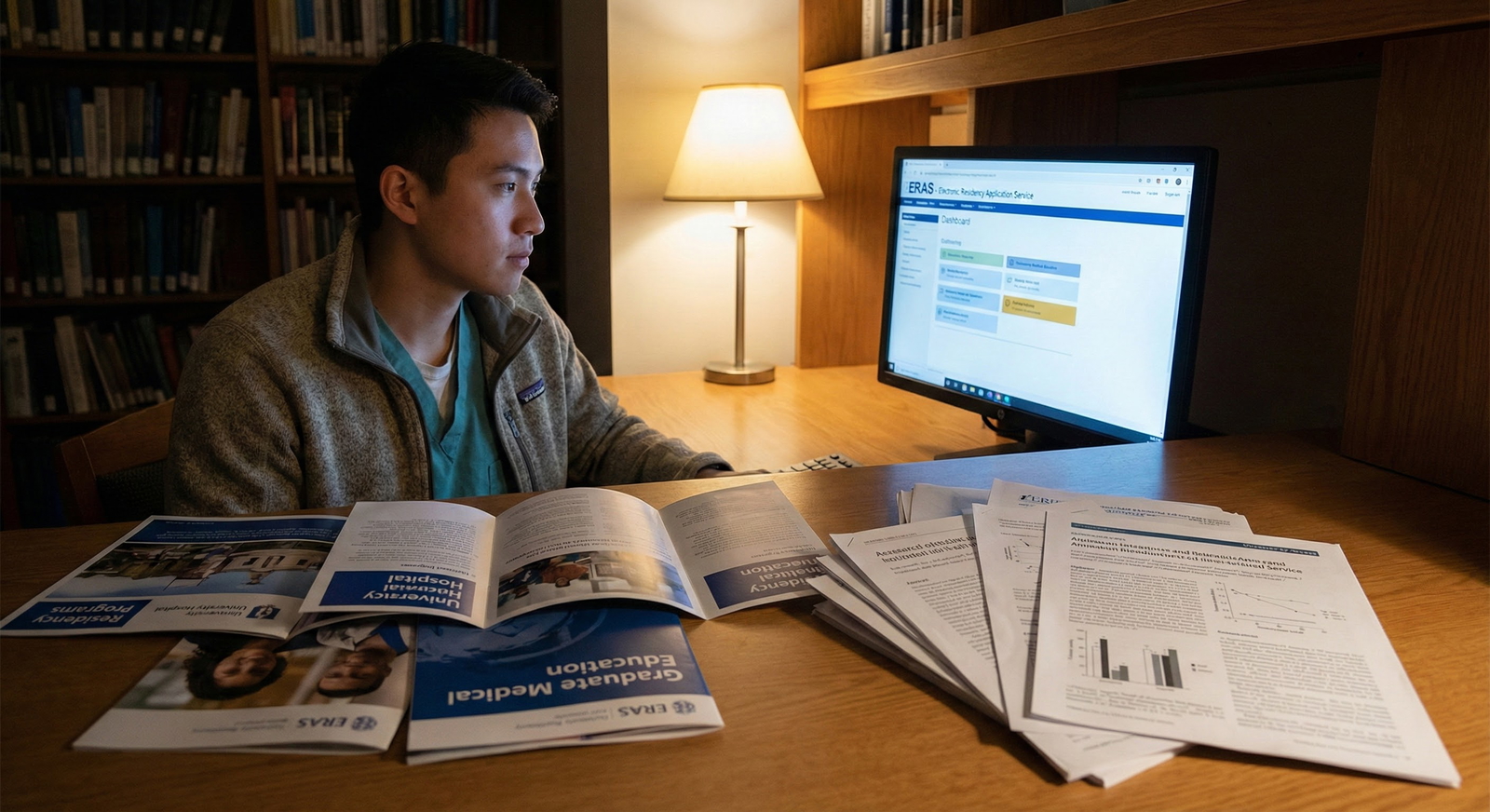
Understanding the Research Landscape for US Citizen IMGs in ENT
For a US citizen IMG (American studying abroad), otolaryngology—head and neck surgery (ENT)—is one of the most competitive specialties to match into. Along with high USMLE scores and strong clinical performance, a convincing research portfolio has become almost mandatory for a successful otolaryngology match.
Program directors increasingly use research productivity as a signal of:
- Commitment to ENT as a career
- Ability to think critically and work in teams
- Familiarity with academic medicine and evidence-based practice
- Potential to contribute to the department’s scholarly output
As a US citizen IMG, you start from a relative disadvantage compared with US MD seniors: fewer built-in research opportunities, less access to home ENT departments, and often weaker mentoring networks. But those obstacles can be strategically overcome with targeted planning, early action, and disciplined execution.
This guide will walk you through how to:
- Understand expectations for research in ENT
- Find mentors and projects from abroad
- Build meaningful research experiences and publications for match
- Present your work and communicate it effectively in your application and interviews
Throughout, the focus is specifically on the US citizen IMG interested in ENT residency—someone who knows that a thoughtful research profile can be the differentiating factor in a competitive cycle.
What Programs Expect: Depth, Not Just Numbers
How competitive is ENT from a research standpoint?
ENT is firmly in the “research-heavy” group of specialties, similar to dermatology, plastic surgery, and neurosurgery. NRMP data and Program Director surveys consistently show that matched applicants tend to have:
- Multiple research experiences
- Several presentations, abstracts, and publications
- Demonstrated interest specifically in otolaryngology topics
For US allopathic seniors in ENT, it’s common to see double-digit scholarly output (abstracts, posters, oral presentations, and papers combined). As a US citizen IMG, you are not required to match these numbers exactly, but you do need to show that:
- You can complete projects to the point of dissemination (poster/paper).
- Your work is ENT-focused or clearly relevant (e.g., head and neck oncology, audiology, airway, skull base, facial plastics, sleep medicine, etc.).
- You understand the basics of research methodology and can speak intelligently about your contributions.
How many publications are “needed” for an ENT match?
There is no magic number, but realistically:
- Competitive range for a US citizen IMG aiming for ENT:
- 2–4 completed projects in ENT or closely related fields
- Ideally at least 1–2 peer-reviewed publications (PubMed-indexed preferred)
- Additional abstracts/posters/oral presentations at regional or national conferences
Programs know that IMGs and Americans studying abroad may have fewer built-in resources. They are more forgiving if:
- You clearly overcame structural limitations (no home ENT department, limited research infrastructure).
- You can articulate your role in each project and what you learned.
- You show evidence of consistency and growth over time, not a last-minute scramble.
When people ask, “how many publications needed to match ENT?” the truthful answer is: enough to prove you are serious, reliable, and capable of scholarly work. For most US citizen IMGs, that translates into a small but solid portfolio of completed, ENT-relevant work, not a huge list of low-quality or tangential projects.
Finding ENT Research Opportunities as a US Citizen IMG

If you’re an American studying abroad, your biggest barrier is usually access—to mentors, departments, and ongoing projects. You’ll likely need to be more proactive and creative than your US MD counterparts.
Step 1: Clarify your ENT interests
You do not need a hyper-specific niche, but having a direction helps you target the right people and stand out. Some common ENT areas:
- Otology/neurotology (hearing loss, cochlear implants, chronic ear disease)
- Rhinology (sinus disease, skull base surgery, allergies)
- Laryngology (voice disorders, airway, swallowing)
- Head and neck oncology (cancers of oral cavity, pharynx, larynx, thyroid)
- Pediatric otolaryngology (airway anomalies, otitis media, congenital conditions)
- Facial plastics and reconstructive surgery
- Sleep surgery and obstructive sleep apnea
Being able to say, for example, “I’m particularly interested in head and neck oncology outcomes” allows you to write more focused emails and stand out in a mentor’s inbox.
Step 2: Identify potential mentors in the US
As a US citizen IMG, your strongest academic ties for ENT research will often be in the United States, not at your overseas school. Use:
Otolaryngology department websites
- Search faculty pages at academic centers (university-affiliated hospitals).
- Look for faculty with recent ENT publications in your interest area.
- Target assistant or associate professors—they’re often building their own research programs and may be more open to help.
PubMed and Google Scholar
- Search keywords like “laryngeal cancer,” “chronic sinusitis outcomes,” “cochlear implant pediatric,” plus “otolaryngology.”
- See which US institutions and faculty names repeat.
Professional societies and interest groups
- American Academy of Otolaryngology–Head and Neck Surgery (AAO-HNS)
- Specialty societies (e.g., American Head and Neck Society, American Neurotology Society)
- Many have research committees and trainee sections where you can network via email or virtual events.
Alumni and personal connections
- Reach out to alumni from your international school who matched ENT.
- Ask US-based family, friends, or undergraduate mentors if they know ENT physicians.
Step 3: Craft effective outreach emails
Faculty receive many vague, copy-paste requests. You want to signal three things: professionalism, specificity, and reliability.
Key points in a strong email:
Short professional subject line:
- “US IMG Student Interested in ENT Research Collaboration”
- “Prospective ENT Applicant Seeking Remote Outcomes Research Opportunity”
Brief introduction:
- Who you are: “US citizen, 3rd-year medical student at [School] in [Country]”
- Interest in ENT and a specific area: “particularly interested in sinus and skull base outcomes research.”
Evidence of initiative:
- Mention you read 1–2 of their recent papers (by title/topic, not flattery).
- Briefly highlight any basic skills: data analysis, literature review, statistics, previous research.
Clear ask:
- “I’m writing to ask if you might have any ongoing or upcoming projects in which a motivated remote student could assist, especially with literature review, data collection, or manuscript drafting.”
Time commitment and flexibility:
- “I can commit approximately X hours per week and am comfortable working across time zones.”
Attach a 1-page CV (including USMLE scores if available, prior research, any ENT exposure).
Expect a low response rate; persistence is normal. Sending 30–40 tailored emails to different faculty is common before landing 1–3 solid opportunities.
Step 4: Use formal research programs and fellowships
If you have the time and financial ability, dedicated research years can dramatically elevate your profile.
Options include:
Formal ENT research fellowships at US academic centers
- Some departments advertise “research fellow” positions on their websites.
- Typically 1–2 years, full-time, often paid (though some are unpaid or low-paid).
- Duties: project coordination, database management, manuscript drafting, conference submissions.
Transitional or gap-year research during medical school
- Many US citizen IMGs take an extra year between basic sciences and clinicals or between graduation and application to focus on ENT research in the US.
- Particularly valuable if your school’s ENT exposure is minimal.
NIH or institutional research programs
- Certain US institutions offer structured programs open to IMGs or non-matriculated students; requirements vary.
A dedicated research year is not absolutely necessary, but for a US citizen IMG in ENT, it can be a powerful differentiator and a way to gain US mentors and strong letters of recommendation.
Types of Research That Work Well for ENT Applicants

You don’t need to be in a lab pipetting cells to build a strong ENT research profile. In fact, clinical and outcomes research often has the quickest path to publication and is easier to conduct remotely.
High-yield research modalities for US citizen IMGs
Retrospective chart reviews / outcomes studies
- Common in ENT: post-operative outcomes, complication rates, quality-of-life after sinus surgery, survival outcomes in head and neck cancer, etc.
- Feasible if your mentor has access to institutional databases.
- Your role: protocol design assistance, data extraction (after IRB training), basic analysis, drafting methods/results, literature review.
Systematic reviews and meta-analyses
- Particularly accessible if you lack direct patient data.
- Topics: surgical techniques comparison, treatment outcomes, complication rates, diagnostic tools in ENT subfields.
- Your role: literature search, data extraction, risk of bias assessment, writing.
- These can yield high-impact publications when done rigorously.
Case reports and case series
- Lower academic weight, but valuable if they are:
- Rare conditions, unusual presentations, or novel interventions.
- Accompanied by a strong literature review and clear teaching points.
- Good for early first-author experience.
- Lower academic weight, but valuable if they are:
Quality improvement (QI) projects
- ENT-specific: improving perioperative antibiotic use, postoperative pain control, voice outcome documentation, airway emergency protocols.
- Often easier to implement and publish as brief reports.
Basic science / translational research
- More complex to start as an IMG, but very impactful if you have access to a lab:
- Cancer biology (squamous cell carcinoma, thyroid carcinoma), immunology in chronic rhinosinusitis, inner ear biology.
- Useful if you’re considering an academic career, but not essential for all applicants.
- More complex to start as an IMG, but very impactful if you have access to a lab:
Balancing breadth vs. depth
Aim for:
- 1–2 core areas of focus (e.g., rhinology and skull base; or head and neck oncology).
- Multiple projects within these areas, rather than scattered topics across many specialties.
This consistency allows you to present a coherent narrative: “Over my medical training I have focused my research on [X], which developed my interest in [specific ENT subspecialty].”
Authorship and your role
For residency selection, quality of involvement matters more than being a minor co-author on 15 papers.
Strive for:
- At least 1–2 first-author works (case report, systematic review, or small clinical study).
- Some middle-author roles in larger projects, where you can still clearly describe what you did (e.g., “I designed the data collection tool and abstracted data for 80 patients.”).
Be ready to explain, in detail, for each project:
- The research question and rationale
- Study design and methods
- Your concrete contributions
- Key findings and implications for ENT practice
This is where your understanding and authenticity will matter more than raw publication count.
Executing Projects and Maximizing Your Scholarly Output
Having a mentor and project idea is only the beginning. Execution and follow-through are where many students fall short, especially when working remotely from abroad.
Step 1: Start with realistic, time-bounded projects
As a US citizen IMG, your clinical schedule and time zones might be challenging. Choose initial projects that are:
- Clearly defined
- Achievable within 3–9 months
- Not entirely dependent on in-person tasks
Good starter projects:
- Systematic review on a narrow ENT topic
- Case report with literature review
- Retrospective chart review with manageable sample size
Once you have proof of reliability, mentors are more likely to involve you in more complex, higher-impact studies.
Step 2: Develop essential research skills early
You don’t need a PhD, but familiarity with basic tools will make you much more valuable:
- Reference management software (Zotero, Mendeley, EndNote)
- Literature search strategies using PubMed, Embase, Cochrane
- Basic biostatistics concepts: p-values, confidence intervals, regression, survival analysis (especially for head and neck oncology)
- Data handling in Excel or statistical packages (R, SPSS, Stata)
- Academic writing structure: IMRAD (Introduction, Methods, Results, Discussion)
There are many free and low-cost resources:
- Coursera/edX courses on clinical research, biostatistics, and epidemiology
- Institution- or society-sponsored webinars on ENT research methods
- YouTube channels focused on biostatistics and research design
The more you can independently perform literature review, create tables/figures, and draft sections of the manuscript, the more indispensable you become to your mentor.
Step 3: Communicate proactively with your team
Remote work demands strong communication:
- Agree on a clear timeline and intermediate goals (e.g., “draft introduction by [date]”).
- Send regular brief updates (every 1–2 weeks):
- “Completed search and screened 300/450 abstracts; identified 50 for full text.”
- Clarify feedback expectations and deadlines.
- Be honest about delays—better to notify early than disappear.
Remember: A reputation as a reliable collaborator often leads to additional opportunities, letters of recommendation, and advocacy during the match cycle.
Step 4: Target meaningful dissemination—abstracts, posters, publications
Your goal is to convert work into tangible outputs for your CV:
Local & institutional presentations
- Resident research days, departmental seminars, student symposia.
- Count toward “presentations” on your ERAS application.
Regional and national conferences
- AAO-HNS Annual Meeting in particular is a major ENT venue.
- Many subspecialty meetings accept student work.
- Even a virtual poster is valuable; some meetings offer reduced or student rates.
Peer-reviewed journals
- ENT-specific journals carry more weight (e.g., Otolaryngology–Head and Neck Surgery, Laryngoscope, American Journal of Otolaryngology, etc.).
- However, quality and indexing (PubMed) matter more than impact factor alone.
For each project, consider from the start:
- Where you will submit the abstract (which meeting, what deadline)
- Where you might submit the full manuscript
Aligning your work with submission deadlines helps move projects forward and avoids indefinite limbo.
Strategically Presenting Your Research in the ENT Match
You’ve built research for residency applications; now you must present it effectively to program directors and interviewers.
Crafting your research narrative in ERAS
In your ERAS application:
- List each research experience under “Experiences” with:
- Title and type of project
- Your specific roles and responsibilities
- Methods and key outcomes (briefly)
- List publications, abstracts, and presentations in the appropriate sections, using standard citation format.
For a US citizen IMG in ENT, it’s particularly important to:
- Highlight US-based research experiences separately (they signal ability to function in US academic systems).
- Emphasize longitudinal engagement: projects that spanned months to years.
- Connect your ENT research experiences to your career goals—especially if you’re interested in academic practice.
Personal statement: linking research to your ENT identity
Your personal statement should not be a full research CV, but it should:
- Briefly describe a key project and what it taught you about ENT.
- Show how research deepened your understanding of:
- Disease processes (e.g., pathophysiology of chronic rhinosinusitis)
- Patient outcomes and quality-of-life considerations
- Health disparities and access issues (especially in head and neck cancer or pediatric ENT)
Example angle:
“Through my work examining treatment delays in head and neck cancer, I saw how social determinants of health influence prognosis at least as much as surgical technique. This shaped my interest in academic otolaryngology where clinical care, research, and advocacy intersect.”
Interview preparation: discussing your work confidently
Expect most ENT interviews to include questions about your research. Prepare to:
Clearly summarize each major project in 2–3 minutes:
- “The question we asked was…”
- “We designed the study as…”
- “We found that…”
- “This suggests that in clinical practice we should…”
Know the limitations of each study (retrospective design, small sample size, single-center biases).
Be ready to answer, “If you could redo or extend this project, what would you change?”
Connect your research to the program’s strengths:
- If they have a known head and neck lab, mention how your experience would let you contribute quickly.
- If they’re strong in QI, highlight your ENT QI projects.
Your goal is to appear as someone who not only did research, but understands it and will continue to be academically active in residency.
FAQs: Research Profile Building for US Citizen IMG in Otolaryngology
1. As a US citizen IMG, is research absolutely required to match into ENT residency?
For otolaryngology, it is strongly expected. While there are rare exceptions, especially at smaller community-based programs, most applicants who successfully match ENT—especially as US citizen IMGs—have meaningful research exposure and at least some publications or presentations. Without any research, your application will likely be filtered out at many academic programs.
2. How many publications are needed to be competitive for an ENT match as a US citizen IMG?
There is no fixed number, but for most US citizen IMGs targeting ENT:
- Aim for 2–4 solid ENT-related projects completed to dissemination.
- Ideally have 1–2 peer-reviewed, PubMed-indexed publications (first author on at least one is ideal).
- Additional abstracts/posters/oral presentations are valuable, especially at ENT-specific conferences.
Quality, ENT focus, and your clear role matter more than raw count.
3. Does research outside of ENT (e.g., internal medicine, neurology) still help my otolaryngology application?
Yes, especially if done well and published. Non-ENT research shows:
- You can work on teams and complete projects.
- You understand scientific methods.
However, for a competitive ENT application, try to add at least some ENT-focused work before applying—case reports, chart reviews, or a systematic review in otology, rhinology, head and neck, etc. ENT-specific research signals true commitment to the specialty.
4. I’m late in my medical school timeline. What can I realistically do now to strengthen my ENT research profile before applying?
If you are 6–12 months from applying:
- Prioritize shorter, achievable projects: case reports, focused retrospective reviews, systematic reviews.
- Seek fast-moving mentors already running data-heavy projects who need help with analysis or manuscript writing.
- Target abstract submissions to upcoming ENT meetings to gain at least posters or oral presentations.
- Consider delaying graduation or application by a year to complete a research fellowship if your overall profile (scores, US clinical experience, letters) is borderline.
Even late in training, a concentrated, well-structured period of research can meaningfully improve your otolaryngology match prospects as a US citizen IMG.
By approaching research intentionally—choosing feasible projects, finding invested mentors, and following through to publication—you can transform a structural disadvantage into a compelling strength. For a US citizen IMG aiming at ENT, a focused and credible research portfolio is one of the best investments you can make in your residency future.