Understanding the Role of Research in Internal Medicine Residency Applications
For an MD graduate targeting an internal medicine residency, a strong research profile is no longer “optional.” It is a key differentiator in an increasingly competitive allopathic medical school match environment, especially if you’re aiming for academic internal medicine residency programs or subspecialty fellowship down the line.
Research experience signals several things to program directors:
- You can think critically and interpret evidence.
- You understand basic research methods and statistics.
- You can work in teams and see a project through to completion.
- You are likely to contribute academically during residency (QI projects, teaching, publications).
Where research matters most in Internal Medicine (IM):
- Academic IM programs (especially university-based)
- Programs with strong fellowship pipelines (cards, GI, heme/onc, pulm/crit, ID, nephro, etc.)
- Applicants seeking subspecialty fellowships later
- Highly competitive geographic regions (Northeast, West Coast, big academic centers)
Does this mean community IM programs or less research-intensive residencies don’t care? No—but they often weigh clinical performance, USMLE/COMLEX scores, and letters slightly more heavily. Still, even there, a solid research profile can break ties and highlight your initiative.
Key idea: Your research portfolio should tell a coherent story about your interests, skills, and potential as a future internist. It does not need to be perfect or packed with dozens of high-impact publications, but it should be intentional and well-presented.
How Many Publications Do You Really Need for an IM Match?
The question “how many publications needed” is one of the most common for MD graduate residency applicants. The honest answer: there is no single magic number. Instead, think about your research profile in tiers:
1. Minimum Research Exposure (Baseline Competitiveness)
For many categorical internal medicine residency programs, especially community or mid-tier academic programs, having at least:
- 1–2 research experiences (projects, even if ongoing)
- 0–2 publications or abstracts, ideally related to medicine or a clinical field
…is often sufficient to show that you’ve been involved, even if you’re not on an academic track.
This could include:
- A prospective or retrospective clinical project
- A QI (quality improvement) project with data collection and analysis
- An abstract/poster at a local or national meeting
- A co-authorship on a case report
2. Strong Academic IM Candidate
For applicants targeting academic university-based internal medicine residency programs, or those planning for competitive fellowships, a more robust research profile is expected:
Typical ranges seen in successful academic IM match applicants:
- 3–8 total research experiences
- 3–10+ posters/abstracts/presentations
- 1–5 publications, which may include:
- Case reports
- Original research
- Review articles
- Book chapters
- Quality improvement/patient safety publications
These numbers are not hard cutoffs. A candidate with 2 high-quality first-author clinical papers can be stronger than someone with 10 minimal contributions where they rarely understood the research.
3. Research-Heavy or Physician-Scientist Trajectory
If you are interested in:
- Clinician-investigator pathways (e.g., ABIM research pathway)
- Highly research-focused programs
- Combined IM/PhD or post-doc research years
Then expectations can be significantly higher:
- Multiple first-author manuscripts
- Robust bench or translational work, or advanced clinical research
- Track record of ongoing scholarly work and grants (if applicable)
Key principle: Quality, consistency, and your ability to discuss your work clearly in interviews are more important than just counting publications for match.
Core Components of a Strong Research Profile for Internal Medicine
Think of your research profile as a portfolio with several key building blocks.
1. Types of Research That Count
All of the following can strengthen your application as an MD graduate residency candidate in Internal Medicine:
Clinical research
- Chart reviews (retrospective cohort studies)
- Prospective observational studies or clinical trials
- Outcomes or epidemiological studies
Quality Improvement (QI) / Patient Safety Projects
- Initiatives to reduce readmissions
- Antimicrobial stewardship projects
- Improving guideline adherence (e.g., sepsis bundles, DVT prophylaxis)
Case Reports and Case Series
- Rare diseases, unusual presentations, or novel treatment responses
- Multidisciplinary cases that highlight internal medicine complexity
Systematic Reviews or Narrative Reviews
- Focused topics relevant to internal medicine subspecialties
- High-yield clinically relevant questions
Basic science or translational research
- Immunology, cardiology, oncology lab work, etc.
- Particularly helpful if relevant to future IM subspecialty plans
Health services research / medical education
- Studies on healthcare delivery, cost-effectiveness, or training models
- Curriculum design and evaluation in medical education
Tip: For an internal medicine residency, clinical and QI projects are typically the most accessible and easiest to connect directly to your future career in IM.
2. Depth of Engagement vs. Surface-Level Involvement
Program directors pay attention to what you actually did, not just your name on a byline.
Compare:
- Surface-level involvement: Helped with data entry for a month, no understanding of the question, can’t describe methods or results.
- Deep engagement: Helped design the study, wrote parts of the IRB, extracted data, did basic statistics, drafted the manuscript, presented the poster.
In interviews, you must be able to:
- Explain the research question in plain language.
- Describe the methods at a level appropriate for a resident physician.
- Summarize the key findings and why they matter clinically.
- Reflect on any limitations and what you would do differently.
Being the second author on one deeply understood project is often more impressive than being the tenth author on five papers you barely recall.
3. Continuity and a Coherent Narrative
A research profile that aligns with your IM interests is helpful, but it doesn’t have to be perfectly linear. Program directors like to see:
- Some degree of focus
- E.g., multiple projects in cardiology, diabetes, health disparities, medical education, hospital medicine.
- Evidence of growth
- From case report → retrospective study → prospective project
- From team member → taking on more leadership and writing
When you craft your personal statement and CV, you should be able to articulate a story:
“My early experience with a heart failure outcomes project sparked my interest in chronic disease management, which led me to additional work in ambulatory QI for diabetic patients. These experiences cemented my interest in internal medicine and in pursuing a future cardiology fellowship.”

Step-by-Step Plan to Build Your Research Profile as an MD Graduate
Step 1: Clarify Your Goals and Timeline
First, determine:
- How far you are from your ERAS submission date
- Your target program types (community vs academic, region, subspecialty interest)
- Your current research baseline:
- No experience
- Some experience but no publications
- Publications but not in IM or not recent
If you are 12–24 months before applying:
- You have time to initiate at least one substantial project and a few smaller ones (case reports, abstracts).
- Consider joining a large ongoing project for a quicker path to authorship.
If you are 6–12 months before applying:
- Focus on projects that can realistically yield abstracts or submissions within that timeframe:
- Case reports
- Retrospective chart reviews with limited scope
- Secondary analysis of existing data
- QI projects with rapidly measurable outcomes
If you are <6 months before applying:
- Prioritize:
- Converting existing work into posters or manuscripts.
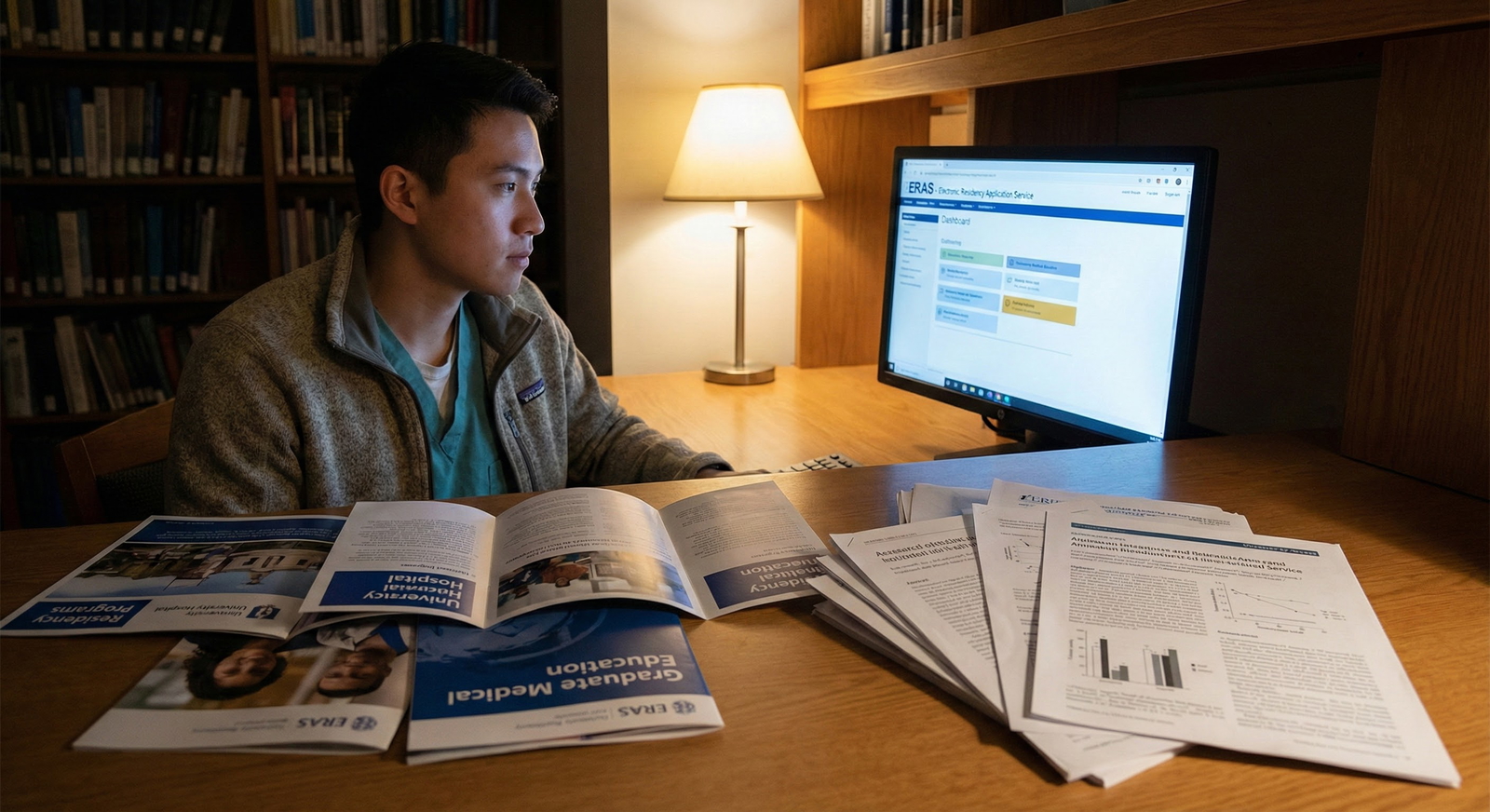
- Ensuring all experiences are correctly documented in ERAS.
- Pushing in-progress manuscripts toward submission (even if “submitted, under review”).
Step 2: Find Mentors and Research Opportunities
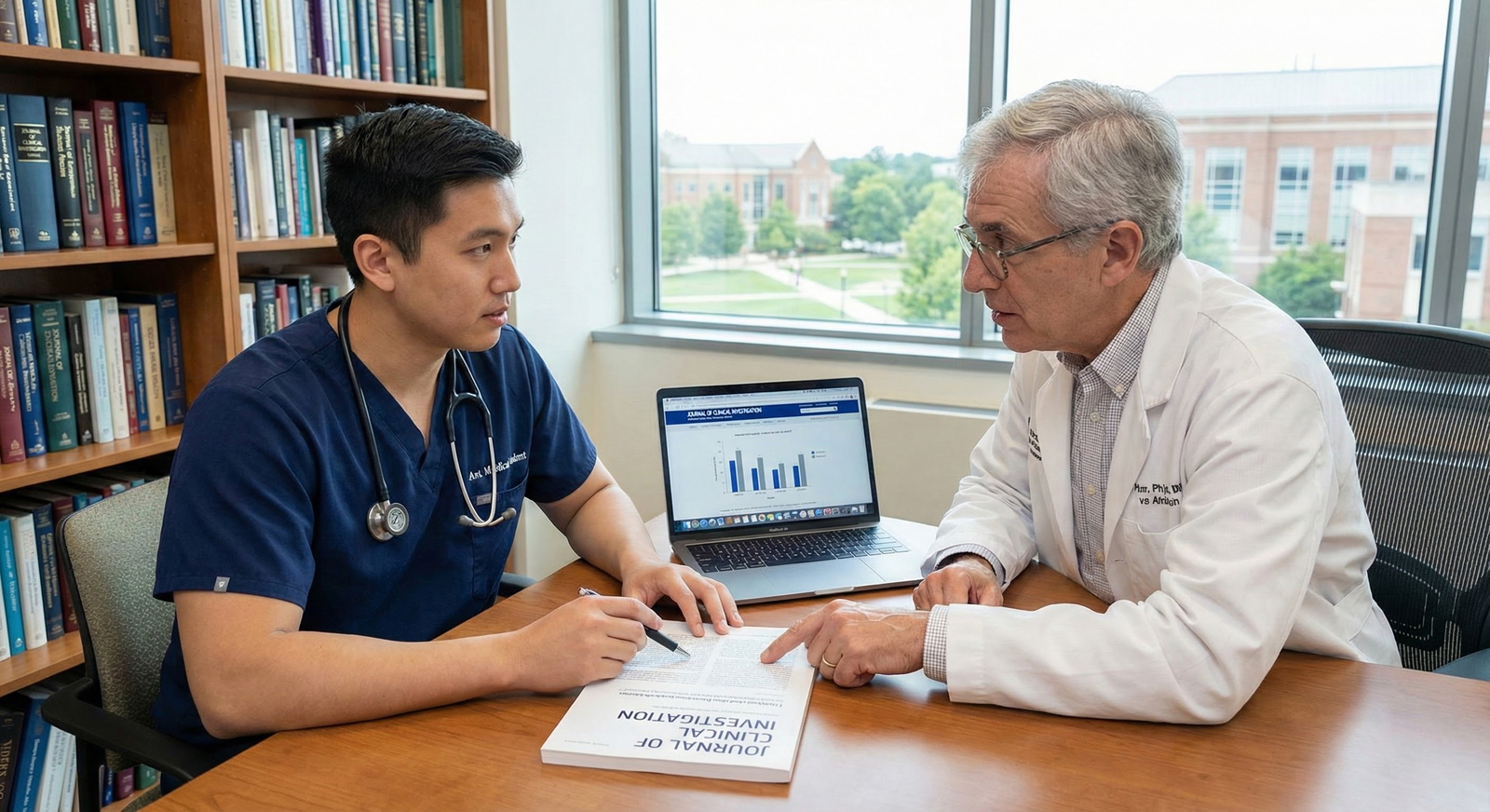
For an MD graduate residency applicant, your biggest accelerant is the right mentor. Your mentor does not have to be in your exact subspecialty of interest, but they should:
- Be active in research (recent PubMed track record).
- Have a track record of working with students or residents.
- Be responsive and supportive.
Where to find mentors:
- Your internal medicine department (attendings, hospitalists, subspecialists).
- Research offices or clinical and translational science institutes at your institution.
- National organizations (e.g., ACP, subspecialty societies) with student/research collaboratives.
- Alumni from your allopathic medical school match network who are now in academic IM.
How to approach a potential mentor (sample email):
- Subject: “MD graduate seeking internal medicine research opportunities – [Your Name]”
- Briefly introduce your status (MD graduate, year, interests).
- Mention any prior research experience (even if limited).
- Express clear goals: “I am preparing for internal medicine residency applications and hope to become involved in clinical or QI research in [broad area].”
- Offer specific time commitment (e.g., 5–10 hours/week).
- Attach a concise CV and unofficial transcript if relevant.
Step 3: Start with Feasible, High-Yield Projects
To maximize the impact on your IM match:
Quick-win projects:
Case reports / case series
- Identify interesting cases during clinical rotations or observerships.
- Ask: “Has this presentation/complication been reported? Is there a teaching point?”
- Work with the primary attending and request guidance on target journals or conferences.
Retrospective chart reviews
- Short projects focusing on readmissions, length of stay, complication rates, etc.
- Often faster if the mentor already has IRB approval or a database.
QI projects
- Implement or evaluate an intervention (e.g., improving vaccination rates on a ward).
- Present locally, submit abstracts to society meetings, and write up as a short paper.
Longer-term, higher-impact projects:
- Prospective observational studies (e.g., registry of specific conditions).
- Substudies of large ongoing research projects.
- Systematic reviews or meta-analyses (if you have statistical and literature review support).
Step 4: Take Ownership of Specific Roles
To transform “I helped with research” into “I built a strong research profile,” you need defined responsibilities:
Literature review & background writing
- Summarize existing evidence, identify the gap.
- Draft introduction and discussion sections.
IRB preparation
- Learn the process and help prepare protocols and consent documents.
Data collection and management
- Use tools like REDCap, Excel, or institutional systems.
- Maintain clean, anonymized data.
Basic statistical analysis
- Learn simple tests: t-test, chi-square, logistic regression.
- Use software: SPSS, R, Stata, or institutional tools.
- If statistics is not your strength, collaborate but at least understand the methods.
Manuscript and abstract writing
- Aim to be first or second author when you’ve done significant work.
- Target appropriate journals; don’t aim only for the highest-impact ones.
Being able to say, “I designed the data collection tool and wrote the first draft of the manuscript” is very powerful during interviews.
Step 5: Present and Distribute Your Work
Program directors value visibility and dissemination:
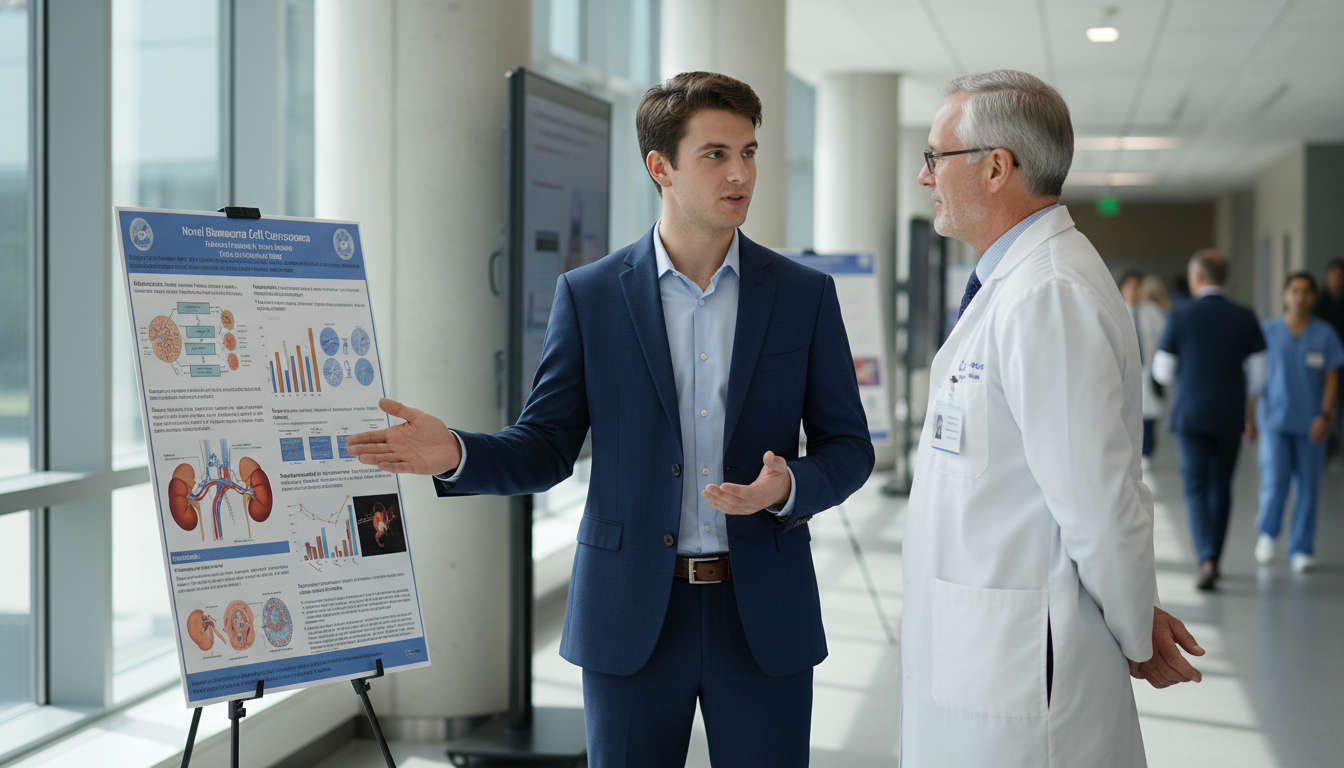
Conferences and meetings
- Local hospital or regional research days
- ACP chapter meetings
- Specialty society meetings (e.g., ACC, AASLD, ATS, ASN, IDSA)
Types of presentations
- Poster presentations
- Oral presentations
- Online or virtual conferences
Publications
- Full-length original research articles
- Brief reports
- Case reports or image articles
- Narrative or systematic reviews
- Medical education or QI articles
Even if your manuscript is “under review,” you can list it in ERAS appropriately (e.g., “Submitted,” “Provisionally accepted”), without misrepresenting its status.

Documenting and Showcasing Your Research in ERAS and Interviews
1. Entering Research in ERAS
The ERAS application allows you to list:
- Experiences (research, work, volunteering)
- Publications (peer-reviewed and non–peer-reviewed)
- Presentations and abstracts
For each research experience, make sure to:
- Use clear titles, e.g., “Clinical Outcomes in Patients with Sepsis Readmissions” rather than “Research Assistant.”
- Briefly describe your role and the project aims.
- Quantify impact where possible: number of patients included, key findings in one sentence.
For publications for match, include:
- Full citation if published (authors, title, journal, year).
- Your author order and role.
- Status: Published, In Press, Accepted, Submitted, or In Preparation (only list “in preparation” if there is a realistic plan and draft underway).
Avoid inflating your contribution. Program directors and interviewers often verify or probe details.
2. Crafting a Research-Focused Personal Statement
If research is a central part of your profile, you can:
- Devote a paragraph to a key project that shaped your interest in IM.
- Highlight:
- The patient problem or population you studied.
- What you learned about the disease and the health system.
- How this motivated you to pursue internal medicine.
Avoid turning your personal statement into a mini-thesis. It should be about you, not just your study.
3. Preparing to Discuss Research in Interviews
You should be able to comfortably and confidently discuss any project listed in your application. Prepare:
- A 2–3 sentence overview of each major project:
- The question
- The method
- The main result
- A short anecdote about a challenge you faced and overcame in research (data issues, IRB delays, failed hypotheses).
- Thoughts on future directions:
- How you hope to continue research during residency.
- Specific subspecialty or methodological interests (e.g., “I’d like to develop skills in clinical epidemiology and pursue outcomes research in heart failure.”)
Interviewers often care less about the topic itself than about your curiosity, perseverance, and maturity in reflecting on the research process.
Strategic Advice for Different Applicant Profiles
For Recent MD Graduates with Limited Research
If you’re close to graduation or just graduated from an allopathic medical school and have minimal research:
- Start with 1–2 focused projects rather than spreading yourself thin.
- Aim for:
- At least 1 poster or abstract by application time.
- At least 1 manuscript in submission or advanced drafting.
- Leverage your clinical performance and strong letters to complement a lighter research profile.
- Emphasize QI and clinical relevance in your projects; they are highly valued in internal medicine.
For International MD Graduates Targeting U.S. IM Residency
If you graduated abroad and are targeting the U.S. MD graduate residency track:
- Research productivity is particularly important for matching into academic IM programs.
- If you are in the U.S.:
- Seek volunteer research positions at teaching hospitals.
- Combine observership or externship experiences with case reports and QI projects.
- If abroad:
- Collaborate remotely with U.S. researchers if possible.
- Submit to international conferences and journals.
- Focus on:
- Demonstrating understanding of evidence-based medicine.
- Gaining at least a few English-language publications or abstracts.
For Applicants With Strong Research but Weaker Scores
If your USMLE/COMLEX scores are not as strong:
- A robust research portfolio can help, especially for academic programs that value scholarly potential.
- Emphasize:
- Leadership roles in research.
- First-author publications.
- Longitudinal commitment over several years.
Programs may see you as someone who will significantly contribute academically, which can offset modest test scores—particularly if you demonstrate strong clinical reasoning and communication skills.
Frequently Asked Questions (FAQ)
1. How many publications do I need to match into an internal medicine residency?
There is no fixed number. For most categorical IM programs, 1–3 publications or abstracts plus several meaningful research experiences are often sufficient. For research-heavy academic programs or those with a strong fellowship pipeline, many successful applicants have 3–10+ abstracts/presentations and 1–5 publications. Focus on quality, relevance, and your ability to explain your role, rather than only on counts.
2. Does my research have to be in internal medicine specifically?
Not necessarily. While internal medicine–related projects (cardiology, pulmonary, endocrinology, infectious diseases, etc.) are ideal, program directors value any rigorous research experience that shows:
- Critical thinking
- Methodologic understanding
- Persistence and teamwork
If you have basic science or non-IM research, frame it in terms of the skills you gained and how they transfer to clinical internal medicine and evidence-based practice.
3. Is it better to have many small projects or one big project?
A combination is ideal. For the IM match, having:
- 1–2 substantial projects (where you played a major role and possibly achieved a publication)
- Plus several smaller contributions (case reports, posters, QI projects)
…shows both depth and breadth. One massive project with no dissemination yet is less impressive than one solid project plus a few completed, presented works. Aim for at least one project where you are first or second author.
4. Can quality improvement (QI) work really count as research for residency applications?
Yes. In internal medicine, QI and patient safety projects are highly valued and often more readily translatable to your day-to-day work as a resident. Many programs actively encourage QI, and listing:
- QI projects with measurable outcomes
- Presentations of QI work at conferences
- QI-related publications
…strengthens your research profile, especially if you clearly explain the problem, intervention, and outcome. Just be transparent in ERAS whether it was classical research or QI, and describe your methods clearly.
Building a compelling research profile as an MD graduate applying to internal medicine residency is about strategic choices, consistent effort, and clear communication, not just chasing publication numbers. With focused projects, good mentorship, and honest representation of your work, you can craft a research portfolio that meaningfully enhances your IM match prospects and sets the foundation for an academic, scholarly, and fulfilling career in internal medicine.