Why Research Matters for an MD Graduate in Nuclear Medicine
For an MD graduate aiming for a nuclear medicine residency, a strong research profile is often the difference between a standard application and a standout one. Nuclear medicine is a data‑rich, technology‑driven field where imaging physics, radiopharmaceutical development, and quantitative image analysis intersect. Program directors look for applicants who can think critically, interpret evidence, and contribute to the future of imaging.
Several trends make research especially important for the nuclear medicine match:
- Many programs are housed in major academic centers with robust imaging research.
- Nuclear medicine is rapidly evolving (e.g., theranostics, AI in imaging), so programs value applicants who understand research methodology.
- There is a relatively small applicant pool; research can be a key differentiator.
- As an MD graduate residency applicant, especially from an allopathic medical school match background, you are expected to have some exposure to research or scholarly work.
This article will walk you through exactly how to build a targeted research profile for nuclear medicine—what types of projects to pursue, how to get involved, how many publications are needed, and how to present your work effectively during the residency application and interview process.
Understanding What Counts as “Research” in Nuclear Medicine
Before building your profile, you need clarity on what “research for residency” really means. It’s broader than just randomized clinical trials or first-author PubMed papers.
Core Types of Research in Nuclear Medicine
Clinical Research
- Focus: Patient care, diagnostic accuracy, staging, treatment response.
- Examples:
- Evaluating PET/CT parameters to predict response in lymphoma.
- Comparing SPECT vs SPECT/CT in bone metastases detection.
- Studying patterns of incidental findings on nuclear cardiology studies.
- Why it’s valuable: Directly relevant to daily nuclear medicine practice, easier to access for MD students and graduates.
Translational / Radiopharmaceutical Research
- Focus: Bridging basic science and clinical applications.
- Examples:
- Studying new radiotracers for neurodegenerative diseases.
- Assessing biodistribution and dosimetry of a novel theranostic agent.
- Why it’s valuable: Shows deeper engagement with the cutting-edge side of the specialty.
Physics / Quantitative Imaging / AI
- Focus: Image acquisition, reconstruction, quantification, automation.
- Examples:
- Comparing different PET reconstruction algorithms and their effect on SUV measurements.
- Machine learning to classify benign vs malignant lesions on PET.
- Dose reduction protocols for SPECT/CT.
- Why it’s valuable: Nuclear medicine is heavily technical; these projects demonstrate analytical skills and comfort with imaging technology.
Quality Improvement (QI) and Operational Research
- Focus: Workflow, safety, reporting, protocol optimization.
- Examples:
- Reducing radiopharmaceutical waste in the department.
- Standardizing reporting templates for thyroid uptake scans.
- Decreasing patient waiting times for PET/CT.
- Why it’s valuable: Highly practical, often easier to start and complete within limited time, and still counts as scholarly work.
Educational and Outcomes Research
- Focus: Training methods, patient education, outcomes of imaging-driven decisions.
- Examples:
- Developing and evaluating a resident curriculum in theranostics.
- Testing an educational tool for patient understanding of PET/CT risks and benefits.
- Why it’s valuable: Demonstrates leadership and commitment to teaching—appealing in academic programs.
All of the above can support a strong application. The key is to make sure your work is legitimate, mentored, and ideally disseminated (abstracts, posters, publications, or presentations).

Getting Started: Finding Mentors and Research Opportunities
Step 1: Map Your Local Nuclear Medicine Landscape
As an MD graduate, your first step is to identify where nuclear medicine research happens around you:
- Your home institution’s nuclear medicine department
- Look at faculty pages and their recent publications.
- Identify who is active in clinical or translational imaging research.
- Radiology department with nuclear medicine section
- Many nuclear imaging projects reside within radiology divisions.
- Affiliated cancer center or cardiology division
- Oncology and cardiology often drive PET, SPECT, and novel tracer studies.
- Medical physics or bioengineering departments
- Ideal if you’re interested in image reconstruction, dosimetry, or AI.
If your institution has limited nuclear medicine, expand your search:
- Regional academic centers with nuclear medicine fellowships.
- National collaborative trials (e.g., trials involving PET tracers or theranostics) where data analysis can be done remotely.
- Online research networks and virtual collaborations.
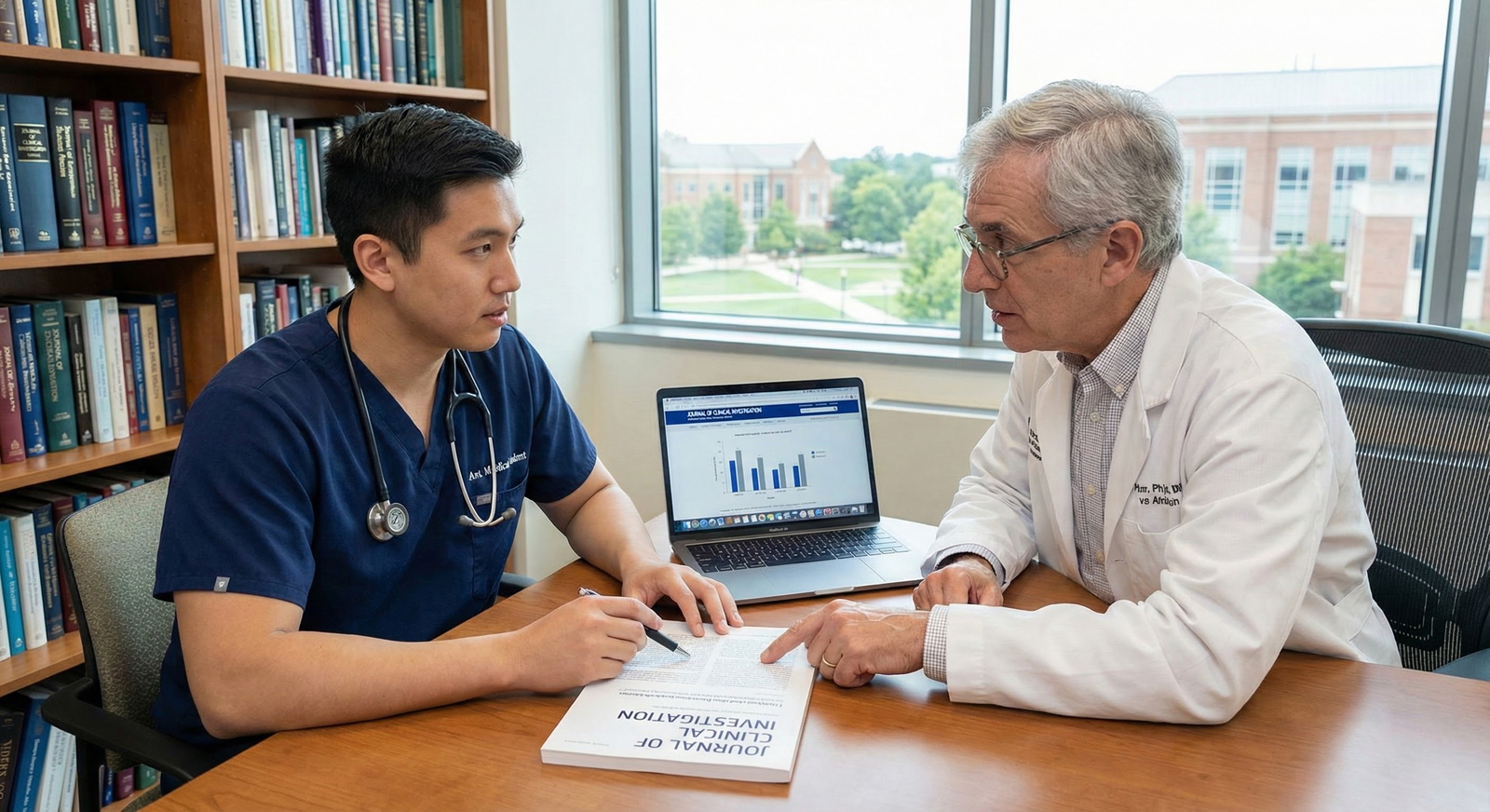
Step 2: Approach Potential Mentors Strategically
Program directors value applicants who can articulate a research question and follow through. The way you approach mentors matters.
How to write your initial email:
- Use a concise, professional subject:
“MD graduate interested in nuclear medicine research – request for mentorship” - Include:
- 1–2 sentence introduction (who you are, your stage of training).
- 1–2 sentences on your interest in nuclear medicine (specific areas if possible).
- 1–2 sentences referencing their recent work (show you did your homework).
- A clear ask: “I would be grateful for the opportunity to assist with any ongoing or upcoming projects; I am particularly interested in X/Y.”
- Your CV attached (including any prior publications for match and research experiences).
Example:
I recently completed my MD at [Institution] and am applying for nuclear medicine residency in the upcoming cycle. I am particularly interested in PET/CT applications in oncology and theranostics.
I read your recent paper on [topic] in [journal] and would be very interested in contributing to similar work. I have experience with data collection and basic statistics (SPSS/R) and can commit consistent time over the coming months.
Would you be open to discussing any ongoing or upcoming projects where I might be of help?
Be explicit about your time availability and your goals (e.g., aiming for at least an abstract or manuscript submission before the allopathic medical school match season).
Step 3: Start with Feasible, Time‑Bound Projects
Choose projects that you can realistically complete or advance significantly before your nuclear medicine residency application is due:
- Retrospective chart reviews using existing imaging data.
- Analysis of an already-collected dataset for an additional aim.
- Secondary analysis of imaging metrics or subgroups.
- A small QI project you can implement and evaluate over a few months.
Avoid highly ambitious basic science projects that require long bench work timelines unless you have a dedicated gap year and strong lab support.
Building a Competitive Research Portfolio: Depth, Not Just Numbers
A frequent concern among MD graduates is: “How many publications are needed?” There is no single magic number, but there are practical benchmarks and strategies to keep in mind.
How Many Publications Are Realistic and Helpful?
For the typical MD graduate residency applicant in nuclear medicine:
- 1–3 publications (any authorship) in nuclear medicine, radiology, or closely related fields is often enough to demonstrate serious interest.
- 3–7 total scholarly items (combining publications, abstracts, posters, and presentations) is a solid portfolio.
- Even 0–1 publications can be acceptable if:
- You have work in progress (submitted/under review).
- You can clearly explain your role and learning from your projects.
- You compensate with strong clinical performance, letters, and a clear narrative.
Programs rarely reject applicants solely on the basis of “only 1” paper, especially in smaller or newer specialties. What matters is the story and consistency of your engagement.
Types of Outputs That Strengthen Your Profile
Think of your work on a spectrum from least to most robust in terms of impact:
Departmental or local presentations
- Case conferences, resident teaching sessions.
- Helps build presentation skills and may evolve into abstracts.
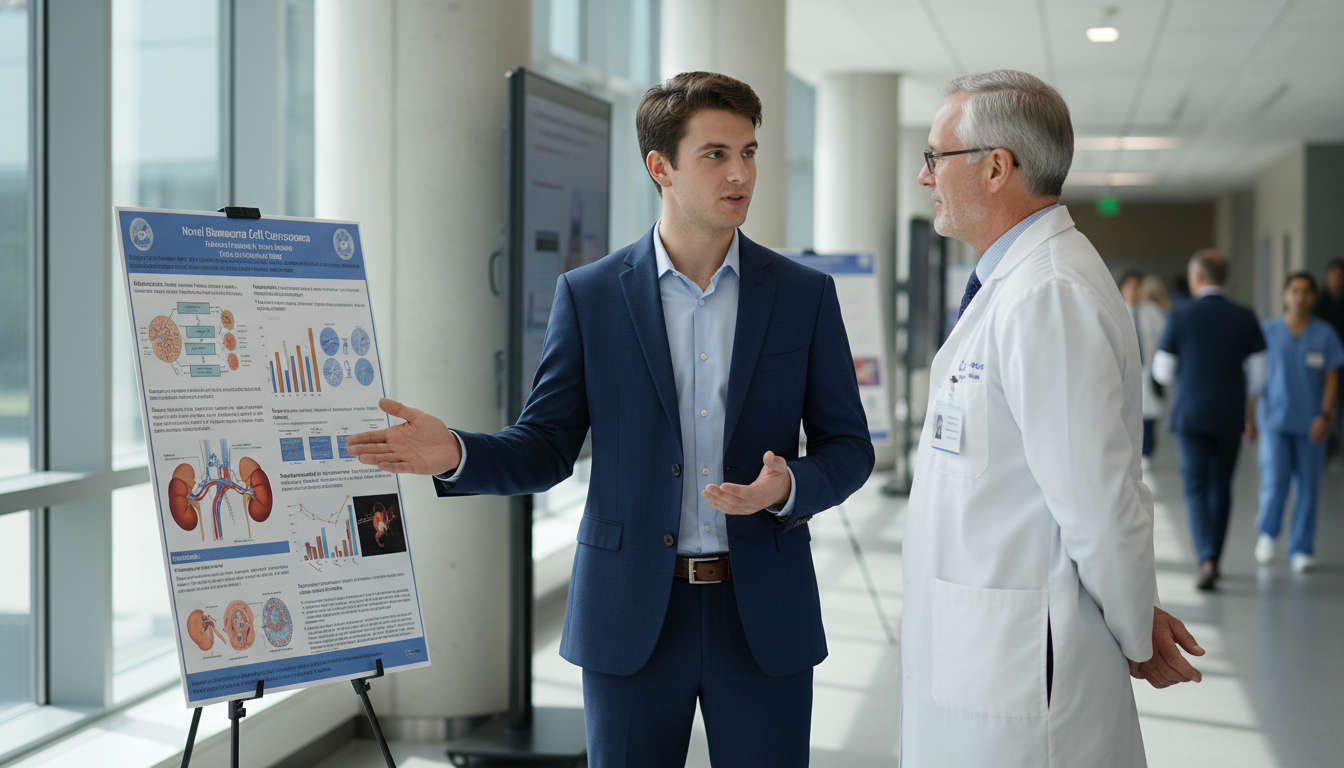
Posters and abstracts at regional/national meetings
- E.g., SNMMI (Society of Nuclear Medicine and Molecular Imaging), RSNA, EANM, local radiology or oncology societies.
- These are highly visible and count as scholarly products on your CV.
Conference oral presentations
- More competitive than posters and show that your work was well-received.
Peer‑reviewed publications
- Case reports, pictorial reviews, retrospective studies, systematic reviews, or meta‑analyses.
- Their impact is greater when directly relevant to nuclear medicine, but related imaging fields also count.
Review articles or educational pieces
- For example, a review on Ga‑68 DOTATATE PET in neuroendocrine tumors, or an educational pictorial essay on PET pitfalls.
- These can be particularly feasible for MD graduates with a good mentor.
Quality vs Quantity: What Program Directors Look For
Program directors, especially in research‑active academic programs, look for:
Relevance to nuclear medicine
A cardiology project on SPECT imaging or a neurology project on amyloid PET is more compelling than unrelated internal medicine research.Continuity of interest
Several projects over 1–3 years in imaging or related fields show durable commitment, not a last‑minute scramble.Meaningful role
You don’t have to be first author on everything, but you should be able to clearly describe what you did: data collection, analysis, drafting, image interpretation, etc.Understanding of methods
Can you explain the study design, inclusion/exclusion criteria, statistical tests used, and limitations?Professionalism and follow‑through
Mentors may later write letters commenting on how reliable and responsible you were.
For niche fields like nuclear medicine, even a small number of well‑executed, nuclear medicine‑relevant projects can be more impressive than many unrelated papers.
Practical Pathways to Produce Nuclear Medicine Research
This section outlines concrete project ideas and step‑by‑step approaches that an MD graduate can realistically complete in the timeframe leading up to a nuclear medicine match.
1. Retrospective Clinical Imaging Studies
Example project ideas:
- “Prognostic value of baseline FDG PET/CT SUVmax in diffuse large B-cell lymphoma.”
- “Incidence and clinical impact of incidental thyroid uptake on FDG PET/CT.”
- “Diagnostic accuracy of SPECT/CT vs planar imaging for osteomyelitis in diabetic foot.”
Steps:
Identify a feasible research question
- Leverage what your mentor is already studying.
- Aim for a narrow, answerable question.
Obtain IRB approval (with mentor guidance)
- Your mentor will usually be PI; you assist with protocol and data forms.
Define inclusion/exclusion criteria and variables
- Age range, diagnosis, imaging modality, tracers, outcomes (e.g., survival, response).
Data extraction
- Extract imaging findings, lab values, pathology results, and outcomes from the electronic medical record.
- De‑identify data and maintain secure records.
Data analysis
- Learn basic statistics: t‑tests, chi‑square, Kaplan–Meier survival curves, logistic or Cox regression.
- Use R, SPSS, Stata, or even Excel for simple analyses (under mentor supervision).
Abstract and manuscript
- Target an abstract submission to SNMMI, RSNA, or a regional meeting.
- Draft a paper with your mentor, aiming for submission before application season.
2. Case Reports and Pictorial Essays
These are particularly feasible for MD graduates with time constraints.
High‑yield themes:
- Rare pathologies with distinctive PET or SPECT findings.
- Classic theranostic cases (e.g., Lu‑177 DOTATATE in neuroendocrine tumors).
- Unusual artifacts or pitfalls in PET/CT or SPECT/CT.
- Multimodality imaging cases (e.g., correlation of MRI and PET).
Steps:
- Spot interesting cases during clinical rotations or observerships.
- Discuss with a faculty member to confirm novelty or educational value.
- Collect images and clinical data with patient identifiers removed.
- Review the literature carefully to frame why the case is unique.
- Draft the report and figure legends; choose an appropriate journal (many imaging journals welcome case reports).
While case reports may not weigh as heavily as original research, they demonstrate nuclear medicine-specific engagement and can be completed quickly.
3. Quality Improvement (QI) Projects
QI projects can be very attractive in programs emphasizing clinical excellence.
Examples:
- Implementing a standardized protocol to reduce FDG dose while maintaining image quality.
- Redesigning patient information sheets to reduce no‑show rates in PET/CT appointments.
- Introducing a structured reporting template for myocardial perfusion SPECT.
Approach:
- Identify a practical problem in your department.
- Propose a measurable intervention.
- Collect baseline data, implement change, and then collect follow‑up data.
- Analyze pre‑ and post‑intervention metrics.
- Present findings locally and prepare an abstract or short report.
QI projects are sometimes overlooked, but they are often easier to complete and show leadership, initiative, and understanding of system‑level care.
4. Systematic Reviews and Meta‑Analyses
If you lack clinical data access or are off‑site, literature‑based projects are a strong option.
Nuclear medicine‑oriented topics might include:
- Diagnostic performance of FDG PET/CT in staging a specific cancer.
- Comparative effectiveness of different tracers (e.g., FDG vs PSMA PET in prostate cancer).
- Safety and efficacy of specific theranostic agents.
Steps:
- Work with a mentor to define a clear PICO question (Population, Intervention, Comparator, Outcome).
- Register the protocol (e.g., PROSPERO) if possible.
- Systematically search databases (PubMed, Embase, Cochrane).
- Screen titles/abstracts and perform full‑text review.
- Extract data and perform meta‑analysis (if quantitative synthesis is feasible).
- Draft the manuscript following PRISMA guidelines.
These projects require more methodologic rigor but can produce high‑impact publications—even if you do not have direct patient contact.
Presenting and Leveraging Your Research During the Match
Doing the research is half the battle; the other half is communicating it effectively on your application and in interviews for a nuclear medicine residency.
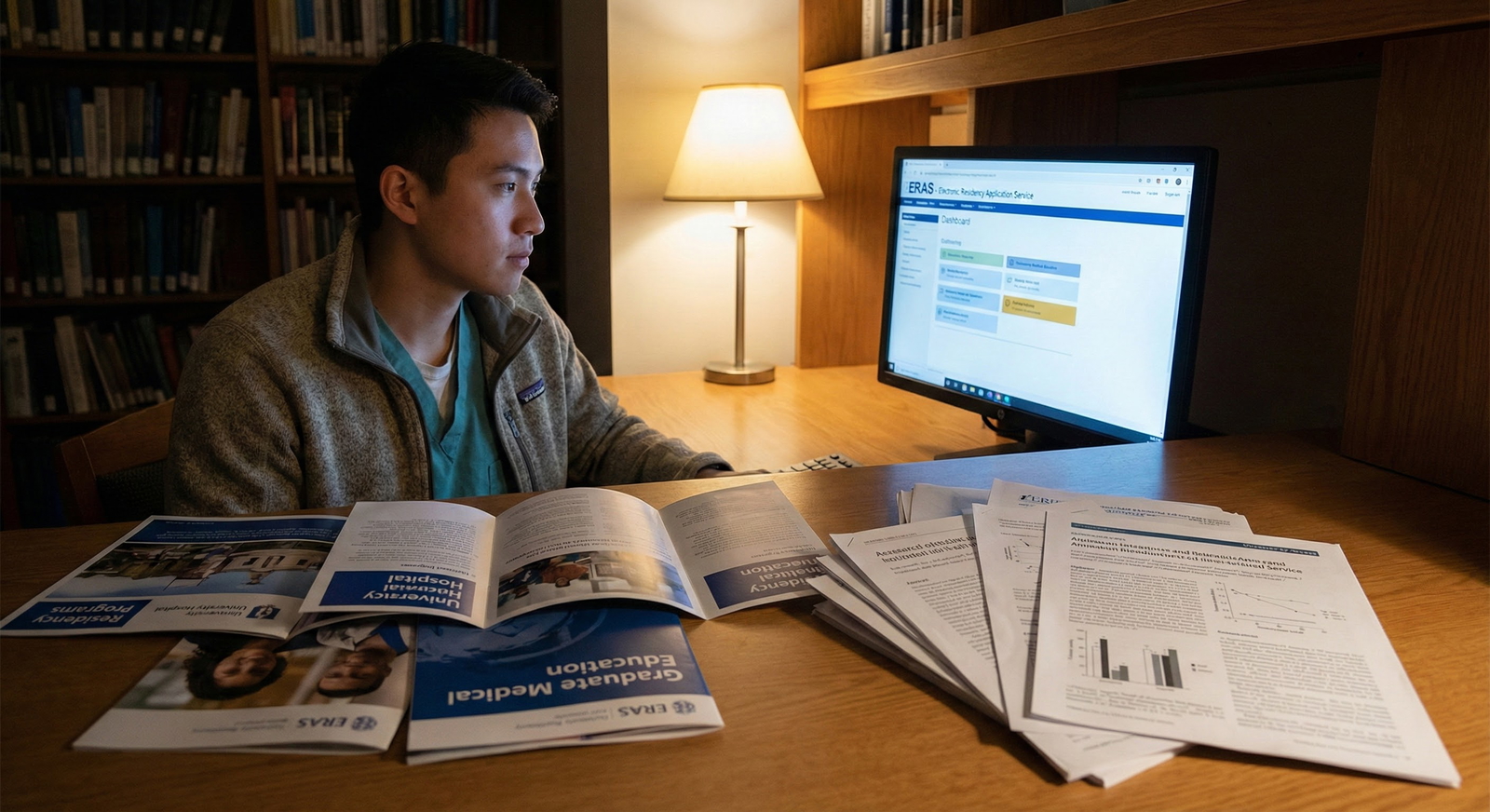
How to List Research on ERAS/CV
Organize your research profile so that program directors can quickly see:
- Nuclear medicine‑relevant projects first.
- Your role (e.g., data collection, statistical analysis, drafting).
- Status (published, in press, submitted, in progress).
Tips:
- Clearly label imaging or nuclear medicine topics in titles if not obvious.
- For multi‑disciplinary projects, briefly state their nuclear medicine connection in your description (e.g., “included PET/CT data analysis for response assessment”).
- Do not inflate your role; honesty is critical.
Talking About Your Research in Interviews
You should be able to discuss each project in a structured, confident manner:
- Summarize in 1–2 sentences: The clinical question and why it matters.
- Study design: Retrospective/prospective, sample size, major inclusion criteria.
- Key findings: Main result and what it adds to existing knowledge.
- Your contribution: What you did, what you learned (e.g., statistics, imaging interpretation).
- Limitations and next steps: Show critical thinking, not just recitation.
Example concise description during an interview:
I worked on a retrospective study of 120 patients with diffuse large B‑cell lymphoma to evaluate whether baseline FDG PET/CT SUVmax predicted progression‑free survival. We found that higher SUVmax was independently associated with shorter PFS, even after adjusting for IPI score. I helped with data extraction from the PACS and EMR, performed the initial survival analyses in R, and drafted the results section. This project taught me a lot about quantitative PET metrics and the challenges of retrospective design, including missing data and selection bias.
Integrating Research into Your Personal Statement
Instead of listing projects, use 1–2 short narratives that connect your research to your clinical interest in nuclear medicine:
- How a particular project changed the way you view imaging’s role in patient care.
- How working on quantitative PET metrics sparked your interest in theranostics.
- How a QI project showed you the impact of protocol optimization on patient safety and diagnostic yield.
Frame your research not as an obligation to generate publications for match, but as evidence of your curiosity and growth in the field.
Letters of Recommendation and Research
If possible, secure at least one letter from a nuclear medicine or imaging research mentor who can:
- Comment on your intellectual curiosity.
- Describe your reliability and work ethic.
- Highlight your ability to engage with complex imaging or methodological concepts.
- Reference specific projects and your role.
Such a letter can amplify the impact of your research profile far more than a bare list of publications.
Frequently Asked Questions (FAQ)
1. As an MD graduate, do I absolutely need nuclear medicine publications to match?
Not absolutely, but some form of scholarly engagement is strongly recommended, especially for academic programs. If you have limited research, aim for at least:
- One project directly related to imaging or nuclear medicine (even if just a poster or case report).
- Evidence of ongoing or submitted work.
- A clear, coherent explanation of why you’re interested in nuclear medicine and how your experiences prepared you for it.
For community‑focused or smaller programs, a strong clinical profile with a modest research background can still be competitive.
2. How many publications are needed to be “competitive” for a nuclear medicine residency?
There is no fixed threshold, but a practical range is:
- 1–3 peer‑reviewed publications (any authorship) related to imaging or nuclear medicine.
- Several additional scholarly items (abstracts, posters, QI projects, presentations).
More important than the exact number is relevance, depth of involvement, and your ability to discuss the work intelligently. A few focused, nuclear medicine‑specific projects can be more impactful than many unrelated ones.
3. I’m starting late and have less than a year before applying. What should I prioritize?
Prioritize feasible, high‑yield projects:
- Retrospective chart reviews with existing imaging data.
- Case reports or pictorial essays with distinctive nuclear medicine findings.
- QI projects that can be implemented and evaluated within months.
- Collaborations on ongoing projects where data are already collected.
Aim for at least one abstract submission and one manuscript in progress by the time applications open. Even if not yet published, “submitted” or “under review” work still signals active engagement.
4. My home institution has minimal nuclear medicine. How can I still build a strong research profile?
Consider:
- Remote collaborations with nuclear medicine departments at other academic centers (email faculty with clear proposals and your CV).
- Literature‑based projects: systematic reviews, meta‑analyses, educational reviews on nuclear imaging topics.
- Projects in related imaging areas (radiology, cardiology, oncology) that heavily use PET, SPECT, or theranostic principles.
- Short observerships or visiting research rotations where you can collect data or work on manuscripts.
You can still present a compelling narrative for the nuclear medicine match if you show initiative, creativity, and consistent interest in imaging-focused research, even if you had structural limitations locally.
By approaching research strategically—selecting feasible projects, finding engaged mentors, and clearly presenting your contributions—you can build a compelling research profile as an MD graduate and significantly strengthen your application for nuclear medicine residency. Focus on relevance, depth, and integrity, and use your research experiences to illustrate not just what you have done, but who you are as a future nuclear medicine physician.