Understanding the Role of Research for Non-US Citizen IMGs in EM-IM
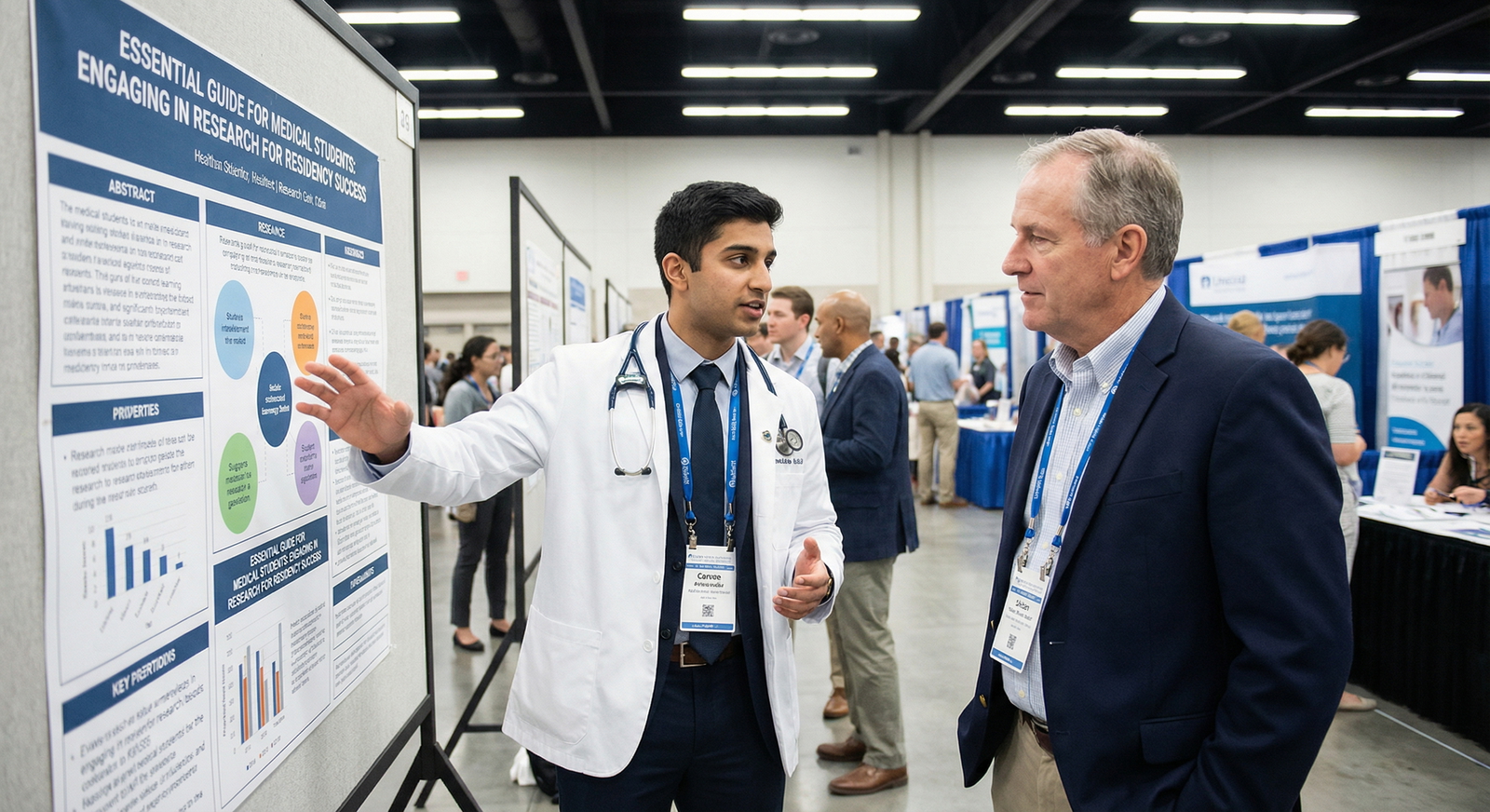
For a non-US citizen IMG aiming for a competitive Emergency Medicine–Internal Medicine (EM-IM) combined residency, a thoughtful research profile can significantly strengthen your application. While EM-IM programs value strong clinical performance, USMLE scores, and letters, research demonstrates that you can think critically, communicate clearly, and contribute academically to the field.
Before planning your strategy, it’s crucial to understand:
- Why research matters
- What types of research are realistic for a foreign national medical graduate
- How program directors view publications for match, especially in EM-IM
Why Research Matters in EM-IM Specifically
EM-IM residents train in two specialties that both value:
- Evidence-based practice: Both emergency medicine and internal medicine rely on rapidly evolving literature.
- Systems-based thinking: EM-IM physicians often work in leadership, quality improvement, and complex care coordination.
- Academic versatility: Many EM-IM graduates pursue academic careers, hospital administration, critical care, or global health.
A research track record—however modest—suggests you can:
- Analyze clinical questions
- Work in teams
- Complete long-term projects
- Communicate your findings verbally and in writing
For a non-US citizen IMG, research can also signal:
- Familiarity with the US academic environment
- Ability to collaborate remotely and across borders
- Persistent interest in EM, IM, or both
How Program Directors Think About Research
Most EM-IM program directors do not require you to be a “superstar researcher,” but they often look for:
- Evidence of scholarly curiosity: Have you tried to engage in research, QI, or scholarly work?
- Follow-through: Did you complete projects or abandon them halfway?
- Relevance: Are at least some projects related to emergency medicine, internal medicine, critical care, or systems of care?
- Role clarity: Do you understand and honestly represent your contributions?
Research alone will not compensate for very low scores or poor clinical performance, but it can be the deciding factor between two similarly qualified applicants—especially for a foreign national medical graduate competing in a limited visa environment.
How Many Publications Are Really Needed for EM-IM?
Many IMGs obsess over one question: “How many publications are needed to match?” There is no fixed number, but we can approach this pragmatically.
Typical Ranges for EM-IM Applicants
For EM and EM-IM combined programs, you’ll see a wide distribution:
- Some matched applicants: 0–1 publication, but with strong US clinical experience and outstanding letters.
- Many strong applicants: 2–5 scholarly products (not all necessarily full PubMed-indexed papers).
- A minority: 10+ items, often from research-heavy backgrounds or PhD-level training.
For a non-US citizen IMG, especially if requiring visa sponsorship, aiming for 3–6 solid scholarly items (broadly defined) is often a realistic and strategic goal. These might include:
- PubMed-indexed original research
- Case reports or case series
- Review articles or narrative reviews
- Quality improvement (QI) project abstracts or posters
- National or regional conference presentations
- Online peer-reviewed educational content (increasingly recognized in some EM programs)
The goal is not to chase a magical number but to ensure your research timeline tells a coherent story and shows progression.
Quality vs Quantity: What Actually Matters
Program directors tend to value:
Peer-reviewed work over non-reviewed:
- Peer-reviewed journals (even lower-impact) > predatory journals or blogs
- Conference abstracts/posters > informal presentations with no documentation
Substance over name inflation:
- One serious first-author project > five minor middle-author names where your role is unclear
Relevance to EM or IM:
- Studies in acute care, sepsis, resuscitation, diagnostic imaging, ED operations, inpatient medicine, or chronic disease management are highly relevant.
- Non-clinical fields (e.g., basic science unrelated to EM/IM) can still help but should be framed carefully.
Consistency over sudden bursts:
- A steady pattern over 1–3 years looks stronger than 10 items submitted within 3 months just before the application deadline.
If your current CV is empty, your first aim should be one completed, well-defined project, then gradually build from there.
Types of Research and Scholarly Work That Count for EM-IM
You do not need to be in a top US academic center to contribute meaningfully. The key is to understand the spectrum of “research and scholarship” and pick what’s feasible.
1. Clinical Research
Ideal for those with access to clinical data (in home country or during US rotations):
Retrospective chart reviews
- Example EM-IM topic: Outcomes of patients with sepsis initially treated in the ED vs admitted directly to ICU.
- Feasibility: Often manageable with mentorship and institutional data.
Prospective observational studies
- Example: Evaluating triage scores in predicting ED resource utilization.
Diagnostic accuracy studies
- Example: Assessing the performance of a point-of-care test or bedside scoring system in ED or internal medicine wards.
Clinical research is highly valued but requires:
- Institutional Review Board (IRB) or ethics approval
- Data access
- Statistical planning
2. Quality Improvement (QI) and Systems Projects
EM-IM as a specialty strongly values QI and systems-based practice, including:
- Reducing ED boarding times for admitted IM patients
- Improving sepsis bundle compliance across ED and inpatient units
- Optimizing transitions of care between ED and internal medicine teams
QI projects can often be converted into:
- Conference abstracts
- Posters
- Short publications in QI-focused journals
These are particularly feasible if you’re:
- Doing a US observership or research fellowship
- In a teaching hospital in your home country with some QI culture
3. Case Reports and Case Series
For a foreign national medical graduate with limited infrastructure, case reports are often the most accessible entry point:
- EM-IM-relevant examples:
- Rare presentation of a common disease initially seen in the ED and managed on IM service
- Complex toxicology case managed across ED and ICU
- Unusual complications of a common inpatient condition presenting as an ED emergency
While case reports carry lower academic weight than original research, they demonstrate:
- Clinical observation skills
- Ability to structure and write for publication
- Engagement with literature (through discussion sections)
4. Review Articles and Educational Scholarship
If access to patient data is limited, you can contribute through review-type work:
- Narrative reviews on EM-IM topics (e.g., management of sepsis across ED and inpatient settings)
- Practical review on managing comorbidities in the ED (heart failure, COPD, diabetes)
- Educational projects:
- Online curricula
- Simulation scenario development
- FOAMed-style (Free Open Access Medical education) content in collaboration with recognized academic teams
These are particularly valuable if supervised by an established academic mentor who can help with:
- Topic selection
- Manuscript structure
- Target journal or platform
5. Multi-Institutional Collaborations and Consortia
Some EM and IM networks recruit remote collaborators for:
- Online survey-based studies
- Multi-center chart reviews
- Educational interventions or curriculum studies
These can be excellent opportunities for a non-US citizen IMG to:
- Join existing infrastructure
- Gain middle or co-authorship
- Learn research methodology through real projects

Step-by-Step Strategy to Build a Research Profile as a Non-US Citizen IMG
This section lays out a concrete roadmap from zero experience to a coherent research record aligned with emergency medicine internal medicine combined programs.
Step 1: Define Your EM-IM Research Interests (But Stay Flexible)
You don’t need a hyper-narrow niche, but you should have thematic areas that make sense for EM-IM:
Examples:
- Sepsis and shock management (ED and ICU/inpatient continuum)
- Acute on chronic conditions (heart failure, COPD, cirrhosis) across ED and IM
- ED operations and hospital flow, boarding, length of stay
- Diagnostic decision-making in chest pain, dyspnea, or altered mental status
- Global emergency and internal medicine challenges (resource-limited settings)
Having a loose theme allows you to:
- Choose projects that build a consistent narrative
- Explain your interests convincingly in personal statements and interviews
Step 2: Secure Mentorship (Local, Remote, or Hybrid)
Mentorship is the critical success factor in research for residency.
Sources of mentors:
Home institution:
- EM, IM, or critical care faculty
- Public health or epidemiology departments
- Even if they are not EM-IM, you can target EM/IM-relevant topics.
US-based contacts from observerships or electives:
- Ask explicitly: “I am very interested in EM-IM and research for residency. Are there any projects I could help with, even remotely?”
Online academic networks:
- EM and IM societies have research collaboratives and interest groups.
- Some faculty tweet or post about needing volunteers for specific projects.
When approaching mentors:
- Be concise, specific, and realistic.
- Provide a brief CV and mention your availability, skills (e.g., literature review, data entry, statistics) and interests.
Step 3: Start with Feasible, Time-Bound Projects
As a non-US citizen IMG, your constraints may include:
- Limited access to US patient data
- Time zone differences
- Visa limitations for in-person research roles
Start with:
- Literature reviews or narrative reviews
- Time-bound: 2–4 months with clear deadlines
- Tasks: literature search, drafting, referencing
- Case reports
- Time-bound: 1–3 months
- Tasks: data collection, writing, figures, submission
As you gain traction:
- Move into retrospective chart reviews, QI work, or survey-based studies.
Step 4: Learn Basic Research Skills Strategically
You don’t need a master’s degree to be effective, but you do need:
Research methodology basics
- Study design types: cohort, case-control, cross-sectional, RCTs, QI cycles (PDSA)
- Bias and confounding
- Outcome measures and statistics at a conceptual level
Practical skills
- Using reference managers (e.g., Zotero, Mendeley)
- Understanding IRB/ethics basics
- Data cleaning in Excel or basic statistical packages (SPSS, R basics, or Stata)
- Scientific writing skills
There are many free or low-cost online courses (Coursera, edX, institutional webinars) you can complete and list on your CV without misrepresentation.
Step 5: Document and Convert Every Scholarly Activity
To maximize your publications for match:
- Convert:
- A QI project → poster → short publication.
- A research project → abstract → full paper.
- A local presentation → regional or national conference.
Keep track of:
- Project titles
- Author order
- Venue (journal, conference)
- Status: in progress, submitted, under review, accepted, published
You can list “submitted” or “in preparation” items if they are real projects, but:
- Be honest about status
- Do not inflate or fabricate
Program directors value integrity more than a long but dubious list.

Integrating Research into Your EM-IM Application Story
Research should not appear as detached bullet points—it needs to fit organically into your EM-IM narrative.
Personal Statement Integration
When discussing research:
- Highlight 1–2 key projects that:
- Relate to EM or IM
- Taught you something clinically or professionally
- Emphasize:
- What question the project tried to answer
- Your specific role
- How it deepened your interest in the ED–ward–ICU continuum
Example framing:
“During a retrospective study of sepsis outcomes among patients first seen in the emergency department and later managed on internal medicine wards, I learned how early ED decisions shape inpatient trajectories. This reinforced my interest in EM-IM, where physicians bridge acute stabilization and longitudinal inpatient management.”
CV and ERAS Application
Under “Scholarly Activities” or “Publications”:
- Separate peer-reviewed publications, abstracts/posters, and oral presentations.
- Use standard citation formats.
- For in-progress projects:
- Clearly label them as “in submission” or “in preparation.”
Avoid:
- Listing the same work multiple times in misleading ways.
- Overstating your role (“designed and led the study” if you were mainly data entry or literature review).
Letters of Recommendation (LoRs)
A good research mentor can:
- Write a strong, specific letter describing your:
- Initiative
- Reliability
- Intellectual curiosity
- Highlight your contributions to EM/IM-related projects.
For an EM-IM application, an ideal mix might include:
- EM faculty letter
- IM faculty letter
- Research mentor letter (if involved in EM/IM or critical care research)
If the research mentor is not in EM or IM, their letter is still valuable if it illustrates your work ethic and analytic skills.
Overcoming Common Barriers as a Non-US Citizen IMG
Limited Access to US Institutions
You can still build an impactful research profile by:
- Working with home-country EM/IM departments on regionally relevant topics (e.g., infectious diseases, limited-resource ED operations).
- Joining international collaborations where remote work is standard.
- Targeting journals and conferences that accept global health and international perspectives.
On your application, frame this as a strength:
- You understand the global dimension of EM and IM
- You bring insights from different health systems
Visa and Funding Constraints
If you cannot take full-time US research positions due to visa or funding:
- Aim for remote, part-time collaboration, clearly communicating availability.
- Use short-term visiting research positions or observership-plus-research combinations.
- Build sustainable remote workflows (shared drives, regular Zoom meetings, version control for manuscripts).
Time Management with Exams and Clinical Work
Balancing USMLE preparation, clinical duties, and research is particularly challenging for non-US citizen IMGs.
Practical tips:
- Limit yourself to 1–2 active projects at a time, especially during exam prep.
- Use a weekly research block (e.g., 4–6 hours) rather than sporadic bursts.
- Set:
- Specific milestones (draft introduction by X date, submit abstract by Y conference deadline).
- Shared project timelines agreed upon with mentors.
Your goal is visible completion, not having your name on dozens of half-finished projects.
Frequently Asked Questions (FAQ)
1. As a non-US citizen IMG, do I need US-based research to match EM-IM?
Not necessarily. US-based research is helpful but not mandatory. Program directors primarily care about:
- The quality, integrity, and relevance of your work
- Your role and what you learned
- Evidence of follow-through
Research conducted in your home country—especially in EM, IM, critical care, or systems of care—is absolutely valuable. If you can complement it with at least one US-based project or US mentor’s support, that’s ideal but not required.
2. How many publications are needed to be competitive for EM-IM?
There is no fixed number. For many non-US citizen IMG applicants, a realistic and competitive target is:
- 3–6 total scholarly items, including:
- 1–2 peer-reviewed papers (original research, case reports, or reviews)
- 1–3 conference abstracts/posters or presentations
- Possibly additional in-progress projects clearly indicated as such
More important than “how many publications needed” is that your research:
- Shows trajectory (learning and increasing responsibility)
- Connects logically to EM/IM or acute care
- Is presented honestly and clearly in your application
3. I don’t have any research experience. Is it too late if I want to apply in 1–2 years?
It is not too late, but you should start now with a focused plan:
Within 12–18 months, it is realistic to achieve:
- 1–2 completed case reports or narrative reviews
- Participation in a small chart review or survey project
- 1 conference abstract/poster
Intensively use your next year to:
- Secure a mentor
- Acquire basic research skills (online courses, workshops)
- Commit to 1–2 high-yield projects and bring them to completion
Even a small but real body of work is better than an empty CV or rushed, poorly executed projects.
4. Does heavy research compensate for lower USMLE scores in EM-IM?
Research helps but does not fully compensate for very low scores. EM-IM programs must ensure residents can pass board exams in two specialties. However:
- Solid research can make you more attractive among borderline candidates with adequate minimum scores.
- For candidates with mid-range scores, a strong research profile may significantly improve your chances, especially at academic centers.
Always prioritize meeting minimum score expectations and solid clinical performance, then use research to differentiate yourself further.
By focusing on attainable projects, honest mentorship, and a coherent EM-IM narrative, a non-US citizen IMG can build a research profile that meaningfully strengthens their application. Your goal is not to become a full-time scientist before residency—but to show that you think critically, follow through on commitments, and are ready to contribute to the academic and systems-focused demands of emergency medicine–internal medicine combined training.