Understanding the Role of Research in Nuclear Medicine Residency for Non‑US Citizen IMGs
For a non-US citizen IMG aiming for nuclear medicine residency in the United States, a strong research profile is not optional—it is one of the most powerful levers you control. Nuclear medicine is a relatively small, highly academic field anchored in imaging physics, radiopharmaceuticals, molecular imaging, and theranostics. Program directors expect applicants—especially foreign national medical graduates—to demonstrate curiosity, scientific thinking, and evidence of scholarly activity.
In evaluations, your “research” is rarely just one checkbox. It breaks down into:
- Evidence of commitment to nuclear medicine or imaging
- Ability to work in a US academic system and contribute to publications
- Communication skills through abstracts, posters, and manuscripts
- Professionalism and persistence over months-long projects
For a non-US citizen IMG, research for residency serves additional strategic purposes:
- It can compensate partially for weaker or older USMLE scores.
- It is one of the most realistic ways to build US connections and LORs when you cannot easily obtain prolonged clinical observerships.
- It can differentiate you from other international candidates in a niche specialty.
- It demonstrates that you understand how academic medicine functions in the US.
This article will walk you through how to build, structure, and present a research profile specifically tailored toward a competitive nuclear medicine match, with a focus on realistic strategies for foreign national medical graduates.
What Programs Actually Look for in a Research Profile
Before you invest your time, you need to understand what “good research” looks like from a program director’s perspective. It is less about raw numbers and more about quality, relevance, and trajectory.
1. Relevance to Nuclear Medicine and Imaging
In nuclear medicine, relevant research includes:
- PET/CT, SPECT/CT, and hybrid imaging modalities
- Radiopharmaceutical development or evaluation
- Theranostics (e.g., Lu-177, I-131, Ga-68, F-18 tracers)
- Dosimetry and imaging physics
- Quantitative imaging, radiomics, AI in imaging analysis
- Oncologic imaging, cardiac nuclear imaging, neuroimaging
- Radiation safety and optimization
- Quality improvement in imaging workflows
Non-imaging work (e.g., general internal medicine or basic lab science) can still help, but one or two nuclear medicine or imaging-focused projects will significantly strengthen your narrative as a serious candidate.
2. Types of Scholarly Output That Matter
Programs typically value, in this approximate order:
Peer-reviewed publications
- Original research, clinical or translational
- Systematic reviews/meta-analyses
- Well-structured narrative reviews in reputable journals
Conference abstracts and posters
- Especially at nuclear medicine or radiology conferences (SNMMI, RSNA, EANM, ASNC, etc.)
Oral presentations / invited talks
- Even at local or institutional meetings, if clearly documented
Quality improvement (QI) or educational projects with dissemination
- Published as institutional reports, abstract presentations, or accepted to conferences
Non-traditional scholarly contributions
- Online educational content (e.g., structured case series endorsed by a department)
- Book chapters, imaging atlases, or structured teaching materials
3. “How Many Publications Needed” to Be Competitive?
There is no magical number, and program directors know that access to research opportunities is uneven. However, for a non-US citizen IMG targeting nuclear medicine:
- Minimum realistic target:
- 1–2 imaging-related publications (even as middle author)
- Plus several abstracts/posters or review articles
- Competitive for academic programs:
- 3–6 total publications, with at least 1–2 clearly in nuclear medicine/imaging
- Evidence of progression (e.g., from case reports to review to original studies)
- Highly competitive / research-focused programs:
- 6+ publications, some first- or second-author, and clear nuclear medicine focus
- Possibly a dedicated research year or master’s/PhD exposure
Remember: the story matters more than raw counts. One year of focused nuclear medicine research in a US department, with a few tangible outputs and strong letters, can outweigh scattered, unrelated articles from years ago.
Finding and Securing Research Opportunities in Nuclear Medicine
For a non-US citizen IMG living outside the US or on a visa, the most difficult step is often getting your foot in the door. You must be strategic and persistent.
1. Prioritize Environments That Match Your Goals
You have several potential settings:
US academic nuclear medicine or radiology departments
- Ideal for letters and understanding of the match system
- May offer structured research fellowships or unpaid research positions
European or Canadian nuclear medicine centers
- Highly valued academically, especially EANM-affiliated centers
- Can still improve your profile significantly
Home-country institutions with nuclear medicine units
- More accessible and may allow greater responsibility
- Still helpful, especially if you publish in international journals
Remote research collaborations
- Increasingly feasible for retrospective studies, systematic reviews, or imaging AI projects
- Can be combined with your current clinical or academic role
Aim to have at least one significant research experience in a setting that is internationally recognizable (US, Europe, Canada, or well-known academic center in your region).
2. Strategies to Cold-Email for Research Positions
Cold emailing is often uncomfortable, but it works. To maximize your response rate:
Step 1: Identify potential mentors
- Look for faculty who:
- Publish regularly in nuclear medicine, PET/CT, theranostics, or molecular imaging
- Are involved in resident/fellow education
- Have interest in outcomes, QI, or retrospective imaging studies (feasible for you to join)
Sources:
- Department websites (Nuclear Medicine, Radiology, Molecular Imaging)
- Recent issues of journals like Journal of Nuclear Medicine, Clinical Nuclear Medicine, European Journal of Nuclear Medicine and Molecular Imaging
- Conference programs (SNMMI, RSNA, EANM)
Step 2: Craft a focused, respectful email
Include:
- Short introduction (1–2 sentences): who you are, non-US citizen IMG status, interest in nuclear medicine residency.
- Evidence you know their work: mention 1–2 of their recent papers specifically.
- A concrete ask:
- “I am seeking a 6–12 month research position (in person or remote) contributing to your ongoing projects in PET/CT or theranostics.”
- CV attached (well-formatted, one click).
- Flexibility: emphasize willingness to start with small tasks (data entry, literature review, IRB prep).
Send a limited number of high-quality emails (10–20) rather than 200 generic ones. Follow up ~10–14 days later with a concise, polite message.
3. Consider Formal Research Programs
Some institutions offer:
- Dedicated research fellowships in nuclear medicine or molecular imaging
- Postdoctoral research positions with focus on imaging or radiopharmaceuticals
- NIH or large cancer center research positions that welcome international graduates
If you already hold or can obtain a visa (e.g., J-1 research, F-1 OPT after a US-degree), these structured programs can be ideal. Monitor:
- Academic job boards (e.g., institution HR sites, ARRS, RSNA, SNMMI career portals)
- Individual department career pages
- PI-specific lab websites
4. Building Research Where You Are
If relocation or visas are a barrier, you can still build a research profile:
- Join projects in your local nuclear medicine or radiology department.
- Start with:
- Case reports of unusual PET/CT or SPECT/CT findings
- Retrospective case series on common nuclear medicine studies (e.g., myocardial perfusion, bone scans)
- Clinical audits/QI projects improving imaging protocols or reporting time
Then collaborate with an academic nuclear medicine specialist (even via email) for guidance and co-authorship, especially for journal targeting and manuscript structure.
Choosing the Right Projects and Maximizing Output
Once you have access to a research environment, your next challenge is to convert time into meaningful academic output.
1. Project Types Well-Suited for IMGs in Nuclear Medicine
a. Retrospective Clinical Studies
- Examples:
- Accuracy of PET/CT in staging a specific cancer subtype
- Prognostic value of standardized uptake value (SUV) in lymphoma
- Comparison of two imaging protocols or radiotracers
- Advantages:
- Feasible within 6–12 months
- Often suitable for multi-author collaboration
- Can generate abstracts, posters, and full papers
b. Case Reports and Case Series
- Examples:
- Unusual uptake pattern revealing an unexpected diagnosis
- Theranostic cases demonstrating impressive treatment response
- Rare complications visible on SPECT/CT
- Benefits:
- Good entry point if you’re new to research
- Faster to complete, especially with supportive mentors
- Useful to learn the publication process
c. Systematic Reviews or Meta-Analyses
- Particularly feasible if data access is limited but you have internet and time.
- Examples:
- Diagnostic performance of PSMA PET/CT for recurrent prostate cancer
- Outcomes of Lu-177 DOTATATE therapy in neuroendocrine tumors
- Show strong methodological understanding and are highly valued as publications for match, especially if performed rigorously (PRISMA-guided).
d. Quality Improvement (QI) and Educational Projects
- Examples:
- Reducing unnecessary repeat scans through improved scheduling
- Standardizing SUV reporting in PET/CT
- Developing an image-rich teaching curriculum for residents
- These can still lead to posters/publications if results are meaningful.
2. Designing Projects That Can Actually Finish Before Match
As a non-US citizen IMG, your time is often limited by visas, clinical obligations, and finances. To avoid half-finished projects:
Aim for at least one “fast track” project (case series, small retrospective study, or systematic review) that can produce:
- 1–2 abstracts for conferences
- At least one manuscript submission before ERAS opens
Clarify with your mentor:
- Target conference(s) and deadlines
- Journal level (top-tier vs. mid-tier) and realistic timeline
- Your role in data collection, analysis, and writing
Focus on projects where you control a critical part of the work (data collection, drafting, figure generation). This makes it more likely you will be included prominently and the project will progress.
3. Building a Sense of Progression in Your CV
Program directors value progression:
- Early: Case reports, smaller roles in larger projects
- Later: Systematic reviews, original clinical research, possible first-author works
- Advanced: Leading a project, designing protocol, or presenting at major conferences
In your personal statement and interviews, frame this as:
“I began with case reports to learn manuscript writing, then contributed to a retrospective PET/CT study as a data coordinator and co-author, and finally led my own systematic review on theranostic applications in neuroendocrine tumors.”
This conveys maturity and growth as a future academic physician.
Presenting and Leveraging Your Research for the Nuclear Medicine Match
Doing the research is only half the story. The way you present your work on your application and in person can significantly influence how it is perceived.
1. Documenting Research in ERAS
On ERAS, categorize:
- Peer-reviewed articles (accepted, in press, or published)
- Conference abstracts, posters, and presentations
- Book chapters or other publications
- Ongoing projects (only if you play a substantive role)
Best practices:
- Use consistent citation style (e.g., AMA).
- Clearly indicate your authorship position (first, second, middle, last).
- For works “submitted” or “in preparation,” be conservative:
- Include only if there is a real manuscript in progress and your mentor agrees.
- Avoid inflating your role or number of “submitted” works; program directors are wary of this.
2. How to Talk About Your Research in Personal Statement and Interviews
Your goal is not to recite methods, but to show:
- Intellectual curiosity
- Understanding of nuclear medicine’s evolving role
- Skills that translate into residency performance (teamwork, perseverance, statistics, critical reading)
Use one or two key projects as anchor stories. For each, be ready to discuss:
- What was the clinical question?
- What was your specific role?
- What did you learn—scientifically and professionally?
- How did it solidify your interest in nuclear medicine?
Example soundbite:
“While working on a retrospective study of PSMA PET/CT in biochemical recurrence, I realized how much molecular imaging can change management compared to conventional imaging. This experience convinced me that I want to contribute to this field long-term, both clinically and academically.”
3. Getting Strong Letters of Recommendation from Research Mentors
For a foreign national medical graduate, a strong US-based or internationally recognized letter can be transformative.
To earn such letters:
- Be reliable and consistent:
- Meet deadlines, communicate early about delays, and show professional email etiquette.
- Contribute intellectually:
- Propose ideas, read background literature, and ask thoughtful questions.
- Show you can teach and collaborate with peers or junior members.
When requesting a letter:
- Ask: “Would you feel comfortable writing a strong letter in support of my nuclear medicine residency applications?”
- Provide:
- Your CV and draft personal statement
- A summary of your work together, including specific contributions and outcomes
- A list of programs you are targeting, especially academic ones
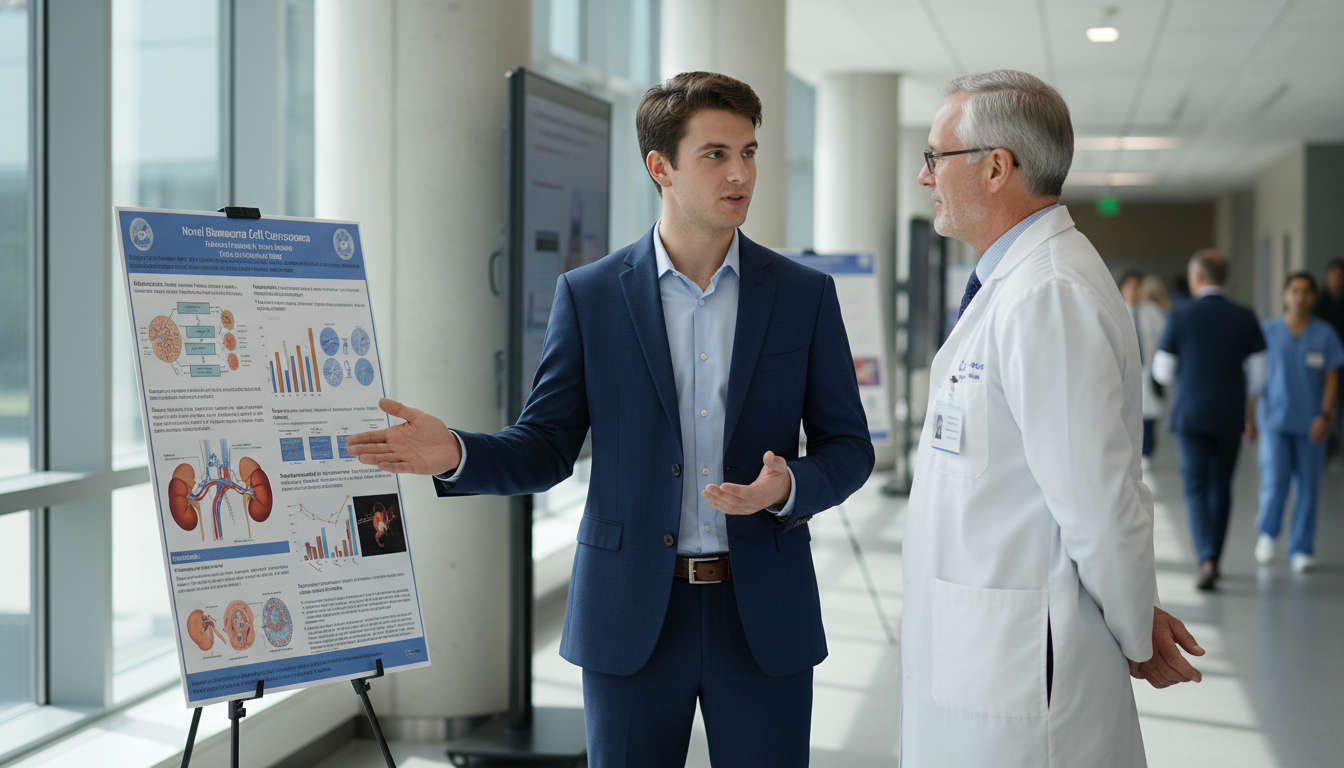
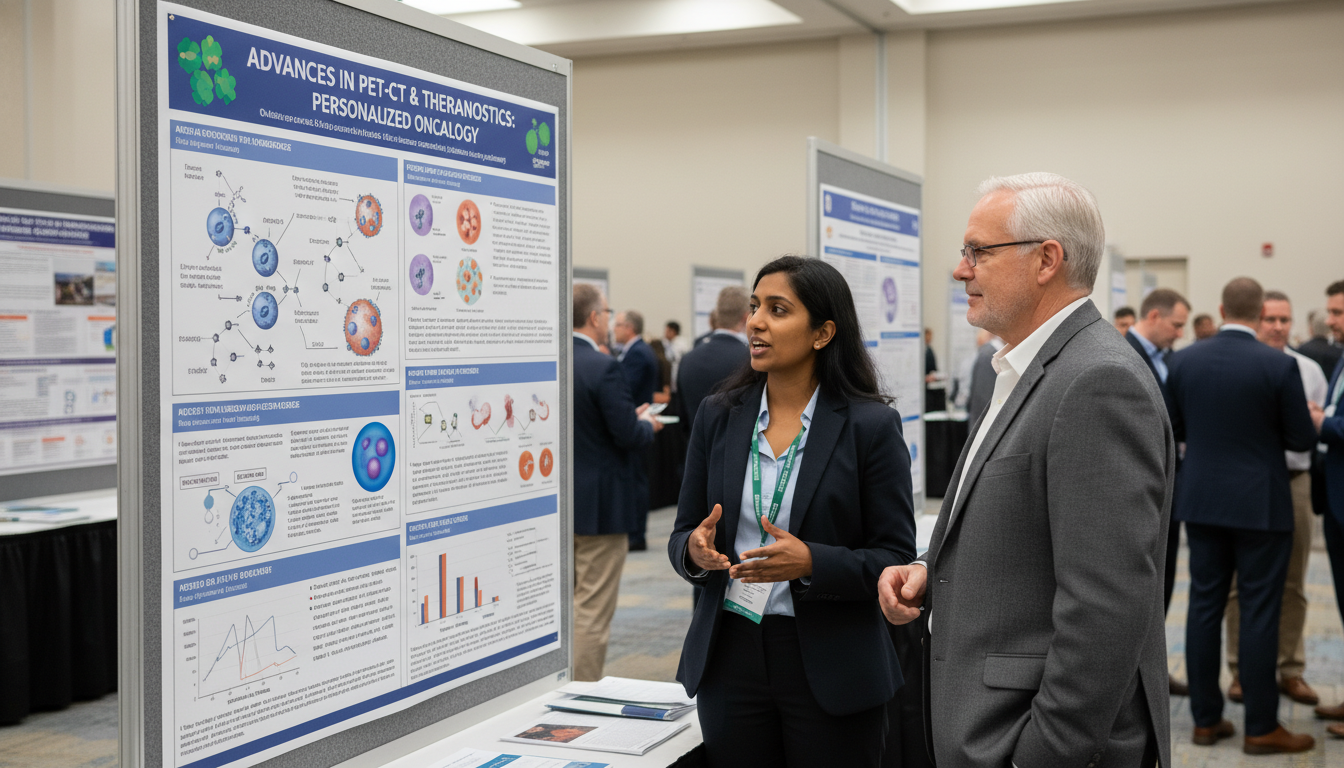
4. Using Conferences Strategically
Conferences serve multiple purposes:
- Visibility: Presenting posters or oral presentations shows active engagement.
- Networking: Meeting program directors, fellows, and residents.
- Learning: Understanding emerging topics in nuclear cardiology, oncologic PET, theranostics.
For non-US citizen IMGs:
- Target at least one internationally recognized meeting:
- SNMMI (USA), RSNA (USA), EANM (Europe), regional nuclear medicine meetings.
- Apply for travel grants or trainee awards when eligible.
- Prepare a concise, confident 2–3 minute explanation of your poster in plain language.
Mention these experiences on your CV and during interviews as evidence of proactive engagement in the field.
Practical 12–18 Month Timeline for Building a Research Profile
For a non-US citizen IMG planning ahead for a nuclear medicine match, here is a realistic timeline.
Months 0–3: Foundation and Access
- Clarify: you want nuclear medicine (or DR-NM, or DR with strong interest in NM).
- Identify 10–20 potential mentors in nuclear medicine/imaging and send targeted emails.
- Simultaneously:
- Start a case report or small case series at your current institution.
- Begin reading key journals to understand current topics.
Months 3–6: First Outputs
- Secure at least one concrete project with a mentor.
- Focus on:
- Submitting 1–2 case reports or short communications.
- Designing a small retrospective project or systematic review with clear endpoints.
- Learn basic statistics or collaborate with a biostatistician.
Months 6–12: Consolidation
- Submit abstracts to at least one nuclear medicine or imaging conference.
- Push the retrospective study or systematic review toward manuscript submission.
- Aim to have:
- 1–2 accepted or in-press papers
- Multiple conference abstracts/posters
Months 12–18: Application Year
- Finalize manuscripts and update ERAS with accepted work.
- Request letters of recommendation from research mentors.
- Integrate research themes into your personal statement and interview preparation.
- If possible, start or join a new project to show ongoing research engagement, even if it will be completed after you start residency.
This structured approach can transform a modest profile into one that clearly signals academic commitment, especially valuable for a foreign national medical graduate targeting nuclear medicine.
FAQs: Research Profile Building for Non-US Citizen IMG in Nuclear Medicine
1. As a non-US citizen IMG, is research mandatory to match into nuclear medicine?
Strictly speaking, no—but in practice it is highly advantageous, especially for non-US citizen IMGs. Nuclear medicine is a small, academic specialty, and programs often prioritize applicants who show clear interest and scholarly engagement. Even one or two relevant projects can significantly strengthen your nuclear medicine match chances and offset disadvantages like older graduation year or modest scores.
2. How many publications do I need to be competitive?
There is no fixed number, but realistic targets are:
Minimum:
- 1–2 publications (any field) + some posters/abstracts
- At least some clear connection to imaging or nuclear medicine.
Stronger for nuclear medicine:
- 3–6 publications total, with 1–2 in nuclear medicine/molecular imaging, plus conference presentations.
Remember, programs care about quality, relevance, and progression more than a raw count. A focused, coherent portfolio in imaging is better than scattered, unrelated papers.
3. Can remote or non-US research still help my application?
Yes. Research done outside the US is absolutely valuable, especially if:
- It is in a recognizable nuclear medicine or radiology journal.
- It addresses clinically relevant imaging questions.
- It leads to publications or conference presentations (international or regional).
- You can obtain strong, detailed letters from supervisors.
However, US-based or widely recognized international research has added benefits: it signals your ability to function in the environment where you will train, and often produces letters familiar to US program directors.
4. I have strong basic science research but nothing in imaging. Should I switch focus?
You do not need to abandon your background. Basic science, especially in oncology, pharmacology, or molecular biology, is still valuable—nuclear medicine is inherently molecular. But for residency applications, you should add at least one or two imaging-focused or nuclear medicine-related projects to establish a direct link to the specialty. This can be as simple as:
- A review on theranostic applications in a disease you previously studied.
- A collaborative clinical project where you analyze PET/CT or SPECT/CT data related to your previous field (e.g., oncology, cardiology, neurology).
This combination—basic science foundation plus targeted nuclear medicine research—can be particularly compelling for academic programs.
By approaching research profile building with intention—choosing relevant projects, securing strong mentorship, and clearly presenting your work—you can significantly improve your chances as a non-US citizen IMG seeking nuclear medicine residency in the US.