
As a non-US citizen IMG (international medical graduate) aiming for pathology residency in the United States, your research profile is one of the few areas you can actively and significantly improve before applying. Programs commonly receive hundreds of applications, and research is a powerful way to stand out—especially for a foreign national medical graduate who may not yet have US clinical experience or strong local connections.
This guide will walk you through how to strategically build a research profile tailored to pathology, maximize your chances in the pathology match, and avoid common mistakes IMGs make when chasing “any” research rather than the right research.
Understanding the Role of Research in Pathology Residency
Pathology is inherently academic and evidence-based. Compared to many clinical specialties, program directors in pathology often place greater emphasis on research—but that doesn’t mean you must be a PhD-level scientist to match.
Why research matters more in pathology
Pathology is data and discovery driven
- Molecular diagnostics, cancer genomics, AI in pathology, and biomarker discovery are central to modern practice.
- Program directors know that residents who understand research can adapt to evolving diagnostic tools.
Many departments are research-heavy
- Larger academic pathology programs depend on resident participation in projects, publications, and conferences to maintain productivity.
- A strong research track record signals you will contribute to that mission.
Compensates for IMG disadvantages
As a non-US citizen IMG, you may:- Lack US clinical experience
- Come from a lesser-known medical school
- Need visa sponsorship
Demonstrated productivity in research helps counterbalance these issues by showing you can thrive in academic environments.
What “counts” as research in residency applications?
ERAS and program directors consider a broad range of scholarly activities as “research” or “scholarly output”:
- Original research articles (retrospective, prospective, basic science, translational)
- Case reports and case series
- Review articles and book chapters
- Quality improvement (QI) projects with data and outcomes
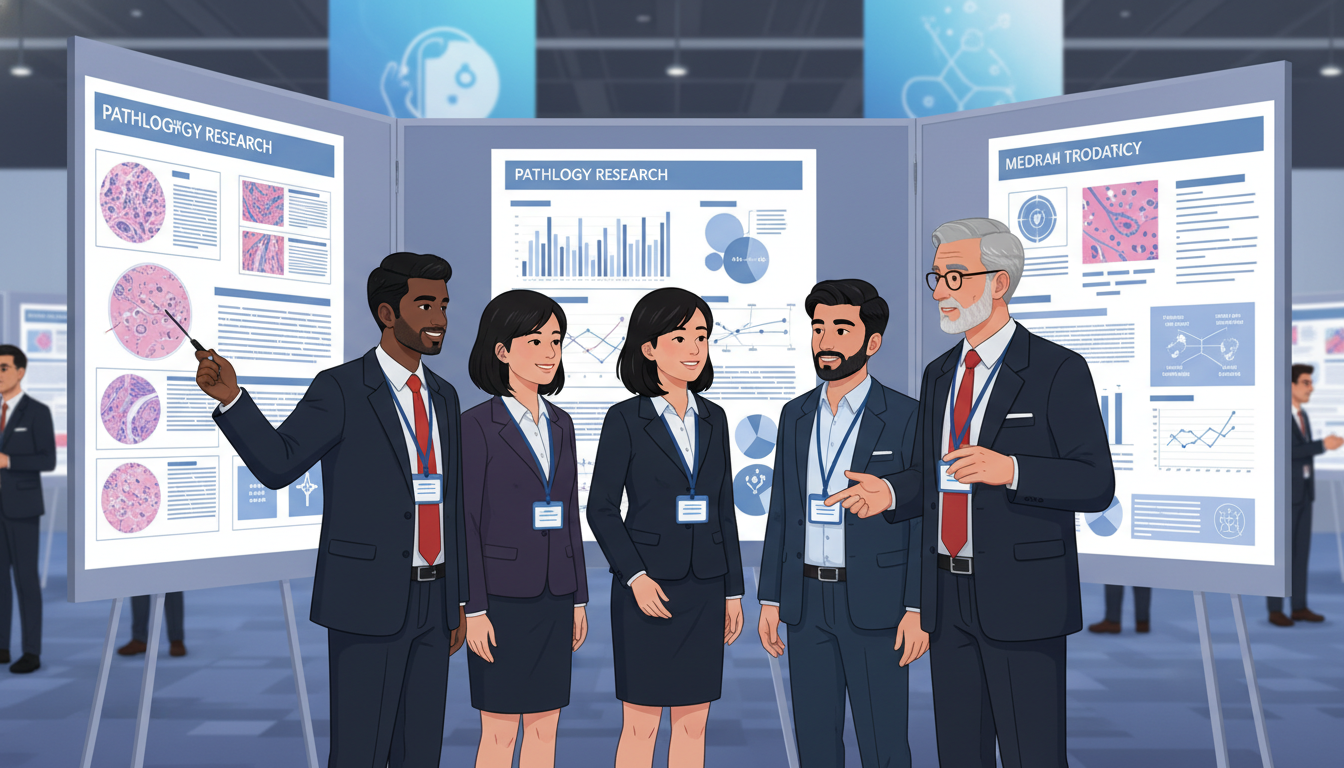
- Posters and oral presentations at local, national, or international conferences
- Abstracts in conference proceedings
- Discipline-specific projects (e.g., digital pathology tool validation, database creation)
- Participation in data analysis, study design, or statistics—even if you are not first author
The key is documented output: something traceable (publication, abstract, poster, presentation, institutional report) that you can list, attach, or discuss.
Strategic Planning: Designing Your Research Trajectory as an IMG
Before you send 200 cold emails, step back and build a strategy. Time, funding, and visa constraints mean you must be deliberate.
Clarify your goals in advance
For a non-US citizen IMG targeting pathology residency, your research goals should be:
Demonstrate consistent interest in pathology
Even if you have research in other specialties, your profile should include some pathology-related work by the time you apply.
Examples:- Case reports in surgical pathology
- Retrospective studies in hematopathology or cytology
- Projects related to digital pathology or AI-based slide analysis
Establish reliability and productivity
Program directors don’t just want “intelligent”; they want finishers. Showing a track record of completed projects (with outputs) is more valuable than multiple unfinished “works in progress.”Build strong US-based connections and letters
Research mentors who know your work ethic can write powerful letters that carry weight in the pathology match, especially from well-known US institutions.
How many publications are needed for pathology?
There is no fixed number, and “how many publications needed” depends on your overall profile and target programs. In broad terms:
Competitive academic programs (top-tier)
- Often: 3–8+ publications, with at least some clearly in pathology or closely related fields
- Multiple abstracts/posters at major conferences (USCAP, CAP, ASCP, ASH for hemepath)
Solid mid-tier academic programs
- Often: 1–4 publications or strong conference presentations
- Some pathology-related scholarly work is highly beneficial
Community or hybrid programs
- Research is less critical but still helpful, especially if you’re a non-US citizen IMG needing a visa
- Even 1–2 case reports or small projects can meaningfully strengthen your file
Remember:
- Quality and relevance > raw quantity
- Completed, peer-reviewed work > multiple “submitted” or “planning” projects
Timeline for building a research profile
If you are 2+ years away from applying:
First 6–12 months:
- Learn basic research methods and statistics
- Join ongoing projects (easier to start with)
- Aim for a few case reports, small retrospective projects, or assisting with data collection
Next 12–24 months:
- Take on more responsibility (co-first author, leading smaller projects)
- Present at conferences
- Target at least one solid pathology-focused publication
If you are 1 year or less from applying:
- Focus on:
- Rapidly publishable outputs (case reports, brief communications, conference abstracts)
- Getting involved in projects already in late stages
- Strengthening relationships with US-based pathologists for letters
Do not begin only large, multi-year basic science projects at this stage unless you can realistically see at least an abstract published before ERAS submission.

Finding and Securing Pathology Research Opportunities
As a foreign national medical graduate, your main challenge may be access: how to get into a lab or department in another country. This is solvable with a structured approach.
1. Use your existing network first
Even if you trained abroad, you may have:
- Alumni from your medical school in US pathology programs
- Former faculty with collaborations in US institutions
- Peers who already matched into US residencies
Action steps:
- Contact alumni and ask:
- “Do you know any pathology faculty who accept interested IMGs for research or observerships?”
- “Can you introduce me by email to Dr. X in your department?”
- Use LinkedIn and your school’s alumni office if available.
Introductions dramatically outperform cold emails.
2. Cold emailing pathology faculty effectively
If you must cold-email, focus on quality and relevance, not volume.
Target faculty who:
- Have a track record of publishing with trainees
- Are involved in educational or translational projects (often more open to IMGs)
- Work in areas that interest you:
- Surgical pathology subspecialties (GI, GU, breast, gyn, neuropath, etc.)
- Hematopathology
- Cytopathology
- Molecular pathology / genomics
- Digital pathology and AI
Key elements of a good cold email:
Subject line examples:
- “Prospective non-US citizen IMG seeking pathology research experience (remote or in-person)”
- “Foreign national medical graduate with prior pathology research experience – interested in joining your team”
Email structure:
- Brief introduction (who you are, where you trained, non-US citizen IMG)
- Clear interest in pathology and that faculty member’s work (cite a paper or a project)
- Specific skills you offer (data handling, statistics, systematic review, coding, etc.)
- Logistical constraints (remote only, visa needs, available time per week)
- A short, polite ask: “Would you be open to a brief meeting to discuss whether I could assist with any ongoing projects?”
Attach:
- 1-page CV emphasizing research and pathology-related experiences
- No more than one PDF; keep it simple.
3. Remote vs in-person research for IMGs
Remote research:
Pros:
- No visa needed initially
- Can start from your home country
- Ideal for literature-based projects, slide review via digital pathology, or database analysis
Cons:
- Harder to build strong personal relationships
- Some tasks (e.g., grossing, lab-based work) not feasible
- May carry slightly less weight than in-person when it comes to letters
In-person research (research fellowship, unpaid observer + research, etc.):
Pros:
- Stronger mentorship and visibility
- Opportunities for hands-on pathology exposure
- More compelling letters describing your work and personality
- Better integration into the department (grand rounds, teaching, sign-out observation)
Cons:
- Requires visa support (J-1 research, B-1/B-2 for short-term observerships, etc.)
- Financial/relocation burdens
If possible, aim for in-person research for at least 6–12 months at a US institution before applying. This can significantly boost your chances in the pathology match.
4. Types of research roles you can pursue
Formal research fellowship (paid or unpaid, typically 1–2 years)
- Often advertised on departmental or professional society websites
- Competitive but extremely valuable
Volunteer research assistant
- You help with data collection, literature reviews, database entry, slide scanning, etc.
- Can be done remotely or in-person
Short-term observership + project
- Even a 1–3 month observership can lead to a case report or small study if you are proactive
Methodology roles
- If you have skills in programming (R, Python), image analysis, or biostatistics, you can contribute to digital pathology or AI projects even from abroad
What Kind of Research Impresses Pathology Program Directors?
Not all research is equal in the eyes of pathology program directors. Focus on work that highlights your interest in and aptitude for pathology.
Pathology-focused project categories
Surgical pathology case reports and series
- Great starting point for IMGs, often relatively quick
- Emphasize:
- Rare tumors
- Unusual presentations or histologic findings
- Difficult differential diagnoses
- Outcome:
- Short publications + conference posters
Retrospective chart or slide reviews
- Example topics:
- Immunohistochemical marker patterns in a specific tumor
- Correlation between histologic grade and clinical outcomes
- Re-examination of archived slides for updated molecular classification
- Requires:
- Access to pathology archives
- IRB / ethics approval (handled by your PI)
- Example topics:
Molecular and translational pathology
- Studies involving:
- Next-generation sequencing
- Biomarker validation
- Correlation of molecular alterations with morphologic features
- Often seen very favorably because they’re at the cutting edge
- Studies involving:
Digital pathology and AI projects
- Training or validating AI models for:
- Tumor grading
- Mitotic count
- Detection of specific features (e.g., lymphovascular invasion)
- Even if you’re not a programmer, you can help with:
- Annotating slides
- Data curation
- Validation cohorts
- Training or validating AI models for:
Hematopathology, cytology, and transfusion medicine
- Many programs value residents interested in these areas due to service needs
- Projects might involve:
- Flow cytometry data analysis
- Blood bank utilization studies
- Cytology-histology correlation studies
Non-pathology research: helpful or not?
If you already have research in other fields (internal medicine, cardiology, surgery, etc.):
- It still helps, especially if:
- You have strong methodology skills
- Publications in reputable journals
- Leadership roles (first author, project coordinator)
However:
- As you approach the application cycle, you should add at least some explicitly pathology-related work to clearly align your profile with your chosen specialty.
Converting Effort into Output: Publications, Presentations, and CV Impact
Time in the lab only helps your pathology residency application if it leads to tangible outcomes you can list on your CV.
Prioritizing high-yield outputs
In the year or two before applying, the most valuable outputs are:
Peer-reviewed publications
- Original research > case reports > letters to the editor
- PubMed-indexed journals carry more weight
- Pathology-focused or oncology/molecular journals are particularly relevant
Conference abstracts and posters
- US-based specialty conferences are especially valuable:
- USCAP
- CAP
- ASCP
- ASH (for hematopathology)
- Even virtual presentations still count and should be listed.
- US-based specialty conferences are especially valuable:
Oral presentations
- At national or international meetings are especially strong signals of quality work
- Local departmental or institutional presentations also matter and can be included under “Presentations”
Invited talks or teaching sessions
- Journal clubs, resident teaching, or lecture series can be listed under “Educational activities” or “Presentations”
Maximizing your author position
First or co-first author roles:
- Show leadership and main responsibility
- Try to secure at least one first-author pathology paper or case report before applying
Middle author:
- Still helpful, shows teamwork and consistent involvement
- Especially relevant if part of a productive research group
Be honest—never exaggerate your contributions, as program directors may ask directly:
“What exactly did you do in this project?”
How to list research on your CV and ERAS
Organize clearly under sections such as:
- Peer-reviewed Journal Publications
- Abstracts and Conference Presentations
- Research Experience
- Quality Improvement and Scholarly Projects
For each item:
- Include all authors (with your name in bold on your CV if allowed)
- Title, journal/conference name, year, and DOI or URL if available
- Indicate status: Published, In Press, Accepted, Submitted (only if genuinely submitted), or In Preparation (use sparingly)
Program directors dislike CVs full of “in preparation” with no real outputs. Focus on what is completed or very close.
Balancing Research with Other Application Components
Strong research alone does not guarantee a pathology match. You must integrate research with other critical elements, especially as a non-US citizen IMG.
Research vs USMLE scores
- Pathology programs generally require solid USMLE Step 2 CK scores.
- Very strong research can make programs more flexible with slightly lower scores, but catastrophic scores are difficult to overcome.
A realistic approach:
- Secure at least competitive scores (often 220–230+ for many programs, higher for top-tier), then use research to differentiate yourself further.
Research vs US clinical experience (USCE)
- Pathology is less dependent on traditional patient-facing USCE than specialties like internal medicine or surgery.
- However, US pathology exposure (observerships, research year in a pathology department, elective rotations) is extremely valuable and sometimes essential.
If you must choose between:
- 1 year of non-pathology USCE vs
- 1 year of pathology-focused research in the US
For pathology residency, the second option often provides more direct benefit, especially if it leads to strong letters from pathologists.
Letters of recommendation from research mentors
For a foreign national medical graduate, letters from US-faculty mentors can be decisive.
Strong letters from research mentors often mention:
- Your work ethic and reliability
- Specific projects and your role
- Your ability to analyze slides, understand pathology concepts, or learn rapidly
- Communication skills and teamwork
- Comparison to US medical graduates or prior trainees
Ensure your mentor knows:
- You are applying in pathology
- Deadlines for ERAS
- Specific programs if they are willing to send personalized notes to colleagues
Common Mistakes IMGs Make in Building a Research Profile
Avoid these pitfalls that can dilute or waste your efforts:
Chasing too many projects with no completion
- Better to complete 2–3 strong projects than start 10 and finish none.
Neglecting pathology alignment
- Doing only cardiology or surgery research and then suddenly applying to pathology can confuse program directors.
Exaggerating roles or fabricating publications
- Dishonesty will be discovered and can permanently damage your career.
Ignoring conferences and networking
- Presenting at USCAP or other major meetings is not only a CV booster—it is also a networking opportunity with future colleagues and program directors.
Failing to communicate time constraints to your PI
- If you plan to apply in a particular cycle, tell your mentor early so they can help prioritize projects with achievable outputs.
Not preparing to discuss your research in interviews
- You must be able to explain your research questions, methods, findings, and limitations clearly and confidently.
- Practice a 2–3 minute “summary” of your major project; many interviewers will ask you to describe it.
FAQs: Research for Non-US Citizen IMGs in Pathology
1. I am a non-US citizen IMG with no prior research. Can I still match into pathology?
Yes, it is possible, especially in less research-intensive programs; however, as a foreign national medical graduate, you are at a relative disadvantage without publications or research experience. You can improve your odds by:
- Quickly engaging in smaller, faster projects (case reports, retrospective reviews)
- Seeking at least one US-based research or observership experience
- Demonstrating consistent interest in pathology through elective rotations, online courses, or pathology clubs
2. How many publications are needed for a competitive pathology residency?
There is no fixed threshold, but for many non-US citizen IMG applicants:
- Having 1–3 relevant publications or conference abstracts significantly strengthens your profile.
- For more research-heavy academic programs, 3–8+ outputs (including posters and abstracts) with at least some first-author work is common among successful candidates.
Quality, pathology relevance, and your specific role in the project matter more than hitting a specific number.
3. Does basic science research help if it’s not directly pathology-related?
Yes. Basic science or lab-based research shows that you can handle scientific thinking, data analysis, and perseverance. It is particularly valued if it involves cancer, immunology, molecular biology, or imaging, which overlap with pathology. Nonetheless, you should still try to add at least a couple of explicitly pathology-linked outputs (e.g., a pathology-focused review, case report, or collaborative project) before applying.
4. I can only do remote research from my home country. Is that enough?
Remote research can still be very effective if:
- You have a committed mentor
- The projects lead to real outputs (publications, posters)
- You actively communicate and take initiative
If possible, consider attending at least one in-person conference in the US (e.g., USCAP) where you present your work. This gives visibility, networking opportunities, and strengthens your storytelling in the application and interviews. If in-person is absolutely impossible, make sure your CV, personal statement, and letters emphasize your reliability, independence, and contributions to remote teams.
By planning strategically, targeting pathology-relevant projects, and aiming for visible outputs, you can transform your status as a non-US citizen IMG from a perceived disadvantage into a powerful story of initiative, resilience, and academic commitment. A focused, well-executed research profile can become one of your strongest assets in securing a pathology residency position in the US.