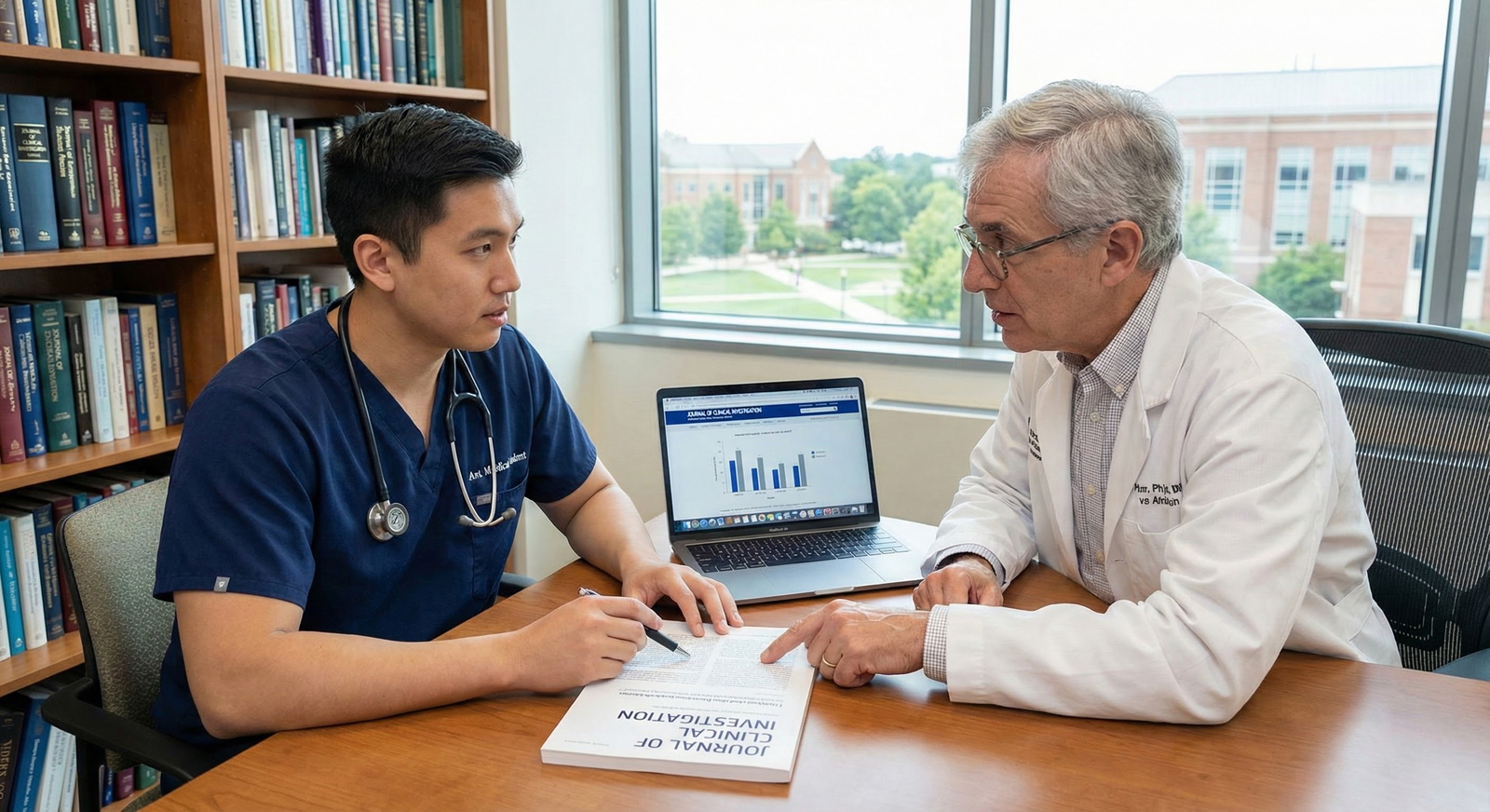
Why Research Matters So Much for Non‑US Citizen IMGs in Transitional Year Applications
For a non-US citizen IMG aiming for a Transitional Year (TY) program, a strong research profile can be the difference between getting overlooked and getting interview invitations. Transitional Year programs are often attached to highly academic institutions and competitive advanced specialties (radiology, neurology, anesthesiology, dermatology, radiation oncology, etc.). That means program directors are used to seeing applicants with at least some research exposure.
For a foreign national medical graduate, research serves several critical functions:
- Signal of academic curiosity and discipline – shows you can think critically, handle data, and follow through on long-term projects.
- Compensation for disadvantages – helps offset lack of US clinical experience, modest USMLE scores, or a less-known medical school.
- Visa-friendly asset – research positions are often a gateway into the US system and can lead to strong letters, observerships, and sometimes institutional support for visas.
- Bridge to advanced specialties – if your ultimate goal is radiology, anesthesia, neurology, PM&R, or another advanced specialty, research for residency in those fields during your TY application phase sends a clear, focused message.
A Transitional Year residency is often seen as “less research-heavy” compared to categorical internal medicine or neurology, but many TY programs are housed in academic centers that deeply value scholarship. As a non-US citizen IMG, you should think of research as a strategic tool to enter the US system, build connections, and strengthen your narrative.
Understanding What “Counts” as Research in a TY Application
Before you start chasing publications for match, you need clarity on what activities actually matter for residency applications—and specifically a TY program.
Types of Research Experiences That Carry Weight
Program directors don’t only value bench science or randomized trials. For a non-US citizen IMG, the following are all meaningful:
Clinical Research
- Retrospective chart reviews
- Cohort studies and database analyses
- Clinical outcomes and quality improvement (QI) projects
- Observational studies in a hospital setting
These are often more accessible and directly applicable to patient care.
Quality Improvement (QI) and Patient Safety Projects
- Protocol optimization (e.g., improving sepsis bundle compliance)
- Reducing medication errors or falls
- Streamlining discharge processes
Many TY programs highlight patient safety; QI projects fit very naturally in your application.
Educational Research
- Studies on curriculum effectiveness
- Simulation training outcomes
- Innovations in teaching or assessment
If you enjoy teaching, this can frame you as a future educator.
Basic Science / Translational Research
- Lab-based projects, molecular or cellular experiments
- Animal models, genomics, immunology
Valued, but can be harder to start and complete quickly. Often more relevant if your long-term specialty is research-intensive (e.g., oncology, neurology).
Scholarly Products Beyond Original Articles
- Case reports and case series
- Narrative or systematic reviews
- Book chapters
- Conference posters and oral presentations
- Abstracts and letters to the editor
These are especially realistic for non-US IMGs starting from abroad.
How Programs View Different Outputs
When applicants ask “how many publications needed?” they’re often missing the real picture: quality, relevance, and evidence of progression matter more than raw numbers.
In general, from highest to lower impact (but all helpful):
- First‑author original article in a peer‑reviewed journal
- Co‑author original article
- First‑author review article or case report
- Conference oral presentation
- Conference poster or published abstract
- Institutional presentations, QI projects with documented impact
For a Transitional Year program, having even a few well-chosen, clinically relevant projects—especially in internal medicine, emergency medicine, neurology, anesthesia, or radiology—can greatly strengthen your application.
How Many Publications Do You Actually Need as a Non-US Citizen IMG?
There is no universal threshold; different programs and specialties weigh research differently. But for a non-US citizen IMG targeting a TY program, several realistic scenarios can guide you.
Typical Ranges Seen in Matched IMGs
From NRMP surveys and program director preferences (and experience with applicants), a non-US citizen IMG who matches to a Transitional Year often falls into one of these categories:
Minimal research (0–1 item):
- Strong USMLE scores
- Solid US clinical experience and letters
- Less emphasis on academic centers
Moderate research (2–5 items):
- A combination of case reports, posters, and small studies
- Common among successful IMGs at mid‑tier academic TY programs
Robust portfolio (5+ items):
- Multiple abstracts, posters, or publications
- More common when aiming for highly academic centers or if planning a competitive advanced specialty (e.g., radiology, anesthesiology, dermatology)
When people ask “how many publications needed”, the better question is:
Do I have enough scholarly work to show that I can think, write, and complete what I start?
For a Transitional Year specifically, the following targets are realistic and helpful for a foreign national medical graduate:
- Minimum solid target:
- 1–2 case reports or small projects
- 1–2 posters or conference abstracts
- Competitive academic profile target:
- 1 original article (even in progress / under review) or
- 2–3 case reports/series or reviews
- 2–4 posters/abstracts (preferably in relevant fields)
If you are very early in the process, aim for “2–3 complete and presentable experiences” rather than obsessing over a specific publication count.
Step‑by‑Step Strategy to Build a Strong Research Profile from Inside or Outside the US

Step 1: Clarify Your Narrative and Specialty Direction
Even though Transitional Year is a one‑year program, most TY applicants have a target advanced specialty. Your research for residency should align with that direction whenever possible.
Ask yourself:
- Am I leaning toward radiology, anesthesia, neurology, PM&R, derm, ophthalmology, or radiation oncology?
- Would internal medicine or family medicine be a future pathway if my advanced specialty plan changes?
- Do I enjoy clinical, procedural, or cognitive specialties more?
Then:
- If aiming for radiology: pursue projects involving imaging, diagnostic accuracy, radiologic markers.
- If aiming for anesthesia: perioperative outcomes, pain management, airway, ICU-related topics.
- If undecided: choose broad internal medicine topics, QI, or multi‑disciplinary projects.
This alignment makes your CV coherent and helps you write a compelling personal statement for both TY and your ultimate specialty.
Step 2: Find Mentors and Projects (From Abroad and In the US)
For a non-US citizen IMG, the main barrier is access. You may not physically be in the US yet, but there are still routes to join projects.
Channels to find research opportunities:
Cold Emailing Academic Physicians
- Identify faculty on US hospital or university websites in your area of interest.
- Look for those with multiple recent publications and a track record of trainees.
- Send a concise, professional email with:
- Who you are (non-US citizen IMG, school, year of graduation)
- Your exam status (USMLE scores / attempts if taken)
- A short CV
- Clear ask: “I am looking to assist remotely with ongoing projects (data extraction, manuscript drafting, literature review).”
Networking via Conferences and Online Platforms
- Attend virtual conferences (often cheaper, sometimes with IMG discounts).
- Use LinkedIn or X (Twitter) to follow academic physicians in your field.
- Engage professionally with their work; after a few interactions, request a brief meeting.
Remote Research Positions
- Some US groups offer remote research volunteering or paid roles (e.g., research assistant, data analyst).
- Look at hospital job boards, university postings, and even some private research groups.
Within Your Home Institution
- Do not underestimate your local environment. Collaborate with:
- Internal medicine faculty
- Radiologists, anesthesiologists, neurologists
- Public health departments
- Local projects are still valuable—especially if they lead to publications or case reports in English-language journals.
- Do not underestimate your local environment. Collaborate with:
Step 3: Start with Achievable, High-Yield Project Types
As a foreign national medical graduate, you should maximize probability of completion over prestige. Focus on research formats that tend to move quickly:
Case Reports and Case Series
- Identify unusual or instructive cases (rare diseases, unusual presentations, challenging management).
- Structure them using established guidelines (e.g., CARE guidelines).
- Target specialty-specific or general medical journals that accept case reports.
Retrospective Chart Review
- More common if you have access to a hospital database through a mentor.
- Choose manageable questions:
- E.g., “Outcomes of patients admitted with sepsis before and after new protocol,” or
- “Characteristics and outcomes of stroke patients presenting within 6 hours vs after 6 hours.”
- Plan a small but focused project that can generate at least an abstract and a poster.
Narrative or Systematic Reviews
- Can be done remotely with access to medical databases (PubMed, Embase).
- Collaborate with a mentor who can guide topic selection and methodology.
- Particularly helpful if your clinical access is limited.
Quality Improvement / Patient Safety
- If you have clinical access (internship, non-US residency, or observership), consider:
- Reducing delays in antibiotics for sepsis
- Improving discharge summary completeness
- Increasing vaccination rates in a clinic
- Document baseline data, intervention, and outcomes.
- If you have clinical access (internship, non-US residency, or observership), consider:
Step 4: Develop the Core Skills Programs Expect
TY and advanced program directors want evidence that you can:
- Perform literature searches effectively
- Understand basic biostatistics
- Write clear scientific English
- Work collaboratively and respect deadlines
Concrete ways to build these skills:
- Take free or low‑cost online courses (Coursera, edX) in:
- Research methods and statistics
- Epidemiology
- Scientific writing
- Read discussion sections of good articles in your field and analyze how they argue, contextualize, and acknowledge limitations.
- Practice writing abstracts and get feedback from mentors or peers.
When you list “research” on your CV, be prepared to talk confidently about hypothesis, methods, limitations, and potential impact during interviews.
Positioning Your Research for Maximum Impact in TY Applications

Tailoring Your CV and ERAS Application
When applying to Transitional Year programs, your research should appear organized, honest, and clearly described.
Key tips for ERAS entries:
List all scholarly activities
- Publications (published, accepted, or in-press)
- Submitted manuscripts (clearly labeled as “submitted”)
- Posters, oral presentations, book chapters, QI projects
Avoid exaggeration
- Do not mark “published” if it is under review or submitted.
- Be transparent about author position and journal status.
Use impactful yet accurate descriptions
- Instead of “Helped with research,” write:
- “Performed literature review, extracted clinical data from 150 patient charts, and contributed to drafting methods and discussion.”
- Instead of “Helped with research,” write:
Highlight relevance
- For a radiology-bound applicant: emphasize imaging-related projects.
- For more general TY emphasis: highlight QI, internal medicine, or emergency topics.
Integrating Research into Your Personal Statement
Your Transitional Year personal statement should not read like a research grant, but you can:
- Show how research shaped your clinical reasoning, teamwork, or interest in a specialty.
- Mention one or two key projects that:
- Taught you how to question assumptions in medicine.
- Showed you the complexity of clinical decisions.
- Improved your understanding of patient safety or systems-based practice.
For example:
“While working on a retrospective study of septic shock outcomes, I realized how small changes in early management can significantly impact mortality. This experience motivated me to pursue a Transitional Year in an environment where patient safety and interdisciplinary collaboration are central values.”
Using Research to Secure Strong Letters of Recommendation
For a non-US citizen IMG, research mentors can be excellent letter writers, especially if:
- They are based in the US (familiar with the system and expectations).
- They have observed your work ethic, reliability, and communication.
- They can compare you favorably to other trainees or residents.
To earn a strong letter:
- Be consistent and communicative during the project.
- Deliver on tasks before deadlines.
- Ask for feedback and respond positively.
- When the time comes, request a letter that:
- Specifically addresses your research abilities and professionalism.
- Mentions your potential as a Transitional Year resident and future specialist.
Common Pitfalls for Non‑US Citizen IMGs and How to Avoid Them
As a non-US citizen IMG or foreign national medical graduate, you face specific challenges:
1. Over‑focusing on Quantity Over Substance
Submitting to predatory journals or splitting tiny projects into multiple low‑impact pieces can backfire. Program directors are increasingly aware of poor-quality journals.
Avoid:
- Paying large fees to suspicious open-access journals with no real peer review.
- Listing non-peer-reviewed blogs or unverified platforms as “publications.”
Prefer:
- Reputable specialty or general journals (even lower impact factor is fine).
- Regional or national conferences that offer peer-reviewed abstract selection.
2. Being an Invisible Co-Author on Many Papers
If your name appears on 8–10 papers, but you cannot explain the hypothesis or methodology, interviewers will notice.
Solution:
- Only list works on which you truly contributed.
- Prepare to discuss each project coherently.
3. Poor Time Management During Application Season
Trying to start entirely new projects in the 2–3 months before ERAS opens often leads to incomplete work and stress.
Better approach:
- 12–18 months before application: build core skills and start first projects.
- 6–12 months before: focus on bringing 2–3 key projects to completion or at least abstract phase.
- 0–6 months before: finalize manuscripts, submit abstracts, and prepare your CV.
4. Ignoring Visa and Location Considerations
Some research positions for non-US citizens are more friendly to visa sponsorship than others.
- Ask early if the lab or institution has experience with J‑1 or H‑1B sponsorship for formal positions.
- Even if you cannot secure a visa-dependent role, remote collaboration that leads to publications is still extremely valuable.
Putting It All Together: A Sample Roadmap (18–24 Months Timeline)
For a non‑US citizen IMG planning a Transitional Year application:
Months 0–3
- Clarify your specialty direction (radiology/anesthesia/neurology/etc.).
- Take online courses in research methods and statistics.
- Start reading 1–2 journal articles per week in your area of interest.
- Begin structured cold emailing to potential mentors (US and home country).
Months 3–6
- Start at least one concrete project:
- Case report or case series.
- Small retrospective review with a mentor.
- Learn reference managers (e.g., Zotero, Mendeley) and basic statistical tools.
Months 6–12
- Aim to produce:
- 1–2 conference abstracts or posters.
- Draft of at least one manuscript (case report, review, or original research).
- Request feedback frequently and iterate quickly.
- Strengthen professional relationships with mentors.
Months 12–18
- Finalize and submit manuscripts to appropriate journals.
- Present at conferences if possible (even virtual).
- Ask key mentors about letters of recommendation.
- Update your CV and ERAS entries as projects progress.
Months 18–24 (Application Year)
- Enter all scholarly products into ERAS accurately.
- Prepare to discuss:
- Your role in each project.
- What you learned.
- How it shapes your choice of Transitional Year and your advanced specialty.
- During interviews, highlight how your research experiences align with the program’s strengths (patient safety, education, specific specialties).
Following a structured plan like this makes research for residency an integrated part of your journey, rather than a last-minute scramble.
FAQs: Research Profile Building for Non-US Citizen IMGs Applying to Transitional Year
1. I have no publications yet. Can I still match a Transitional Year as a non-US citizen IMG?
Yes, it is possible, especially if you have strong USMLE scores, US clinical experience, and solid letters. However, having at least some research exposure—even a single case report or poster—will improve your chances and help you stand out, particularly for academic TY programs. Starting even one small, well-guided project now is better than waiting for a “perfect” opportunity.
2. As a foreign national medical graduate, is US-based research mandatory?
US-based research is not mandatory, but it is ideal. Research from your home country still counts, especially if:
- It is written in English.
- It is peer-reviewed.
- You can clearly explain your role and the project’s impact.
US-based work can help generate US letters of recommendation and familiarity with the system, but high-quality international work is far better than weak or artificial US affiliations.
3. What is the best type of research for a Transitional Year applicant?
For a TY program, clinically relevant and practical research is often the most impactful:
- Clinical studies in internal medicine, emergency medicine, anesthesia, radiology, neurology, or critical care.
- Quality improvement and patient safety projects.
- Well-constructed case reports and series.
If you know your advanced specialty goal, tailor your topics to that field; if you’re undecided, choose common conditions and cross-specialty issues.
4. How should I answer “how many publications needed” when planning my research strategy?
Instead of aiming for a magic number, aim for:
- 2–3 solid, completed projects that you fully understand and can discuss.
- A mix of outputs—e.g., one manuscript (case or original study) plus one or two posters/abstracts.
- Clear alignment with your future specialty and Transitional Year goals.
Program directors value demonstrated progress, integrity, and depth of involvement more than hitting an arbitrary tally of publications.
Building a research profile as a non-US citizen IMG targeting a Transitional Year residency is challenging, but entirely achievable with structure, persistence, and strategic choices. Focus on meaningful projects, authentic mentorship, and clear alignment with your long-term goals, and your research experience will become a powerful asset in your journey to the match.