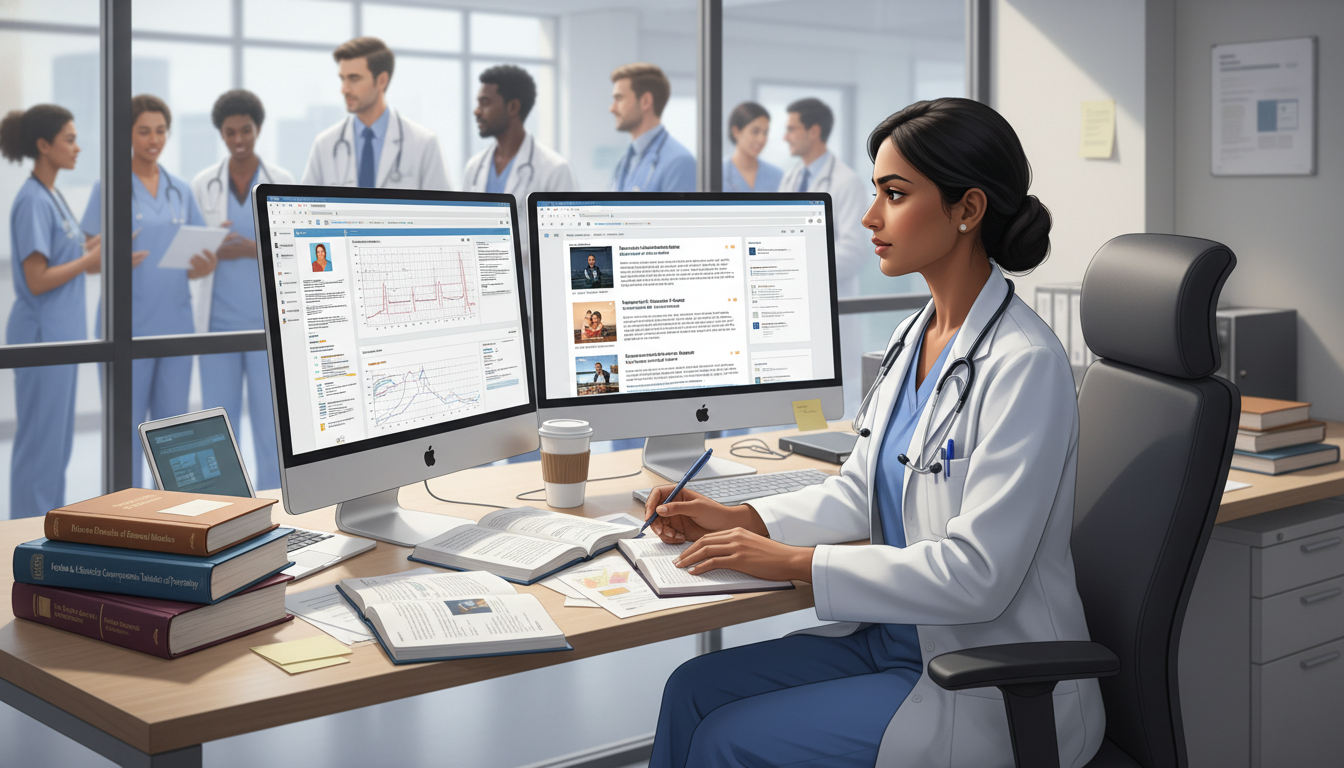
Building a compelling research profile as a non-US citizen IMG aiming for Clinical Informatics is both a strategic necessity and a powerful way to stand out in a competitive match landscape. Clinical informatics is inherently data- and research-driven; programs want applicants who can bridge medicine, data, and technology—and your research track record is one of the clearest signals.
Below is a step-by-step roadmap tailored to a non-US citizen IMG or foreign national medical graduate interested in clinical informatics fellowship and informatics-oriented residency paths, with a focus on research for residency, publications for match, and maximizing your chances despite visa and geographic barriers.
Understanding What “Research Profile” Means in Clinical Informatics
Before strategizing, you need to understand how program directors and selection committees think about research in this field.
What counts as “research” for informatics-focused applications?
In clinical informatics, “research” is broader than traditional bench or purely clinical research. Valuable experiences include:
- Clinical data analysis (e.g., retrospective EHR studies on outcomes, quality metrics)
- Health IT implementation projects (e.g., implementing a new order set or CDS tool with evaluation of outcomes)
- Usability and workflow studies (e.g., evaluating EHR usability, nursing workflow impact)
- Quality improvement (QI) with strong data methods (e.g., dashboard-driven interventions with pre/post analysis)
- AI/ML in healthcare (e.g., risk prediction models, NLP on clinical notes, imaging informatics)
- Digital health and mHealth studies (e.g., apps, patient portals, telemedicine tools)
- Public health and population health informatics (e.g., registries, surveillance dashboards)
- Standards and interoperability projects (e.g., FHIR, HL7, data mapping and validation)
If your work involves data, systems, workflows, and outcomes at the intersection of IT and clinical care, it’s relevant.
How does your research profile get evaluated?
Programs look at several dimensions:
Evidence of sustained interest in informatics
- Multiple related projects over time
- Progression from simpler to more sophisticated work
Rigor and impact
- Peer-reviewed publications
- Abstracts/posters/oral presentations at reputable conferences
- Evidence of sound methodology
Role and responsibility
- Were you a data collector, analyst, first author, project lead?
- Did you drive design, analysis, or writing?
Technical skills
- Experience with data tools (R, Python, SQL, Tableau, Power BI, etc.)
- Familiarity with EHRs, databases, or health IT systems
Informatics identity
- Does your research clearly signal you as an informatics person, not just a generalist?
If you are a non-US citizen IMG, your research profile often has to work even harder to compensate for limited in-person US clinical experience or visa-related constraints. That’s why a structured approach is essential.
Clarifying Your Goals: Where Are You Aiming?
Your exact target within informatics shapes how aggressively—and in what direction—you build your research portfolio.
1. Informatics-heavy residency vs. standalone Clinical Informatics fellowship
You might be aiming for:
A core residency with strong informatics pathway
Examples: IM, FM, Pathology, EM, Pediatrics programs with built-in informatics tracks or chief medical information officer (CMIO) mentorship.A formal Clinical Informatics fellowship (usually after residency)
These fellowships increasingly expect a proven track record in informatics research or project work.Long-term career in health IT / data science
Even if not purely academic, research-style work shows you can evaluate tools, measure outcomes, and think critically.
2. How many publications do you really need?
A common question is: “How many publications needed to be competitive?”
There is no fixed number, but for a non-US citizen IMG targeting informatics-focused training:
Baseline competitive
- 2–3 peer-reviewed papers (not necessarily all first-author)
- Several posters/abstracts (3–5) at recognized conferences
- Plus strong project descriptions in your CV and personal statement
Stronger profile for research-heavy programs or top fellowships
- 4–8 peer-reviewed publications (mix of first-author and co-author)
- A coherent theme around informatics, EHRs, digital health, or data science
- Potentially a thesis, capstone, or a significant QI/IT implementation project
What if you have fewer?
If you only have 1–2 publications, you can partially compensate with:- Solid US-based research experience under well-known faculty
- Strong letters explicitly praising your informatics and analytic skills
- Clearly described projects demonstrating real-world impact
Quality, relevance, and clear informatics identity often matter more than just raw numbers.
Finding and Creating Research Opportunities as a Non-US Citizen IMG
Because you may be outside the US, on a visa, or lacking institutional connections, you’ll need to be proactive and sometimes creative.
1. Start with what you have: your current institution and country
If you are still in medical school or residency abroad, or working clinically:
Audit what’s available locally:
- Does your hospital use an EHR? (Even partial systems or local EMR can work)
- Are there any QI committees, audit projects, or digital health pilots?
- Is there a health IT, biostatistics, or computer science department at your university?
Transform routine clinical problems into informatics research topics:
- Medication error tracking in your hospital → build a basic database → analyze patterns → propose EHR alerts.
- Delays in lab results reporting → measure turnaround time before/after a new system.
- Poor adherence to clinical guidelines → design a checklist, dashboard, or reminder system and study its impact.
These can become:
- A QI project with rigorous data analysis
- A poster at an informatics or QI conference
- Eventually a manuscript
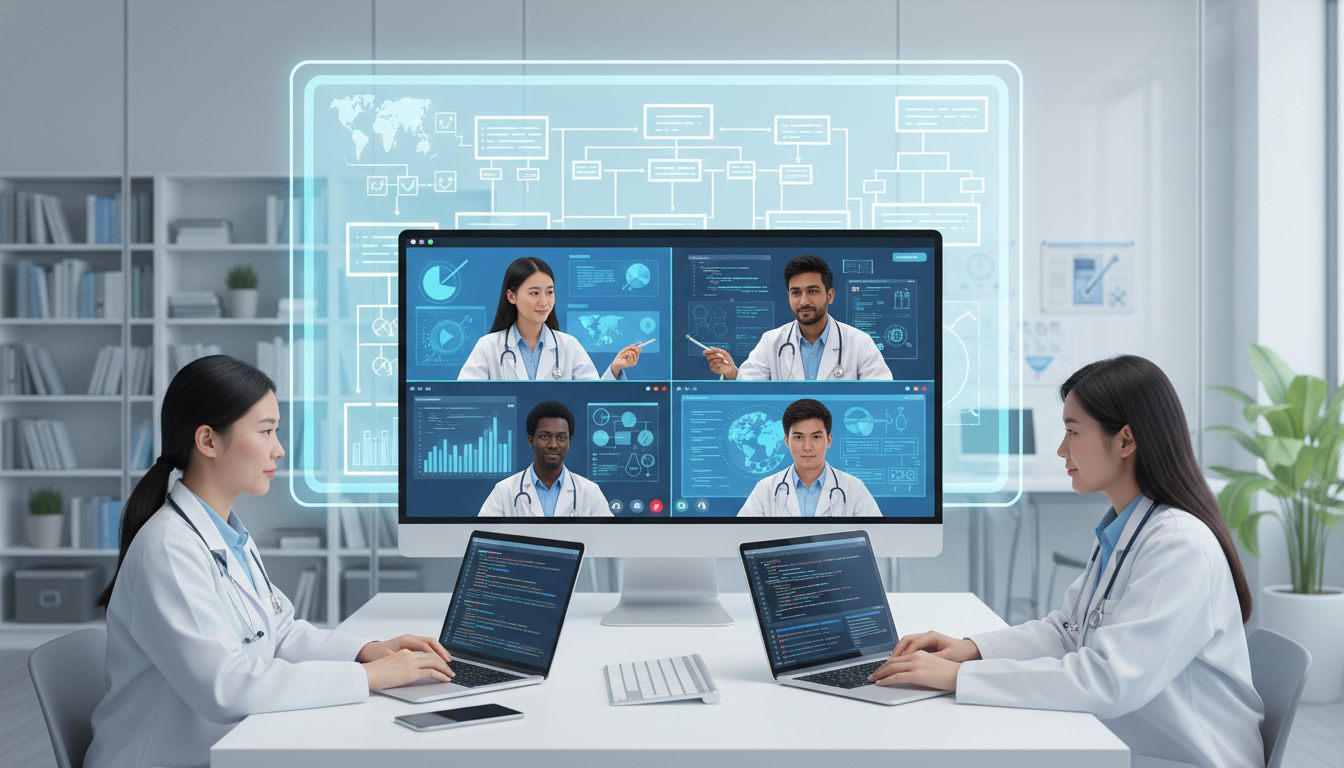
2. Pursue remote and online research collaborations
As a foreign national medical graduate, your best options often include remote, data-driven projects:
Email faculty at US/Canadian/European institutions with:
- A concise 1–2 paragraph intro (background, interest in clinical informatics)
- Your CV, highlighting any coding, analytics, or IT-related work
- 2–3 specific ideas or questions showing you understand their work
- A clear ask: “I would be grateful for the opportunity to assist with data analysis, literature review, or manuscript preparation on your ongoing projects.”
Target people whose work aligns with:
- EHR data analysis
- Digital health tools
- Telehealth
- AI/ML in clinical practice
- Population health informatics
Look for:
- Authors of papers you admire
- Speakers at AMIA, HIMSS, IHI, or specialty informatics conferences
- Faculty with titles like CMIO, Director of Clinical Informatics, or similar
Even if only a fraction respond, one good mentor can lead to multiple projects.
3. Join structured programs or “virtual research” initiatives
Search for:
- Online research training programs in health informatics, digital health, or data science
- Short courses or summer schools that allow remote participation and often include capstone projects
- International collaborative registries or multicenter databases where you can help with:
- Data cleaning
- Literature review
- Statistical analysis
- Manuscript drafting
Examples of potential venues (you’ll need to check current eligibility and visa rules):
- AMIA student or trainee networks
- Global digital health consortia
- Open-source EHR or health IT communities such as OpenMRS, OpenEHR, or projects using FHIR
Even if these aren’t formal “research programs,” involvement in data-driven development and evaluation can be framed as informatics project work in your CV.
4. Self-initiated projects with open data
You don’t always need direct access to live EHRs.
Use publicly available datasets:
- MIMIC-III / MIMIC-IV (ICU data)
- PhysioNet repositories
- COVID-19 open datasets
- National health survey datasets (depending on your country)
- WHO and public health registries
Potential project ideas:
- Predicting risk of ICU mortality, readmission, or sepsis with simple ML models
- Evaluating patterns of telemedicine use during COVID-19
- Studying adherence to guideline-based care using proxy data
Turn into:
- An arXiv preprint + submission to a journal
- A conference abstract at an informatics or data science meeting
- A GitHub repository demonstrating code and reproducible analysis
This is especially useful when institutional resources are limited but you have internet access and some coding ability.
Building Skills That Make You Valuable on Any Informatics Project
An excellent research profile is not just a stack of publications—it’s the skills and tools that produced them. Programs want to see what you can do.
1. Core technical skills
For informatics-focused research, you should aim to build competence in:
Data analysis and statistics
- R or Python (pandas, NumPy, SciPy, scikit-learn)
- Basic biostatistics (descriptives, regression, survival analysis, model evaluation)
- Data visualization (ggplot2, matplotlib, seaborn)
Database and EHR-related skills
- SQL basics (SELECT, JOIN, GROUP BY, etc.)
- Understanding of database schemas and clinical data models (e.g., OMOP CDM)
- Basic familiarity with clinical coding standards (ICD, CPT, SNOMED, LOINC)
Health IT concepts
- EHR components (CPOE, CDS, documentation, results review)
- Interoperability basics (HL7, FHIR)
- Data quality and governance
Even beginner-level skills, if used in real projects, make you stand out compared with many other IMGs.
2. Learn through structured online courses
Examples (choose those aligning with your level and interests):
Statistics & Data Science
- Coursera / edX courses in biostatistics or data analysis
- Specializations in “Data Science” (R/Python) and “Machine Learning”
Health Informatics / Health IT training
- Introduction to health informatics courses on Coursera, edX, or FutureLearn
- AMIA 10×10 or similar informatics training programs
- University-sponsored online certificates in clinical informatics
Be sure to:
- List completed courses and certificates on your CV
- Apply what you learn to actual data—even small personal projects
3. Communication and writing skills
Programs value applicants who can write and present clearly:
Practice writing:
- Structured abstracts (Background/Methods/Results/Conclusion)
- Short reports or case studies
- Methods and Results sections for projects
Presenting:
- Create posters in PowerPoint or Canva
- Learn to summarize complex analyses in simple, clinically meaningful terms
These skills directly influence publications for match, and they are particularly important if English is not your first language.
Turning Work Into Output: Publications, Presentations, and a Coherent Narrative
You may already have done useful work that isn’t yet visible in your CV. Now you must convert effort into documented outcomes.
1. Types of outputs that matter
From highest to lowest “weight” (approximate, but useful):
Peer-reviewed original research articles
- Especially first-author, clinically relevant, and data-driven
- Informatics content preferred, but strong clinical research can still help
Systematic reviews or focused narrative reviews
- Topics like CDS effectiveness, telehealth outcomes, AI in diagnostics, etc.
- Good way to build expertise and get a publication even without primary data
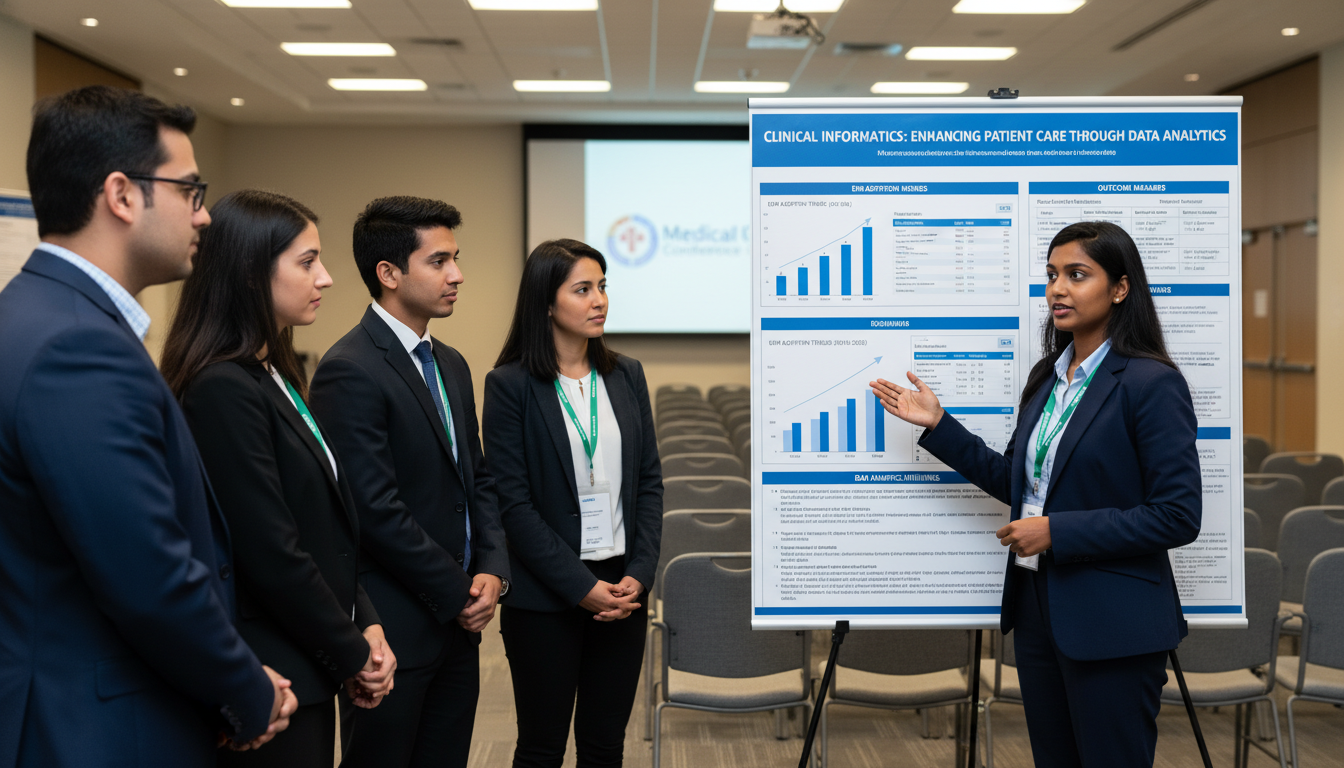
Conference presentations
- Oral presentations and poster sessions at:
- AMIA
- HIMSS
- Specialty informatics tracks (e.g., RSNA for imaging informatics)
- Local and regional data science or QI conferences
- Oral presentations and poster sessions at:
Case reports and technical reports
- Implementation of a new decision support tool in your hospital
- Description of a novel data pipeline or dashboard for tracking specific outcomes
Preprints, GitHub projects, and non-peer-reviewed outputs
- Useful to show activity and technical ability, especially if time is short
- Not a substitute for peer-reviewed work, but still worth listing
2. Strategy for a non-US citizen IMG starting from minimal research
If you’re starting almost from scratch and aiming to apply in 1–2 years:
Month 0–3
- Complete at least one serious online course in:
- Basic data analysis (R or Python)
- Or introductory health informatics
- Join or initiate a small, well-defined data project:
- E.g., a retrospective chart review on a specific outcome improved by a protocol or tool
- Start drafting a review article in an informatics-related topic of genuine interest, ideally with a mentor
Month 4–9
- Aim to submit:
- 1 original research manuscript OR
- 1 substantive review article
- Submit 1–2 abstracts to conferences (even regional or virtual)
- Start a second project, ideally with a clearer informatics angle:
- E.g., EHR-based decision support, medication safety dashboard, telehealth utilization study
Month 10–18
- Convert ongoing projects into manuscripts
- Target an informatics-leaning conference (e.g., AMIA) for at least 1 presentation
- Polish your CV and personal statement to highlight:
- Your informatics trajectory
- The story of how your clinical experience + data/IT skills converge
If your application timeline is shorter, you may lean more heavily on reviews, QI, and small but well-executed studies that can be quickly written up.
3. Presenting your research story for residency or fellowship
When applying, your research profile must be woven into a coherent narrative:
In your CV:
- Group “Research and Publications” clearly
- Separate Informatics/Health IT projects from purely clinical work
- Highlight your role (first author, data analyst, project lead, etc.)
In your personal statement:
- Explain how you recognized problems in clinical workflows or data quality
- Describe how you used research and informatics tools to address them
- Connect your past work to your future plans in clinical informatics
In interviews:
- Be prepared to talk clearly and non-technically about:
- The clinical problem
- Your method
- Key findings
- Impact on patients or workflows
- Emphasize your ability to work across disciplines (clinicians, IT, data scientists)
- Be prepared to talk clearly and non-technically about:
Special Considerations for Non-US Citizen IMGs and Foreign Nationals
As a non-US citizen IMG, you face additional constraints—but also some unique opportunities.
1. Visa and timing issues
- Some fellowships and residencies prefer or require:
- J-1 or H-1B eligibility
- Prior US training or observerships
- Research time can be used strategically while:
- Waiting for exam results
- Preparing for USMLE/other licensing
- Waiting between match cycles
Research experience is often unrestricted by visa if done remotely or in your home country, especially if not in a paid position. However, always:
- Confirm institutional and legal rules
- Avoid any misrepresentation of where work was done
2. Leveraging your international context in research
Your position as a foreign national medical graduate can be an asset:
Comparative health systems research:
- Study how informatics solutions in your country differ from those in high-income settings
- Evaluate low-cost digital solutions (e.g., SMS reminders, basic EMRs) and their outcomes
Resource-limited settings:
- Informatics innovations to improve care with limited infrastructure
- Mobile health interventions for rural or underserved populations
These projects show:
- Creativity
- Real-world impact
- A global, systems-level perspective that many programs value
3. Building a remote professional network
Networking matters, even for research:
Join:
- Informatics interest groups
- Online seminars and webinars (e.g., AMIA, HIMSS, specialty societies)
- LinkedIn groups focused on clinical informatics and digital health
After attending online talks:
- Send a short, professional follow-up email:
- Thank the speaker
- Mention 1–2 specific points you learned
- Briefly introduce your background and interest in informatics
- Ask if they know of any projects where a motivated IMG could help remotely
- Send a short, professional follow-up email:
Over time, this can produce:
- Mentors who can support your research for residency and future clinical informatics fellowship applications
- Strong letters that comment specifically on your informatics capacity and technical skills
FAQs: Research Profile Building for Non-US Citizen IMGs in Clinical Informatics
1. As a non-US citizen IMG, how many publications do I need to match into an informatics-heavy residency or Clinical Informatics fellowship?
There is no strict minimum, but for a competitive informatics-oriented profile:
- Aim for 2–3 peer-reviewed publications (at least one clearly relevant to informatics, data, or digital health)
- Add several conference presentations or posters (3–5) if possible
- Ensure your work forms a coherent story around informatics, not a random collection of topics
For more research-intensive programs or top Clinical Informatics fellowships, 4–8 publications (including reviews, original research, and informatics QI projects) can be advantageous. Remember: relevance, rigor, and clear informatics identity matter more than just the count.
2. I don’t have access to an EHR in my hospital. Can I still build a strong informatics research profile?
Yes. You can:
- Use publicly available datasets (e.g., MIMIC, PhysioNet, public health data) for data-driven projects
- Conduct workflow, usability, or process studies (even without an EHR)
- Implement and evaluate low-tech digital tools (e.g., Excel-based dashboards, SMS reminders, basic EMRs)
- Focus on systematic or narrative reviews of informatics solutions in your specialty
Many impactful clinical informatics questions don’t require direct access to a full EHR; they require structured thinking about data, workflows, and outcomes.
3. Does QI count as research? Will QI projects help my match chances?
Many QI projects absolutely count, especially when:
- They use systematic methods (PDSA cycles, pre-post analysis, clear metrics)
- They involve data collection and analysis, especially from digital or semi-digital sources
- They are written up and disseminated:
- As conference abstracts/posters
- As short communications in journals
For clinical informatics, QI is often where informatics tools are actually implemented and tested, so QI-based projects with a data-driven approach are highly relevant.
4. I have strong clinical research but little informatics. Should I pivot entirely to informatics topics?
You don’t need to discard your clinical research background. Instead:
Reframe your existing research:
- Emphasize any data, technology, or process elements (e.g., use of registries, digital data capture, telehealth)
Add at least a few clearly informatics-focused projects going forward:
- Even 1–2 strong informatics projects plus your existing clinical research can create a credible informatics narrative
In your personal statement and interviews:
- Connect your prior clinical research skills (study design, statistics, writing) to your new focus on health IT and data-driven care
The goal is to show evolution, not abrupt randomness: your clinical foundation plus your informatics work together form a strong platform for residency and future clinical informatics fellowship training.
By deliberately choosing projects, building robust analytic and informatics skills, and converting your work into visible outputs, you can create a powerful research profile—even as a non-US citizen IMG with limited direct US experience. Clinical informatics thrives on people who understand both patients and data; your journey as a foreign national medical graduate can be a unique strength if you align your research story with that mission.