Understanding Research Expectations for Med-Peds as a Non-US Citizen IMG
Medicine-Pediatrics (Med-Peds) attracts applicants who are intellectually curious, adaptable, and comfortable with complexity. For a non-US citizen IMG or foreign national medical graduate, a strong research profile is often one of the most powerful ways to demonstrate that you bring these qualities to a US program.
Program directors in Med-Peds value:
- Evidence of academic curiosity
- Ability to complete projects and work in teams
- Clear communication and writing skills
- Comfort with data, guidelines, and evidence-based medicine
Research is one of the most visible ways to show all of the above—especially if you are coming from outside the US system and may be less familiar to programs.
Why Research Matters Even More for Non-US Citizen IMGs
Compared to US graduates, a non-US citizen IMG usually faces:
- Less name recognition of medical school
- Limited US clinical experience at the time of application
- Visa-related concerns
- Perceived variability in training quality
A targeted research record helps you:
- Show that you can thrive in an academic environment similar to US residency
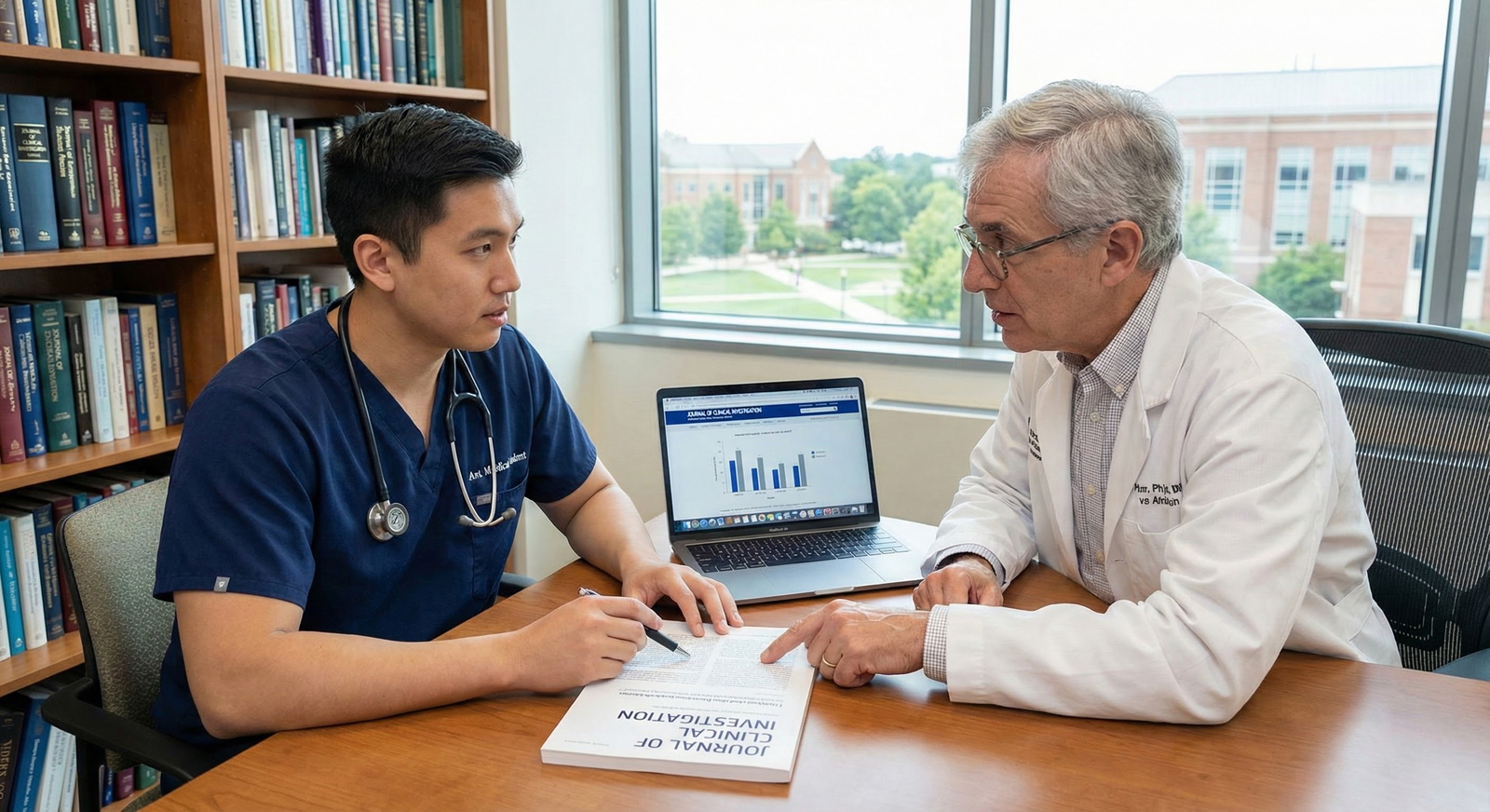
- Build relationships with US faculty who can write strong letters of recommendation
- Demonstrate persistence, professionalism, and scholarly potential
- Stand out among other IMGs with similar board scores and clinical experiences
For Med-Peds specifically, research is not only about doing a PhD-level project. Programs are often impressed by:
- Quality improvement (QI) work that improves systems of care
- Research related to transitions of care from pediatrics to adult medicine
- Projects in chronic disease that affects both children and adults (e.g., cystic fibrosis, congenital heart disease, sickle cell disease, diabetes, IBD)
- Health disparities and global health research
Understanding these priorities helps you design a research profile that actually matters for the medicine pediatrics match—not just random publications for the sake of numbers.
How Many Publications Do You Really Need for Med-Peds?
One of the most common questions is: “How many publications are needed?” There is no absolute number that guarantees success, but there are realistic benchmarks and patterns.
Typical Expectations in Med-Peds
Med-Peds is generally less research-intense than competitive subspecialties like dermatology or neurosurgery, but more research-aware than some purely community-driven primary care fields. For a non-US citizen IMG, your research record can move you from “risky” to “highly recruitable.”
Think in tiers rather than strict numbers:
Minimal but Credible Profile
- 1–2 research experiences (doesn’t need to be published yet)
- 0–1 publications or abstracts/posters
- Solid clinical performance and USMLE scores
- Works best if you have strong US clinical experience and LORs
Competitive Research Profile (Good Target for Most IMGs)
- 2–4 meaningful research projects (even if some are still in progress)
- 1–3 publications (original article, review, or case report)
- Several abstracts, posters, or oral presentations at national or regional conferences
- Clear narrative tying your research to Med-Peds interests
Academic-leaning Profile (Helpful for University & Research-heavy Programs)
- 4+ projects with ongoing involvement
- 3–6+ publications (could include co-authorship, reviews, book chapters)
- Consistent abstract/poster presentations
- A visible role: first-author on at least one or two projects
- Potential interest in academic career, clinician-educator, or future fellowship
For a non-US citizen IMG applying to Med-Peds, aiming toward the Competitive Research Profile tier is realistic and effective if you have 1–2 years to build your CV.
Quality vs Quantity: What Programs Actually Notice
Program directors often skim your ERAS application. They tend to notice:
- Whether you have at least one first-author or co-first-author project
- ANY US-based research experience, especially at a teaching hospital
- Projects that clearly relate to Med-Peds themes, such as:
- Chronic illness across the lifespan
- Adolescent to adult care transitions
- Health systems, primary care innovation, or complex care
- Evidence you can see a project through to completion (submitted, published, or presented)
Ten low-quality, unrelated case reports with no clear role will not help you as much as:
- 1–2 thoughtful, Med-Peds-relevant projects
- 1 solid first-author case report or review
- 1–2 meaningful QI or retrospective projects with US mentors
Programs are not just counting “how many publications needed”—they read the type, your role, and relevance.
Choosing the Right Research for a Med-Peds-Focused Profile
To build an intentional research portfolio, focus on three main dimensions:
- Clinical Domain (Adult, Pediatrics, or Combined)
- Type of Work (Clinical research, QI, education, global health, etc.)
- Feasibility and Timeline

1. Prioritize Topics That Match Med-Peds Identity
Med-Peds straddles internal medicine and pediatrics. Projects that touch both worlds are particularly compelling. Some strong theme areas:
Transition of Care Research
- Example: Outcomes of adolescents with type 1 diabetes as they transfer from pediatric to adult endocrinology.
- Why it’s powerful: Transitions of care are central to the Med-Peds mission; shows understanding of lifespan care.
Chronic Conditions Across Lifespan
- CF, congenital heart disease, sickle cell disease, HIV, IBD, epilepsy
- Example: A chart review of adult patients with congenital heart disease previously followed in pediatrics clinic.
Primary Care and Complex Care
- Polypharmacy, care coordination, medical homes, social determinants of health
- Example: QI project improving immunization rates in a combined Med-Peds clinic.
Health Disparities and Global Health
- Access to care, refugee health, rural health, low-resource settings
- Example: Study of vaccination coverage among children in migrant communities and their adult caregivers.
If you trained abroad, you can leverage your home-country context:
- Compare patterns of disease presentation between your country and the US.
- Look at barriers to care for adolescents transitioning to adult services in low- and middle-income countries.
- Explore health systems and policy topics that highlight your insight into global health—something Med-Peds programs often appreciate.
2. Choose Research Formats That Fit Your Time and Access
Not all projects are equal in difficulty or timeline.
Faster-to-complete options (3–6 months):
- Case reports and case series
- Narrative reviews or scoping reviews
- Retrospective chart reviews with clearly defined endpoints
- Small QI projects with simple outcomes (e.g., screening rates, documentation practices)
Longer-term options (6–18+ months):
- Prospective cohort studies
- Randomized or interventional studies
- Complex multi-site QI projects
- Educational intervention studies
As a non-US citizen IMG, especially if you’re still outside the US, shorter, well-chosen projects can help you build momentum quickly. Once you secure a foothold (e.g., a visiting research position or observership with some research component), you can join bigger, ongoing projects under established teams.
3. Balance Adult and Pediatric Work
Your portfolio does not need to be perfectly split 50/50, but showing some involvement in both adult and pediatrics is helpful for Med-Peds.
For example, a balanced but realistic portfolio might look like:
- One pediatric-focused QI project (e.g., asthma action plans in a pediatric clinic)
- One adult medicine retrospective study (e.g., hospital readmissions in patients with heart failure)
- One Med-Peds-relevant review (e.g., management of sickle cell disease across lifespan)
- One case report (either adult or pediatric) but tied conceptually to complex care or chronic disease
Programs will see that you are comfortable in both worlds and thinking on a lifespan continuum.
Finding and Securing Research Opportunities as a Foreign National Medical Graduate
For a non-US citizen IMG, the biggest barrier is not motivation; it is access—to faculty, data, and infrastructure. You will need a strategic approach.
1. Start Locally: Home Institution and Country
Before you look to the US, ask:
- Are there faculty at your medical school or affiliated hospitals doing pediatric, internal medicine, or community health research?
- Is there a department of community medicine, public health, or pediatrics with ongoing projects?
- Does your hospital collect electronic data that could be used for retrospective studies?
You can:
- Approach a receptive clinician with a very concrete proposal:
- “I am interested in doing a retrospective chart review on X. I can draft a protocol and do the data collection if you can help me with IRB and supervision.”
- Offer help on existing projects:
- Data collection
- Literature review
- Drafting parts of manuscripts
This can give you early first- or co-authorship and help you learn basic research skills, which strengthens your case when later approaching US mentors.
2. Targeted Outreach to US-Based Researchers
Cold emailing can work—but only if done strategically.
Steps:
- Identify Med-Peds or combined internal medicine/pediatrics faculty:
- Search: “Medicine-Pediatrics residency [hospital name] faculty research,” or
“Med-Peds transitions of care research” - Look at authors of articles on topics like sickle cell disease, CF, or care transitions.
- Search: “Medicine-Pediatrics residency [hospital name] faculty research,” or
- Read at least the abstract (ideally full text) of their recent work.
- Write a very specific, respectful email that shows:
- You know their work.
- You have skills and availability.
- You are willing to do unglamorous work (data cleaning, chart review, referencing).
Example email structure:
- Brief introduction:
- Who you are (non-US citizen IMG from X country, graduation year, interests).
- Why you’re emailing them specifically:
- Mention 1–2 of their recent papers and what you learned.
- What you can offer:
- “Experience with basic statistics (SPSS/R), literature reviews, chart abstraction.”
- “20+ hours per week for at least 6 months.” (If realistic)
- What you’re asking:
- “Would you be open to a short call to discuss ways I might assist with ongoing projects—remotely or in person if I can secure observership funding?”
- Attach:
- CV tailored with a section highlighting research skills and related experience.
Send a manageable number of high-quality emails (maybe 5–10 per week) rather than mass generic emails.
3. Use Formal Research Programs or Positions
Some non-US citizen IMGs succeed by obtaining:
- Research fellow positions at US institutions (often unpaid, sometimes paid).
- Postdoctoral fellowships (if you have additional training).
- Short-term visiting scholar roles funded by home-country grants or scholarships.
These can be competitive, but if you show:
- Previous research output (even local projects),
- Clear interest in the Med-Peds-relevant areas the lab works on,
- Willingness to commit for at least 6–12 months,
you may find an opening, particularly in groups focused on population health, QI, or chronic disease.
Turning Projects into Strong, Visible Outputs for the Medicine Pediatrics Match
Collecting experiences is not enough. You must convert them into outputs that program directors recognize.

1. Aim for a Mix of Output Types
Try to have at least one in each of these categories by the time you apply:
Publication (Journal Article, Review, or Case Report)
- Preferably PubMed-indexed journal, but regional or specialty journals can still help.
- Authorship order matters; having at least one first-author paper is ideal.
Conference Presentation
- Poster or oral presentations at:
- National/international meetings (e.g., pediatric, internal medicine, global health, Med-Peds specific when possible).
- Regional or institutional symposia.
- Poster or oral presentations at:
Quality Improvement or Systems Project
- Even if only implemented locally, if well-documented, it shows practical impact and is highly valued in primary-care oriented specialties.
These outputs create talking points for interviews; interviewers commonly ask:
- “Tell me about a project you led.”
- “What did you learn from your research?”
- “How would you like to integrate research into your future career?”
2. Be Strategic With Case Reports and Reviews
Case reports are accessible for many IMGs, but they are overdone and sometimes seen as low yield if not handled strategically.
To maximize impact:
- Pick cases that have:
- Relevance to Med-Peds themes (rare congenital diseases that persist into adulthood, complex chronic illness, diagnostic dilemmas).
- Write a brief literature review section that demonstrates deep thinking and updated guidelines.
- If possible, partner with a US mentor for guidance on journal selection and revision.
Similarly, reviews (narrative, systematic, or scoping) are powerful if they:
- Address a clinically relevant question.
- Highlight gaps in care for adolescents transitioning to adult systems, or chronic conditions across lifespan.
3. Learn and Show Basic Research Skills
Programs do not expect you to be a biostatistician, but they are impressed when you can speak concretely about:
- How you designed a study (inclusion criteria, outcomes, limitations).
- How you performed data collection (tools, reliability).
- Basic stats (e.g., you know what a p-value, confidence interval, regression model are, at least conceptually).
- Ethics and IRB/ethics committee processes.
Concrete ways to develop and document these skills:
- Take online courses (Coursera, edX, etc.) in:
- Biostatistics for clinicians
- Clinical research methods
- QI in healthcare
- Include them on your CV under “Additional Training” or “Certificates.”
- Mention them in your personal statement if they shaped your understanding of research.
Presenting Your Research Profile Effectively in ERAS and Interviews
Even a strong research profile won’t help if it’s poorly organized or explained.
1. Organizing Your ERAS Application
Research Experiences Section
- List a manageable number of substantial experiences (2–6) rather than every minor activity.
- Under each, briefly describe:
- Your role (designed the study, collected data, performed analysis, drafted manuscript, etc.).
- Skills used (chart review, basic stats, IRB submission).
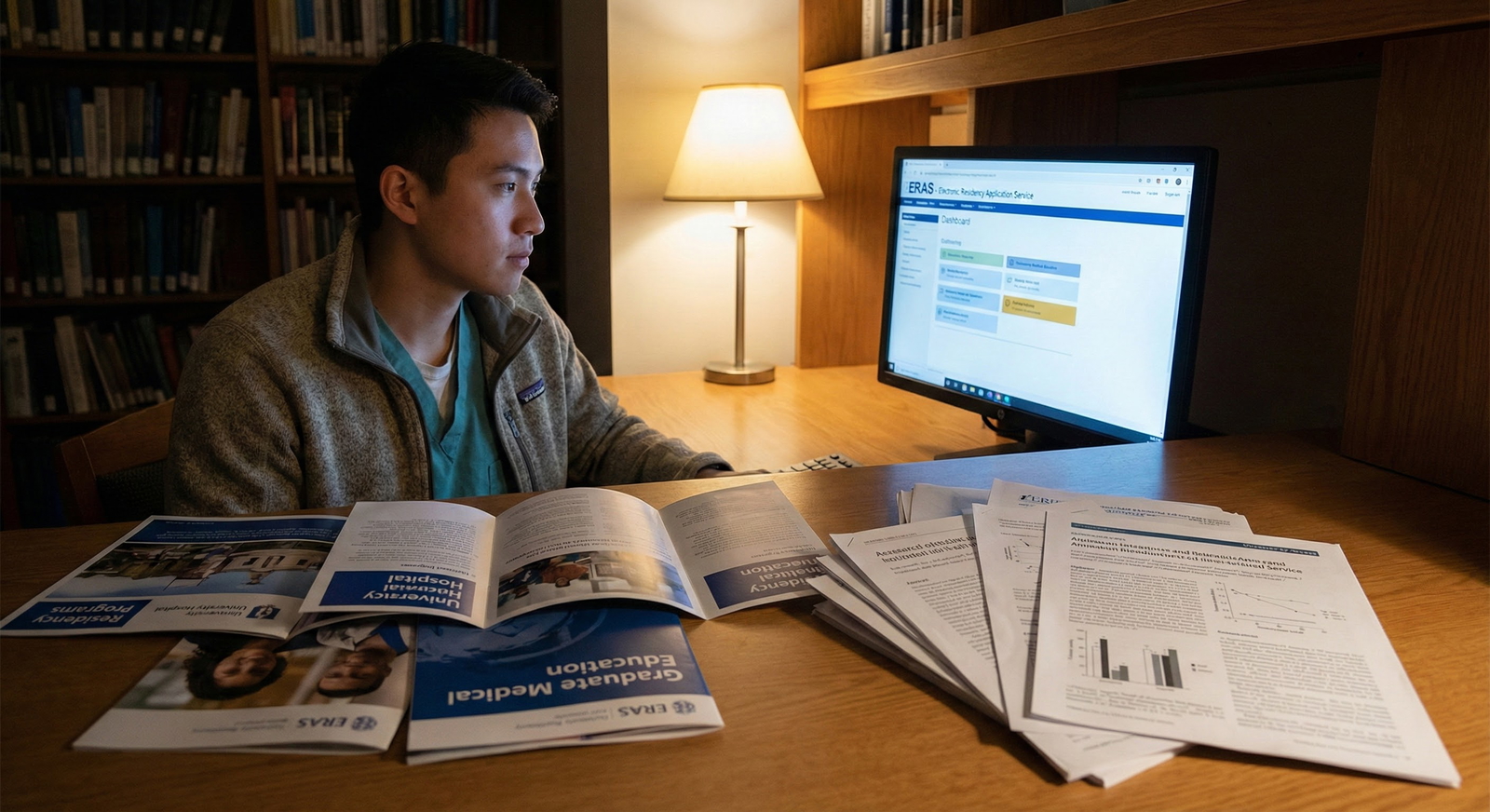
Publications for Match (ERAS Citations)
- Ensure consistent, correct citations (PubMed format is ideal).
- Label status correctly: Published, Accepted, In-press, Submitted, In preparation.
- Avoid listing “in preparation” papers unless a draft exists and there’s clear progress.
Personal Statement
- Use 1–2 paragraphs (not the whole statement) to:
- Connect your research to your interest in Med-Peds.
- Emphasize what you learned that will make you a better Med-Peds physician (e.g., systems thinking, communication, comfort with evidence).
- Use 1–2 paragraphs (not the whole statement) to:
2. Telling a Coherent Story
Programs are more impressed by coherence than by random achievements.
Possible narratives for a non-US citizen IMG:
- “I became interested in lifelong chronic disease management after caring for [patient story]. This led me to research in [X], focusing on how care transitions affect outcomes.”
- “Working in a resource-limited setting showed me the impact of health systems on both children and adults. My research in [Y] helped me understand how to design feasible interventions in real-world clinics.”
The goal is to make interviewers think:
“This person really understands what Med-Peds is about and has already started working on the kinds of questions our specialty addresses.”
3. Answering Research Questions in Interviews
Prepare 2–3 short, clear explanations of key projects:
- Problem: What clinical question or problem were you trying to address?
- Approach: What did you actually do?
- Findings: What did you find (or hope to find, if ongoing)?
- Reflection: What did you learn and how will it shape you as a Med-Peds resident?
Keep these explanations to about 1–2 minutes each, with optional details if the interviewer asks for more.
Common Pitfalls and How to Avoid Them
Many non-US citizen IMGs unintentionally weaken their research profile by:
Chasing Quantity Over Impact
- Ten low-quality, predatory-journal publications are much less useful than 2–3 solid publications in respectable journals.
Disconnect Between Research and Med-Peds
- If all your research is in pathology or orthopedic surgery with no clear link to medicine or pediatrics, programs might question your focus.
- If your earlier work is in a different field, use your personal statement and interviews to explain how your interests shifted and what you learned that still applies.
Overclaiming Role or Experience
- Program directors can sense when applicants exaggerate. Misrepresenting authorship, data analysis role, or project details can be discovered during probing questions.
Neglecting to Finish Projects
- A CV full of “ongoing” or “in preparation” projects but few completed outputs suggests difficulty with follow-through.
- Pick fewer projects and actually carry them to submission, presentation, or publication.
Ignoring Time Zones and Communication
- When working remotely with US mentors, slow replies or missed meetings damage trust.
- Treat your research involvement like a serious job: punctual, responsive, organized.
FAQs: Research Profile Building for Non-US Citizen IMG in Medicine-Pediatrics
1. As a non-US citizen IMG, do I need US-based research to match Med-Peds?
US-based research is very helpful but not absolutely required. If you have:
- Strong, well-executed projects in your home country,
- Publications in recognized journals, and
- Clear relevance to internal medicine, pediatrics, or Med-Peds themes,
you can still be a competitive candidate. However, US-based research gives extra benefits:
- US mentors who can write letters of recommendation,
- Familiarity with US healthcare systems, and
- A signal that you can function in a US academic environment.
If possible, aim for at least one US-based project or research observership before you apply.
2. How many publications needed to feel competitive as a foreign national medical graduate?
There is no universal cutoff, but for most non-US citizen IMGs applying to Med-Peds:
- 1–3 meaningful publications (including case reports or reviews) plus several presentations and QI projects form a solid, competitive platform.
- More is helpful if:
- You had a gap after graduation and need to show continued academic engagement.
- You are targeting research-intensive or highly academic university programs.
Focus on substance, authorship role, and Med-Peds relevance rather than only numbers.
3. I am late in my application timeline. Is it worth starting new research now?
Yes—if you choose fast, realistic projects:
- Case reports with strong teaching points.
- Short narrative reviews in Med-Peds-related topics.
- Small QI projects that you can complete in a few months.
Even if these do not fully mature into publications before you submit ERAS, they:
- Show ongoing scholarly engagement,
- Provide talking points for interviews,
- Can turn into publications or presentations during the interview season or early residency.
Be honest about timelines on your CV (e.g., “Manuscript in preparation,” “Data collection ongoing”) and be ready to discuss progress.
4. Does research compensate for lower USMLE scores for Medicine-Pediatrics?
Research can partially offset lower scores by:
- Demonstrating academic strength and critical thinking,
- Showing commitment and discipline,
- Making you more attractive to academically oriented programs.
However, it does not completely erase concern about very low scores or multiple attempts. For borderline scores:
- Strong research, plus US clinical experience and excellent letters, can help you reach interview lists, especially at programs that value well-rounded applicants.
- Use your research story to reinforce your maturity, resilience, and long-term goals in Med-Peds.
A well-constructed research profile is one of the most powerful tools a non-US citizen IMG can use to stand out in the medicine pediatrics match. By choosing Med-Peds-relevant topics, being strategic about project types and timelines, and presenting your work clearly in ERAS and interviews, you position yourself not only as a capable intern but as a future leader in a specialty that thrives on curiosity, continuity, and care across the lifespan.