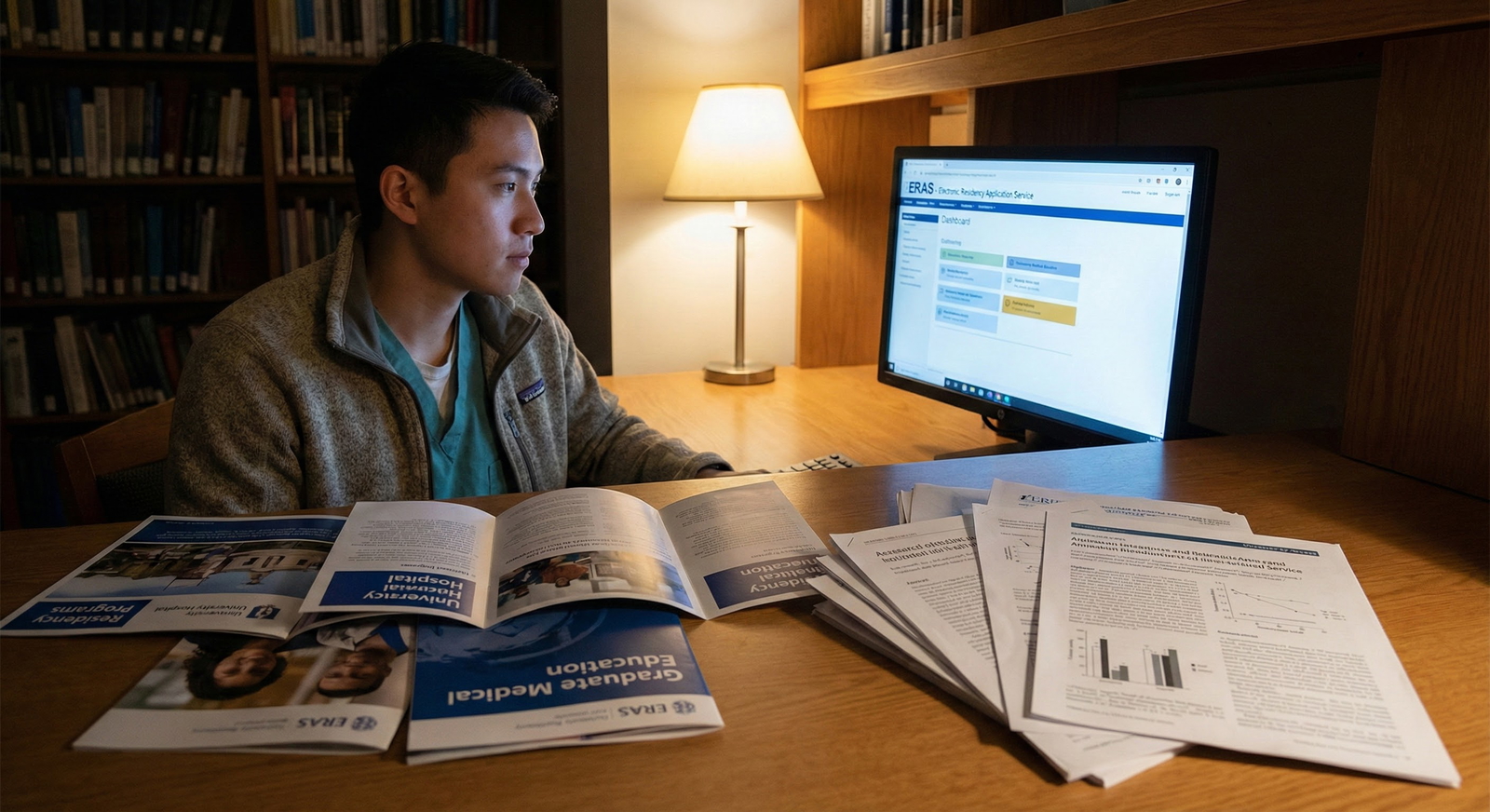
Why Your Research Profile Matters So Much in Peds–Psych as a Non‑US Citizen IMG
For a non-US citizen IMG, research is often the single most powerful tool to offset disadvantages in the residency match. In a niche combined specialty like Pediatrics–Psychiatry–Child & Adolescent Psychiatry (often called peds psych or triple board), a strong research portfolio can:
- Prove your sustained commitment to this unusual career path
- Compensate (partly) for visa needs and lack of US clinical experience
- Differentiate you from applicants with stronger name-brand schools or US medical degrees
- Demonstrate academic curiosity and readiness for complex, integrated training
Programs that offer triple board or peds–psych combined training are usually university-based, research-oriented, and relatively small. That means faculty tend to notice applicants whose scholarly work aligns with their interests—especially applicants who are foreign national medical graduates and need extra reasons to be ranked highly despite visa complexities.
This article lays out, step by step, how to build a research profile specifically tailored to pediatrics–psychiatry as a non-US citizen IMG: what counts as meaningful research, how to get involved from abroad, how many projects and publications truly matter, and how to present your work effectively in ERAS and interviews.
Understanding What “Counts” as Research in Pediatrics–Psychiatry
Residency applicants often ask about how many publications are needed or whether a certain type of work “counts.” Before chasing numbers, you should understand the types of scholarly activities that matter for peds–psych and triple board programs.
1. Clinical Research (High Priority)
Clinical research is typically the most directly relevant and impactful. Examples:
- Outcomes of children with autism treated in integrated pediatric–psychiatry clinics
- Psychotropic medication safety in pediatric populations
- Early childhood trauma, attachment, and mental health outcomes
- Integrated care models: embedding mental health in pediatric primary care
- Transition of adolescents with chronic medical illness (e.g., diabetes, epilepsy) to adult mental health care
These projects show you care about both pediatrics and psychiatry and understand the real-world intersections.
2. Translational & Neuroscience Research
Triple board and peds–psych programs often value research exploring brain–behavior relationships in children, such as:
- Neuroimaging or EEG studies in ADHD, autism, or mood disorders
- Genetic or biomarker studies of neurodevelopmental or psychiatric conditions
- Studies on neuroinflammation, perinatal exposures, or early brain development
You don’t need to be running a lab; being part of a team and understanding the basic science mechanisms that underlie child mental health is valuable.
3. Public Health, Systems & Policy Research
Because pediatrics–psychiatry sits at the intersection of medicine, mental health, and systems of care, health services research is particularly appreciated:
- School-based mental health programs
- Suicide prevention strategies in youth
- Access disparities in child mental health for immigrant or marginalized populations
- Telepsychiatry in pediatric populations
- Policy analyses regarding child mental health coverage and services
As a foreign national medical graduate, you can highlight your perspectives on global child mental health systems and compare them to US models.
4. Quality Improvement (QI) and Implementation Projects
Even if you lack access to formal labs, you can often participate in QI or implementation studies:
- Improving screening rates for depression or anxiety in adolescent clinics
- Implementing developmental screening tools in pediatric practices
- Reducing unnecessary psychotropic use in hospitalized children
- Standardizing suicide risk assessments in emergency departments
QI work is highly relevant to clinical practice and easier to initiate even in resource-limited settings, including outside the US.
5. Educational and Curriculum Research
This is often underappreciated but very useful, especially in child psychiatry:
- Designing a curriculum to teach med students about pediatric mental health
- Evaluating training modules on adolescent substance use
- Studying stigma reduction programs among healthcare trainees
If you can show that your educational project changed knowledge, attitudes, or behavior, that’s meaningful research—especially for combined programs that train you to be a clinician–educator.

How Many Publications Do You Really Need as a Non-US Citizen IMG?
Programs almost never have an official answer to “how many publications needed,” but patterns across competitive academic fields—including triple board and child psychiatry pathways—suggest some realistic benchmarks.
Think Portfolio, Not Just Publication Count
Selection committees look at your whole research trajectory, not just the raw number:
- Did you stay in one area or jump randomly between topics?
- Did your work clearly connect to pediatrics–psychiatry or child mental health?
- Did your role grow over time (from data entry to writing sections to first author)?
- Did you turn projects into publications for match or at least abstracts/posters?
Reasonable Targets for a Competitive Peds–Psych / Triple Board Applicant
For a non-US citizen IMG aiming for research-oriented peds–psych programs, a strong (not perfect or mandatory) profile might look like:
- 1–2 first-author or co–first-author papers (not necessarily in top journals)
- 2–4 co-authored papers in related fields (pediatrics, psychiatry, child mental health, public health)
- 3–6 conference abstracts/posters or oral presentations at regional, national, or reputable international meetings
- Clear and consistent involvement over at least 1.5–3 years
However:
- Many successful foreign national medical graduates matched with fewer than this (e.g., 1–2 publications plus several posters).
- Some with no publications but strong ongoing projects, great letters, and clear fit still matched.
Your goal is not to hit a magic number but to show depth, continuity, and relevance to pediatrics–psychiatry.
For Those Starting Late
If you are in your final year or have already graduated:
- Aim for 1–2 solid projects with clear relevance to children’s mental health or integrated care.
- Emphasize submitted manuscripts, “under review” status, and poster accepted notifications.
- Get strong letters from supervisors emphasizing your intellectual contribution, not just your name on a paper.
Finding and Creating Research Opportunities as a Non‑US Citizen IMG
Access is often the hardest part for a non-US citizen IMG, especially if you are still abroad or newly graduated. You may not have easy access to US academic centers—but there are more pathways than you might think.
1. Start Where You Are: Home Country Opportunities
Even if your institution is not research heavy, you can often:
- Join an existing pediatric, psychiatry, or neurology project
- Suggest a chart review study in a hospital where you see children with mental health concerns (e.g., seizure disorders with behavioral issues, somatic complaints, unexplained abdominal pain with anxiety)
- Collaborate with a child psychologist or social worker on outcomes of therapy programs
- Conduct a cross-sectional survey on topics like bullying, self-harm, sleep, or social media use in adolescents
If nothing exists, propose a small, feasible study that:
- Uses existing records (retrospective)
- Has a simple design (e.g., pre–post intervention, or cross-sectional survey)
- Answers a practical question relevant to child health or mental health
2. Remote Research with US or International Mentors
As a non-US citizen IMG, you can still join research remotely:
- Search for faculty engaged in pediatrics–psychiatry, triple board, or child psychiatry on university websites.
- Read 1–2 of their papers and send a tailored, concise email with:
- A short introduction (school, year, interest in peds–psych, need for J‑1/H‑1B visa)
- A 2–3 sentence summary of why you find their work meaningful
- Specific skills you can offer: data cleaning, systematic reviews, survey design, literature search, basic stats
- A clear ask: “Would you consider having me assist with an ongoing project remotely?”
Hints to raise your success rate:
- Target assistant professors or mid-career faculty; they are often more actively publishing and more open to help.
- Look for authors of recent papers (last 3–4 years) in child psychiatry, developmental pediatrics, integrated care, and youth mental health.
- Be explicit that you are ready to commit consistent weekly hours and learn necessary tools (e.g., REDCap, SPSS, R).
3. Systematic Reviews and Meta-Analyses
If you lack access to patient data, systematic reviews are an excellent path to research for residency:
Pick a focused topic:
- e.g., “Effectiveness of school-based CBT programs for adolescent depression”
- “Sleep interventions to reduce irritability in children with autism”
- “Suicide screening tools in pediatric primary care clinics”
Learn the basics:
- PRISMA guidelines
- Database searching (PubMed, PsycINFO, Embase, Google Scholar)
- Basic risk of bias assessment tools
These projects are relatively feasible for a motivated non-US citizen IMG and can lead to publications if done rigorously, especially with a mentor’s guidance.
4. Data Skills as a Force Multiplier
Building some technical skills gives mentors a concrete reason to include you:
- Basic statistics in R, SPSS, STATA, or Python
- Data cleaning (Excel, CSV, REDCap export)
- Basic qualitative analysis (coding interviews, using NVivo or similar tools)
- Graphical representation of data (R ggplot, Python matplotlib, or even SPSS output cleaned for publication)
Mentioning these skills in outreach emails makes you far more attractive as a collaborator.

Building a Coherent Peds–Psych Research Narrative
Your research profile should not look like random scattered activities. Programs want to see a story that aligns with your specialty choice.
1. Choose a Thematic Focus
You do not need a single ultra-narrow niche, but you should have a visible thread. Some example themes:
- Neurodevelopmental conditions (autism, ADHD, intellectual disability)
- Adolescent depression, anxiety, and suicide prevention
- Chronic medical illness and mental health (e.g., cystic fibrosis and depression)
- Immigration, acculturation, and child mental health
- Trauma, adverse childhood experiences, and resilience
- Integrated care models: co-located pediatrics and child psychiatry services
As a foreign national medical graduate, you can add a global or cross-cultural dimension:
- Comparing stigma, access, or outcomes between your home country and the US
- Implementing low-cost interventions used in your home country into Western contexts, or vice versa
2. Progression Over Time
Ideally, your CV shows that:
- You were curious early (student research, basic involvement).
- You deepened your commitment (took on more responsibility, co-authored papers).
- You focused on child–mental-health intersection as your career interest matured.
- You tied that into electives, observerships, and mentorship in pediatrics–psychiatry.
Even if the timeline is compressed, you can show progression by:
- Being first author on at least one study or review
- Presenting research at a pediatrics or psychiatry conference
- Linking your projects clearly when you describe them in your personal statement and interviews
3. Translating Research into Clinical Insight
In interviews for peds–psych or triple board, faculty often ask:
- “Tell me about your research.”
- “How has your research prepared you for combined training?”
- “How would you like to continue doing research as a resident?”
Prepare to:
- Summarize each project in 2–3 sentences: background, question, key finding, implication.
- Highlight what you personally contributed (design, data collection, analysis, writing).
- Explain how the project shapes your approach to complex pediatric–psychiatric cases.
Example:
“Working on a study of depression screening in diabetic adolescents taught me how closely medical and psychological issues are intertwined. It reinforced my interest in training that prepares me to treat both simultaneously, which is exactly why I’m drawn to triple board.”
Turning Work into Publications, Posters, and Strong ERAS Entries
Research only helps your residency application if it’s visible and understandable. For a non-US citizen IMG, clarity and credibility are essential.
1. Prioritize Completion and Dissemination
Many applicants start multiple projects but finish few. As you approach the match:
Prioritize finishing at least one or two projects to the point of:
- Manuscript submission
- Abstract accepted for presentation
- Preprint posted (if acceptable in your field/region)
Ask mentors early:
- “What is the realistic publication pathway for this?”
- “Can we target a child psychiatry, pediatrics, or general psychiatry journal?”
- “Can this be submitted as a poster to [AAP, AACAP, APA, or international child psych conferences]?”
2. Writing Strong Abstracts and Manuscripts
Even if English is not your first language:
- Use templates from similar published papers in your target journal.
- Ask for feedback from mentors or peers familiar with academic English.
- Use tools (grammar checkers, reference managers like Zotero/Mendeley) to streamline writing.
Aim for journals that are:
- Reputable, peer-reviewed
- Realistic for the size and scope of your study (small local or specialty journals are fine)
- Related to pediatrics, psychiatry, child mental health, or public health
3. Presenting Your Work: Posters & Talks
Presentations demonstrate active engagement with the academic community:
- Submit to regional meetings (state pediatrics or psychiatry societies, regional academic conferences).
- Consider international meetings that accept virtual presentations—useful if travel/visa is a barrier.
- Practice a concise 2–3 minute summary of each poster; this will help both in Q&A and in residency interviews.
When listing on your CV/ERAS:
- Use correct citation format.
- Clearly label status: “published,” “in press,” “accepted,” “submitted,” or “in preparation.”
- Avoid exaggeration; do not list “in preparation” items unless genuinely close to submission and discussable in detail.
4. Optimizing ERAS Research Entries
For each research experience:
- Title: Make it descriptive and relevant (“Depression Screening in Adolescents with Type 1 Diabetes”)
- Role: Be specific (data collection, analysis, first author, coordinator, etc.)
- Description (700–1000 characters):
- 1–2 sentences: project goal and relevance to peds–psych
- 1–2 sentences: your tasks and responsibilities
- 1 sentence: outcome (publication, poster, ongoing analysis)
- 1 sentence: skills or insights gained (statistics, collaboration, systems thinking)
Highlight experiences that best demonstrate your fit for combined pediatrics–psychiatry training, not just those with the highest impact factor.
Practical Timelines and Strategies for Different Applicant Scenarios
Scenario 1: You Are a Mid-Training Medical Student (2–3 Years Before Applying)
Year 1:
- Join an existing project (child mental health, pediatrics, or both).
- Learn basic statistics and study design.
- Aim for at least one poster submission.
Year 2:
- Take on greater responsibility (leading sub-analyses, drafting a manuscript).
- Start a systematic review or small independent project closely linked to peds–psych.
- Submit abstracts to child psychiatry or pediatrics conferences.
Year 3:
- Focus on transforming at least one project into a first-author publication.
- Strengthen relationships with research mentors who can write detailed letters.
- Align electives and clinical experiences with pediatric–psychiatry themes.
Scenario 2: You Have One Year Before Applying
- Join an ongoing project where data is mostly collected and analysis/writing are needed.
- Simultaneously begin a review article or small QI project (short timeline).
- Aim for:
- At least one submitted manuscript (preferably first author)
- 1–2 poster submissions
- Clear, focused peds–psych relevance in your statements and CV
Scenario 3: You Already Graduated and Are Working Toward a Future Match
- Consider a paid or volunteer research assistant position at an academic center, if visas and finances allow.
- If you remain in your home country:
- Lead a pragmatic study in a pediatric or psychiatry clinic.
- Collaborate remotely on systematic reviews with international mentors.
- Use this period to:
- Build 1–3 publications
- Obtain strong research-based letters
- Solidify your identity as a future child mental health clinician with integrated training goals
FAQs: Research Profile Building for Non‑US Citizen IMGs in Peds–Psych
1. As a non‑US citizen IMG, is research absolutely necessary to match into peds–psych or triple board?
No, it is not mathematically mandatory, but for most foreign national medical graduates, research significantly improves competitiveness. Peds–psych and triple board programs:
- Are few in number and mostly at academic centers
- Tend to favor applicants showing strong intellectual curiosity and commitment to child mental health
- May be more cautious about visa sponsorship, so research helps justify investing in you
If you lack research, you would need exceptionally strong US clinical experience, outstanding letters, and a very compelling personal narrative. For most non-US citizen IMGs, developing a solid research profile is the more reliable route.
2. I don’t have access to children’s hospitals or psychiatry departments. Can I still build a relevant research profile?
Yes. You can:
- Conduct survey or observational studies in schools, community clinics, or primary care settings.
- Study adolescent behavior, substance use, bullying, sleep, or social media—topics closely related to mental health.
- Do systematic reviews or meta-analyses on child psychiatry or pediatric–mental-health topics.
- Partner with psychologists, social workers, or NGOs working with children.
What matters is that your work clearly intersects child health and mental health, not that it occurs in a large tertiary center.
3. What if my existing publications are not in pediatrics–psychiatry?
They still help, especially for demonstrating basic research competence. In your application:
- Group your earlier work as evidence of research skills and reliability.
- Emphasize any core methods (statistics, trial design, survey methods) that transfer to peds–psych.
- Then show a transition toward child mental health or integrated care via your newer projects, electives, or observerships.
Programs understand that interests evolve; they mainly want to see a clear, recent alignment with peds–psych.
4. Will lack of first-author publications hurt my chances as a foreign national medical graduate?
First-author work is ideal, but not essential for every applicant. Programs care more about:
- Your genuine understanding of the project
- Your ability to explain methods and implications
- Evidence that you contributed intellectually, not just administratively
If you lack first-author pieces:
- Be ready to describe your role specifically (e.g., “I led data analysis and drafted the results section”).
- Aim to complete at least one first-author review article, case series, or QI study before applying.
- Ask mentors if you can lead spin-off analyses that you can first-author.
Your goal is not perfection, but a credible, coherent picture that you are ready for the academic demands of pediatrics–psychiatry or triple board training.
By approaching research strategically—choosing relevant topics, finding or creating opportunities, and turning work into well-presented publications and presentations—you can build a research profile that significantly strengthens your application as a non-US citizen IMG seeking a future in pediatrics–psychiatry.