Understanding the Role of Research in OB GYN Residency Applications
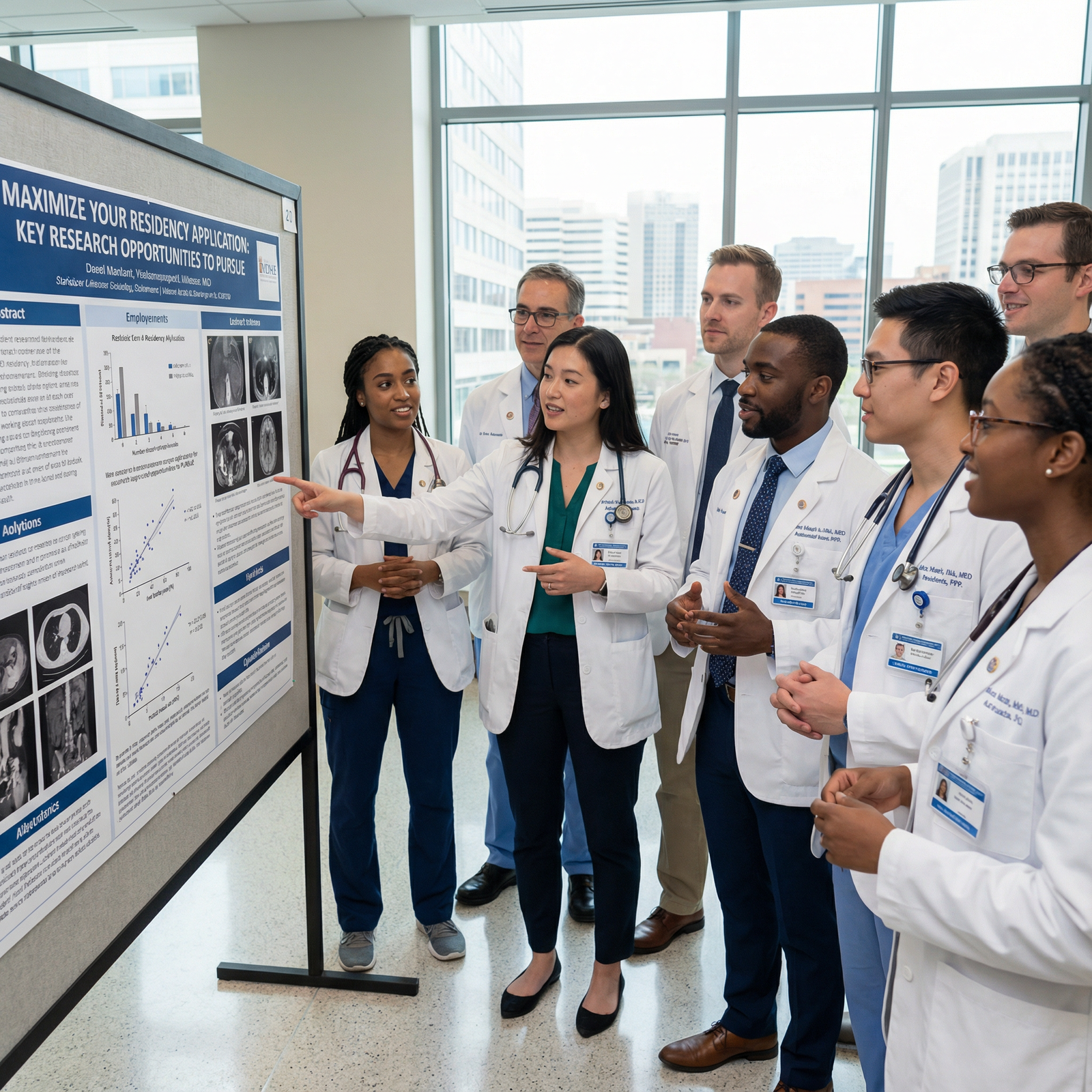
For an MD graduate pursuing an OB GYN residency, a strong research profile is no longer optional—it is a meaningful differentiator in the allopathic medical school match. Even community OB GYN programs increasingly value applicants who can interpret data, contribute to quality improvement, and participate in evidence-based practice. For competitive academic programs and university-affiliated OB GYN residencies, research involvement is often an informal expectation.
Why research matters in OB GYN
Residency selection committees look at research for several key reasons:
- Evidence of academic curiosity: It shows you think beyond memorizing guidelines and want to understand why they exist.
- Ability to complete long-term projects: Research requires persistence, organization, and follow-through—skills that translate directly to residency performance.
- Potential for an academic career: Programs that emphasize teaching and scholarship want residents who can sustain research and possibly become faculty.
- Contribution to the program’s scholarly output: Residents with prior research experience often publish during residency, improving the program’s academic profile and ACGME metrics.
In obstetrics and gynecology specifically, research intersects with:
- High-stakes clinical decision-making (e.g., preterm birth, postpartum hemorrhage, hypertensive disorders of pregnancy)
- Rapidly evolving subspecialties (MFM, Gyn Onc, REI, Urogynecology)
- Health disparities and public health (e.g., maternal mortality, reproductive justice)
- Surgical outcomes and minimally invasive innovation
What programs actually look for
Programs rarely require a specific number of publications, but they do look for:
- Consistent engagement with scholarly work (e.g., multiple projects, not just a one-time mandated project)
- Progression in roles (from data entry to presenting, to first authorship)
- Relevance to OB GYN or women’s health (though outside topics can still be valuable)
- Ability to discuss projects intelligently during interviews
- Evidence of completion: abstracts presented, posters delivered, manuscripts submitted or accepted
A common concern is “how many publications needed” to match OB GYN. There is no universal threshold. However, understanding norms can help you set realistic goals.
- For mid-range OB GYN residency programs (community or community/university-affiliated), many matched MDs have:
- 1–3 total scholarly experiences
- 0–2 publications (often case reports or retrospective studies)
- For highly competitive academic OB GYN residency programs, many successful MD applicants have:
- Multiple research experiences (3–6+)
- Several abstracts/posters
- 1–4 publications (not always first-author, and not always OB GYN–specific)
Your goal is not to chase a magic number, but to build a coherent, honest, and discussable research profile that aligns with your interest in obstetrics and gynecology.
Core Components of a Strong OB GYN Research Profile
Think of your research profile as a portfolio with several dimensions. Each dimension doesn’t need to be perfect, but together they should show steady growth and clear interest in OB GYN.
1. Breadth vs. depth of research experiences
Breadth means you’ve experienced different types of scholarly work (clinical research, QI, educational projects, basic science).
Depth means you’ve meaningfully advanced in responsibilities or expertise within a given area.
For an MD graduate applying to OB GYN, a balanced portfolio often includes:
- 1–2 projects clearly related to OB GYN or women’s health
- 1–2 additional scholarly experiences in other specialties, public health, or quality improvement
- Some evidence of longitudinal commitment (e.g., multi-year project, continued collaboration with a mentor)
Example profile (strong but realistic)
- Third-year: Retrospective chart review on outcomes following induction of labor in obese patients
- Fourth-year: Case report on ovarian torsion in pregnancy, presented as a poster at a regional OB GYN conference
- Elective block: Assisted with an educational research project on improving Pap smear technique training for interns
- One non-OB GYN project: Quality improvement on reducing antibiotic overuse in the ED
This profile demonstrates both breadth and depth, without requiring dozens of publications.
2. Types of scholarly output valued by programs
Programs recognize multiple forms of scholarly activity. In order of perceived impact (roughly):
- Peer-reviewed original research articles (especially first-author or OB GYN–relevant)
- Systematic reviews or meta-analyses
- Narrative reviews, book chapters, or invited articles
- Case reports/series with peer-reviewed publication
- Abstracts and posters accepted at regional/national conferences
- Oral presentations at conferences or local symposia
- Quality improvement (QI) projects with measured outcomes
- Non-traditional scholarship: educational modules, institutional protocols, databases built
Even if you don’t have high-impact journal publications, showing that you brought projects to a visible endpoint—poster, oral presentation, or publication—is highly valuable.
3. OB GYN–specific versus general research
Many MD graduates worry if all projects must be OB GYN–specific to help their obstetrics match prospects. The answer is no—but having at least some relevant work is advantageous.
Highly relevant topics include:
- Maternal-fetal medicine (hypertensive disorders, diabetes in pregnancy, preterm birth, fetal anomalies)
- Gynecologic oncology (ovarian, endometrial, cervical cancers)
- Reproductive endocrinology and infertility
- Urogynecology and pelvic reconstructive surgery
- Contraception, family planning, abortion care research (where applicable)
- Health disparities in maternal mortality and morbidity
- Global women’s health and reproductive health policy
- Minimally invasive gynecologic surgery outcomes
Moderately relevant topics:
- General women’s health (breast health, osteoporosis, STIs in women, contraception counseling)
- Adolescent health with reproductive components
- Surgical outcomes or ER care that frequently touches OB GYN patient populations
Indirectly valuable:
- Any rigorous research experience (cardiology, ICU, internal medicine) that demonstrates your scholarly skills and can be translated to OB GYN.
During interviews, you should be able to connect even non-OB GYN research to skills that matter for an OB GYN resident: critical appraisal, dealing with large datasets, protocol development, understanding ethical issues, and communicating findings.

Strategically Getting Involved in OB GYN Research as an MD Graduate
Whether you’re still in medical school, in a research year, or a post-graduate MD preparing for the allopathic medical school match, you can take concrete steps to build your research profile.
Step 1: Map your timeline and bandwidth
Honest self-assessment is crucial:
- How many months until ERAS submission?
- How many hours per week can you dedicate to research?
- Do you need projects that yield quicker outputs (posters, abstracts), or can you commit to a longer-term study?
If you are:
- 18–24 months from applying: You can aim for more substantial projects (prospective studies, multi-center projects, systematic reviews).
- 9–12 months from applying: Emphasize projects with a higher chance of completion before ERAS, such as retrospective chart reviews, case reports, and smaller QI studies.
- < 9 months from applying: Focus on helping finalize ongoing projects (data cleaning, drafting manuscripts) and case reports or reviews that can be completed quickly. Even “submitted” or “in preparation” work can be listed, if honest and verifiable.
Step 2: Identify mentors in OB GYN
Target potential mentors with a track record of scholarship and a reputation for supporting trainees.
Where to look:
- Your home OB GYN department faculty page (look for “Publications” or “Research interests”)
- Maternal-fetal medicine, gynecologic oncology, or REI divisions
- Hospital research institutes or women’s health centers
- Residents and fellows in OB GYN who are already engaged in projects
How to approach:
Send a concise email that respects their time:
- Briefly introduce yourself as an MD graduate
- Express specific interest in OB GYN and the obstetrics match
- Name a couple of their projects or topics that caught your eye
- Clearly state your available time and skills (e.g., basic stats, chart review, literature search)
- Ask if they have ongoing or upcoming projects where you might help
Offer to start with discrete, well-defined tasks (data extraction, abstract drafting, IRB paperwork) to demonstrate reliability.
Step 3: Choose project types strategically
Not all project types are equally feasible for an MD graduate on a tight timeline. Consider:
Retrospective chart reviews
- Often quicker to launch if IRB is already approved
- Common in OB, MFM, and Gyn Onc
- Example: “Comparison of postpartum hemorrhage rates after induction vs spontaneous labor in multiparous women.”
Case reports and case series
- High-yield if you’re on clinical rotations or working in a hospital where unusual cases arise
- Example: “Rare presentation of HELLP syndrome postpartum in a normotensive patient.”
Systematic or narrative reviews
- Valuable if you’re comfortable with literature search and synthesis
- Can be done remotely and on your own schedule
- Example: “Management of previable PPROM: current evidence and practice variations.”
Quality improvement projects
- Often less publication-focused but still count as scholarly activity
- Example: “Increasing early postpartum depression screening rates in a safety-net clinic.”
Secondary analysis of existing datasets
- High potential impact if mentor has a large database
- Requires some stats skills or collaboration with a biostatistician
- Example: “Racial disparities in cesarean delivery rates at a tertiary care center.”
For an MD graduate with limited time before the OB GYN residency application cycle, combining one chart review, one case report, and participation in an existing project nearing completion is often a realistic and effective mix.
Step 4: Demonstrate reliability and initiative
Once you’re on a project:
- Set clear expectations: Ask for deadlines, preferred communication style, and milestones.
- Communicate early and often: Provide regular updates, especially if you encounter delays.
- Volunteer for defined tasks: Literature search, writing the introduction, formatting references, preparing slides or posters.
- Ask for authorship expectations early and professionally—especially if you’re doing a large portion of the work.
Mentors are far more likely to involve you in higher-impact projects if you prove you can meet deadlines and handle feedback professionally.
Translating Research Work into Match-Relevant Outcomes
Doing the work is only part of the equation; you must also convert your efforts into tangible outcomes that strengthen your OB GYN residency application.
From project to product: posters, presentations, and publications
For each project, ask:
- Where can this realistically be presented or published?
- What is the timeline for conference abstracts?
- Who will be responsible for drafting the manuscript?
Common endpoints for OB GYN research projects:
- Local/regional conferences:
- Departmental research day
- State or regional OB GYN society meetings
- National conferences:
- ACOG Annual Clinical & Scientific Meeting
- SMFM for MFM-related work
- SGO for gynecologic oncology
- AUGS for urogynecology
- Journals:
- Well-known OB GYN journals (Obstetrics & Gynecology, AJOG, BJOG) for strong projects
- Subspecialty or regional journals for more focused or smaller studies
- Case report/focused journals if appropriate
Even if a paper is still under review at the time of ERAS submission, you can list it accurately (e.g., “Submitted,” “In revision”) as long as its status is truthful and documented.
How many publications needed to be competitive?
There is no fixed number, but some patterns exist:
- To be credible as an OB GYN applicant:
- At least 1–2 research experiences and ideally 1 tangible output (poster, abstract, or publication)
- To be solidly competitive for many academic and community programs:
- 2–4 research experiences
- 1–3 posters/abstracts
- 0–2 publications (can include case reports, co-authored papers)
- To stand out for top-tier academic OB GYN residency programs:
- Multiple OB GYN or women’s health–relevant projects
- Several posters/abstracts (particularly at recognized societies)
- Several publications, ideally with at least one first- or second-author paper
However, programs evaluate your entire application. Strong clinical grades, solid USMLE/COMLEX scores, meaningful OB GYN rotations, and compelling letters can offset a leaner research profile, especially for MD graduates targeting less research-intensive programs.
Accurately reporting your research on ERAS
When listing your research:
- Distinguish between “Peer-reviewed article/abstract” and “Other research experiences.”
- Be honest about your role (e.g., data collection, primary author, statistical analysis).
- Avoid overstating or misrepresenting “in preparation” work—be ready to show drafts if asked.
- For each major project, be prepared with:
- A 1–2 sentence summary of the question, methods, and main findings
- What you learned
- How it informs your interest in OB GYN
During interviews, you may face detailed questions about your methodology or results; do not list anything you cannot explain comfortably.
Integrating research into your personal statement and interviews
Your research should support—rather than overshadow—your clinical interest in OB GYN. Use it to:
- Illustrate long-standing interest in women’s health
- Demonstrate commitment to improving outcomes in areas like maternal mortality, cancer care, or reproductive health
- Show skills that make you a better resident: critical appraisal, protocol adherence, multidisciplinary teamwork
Example integration for a personal statement:
“My research on postpartum hemorrhage in a safety-net hospital system did more than challenge my understanding of statistics; it exposed how structural barriers and delayed access to prenatal care can shape maternal outcomes. The experience sharpened my resolve to train in an OB GYN residency where I can combine clinical excellence with inquiry-driven improvement in care delivery.”

Advanced Strategies: Maximizing Impact for the Obstetrics Match
If you are especially interested in academic OB GYN or a highly competitive obstetrics match, you can take your research profile one step further with more intentional planning.
Building a thematic focus
Programs are impressed when your scholarly work shows a coherent theme, even if you’ve done a variety of projects.
Examples of thematic profiles:
Maternal-fetal medicine theme:
- Retrospective study on preeclampsia outcomes
- Case report of atypical HELLP syndrome
- Review article on management of fetal growth restriction
Women’s health disparities theme:
- QI project on improving postpartum visit attendance
- Community-based research on contraception access
- Manuscript on racial disparities in maternal mortality
Gyn Onc theme:
- Chart review of surgical outcomes for endometrial cancer
- Case report of unusual ovarian malignancy
- Poster on survivorship issues in young women with cervical cancer
You don’t need perfect alignment, but a recognizable thread makes your application more memorable and credible.
Leveraging research years and gap periods
As an MD graduate, you may have time between graduation and residency. This can be turned into a major strength:
- Join an OB GYN department as a research fellow or research coordinator.
- Work in a maternal-fetal medicine research office supporting multiple studies.
- Collaborate with a public health or epidemiology group focusing on maternal health.
In 12 months of focused work, it’s feasible to:
- Participate in 3–6 projects
- Achieve 2–4 posters/abstracts
- Move several manuscripts into submission or publication
Just ensure you maintain clinical exposure (shadowing, clinical volunteering) so your application doesn’t appear purely research-focused at the expense of patient care.
Strengthening your skills: statistics, writing, and collaboration
To be an attractive collaborator and more independent researcher:
- Learn basic statistics and study design relevant to clinical research:
- Odds ratios, confidence intervals, p-values
- Cohort vs case-control vs RCT
- Common OB GYN outcomes measures (maternal morbidity indices, surgical complication rates)
- Develop scientific writing skills:
- Read OB GYN journal articles critically
- Practice writing abstracts and introductions
- Ask for feedback on your drafts and observe how mentors revise your work
- Practice professionalism in collaboration:
- Respond promptly to emails
- Track tasks and deadlines
- Give and receive feedback respectfully
These skills will not only strengthen your research profile but also directly enhance your performance as an OB GYN resident.
FAQs: Research Profile Building for MD Graduate in Obstetrics & Gynecology
1. I’m an MD graduate with no publications yet. Can I still match OB GYN?
Yes. Many applicants in OB GYN match successfully without formal publications, especially into community or less research-heavy programs. Focus on:
- Gaining at least one or two meaningful research experiences
- Completing tangible outputs (e.g., a poster, abstract, or submitted paper)
- Strengthening other parts of your application—clinical performance, strong OB GYN letters, and a compelling personal statement.
If you’re targeting highly academic programs, consider a focused research year to build a more robust profile.
2. How many publications are typically needed for a competitive OB GYN residency?
There is no strict cutoff. For many applicants, a realistic and competitive range is:
- 1–3 publications or in-press/submitted manuscripts
- 1–3 posters/abstracts at local or national meetings
- 2–5 total research experiences
However, programs evaluate your research in context: the quality of your involvement, the relevance to OB GYN, and your ability to discuss your work confidently often matter more than sheer numbers.
3. Does my research have to be only in OB GYN to help my obstetrics match chances?
No. While OB GYN or women’s health–focused projects are ideal, any rigorous research experience is valuable. Non-OB GYN projects can still:
- Demonstrate your ability to complete scholarly work
- Show proficiency with study design, data analysis, and scientific writing
- Highlight qualities like persistence, curiosity, and teamwork
Whenever possible, secure at least one or two OB GYN–related projects, but do not discount other experiences.
4. How should I answer questions about projects that are still “in progress” during interviews?
Be honest and specific:
- Clearly state the project’s stage (data collection, analysis, manuscript drafting, submitted).
- Briefly describe the research question, the methods, and any preliminary findings.
- Emphasize your personal role and what you learned.
- Avoid overstating the likelihood of publication or acceptance.
Program directors are not expecting every project to be published—but they do expect you to understand your work and represent it accurately.
By approaching research profile building strategically—selecting feasible projects, engaging strong mentors, generating tangible outputs, and integrating your scholarly work into a coherent narrative—you can significantly strengthen your candidacy for OB GYN residency. For an MD graduate navigating the allopathic medical school match, a thoughtful approach to research for residency can transform this aspect of your application from a vulnerability into a powerful asset.