Understanding the Role of Research for a US Citizen IMG in EM–IM
As a US citizen IMG (American studying abroad or graduate of a non‑US school), you start residency applications with both advantages and challenges. You share citizenship and often cultural familiarity with programs, but your medical school name, curriculum, and clinical training environment may be less known to program directors. Research becomes one of the most powerful ways to validate your academic ability, signal commitment, and differentiate yourself, especially for a competitive pathway like Emergency Medicine–Internal Medicine (EM–IM) combined residency.
EM–IM programs are small, selective, and academically oriented. They tend to value applicants who show:
- Intellectual curiosity and problem-solving skills
- Comfort with evidence-based medicine
- Ability to handle complex, undifferentiated patients
- Interest in academic careers, quality improvement, or leadership
A strong research profile directly supports these attributes.
Before building that profile, clarify what research really means in the residency context:
- It is not limited to bench science or randomized controlled trials.
- EM–IM programs value:
- Clinical research
- Quality improvement (QI) projects
- Systems-based projects (e.g., ED throughput, sepsis bundles, patient flow)
- Medical education research
- Public health and global health work relevant to EM/IM
Your goal is not just “research for residency” in a checkbox sense. It is to present a coherent, plausible academic narrative that fits what EM–IM programs actually do.
How Many Publications Do You Really Need for EM–IM?
Many US citizen IMGs obsess over a single question: “How many publications are needed to match?” There is no magic number. Programs review your entire application in context:
- School reputation and performance
- USMLE/COMLEX scores (if applicable)
- Clinical grades and letters of recommendation
- Research experiences and scholarly output
- Personal statement and fit for EM–IM
That said, there are realistic benchmarks.
Reasonable Targets for a Competitive EM–IM Applicant
For a US citizen IMG aiming for EM–IM combined:
Ideal but not required:
- 2–4 peer-reviewed publications (any authorship position)
- 1–2 first-author or co–first-author works (including case reports or QI)
- 2–5 conference abstracts/posters or oral presentations
Solid, realistic target if you are starting later or have limited access:
- 1–2 publications (including case reports or retrospective studies)
- Several accepted posters/abstracts at national or regional meetings
- One longitudinal QI project with clear outcomes
Minimum to be credible as “research-engaged”:
- Substantial participation in at least one complete project that resulted in:
- A poster/abstract at a recognized meeting, and/or
- A manuscript submitted (even if not yet accepted)
- Evidence you understand basic research methods and can discuss them confidently at interviews
- Substantial participation in at least one complete project that resulted in:
Publications for match are valuable, but process matters as much as product. Programs want to see you:
- Generated a question
- Collected or analyzed data
- Addressed IRB/ethics issues
- Dealt with setbacks and revisions
- Contributed in a sustained way
You can be competitive with fewer total items if your work is EM/IM-relevant and shows progression from simple to more complex projects.
Types of Research That Fit the EM–IM Combined Profile
For emergency medicine internal medicine, not all research is equal. You want your profile to reflect how you think as an emerging EM–IM physician.
High-Yield Research Areas for EM–IM
Acute Care & Critical Illness Topics
- Sepsis, shock, respiratory failure, cardiac arrest
- ED-to-ICU transitions, rapid response systems, code blue outcomes
- Prehospital care and EMS research
Chronic Disease Management with Acute Exacerbations
- Heart failure, COPD, asthma, diabetic emergencies
- Continuity-of-care and readmission reduction
- ED-based interventions that improve long-term outcomes
Systems and Operations Research
- ED overcrowding, boarding, and throughput
- Observation units and short-stay medicine
- Transitions of care from ED to inpatient or outpatient settings
Quality Improvement and Patient Safety
- Timely antibiotic administration for sepsis
- Stroke and STEMI pathway optimization
- Medication reconciliation between ED, inpatient, and discharge
Medical Education
- Simulation in EM/IM (codes, procedures, resuscitation)
- Clinical reasoning and diagnostic error in acute settings
- Interprofessional education across ED and ward teams
Public Health & Health Disparities
- Substance use, mental health and ED utilization
- Homelessness and frequent ED users
- Health literacy and follow-up adherence after ED visits
Less Traditional but Still Valuable Work
If you trained at a school with limited EM research, other areas are still valuable if you connect them to EM–IM in your application:
- Global health projects (e.g., infectious disease surveillance, injury patterns)
- Community-based studies on chronic disease management
- Telemedicine or digital health initiatives
The key is how you frame the relevance in your personal statement and interviews: explain how the skills and insights translate to EM–IM practice.

Step-by-Step: Building a Research Profile as a US Citizen IMG
US citizen IMGs often lack easy access to US-based research networks, especially if they studied in the Caribbean, Europe, Asia, or Latin America. You must be strategic and proactive.
Step 1: Inventory Your Starting Point
Make a structured list of what you already have:
- Any previous projects (even if incomplete or unpublished)
- Any posters, presentations, or theses
- Skills: statistics, Excel, R, SPSS, literature review, data collection
- Access: home-country hospitals, your medical school, alumni, contacts in the US
Then, ask yourself:
- Do I have at least one complete scholarly product (poster, publication)?
- Is any of my work even tangentially related to EM or IM?
- What are my time constraints before I apply? (6 months? 12–18 months?)
This baseline determines whether you should:
- Finish and polish existing work, or
- Start new, tightly scoped projects that are realistic in your timeline
Step 2: Create an EM–IM Research Narrative
Even if your current work isn’t EM-specific, you can align your story. Define:
- A core research theme, such as:
- “Improving acute care outcomes in resource-limited settings”
- “Optimizing transitions between ED and inpatient medicine”
- “Reducing diagnostic error in acutely ill medical patients”
This theme guides which projects you pursue next, so your CV looks like a focused trajectory, not random scatter.
Example:
You worked on a diabetes QI project in your home country. You now seek projects on:
- DKA admissions and readmissions
- ED-based diabetes education
- Improving follow-up after hyperglycemia visits
Altogether, this becomes a coherent “acute and chronic disease interface” narrative that fits EM–IM.
Step 3: Find Research Mentors and Projects (Remotely if Needed)
For a US citizen IMG, finding the right mentor is often the biggest barrier. Use multiple approaches:
Cold Email US Faculty in EM, IM, or EM–IM
Focus on academic departments with EM–IM programs or strong EM/IM research:
- Look up faculty interests on departmental websites
- Target clinicians who list:
- Operations research
- QI and patient safety
- Critical care, ED-ICU, hospital medicine, or transitions of care
In your email:
- Keep it short (8–12 sentences)
- Highlight:
- You are a US citizen IMG / American studying abroad
- Interest in EM–IM combined training
- Any past research exposure
- Your concrete skills (literature review, data entry, basic stats, language fluency)
- Attach a 1-page CV
- Offer to help with ongoing projects, especially:
- Data extraction
- Chart review
- Literature review and reference management
Leverage Alumni & Personal Networks
- Ask your school’s alumni office for US-based EM or IM graduates
- Contact alumni on LinkedIn who list EM, IM, EM–IM, or hospitalist careers
- Be explicit: “I’m looking to gain research experience relevant to emergency medicine internal medicine and would be happy to help with any current projects.”
Virtual Research Positions and Short-Term Roles
- Some departments advertise remote research assistant roles, often paid or volunteer
- Check:
- Academic EM department websites
- EM residency pages
- Hospital research institutes
Local Opportunities Where You Are
Even outside the US, you can create or join EM/IM-relevant projects at your teaching hospital:
- Retrospective chart reviews on common ED presentations
- QI projects on triage accuracy, wait times, sepsis bundles
- Surveys of resident/medical student knowledge
These can still produce international conference presentations and publications, which matter.
Step 4: Choose Project Types That Fit Your Timeline
If you’re 6–12 months from applying, prioritize low-barrier, high-yield projects:
Case Reports and Case Series
- Good entry point
- Use interesting cases from ED, wards, ICU
- Aim for:
- Rare conditions
- Unusual presentations
- Diagnostic or management dilemmas
Retrospective Chart Reviews
- ED presentations (e.g., chest pain, syncope, sepsis)
- Inpatient outcomes for ED-admitted patients
- Requires IRB, but can be done in 9–12 months with good mentorship
Quality Improvement Projects
- Time-sensitive metrics (door-to-needle time, triage-to-provider time)
- Implementation of new protocols (sepsis, stroke, anticoagulation reversal)
- Use Plan-Do-Study-Act (PDSA) cycles; QI is highly valued in EM–IM
Systematic or Scoping Reviews
- Feasible remotely with a strong mentor
- Helps you learn an area deeply and generate potential future original projects
Step 5: Turn Work into Tangible Outputs
For residency applications, products count:
- Abstracts and posters at:
- ACEP, SAEM, AAEM, SHM, SGIM, SCCM, or regional meetings
- Publications:
- Case reports, case series, QI studies, retrospective cohorts
- Letters to the editor or brief reports
- Local or institutional presentations:
- Grand rounds, morbidity and mortality conferences
Always ask: What is our plan to present or publish this? Build that into the project timeline from the start.

Practical Strategies and Examples for EM–IM-Oriented Projects
Example 1: ED Sepsis Care and Inpatient Outcomes
- Project type: Retrospective cohort
- Setting: Tertiary care hospital ED and medical wards
- Question: Does time to antibiotics in the ED affect inpatient length of stay for sepsis admissions?
- Why EM–IM relevant:
- Bridges ED (initial care) and IM (subsequent management)
- Shows interest in acute care, QI, and systems thinking
Your role as a US citizen IMG could include:
- Extracting data from electronic medical records
- Assisting with data cleaning and basic analysis
- Drafting sections of the manuscript (methods, results)
- Presenting at a conference (poster)
Example 2: QI – Improving Handoff Quality from ED to Inpatient Medicine
- Project type: QI, mixed methods
- Question: Does a structured handoff tool improve perceived communication quality and reduce early adverse events after ED admission?
- Activities you can lead:
- Literature search on existing ED-to-IM handoff tools
- Designing and piloting a handoff template
- Collecting pre- and post-intervention data
- Co-authoring a poster for an EM or IM conference
This directly parallels the day-to-day life of an EM–IM resident.
Example 3: Diagnostic Error in Shortness of Breath Presentations
- Project type: Chart review and/or case series
- Question: What are common missed or delayed diagnoses in ED patients with dyspnea who require subsequent ICU care?
- Teaching value:
- Showcases your attention to cognitive errors and clinical reasoning
- Fits the EM–IM emphasis on complex medical patients
Example 4: Global Health Project with EM–IM Framing
Even if your project occurs outside the US:
- Topic: Outcomes of pneumonia admissions at a resource-limited hospital where ED care is minimal.
- EM–IM relevance:
- Recognize advanced disease presentations due to limited access
- Study simple early interventions (e.g., triage, oxygen, antibiotics) affecting mortality
In your personal statement, emphasize how this taught you to handle undifferentiated, high-acuity medical patients—exactly what EM–IM demands.
Presenting Your Research on ERAS and in Interviews
Your research only helps if programs can see and understand it quickly.
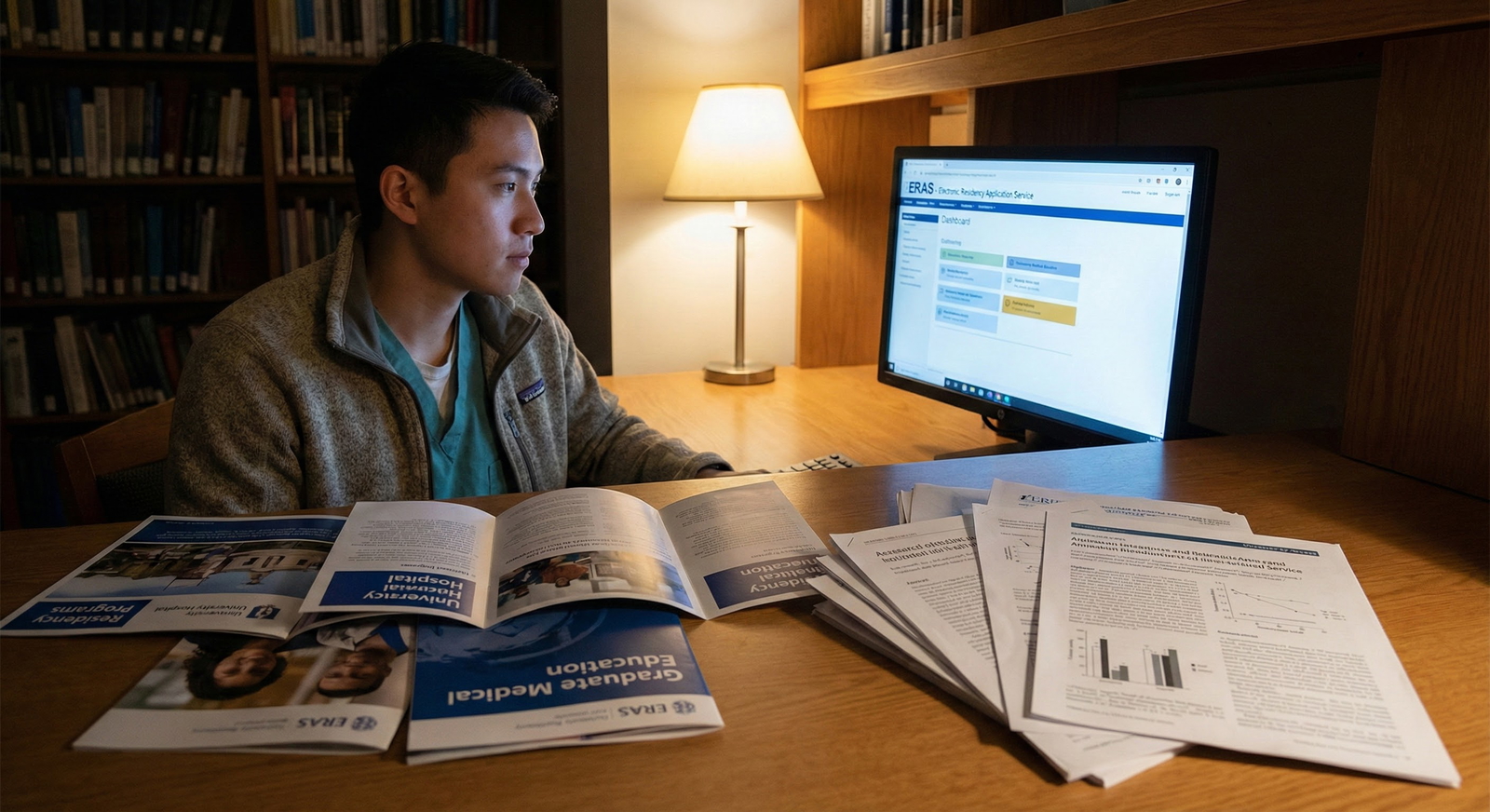
How to List Research in ERAS
- Use clear, descriptive titles:
- “Impact of ED Sepsis Protocol on Inpatient Length of Stay: A Retrospective Cohort Study” is much better than “Sepsis Study.”
- Accurately indicate:
- Role (first author, co-author, data analyst, etc.)
- Status (submitted, under review, accepted, published)
- Group your experiences logically:
- “Emergency Medicine Research”
- “Internal Medicine/Acute Care Research”
- “Quality Improvement and Patient Safety Projects”
Consistency and honesty are critical; programs may ask for proof or details.
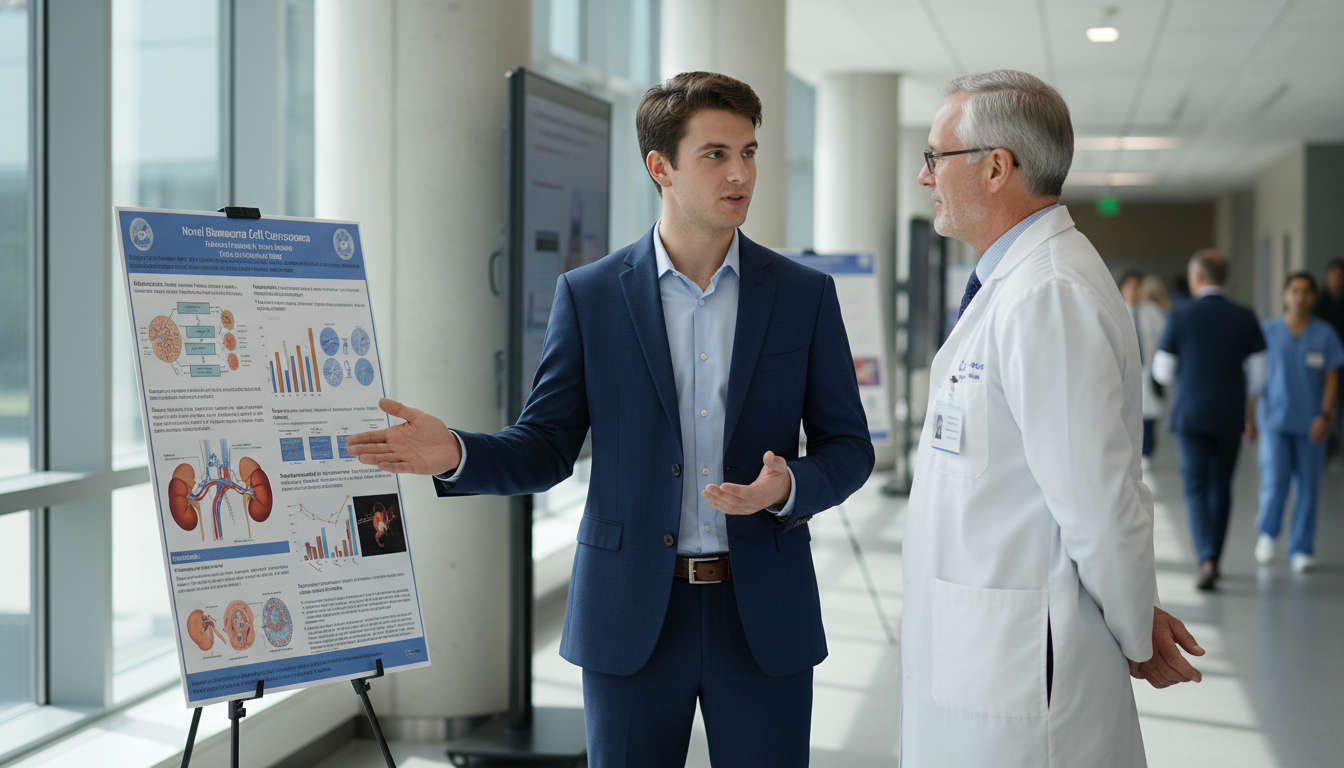
How to Talk About Research in Interviews
Be ready to discuss:
Your main research question
- Why it mattered clinically
- Why you were drawn to it
Your specific role
- What you personally did vs. what the team did
- Any challenges, errors, and how you addressed them
What you learned
- About EM–IM-related themes (system failures, diagnostic challenges, patient safety)
- About teamwork, resilience, and time management
How this experience shapes your future
- How you’d like to continue research in EM–IM residency
- Any ideas for future projects you might pursue as a resident
Interviewers are often less interested in sophisticated statistics and more interested in whether you can think like a clinician-scientist and communicate clearly.
Common Pitfalls to Avoid
- Overstating your contribution (“I designed the entire study” when you didn’t)
- Listing “ghost projects” that never really progressed
- Not understanding basic aspects of a study you’re listed on (design, sample, main outcome)
- Vague, generic answers (“We looked at outcomes in patients…” with no specifics)
Prepare 2–3 key projects you can discuss confidently and deeply.
Balancing Research With Exams, Rotations, and Applications
As a US citizen IMG, you may be juggling:
- USMLE/COMLEX prep or retakes
- Clinical rotations (sometimes short-term US electives)
- Application logistics (LORs, visas for non-US graduates, ERAS, NRMP)
- Potential gaps after graduation
To avoid burnout and incomplete projects:
Set a realistic bandwidth
- During heavy exam prep, keep research limited (e.g., literature review, small writing tasks)
- During lighter periods, push harder on project data and writing
Focus on 1–2 primary projects instead of 5+ scattered ones
Use structured time-blocking
- 2–4 focused hours/week can be enough if consistent and well-directed
Communicate with mentors
- Be upfront about exam dates and availability
- Agree on realistic timelines
Remember: one completed, presented project is more valuable than five abandoned or barely started ideas.
FAQs: Research Profile Building for US Citizen IMGs in EM–IM
1. As a US citizen IMG, can I match EM–IM without any publications?
Yes, it’s possible, but more difficult. EM–IM programs tend to be fairly academic and see research as a marker of curiosity and discipline. If you lack formal publications, aim to have at least:
- A meaningful QI or research project with a poster or presentation
- Strong clinical performance and letters, ideally with EM and IM exposure
- A clear explanation of your academic interests and how you’ll contribute in residency
If you are more than 12–18 months from applying, you should seriously pursue at least one project with potential for publication.
2. How many publications are needed to be considered “strong” for EM–IM?
There is no strict cutoff, but for a US citizen IMG:
- A strong profile might have:
- 2–4 peer-reviewed publications or accepted manuscripts
- Several abstracts/posters at notable conferences
- A good, competitive profile can still be achieved with:
- 1–2 solid publications (including case reports)
- 2–3 posters/abstracts
- Clear EM–IM relevance and the ability to discuss them intelligently
Quality and fit matter as much as raw numbers.
3. Does research outside of EM or IM still help my EM–IM application?
Yes, if you can articulate the connection. For example:
- Basic science work: show how it taught you rigor, patience, and data analysis
- Psychiatry outcomes study: connect it to ED psychiatry boarding or medical-psychiatric interface
- Global health: emphasize resource-limited acute care and complex chronic disease
However, if you have time, prioritize at least one project that clearly touches emergency medicine internal medicine themes.
4. I started late. What can I realistically do in 6–9 months before applying?
Focus on shorter-cycle projects:
- Case reports or small case series from ED or inpatient medicine
- A QI project with a narrow scope (e.g., sepsis bundle adherence, discharge instructions quality)
- Help with data cleaning or analysis on an existing study where a mentor can add you as a co-author
- Aim for:
- At least one abstract/poster submission
- One manuscript submitted (even if not yet accepted by the time of ERAS)
Explain in your application that you got involved as soon as feasible and intend to keep building your academic profile in residency.
By approaching research strategically—as evidence of how you think, work, and solve clinical problems—you can turn it into a genuine strength of your EM–IM application, even as a US citizen IMG with limited initial access. Focus on coherent themes, feasible projects, and tangible outputs, and your research profile will speak powerfully for you on Match day.