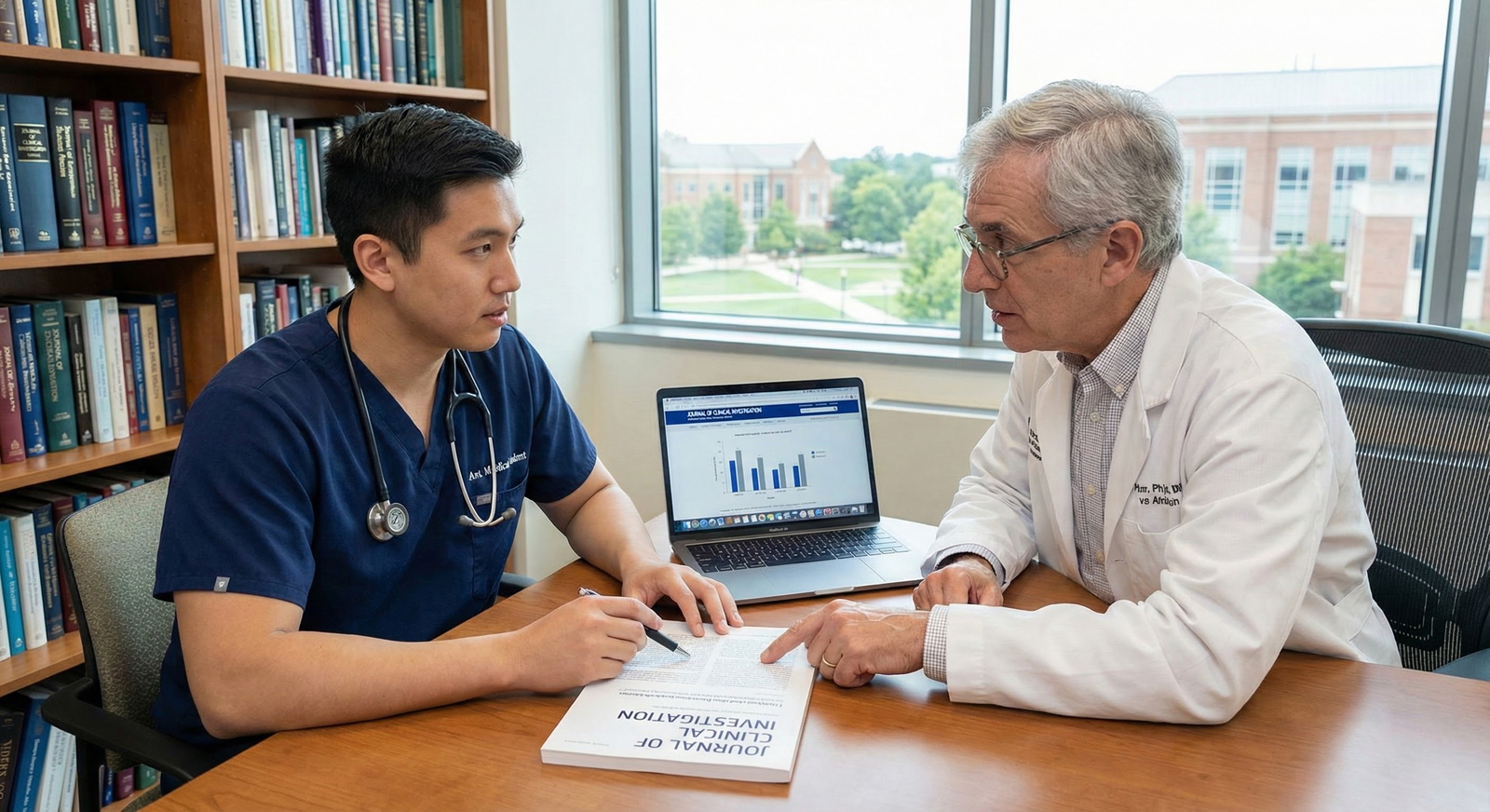
Understanding the Role of Research for a US Citizen IMG in Family Medicine
If you’re an American studying abroad and targeting a family medicine residency, you’ve probably heard conflicting messages about research. Some say, “Family medicine doesn’t care about research,” while others insist, “You need publications for match competitiveness.” The truth lies in between—and for a US citizen IMG, a thoughtful research profile can be a significant asset.
Why Research Matters in Family Medicine (Even If It’s Not “Required”)
Family medicine (FM) is often perceived as less research-heavy than internal medicine or competitive surgical specialties. However:
- Many family medicine programs are university-affiliated and value scholarly activity.
- The ACGME requires residencies to foster scholarly activity among residents and faculty.
- Research experience signals:
- Academic curiosity
- Ability to complete long-term projects
- Skills in critical appraisal of evidence
- Strong work ethic and professionalism
For a US citizen IMG, research can help:
- Compensate for being trained outside the US system
- Demonstrate familiarity with US-style academic medicine
- Differentiate you from other IMGs with similar scores and backgrounds
- Provide strong letters of recommendation from academic mentors
Programs may not expect you to be a prolific researcher, but they do value evidence that you can engage with quality improvement (QI), data, and outcomes—cornerstones of modern family medicine.
How Much Research Do Family Medicine Programs Expect?
You’re probably wondering: “How many publications are needed?”
There is no single number, and program directors rarely apply a rigid cutoff. For FM specifically:
- Many successful US citizen IMGs match with:
- 0–2 publications (especially if other parts of the application are strong)
- A mix of posters, QI projects, and case reports
- At more academic FM programs:
- Having 1–3 solid scholarly works (e.g., posters, abstracts, case reports, or manuscripts) can noticeably strengthen your profile.
- More important than the raw number is:
- Consistency of involvement
- Relevance to primary care or general medicine
- Your role in the project and ability to discuss it clearly in interviews
Instead of chasing a target number, focus on building a coherent research story that supports your interest in family medicine and population health.
What “Counts” as Research in Family Medicine?
For the FM match, “research” is broader than classic bench or randomized controlled trials. Program directors care about your ability to ask questions, gather data, and improve care.
Types of Scholarly Activity That Matter
All of the following can contribute meaningfully to your research profile:
Original Clinical Research
- Chart reviews (e.g., diabetes control in a clinic population)
- Prospective or retrospective cohort studies
- Surveys of patient or provider attitudes
- Outcomes research (readmissions, screening rates, etc.)
- Example:
- A retrospective chart review of hypertension control in a primary care clinic across different age groups.
Quality Improvement (QI) Projects
- Workflow changes to improve vaccination rates
- Medication reconciliation initiatives
- Reducing no-show rates in clinic
- These are highly relevant to family medicine because they involve:
- Systems thinking
- Population health
- Practical, clinic-level change
Case Reports and Case Series
- Rare presentations in primary care
- Unusual side effects or treatment responses
- Interesting diagnostic challenges in outpatient settings
- Easier entry point for IMGs and often faster to complete.
Literature Reviews and Narrative Reviews
- Focused review on a primary care–relevant topic:
- Chronic disease management
- Women’s health
- Geriatrics
- Adolescent medicine
- Can be submitted to FM journals or presented as posters.
- Focused review on a primary care–relevant topic:
Community Health or Public Health Projects
- Screening programs
- Community outreach
- Health promotion campaigns
- If you collect and analyze data, this is research-like and highly valued in family medicine.
Educational Research / Curriculum Development
- Designing and evaluating a teaching module
- Assessing student learning outcomes
- Simulation-based projects related to outpatient care
Does the Topic Need to Be Family Medicine–Specific?
Not strictly. For a US citizen IMG, any structured scholarly work is useful, but you gain extra benefit if:
- The topic is:
- Outpatient-oriented
- Chronic disease management
- Preventive care
- Mental health in primary care
- Women’s health, geriatrics, or pediatrics
- Or you can articulate how the topic connects to:
- Primary care
- Population health
- Continuity of care
For example, a project on inpatient sepsis protocols can still be positioned as:
- Improving transitions of care
- Recognizing sepsis early in an outpatient or ED setting
- Reducing readmissions—linking it to the FM continuum of care.

Step-by-Step Plan to Build a Research Profile as a US Citizen IMG
Step 1: Clarify Your Timeframe and Priorities
Your strategy depends on how far you are from applying:
- 18–24 months before ERAS
- Aim for 1–2 substantial projects (e.g., QI + one paper/poster).
- You have time for data collection and publication attempts.
- 12 months before ERAS
- Focus on projects that can realistically generate presentations or submitted manuscripts before application deadlines.
- Goal: at least one solid, completed project and perhaps a second in progress.
- 6 months or less before ERAS
- Emphasize:
- Case reports
- Short QI cycles
- Conference abstracts
- You may not get full publications in time, but abstracts and submitted manuscripts still strengthen your CV.
- Emphasize:
Always balance research with:
- US clinical experience (USCE)
- US letters of recommendation
- Step score improvement (if applicable)
- Application strategy (personal statement, program list)
Research helps, but it should not completely crowd out these other critical elements.
Step 2: Find Mentors and Research Opportunities
As an American studying abroad, you face unique challenges: limited local research infrastructure and less access to US academic centers. Use a multi-pronged approach.
A. At Your International Medical School
Even if research is limited, look for:
- Faculty who have:
- Any prior publications
- Connections to US or UK institutions
- Interest in primary care, internal medicine, pediatrics, or community health
- Student research clubs or interest groups
- Existing data sets from:
- Clinics
- Community outreach projects
- Public health initiatives
Approach a potential mentor with a specific, concise proposal instead of a vague “I want to do research.”
Example email structure:
- 2–3 lines introducing yourself (US citizen IMG, year in school, interest in FM)
- 1–2 lines about their work that you’ve read
- A clear ask: “I’d like to contribute to any ongoing primary care or QI projects you may have,” or suggest a small retrospective or QI project.
B. During US Clinical Rotations / Externships
Your US rotations are often the best opportunity for meaningful, FM-relevant research:
- Ask at the beginning of your rotation:
- “Do you or your department have ongoing QI or research projects I could help with?”
- Look for:
- Attending physicians interested in teaching
- Residents doing scholarly projects
- Clinic managers involved in QI initiatives
You might join:
- A diabetes registry improvement project
- A vaccination uptake QI initiative
- A transitions-of-care or readmission reduction project
Even a small role (data entry, chart review, preliminary analysis) can lead to:
- Co-authorship
- A poster at a local conference
- A strong letter describing your contribution
C. Remote and Online Research Collaborations
If local options are limited:
- Search for:
- Remote research opportunities via academic hospital websites or faculty pages.
- FM departments at US medical schools and hospitals with a focus on community health.
- Email faculty whose published work aligns with:
- Family medicine
- Primary care
- Preventive or community health
When reaching out remotely:
- Emphasize:
- Strong motivation
- Reliability
- Willingness to take on time-consuming but necessary tasks (literature searches, data cleaning)
- Offer:
- Flexible hours due to time zone differences
- Regular updates, clear timelines
Some structured online options (availability varies; always verify current status):
- Short-term research training programs
- Online QI collaboratives
- FM or primary care–focused academic societies that accept student volunteers on research projects
Step 3: Choose Projects That You Can Actually Finish
One of the biggest mistakes IMGs make is starting projects that are too big or poorly defined.
For a US citizen IMG in FM, it is better to:
- Complete one simple, well-executed project
- Than start three ambitious, unfinished ones
Examples of manageable projects:
QI Project with Simple Metrics
- Title: “Improving Influenza Vaccination Rates in a Community Clinic”
- Scope:
- Pre-intervention audit (baseline rate)
- Intervention (educational flyers + EMR reminders)
- Post-intervention audit
- Timeline: 3–6 months
Retrospective Chart Review
- Title: “Prevalence of Depression Screening in Diabetic Patients in an Outpatient Clinic”
- Scope:
- Extract a limited number of variables
- Analyze screening rates and associations
- Timeline: 4–8 months
Case Report
- Title: “A Rare Presentation of Giant Cell Arteritis in a Primary Care Setting”
- Scope:
- One patient
- Literature review
- Discussion of outpatient diagnostic approach
- Timeline: 1–3 months
These projects:
- Are doable within a typical IMG schedule
- Generate tangible outputs (abstracts, posters, manuscripts)
- Demonstrate skills relevant to family medicine
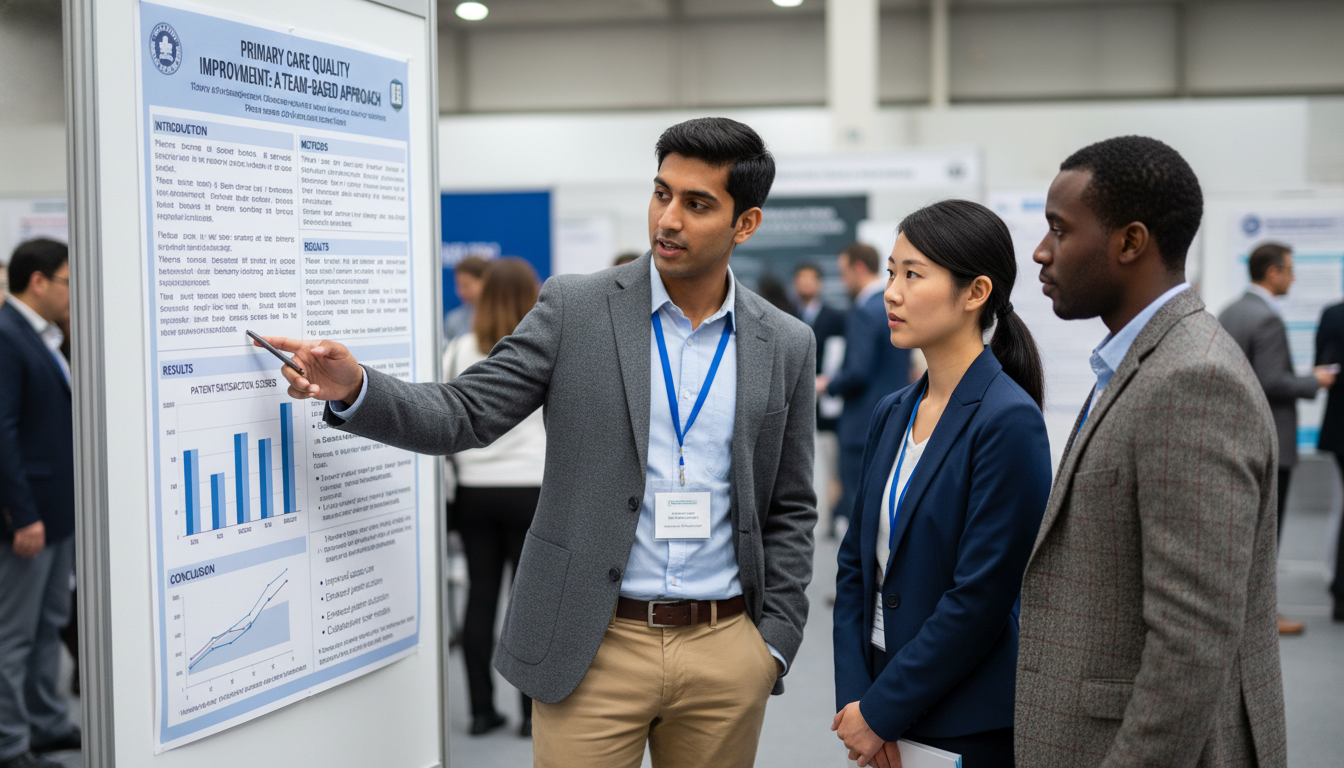
Turning Research Work into Strong, Visible Achievements
From Data to CV Line: Publications, Posters, and Abstracts
Programs look not just at whether you “did” research, but whether it resulted in scholarly output. Think in terms of a pipeline:
Local Presentation
- Present QI projects or case reports at:
- Your medical school
- Local hospital meetings
- Benefit:
- Practice presentation skills
- Builds credibility for later conference submissions
- Present QI projects or case reports at:
Regional or National Conferences
- Target:
- American Academy of Family Physicians (AAFP) student/resident conferences
- State AAFP chapter meetings
- General medical conferences that accept student posters
- Even a poster presentation significantly strengthens your FM match application.
- Target:
Manuscripts and Publications
- Aim to submit:
- Case reports to FM or general medical journals
- QI projects to practice-oriented journals
- Even if your manuscript is still under review by ERAS submission:
- You can list it as “Submitted” or “In Revision” with full details.
- Aim to submit:
“How Many Publications Needed” to Be Competitive?
For family medicine, especially as a US citizen IMG:
- 0 publications but 1–2 well-documented projects:
- Still competitive for many community and some university-affiliated programs if you:
- Have USCE
- Strong letters
- Decent scores
- Still competitive for many community and some university-affiliated programs if you:
- 1–2 publications or abstracts/posters:
- Solid profile for a wide range of FM programs.
- Shows completion, follow-through, and academic engagement.
- 3+ publications/abstracts, especially primary care–focused:
- Positions you very well for academic FM programs or those with strong emphasis on teaching and QI.
But remember:
- A single, meaningful QI project you can discuss in depth is better than multiple projects where your role was trivial or unclear.
- Program directors will likely ask in interviews:
- “Tell me about your research.”
- “What was your role?”
- “What did you learn from this project?”
Prepare 2–3 clear, concise stories about your major research experiences.
Describing Your Role Effectively
When filling out ERAS and preparing for interviews, highlight:
- Your level of responsibility:
- Conception of the project idea
- Study design
- Data collection and analysis
- Writing or editing the manuscript
- Specific, concrete contributions:
- “I cleaned and analyzed data using Excel and basic statistics.”
- “I drafted the case report and performed the literature review.”
- “I led the implementation of the QI intervention in our clinic.”
Avoid vague statements like “I helped with research” without details.
Integrating Your Research Story into Your Family Medicine Application
Aligning Your Research with Your FM Narrative
Your application should tell a coherent story: why family medicine, and how your research supports that choice.
In your personal statement, you might:
- Describe:
- How a QI project deepened your understanding of continuity of care
- How a community health project showed you the importance of preventive care
- Connect:
- A case report to your interest in diagnostic reasoning in outpatient settings
- An outcomes study to population health and health equity in primary care
In your interviews, emphasize:
- What the research taught you about:
- Working in teams
- Managing long-term projects
- Handling setbacks and revisions
- How you plan to continue scholarly activity as a resident:
- QA/QI projects
- Teaching
- Community-based research
Programs value residents who will:
- Participate in residency QI requirements
- Help with ACGME scholarly activity metrics
- Contribute to clinic improvement efforts
Using Research to Strengthen Letters of Recommendation
Research mentors—especially in the US—can write powerful letters that:
- Comment on:
- Your reliability
- Professionalism
- Intellectual curiosity
- Initiative and work ethic
- Provide:
- Concrete examples of your contributions
- Evidence of persistence and ability to self-direct
For family medicine, ideal letters come from:
- FM attendings who supervised you clinically and on a research or QI project
- Internists or pediatricians involved in outpatient or community health research
- Public health or primary care mentors who worked closely with you on data-driven projects
When you request a letter:
- Provide your CV and personal statement draft.
- Remind them of:
- Your role in the project
- Specific instances where you demonstrated key qualities (e.g., leadership, thoroughness)
Common Pitfalls and How to Avoid Them
Chasing high-impact, unrealistic projects
- Avoid:
- Large multicenter RCTs
- Projects needing complex statistics beyond your resources
- Focus on:
- Feasible, clinic-level studies and QI projects.
- Avoid:
Overcommitting to multiple projects
- Working on 1–2 projects you finish is better than 5 unfinished ideas.
- Time management is critical, especially if you’re also studying for exams or in clinical rotations.
Ignoring ethics and IRB approvals
- Even “small” projects may require:
- IRB approval
- Ethics committee review
- Always clarify with your mentor and follow institutional policies.
- Even “small” projects may require:
Poor documentation of your contributions
- Keep a simple research log:
- Dates you joined and left a project
- Tasks you performed
- Any presentations, abstracts, or submissions
- This helps accurately complete ERAS and recall details for interviews.
- Keep a simple research log:
Not leveraging research in your story
- Don’t let your research sit as silent lines on your CV.
- Proactively weave it into:
- Personal statement
- Interview answers
- Conversations with program directors and residents
FAQs: Research for US Citizen IMGs Applying to Family Medicine
1. As a US citizen IMG, do I really need research to match into family medicine?
Research is not mandatory, and many US citizen IMGs match into family medicine without extensive research. However:
- Even 1–2 well-structured scholarly activities (QI project, poster, case report) can:
- Help differentiate you from other IMGs
- Show engagement with evidence-based medicine
- Strengthen your candidacy for academic or university-affiliated FM programs
If your scores or other aspects of your application are average, a research profile can be an important positive factor.
2. How many publications needed to be competitive for family medicine?
There is no fixed number. In practice:
- 0–1 publications plus active involvement in projects is often enough for many community FM programs.
- 1–3 publications, abstracts, or posters (especially primary care–relevant) place you in a strong position for a wide range of programs.
- More than that can help for heavily academic FM programs but is not a requirement.
Focus less on the number and more on:
- Finishing what you start
- Having at least one or two projects you can discuss confidently and in detail.
3. Does research outside of family medicine (e.g., surgery, cardiology) still help?
Yes. Any structured research experience helps you:
- Demonstrate:
- Analytical skills
- Persistence
- Ability to work in teams
- Show familiarity with the scientific method and evidence-based practice
When discussing non-FM research, highlight:
- Skills that transfer to family medicine:
- Data interpretation
- Patient safety
- Communication
- How the project influenced your understanding of patient care across settings (e.g., from hospital to outpatient follow-up).
4. I’m late in the process and have less than a year before applying. What’s the best way to build a research profile quickly?
Prioritize shorter-cycle scholarly activities:
- Case reports (identify interesting cases during rotations and ask attendings about writing them up)
- Small QI projects with measurable outcomes
- Conference abstracts or posters based on existing clinic data
Partner with:
- FM attendings
- Residents
- Clinic managers
Your goal in this timeframe is to achieve:
- 1–2 concrete outputs (poster, submitted manuscript, local presentation)
- Clear evidence of engagement rather than an extensive publication list.
By approaching research strategically—aiming for feasible, primary care–relevant projects, securing mentors, and translating your work into visible scholarly products—you can build a strong research profile as a US citizen IMG. This will not only support your family medicine residency application but also prepare you to be the kind of physician who continuously improves care for patients and communities.