Understanding the Role of Research for a US Citizen IMG in OB GYN
For a US citizen IMG or American studying abroad, building a strong research profile can significantly improve your chances in the obstetrics match. While OB GYN is not as research-intensive as some subspecialties (like dermatology or radiation oncology), programs increasingly expect evidence of scholarly activity—especially from IMGs.
As a US citizen IMG, you face unique challenges:
- Limited access to US-based research infrastructure
- Fewer built‑in research opportunities at many international schools
- Less visibility and fewer connections with US academic departments
But you also have specific advantages:
- You’re a US citizen, which removes visa barriers and makes you more attractive than non‑US IMGs with the same profile.
- Many programs appreciate the maturity and resilience that come from international training.
- With strategic planning, you can use research for residency as a powerful differentiator—showing commitment to women’s health and evidence-based care.
This article will help you:
- Understand the realistic expectations for research in OB GYN residency applications
- Strategically build a research portfolio from an international school environment
- Leverage US-based and remote opportunities
- Present your work effectively to residency programs
Throughout, we’ll keep the context focused on OB GYN and the specific perspective of a US citizen IMG.
What Do OB GYN Programs Actually Expect from IMG Research?
Understanding what program directors look for prevents you from wasting time on low‑yield activities and helps you answer a key question many applicants have: how many publications are needed for a competitive obstetrics match?
How important is research in OB GYN?
Based on NRMP Program Director Surveys and recent match trends:
- Research is “very important” to “important” for many academic OB GYN programs.
- Community-based programs may place somewhat less emphasis on research, but still value scholarly activity, especially QI (quality improvement), case reports, and involvement in local projects.
- For IMGs, research and publications for match can help offset weaker elements (like lower test scores or fewer US clinical experiences).
Programs use research to:
- Identify applicants interested in evidence-based practice
- Distinguish between applicants with similar scores and grades
- Predict potential for future academic involvement, teaching, or fellowship
How many publications are needed for OB GYN?
There is no strict number, and many matched applicants have far from perfect “stats.” But for a US citizen IMG targeting OB GYN:
- Minimum goal:
- 1–2 meaningful scholarly activities (e.g., case report, QI project, poster, or publication)
- Strong profile (especially for academic or university programs):
- 3–5 total scholarly items, including:
- 1–2 peer-reviewed publications (not necessarily first-author, not necessarily OB GYN-specific)
- Several abstracts, posters, presentations, or conference talks
- 3–5 total scholarly items, including:
- Outstanding academic track:
- 5+ entries, with at least 2–3 OB GYN-focused publications and national/international presentations
However, programs care about quality, relevance, and your role more than a raw count:
- A single, well-executed OB GYN project where you clearly owned part of the work can be more influential than five superficial, unrelated publications.
- Being able to talk intelligently about your work in interviews matters more than having an impressive‑looking list.
For a US citizen IMG, a realistic and impactful target is:
By the time you apply, have at least 2–3 OB GYN‑relevant scholarly products, one of which is peer‑reviewed (publication or conference abstract), plus any other research you’ve done in other fields.
Core Elements of a Strong OB GYN Research Profile
Think of your research profile as more than just “papers.” Programs see the overall pattern of your interest in women’s health and scholarship.
1. Thematic focus on women’s health
You do not need every project to be OB GYN, but at least some should clearly connect to:
- Obstetrics (e.g., maternal-fetal health, high-risk pregnancy, prenatal diagnosis)
- Gynecology (e.g., abnormal uterine bleeding, fibroids, minimally invasive surgery)
- Reproductive endocrinology/infertility
- Gynecologic oncology
- Family planning, contraception
- Global women’s health, maternal mortality, reproductive justice, access to care
Example:
If your medical school lacks OB GYN research, you can work on projects in:
- Public health: intimate partner violence, menstrual health, maternal nutrition
- Primary care: preconception counseling, postpartum depression
- Surgery: minimally invasive techniques, perioperative care in women
When you write your CV and personal statement, frame them around your commitment to improving women’s health outcomes, even if the project is not purely OB GYN.
2. Variety of scholarly outputs
Aim for diversity:
- Peer-reviewed articles (original research, reviews, case reports)
- Conference abstracts and posters
- Oral presentations (local, regional, or national)
- Quality improvement projects (chart audits, protocol implementations)
- Educational projects (curriculum development, patient education tools)
Programs expect your profile to grow logically over time:
- Preclinical years: background work, literature reviews, data cleaning, case reports
- Clinical years: more clinical research, QI, case series, presentations
- Gap year(s) or dedicated research year: higher-level involvement, manuscripts, larger projects
3. Increasing level of responsibility
Important elements programs will notice:
- Authorship position: First or second author suggests substantial involvement.
- Role: Defined contributions (e.g., data collection, analysis, writing the methods section, presenting at conference).
- Trajectory: You start with simple tasks and move toward independent projects or leadership roles.
Being able to answer clearly in interviews:
“What was your role in this project?”
…is critical. Vague answers raise red flags, especially for IMGs.

Strategies to Build an OB GYN Research Profile as a US Citizen IMG
Your main challenge is access—to mentors, patients, institutional review boards, and conferences. The good news: there are realistic, stepwise strategies you can implement from almost any setting.
Step 1: Clarify your timeline and goals
Ask yourself:
- When will I apply to the obstetrics match?
- How much time per week can I realistically dedicate to research?
- Do I plan a research year in the US?
- Am I aiming primarily for community programs, academic programs, or both?
Typical scenarios for US citizen IMG applicants:
No gap year, straight through:
- Focus on short, feasible projects: case reports, small retrospective reviews, QI.
- Emphasize completion and dissemination (poster, abstract, or paper).
1-year research or MPH/MSc in the US:
- Aim for 1–2 solid OB GYN-based projects resulting in abstracts and at least one publication.
- Build deep relationships with US mentors for strong letters of recommendation.
Multiple years between graduation and application:
- Research should be sustained, not just a one-time project.
- Ensure you are continuously active, not with large unexplained gaps.
Step 2: Leverage your current environment
Even if you are at a smaller or non-US school, there are often underused opportunities:
a) Identify local OB GYN faculty with academic interest
- Look for faculty who:
- Have any publications listed on institutional websites
- Attend or present at conferences
- Mention ongoing projects in lectures or clinics
Approach them with a specific, low‑maintenance proposal, such as:
“I’m a US citizen IMG very interested in OB GYN and the US obstetrics match. I’d like to gain experience in research and would be happy to help with data collection, chart reviews, or writing a case report. Are there any ongoing projects I could assist with, or a patient case we could write up together?”
Key: Show you’re willing to work, be reliable, and not create extra burden.
b) Start with case reports and case series
Case-based work is often the most accessible entry point:
- Identify unusual or instructive OB GYN cases:
- Rare presentations (e.g., ovarian torsion in early pregnancy)
- Complications (e.g., massive postpartum hemorrhage managed with novel approach)
- Interesting imaging or intraoperative findings
- Ask if your faculty would co-author:
- “Would you be open to supervising a case report on this patient’s presentation and management?”
Practical tips:
- Use journal websites to find “Instructions for authors” specific to case reports.
- Journals like BMJ Case Reports or specialty-led case journals often welcome such submissions.
- Ensure patient consent (or appropriate institutional process) is followed.
c) Conduct simple retrospective or chart-review studies
Even without sophisticated infrastructure, many international hospitals have:
- Medical records that can be reviewed
- A defined population (e.g., labor and delivery unit, gynecology ward)
Examples for OB GYN projects:
- Cesarean section rates and associated factors at your hospital
- Patterns of antenatal care attendance and outcomes
- Management and outcomes of ectopic pregnancy
- Prevalence of anemia in pregnant patients at booking
You’ll typically need:
- A faculty supervisor
- Institutional approval (IRB or equivalent ethics committee review)
- A basic data collection template (Excel or Google Sheets)
Start small—better to complete a focused 6‑month project than abandon an overly ambitious 3‑year one.
Step 3: Expand beyond your home institution
As an American studying abroad, you have easier access to US‑based networks than non‑US IMGs. Use that advantage.
a) Remote research with US-based mentors
Many US OB GYN departments run:
- Database projects (e.g., large registries)
- Chart reviews
- Systematic reviews and meta-analyses
- Educational research
These can often be done remotely. To find such opportunities:
Use your US connections:
- College alumni network
- Friends in US med schools
- Family members working in healthcare or academia
Cold emailing strategy:
Identify OB GYN faculty with interests aligned to yours (e.g., maternal mortality, global women’s health, family planning).
Send a very concise, professional email (shorter is better):
- Who you are: US citizen IMG, school, year, USMLE progress
- Why you’re writing: desire to gain research exposure in OB GYN
- Your skills: organizing data, literature review, basic statistics, commitment
- What you’re asking: a brief meeting to discuss possible remote involvement
- Attach CV (well‑formatted, accurate)
Expect a low response rate. Even 1–2 positive responses can be transformative.
Be prepared to deliver:
- If someone offers a role, meet deadlines, communicate clearly, and ask for feedback.
- Aim to progress from low‑level tasks (data entry) to co‑authorship when you’ve earned trust.
b) Short in-person research experiences / electives
If possible, plan US-based OB GYN electives or research blocks between core rotations or during a dedicated year:
- Target departments that:
- Have a strong academic profile but are still IMG-friendly
- Run structured research programs for students
- During rotations:
- Ask residents and fellows about ongoing projects
- Attend research conferences, M&M, and journal clubs
- Let people know early: “I’m interested in research and would love to get involved if possible.”
Even a 4–8 week elective can launch a project that you continue remotely.
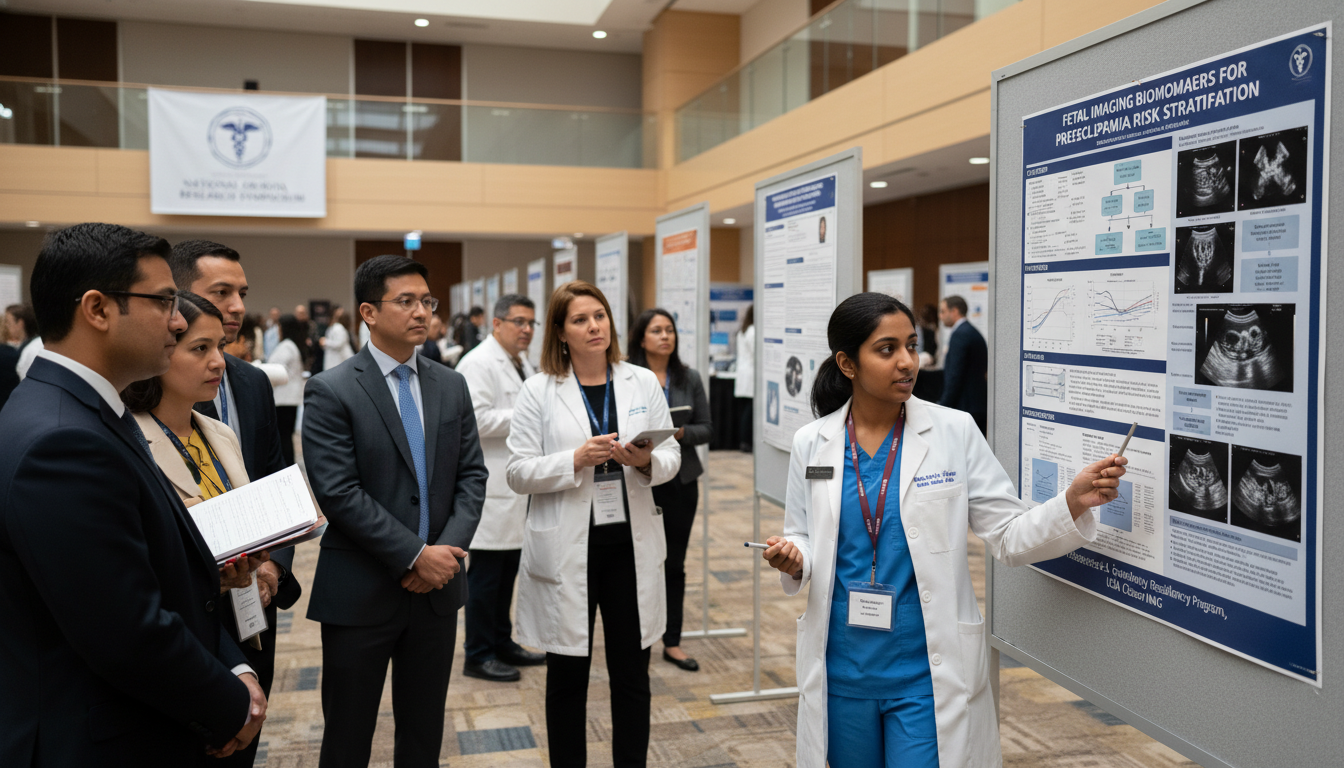
Maximizing the Impact of Your Research for the Obstetrics Match
Once you have some projects, your next task is to translate them into match value. This is where many US citizen IMGs underperform—even with decent research.
Selecting high-yield projects
Given limited time, prioritize:
- OB GYN–focused work over unrelated fields, once you have a baseline record.
- Projects likely to reach a visible endpoint:
- Abstract submission to a national/regional OB GYN meeting
- Case report targeted to a reputable journal
- Small retrospective study with a clear, answerable question
- Projects with supportive mentors:
- Someone who responds to emails, helps you navigate ethics and submission, and is willing to give you credit and letters.
If you must choose between:
- A large, complex, multi-year project that may never finish
- A well‑defined case series that can be submitted in 3–6 months
…for the purposes of your OB GYN residency application, the smaller but completed project often has more immediate value.
Presenting your research on ERAS
Your ERAS application lets you list experiences as:
- Peer-reviewed journal articles/abstracts
- Oral presentations
- Poster presentations
- Other research projects
Key principles:
- Be accurate: no exaggerating authorship or status (e.g., listing “submitted” as “accepted”).
- For each item, provide:
- Full citation (journal, meeting name, date)
- Your role (first author, co-author, data collection, analysis)
- Brief 1–2 line description if space allows.
For research experiences (not yet published):
- Describe what you actually did, not just the project title.
- Clearly state status: “manuscript in preparation,” “abstract submitted,” etc.
Talking about your research in interviews
Program directors often gauge authenticity with a single question:
“Tell me about your research.”
Prepare concise, confident explanations for your top 2–3 projects:
Use a simple structure:
- Context: “This was a retrospective study of X at Y hospital.”
- Question: “We wanted to understand whether…”
- Methods: “We reviewed charts/data from…”
- Results: “We found that…”
- Your role: “My role was to…”
- Impact: “This suggests that…” or “We changed our protocol by…”
Avoid:
- Overclaiming results
- Using jargon you can’t clearly explain
- Claiming ownership of work you barely contributed to
Programs are far more impressed by a US citizen IMG who can discuss one small project intelligently than by someone listing many items but offering vague, confused descriptions.
Using research to support your personal narrative
Your research should reinforce your overall story:
- If you’re interested in global women’s health: highlight projects on maternal mortality, access to care, or low-resource settings.
- If you lean toward a future fellowship (MFM, REI, Gyn Onc): showcase early work in those areas.
- If your strength is teaching: emphasize educational research or curriculum development related to OB GYN.
In your personal statement and interviews, connect the dots:
“As an American studying abroad, I’ve seen firsthand how limited antenatal resources affect outcomes. That motivated my project on predictors of preeclampsia at my teaching hospital, and I’m eager to continue working on evidence-based ways to improve maternal health during residency.”
Common Pitfalls and How to Avoid Them
Even motivated applicants can fall into traps that waste time or damage credibility.
Pitfall 1: Chasing numbers without substance
Obsessing over “how many publications are needed” can lead to:
- Low‑quality work in predatory journals
- Confusing or inconsistent CV entries
- Weak understanding of the actual science
Programs care about integrity and understanding. Avoid:
- Paying to publish in unrecognized or clearly predatory journals.
- Listing non-peer-reviewed blogs or commercial content as “peer-reviewed articles.”
- Inflating your role far beyond reality.
Pitfall 2: Overcommitting and underdelivering
As an IMG, your reputation travels quickly among small academic communities. Common issues:
- Agreeing to many projects and then missing deadlines.
- Poor communication when you get overwhelmed.
- Failing to follow through with revisions or feedback.
Better strategy:
- Start with one project.
- Demonstrate reliability.
- Then gradually add more.
Pitfall 3: Ignoring non-OB GYN research
Some US citizen IMGs think only OB GYN work counts. Not true.
If you already have:
- Internal medicine or surgery research
- Public health or quality improvement studies
- Basic science or lab work
You should absolutely include these—especially if they’re peer-reviewed.
Just be sure to:
- Explain the skills you gained (study design, statistics, writing).
- Connect those skills to your interest in obstetrics and gynecology.
- Show how your focus evolved toward women’s health over time.
Pitfall 4: Not seeking feedback early
A common mistake is working in isolation, then discovering late that:
- Your question is not novel or clinically relevant.
- Your manuscript is not in a format suitable for the target journal.
- Your abstract doesn’t meet conference requirements.
Instead:
- Discuss your research idea with a mentor at the beginning.
- Show drafts early—outline, abstract, and figures.
- Ask specifically: “Is this a realistic project to complete before my application cycle?”
Practical Action Plan for a US Citizen IMG (12–18 Months Before Applying)
12–18 months before ERAS submission
- Clarify your goal: OB GYN residency, likely application year.
- Identify at least one local OB GYN mentor and one US-based contact (if possible).
- Start or join:
- 1 OB GYN case report
- 1 simple retrospective or QI project
- Begin learning basic research skills:
- How to do a structured literature search (PubMed)
- Basic statistics (via free online courses)
- Reference managers (Zotero, Mendeley)
9–12 months before application
- Aim to have:
- One abstract submitted to a conference
- One manuscript in progress or submitted
- Continue building:
- Add a second small project if manageable
- Seek opportunities for oral or poster presentations (local or regional meetings)
- Start drafting how you’ll describe your projects on your CV and in interviews.
3–6 months before application
- Finalize submissions of:
- Manuscripts (even if acceptance isn’t guaranteed yet)
- Conference abstracts (where deadlines align)
- Request letters from research mentors:
- Especially US-based or OB GYN faculty who know you well.
- Prepare clear, concise talking points for each project.
By ERAS opening:
- Ideally, you have:
- 1–2 peer-reviewed items (any field, at least one related to OB GYN or women’s health)
- 2–3 total OB GYN-related scholarly experiences (case reports, QI, abstracts, posters)
- A coherent narrative about your interest and effort in research
Frequently Asked Questions (FAQ)
1. As a US citizen IMG, do I have to do a research year to match into OB GYN?
No. Many US citizen IMGs match into OB GYN without a dedicated research year, especially into community and some university-affiliated programs. A research year can be very helpful if:
- You have limited existing research or weak academic metrics, and
- You can secure a structured, mentored position in a US OB GYN department.
If you already have 2–3 solid OB GYN-related scholarly items and good US clinical experiences, a mandatory research year is not always necessary.
2. What if my school or hospital has almost no OB GYN research?
You can still build a viable profile by:
- Focusing on case reports and small chart reviews with whatever OB GYN exposure you have.
- Doing related fields: maternal health in public health, women’s mental health, surgical outcomes in gynecology‑type procedures.
- Proactively seeking remote US-based mentors for systematic reviews, database research, or collaborative projects.
Your personal statement and interviews can emphasize how you sought out opportunities despite limited infrastructure—a trait many programs respect.
3. Are non‑OB GYN publications useful for the obstetrics match?
Yes. Research in other fields demonstrates:
- Analytical skills
- Scientific writing ability
- Persistence and completion
Programs will value your publications for match even if they’re not in OB GYN, as long as you:
- Can speak about them intelligently
- Connect skills and lessons learned to your future work in women’s health
- Show an eventual trajectory leaning toward OB GYN topics
4. How many publications do I really need to be “competitive” as a US citizen IMG in OB GYN?
There is no magic number, but a reasonable target is:
- Minimum: 1–2 meaningful scholarly activities (case report, QI, small study, or conference abstract), preferably with at least one OB GYN connection.
- More competitive profile: 3–5 entries total, including at least one peer-reviewed publication and multiple OB GYN‑related outputs (posters, abstracts, presentations).
Remember, quality, relevance, and your role matter more than just counting items. A focused, authentic, and well‑explained research portfolio can significantly strengthen your application and show programs that you are ready to practice evidence-based obstetrics and gynecology.