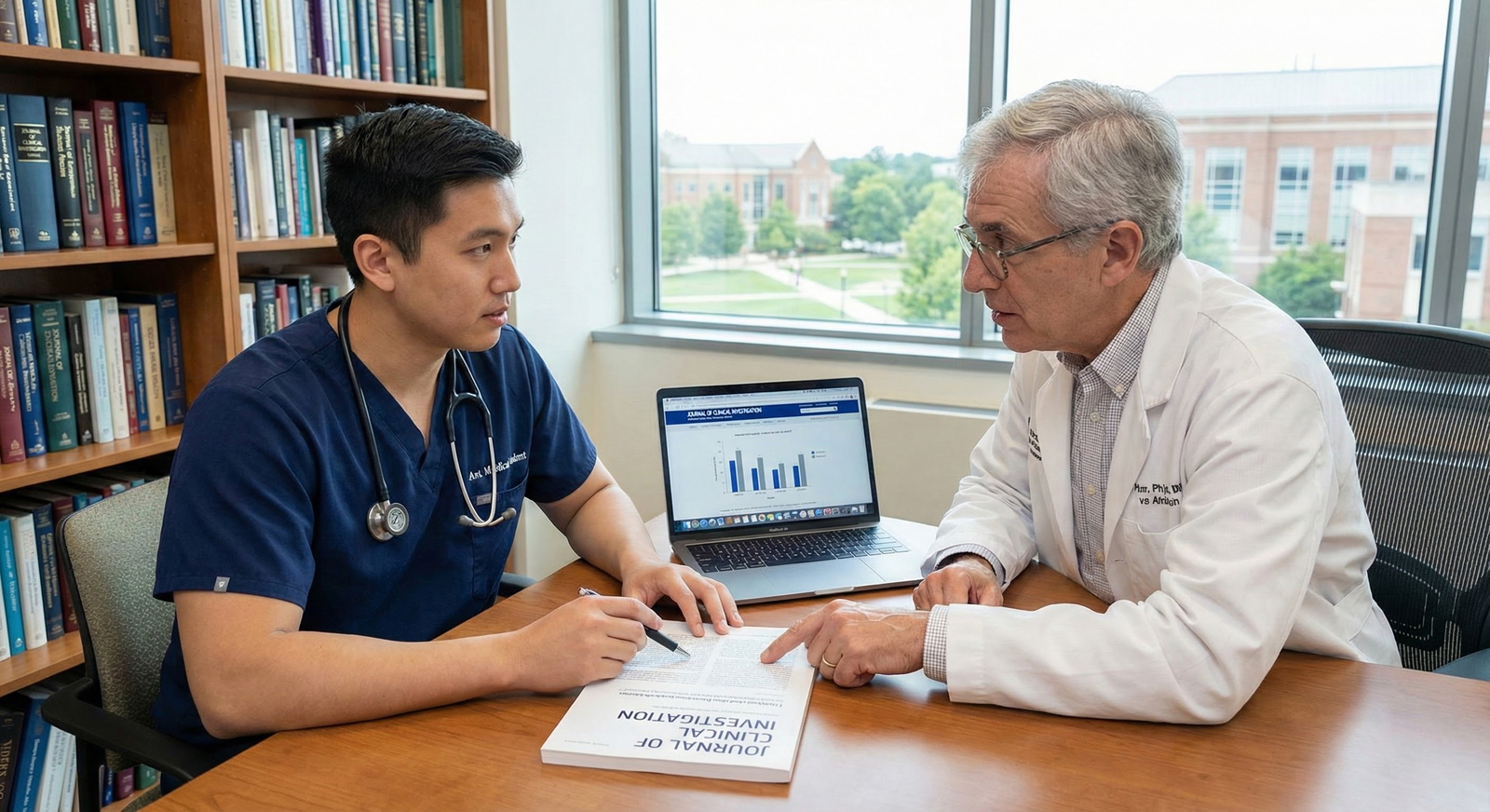
Why Your Research Profile Matters as a US Citizen IMG Aiming for Preliminary Surgery
For a US citizen IMG or American studying abroad, preliminary surgery can be a strategic and realistic path into surgical training or a categorical position later. Program directors often use research as a key differentiator among applicants, especially when Step scores, grades, and clinical experiences look similar.
Even though a preliminary surgery year is often viewed as “transitional,” many prelim surgery residency spots are highly competitive and are used by program directors as an extended, real-life audition for future categorical positions. A strong research background signals:
- Academic potential and curiosity
- Ability to complete long-term projects
- Skill with evidence-based medicine
- Communication and teamwork skills
- Genuine commitment to surgery as a career
As a US citizen IMG, you often compete not only with other IMGs but also with U.S. grads who may have more built-in research infrastructure. That makes research for residency not optional—but an important tool to help you stand out.
This guide will walk you through, step-by-step, how to build a realistic, strategic research profile tailored to prelim surgery applications, with specific advice for US citizen IMGs and Americans studying abroad.
Understanding Expectations: How Much Research Do Surgery Programs Want?
Before you start, you need realistic expectations: how many publications are needed or what type of research matters most for a prelim surgery residency?
What Program Directors Look For
In surgery (including prelim tracks), program directors typically assess your research profile along four dimensions:
Quantity
- Total scholarly products (publications, abstracts, posters, oral presentations, book chapters).
- They look at overall activity, not just PubMed-indexed peer-reviewed articles.
Quality & Relevance
- Is it peer-reviewed?
- Is it related to surgery or perioperative care (not mandatory, but ideal)?
- Is there evidence of increasing responsibility (from co-author to first author)?
Consistency Over Time
- A single random paper is less compelling than 2–4 years of consistent scholarly involvement.
- Longitudinal engagement suggests maturity and persistence.
Role & Contribution
- First-author or second-author roles often carry more weight than being the 12th author.
- Evidence of initiative—designing a project, data collection, manuscript drafting.
So… How Many Publications Are Needed?
There is no magic number, but for a US citizen IMG pursuing a preliminary surgery year, a realistic target framework is:
Strong profile for prelim surgery (especially at academic centers):
- 2–5 total scholarly items, with at least:
- 1–2 peer-reviewed publications (preferably PubMed-indexed), or
- 1–2 first-author case reports, QI projects, or short surgical articles
- Plus posters, abstracts, or oral presentations.
- 2–5 total scholarly items, with at least:
Solid but not research-heavy profile (still competitive at many programs):
- 1–2 publications (can include case reports)
- 1–3 additional products (posters, abstracts, local projects)
Minimal profile (may limit you to less academic or smaller programs):
- 0–1 low-impact items
- Still worth applying, but you’ll need very strong clinical performance, letters, and exam scores.
More publications can help, but quality + relevance + a coherent story matter far more than just raw numbers.
Core Strategies: How a US Citizen IMG Can Build a Strong Research Profile
As a US citizen IMG or American studying abroad, you face unique constraints:
- Limited access to U.S.-based labs or databases while overseas
- A short time window during U.S. clinical rotations
- Less formal research infrastructure at some foreign schools
Despite that, you can still build a smart, targeted research portfolio. Below is a practical blueprint tailored to your situation.

1. Choose the Right Types of Research for Your Timeline
When applying for a prelim surgery residency, your time is limited. Some projects will not be completed or published by the time you apply. Prioritize research types by speed to completion and feasibility:
Fastest to Moderate Timeline (Weeks to Few Months)
- Case reports and case series
- Ideal during U.S. rotations or sub-internships.
- Work with a surgery resident or attending on unusual or instructive cases.
- Narrative reviews or mini-reviews
- Focus on specific surgical techniques, complications, or guidelines.
- Letters to the editor / commentaries
- Responding to newly published surgical trials or guidelines.
Moderate to Longer Timeline (Several Months to >1 Year)
- Retrospective chart reviews (e.g., outcomes after a procedure)
- Quality improvement (QI) projects (e.g., reducing surgical site infections)
- Prospective observational projects (often more difficult as an IMG without institutional continuity)
For a US citizen IMG, an efficient strategy might be:
- 1–2 case reports or case series during U.S. clerkships or sub-Is
- 1 narrative review tied to your area of interest (e.g., trauma, critical care, colorectal surgery)
- 1 small QI or retrospective project if you secure a more extended research or clinical role
2. Leverage Your “US Citizen IMG” Advantage
Being a US citizen IMG removes visa barriers that many international peers face, making U.S. institutions more open to involving you in short-term research work.
Capitalize on this by:
- Starting cold outreach to U.S. surgeons/researchers 6–12 months before U.S. rotations.
- Scheduling research meetings during observerships or away rotations.
- Offering remote help (chart review, data entry, literature search, manuscript drafting) before you physically arrive.
3. Target Areas That Signal Surgical Commitment
For a prelim surgery year, you don’t have to be locked into one tiny niche, but you should show some thematic consistency:
- Perioperative care: fluid management, ERAS protocols, analgesia, DVT prophylaxis
- Acute care surgery / trauma: resuscitation, operative vs non-operative management
- ICU / critical care: ventilation strategies, sepsis, nutrition in surgical patients
- Subspecialties: vascular, colorectal, breast, minimally invasive, transplant, etc.
Programs want to see that your research aligns with the realities of surgical care, not just any random topic.
4. Systematize Your Outreach to Get Involved in Projects
Most US citizen IMGs will not have a research position dropped in their lap. You must be proactive and organized.
Step-by-step outreach strategy:
Identify potential mentors
- Search faculty pages at hospitals where you plan to rotate or apply.
- Focus on those with many publications and a history of working with students.
- Check PubMed to confirm they’re actively publishing.
Craft a concise outreach email (150–200 words)
- Introduce yourself as a US citizen IMG / American studying abroad, interested in surgery.
- Mention any prior experience, even small: “assisted in literature reviews,” “completed a student audit project.”
- Express clear, specific interest in their field.
- Offer to help with ongoing work (data collection, literature reviews, drafting sections).
- Attach a CV (formatted with a clear research section).
Send in batches
- Reach out to 10–20 faculty across different institutions.
- Expect many non-responses; even a 10–20% positive response rate is a success.
Be ready with concrete ideas
- When they respond, suggest:
- “I’d be happy to help with any ongoing projects—especially literature reviews or case reports.”
- “I saw your paper on X; would you be open to a follow-up analysis or review article?”
- When they respond, suggest:
5. Maximize Research Opportunities During U.S. Clinical Time
Your U.S. rotations are not just for LORs; they are prime time to generate publishable work quickly.
Actionable tactics on surgical rotations:
On week 1, tell your resident/attending:
“I’m strongly considering surgery and very interested in research. Are there any ongoing projects I could help with, even small tasks like data collection or case write-ups?”Ask specifically about:
- Interesting current inpatients suitable for case reports.
- Ongoing resident-led QI projects that need help with chart review.
- Upcoming departmental conferences where a case or topic could be turned into a poster.
Before the rotation ends, secure next steps:
- Confirm who is responsible for what (you vs. residents).
- Get contact info and project timelines.
- Schedule follow-up Zoom/Teams meetings after you return abroad.
Building a Coherent Research Story (Not Just a List of Publications)
Program directors don’t just check how many papers you have. They ask:
- Does this research portfolio make sense for someone wanting surgery?
- Is there a narrative of growth and authentic interest?
As a US citizen IMG, your personal story often involves explaining why you trained abroad and how you navigated back to the U.S. A coherent research story can make your path sound intentional and mature.
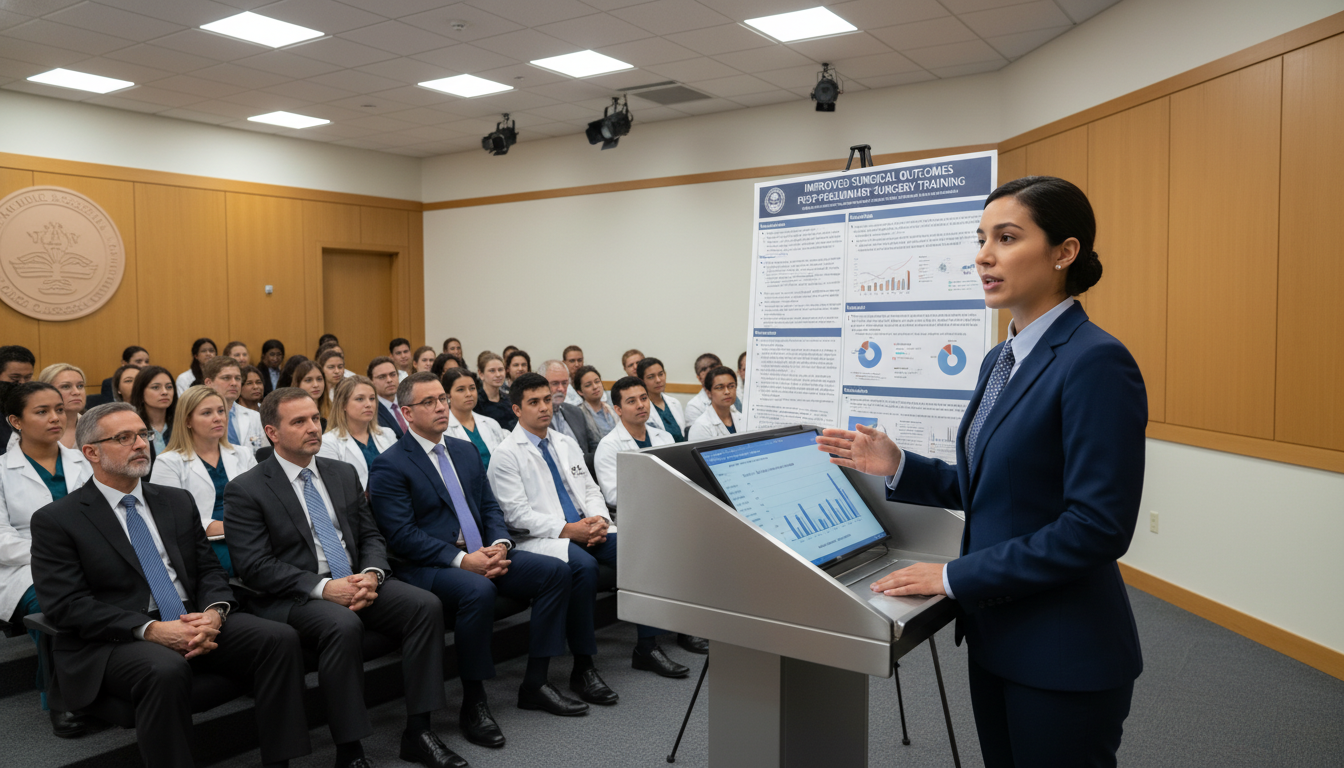
1. Align Your Research with Your Personal Statement
Your personal statement for a prelim surgery residency should reference your research in a way that:
- Demonstrates curiosity and problem-solving
- Connects your research experiences to your interest in surgery
- Highlights specific skills gained: data analysis, critical appraisal, teamwork, writing
Example integration line:
“While working on a retrospective study of postoperative complications in emergency laparotomy patients, I learned to see beyond the individual case and understand patterns of risk that inform surgical decision-making.”
2. Cluster Projects Around Themes
It’s okay if you worked on varied topics, but try to cluster them when describing in your CV or interviews:
Instead of:
- One paper on diabetes
- One abstract on cardiac rehab
- One case report on pancreatitis
Frame them as:
- Projects that taught you about perioperative medicine and the interplay between comorbidities and surgical outcomes.
If you have multiple unrelated projects (very common for IMGs), highlight common threads like:
- Methodology skills (retrospective review, literature synthesis)
- Patient safety, quality improvement, or outcomes focus
- Interdisciplinary collaboration between medicine and surgery
3. Emphasize Your Role and Growth
In your ERAS application and interviews, clarify:
- How your responsibilities evolved:
- First project: literature search, simple data entry
- Later projects: designing data collection forms, writing sections, drafting abstracts
- Specific challenges you overcame:
- Navigating IRB from abroad
- Coordinating with multiple co-authors across time zones
- Learning statistical basics to analyze your data
This growth arc sends a clear message: you are teachable, persistent, and capable of developing into an academic surgeon if given the opportunity.
Practical Logistics: CV, ERAS Entries, and Timing for the Match
Building the research is step one. Presenting it clearly in your application and interviews is equally important.
1. Organizing Your Research on Your CV and ERAS
For a US citizen IMG aiming for a preliminary surgery year, make sure your CV and ERAS entries:
Clearly distinguish between:
- Peer-reviewed publications
- Non–peer-reviewed articles
- Abstracts and presentations
- Ongoing / in progress projects
Follow a consistent citation style (e.g., AMA) with:
- Authors (last name, initials; bold your own name)
- Title
- Journal or conference name
- Volume/issue/pages (if published)
- DOI or PMID when available
Label status honestly:
- “Published”
- “Accepted”
- “In press”
- “Submitted”
- “In preparation” (use sparingly and only for real, active projects with clear drafts and agreed co-authors)
Avoid padding your application with vague “in preparation” entries with no real progress; program directors can sense this.
2. Timing Your Research for the Residency Application Calendar
If you’re targeting a July start for a prelim surgery residency, backward-plan your research activities:
18–24 months before Match (early in clinical years)
- Start small: case reports, simple reviews.
- Begin cold outreach to potential mentors.
12–18 months before Match
- Aim to have at least 1–2 projects underway.
- Submit abstracts to national or regional meetings (ACS, local surgical society conferences).
6–12 months before Match
- Push to get manuscripts submitted.
- Even “under review” status is better than “in preparation.”
- Ask mentors if any ongoing projects need last-minute help; co-authorship may be possible.
ERAS Submission (September)
- Include everything that is published, accepted, or submitted.
- Be ready to discuss all of it confidently in interviews.
Remember: even projects that are still under review at journals can feature strongly in interview conversations, as long as you can clearly explain your role and the study’s significance.
3. Preparing to Talk About Your Research in Interviews
Many applicants fear research questions. For a prelim surgery interview, expect:
- “Tell me about your most meaningful research project.”
- “What did you actually do on this study?”
- “What did you learn from this experience that will make you a better surgery resident?”
Prepare 2–3 polished, 1–2 minute summaries of your main projects that include:
- Context: why the question mattered
- Your specific role
- Main findings (if applicable)
- What skills you gained or how it shaped your thinking
Example structure:
“I worked on a retrospective study of patients undergoing emergent laparotomy at our center. I helped design the data collection template, extracted data from the EMR, and performed initial descriptive statistics alongside a resident. We found that delay to operating room over X hours was associated with higher postoperative complications, which reinforced for me how operational factors and systems issues directly influence surgical outcomes.”
Making the Most of a Prelim Surgery Year to Strengthen Your Future Research Profile
For many US citizen IMGs, a preliminary surgery year is not the final destination; it’s a launchpad—either toward a categorical surgery position or another specialty. Your approach to research during this year can significantly shape your future trajectory.
1. Identify Research-active Faculty Early
Within the first 1–2 months of your prelim year:
Ask senior residents:
“Which attendings are most approachable for residents to get involved in research?”Attend:
- Morbidity & Mortality (M&M) conferences
- Departmental research or journal clubs
- Resident research days
Note which faculty consistently present or mention ongoing studies, and introduce yourself with a clear, concise ask.
2. Tie Research to Your Clinical Performance
Your primary job as a prelim surgery resident is to be clinically solid. Research should never be used to justify clinical shortcomings. Instead:
- Start with something low-intensity (e.g., contributing to a database or case report)
- Ramp up involvement once you’re more efficient on the wards
- Use clinical questions that arise during call or rounds as starting points for projects
For example:
- A cluster of postoperative ileus cases → small QI effort or literature review
- Observed delays in OR start times → data collection and system-based QI project
3. Use Prelim Year Research to Position Yourself for the Next Match
If you plan to reapply for categorical positions:
- Aim to have at least 1 significant project initiated and ideally submitted by mid-year (January–February).
- Maintain clear documentation of your contributions (emails, drafts, data files) for future CV updates.
- Seek strong letters from research mentors that highlight both:
- Your research skills
- Your clinical performance and professionalism
In your future applications, you can frame your prelim year as:
- A period of intense clinical growth
- A chance to deepen your academic engagement in surgery
- Evidence that you can thrive in a demanding U.S. surgical environment
FAQs: Research Profile Building for US Citizen IMG in Preliminary Surgery
1. As a US citizen IMG, is research absolutely required to match a prelim surgery spot?
Not absolutely, but it’s increasingly important. Some community or smaller programs may accept applicants with minimal research if they have solid scores, strong letters, and solid clinical evaluations. However, for academic prelim spots or for those hoping to transition into a categorical surgery position, having at least a few meaningful research or scholarly items is a major advantage.
2. Does my research have to be in surgery, or will any topic help?
Surgical or perioperative topics are ideal, but not mandatory. Non-surgical research still shows:
- Ability to manage projects
- Comfort with data and evidence
- Academic curiosity
If your past research is in unrelated areas (e.g., cardiology, endocrinology), frame it around skills and concepts transferrable to surgery. But if you have time to add one or two surgery-focused projects (case reports, QI), they will help align your portfolio more closely with your goals.
3. How many publications are needed to be competitive as an American studying abroad?
There is no fixed cutoff, but as a US citizen IMG / American studying abroad, a good target for a strong application to prelim surgery is:
- 1–2 peer-reviewed publications (even if small or case-based)
- Plus 1–3 additional scholarly works (abstracts, posters, presentations, or in-progress manuscripts)
Remember that program directors value trajectory and coherent interest in surgery more than a raw count of publications.
4. I don’t have any research yet and I’m less than a year from applying. What should I prioritize?
Focus on shorter timeline projects:
- Case reports/case series during upcoming U.S. rotations
- Narrative reviews on surgical topics
- Joining existing small projects where the main work is already underway (e.g., helping finalize a manuscript or performing a literature review)
At the same time, optimize the rest of your application—USMLE scores, clinical performance, strong letters, and clear articulation of why you want surgery. Even late-start research can still provide valuable talking points for interviews and signal your long-term commitment.
By understanding what surgical programs expect, strategically choosing projects that fit your timeline, and presenting a coherent academic story, you can build a compelling research profile as a US citizen IMG targeting a preliminary surgery residency—and set yourself up for future opportunities in categorical surgery or related fields.