Understanding the Research Landscape in Cardiothoracic Surgery
For a US citizen IMG (American studying abroad), cardiothoracic surgery is one of the most competitive specialties you can pursue. Programs expect not only excellent scores and strong clinical performance but also a clear record of scholarly activity. A well-built research profile can transform you from “borderline” to “serious contender.”
Before diving into tactics, you need to understand what “research” actually looks like in cardiothoracic surgery residency applications and why it matters so much.
Why Research Matters More in Cardiothoracic Surgery
Cardiothoracic surgery programs are:
- Small (few positions per program)
- Almost always academic and research-oriented
- Led by faculty with strong publication and grant histories
They want residents who can:
- Critically appraise literature and apply evidence to complex operative decisions
- Contribute to ongoing clinical or translational projects
- Help the department maintain (or grow) its academic reputation
For a US citizen IMG, research is also a signal of integration into the US academic system. If you’ve done part or all of your medical education abroad, strong US-based research can help reassure programs that you can:
- Work effectively in US academic environments
- Collaborate with US attendings and residents
- Communicate in the style expected in American scientific writing and conferences
What “Counts” as Research for Residency
Programs look at your ERAS CV and your application through several lenses:
- Peer-reviewed journal articles (original research, review articles, meta-analyses, case series, case reports)
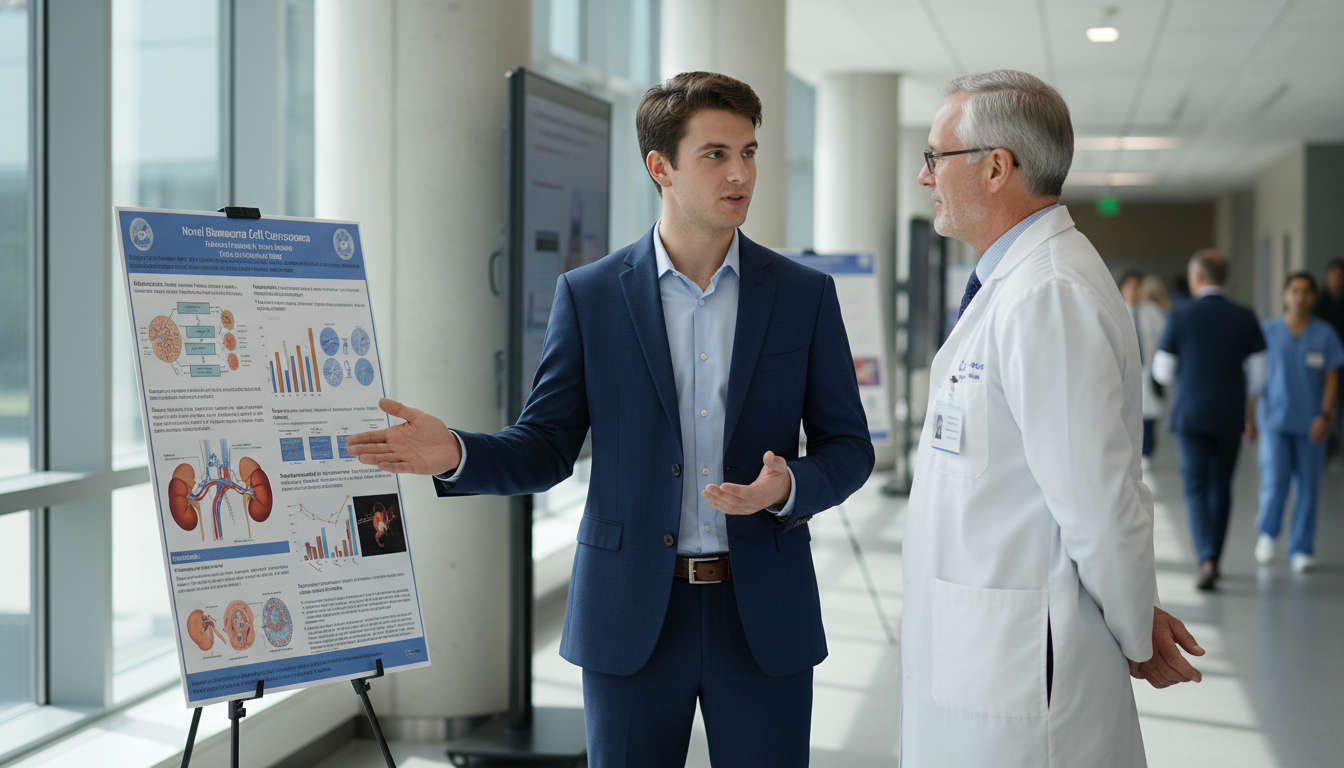
- Conference abstracts/posters/podium presentations (especially national or international meetings)
- Book chapters (particularly in surgery or cardiovascular medicine)
- Quality improvement (QI) projects with data and measurable outcomes
- Clinical research (chart reviews, outcomes studies, registries)
- Basic/translational science (e.g., cardiac tissue engineering, valve biology)
- Systematic reviews and meta-analyses in cardiothoracic-related topics
Shadowing or “helping out” without producing something tangible rarely counts. Programs respond to products: PDFs, PubMed entries, conference programs with your name.
How Many Publications Do You Really Need?
The question “how many publications needed” to match in cardiothoracic surgery doesn’t have a single numeric answer, but we can establish realistic ranges and expectations—especially for a US citizen IMG.
Typical Ranges for Competitive Applicants
For integrated cardiothoracic surgery (I-6) and categorical general surgery applicants who plan to pursue CT fellowship, many successful candidates have:
- Total scholarly items (not all published papers): 10–30+
- Peer-reviewed publications: commonly 3–10+
- CT-specific or surgery-related publications: ideally at least 2–3
As an American studying abroad, you are often compared to US MD and DO students at top programs. You don’t necessarily need to match the upper extreme of their output, but you do need to demonstrate consistent, serious involvement in research, preferably in the US.
A Realistic Target for a US Citizen IMG
Think in tiers rather than a single “magic number”:
Baseline competitive profile
- 2–4 peer-reviewed articles (any field, but at least one in surgery, cardiology, or critical care)
- Several posters/abstracts at regional or national meetings
- At least one QI or outcomes project with your name as a co-author
Stronger competitive profile (recommended for cardiothoracic)
- 4–8 peer-reviewed publications
- 2–3 with clear relevance to cardiothoracic surgery, cardiac ICU, cardiology, or vascular surgery
- National presentations (AATS, STS, AHA, ACC, ACS, resident research days, etc.)
- Mix of first-author and co-author roles
Exceptional profile
- 8+ peer-reviewed publications
- Several first-author manuscripts
- Multiple CT-related projects, possibly including basic science or advanced outcomes research
- Clear mentorship from recognized US cardiothoracic faculty
Remember: quality and relevance matter. Ten small case reports in peripheral fields is less impressive than three solid CT-related outcomes papers with national presentations.
Step-by-Step Strategy to Build a Strong Research Profile

Step 1: Clarify Your Timeline and Starting Point
Your strategy must match where you are in training:
Pre-clinical US citizen IMG (years 1–2 abroad)
- Focus on getting any research exposure, even in internal medicine, cardiology, or basic science.
- Build fundamental skills: statistics, data management, abstract writing.
Clinical years (years 3–4 abroad)
- Prioritize projects that can produce outputs before ERAS submission.
- Align research topics with cardiology, cardiac surgery, anesthesia, critical care, or vascular.
Post-graduation (doing a research year/externship in the US)
- Treat research like a full-time job (40–60+ hours/week).
- Aim for multiple manuscripts, abstracts, and strong letters from US cardiothoracic faculty.
Make a backward plan from your target ERAS submission date. Count how many months you have and which types of projects can reasonably be completed in that time.
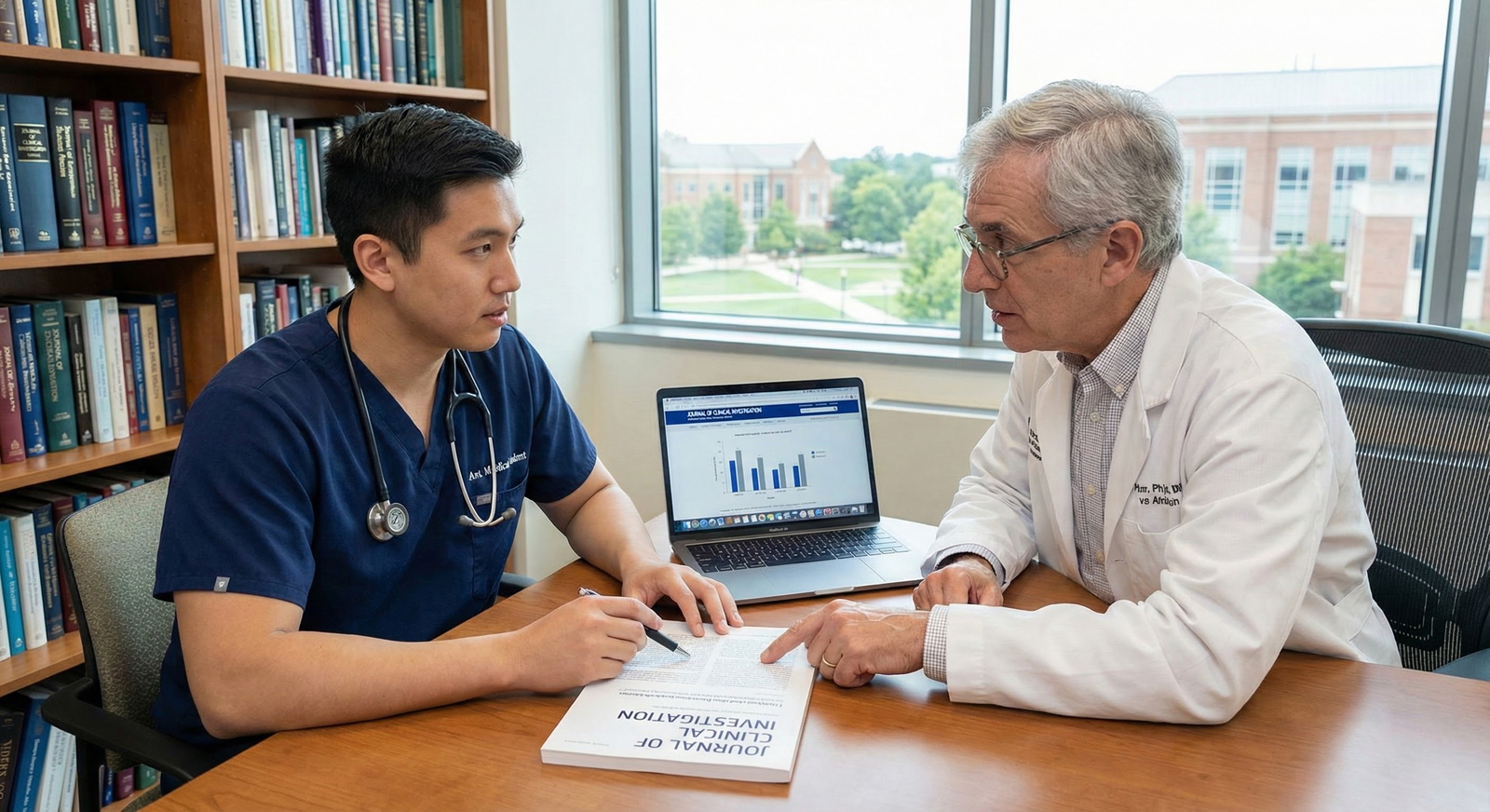
Step 2: Identify and Secure Mentors
For US citizen IMGs, mentorship is often the biggest barrier. You may have limited access to home-institution cardiothoracic surgeons or researchers.
Types of mentors to seek:
Cardiothoracic surgeons at US academic centers
- Even one active research mentor can open several project opportunities.
Cardiologists, intensivists, or vascular surgeons with CT-adjacent research
- Outcomes in heart failure, ECMO, cardiac ICU, structural heart, aortic disease, etc.
- These are highly relevant to heart surgery training.
Non-surgeon physician-scientists or PhD researchers
- Cardiac imaging, biomaterials, physiology, or regenerative medicine.
How to find mentors if you are abroad:
- Search departmental pages of US academic hospitals: look for “research,” “publications,” or “lab” sections under cardiothoracic surgery.
- Search PubMed for “cardiac surgery,” “valve repair,” “aortic surgery,” plus city/region you can travel to; identify frequent first or last authors.
- Attend virtual conferences (STS, AATS, ACC, AHA) and note faculty who are active in IMG-friendly programs.
- Use LinkedIn and Twitter/X (many CT surgeons are active) to identify faculty and message them professionally.
Sample outreach email (adaptable):
Subject: US citizen IMG seeking cardiothoracic research experience
Dear Dr. [Name],
My name is [Your Name], and I am a US citizen currently attending medical school at [School, Country]. I am strongly interested in pursuing cardiothoracic surgery residency in the US and am looking to build a robust research portfolio in this field.
I have [briefly describe any prior research or skills: basic statistics, chart review, systematic reviews, etc.]. I would be grateful for the opportunity to contribute to ongoing projects in your group, including data collection, literature reviews, or manuscript preparation—even if remotely.
I am available [time frame, hours/week, including any plans for in-person visiting research or observerships]. I have attached my CV for your review.
Thank you for your time and consideration.
Sincerely,
[Your Name]
[Contact information]
Send multiple tailored emails, not a single generic message. Expect a high non-response rate and follow up politely after 10–14 days.
Step 3: Choose the Right Types of Projects
As a US citizen IMG, prioritize projects with a realistic chance of producing a citable product before you apply.
High-Yield Project Types for Limited Time
Retrospective chart reviews / outcomes studies
- Example: “Outcomes of elderly patients undergoing CABG with vs without preoperative frailty assessment.”
- Timeline: 6–12 months for data collection, analysis, and manuscript.
Systematic reviews and meta-analyses
- Example: “Meta-analysis of minimally invasive vs sternotomy approaches for mitral valve repair.”
- Can often be done remotely. Good for learning the literature.
- Timeline: 4–8 months if done efficiently with a small team.
Case series / case reports in CT or cardiac ICU
- Example: “Case series: management of LVAD thrombosis in resource-limited settings.”
- Lower impact but useful as additional publications.
Quality improvement (QI) projects in perioperative or ICU care
- Example: Implementing a new postoperative pain protocol in thoracic surgery patients and measuring length of stay.
- Especially valuable if combined with a poster or manuscript.
Database studies using national registries (if your mentor has access)
- Example: STS database, NSQIP, NIS data on outcomes of specific CT procedures.
- Potentially high impact but may require more sophisticated statistics.
Lower-Yield for Short Timelines (but still valuable if you start early)
- Basic/translational lab work (valve biology, tissue engineering, etc.)
- Excellent for depth but often slow to publication (12–24+ months).
- Large prospective cohort studies
- Usually multi-year endeavors—fine if you join early in med school; less ideal if you’re close to applying.
Step 4: Build Practical Research Skills Early
To be genuinely productive, you must move beyond being “free labor” and become an asset to your team.
Core skills to develop:
Literature search and synthesis
- Use PubMed, Embase, Google Scholar efficiently.
- Learn to build search strategies (MeSH terms, Boolean operators).
- Summarize findings in organized tables.
Basic biostatistics and software
- Learn basic concepts: t-tests, chi-square, regression, survival analysis.
- Get comfortable with at least one program (SPSS, R, Stata, or even Excel for basic work).
- Many free online courses (Coursera, edX) are sufficient for starting.
Data management
- Clean data in Excel or CSV format; understand variable coding and missing data.
- Comply with HIPAA and IRB rules when handling patient data.
Scientific writing
- Read high-quality CT surgery papers (e.g., in Annals of Thoracic Surgery, Journal of Thoracic and Cardiovascular Surgery).
- Practice writing Introductions and Discussions for small projects or sub-sections of papers.
- Learn journal formatting and reference managers (Zotero, EndNote, Mendeley).
The more independently you can handle these tasks, the more likely mentors are to keep giving you opportunities—and to write strong letters later.
Step 5: Convert Work into Tangible Outputs
Research means little to selection committees unless it shows up as something they can see:
Abstracts/posters at:
- Cardiothoracic-focused meetings: STS, AATS, EACTS
- General surgery/medicine meetings: ACS, ACC, AHA, SCCM
- Institutional research days
Manuscripts
- Aim first for submission, then acceptance.
- Time to acceptance varies widely; sometimes your manuscript is “in review” when you apply—that still counts.
Oral presentations
- Even at your home school or local society conferences, list them in ERAS.
- Shows communication skills and active academic engagement.
Keep meticulous records:
- Titles, authorship order, date of submission, conference/journal names
- Whether an item is “submitted,” “accepted,” or “published” at the time of ERAS
Navigating Unique Challenges as a US Citizen IMG

Challenge 1: Limited Access to US Academic Centers
If you’re an American studying abroad, you might only be in the US for short breaks or electives. Use these strategically:
- Plan visiting research or clinical observerships in centers with active cardiothoracic research.
- Bundle activities: in 4–8 weeks, try to combine shadowing, initial data work, and planning multiple papers.
- Before arriving, work remotely on:
- IRB applications
- Literature reviews
- Protocol design
By the time you show up in person, you’re already integrated into the team.
Challenge 2: Time Zone, Coordination, and Remote Work
Many US mentors are open to remote collaboration—but only if you’re reliable.
To stand out:
- Propose clear tasks and timelines:
- “I can review 30–40 charts per week.”
- “I can draft the Introduction and Methods by X date.”
- Communicate regularly via email or scheduled Zoom meetings.
- Use shared tools (Google Docs/Sheets, Overleaf, Slack/Teams) professionally.
Challenge 3: Perceived Disadvantage Compared to US MD/DO Students
You cannot control your medical school, but you can control how you leverage your status as a US citizen IMG:
- Emphasize:
- You understand US culture and healthcare systems (through citizenship, prior US education, employment, etc.).
- Your deliberate choice to study abroad and your determination to return.
- Use research experiences to:
- Show that you can function seamlessly in US academic departments.
- Build US-based letters of recommendation from cardiothoracic surgeons.
Challenge 4: Balancing Exams, Rotations, and Research
Many US citizen IMGs are juggling:
- USMLE Step 1/2 or COMLEX
- Core clinical rotations abroad
- Visa and logistical planning (even as a citizen, there can be paperwork)
- Research obligations
Some practical strategies:
- Time block:
- 10–15 hours/week minimum for research, protected as seriously as exam study time.
- Task batching:
- Reserve specific days for data work vs writing vs literature review.
- Project selection:
- Avoid involvement in 6–7 projects with minimal progress.
- Aim for 2–3 solid projects where you have a meaningful role.
Presenting Your Research Effectively in the Application and Interview
Having strong research for residency is step one. Step two is showcasing it strategically.
On Your ERAS Application
- Be honest and precise with statuses (“submitted,” “accepted,” “published,” “in press”).
- Group items by type and relevance:
- Peer-reviewed articles first, then abstracts, posters, book chapters, etc.
- Highlight cardiothoracic-related work early in your list.
- Make sure your name is consistent across all publications.
In Your Personal Statement
For a cardiothoracic surgery residency or a general surgery application with CT interest:
- Briefly describe:
- One or two key projects and what you learned (e.g., understanding postoperative complications, ICU management, or long-term outcomes).
- How this research shaped your career goal in CT surgery.
- Avoid turning the statement into a full research CV; focus on narrative and insight, not just results.
During Interviews
Expect specific questions:
- “Tell me about your most meaningful research project.”
- “What did you personally do?”
- “What was the most challenging part of the study?”
- “How do you see research fitting into your future as a CT surgeon?”
Prepare:
- A 1–2 minute concise explanation of each major project (background, methods, results, your role).
- At least one experience where:
- A project failed or was delayed and how you responded.
- You handled IRB, data errors, or complex statistical decisions.
Interviews are your chance to prove you are not just a “name on a paper” but an engaged, thoughtful researcher.
Putting It All Together: Example Pathways
To make this concrete, here are sample pathways for US citizen IMGs at different stages.
Example 1: Early-Stage American Studying Abroad (Pre-Clinical)
- Year 1–2:
- Join any research group at your school (cardiology/ICU preferred).
- Learn basic stats and literature review methods.
- Co-author 1–2 case reports or small retrospective projects.
- Summer breaks:
- Do a 6–8 week US research observership with a CT surgeon.
- Help with data collection and protocol design; aim for abstract submission.
By the time you start clinical rotations, you already have a foundation and mentors in place.
Example 2: Late-Stage US Citizen IMG (1–1.5 Years Before ERAS)
- Start remote collaboration with a US CT group:
- 1 retrospective outcomes project (target: 1–2 papers, 1 conference abstract).
- 1 systematic review/meta-analysis on a CT topic.
- Simultaneously:
- At your home institution, do a QI project in ICU or perioperative care.
- Result by ERAS:
- 3–6 total publications/abstracts, with at least 2 CT-adjacent.
- Strong letter from a US CT surgeon who supervised your work.
Example 3: Dedicated Research Year in the US (Post-Graduation)
- Full-time research position with a CT department:
- 2–3 outcomes projects, 1–2 systematic reviews, help on ongoing manuscripts.
- Submit to STS, AATS, and national surgery meetings.
- Engage deeply:
- Attend M&M, journal clubs, and CT grand rounds.
- Be visible and reliable; aim for a personalized, enthusiastic letter.
By application time, you may have:
- 5–10+ manuscripts (some in submission/under review).
- 3–5 presentations.
- A clear identity as a future CT surgeon in training.
FAQs: Research Profile Building for US Citizen IMGs in Cardiothoracic Surgery
1. As a US citizen IMG, do I absolutely need US-based research to match into cardiothoracic surgery?
It’s not mandatory, but strongly advantageous. US-based research:
- Demonstrates you can function within US academic systems.
- Provides US cardiothoracic faculty who can write impactful letters.
- Signals commitment to practicing and training in the US.
If you truly cannot get US-based research, aim to:
- Work with internationally recognized faculty.
- Present at major international conferences.
- Focus your topics clearly on CT or cardiac care.
2. Is basic science or clinical research better for my CT surgery application?
For most US citizen IMGs, clinical outcomes research and QI are more feasible and immediately productive. However:
- Clinical research (outcomes, ICU care, perioperative management) is often more directly translatable to residency practice and easier to explain to interviewers.
- Basic/translational research can be very impressive if you have sufficient time, strong mentorship, and clear productivity (papers, grants, major abstracts).
Many of the strongest applicants have some of both, but if time is limited, prioritize clinical/health-services projects that can generate publications before you apply.
3. What if my publications are not directly about cardiothoracic surgery?
Programs understand that not every medical student has direct CT access. Publications in:
- Cardiology
- Anesthesiology (especially cardiac anesthesia)
- Critical care
- Vascular surgery
- Pulmonology (thoracic-related topics)
are all valuable and can be framed as highly relevant to heart surgery training. When possible, choose CT-adjacent questions (e.g., arrhythmias after cardiac surgery, ECMO outcomes, valve disease).
If your early work is in unrelated fields (e.g., dermatology), it still shows research ability, but try to pivot toward CT-related topics as you approach the application.
4. How do programs view “submitted” vs “accepted” vs “published” papers?
- Published / In press: strongest; fully citable, easily verifiable.
- Accepted: nearly as strong; clearly counts as a real output.
- Submitted / Under review: still valuable, but programs know not all submissions are accepted.
Be honest. Overstating the status of a paper can be seen as a red flag if programs look it up or ask about it. If you have several “submitted” items, briefly explain your role and timeline during interviews.
Building a competitive research profile as a US citizen IMG in cardiothoracic surgery is absolutely achievable—but it requires early planning, persistent outreach, and strategic project selection. Focus on mentorship, relevance, tangible outputs, and clear communication of your work, and use your research to prove that you are ready to thrive in one of the most demanding, rewarding fields in medicine.