Research for Residency: Essential Strategies to Strengthen Your Application
Embarking on a Physician Career is a demanding, rewarding journey. Alongside grades, clinical performance, and letters of recommendation, Medical Research has become a defining feature of competitive Residency Applications—not only for research-heavy specialties but increasingly across the board.
Whether you’re aiming for dermatology, internal medicine, surgery, radiology, psychiatry, or family medicine, thoughtful research experience can:
- Differentiate you from other qualified applicants
- Demonstrate advanced critical thinking and curiosity
- Expand your professional network and mentorship base
- Provide compelling stories for your personal statement and interviews
This guide expands on the original article to give you a detailed, practical roadmap: why research matters, how to get involved, how to maximize your experience, and how to showcase it effectively during the residency match process.
Why Research Matters in Residency Applications
Engaging in research is much more than “checking a box.” Done well, it becomes one of the strongest pillars of your professional story and growth as a future physician.
1. Strengthens and Differentiates Your Residency Application
Residency program directors increasingly look for applicants who have demonstrated the ability to ask good questions, work through uncertainty, and engage with the scientific foundation of medicine. Research is one of the clearest ways to show this.
Research on your CV can:
- Signal that you can handle complex, long-term projects
- Demonstrate perseverance, intellectual curiosity, and time management
- Highlight your initiative beyond required coursework
For competitive programs and specialties, particularly at academic centers, multiple research experiences—or a sustained, multi-year project—can be a key tie-breaker between otherwise similar candidates.
Example:
Two students applying for internal medicine both have strong grades and Step scores. One has no research; the other has a first-author case report, a quality improvement project, and a poster presentation at a regional meeting. The second student’s application tells a richer story of engagement with evidence-based practice and scholarly activity, which may tip the scale in their favor.
2. Builds High-Level Critical Thinking and Analytical Skills
At its core, research is structured critical thinking:
- Formulating a clear, testable question
- Evaluating existing literature
- Choosing appropriate methods
- Analyzing and interpreting data
- Recognizing limitations and sources of bias
These are the same skills you will use daily as a physician when:
- Approaching complex diagnostic dilemmas
- Weighing risks and benefits of interventions
- Explaining evidence to patients and families
- Evaluating new therapies and guidelines
Residency programs know this. When they see sustained research, they see someone who has already practiced handling ambiguity, interpreting data, and thinking in an evidence-based way.
3. Shows Genuine Passion for Medicine and Lifelong Learning
Research is rarely easy or fast. Datasets are messy. IRB approvals get delayed. Manuscripts come back with tough reviews. Choosing to persist with research despite these challenges shows real commitment to understanding medicine beyond what’s required on exams.
Programs often ask: “Is this someone who will keep growing after training?”
Evidence of research involvement suggests the answer is yes.
You communicate passion when you can say:
- “Here’s a question that bothered me enough to investigate.”
- “Here’s how I tried to make care safer or outcomes better.”
- “Here’s how that experience shaped how I think about patients.”
4. Creates Valuable Networking in Medicine and Mentorship
Research is one of the most reliable ways to build Networking in Medicine:
- You work closely with faculty who can become strong mentors
- You meet residents, fellows, and other students on your research team
- You present at local, regional, or national conferences and meet leaders in your future specialty
These relationships can later lead to:
- Strong, specific letters of recommendation
- Advocacy during rank-list meetings
- Collaborative opportunities in residency and beyond
- Insight and advice about career paths (academics vs. community practice, fellowships, etc.)
Sometimes, a single research mentor becomes the key person who champions your application or connects you to the program where you will eventually match.
5. Leads to Publications, Presentations, and a Scholarly Track Record
Not every project will end in a PubMed-indexed paper, but many will generate at least one of the following:
- Abstracts and poster presentations
- Oral presentations at local/regional conferences
- Case reports or case series
- Quality improvement or education conference submissions
- Review articles or book chapters
These “scholarly products” do several things for your residency application:
- Make your CV more robust and focused
- Demonstrate that you can see a project through to dissemination
- Provide talking points for interviews
- Show your contribution to the broader medical community
Programs especially value applicants who can explain what they did and what impact it had, not just list a line on their CV.

How to Get Involved in Research as a Medical Student
For many students, the hardest part is simply getting started. Research often seems intimidating or reserved for “academic types.” In reality, there are numerous entry points, and almost every student can find a project that fits their interests, schedule, and skills.
1. Clarify Your Interests and Goals Before You Start
You don’t need a perfectly defined specialty yet, but some direction helps you choose wisely.
Ask yourself:
- Which rotations or pre-clinical topics have engaged me most?
- Am I more drawn to patient care (clinical), cells/molecules (basic science), systems/populations (public health), or education?
- Am I exploring a possible specialty (e.g., orthopedics, neurology), or building general skills?
- Do I want a quick project for exposure, or a long-term project that might lead to publications?
Tip:
If you’re unsure about specialty, lean toward broadly applicable fields like internal medicine, pediatrics, or emergency medicine, or toward cross-cutting areas like quality improvement or medical education. These are relevant to almost any future Physician Career.
2. Leverage Faculty, Residents, and Institutional Resources
The most direct way to get involved is to ask.
Practical steps:
Browse your medical school’s departmental websites. Look for faculty whose research aligns with your interests.
Attend departmental research days or grand rounds, then introduce yourself to presenters afterward.
Email potential mentors with a concise message:
- Who you are (year, school)
- Your interests and goals
- Your availability (hours/week, length of time)
- A brief CV attached
Ask residents and fellows on your rotations if they know of ongoing projects needing help. Many do, particularly in academic centers.
Example email snippet:
I am a second-year medical student interested in cardiology and outcomes research. I have basic familiarity with statistics and am eager to gain more experience in clinical research. I can commit 5–8 hours per week over the next 9 months. If you have any ongoing projects where I could assist with chart review, data collection, or literature review, I would be grateful for the opportunity to contribute.
3. Apply for Structured Summer or Year-Long Research Programs
Many institutions and national organizations offer structured summer research programs or research fellowships, often with:
- Defined mentorship
- Formal didactics (statistics, study design, scientific writing)
- A guaranteed project and expectation of a poster or paper
- Sometimes a stipend
Common options include:
- Home institution summer research scholarships
- NIH-funded summer programs
- Specialty-specific fellowships (e.g., cardiology, oncology, surgery)
- Dedicated research years between MS2–MS3 or MS3–MS4, especially for high-research fields (dermatology, neurosurgery, plastic surgery)
If you’re targeting a research-intensive specialty, a focused research year—used wisely—can significantly boost your competitiveness.
4. Use Online Platforms and Digital Networking
Online tools can dramatically expand your reach for Networking in Medicine and research opportunities:
- ResearchGate / Google Scholar: Identify authors who publish in areas you care about.
- PubMed: Search your institution + keywords (e.g., “University X + stroke outcomes”) to find local investigators.
- LinkedIn: Connect with physicians who share your interests; follow department or specialty society pages.
When reaching out cold (especially beyond your own institution), be polite and realistic. Many faculty outside your institution will be constrained by IRB, data access, or time; however, some multi-institution collaborations and review papers are open to remote participation.
5. Consider Diverse Research Modalities
“Research” is not limited to bench science or randomized trials. Options include:
- Basic Science Research: Lab-based, molecular or cellular work
- Clinical Research: Retrospective chart reviews, prospective cohorts, clinical trials
- Epidemiology / Public Health: Population-level studies, health services research
- Quality Improvement (QI): Projects aimed at improving safety, efficiency, or outcomes in clinical care
- Medical Education Research: Curriculum design, educational outcomes, simulation studies
- Case Reports/Series: Detailed descriptions of unusual or instructive clinical cases
Each type builds different skills. For Residency Applications, clinical research, QI, and medical education are often highly valued and more feasible within limited timeframes.
6. Start Small if Needed: Literature Reviews and Case Reports
If you’re having trouble joining an established project, offer to help with:
- Literature reviews for existing projects
- Systematic or scoping reviews under guidance (great training in critical appraisal)
- Case reports of unique patient presentations or management strategies
These are excellent ways to:
- Learn research fundamentals
- Practice reading and synthesizing evidence
- Earn early scholarly products for your CV
Maximizing the Value of Your Research Experience
Once you’ve secured a spot on a project, your mindset and approach determine how much you truly gain from it.
1. Set Clear, Measurable Goals Up Front
Discuss expectations early with your mentor:
- What is the primary objective of the project?
- What is your specific role (e.g., data entry, analysis, manuscript drafting)?
- What timeline are you working on (e.g., abstract deadline, conference, IRB schedule)?
- Are there realistic opportunities for authorship or presentations?
Translate this into concrete goals:
- “Complete data collection on 100 charts by June.”
- “Learn to run basic logistic regression in R or SPSS.”
- “Draft the introduction and methods sections for a manuscript by August.”
Clear goals keep you focused and help you advocate for your growth.
2. Be Proactive, Reliable, and Communicative
Research mentors value students who:
- Meet or beat deadlines
- Ask thoughtful questions when stuck
- Volunteer for additional tasks once basics are mastered
- Communicate problems early (e.g., schedule changes, unexpected delays)
Professionalism in research mirrors professionalism in clinical care—and mentors remember it when writing letters.
Pro tip: Treat research like a part-time job. Schedule specific blocks each week, track your tasks, and send brief progress updates (e.g., weekly or biweekly emails summarizing what you’ve done and what’s next).
3. Seek Feedback and Skill Development
Research is a prime setting to build skills that directly enhance your Physician Career:
- Study design principles
- Basic statistics and interpretation of p-values, confidence intervals, and effect sizes
- Data management (e.g., REDCap, Excel, statistical software)
- Scientific writing and figure preparation
- IRB and ethical considerations in human subjects research
Ask your mentor:
- “Could we review my data collection methods to ensure consistency?”
- “Would you recommend a statistics resource or course for me?”
- “Could I try drafting part of the manuscript and get your feedback?”
Mentors often welcome motivated learners who want to grow, not just pad their CV.
4. Build Your Professional Network Through Research
As you work on your project:
- Get to know residents, fellows, statisticians, and other staff
- Attend lab meetings, journal clubs, or research seminars
- Volunteer to present your work in small-group settings
These connections may later:
- Introduce you to more projects
- Offer honest advice about programs and specialties
- Support your professional development during residency and beyond
Networking in Medicine is not about collecting business cards—it’s about building authentic relationships through shared work and mutual respect.
5. Document Your Contributions as You Go
Don’t wait until ERAS season to reconstruct what you did. Maintain a simple running document or spreadsheet noting:
- Project title and brief description
- Your exact responsibilities (e.g., reviewed 250 charts, performed data cleaning, wrote first draft of results section)
- Dates involved (start–end)
- Outcomes (abstracts submitted, conferences presented, manuscripts submitted/accepted)
This record will:
- Make it easy to populate your residency CV and ERAS application
- Provide specifics for STAR-style interview responses (Situation, Task, Action, Result)
- Help you accurately represent your role and avoid over- or under-selling your work
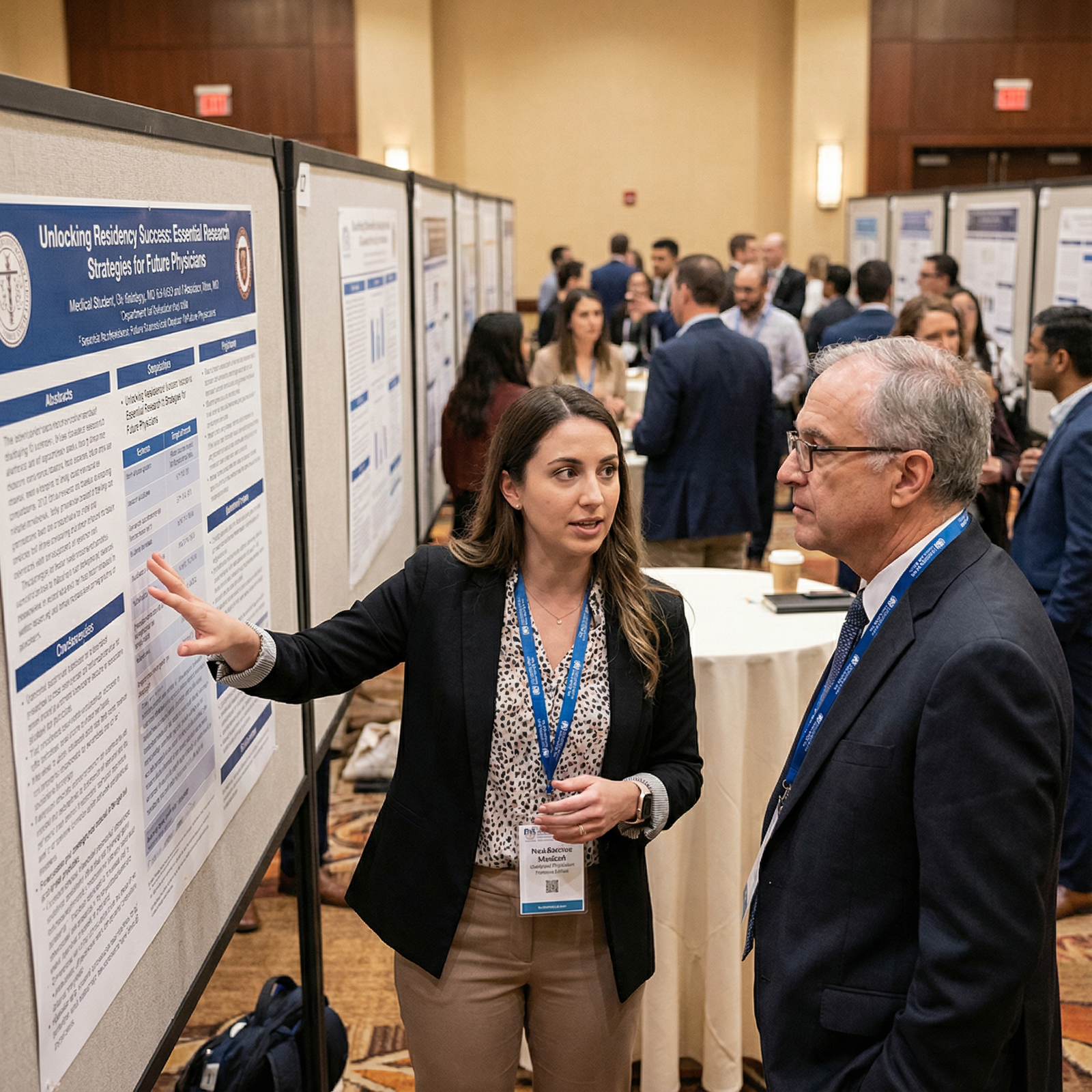
6. Aim for Dissemination: Posters, Presentations, Publications
From a residency perspective, the most impactful research experiences usually end in some form of dissemination:
- Local: Medical school research day, departmental meetings
- Regional/National: Specialty society conferences, poster sessions
- Publications: Case reports, clinical research articles, QI reports, review papers
When a project nears completion, ask:
- “Is there a conference we’re targeting for this abstract?”
- “Could we consider writing up these findings for a journal?”
- “How can I contribute to preparing the abstract/poster/manuscript?”
Working through the full cycle—from question to dissemination—gives you stories and skills that stand out during interviews.
7. Reflect Intentionally on What You Learned
Before you apply for residency, take time to reflect:
- What did this research teach me about patients, systems, or disease processes?
- How did this experience influence my choice of specialty?
- What did I learn about handling setbacks and uncertainty?
- How will this shape my practice and career?
These reflections become the backbone of compelling:
- Personal statement paragraphs
- ERAS activity descriptions
- Interview answers about research and professional growth
Showcasing Your Research Effectively in Residency Applications
Having research is valuable; presenting it strategically is essential. Programs want to understand not just what you did, but why it matters and what it says about you as a future resident.
1. Craft a Research-Focused, Specialty-Linked Personal Statement
In your personal statement:
- Select 1–2 key projects, not every research experience
- Briefly explain:
- The question or problem
- Your role and what you did
- What you learned (about patients, systems, or yourself)
- Connect the experience to your specialty choice and future goals
Example connection:
Working on a quality improvement project to reduce readmissions for heart failure patients showed me how system-level changes can dramatically affect individual patients’ lives. Seeing our 30-day readmission rate fall over 12 months solidified my interest in internal medicine and my desire to pursue a career that blends clinical care with outcomes research.
Avoid excessive technical detail; focus on the human and professional meaning.
2. Organize Your CV and ERAS Research Entries for Clarity
Create a distinct “Research Experience” section that includes:
- Project title and type (e.g., “Clinical research on sepsis outcomes”)
- Institution and department
- Dates
- Mentor’s name and role
- 1–2 bullet points outlining your concrete contributions
For publications and presentations:
- List in standard citation format
- Indicate status accurately (submitted, accepted, in press, published)
- Be honest about authorship position and contribution
Specificity builds credibility and allows interviewers to ask meaningful follow-up questions.
3. Secure Strong, Specific Letters of Recommendation
Letters from research mentors can be particularly powerful when they:
- Describe your work ethic, initiative, and consistency
- Highlight your critical thinking and growth over time
- Compare you favorably to peers they’ve worked with
- Address your potential for success in a residency and Physician Career
To help your mentor write a strong letter:
- Provide your updated CV and personal statement
- Share a brief summary of your work together and your target specialties
- Politely ask if they feel able to write a “strong, positive letter of recommendation”
4. Prepare to Discuss Your Research in Interviews
Almost every interviewer who sees research on your application may ask about it. Be ready to:
- Summarize each major project in 1–2 minutes, in plain language
- Explain your specific role—not just the team’s work
- Discuss one challenge and how you addressed it
- Reflect on what you learned and how it will influence your practice
Avoid overclaiming. It’s perfectly fine to say, “I primarily contributed to data collection and literature review, while the PI and resident led the analysis and writing—but here’s what I took away from the experience.”
5. Demonstrate Ongoing Engagement with Evidence and Learning
Programs value applicants who see research not as a one-time checkbox, but as part of a lifelong habit of evidence-based practice. You can show this by:
- Attending and mentioning recent conferences or webinars
- Staying current with key journals in your chosen specialty
- Describing how you use evidence in clinical decision-making on rotations
- Expressing realistic future goals (e.g., participating in resident QI projects, joining a clinical research group in residency)
This signals that you’ll contribute to the program’s academic environment and keep growing throughout your training.
Frequently Asked Questions (FAQs)
1. How important is research for residency applications?
The importance of research varies by specialty and program type:
- Highly research-oriented specialties (e.g., dermatology, radiation oncology, neurosurgery, plastic surgery, some internal medicine subspecialty tracks) often expect research and value robust scholarly output.
- Moderately competitive specialties (e.g., internal medicine, general surgery, anesthesiology, emergency medicine) increasingly appreciate research, especially at academic centers.
- Community-focused or less research-intensive programs may view research as a plus but place more weight on clinical performance and fit.
In all cases, well-executed research that you can discuss thoughtfully will help your candidacy, even if not strictly required.
2. What type of research is best for my residency application?
The “best” research is:
- Feasible given your time and resources
- Mentored by someone invested in teaching you
- Something you can explain clearly and reflect on meaningfully
For most students, clinical research, quality improvement, or medical education projects are particularly valuable because they connect directly to patient care and systems-level thinking. Bench research can also be excellent, especially if you are interested in physician-scientist pathways.
3. Do I need publications to be competitive?
Publications are beneficial but not mandatory for many specialties. What matters most is:
- Depth and quality of your involvement
- Ability to explain your project and its implications
- Evidence of persistence and follow-through
If you don’t have publications, strong experiences with posters, oral presentations, QI projects, or substantial contributions to ongoing work can still be very powerful. Programs will also understand that timelines for publications often outlast medical school.
4. How can I balance research with coursework, clinical rotations, and personal life?
Balance is crucial. Practical strategies include:
- Starting with a realistic time commitment (e.g., 4–6 hours/week)
- Using a shared calendar to block research time and deadlines
- Communicating clearly with your mentor about exam periods or heavy rotation schedules
- Focusing on fewer projects but showing deeper engagement in each
Burnout doesn’t help your career or your patients. It’s better to do one or two projects well than to spread yourself too thin.
5. What should I do if my research project fails or never gets published?
Unfinished or “negative” projects are common in real-world research and can still be valuable:
- You still gained skills in study design, data handling, and collaboration
- You can honestly discuss the obstacles (e.g., IRB delays, recruitment issues, data quality) and what you learned about resilience and flexibility
- You may still be able to present preliminary findings at an internal or student research day
Residency programs understand that research is unpredictable. They care more about your integrity, reflection, and growth than a perfect publication record.
By approaching research strategically—choosing thoughtfully, working intentionally, and presenting your experiences clearly—you can significantly strengthen your Residency Applications, sharpen your critical thinking, and lay the foundation for a fulfilling, evidence-based Physician Career.