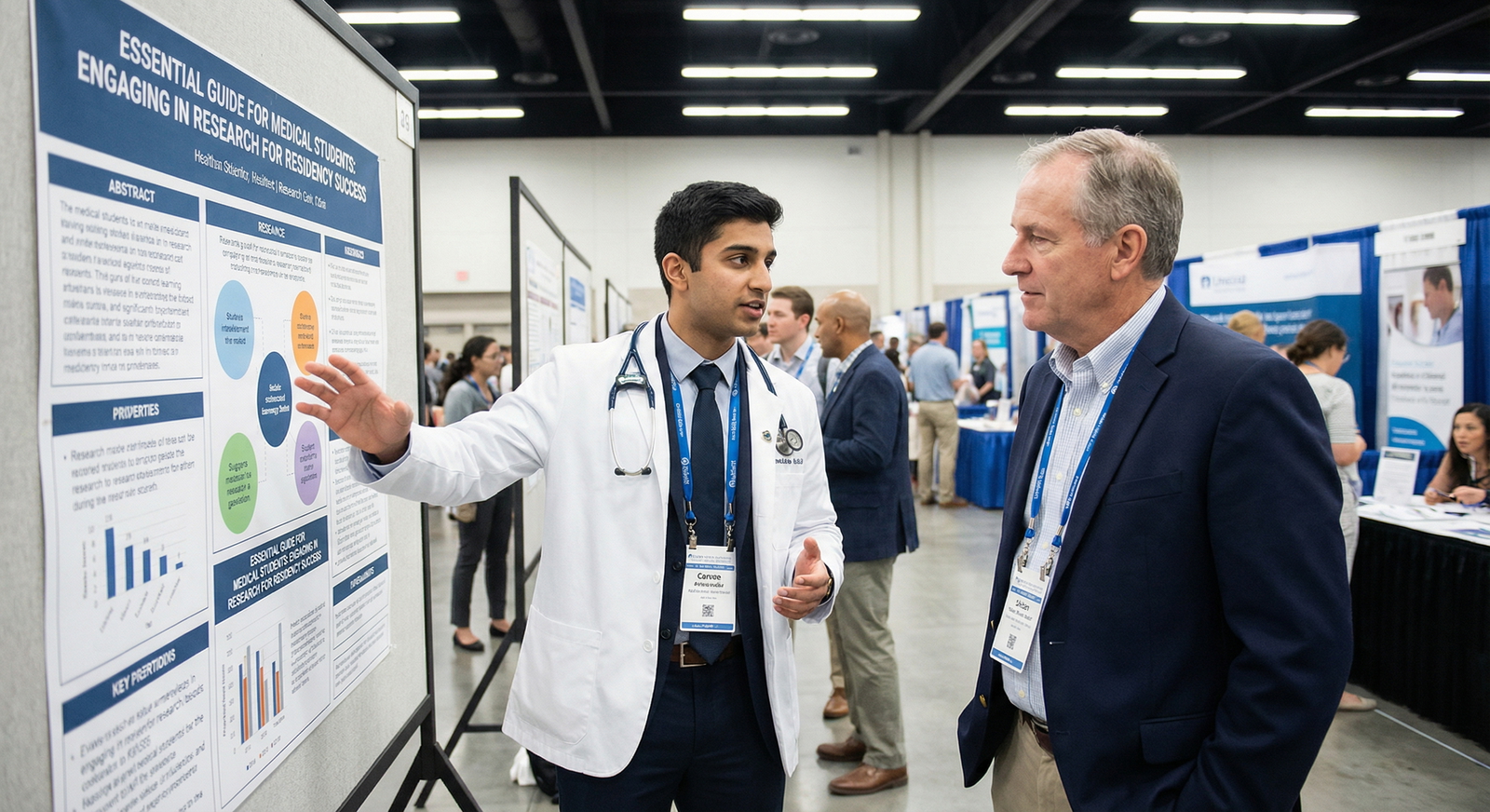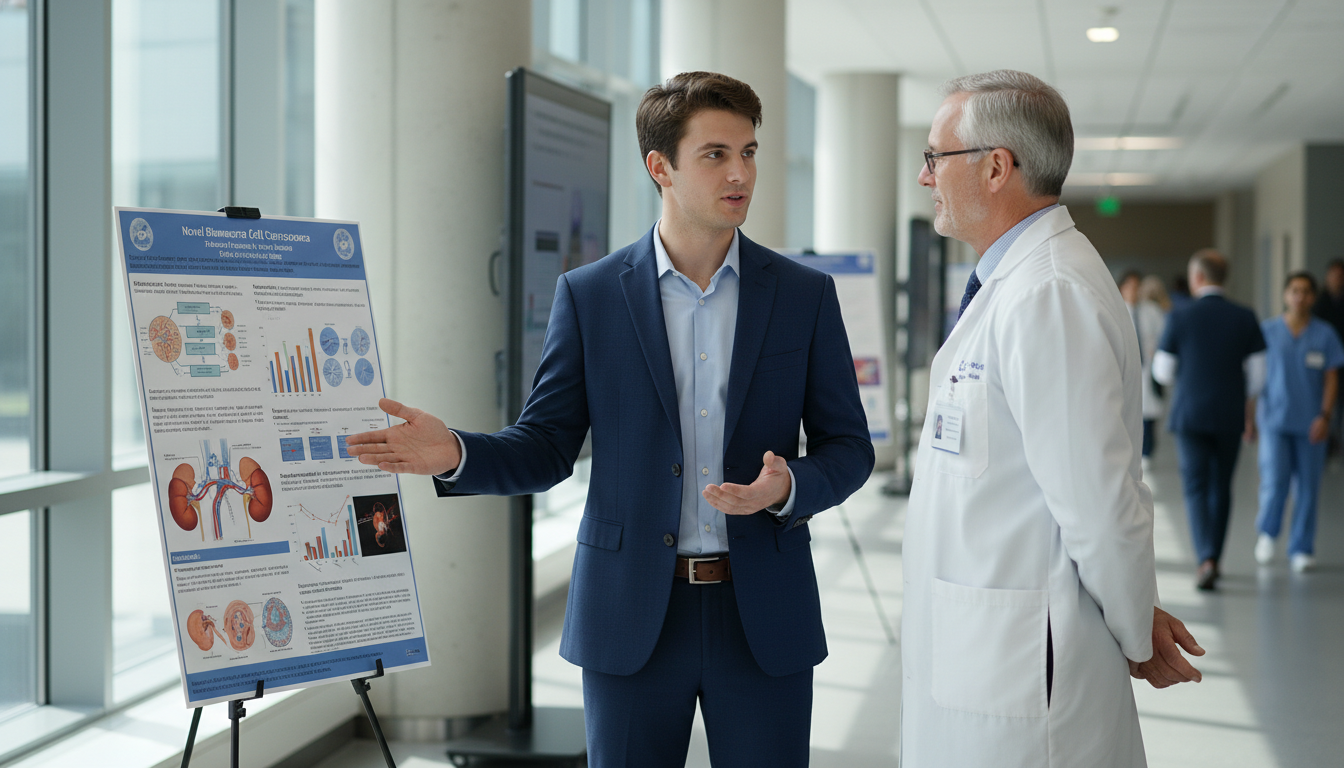
Why Your Research Profile Matters in Urology
Among all specialties, urology is consistently toward the more competitive side of the match. Programs expect evidence that you can think critically, contribute to the field, and handle the academic demands of residency. Your research profile is one of the clearest ways to demonstrate this.
A strong research portfolio helps you:
- Stand out in a competitive urology residency pool
- Demonstrate genuine commitment to urology, not just a “last‑minute” specialty choice
- Show you can follow through on long-term projects
- Signal that you will likely be productive during residency and possibly pursue fellowship or academics
How Competitive Is Urology Research?
Match data fluctuate, but several trends are consistent:
- Successful urology applicants usually report multiple scholarly activities (often 10+ total items if you include abstracts, presentations, and posters, not just PubMed-indexed articles).
- Top-tier academic programs often value at least 1–3 urology-focused publications (not mandatory, but strongly beneficial).
- Programs understand not all schools offer equal research access, but they do expect you to make a good-faith effort to get involved.
Importantly, it’s not purely a numbers game. Programs look at:
- Trajectory – Are you getting more involved over time?
- Depth – Did you take ownership of a project, or just add your name to a large author list?
- Relevance – Is at least some work related to urology or surgery?
- Insights – Can you talk intelligently about your work during interviews?
You don’t need to be a future NIH R01 PI by graduation. You do need a coherent, honest narrative that shows curiosity, persistence, and follow‑through.
Understanding “Research” for the Urology Match
When applicants ask “how many publications needed for urology residency?” they often underestimate the breadth of what counts as research.
Types of Research That Count
Programs typically value most of the following, especially if you can explain your role clearly:
Clinical Research (Retrospective or Prospective)
- Chart reviews (e.g., outcomes after a specific stone surgery)
- Prospective cohort studies
- Quality improvement (QI) projects with rigorous methodology
- Outcomes research and health services research
Basic Science / Translational Research
- Lab work in oncology, immunology, regenerative medicine, biomaterials, etc., especially if prostate, bladder, kidney, or reproductive systems are involved
- Cell culture, animal models, molecular biology
- Translational projects linking mechanisms to clinical endpoints
Epidemiology and Public Health
- Database analyses (e.g., NSQIP, SEER, National Inpatient Sample)
- Projects on disparities in urologic cancer care, access to reconstructive surgery, etc.
Education and Curriculum Research
- Studies on surgical simulation, teaching cystoscopy, or improving resident operative autonomy
- Evaluation of virtual urology curricula
Quality Improvement with Scholarly Output
- QI that results in abstracts, posters, or manuscripts (e.g., reducing catheter-associated infections in post-op urology patients)
Case Reports and Case Series
- Interesting or rare urologic cases (e.g., unusual testicular mass, complex reconstructive procedure)
- Often quicker to complete and good starter projects
Reviews, Book Chapters, and Opinion Pieces
- Narrative or systematic reviews on urologic topics
- Book chapters in urology or surgical texts
- Well-reasoned commentaries or editorials
What Counts as a “Publication” vs “Scholarly Activity”?
For the urology match and ERAS, think in three broad buckets:
Full Publications (Most Valued)
- Peer-reviewed journal articles (original research, reviews, meta-analyses, case reports)
- PubMed-indexed manuscripts carry extra credibility
Abstracts, Posters, and Presentations
- Conference abstracts (AUA, SUO, section meetings, medical student or resident research days)
- Oral presentations (local, regional, national)
- Poster presentations
Other Scholarly Outputs
- Book chapters, invited reviews
- Online academic content with citation (e.g., FOAMed platforms)
- Significant contributions to guidelines or consensus statements (rare at student level, but highly valued)
When people ask “how many publications needed,” they often forget that a strong mix of first-author, co-author, and presentation-level work can be just as compelling as a slightly higher raw count of minor co-author papers.

Building Your Urology Research Profile: Step-by-Step Strategy
Step 1: Clarify Your Timeline and Goals
Your research strategy depends heavily on your current stage:
- Pre-clinical (M1–early M2):
Ideal time to learn methods and join ongoing projects. Focus on skills and exposure. - Late pre-clinical / beginning clinical (late M2–M3):
Prioritize projects with realistic timelines to yield abstracts or papers before ERAS. - M4 / application year / re-applicant:
Focus on fast-moving projects (case reports, database studies, reviews) that can show productivity quickly.
Set 2–3 concrete goals, such as:
- “Have at least one urology-focused poster at a regional or national meeting by the time I apply.”
- “Be first author on at least one manuscript, even if not in urology, to show ownership.”
- “Develop a coherent research theme, e.g., kidney stones, BPH outcomes, or disparities in prostate cancer care.”
Step 2: Find Mentors and Research Homes in Urology
Research for residency is much easier with the right mentors.
Where to find urology mentors:
- Your home institution’s urology department website
- Department research meetings or grand rounds
- AUA section meetings and local urology societies
- Medical student interest groups (urology SIGs often have faculty sponsors)
- Cold emails to faculty whose work genuinely interests you
When reaching out, be concise:
- 3–4 sentence intro: who you are, year in training, interest in urology
- 1–2 sentences about prior experience (even if minimal)
- Clear ask: “I’d love to get involved in an ongoing project and learn from your team”
- Attach CV and unofficial transcript if appropriate
What to look for in a mentor:
- A track record of publishing and presenting
- History of working with medical students or residents
- Reasonable expectations and communication style
- A research infrastructure (data, IRB approvals, lab meetings) you can plug into
You can and often should have multiple mentors: a primary urology mentor plus others (e.g., biostatistician, basic scientist, or outcomes researcher).
Step 3: Start with One or Two Achievable Projects
Early on, scope is everything. Over-ambitious projects often die from lack of time or resources.
Good starter project types:
Chart Review on a Narrow Question
- Example: “Outcomes and complication rates in patients undergoing ureteroscopic lithotripsy at our institution over the past 5 years.”
- Timeline: IRB + data extraction + analysis + write-up ≈ 6–12 months if well-supported.
Single or Small Case Series
- Example: “Rare bladder tumor in a young patient” or “Complicated hypospadias repair outcomes.”
- Timeline: Often 3–6 months from drafting to submission if images and details are readily available.
Focused Narrative Review
- Example: “Management of non-muscle-invasive bladder cancer in elderly patients.”
- Timeline: 4–6 months with a dedicated mentor and clear outline.
For each project, clarify:
- Your specific role (data collection, literature review, writing, analysis)
- Who is senior author and who else is on the team
- Target conference(s) and journal(s)
- Expected timeline and intermediate milestones
Step 4: Learn the Fundamentals of Study Design and Statistics
You do not need a PhD in biostatistics, but you should understand key concepts well enough to:
- Design a basic study with appropriate controls
- Choose common statistical tests (t-test, chi-square, logistic regression) with guidance
- Interpret p-values, confidence intervals, and effect sizes
- Recognize limitations and bias
Concrete ways to build these skills:
- Free online courses in clinical research methods and statistics
- Your institution’s “Intro to Clinical Research” workshops
- Asking your mentor to connect you with a biostatistics core
- Reading high-quality urology papers and paying attention to methods sections
Residents and interviewers will ask you to explain why you chose a particular design and how you interpreted your results. Being able to answer clearly is more impressive than simply having your name on many papers.
Step 5: Develop a Coherent Research Narrative
Urology programs appreciate focus. You don’t need to do only one topic, but having thematic continuity helps.
Example narratives:
- “My early work focused on access disparities in prostate cancer care; later, I expanded into outcomes after radical prostatectomy and patterns of follow-up.”
- “I became interested in kidney stone disease after my surgery rotation; I joined a project on metabolic evaluation of stone formers and then led a retrospective study on stone surgery outcomes.”
- “With an engineering background, I gravitated toward simulation and device design in urology, working on a simulation model for urethral catheterization and later on a redesign of ureteroscopes.”
In your personal statement, MSPE, and interviews, you can then tell a cohesive story: here’s what sparked my interest, here’s what I did to explore it, and here’s where I’d like to go next.

Maximizing Impact: Turning Work Into Posters, Abstracts, and Papers
Choosing Venues: Where to Present and Publish
For the urology match, certain venues carry particular weight:
Conferences:
- American Urological Association (AUA) Annual Meeting – premier venue; any accepted abstract is a strong item on your CV.
- AUA Section Meetings (e.g., Northeastern, Southeastern, Western) – more accessible; great for networking.
- Subspecialty meetings: SUO (oncology), SESAUA, SPU (pediatrics), SUFU (female urology), etc.
- Institutional or regional research days – easier entry points for early projects.
Journals (examples with varying impact/competitiveness):
- European Urology, Journal of Urology, Urology, BJU International
- Urology Practice, Urologic Oncology, Neurourology and Urodynamics
- Specialty-focused or regional journals
Discuss realistic target journals with your mentor; aim high but be pragmatic.
Designing Posters and Talks That Reflect Well on You
Programs reviewing your CV often won’t see your full poster, but at conferences, faculty notice professionalism and clarity.
High-yield practices:
- Keep posters visually clean with clear sections: Background, Methods, Results, Conclusions.
- Use legible fonts and color contrast; avoid small text blocks.
- Highlight your role when networking: “I collected and analyzed the data and wrote the first draft of the manuscript.”
- Practice a 60-second and a 3-minute summary of your project.
For oral presentations:
- Focus on the question, why it matters for urology patients, your methods, and key takeaways.
- Anticipate 2–3 questions about limitations, generalizability, and next steps.
Converting Work to Manuscripts
A frequent pitfall: projects stall after a poster. To demonstrate follow-through, try to convert as many projects as possible to full manuscripts.
Practical steps:
- Draft early. Start a manuscript shell during data analysis. Fill in methods and references as you go.
- Use templates. Follow author guidelines from your target journal from day one.
- Set deadlines. Work with your mentor: “We’ll aim to submit by X date,” and backward-plan drafts.
- Be persistent with revisions. Reviewer feedback is normal; use it to improve the paper and your skills.
Even if a manuscript is “submitted” or “in revision” at the time of ERAS, it still signals productivity—just be honest about its status.
Balancing Quality vs Quantity: How Much Research Is Enough?
Realistic Targets for the Urology Match
There is no universal number, but for context (not strict rules):
- Highly research-oriented applicant (aiming for top academic programs):
- 2–4 peer-reviewed publications (at least 1–2 in urology preferred)
- 4–8 abstracts/posters/presentations
- Evidence of first-author work
- Solidly competitive applicant:
- 1–2 publications total (any specialty, but some urology content is ideal)
- Several conference presentations or posters
- Clear ownership on at least one project
- Late starter or limited-resource environment:
- A few well-executed projects (case reports, chart reviews, QI with poster)
- Strong letters emphasizing your intellectual curiosity and work ethic
- A clear narrative explaining circumstances and what you accomplished with available opportunities
Programs look at your research in context: your school, your timeline, your personal responsibilities, and your clinical performance.
When “More” Can Hurt You
Chasing sheer volume can backfire if:
- You cannot discuss the projects intelligently at interviews.
- Your name appears on many minor contributions with no clear role.
- Your clinical grades, Step scores, or letters suffer because of overcommitment.
- You cut ethical corners or sign onto low-quality “paper mills.”
Aim for substantive engagement in a manageable number of projects. A few high-quality, well-understood papers are more impressive than many superficial credits.
How to Frame Limited Research
If your portfolio is lighter than peers’, focus on:
- Depth: “I led this one project from IRB and design through data collection and drafting the manuscript.”
- Skills learned: database management, statistical analysis, critical appraisal.
- Growth: how you plan to continue scholarly work in residency.
- Context: briefly and honestly explain system limitations (e.g., no home urology program, heavy clinical duties) without sounding like you’re making excuses.
Practical Tips, Common Pitfalls, and Sample Timelines
Time Management and Workflow
Concrete strategies:
- Block 2–4 hours per week dedicated solely to research, scheduled like a class.
- Use a task manager or shared project tracker (e.g., Trello, Asana, or a simple shared Google Sheet).
- Batch similar tasks: one session for literature search, another for data entry, another for drafting.
- Communicate regularly with mentors (e.g., monthly progress emails).
Common Pitfalls to Avoid
- Overcommitting to too many projects
- Leads to burnout and incomplete work. Prioritize and politely decline when necessary.
- Unclear authorship expectations
- Discuss authorship early; document contributions and confirm your role.
- Poor documentation and data hygiene
- Keep de-identified, well-organized datasets; track variable definitions and inclusion/exclusion criteria.
- Ethical missteps
- Never fabricate or manipulate data. Make sure IRB approvals are in place for human subject research.
- Last-minute panic projects
- Starting a major project the summer before ERAS is possible but risky; choose smaller, more feasible outputs.
Example Timelines
M1–M2 (Early Interest in Urology):
- Join 1–2 ongoing urology projects
- Complete a case report with a faculty mentor
- Attend at least one AUA section or institutional research day
- Take a short course in statistics and clinical research methods
M3 (During Clinical Rotations):
- Lead a chart review or outcomes study with realistic 6–12 month timeline
- Aim for abstract submission to AUA or a section meeting
- Continue case reports when interesting patients appear on rotation
M4 (Application Year):
- Finalize manuscripts; submit and track status (submitted/under review)
- Highlight urology research in personal statement and at interviews
- If reapplying or taking a research year, deepen your portfolio with 2–3 focused, higher-impact projects
FAQs: Research Profile Building for Urology Residency
1. How many publications are needed for a competitive urology residency application?
There is no fixed number. Many successful applicants have 1–3 publications plus additional abstracts and posters; some have more, some fewer. What matters most is:
- Demonstrable ownership of at least one project
- At least some urology-relevant work, if possible
- Ability to discuss your research clearly during interviews
Top academic programs tend to favor applicants with stronger research portfolios, but clinical performance and letters remain critical.
2. Is non-urology research helpful for the urology match?
Yes. Non-urology work still demonstrates:
- Research skills (study design, data analysis, writing)
- Reliability and long-term commitment
- Comfort with scholarly activity
Whenever possible, add at least one urology-focused project to signal specific interest, but don’t discount work in other specialties—especially if you played a central role or are first author.
3. I started late. What can I do in 6–12 months to strengthen my profile?
Focus on projects with quicker turnaround:
- Case reports or small case series
- Retrospective chart reviews with existing datasets
- Reviews or educational projects with clear outlines
- QI projects with a strong analytic component
Collaborate with a mentor who has ongoing work you can join. Aim for at least a poster or abstract submission and, if feasible, a manuscript submission before ERAS.
4. How do programs evaluate “research for residency” if nothing is published yet?
Programs recognize that timelines are tight. They consider:
- Submitted manuscripts (clearly labeled as such)
- Accepted or presented abstracts and posters
- Ongoing projects with defined roles and realistic plans for completion
Be honest about statuses (e.g., “manuscript in preparation” vs “under review”). During interviews, describe your contributions and what you learned; clear, thoughtful reflection often carries more weight than publication status alone.
By approaching research profile building in urology strategically—choosing good mentors, selecting feasible projects, learning core skills, and translating your work into presentations and publications—you can create a compelling scholarly story that supports a strong urology residency application and sets the foundation for a lifelong career of inquiry and improvement in patient care.