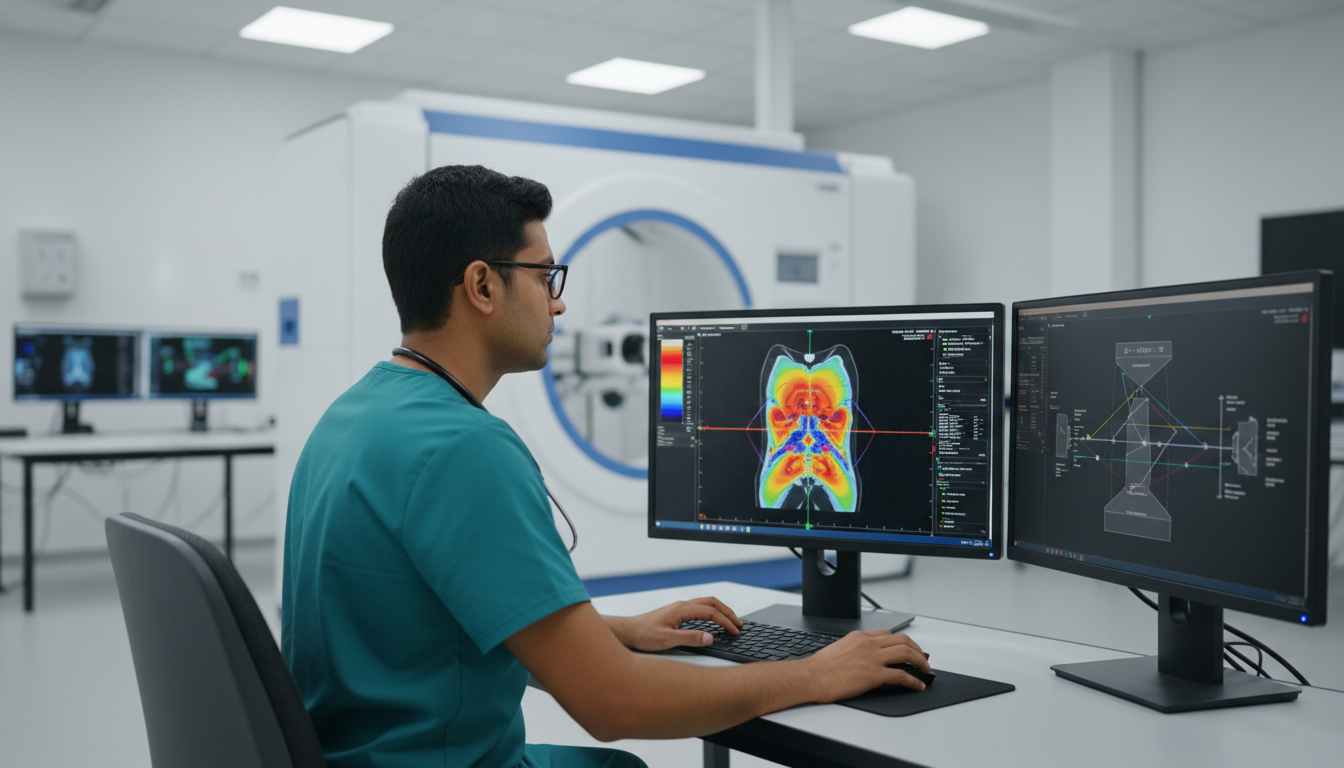
Why Research Matters So Much in Radiation Oncology for US Citizen IMGs
Radiation oncology is one of the most research-driven and competitive specialties in medicine. For a US citizen IMG or an American studying abroad, a strong research profile is often the single most important factor that can compensate for:
- Non‑US medical school
- Less access to home‑institution departments
- Limited opportunities for US clinical rotations in radiation oncology
Program directors in radiation oncology consistently emphasize research productivity and academic potential. Compared to many other fields, rad onc match outcomes correlate strongly with:
- Number and quality of publications
- Involvement in meaningful oncology projects
- Demonstrated understanding of radiation oncology as a career
For a US citizen IMG, research does three crucial things:
Signals commitment to the specialty
You chose a narrow, niche field and invested years in oncology-focused work.Builds credible relationships with US faculty
Research mentors can write the strong, specific letters you need to overcome IMG bias.Provides a measurable, comparable metric
Even if your school name is unfamiliar, your publications, abstracts, and presentations are concrete and easy to evaluate.
If you’re an American studying abroad and aiming for radiation oncology residency, building a deliberate, strategic research profile is not optional—it is core to your application strategy.
In this guide, you’ll learn how to:
- Understand what kind of research matters most in rad onc
- Assess where you are now and set realistic goals (including how many publications needed)
- Find and secure research positions as a US citizen IMG
- Maximize output from each project
- Present your research effectively in your ERAS application and interviews
Understanding the Radiation Oncology Research Landscape
Radiation oncology is uniquely interdisciplinary. Research spans physics, engineering, biology, clinical trials, health services, and outcomes. You do not have to be an expert in all of them—but understanding the terrain helps you target opportunities strategically.
Major Types of Research in Radiation Oncology
Clinical research
- Retrospective chart reviews (e.g., comparing toxicity with two dose fractionations)
- Prospective trials (phase I–III, cooperative group trials)
- Patterns-of-care, survival outcomes, toxicity profiles
- Often most accessible for medical students/IMGs
Translational and basic science research
- Radiobiology (DNA damage, repair pathways, radiosensitizers)
- Tumor microenvironment and immunotherapy–radiation combinations
- Animal models, cell culture, molecular assays
- Higher technical barrier but very impressive if productive
Physics and technology research
- Treatment planning optimization
- Imaging, adaptive therapy, proton therapy, brachytherapy dosimetry
- Machine learning/AI in contouring, planning, or outcome prediction
Outcomes, disparities, and health services research
- Database research (SEER, NCDB, institutional registries)
- Access to care, racial and socioeconomic disparities, rural vs urban treatment patterns
- Cost-effectiveness and policy-oriented studies
Educational and quality improvement (QI) research
- Resident education, contouring curricula, simulation training
- QA initiatives in treatment delivery, workflow optimization
- These are lower barrier and can still generate strong academic output
For an IMG, clinical and outcomes research are usually the most attainable starting points, with physics or translational work added if you find the right mentor.
What Do Programs Actually Look For?
Different programs weigh research differently, but across the specialty, they value:
- Consistent, longitudinal engagement (not just a single summer)
- Oncology relevance, ideally radiation oncology specific
- Evidence of productivity: abstracts, posters, oral presentations, and peer-reviewed publications
- Progression of responsibility: from helper to independent contributor
- Potential for academic career: especially at research-heavy institutions
A key nuance: quality and depth beat raw numbers, but in this field, “quality” nearly always comes with visible output. A thoughtful, well-executed project that leads to a national presentation and a solid paper is more powerful than ten “name only” middle-author case reports.
Setting Realistic Research Goals as a US Citizen IMG
A common question is: “How many publications needed for a competitive radiation oncology residency application?” There is no magic number, but you can think in terms of tiers and context.
Benchmarking: What Does the Average Applicant Look Like?
Data vary by year, but historically successful US MD seniors in radiation oncology often have:
- 10–20+ total research products (including posters, abstracts, and papers)
- Several first-author or co-first-author works
- Radiation oncology or oncology-focused work
As a US citizen IMG, expectations are often higher, not lower, because selection committees want extra evidence that you can thrive in a US academic environment.
You may not need to match those numbers exactly, but you should design a trajectory that demonstrates:
- Clear upward trend over time
- Meaningful engagement (a story you can tell convincingly)
- Tangible output in peer-reviewed or national-level venues
Translating Benchmarks into Personal Goals
Consider creating a 2–4 year research roadmap, depending on your current stage:
If you are early in medical school abroad (Years 1–2):
- Aim to:
- Learn research basics (literature review, statistics, referencing)
- Join 1–2 small projects locally or remotely
- Get at least 1–3 conference abstracts/posters by the end of Year 2
- Priority: building skills and initial experiences, not maximizing count
If you are mid-medical school (Years 3–4):
- Aim to:
- Commit to 1–2 larger projects in radiation oncology/oncology
- Obtain 2–4 posters or oral presentations at recognized meetings
- Target 1–3 published or in-press papers (first or co-first author if possible)
- Priority: alignment with radiation oncology and growing responsibility
If you are near graduation or already graduated (research year / gap years):
- Aim to:
- Secure a dedicated US-based research position (ideal)
- Produce multiple manuscripts (3–6+ over 1–2 years is realistic with a strong lab)
- Present at at least one national meeting (ASTRO strongly preferred)
- Priority: high-yield, high-output environment and very strong letters of recommendation
For many US citizen IMGs, a dedicated one- or two-year research fellowship in the US becomes the cornerstone of a successful rad onc match strategy.

Finding and Securing Research Opportunities as a US Citizen IMG
Access is often the biggest challenge for an American studying abroad. You are outside the US academic network and may not have a home rad onc department. You’ll need to be proactive and strategic.
Step 1: Identify Potential Institutions and Mentors
Start with US radiation oncology departments known for taking IMGs or for strong educational culture. Look for:
- NCI-designated cancer centers
- Academic hospitals with radiation oncology residency programs
- Departments that list research fellows or postdoctoral scholars on their websites
Search strategies:
- Google: “radiation oncology research fellow [city or state]”
- Program websites: faculty pages → look for keywords: “clinical research,” “outcomes,” “education,” “health services”
- ASTRO member directory (where available)
- PubMed: search recent rad onc papers and see which institutions publish a lot in areas you care about (e.g., “stereotactic body radiotherapy lung outcomes MD Anderson”)
Make a spreadsheet tracking:
- Institution
- Faculty name
- Area of interest
- Recent papers
- Email sent / response / follow-up status
Step 2: Learn to Write Effective Cold Emails
As an IMG, cold emailing is often your primary entry point. Your email must be concise, respectful, and show that you did actual homework on their work.
Key elements:
Polite, direct subject line:
- “Prospective US citizen IMG seeking rad onc research year”
- “Interest in head & neck outcomes research – US citizen IMG”
1–2 sentence introduction: who you are, US citizen IMG, school, graduation year
1–2 sentences showing you read their work: mention 1–2 specific recent papers or projects and why they resonate with you
1–2 sentences stating your goal and what you can offer: time commitment, skills (stats, coding, writing), willingness to relocate
Attach:
- 1-page CV (organized, clear “Research Experience” section)
- USMLE scores if strong (optional but helpful)
Send many of these—20–50+ emails is not unusual before landing a solid lead.
Step 3: Targeted Programs and Formal Positions
Some departments offer semi-formal or formal research positions that are particularly friendly to IMGs, such as:
- Clinical research coordinator roles in radiation oncology
- Paid or unpaid research fellows (1–2 years)
- Postdoctoral scholar positions (if you have prior PhD/MSc or substantial experience)
Many of these are not heavily advertised. Ask explicitly in your emails if the department:
- Takes research fellows
- Has “gap year” opportunities for medical graduates
- Would allow remote collaboration to start, with eventual in-person work
If visas are not a barrier (as a US citizen IMG), emphasize that you do not require visa sponsorship. This is a major plus for many institutions.
Step 4: Leveraging Remote and Data-Based Research
If relocating is temporarily impossible, start remotely:
- Outcomes research using de-identified databases (e.g., SEER, NCDB)
- Systematic reviews and meta-analyses
- Survey-based studies in oncology
- Collaborative multi-institutional projects managed via Zoom and shared documents
Remote work can show your motivation and reliability. Once you prove yourself, mentors are far more likely to help you come on-site when circumstances allow.
Maximizing Output: Designing and Driving High-Yield Projects
Once you have access, output—and the story behind it—are what matter. “Research for residency” is not only about checking boxes; it’s about demonstrating that you can take a project from idea to product.
Start with Structured, Feasible Projects
As a newcomer, prioritize projects that can realistically finish before your application cycle. Examples:
- Retrospective chart review with clear primary endpoint (e.g., “Biochemical control after SBRT for low-risk prostate cancer”)
- Institutional patterns-of-care study (e.g., “Use of hypofractionation for breast cancer over 10 years”)
- Outcomes study using SEER/NCDB with a clear question and pre-specified analysis plan
Ask your mentor:
- “What projects are currently stuck and need help to move to completion?”
- “Is there a dataset already available that no one has time to analyze?”
Being the person who finishes projects is more important than being the person who proposes the fanciest idea.
Roles You Should Aim to Play
Initially, you may start as a data collector or literature reviewer, but your target should be to progress to:
- Drafting portions of the manuscript (introduction, methods, discussion)
- Creating tables and figures
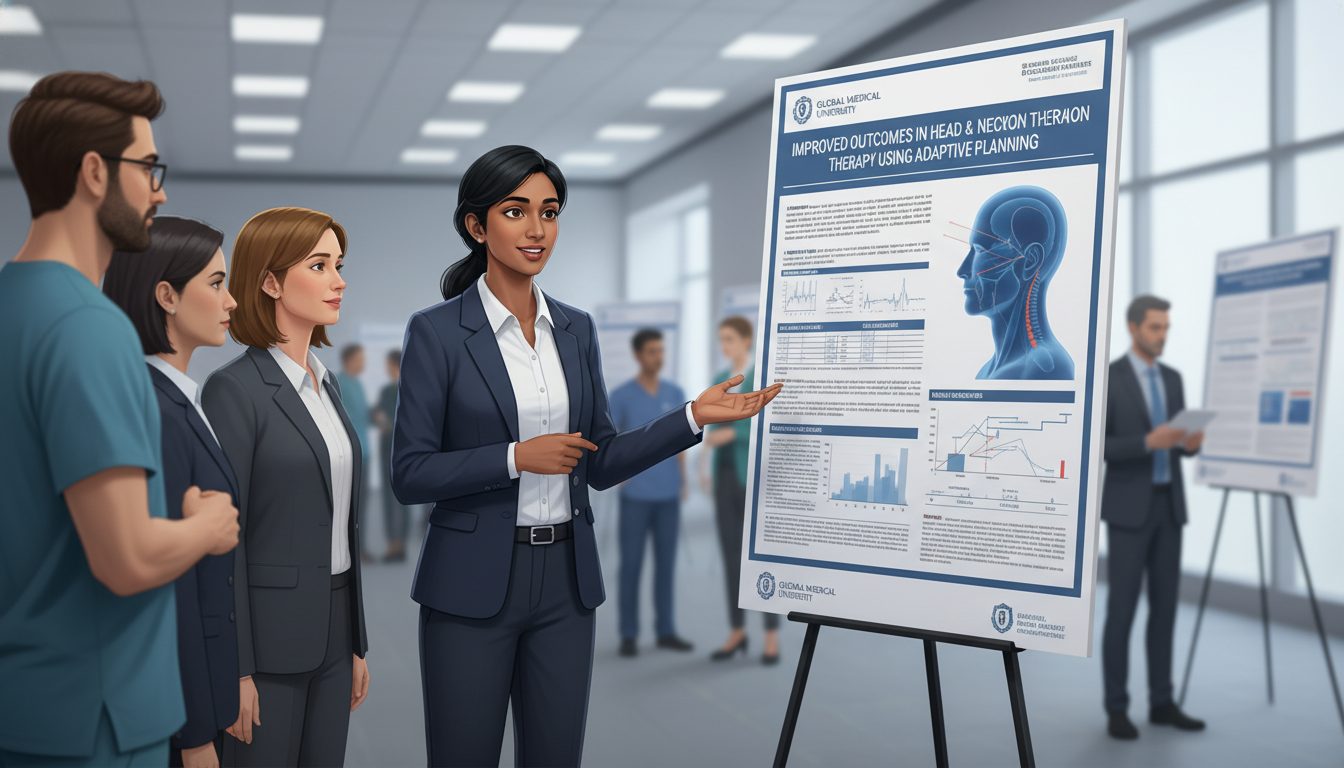
- Structuring abstracts for ASTRO or other oncology meetings
- Helping with IRB submissions and revisions
This progression gives you:
- First- or co-first-author opportunities
- Stronger, more detailed letters of recommendation (“This student wrote the first draft of our paper and led the revision process.”)
Learning Essential Skills Quickly
You don’t need to be a statistician, but you should develop a working knowledge of:
- Basic biostatistics: t-tests, chi-square, survival analysis (Kaplan-Meier, Cox regression)
- Software: Excel, at least one stats program (R, SPSS, or Stata)
- Reference management: Zotero, Mendeley, or EndNote
- Academic writing: IMRAD structure, proper citation, response-to-reviewer etiquette
There are many free or low-cost resources:
- Coursera/edX: introductory biostatistics and research methods
- YouTube channels dedicated to R or SPSS
- Oncology journals’ “how to write a paper” webinars
- ASTRO webinars or institutional grand rounds (often recorded)
The more independent you become, the more valuable you are to mentors—and the more publications for match you can generate.
Balancing Quantity and Quality
To answer the spirit of “how many publications needed”, consider three concentric circles:
Core flagship works (1–3 projects)
- Radiation oncology-specific
- First- or co-first-author
- Presented at a national or major regional meeting (e.g., ASTRO, ASCO, ESTRO)
- Target: at least 1–2 of these by application time
Supportive portfolio (3–8+ projects)
- Mix of first- and middle-author
- Oncology-related; may include case series, review articles, outcomes studies
- Presented at smaller meetings or published in mid-tier journals
Breadth-building activities
- Book chapters, educational content, QI projects, short communications
- Demonstrate engagement and versatility
If you can combine:
- 1–2 “flagship” rad onc projects
- Several supportive oncology projects
- Evidence of ownership and continuity
…your profile will be competitive for many radiation oncology programs, even as a US citizen IMG.
Showcasing Your Research in ERAS and Interviews
Building the research is only half the battle. You must also present it clearly and convincingly.
Optimizing the ERAS Application
Research Experience vs. Publications Sections
- Use the “Experiences” section to describe longitudinal involvement (research assistant, fellow, coordinator).
- Use the “Publications/Presentations” sections to list concrete outputs.
Descriptions that Highlight Your Role
In your experience entries, be specific and honest:- “Designed data collection forms, extracted data from 120 patient charts, performed preliminary survival analysis under supervision using R, and drafted the introduction and discussion for the manuscript.”
Organization of Publications for Match Reviewers
- Group by type: original articles, review articles, case reports, abstracts, posters, oral presentations.
- Clearly note “in press”, “accepted”, or “under review” (under review is okay but weaker than accepted/in press).
- Include DOIs where available.
Prioritize Relevance
- Lead your list with radiation oncology and oncology-focused work.
- Non-oncology work (e.g., cardiology, neurology) can still help but should not overshadow your core narrative.
Preparing to Discuss Your Research in Interviews
Expect most interviewers to ask:
- “Tell me about your most meaningful research project.”
- “What did you learn from your research experience?”
- “How do you see research fitting into your career in radiation oncology?”
To prepare:
Select 2–3 main projects you can discuss in depth.
For each, rehearse a 2–3 minute story covering:
- The research question and why it mattered
- Your specific role
- Main findings (keep stats simple)
- Challenges you faced and how you overcame them
- Impact: publication, practice change, or your own growth
Anticipate follow-up questions:
- “If you could redo this project, what would you change?”
- “What would be the logical next step for this line of work?”
- “Did any of your results surprise you?”
Honest reflection and clear understanding impress more than memorized p-values.
Building a Coherent Narrative
Your research should support a cohesive narrative:
- “I became interested in oncology because…”
- “I started with a small project on X, which led me to outcomes research in Y…”
- “During my US research year in radiation oncology, I focused on Z, which solidified my desire to pursue an academic rad onc career.”
For a US citizen IMG, this narrative also helps address the “Why IMG?” question:
- You can emphasize your deliberate choice, exposure to different healthcare systems, and how your research bridges those experiences with US academic medicine.
Long-Term Academic Strategy: Beyond the Match
Even while focusing on the rad onc match, think beyond July 1 of intern year.
Radiation oncology is shrinking in residency spots and facing workforce and economic challenges. Programs increasingly want residents who:
- Can adapt to changing practice patterns
- Have the skills to contribute to research and innovation
- May become future faculty leaders
Your research foundation as a US citizen IMG can position you for:
- Early involvement in multi-institutional trials
- Resident research tracks or “scholarly concentrations”
- Opportunities for fellowships (e.g., proton therapy, brachytherapy, global oncology)
- Leadership in ASTRO, ARRO, and other organizations
By treating research as a long-term professional habit rather than a one-time hurdle, you set yourself up not just to match, but to thrive in radiation oncology.
FAQs: Research Profile Building for US Citizen IMG in Radiation Oncology
1. I’m a US citizen IMG with no research background. Is it too late to become competitive for radiation oncology?
No, but you must be realistic and focused. If you are early in training, start with small projects and build skills. If you’re nearing graduation, strongly consider taking 1–2 dedicated research years in the US. Solid mentorship, a few well-executed projects, and strong letters can transform your profile, even if you start from zero.
2. How many publications are needed to have a real chance at the rad onc match as an American studying abroad?
There is no fixed cutoff, but for a US citizen IMG, aim for:
- At least 1–2 first- or co-first-author radiation oncology or oncology-focused papers (published, in press, or clearly close to submission)
- Several additional outputs: abstracts, posters, case reports, or middle-author papers
More is better if quality and relevance are maintained, but a smaller portfolio with clearly defined, meaningful contributions and a compelling narrative can still succeed—especially with strong US-based mentors.
3. Does research outside radiation oncology (e.g., internal medicine, surgery) help my application?
Yes, especially if it shows:
- Longitudinal engagement
- Increasing responsibility
- Solid methodology and publication outcomes
However, you should still develop at least some radiation oncology–specific or at minimum oncology-focused research to demonstrate genuine commitment to the field. Use your non-oncology work to show your skills and perseverance; use rad onc work to show specialty fit.
4. Should I prioritize a prestigious institution with uncertain output or a smaller program that promises many publications?
For residency applications, output and mentorship quality usually matter more than pure brand name. Ideally, choose:
- A setting where your mentor has a track record of getting students’ names on papers
- A realistic plan for several manuscripts/abstracts over your time there
- Opportunities to present at conferences (e.g., ASTRO)
A world-famous center with weak mentoring and no completed projects helps less than a mid-tier institution where you lead multiple successful studies and earn strong letters. The optimal scenario is a productive mentor at a reputable academic center—but if forced to choose, favor reliable output and mentorship.
By planning strategically, seeking the right mentors, and committing deeply to meaningful projects, a US citizen IMG can build a research profile that not only opens doors to radiation oncology residency, but also lays the foundation for a durable, impactful academic career in the field.