
The worst thing you can do with an interview-free day is “rest” without a plan and call it preparation.
You’re in the middle of residency interview season. Your calendar is a mess of Zoom links, flight confirmations, and half-finished thank-you emails. Interview-free days are not vacations; they’re your performance sharpening days. Used right, they’re the difference between sounding polished and sounding like every other applicant rambling about “strong clinical training and great culture.”
Here’s how to use those off days, in order, across the whole season.
Big Picture: How Many “Free” Days You Actually Have
Before anything else, you need to see the battlefield.
On your first real break in interview season (usually late October or early November), sit down and map your schedule.
At this point you should:
- Lay out a calendar from now through Rank List deadline.
- Mark:
- Interview days
- Travel days
- Heavy clinical days / exams
- Completely free days (no shifts, no travel, no interviews)
Now label each free day with a job:
- “Strategy Day”
- “Deep Prep Day”
- “Admin/Logistics Day”
- “Recovery + Light Prep Day”
You will not get more than 10–15 of these truly useful days if you’re interviewing widely. Waste half of them and you’ll feel it in your performance by January.
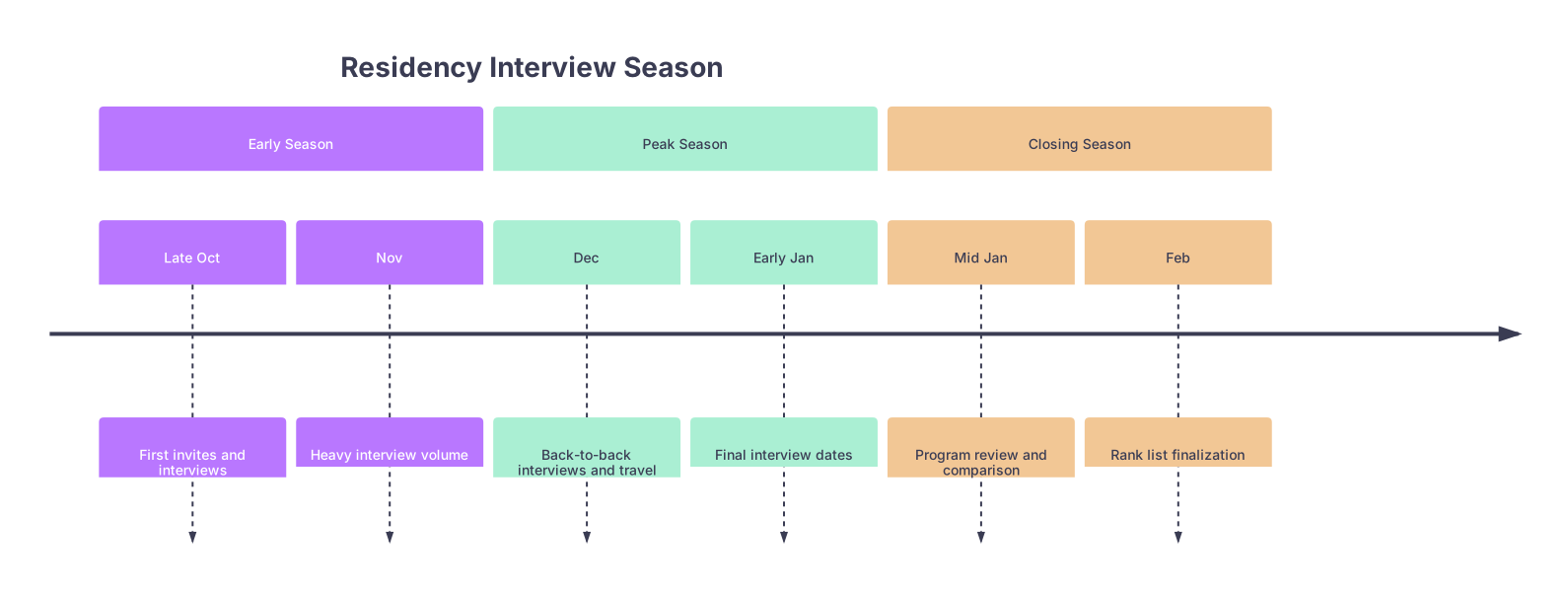
| Period | Event |
|---|---|
| Early Season - Late Oct | First invites and interviews |
| Early Season - Nov | Heavy interview volume |
| Peak Season - Dec | Back-to-back interviews and travel |
| Peak Season - Early Jan | Final interview dates |
| Closing Season - Mid Jan | Program review and comparison |
| Closing Season - Feb | Rank list finalization |
Phase 1: Early Interview Season (First 2–3 Weeks of Interviews)
You’re still figuring out your story. You don’t yet know what programs will ask, or where you sound weak. Early days off should be heavy on foundation-building.
On Your First Interview-Free Day
At this point you should build your core message and tools.
Task 1: Lock in your “three pillars” story (2–3 hours)
You need a consistent spine to your interviews. Not 20 scattered talking points.
Write down, in plain language:
- Why this specialty for you, specifically (not “I like continuity of care”)
- What 2–3 strengths define how you work (e.g., “systems thinker,” “calm in chaos,” “teacher”)
- What you want from a program (not wallpaper phrases; be precise—like “high volume, strong mentorship, real graduated autonomy by PGY-3”)
Turn this into:
- A 60–90 second “Tell me about yourself”
- A 60 second “Why this specialty?”
- A 60–90 second “What are you looking for in a program?”
Write them out. Say them out loud. Edit until they sound like you, not a template.
Task 2: Build your interview notebook or digital system (1–2 hours)
You’ll drown in details if you keep everything in your head.
Create:
- One Program Master List (spreadsheet or doc) with:
- Program name
- City
- Date of interview
- Key features (3–5 bullet points)
- Red flags
- People you met
- Overall vibe (yes/no/maybe)
- One Question Bank:
- Common questions you expect
- Your bullet-point answers (not scripts—just anchors)
- Specific examples mapped to each question
| Tool | Main Purpose |
|---|---|
| Program Master List | Compare programs objectively |
| Question Bank | Keep answers consistent & sharp |
| Logistics Tracker | Travel, links, times |
| Thank-You Tracker | Who you emailed & when |
Task 3: Record yourself once (30–45 minutes)
Use your phone. Ask yourself:
- Tell me about yourself.
- Why this specialty?
- Tell me about a time you failed.
Watch it. You’ll hate it. That’s fine.
At this point you should:
- Identify 2–3 verbal tics (“like,” “um,” “kind of”)
- Notice posture, eye contact, pace
- Write one sentence: “My main weakness in this video is ________.”
That sentence will drive your next few free days.
Phase 2: After 2–4 Interviews – First Refinement Day
Now you’ve had a few real interviews. You know the actual questions, not just the Reddit list.
On your first truly free day after 2–4 interviews, you sharpen based on reality instead of theory.
Morning: Post-Interview Debrief and Pattern Hunting (1.5–2 hours)
At this point you should:
- Debrief each past interview (even retroactively):
- What questions actually came up?
- Where did you struggle or ramble?
- What surprised you?
- For each interview, jot down:
- 2 things that went well
- 2 things that felt off
Look for patterns:
- Do you always stumble on “weakness”?
- Do you ramble when discussing research?
- Do you sound vague about “future career goals”?
Update your Question Bank:
- Add every question you can remember from real interviews so far.
- Put an asterisk next to questions that have repeated across programs.
Midday: Targeted Answer Repair (2–3 hours)
Pick 5–7 questions you’ve actually struggled with. For each:
- Write a bullet-point outline:
- Context (1 quick line)
- Action (2 short bullets)
- Result/Reflection (1–2 bullets)
- Practice each answer aloud 2–3 times—no script reading. Just glancing at bullets.
Questions that almost always show up and deserve this treatment:
- Tell me about a time you had a conflict on the team.
- Tell me about a time you made a mistake.
- Describe a situation where you had to advocate for a patient.
- Tell me about a challenging patient/family interaction.
- What would you do if you and your senior disagreed about management?
You’re not aiming for word-perfect. You’re aiming for consistent structure, specific detail, and a clear takeaway.
Late Afternoon: Program-Specific Prep for Next 1–2 Interviews (1.5–2 hours)
You’re still early in the season; you don’t need to obsess over 10 programs at once.
At this point you should:
- Deep-dive the next 1–2 upcoming programs only.
- For each program:
- Read their website sections: curriculum, call structure, program values, electives, resident wellness.
- Look up one or two recent publications or initiatives (e.g., a QI project, new curriculum).
Create:
- 3–4 tailored questions per program that could not be asked anywhere else.
- 1–2 reasons that connect you personally to that program (patient population, training style, geography for family reasons—real ones, not manufactured).
Phase 3: Mid-Season Grind (When You’re Stacked With Back-to-Back Interviews)
This is late November through December for most people. You’re tired. Everything’s blurring together. This is where most applicants slide into autopilot answers and generic smiles.
Interview-free days here are about maintenance and survival, not rebuilding from scratch.
The Night Before a Free Day
At this point you should:
- Make a 30-second plan:
- Top 2 things you must fix (e.g., “I keep rushing my answers” or “I don’t have a good story for handling feedback”).
- Which upcoming program needs special prep.
Write that plan down. Put it on your desk. Next morning, you start there.
A Typical Mid-Season Free Day Structure
Block 1 (60–90 minutes): Short, Focused Practice
- Pick 5 core questions (the ones they keep asking).
- Answer each aloud twice.
- Record the second round of 2–3 of them. Watch once, right away.
- Write down exactly one improvement per question:
- “Cut the preamble.”
- “Give concrete numbers.”
- “End with what I learned.”
Don’t do 4 hours of mock interviews. Your brain will check out.
Block 2 (60–90 minutes): Program-Specific Sprints
For the very next program only:
- Update your program sheet:
- Who are the key faculty / PD?
- What is unusual about their schedule, tracks, or patient population?
- Draft:
- 2–3 specific reasons you fit there.
- 3–4 tailored questions that show you did more than skim.
Then stop. Over-prepping 6 programs out will just make things blurrier.
Block 3 (30–45 minutes): Admin + Thank-You Cleanup
At this point you should stay on top of the mess:
- Send remaining thank-you emails from your last interview (ideally within 48 hours, but late is better than never).
- Update your Program Master List with:
- Overall vibe (green / yellow / red)
- Anything concerning (e.g., “PD dodged question about fellowships”)
- Clean your inbox:
- Star or label anything about:
- Interview time changes
- Supplemental surveys
- Second-look offerings
- Star or label anything about:
What a “Recovery + Light Prep” Day Actually Looks Like
If you schedule free days with nothing but “REST” on them, you’ll doom yourself to guilt-scrolling and low-grade anxiety.
So on days where you’re drained, you still structure it—but lighter.
At this point you should aim for 2–3 total hours of low-stress sharpening.
Morning (30–45 minutes): Passive Review
- Listen to your own recorded answers while doing something mindless (dishes, walking).
- Pause only to jot 1–2 notes:
- “That answer is too long.”
- “I like how I phrased this part.”
Afternoon (60–90 minutes): One Issue Only
Pick the single most painful part of your interviews lately. Examples I see all the time:
- Getting thrown by weird questions like “What’s the last book you read?”
- Giving vague answers to “Where do you see yourself in 10 years?”
- Freezing on a specific type of story (conflict, failure, ethical issue).
Spend this block:
- Brainstorming 3–4 stories or answers for that one problem.
- Saying each aloud.
- Choosing 1–2 that feel natural and committing them to your Question Bank.
Evening (30–45 minutes): Light Program Browsing
- Skim the websites of your next 1–2 programs.
- No deep dive. Just:
- Check call schedule.
- Look for subtracks/fellowships you might mention.
- Note anything that sounds genuinely appealing to you.
Then you’re done.
Late Season: After 8–10 Interviews – Comparison & Rank List Prep Days
By now you’ve said “Thank you so much for having me” more times than you can count. Everything’s blending.
Your interview-free days now have a different job: distill, not add more noise.
First Comparison Day (Mid / Late December)
At this point you should turn messy impressions into usable decisions.
Step 1: Clean Up Your Program Notes (1–2 hours)
For each program you’ve already interviewed at, update your Program Master List with:
- 3 pros
- 3 cons
- Culture summary in one sentence (e.g., “High-powered, research-heavy, slightly intense”)
- Your gut rank (don’t overthink; first instinct)

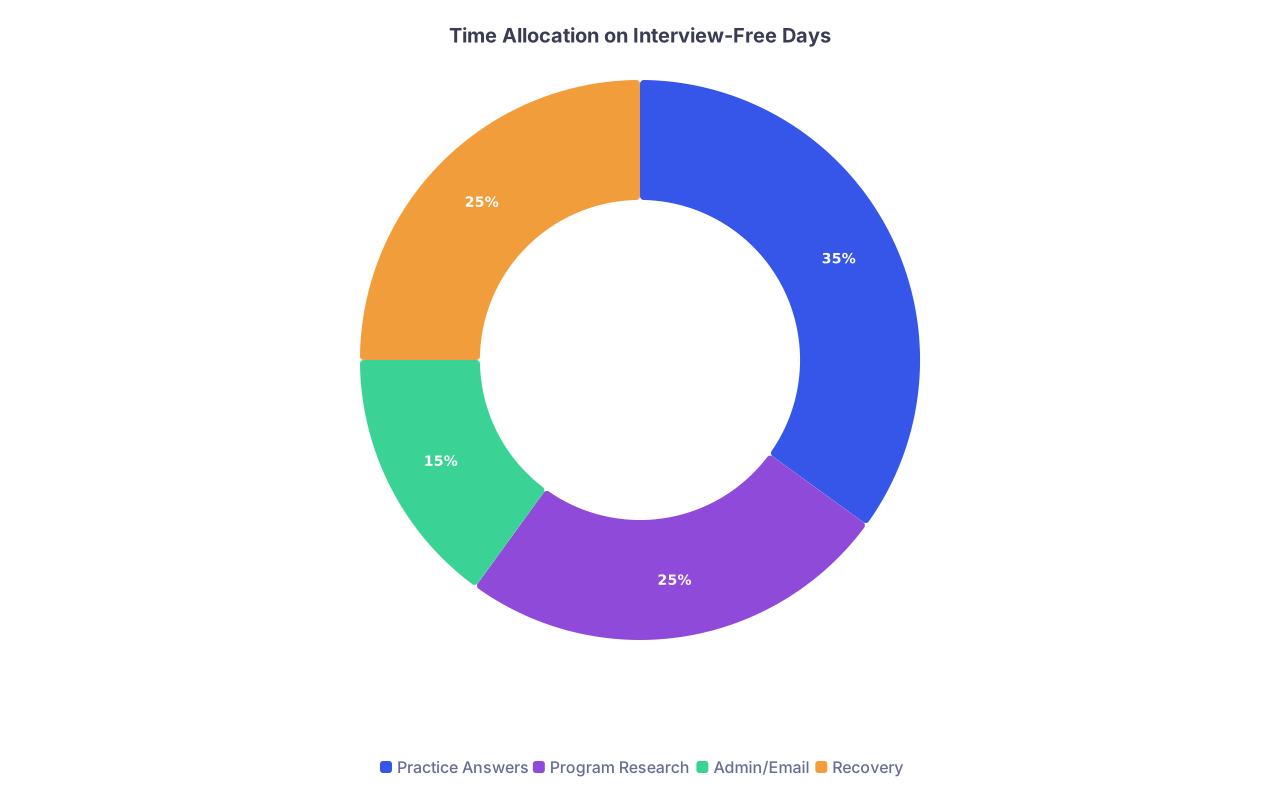
| Category | Value |
|---|---|
| Practice Answers | 35 |
| Program Research | 25 |
| Admin/Email | 15 |
| Recovery | 25 |
Step 2: Identify What Actually Matters to You (45–60 minutes)
By now you’ve heard 20 versions of “We’re like a family.” Ignore the slogans.
Make a short list of your top 4–5 decision factors, for example:
- Geographic location / family
- Fellowship match strength
- Procedural volume / autonomy
- Resident happiness (real, not brochure-level)
- Research support
Rank each program on these 4–5 factors only (simple 1–5 scale is enough).
Step 3: Emotional Check-in (30 minutes)
This sounds fluffy. It’s not.
For each program:
- Write the first 3 words that come to mind about how you felt at the end of the day.
- Notice where you’re talking yourself into or out of a place for prestige reasons alone.
This raw emotional data is gold when you’re staring at a rank list in February.
Micro-Timeline: The 24 Hours Before and After Each Interview
Interview-free days aren’t just random days off. The days around interviews matter too.
The Day Before an Interview (If It’s “Free”)
At this point you should not be doing 6 hours of prep. You’ll just overheat.
Aim for:
- 60–90 minutes max of:
- Reviewing the program’s key facts.
- Refreshing your tailored questions.
- Rehearsing 3–4 core answers (tell me about yourself, why this specialty, a challenge, a mistake).
Then stop. Sleep matters more.
The Day After an Interview (If It’s Free)
Use your memory while it’s fresh.
Within 2–3 hours of waking up (30–45 minutes):
- Fill in your program sheet:
- People you met (names, roles, something memorable).
- Questions they asked you.
- Any red or green flags.
- Your gut sense.
Before bed (20–30 minutes):
- Send targeted, short thank-you notes (no essays).
- Update overall rank impressions if anything felt extreme (very good or very bad).
Example: How to Use Three Interview-Free Days in a Heavy Week
Say this is your schedule:
- Mon: Interview
- Tue: Interview
- Wed: Free
- Thu: Interview
- Fri: Free
- Sat: Free
At this point you should structure it like this:
Wednesday – Recovery + Light Sharpening
- 30 min: Debrief Mon/Tue interviews, update notes.
- 60 min: Fix one recurring weak question.
- 30 min: Quick prep for Thu program.
- Rest of day: actual rest, no guilt.
Friday – Deep Practice + Program Sprint
- 90 min: Focused answer practice for 5–7 key questions, record 2–3.
- 60 min: Deep dive next big “reach” or high-priority program.
- 30 min: Thank-you email catch-up + inbox cleanup.
Saturday – Strategy and Comparison
- 60–90 min: Review all programs to date, update pros/cons and gut rankings.
- 45–60 min: Refresh your core story (make sure your “Why this specialty?” hasn’t drifted into blandness).
- 30 min: Map the next 2 weeks—mark which upcoming free days are for recovery vs deep prep.
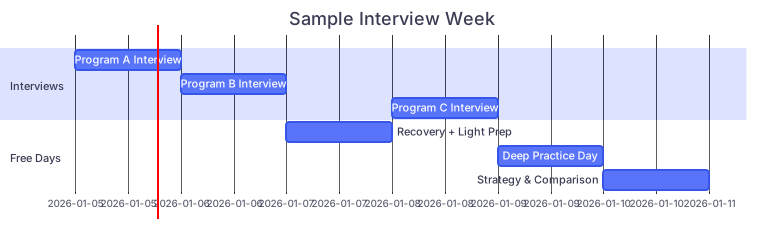
| Task | Details |
|---|---|
| Interviews: Program A Interview | a1, 2026-01-05, 1d |
| Interviews: Program B Interview | a2, 2026-01-06, 1d |
| Interviews: Program C Interview | a3, 2026-01-08, 1d |
| Free Days: Recovery + Light Prep | b1, 2026-01-07, 1d |
| Free Days: Deep Practice Day | b2, 2026-01-09, 1d |
| Free Days: Strategy & Comparison | b3, 2026-01-10, 1d |
Common Ways People Waste Interview-Free Days (And What To Do Instead)
I’ve watched plenty of applicants sleepwalk through off days. Same mistakes again and again.
Mistake 1: Bingeing Question Lists Without Saying Anything Out Loud
Reading 200 “top interview questions” and not answering them out loud is fantasy prep. At this point you should:
- Cap your “reading lists” time to 30 minutes.
- Spend at least double that actually speaking answers.
Mistake 2: Rewriting Answers Instead of Practicing Delivery
Endless editing in a Google Doc doesn’t fix your tendency to ramble in real time.
Use bullets, not scripts. Then rehearse.
Mistake 3: Treating Every Free Day Like a Monolithic “Prep Day”
You need different types of off days: recovery, deep practice, admin, strategy. If you don’t label them, you’ll do a vague mixture of all and none will be done well.
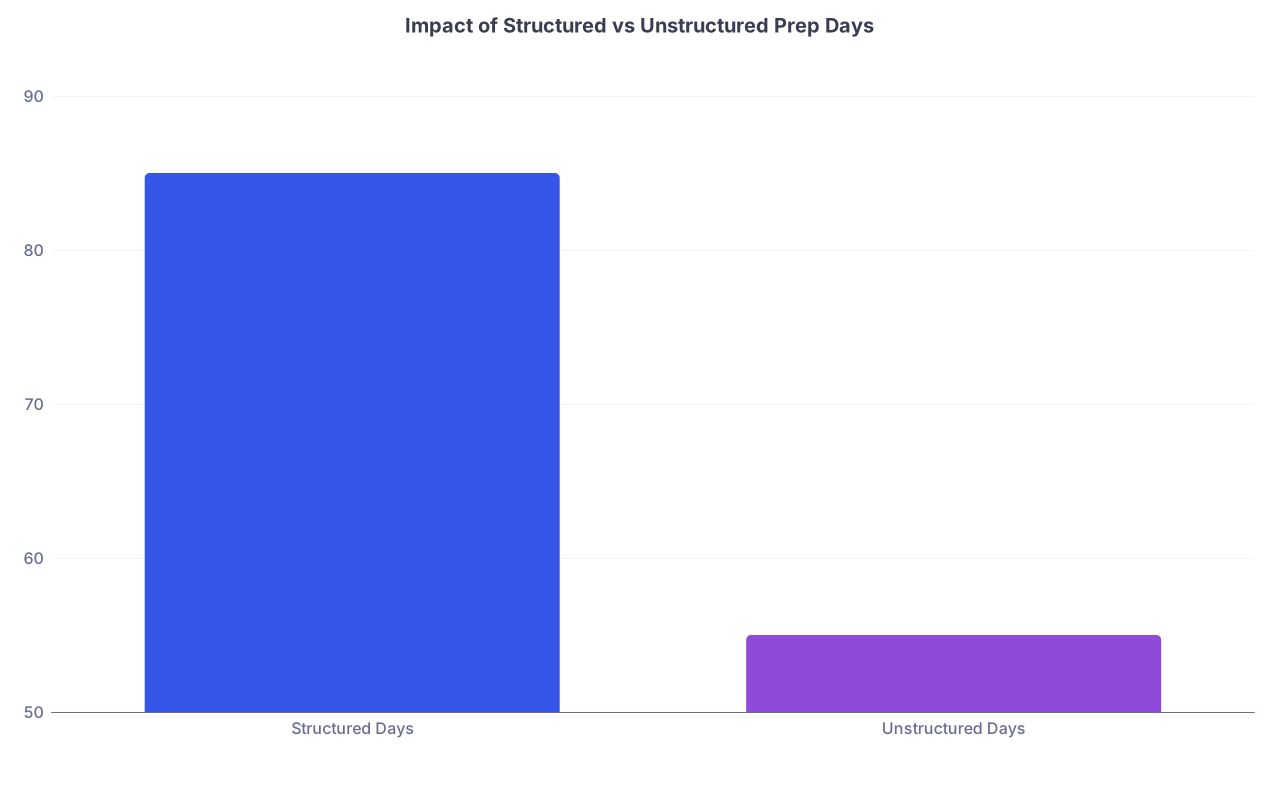
| Category | Value |
|---|---|
| Structured Days | 85 |
| Unstructured Days | 55 |
(Think of those numbers as your average performance out of 100. That’s roughly the gap I see in polish between people who plan their off days and those who just “see how it goes.”)
Final Calibration: Last Few Free Days Before Rank List Submission
By late January / early February, you’re mostly done interviewing. Your free days shift from performance sharpening to decision sharpening—but there’s still performance involved: you’ll talk with mentors, maybe do second looks, and you need to be clear.
At this point you should:
Use one full free day to:
- Re-read your entire Program Master List.
- Sort programs into clear tiers (A, B, C).
- Confirm that your top choices actually match your day-to-day priorities, not just your ego.
Use another lighter free day to:
- Script 2–3 talking points you’ll discuss with mentors or advisors about your tentative rank list.
- Clarify any final questions that could justify a follow-up email or second look.
The Short Version
Use interview-free days like a professional, not a passenger:
- Every off day gets a job. Recovery, deep practice, program research, or strategy—not all at once.
- Prep is spoken, not just written. Bullet your ideas, then say them out loud, record, refine.
- Track and compare programs as you go. Your memory will lie to you in February; your notes will not.