Understanding Match Day and Why It Matters for Caribbean IMGs
For Caribbean international medical graduates (IMGs), Match Day is more than a date on the calendar—it’s the culmination of years of sacrifice, relocation, exam preparation, and clinical rotations far from home. Whether you’re at SGU, AUC, Ross, Saba, or another Caribbean medical school, understanding the structure of Match Week, the unique challenges you face, and the strategies that work for Caribbean graduates is essential.
Many Caribbean students hear phrases like “SGU residency match statistics” or “Caribbean medical school residency chances” and feel both hope and anxiety. The reality is that thousands of Caribbean IMGs match successfully every year—especially those who prepare strategically and understand the Match Week timeline in detail.
This guide breaks down exactly what happens during Match Week, what to do on Match Day itself, and how you can set yourself up for success as a Caribbean IMG.
The Match Week Timeline: What Actually Happens and When
One of the most common sources of stress is simply not knowing what to expect. Understanding the NRMP Match Week timeline—and how it applies to you as a Caribbean IMG—can help you plan, prepare emotionally, and respond quickly if things don’t go as expected.
Key Dates and Milestones
While the exact calendar dates change each year, the sequence of events is consistent:
1. Rank Order List (ROL) Deadline – Mid to Late February
- By this date, you must certify your Rank Order List in NRMP.
- Your list should reflect your true preferences—never try to “game the algorithm.”
- As a Caribbean IMG, your ROL strategy should account for:
- Programs where you interviewed
- IMG-friendliness
- Geography and visa policies (if applicable)
- Specialty competitiveness and your applicant profile (USMLE scores, attempts, year of graduation, etc.)
2. Match Week Begins – Monday Morning (Eastern Time)
This is the first emotionally intense moment:
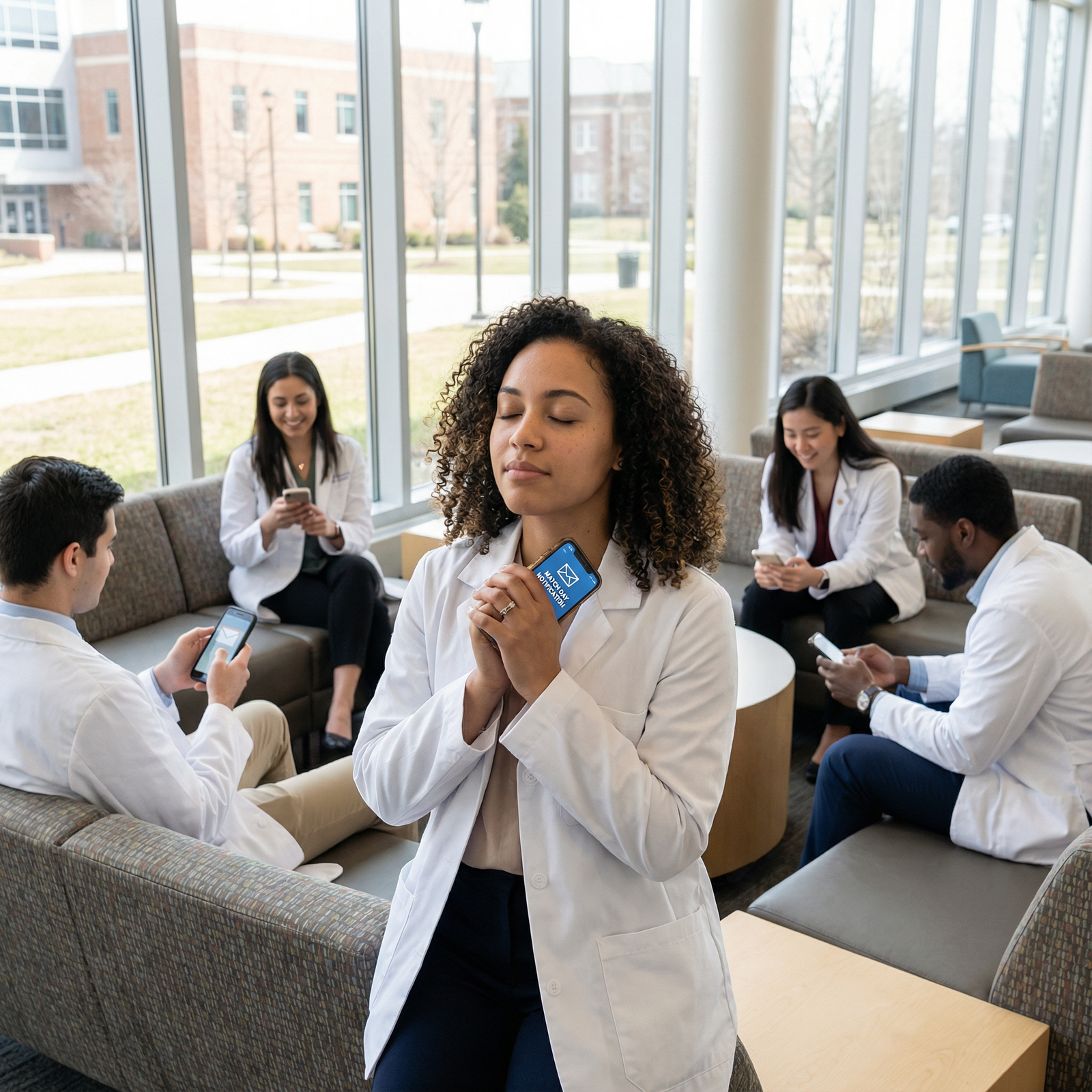
- You receive an email from NRMP OR log into your NRMP account to see whether you:
- MATCHED (somewhere on your list), or
- PARTIALLY MATCHED (for advanced/preliminary combinations), or
- DID NOT MATCH.
You will not know where you matched on Monday—only whether you matched.
3. SOAP (Supplemental Offer and Acceptance Program) – Monday to Thursday
If you do not match, or only partially match and still need a preliminary or advanced spot, you may be eligible for SOAP.
Typical SOAP structure:
- Monday: List of unfilled programs becomes available to SOAP-eligible applicants. You start sending applications via ERAS (up to a limited number of programs).
- Tuesday–Thursday: Multiple rounds of offers and acceptances occur. Programs review SOAP applications, conduct short interviews, and extend offers in timed rounds.
- Thursday: SOAP ends. Any remaining unfilled positions become visible to everyone afterward (but without a formal SOAP structure).
As a Caribbean IMG, SOAP is both an opportunity and a high-pressure process. Preparation needs to start before Match Week.
4. Match Day – Friday of Match Week
This is the day everyone thinks of when they ask “when is Match Day?” or search “Match Day SGU”:
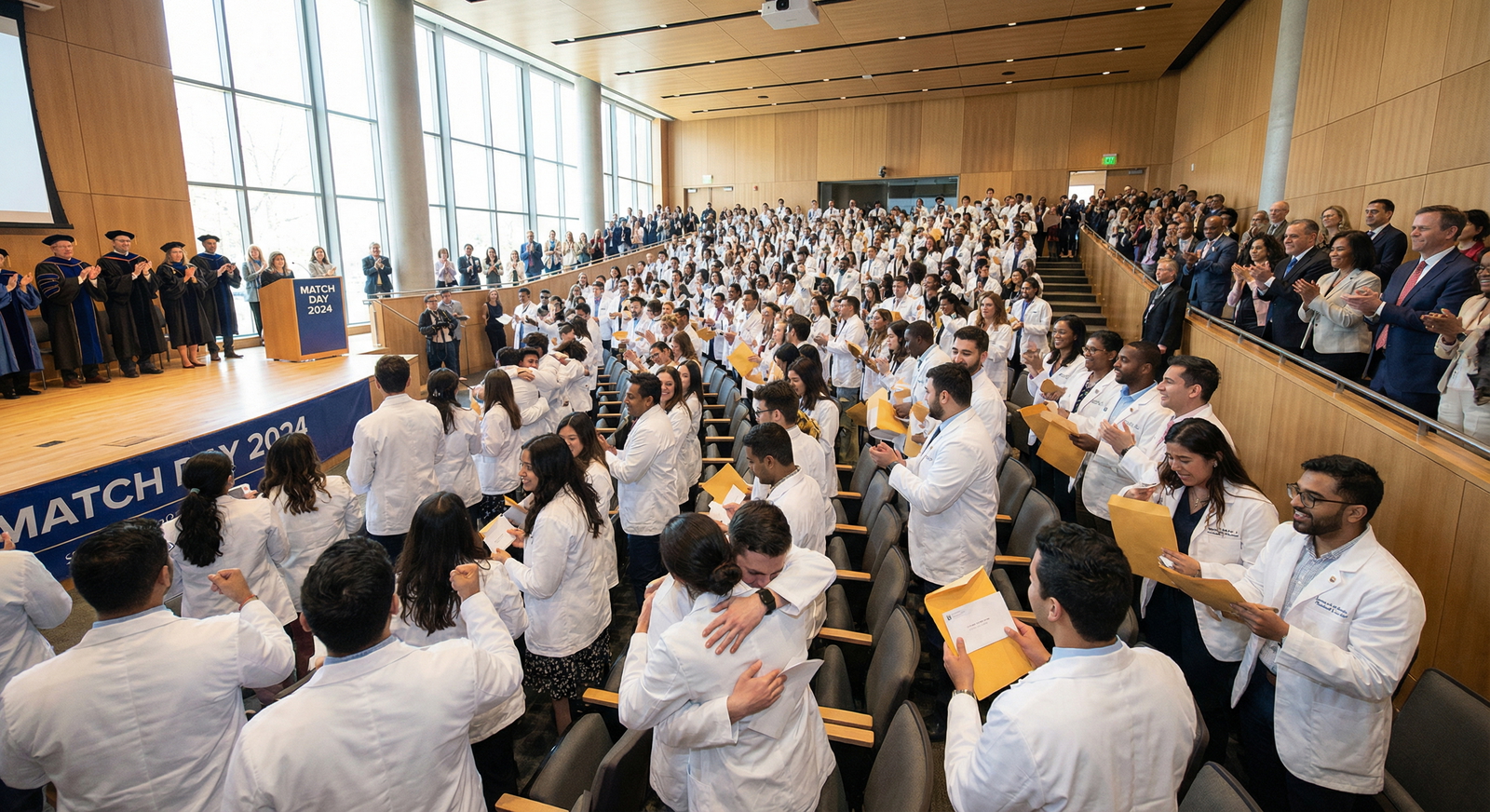
- Morning (Local Time): Medical schools and students hold Match Day ceremonies or watch parties.
- You receive an official email from NRMP and can log in to see where you matched.
- You celebrate, share news with family and friends, and begin thinking about next steps—housing, licensing paperwork, and transitions.
Strategic Preparation Before Match Week: Setting Up for Success
The best Match Day experiences are built on months (and years) of deliberate preparation. As a Caribbean IMG, there are some extra layers you must manage—licensing requirements, visa issues, perceptions of Caribbean schools, and sometimes fewer home residency program connections.
1. Optimize Your Profile Early
Before you ever get to Match Week, your focus should be on making your application as competitive as possible:
USMLE Performance
- Aim for strong Step 2 CK performance; Step 1 is now pass/fail but still must be passed early.
- Avoid multiple attempts, if possible; if you have them, ensure significant upward trend and strong Step 2 CK.
Clinical Rotations and Letters of Recommendation
- Prioritize U.S. clinical rotations in your target specialty.
- Seek rotations at hospitals that have residency programs—especially those with a history of taking Caribbean grads.
- Secure strong, detailed letters from U.S. attendings who know your work.
Specialty Strategy
- Honestly assess your competitiveness for your intended specialty.
- Internal medicine, family medicine, pediatrics, and psychiatry are often more IMG-friendly.
- For more competitive fields, consider dual strategies (e.g., applying to both internal medicine and your dream specialty).
2. Understand Your School’s Match Support
If you’re at a major Caribbean medical school—such as SGU, Ross, AUC, or Saba—there are often structured supports:
- SGU residency match advising and specialty advisors.
- ERAS workshops and mock interview sessions.
- Guidance on program selection and ranking.
Use these aggressively:
- Send your target program list to advisors for feedback.
- Attend webinars on “Caribbean medical school residency” outcomes and strategies.
- Ask for help interpreting “IMG-friendliness” of certain regions.
3. Build a Realistic Rank List
The NRMP algorithm is applicant-favorable if you rank programs in your true preference order. However, your list also needs to be realistic:
Prioritize places that interviewed you.
Never rank programs where you didn’t interview.Research IMG-friendliness.
- Review historical data: do they have current residents from Caribbean schools?
- Check if they sponsor visas (J-1/H-1B) if you are a non-U.S. citizen.
Balance dream vs. safety programs.
- Include some “reach” programs, but ensure a solid base of community programs with strong IMG representation.
Rank all acceptable programs.
- If you’d be willing to train there, rank it.
- Don’t exclude a program just because it’s not in your ideal city; residency is temporary, and training plus board eligibility are your primary goals.
What to Expect Emotionally and Logistically During Match Week
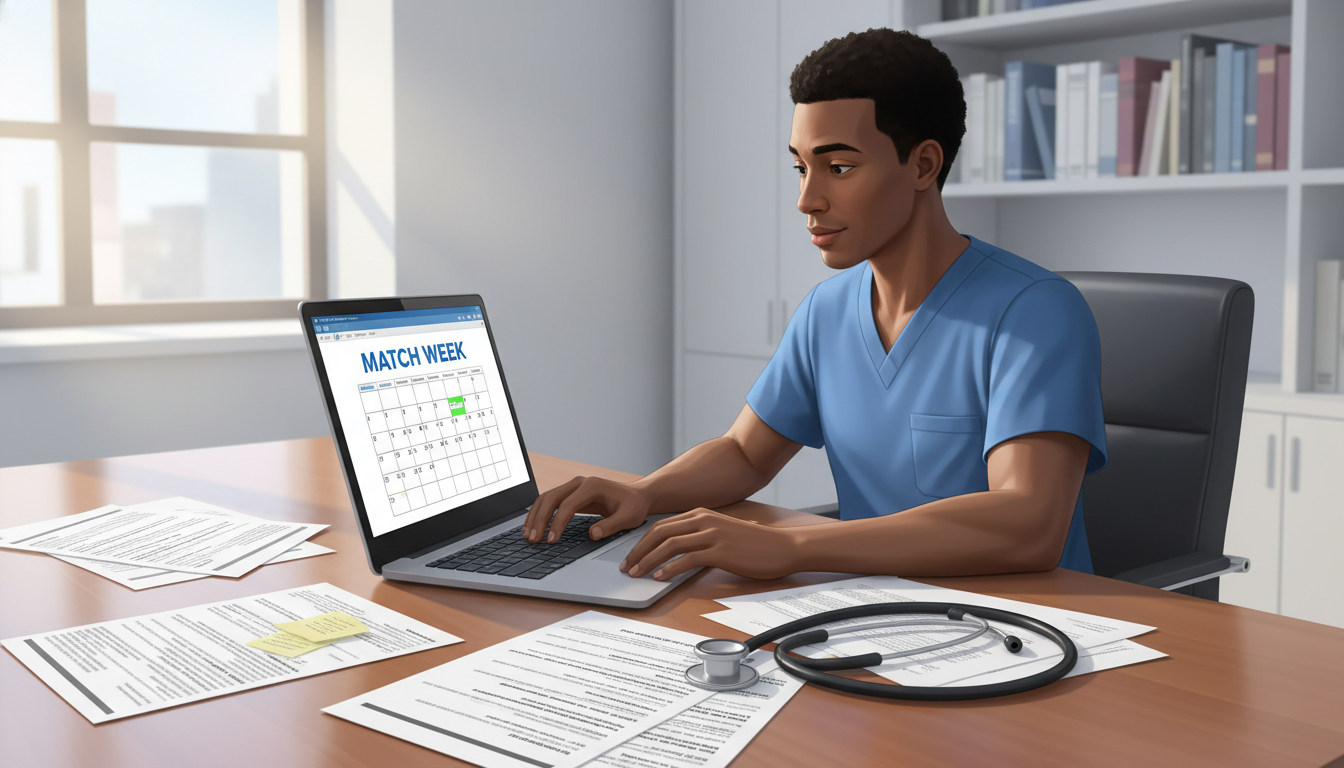
Match Week is a roller coaster emotionally, especially for Caribbean IMGs who may carry extra pressure about proving the value of their education and sacrifices. Planning for both emotional and logistical needs can make a huge difference.
Monday: Did I Match?
Morning: NRMP Notification
You’ll learn one of the following:
You matched to a residency position.
- Relief and excitement—but also uncertainty about where.
- Use Monday–Thursday to prepare emotionally, finalize backup plans, and think about finances and logistics.
You did not match (or partially matched).
- This is a heavy moment, but it is not the end of your residency path.
- Many Caribbean IMGs secure positions through SOAP or in future cycles.
- Your response in the next 24–72 hours is critical.
If You Matched: Strategic Use of the Week
While you’re waiting for Match Day itself:
Review your application materials
Familiarize yourself with what you emphasized in ERAS, since programs may mention it later.Gather documents you’ll soon need:
- Passport, social security, vaccination records.
- Medical school transcripts and diploma timeline.
- USMLE scores / ECFMG certification status.
Plan for location contingencies
Since you don’t yet know where you’ll be:- Consider broad geographic scenarios (coasts, Midwest, rural vs urban).
- Prepare a mental checklist for quick housing searches.
Emotional preparation
- Sleep, hydrate, and maintain exercise if possible.
- Limit doom-scrolling through forums. Online speculation can amplify anxiety, especially around “Caribbean medical school residency chances” or comparisons with U.S. grads.
If You Did Not Match: Entering SOAP as a Caribbean IMG
This is where preparation and mindset are critical.
1. Understand Your SOAP Eligibility
You are SOAP-eligible if:
- You registered for NRMP Main Match and
- You are unmatched or partially matched and
- You are ECFMG certified (or will be by program start) and
- You meet NRMP’s specific eligibility rules for that year.
If eligible, you will gain access to the SOAP system and the list of unfilled programs.
2. Rapid Action Steps on Monday
Meet with your dean’s office or advisor immediately.
- Most Caribbean schools have SOAP playbooks and dedicated personnel.
- Ask for help triaging which specialties and programs to target.
Refocus your specialty strategy.
- Be flexible. You may need to pivot to more IMG-friendly and less competitive specialties (e.g., Internal Medicine, Family Medicine, Psychiatry, Pediatrics, Transitional Year, Preliminary Medicine/ Surgery).
- Consider your long-term goals: Some use a preliminary year as a steppingstone.
Update and tailor your ERAS application quickly.
- Adjust your personal statement to the specialty you’re now targeting.
- Revise program-specific questions if permissible.
3. During SOAP Rounds (Tuesday–Thursday)
Be highly responsive.
- Keep your phone on you and email refreshed.
- Programs may request short virtual interviews on very short notice (sometimes same-day).
Prepare a concise “SOAP script.”
- Be ready to explain:
- Why you’re interested in this specialty and program.
- What your strengths are as a Caribbean IMG (clinical exposure, adaptability, resilience).
- How you’ve addressed any application weaknesses (exam attempts, gaps).
- Be ready to explain:
Avoid desperation behavior.
- Do not contact programs that are not SOAP-participating outside the proper channels.
- Stay professional and focused; the SOAP process is structured and time-limited.
Match Day Itself: Making the Most of the Moment
By Friday, the suspense culminates in a single email and a few lines of text that will shape your next 3–7 years. As a Caribbean IMG, you may be celebrating away from your original home country or even away from your family; planning your Match Day intentionally can make it meaningful.
Morning: How Information Is Released
- NRMP typically releases results late morning (Eastern time).
- You can:
- Open the email on your phone.
- Log into NRMP’s website directly.
- Your school (especially larger ones like SGU) may host:
- A formal Match Day ceremony.
- A smaller gathering or viewing party.
- Virtual events if you’re off-campus.
Think ahead about:
- Where you want to be when you open the email.
- With whom you want to share that first reaction.
Sharing the News: Family, Friends, and Social Media
As a Caribbean IMG, your family may be spread across different countries and time zones. Consider:
Immediate family calls or video chats.
- Plan a time window when everyone can be online.
- Have someone ready to screen-record your reaction if that matters to you.
Professional presentation of your Match announcement.
- When posting on LinkedIn or Instagram:
- Include your matched specialty and institution.
- Express gratitude to mentors and your school.
- Avoid disparaging comments about other programs or the process.
- When posting on LinkedIn or Instagram:
If you didn’t match or are unhappy with the result:
- You don’t have to post anything immediately.
- Process privately before sharing widely.
- Remember that others struggle silently too; it’s much more common than you think.
Immediate Next Steps After You Match
Once the initial excitement settles:
Review your program’s welcome materials.
Many programs send:- Welcome emails
- Onboarding checklists
- Dates for orientation and start date
Confirm requirements for ECFMG certification and medical licensing.
- Ensure all exam components are completed and documented.
- Check state-specific requirements—some states have unique rules for Caribbean-graduated IMGs.
Start thinking about relocation logistics:
- Housing near the hospital.
- Transportation (public transit vs car).
- Visa process (if applicable), including DS-2019 for J-1 or H-1B procedures.

Special Considerations for Caribbean IMGs: Visas, Geography, and Perceptions
Caribbean medical graduates often face specific concerns that can shape their Match Day strategy and post-Match decisions.
1. Visa and Immigration Issues
If you are a non-U.S. citizen Caribbean IMG:
Know your visa category options:
- J-1 visa (most common): Sponsored by ECFMG; used by many IMGs in residency.
- H-1B visa: Less common; usually requires all USMLE Steps (including Step 3) completed before residency start, and the program must be willing and able to sponsor.
Check your program’s historical behavior:
- Does the program actively sponsor visas?
- Are there current residents on J-1/H-1B?
Start documentation early:
- Passport validity
- Birth certificate, diplomas, translations if needed
- Police certificates for some visa processes, depending on consulate requirements
Visa timing can affect:
- When you can actually start residency.
- Travel back to your home country between Match Day and residency start.
2. Geographic Flexibility and Family Considerations
Many Caribbean IMGs are willing to be geographically flexible to increase their chances of matching. After you receive your Match result:
Assess the location thoroughly:
- Cost of living.
- Safety and neighborhoods suitable for residents.
- Weather and climate (e.g., harsh winters if you’re from a tropical climate).
Family and support system:
- If you have a partner or children, involve them early in planning.
- Research schools, childcare, and job markets for partners.
3. Addressing Perceptions of Caribbean Medical Schools
While the stigma around Caribbean schools is gradually shifting, it still exists in some circles. Your performance and professionalism can steadily counteract this:
Leverage your strengths:
- High volume of clinical exposure.
- Adaptability to different systems and patient populations.
- Resilience from navigating international education pathways.
Prepare confident but humble narratives:
- If asked about your school or path:
- Focus on what you gained (clinical skills, global perspective).
- Avoid defensiveness or negativity.
- Highlight outcomes—many Caribbean IMGs proceed to successful careers and fellowships.
- If asked about your school or path:
After Match Day: Building a Strong Start as a Caribbean IMG Resident
Matching is the beginning of your residency journey, not the endpoint. Your first year will shape your reputation, fellowship opportunities, and future job prospects.
1. Administrative and Licensing Tasks
Within the first few weeks after Match Day:
- Complete onboarding packets promptly.
- Submit background checks and drug screens as required.
- Start your state medical training license process (if required):
- Some states have unique requirements for Caribbean graduates regarding:
- Number of weeks of core rotations.
- Documentation of clinical experiences.
- ECFMG certification timing.
- Some states have unique requirements for Caribbean graduates regarding:
2. Academic Preparation
Before residency starts:
Review key clinical topics for your specialty:
- Internal medicine: hypertension, diabetes, CHF, pneumonia, sepsis, chest pain workup.
- Family medicine: preventive care, chronic disease management, basic pediatrics and OB.
- Pediatrics: vaccination schedules, common infections, neonatal care basics.
Practice clinical documentation:
- SOAP notes and H&Ps.
- Electronic medical record (EMR) usage.
- Billing and coding basics if resources are provided.
3. Professionalism and Reputation-Building
As a Caribbean IMG in residency:
Be reliable above all else.
- Show up on time (or early).
- Complete tasks and follow up diligently.
- Communicate clearly with your team.
Seek mentorship early:
- Identify senior residents or attendings who are supportive.
- Ask them for feedback periodically.
- Express interest in academic projects or QI initiatives.
Plan for your longer-term goals:
- If you want fellowship, ask about research opportunities and scholarly activity requirements.
- Attend departmental conferences and grand rounds consistently.
FAQs: Match Day and Match Week for Caribbean IMGs
1. As a Caribbean IMG, are my chances of matching significantly lower than U.S. graduates?
Caribbean IMGs, on average, have lower match rates than U.S. MD and DO graduates. However, thousands successfully match each year, especially those who:
- Score well on USMLE Step 2 CK
- Have strong U.S. clinical experiences
- Apply strategically to IMG-friendly programs and realistic specialties
- Submit well-crafted applications and interview effectively
Being from a Caribbean school does not exclude you from matching, but it does mean you must be especially intentional about your preparation.
2. How does the SGU residency match process differ from other Caribbean schools?
The core NRMP process is the same for all schools, including SGU. However, SGU and other larger Caribbean medical schools often provide:
- Dedicated advising teams for residency applications
- Workshops on ERAS and interview preparation
- Data on where recent graduates matched, helping you identify IMG-friendly programs
This infrastructure can make navigating the residency application and Match Week smoother, but the underlying NRMP rules and timelines are identical regardless of school.
3. If I don’t match on Monday, do I still have a chance to get a residency spot?
Yes. If you are SOAP-eligible, you can still secure a residency position through the Supplemental Offer and Acceptance Program during Match Week. Many Caribbean IMGs obtain positions this way, particularly in primary care specialties and preliminary or transitional year programs. Even if SOAP is not successful, you may:
- Apply for off-cycle or post-Match positions later in the year
- Reassess your strategy (exams, specialty choice, application strength) and reapply in the next Match cycle.
4. How soon after Match Day should I start planning for relocation and licensing?
Begin planning immediately after you receive your Match result. Some steps, like securing housing or applying for state training licenses, can take weeks to months. As a Caribbean IMG, you may also need to:
- Handle visa processing (J-1 or H-1B) if you are a non-U.S. citizen
- Coordinate receipt of final transcripts and ECFMG certification documents from your school
Starting early ensures you’re not scrambling in June when orientation is near. The more organized you are after Match Day, the smoother your transition into residency will be.
By understanding the Match Week timeline, preparing strategically, and using support systems available through your Caribbean medical school, you can approach Match Day with clarity and confidence. Your journey as a Caribbean IMG is demanding, but with thoughtful planning, Match Day can be the launchpad for a successful residency and a fulfilling medical career.