Understanding Match Day and Why It Matters So Much for Non‑US Citizen IMGs
For a non-US citizen IMG (international medical graduate), Match Day is more than a date on the calendar—it’s the culmination of years of exams, applications, interviews, and immigration planning. It also marks the starting point for your residency and your professional life in the United States.
Before getting into strategies, it’s essential to understand:
- What Match Day is
- When is Match Day and what is Match Week?
- How the Match algorithm works (at a practical level)
- Why the stakes are slightly different for a foreign national medical graduate
What is Match Day?
Match Day is the day when the National Resident Matching Program (NRMP) releases the final results of the residency match. On this day, you learn:
- Whether you matched
- Where you matched
- In which specialty and program you will begin training
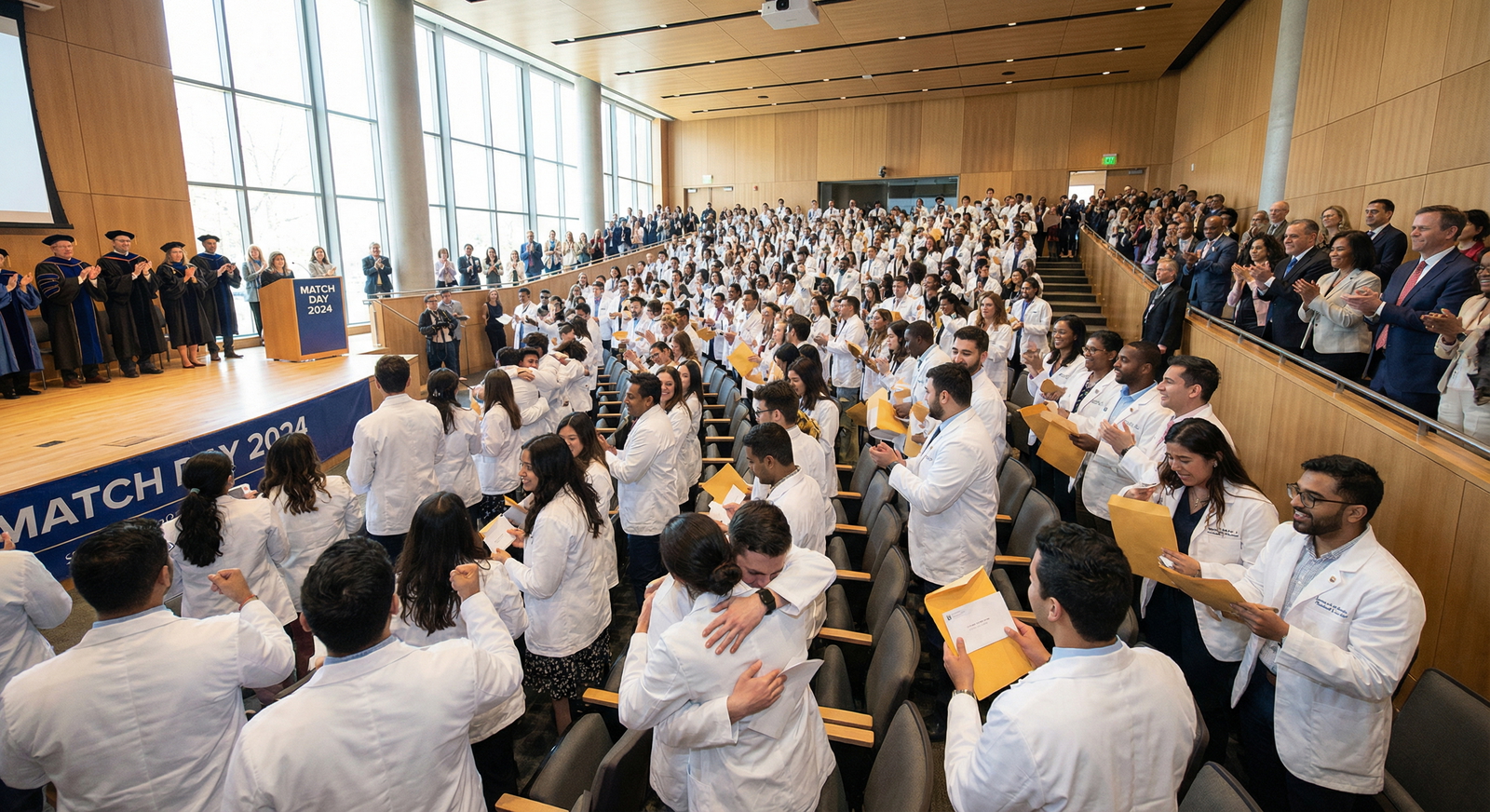
For US medical schools, Match Day is often a formal ceremony. As a non-US citizen IMG, you may be receiving your result via email, the NRMP R3 system, or with friends/family abroad—but the impact is the same.
When is Match Day?
Match Day is typically:
- Mid-March each year, always on a Friday of “Match Week”
- Exact dates change annually, but:
- Monday: You find out if you matched (not where)
- Friday: You find out where you matched
When you ask “when is Match Day?” you should also think in terms of Match Week, because the entire week has key milestones that affect your strategy—especially if you don’t match on the first try.
The Match Week Timeline (High-Level)
Here’s the typical Match Week timeline for the NRMP Main Residency Match:
Monday – 11:00 AM ET
- You receive an email / log into NRMP R3:
- “You have matched” or
- “You have not matched to any position” or
- “You have partially matched” (for advanced/preliminary situations)
- If you did not match or are partially matched, you get access to SOAP (Supplemental Offer and Acceptance Program).
- You receive an email / log into NRMP R3:
Monday afternoon – Thursday
- SOAP rounds:
- You can see unfilled programs.
- You submit applications via ERAS.
- Programs review and send out offers in several rounds.
- You accept or decline offers in set time windows.
- SOAP rounds:
Friday – Match Day – 12:00 PM ET
- NRMP releases full Match Day results.
- You receive your match letter and see the final program details.
- Your ERAS and NRMP accounts update.
For a non-US citizen IMG, understanding this Match Week timeline is vital. It affects:
- Your travel and housing planning
- Your visa planning (J-1 vs H-1B possibilities)
- How you respond if you don’t match or only partially match
In the next sections, we’ll break down how to prepare before, during, and after Match Day specifically from the perspective of a foreign national medical graduate.
Strategic Preparation Before Match Week (3–6 Months Before)
Your outcome on Match Day is largely influenced by what you do months before Match Week. For non-US citizen IMGs, preparation includes not just ranking programs but also planning for visa and backup scenarios.
1. Build a Realistic Rank Order List (ROL)
The NRMP algorithm favors applicant preferences, meaning:
- You should rank programs in true order of desire, not based on where you think you’ll match.
- Do not try to “game” the algorithm; it doesn’t work.
For a non-US citizen IMG, add these layers:
Check Visa Sponsorship
- Confirm whether each program sponsors J-1, H-1B, or both.
- Rank only programs willing/able to sponsor your visa type.
- If a program does not sponsor any visas, think carefully before ranking it—unless you already have a suitable status (e.g., green card).
Weigh IMG-Friendliness
Consider:- Historical percentage of IMGs in the program.
- How many non-US citizen IMGs they have taken.
- Program websites, alumni profiles, and NRMP/ERAS data.
- Feedback from current residents (especially IMGs).
Balance Competitiveness and Safety Use a rough category system:
- Reach Programs – highly competitive, strong reputation, limited IMG intake.
- Target Programs – realistic for your profile (scores, YOG, USCE).
- Safety Programs – community or smaller programs known for IMG intake.
Aim for a broad list:
- Many non-US citizen IMGs rank 10–20+ programs, sometimes more.
- Broader is typically better if the programs are acceptable for you to train in.
Account for Geographic and Lifestyle Realities
- Areas with high cost of living may be more challenging without family support.
- Some locations may be more welcoming or familiar to IMGs.
- Weather, safety, proximity to cultural/religious communities—all matter for your long-term well-being.
Actionable Tip:
Create a spreadsheet listing each program with columns for:
- Visa options (J-1, H-1B, none)
- IMG percentage (overall and non-US citizens)
- Board pass rates
- City cost of living
- Your preference score (1–10)
- Notes from interviews (fit, vibe, red/green flags)
Use this to sort and finalize your ROL.
2. Clarify Visa Strategy Before Match Day
As a foreign national medical graduate, visa planning should not start after Match Day—you need a preliminary strategy early.
J-1 vs H-1B – Practical Overview
J-1 (ECFMG-sponsored)
- Most common for IMGs.
- Requires return-home rule (often 2 years) unless waived.
- Usually easier and faster for most programs.
H-1B (Employer-sponsored)
- Requires passing USMLE Step 3 before petition filing.
- Some states require Step 3 for licensing.
- More expensive and paperwork-heavy for programs.
- Some institutions or states don’t use H-1B for residents.
Strategy Points:
- If you strongly prefer H-1B, ensure:
- You have taken and passed Step 3 early (ideally before interviews or at least before rank list submission).
- You confirm that your ranked programs are open to H-1B sponsorship.
- If you’re flexible:
- Rank both J-1 and H-1B programs, but understand implications for future plans (e.g., waiver jobs, academic careers).
Actionable Tip:
In interviews, ask program directors or coordinators directly and politely:
“For non-US citizen IMGs, what visa types does your program typically sponsor for categorical residents?”
Document answers and incorporate them into your rank list decisions.
3. Financial and Practical Planning for Outcomes
Match Day can lead to very different immediate futures:
- You match → need to plan for relocation, visa fees, licensing, and initial living expenses.
- You don’t match → may need to fund another year of exams, observerships, research, or home-country work.
Budget at least 6 months ahead for:
- Credentialing and licensing fees
- ECFMG / visa-related costs
- First 1–2 months of rent and living expenses in your new city
- Travel for visa interviews or immigration documents (if needed)
For many non-US citizen IMGs, funding can be tight. Planning ahead allows you to respond to any Match Week outcome more calmly.

Navigating Match Week Step-by-Step as a Non‑US Citizen IMG
Once the Match Week timeline begins, your role shifts from planning to execution. Here’s how to handle each phase strategically.
Monday: “Did I Match?” – Immediate Response Plan
At 11:00 AM ET Monday, you will see one of three NRMP statuses:
- You Matched
- You Partially Matched (commonly in advanced specialties requiring a preliminary year)
- You Did Not Match
If You Matched
- Celebrate, but stay organized:
- Your exact program will be revealed on Friday.
- Confirm that your email and phone number in ERAS/NRMP are current.
- Start thinking:
- How will this impact your visa pathway?
- Do you have all documents ready (passport, ECFMG certificate, degree)?
- Avoid contacting programs before Friday; the official Match Day is when details are released.
If You Partially Matched (Advanced + Preliminary Scenario)
For example, you matched into an advanced position (PGY-2) but not a PGY-1 prelim (or vice versa).
- You are eligible for SOAP for the missing portion.
- Focus your SOAP applications on:
- Programs that are IMG-friendly
- Programs with visa sponsorship
- Locations/logistics that allow continuity from PGY-1 to PGY-2
Tip:
During SOAP, respond quickly and professionally to all communications—slots fill fast.
If You Did Not Match
This can be emotionally painful, but your actions over the next few days are critical.
- Take a short emotional break (a few hours).
- Then, immediately organize for SOAP:
- Check which programs have unfilled positions.
- Refine your ERAS application if allowed (updated experiences, new LORs).
- Draft concise, targeted messages (if programs permit communication).
For non-US citizen IMGs, confirm:
- Which unfilled programs sponsor visas
- Whether they typically accept non-US citizen IMGs
SOAP Strategy for Non‑US Citizen IMGs
The Supplemental Offer and Acceptance Program is structured and time-limited. Keep in mind:
Application Limits
- You have a limited number of SOAP applications.
- Use them strategically, not randomly.
Target Programs Wisely Prioritize:
- Programs with known IMG intake
- Programs explicitly listing visa sponsorship
- Specialties where you are already relatively competitive
Adjust Specialty Expectations (If Needed) For some applicants, reapplying next year in the same specialty makes sense. For others:
- Switching to a less competitive specialty during SOAP can provide a foothold in the US system.
- For example:
- From internal medicine → preliminary medicine / transitional year
- From general surgery → prelim surgery / prelim medicine
Use SOAP to maximize the chance of any ACGME-accredited clinical position that aligns with your long-term plan.
Professionalism and Responsiveness
- Be available constantly during SOAP rounds.
- Reply promptly to emails or calls from programs.
- Be concise, respectful, and clear if asked to interview on short notice.
Communication Pitfalls to Avoid During Match Week
- Do not aggressively email programs that you ranked to ask why you didn’t match.
- Do not pressure programs for visa commitments during SOAP before they even show interest.
- Do not share confidential SOAP lists publicly (this violates NRMP rules).
As a non-US citizen IMG, your professionalism during Match Week can influence whether a borderline program decides to extend you a SOAP offer.

Match Day Itself: Making the Most of Your Result
Whether you are in the US or abroad, Match Day is a major transition point. Your mindset and actions on this day set the tone for the months ahead.
Reading and Interpreting Your Match Letter
At 12:00 PM ET on Friday, your Match result will be available. It usually includes:
- Your specialty
- Your program name
- The city/state
- The start date (usually July 1)
Confirm these details and store the letter securely (download and back it up).
First Steps After a Successful Match
Once you know where you matched:
Notify Key People
- Family and close friends
- Mentors and letter writers
- Research supervisors or USCE preceptors
Email the Program a Brief Thank You
- Usually addressed to:
- Program Director (PD)
- Program Coordinator (PC)
- Keep it short, professional, and warm.
Example:
Subject: Grateful to Have Matched to [Program Name]
Dear Dr. [PD Last Name] and [Coordinator’s Name],
I am delighted to share that I have matched to the [Specialty] residency program at [Institution]. It is an honor to join your team.
I look forward to contributing to the program and serving your patients. Please let me know if there are any initial documents or forms you would like me to complete.
Sincerely,
[Your Full Name, Degree]
AAMC ID: [XXXXXXX]- Usually addressed to:
Ask About Next Steps Usually, the program will soon send:
- A welcome packet or onboarding email
- Credentialing and HR forms
- Information about visa processing, if applicable
- Orientation dates
Visa and Immigration Planning After Match Day
As a foreign national medical graduate, this is arguably the most critical operational part after you match.
Step 1: Clarify Your Visa Category with the Program
Confirm formally:
- Whether you will be sponsored for J-1 or H-1B
- What documents they require from you and by when
Typically, the program’s GME office or international office will guide you, but you must:
- Respond quickly
- Provide accurate information
- Keep copies of all communications
Step 2: Gather and Organize Documents
Common items include:
- Valid passport
- ECFMG certificate
- Final medical school diploma and transcripts
- USMLE score reports
- Previous visa documents (if you have been in the US before)
- Marriage certificate / birth certificates for dependents (if applying with family)
Create a scanned digital folder with all documents in PDF form, properly labeled.
Step 3: Timing and Travel Coordination
Consider:
- How long it takes to obtain the necessary visa stamp in your country
- Whether there are appointment backlogs at the US consulate
- Travel restrictions or additional screenings
Build in time buffers; do not schedule visa interviews at the last possible moment.
Emotional and Professional Mindset on Match Day
For non-US citizen IMGs, Match Day often involves:
- A time zone difference (midday ET may be late night or early morning for you)
- Separation from family and support networks
- Added stress about visas and relocation
A few ways to manage this:
- Plan a small, intentional celebration, even if simple.
- Connect with other IMGs online; many are going through the same experience.
- Remind yourself that matching is a major professional achievement—celebrate it fully, even as you prepare for the next steps.
If You Did Not Match: Strategic Next Steps for Non‑US Citizen IMGs
Not matching can feel devastating, but many IMGs successfully match on a subsequent attempt—often with stronger applications and clearer strategies.
Immediate Post-Match Reflection
Within 1–2 weeks, perform a structured review of your application:
Scores and Attempts
- USMLE/COMLEX scores and any failures
- Step 2 CK timing (late scores can hurt)
Clinical Experience
- Extent and recency of US clinical experience (USCE)
- Types of rotations (observership vs hands-on electives)
- Strength and relevance of Letters of Recommendation
Specialty Selection
- Was your target specialty realistic for your profile?
- Did you apply broadly enough?
Visa Status and Constraints
- Did your visa needs limit the number of programs you could apply to?
- Are there alternative visa or immigration paths you should consider?
Building a Stronger Application for the Next Cycle
Specific strategies for foreign national medical graduates:
Enhance US Clinical Experience (USCE)
- Seek observerships, externships, or research positions in the US.
- Prefer settings that:
- Are ACGME-affiliated
- Have active residency programs
- Aim for new, strong letters of recommendation from US faculty.
Consider a Research Year
- Particularly effective if:
- You aim for academic or competitive specialties.
- You can obtain a suitable visa (e.g., J-1 research, F-1 research programs).
- Focus on:
- Publications or abstracts
- Conference presentations
- Building mentorship networks
- Particularly effective if:
Refine Specialty and Program List
- Consider switching to more IMG-friendly specialties if appropriate.
- Apply to a broader range of community and smaller academic programs.
- Prioritize programs with a history of sponsoring visas and taking non-US citizen IMGs.
Improve Exam Profile Where Possible
- If permitted and appropriate, strengthen areas such as:
- Additional sub-specialty certifications (e.g., BLS/ACLS)
- Quality improvement projects or US-based courses
- If permitted and appropriate, strengthen areas such as:
Maintaining Legal Status (If You Are Already in the US)
If you’re in the US on a visa (e.g., B-1/B-2, F-1, J-1 research):
- Consult with an immigration attorney or your international office early.
- Explore options such as:
- Extending or changing status
- Enrolling in a degree or research program that maintains status
- Avoid gaps that might complicate your next visa application.
Practical Tips to Optimize Your Match Day Journey as a Non‑US Citizen IMG
To bring everything together, here are concrete, high-yield strategies tailored to foreign national medical graduates:
Start Visa Discussions Early
- Do not wait until after you rank programs to clarify whether your preferred programs sponsor visas.
- Ask during interviews, or email coordinators politely afterward if you’re unsure.
Use the Match Week Timeline to Your Advantage
- Block off Monday–Friday of Match Week as “high-priority availability.”
- Avoid clinical or job commitments that prevent you from responding quickly to SOAP or program emails.
Stay Organized Digitally
- Keep separate folders for:
- Match documents (NRMP, ERAS confirmations)
- Visa-related items
- Program-specific information
- Use spreadsheets to track:
- Communication with programs
- Task completion and deadlines
- Keep separate folders for:
Build an IMG Support Network
- Engage with:
- Online IMG forums
- WhatsApp/Telegram groups for your specialty or country of origin
- Share practical advice (without violating NRMP rules) and support each other emotionally.
- Engage with:
Protect Your Well-Being
- Match season is stressful. Sleep, nutrition, exercise, and social connection are not luxuries—they keep you functioning.
- Consider counseling or mental health resources if anxiety or disappointment feels overwhelming.
FAQs: Match Day and Match Week for Non‑US Citizen IMGs
1. As a non-US citizen IMG, does the Match algorithm treat me differently?
No. The NRMP Match algorithm does not consider nationality or visa status. It only uses the rank order lists of applicants and programs.
However, programs may factor visa and sponsorship issues into whom they rank, which indirectly affects your odds. That’s why it’s crucial to apply and rank programs that actively support foreign national medical graduates.
2. When is Match Day and how far in advance should I prepare?
Match Day is usually the Friday of the third week in March, with Match Week starting the preceding Monday.
You should begin targeted preparation for Match Week at least 3–6 months before, including:
- Finalizing a realistic rank list
- Clarifying visa-friendly programs
- Preparing financially and logistically for either outcome (matched or unmatched)
3. Can I switch from J-1 to H-1B later during residency?
It depends on your program and institutional policies:
- Many programs prefer residents to stay on the same visa type throughout training.
- Some allow switching (e.g., J-1 to H-1B) for fellowship or later training years, especially if you have passed Step 3 and meet licensing requirements.
- Always confirm with your GME office and immigration advisors before planning such a switch.
4. If I don’t match as a non-US citizen IMG, is it realistic to try again?
Yes. Many non-US citizen IMGs successfully match on a second or even third attempt, especially if they:
- Strengthen their CV with US clinical experience or research
- Target more IMG-friendly specialties and programs
- Clarify and adapt their visa strategy
- Obtain strong new letters of recommendation from US faculty
Reapplication requires honest self-assessment and a focused plan, but it is often very achievable.
Being a non-US citizen IMG adds complexity to the residency journey, but with early preparation, informed visa planning, and strategic use of the Match Week timeline, you can navigate Match Day with confidence and position yourself for success in US residency training.