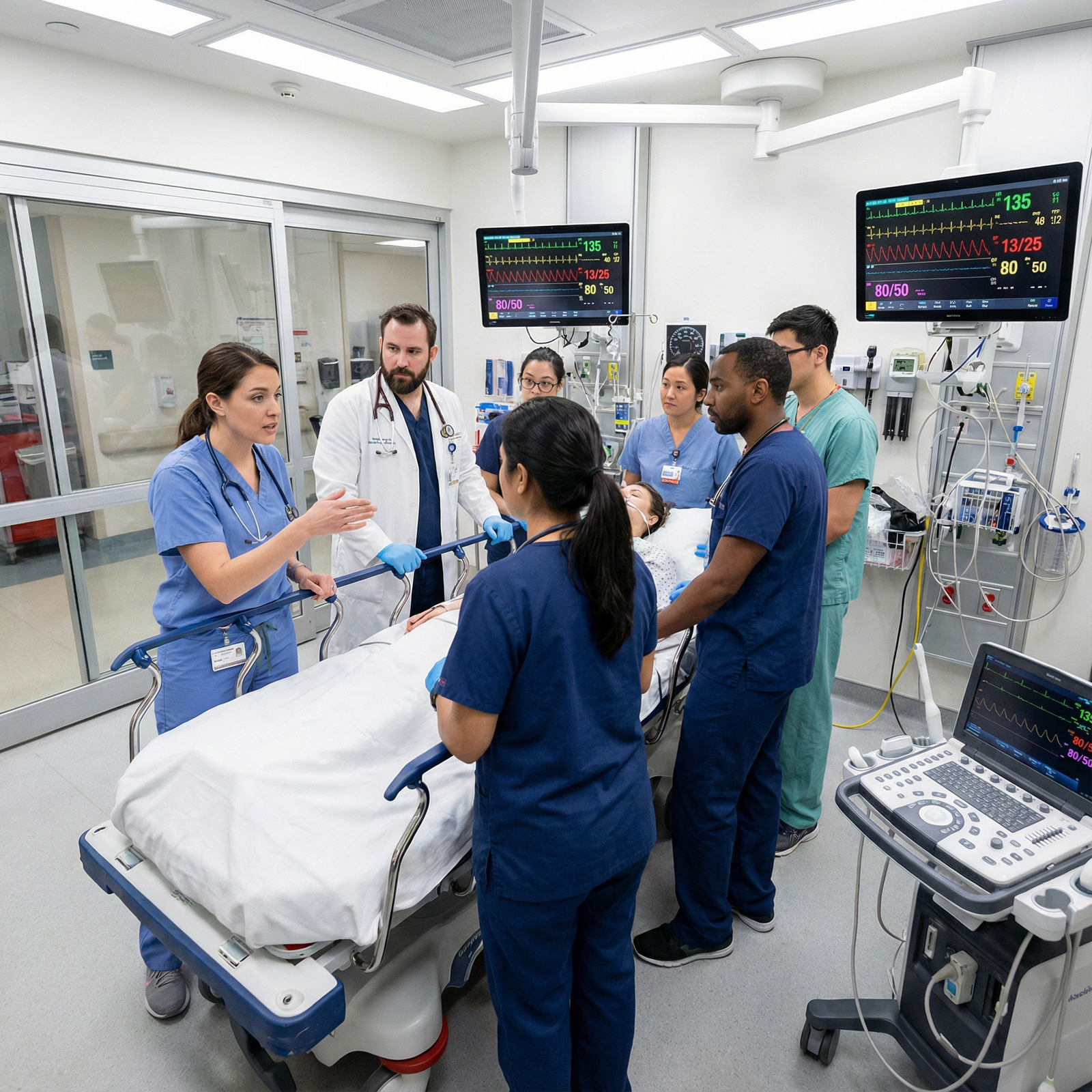
Mastering Rapid Decision Making in Medical Emergencies for Residents
In residency, few skills matter more than the ability to make fast, sound decisions in medical emergencies. Whether you’re in the ED, the ICU, or on night float covering the wards, you will face moments where every second counts and your choices directly shape patient outcomes.
Rapid decision-making in emergency care is not just “being quick.” It’s the integration of:
- Solid medical knowledge
- Practical experience
- Sharp clinical judgment
- Effective communication
- Emotional control under pressure
all applied in compressed timeframes.
This guide reframes the original article specifically for residents and senior medical students, adding practical tools and real-world strategies to help you grow from “reacting” to emergencies to leading them with confidence and competence.
Core Components of Rapid Decision Making in Medical Emergencies
Before improving how you decide, you need to understand what goes into high-quality decisions under pressure. These components are also the primary targets for your ongoing healthcare training.
1. Medical Knowledge and Pattern-Based Expertise
Foundational Knowledge
You cannot shortcut this: you decide as well as you understand.
In medical emergencies, you’re commonly dealing with:
- Cardiovascular crises (ACS, arrhythmias, shock)
- Respiratory failure
- Sepsis and septic shock
- Acute neurological events (stroke, seizures, altered mental status)
- Trauma and hemorrhage
- Toxicologic and metabolic emergencies
Actionable tips:
- Build “emergency bundles” in your mind for key chief complaints (e.g., chest pain, shortness of breath, altered mental status, trauma).
- For each bundle, know:
- Top life-threatening causes
- Immediate “don’t-miss” actions
- First-line diagnostics and treatments
Experience and the Power of Repetition
With experience, clinical judgment shifts from purely analytic (“let me think through every possibility”) to more automatic pattern recognition.
You’ll notice:
- “This looks like classic septic shock.”
- “These vitals and this abdomen feel like a ruptured AAA until proven otherwise.”
- “This is not what straightforward pneumonia looks like.”
As a resident:
- Seek out high-yield exposures (codes, rapid responses, trauma activations).
- Volunteer to run parts of the resuscitation under supervision.
- After each emergency, briefly debrief with yourself:
- What did I see?
- What did I miss?
- How could I decide faster next time?
This deliberate reflection accelerates the conversion of knowledge → experience → intuition.
2. Clinical Judgment: From Data Overload to Clear Decisions
Clinical judgment is the bridge between raw data and action. In emergencies, that bridge must be fast but structurally sound.
Rapid Data Assessment
In a medical emergency, you’re flooded with inputs:
- Vitals, mental status, physical exam
- Point-of-care tests and imaging
- History from patient, EMS, or family
- Treatment responses over minutes
To maintain clarity:
- Focus first on life-threats: airway, breathing, circulation, neurologic status.
- Ask yourself: “What can kill this patient in the next 5–10 minutes?”
- Use structured tools (ABCDE, AVPU/Glasgow Coma Scale, shock index).
Pattern Recognition vs. Analytic Reasoning
You’ll use two cognitive modes:
System 1 (Fast, intuitive):
- “This looks like PE.”
- “This is a STEMI until proven otherwise.”
- Great for speed but prone to bias.
System 2 (Slow, deliberate):
- “Let’s consider other causes of hypotension.”
- “Do the labs and imaging align with my initial impression?”
- Slower but more accurate.
In time-critical situations, you often start with System 1 and then rapidly sanity-check with System 2:
- Generate a quick working diagnosis.
- Ask: “What else could this be that would be catastrophic if I miss it?”
- Rule out or cover those critical possibilities (e.g., treating for sepsis while also evaluating for PE).
3. Communication and Team Leadership Under Pressure
Emergency care is a team sport. Your clinical judgment is only as effective as your ability to communicate it.
Intra-Team Communication
In a code or high-acuity event, aim for:
- Clear leadership voice:
- “I’m leading this code. Let’s quickly introduce ourselves and roles.”
- Closed-loop communication:
- You: “Give 1 mg epinephrine IV push.”
- Nurse: “1 mg epinephrine IV push now.”
- You: “Confirmed, 1 mg epinephrine given at 14:03.”
- Explicit prioritization:
- “Our top priorities: secure airway, support blood pressure, get an ECG.”
Use brief, structured updates:
- “Summary: 65-year-old male, likely septic shock, hypotensive despite 2L fluids, starting norepinephrine now, lactate 5.2, sending blood cultures and broad-spectrum antibiotics.”
Patient and Family Communication
Even in chaos, brief, calm communication can:
- Reduce anxiety
- Improve cooperation
- Clarify critical history elements
Examples:
- “You’re having trouble breathing. We’re going to give you oxygen and medications to open your airways.”
- “Your relative is very sick and we’re working quickly to stabilize them. I’ll update you as soon as we can.”
4. Cognitive Capacity and Stress Management in Emergencies
You cannot disconnect how you think from how you feel under stress. Your brain in a code is not the same as your brain in a conference room.
Cognitive Load and Mental Agility
Under high cognitive load, residents are prone to:
- Missing critical trends (e.g., creeping hypotension)
- Fixating on one diagnosis
- Forgetting basic steps (e.g., checking blood glucose)
To preserve cognitive capacity:
- Offload tasks:
- “Please document times and meds.”
- “Please keep me updated if systolic BP drops below 90.”
- Use checklists and protocols for high-stakes tasks.
- Verbally summarize the case every few minutes to re-center your thinking.
Stress Management and Emotional Regulation
You will feel:
- Adrenaline
- Fear of making the wrong call
- Performance pressure (especially with attendings watching)
Practical techniques:
- Tactical breathing: Inhale for 4 sec → hold 4 → exhale 4 → hold 4 (box breathing). Use this while walking to the code or between tasks.
- Mental scripting: Before a shift, visualize handling a code or rapid response calmly and systematically.
- Cognitive reframing: Shift from “I can’t mess this up” to “My job is to do the next right thing, one step at a time.”
Over time, you’ll recognize your own stress signals (tunnel vision, voice changes, shaky hands) and proactively apply these strategies.
5. Decision-Making Frameworks and Protocols in Emergency Care
When seconds matter, frameworks are your lifeline. They reduce variability, prevent omissions, and support consistent clinical judgment.
Common protocols residents should master:
- ACLS for cardiac arrest and arrhythmias
- ATLS for trauma
- Stroke pathways for suspected acute ischemic stroke
- Sepsis bundles for suspected septic shock
- Mass casualty triage (START, SALT, etc.)
Use these frameworks as:
- Default starting points for action
- Shared language for the entire team
- Checkpoints to ensure you didn’t miss critical interventions
But remember: protocols guide; they don’t replace thinking. Use them flexibly and adapt to the patient in front of you.
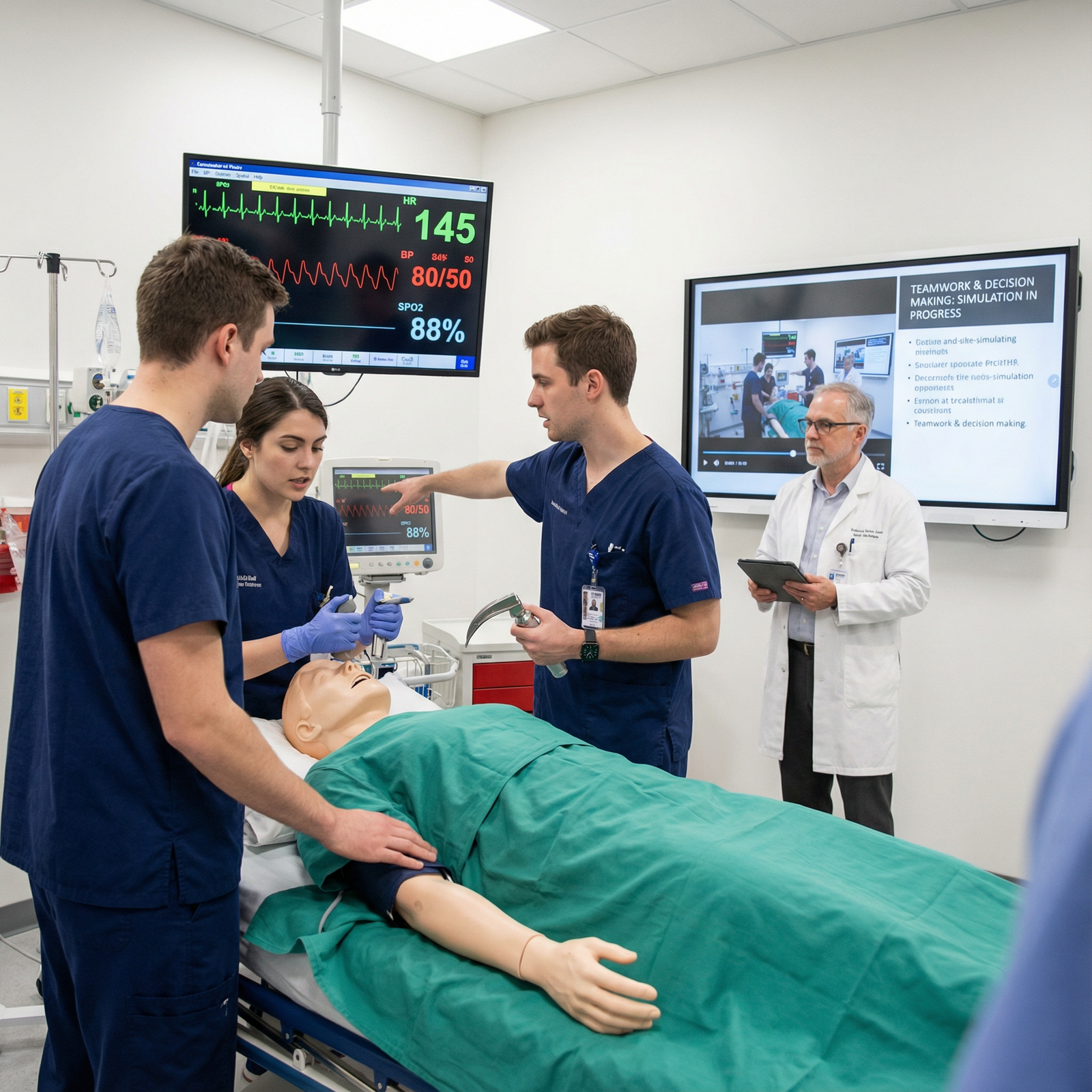
The Stepwise Process of Decision Making in Emergencies
Even in chaos, the best clinicians follow a structured, repeatable process that can be compressed or expanded depending on time and severity.
Step 1: Initial Assessment – Stabilize Before You Elaborate
Key goals:
- Identify and address immediate life threats
- Rapidly determine how unstable the patient is
Core actions:
- ABCs (Airway, Breathing, Circulation) plus mental status:
- Airway: Is it patent? Is the patient protecting it?
- Breathing: Work of breathing? Oxygenation? Breath sounds?
- Circulation: HR, BP, perfusion, major bleeding?
- Disability: Level of consciousness, pupils, glucose.
- Initiate basic supportive measures:
- Oxygen, IV access, monitoring, point-of-care glucose.
- Decide quickly: “Do I need help?”
- Call the rapid response team, ICU fellow, or attending early if needed.
Step 2: Generate and Prioritize Differential Diagnoses
Once immediate threats are addressed or being managed:
- Based on the chief complaint and initial findings, outline:
- Top 3–5 likely diagnoses
- Top 2–3 “can’t-miss” diagnoses that must be ruled out quickly
- Prioritize:
- High-probability and high-lethality conditions first (e.g., aortic dissection in tearing chest pain with pulse differential).
Use mental or written frameworks:
- Chest pain: ACS, PE, aortic dissection, tension pneumothorax, esophageal rupture.
- Shortness of breath: CHF, COPD/asthma exacerbation, PE, pneumonia, pneumothorax, acidosis.
Step 3: Make the Decision – Commit with Flexibility
Here is where clinical judgment and collaboration merge.
- Discuss with your team or attending:
- “I think this is septic shock, source likely pneumonia. Plan: fluids, broad-spectrum antibiotics, vasopressors if MAP <65 after fluids, labs, blood cultures, chest X-ray.”
- Consider second opinions or consults quickly for high-stakes choices (e.g., emergency surgery, thrombolytics, intubation).
- Once a decision is made, own it while staying open to new data:
- “We’re proceeding as sepsis until proven otherwise, but we’re simultaneously ruling out PE.”
Step 4: Implement the Plan and Coordinate the Team
Execution errors can be as harmful as diagnostic errors.
- Clearly assign roles:
- “Alex, airway. Priya, lines and labs. Mike, meds and documentation.”
- Use structured commands and time anchors:
- “First liter of fluids in over 15–20 minutes, then reassess BP and lactate.”
- Anticipate downstream needs:
- ICU or step-down transfer
- CT scan timing
- OR or cath lab coordination
Step 5: Ongoing Evaluation and Course Correction
Emergencies evolve dynamically. Good decision-making is iterative.
- Continuously monitor:
- Vitals, mental status, urine output, perfusion, lab results.
- Regularly ask:
- “Is the patient improving, worsening, or unchanged?”
- “Does this trajectory fit our working diagnosis?”
- Be ready to pivot:
- If treatment isn’t working, reassess for alternative diagnoses or missed complications.
- Escalate care when needed (e.g., additional vasopressors, mechanical ventilation, higher level of care).
Practical Strategies to Strengthen Rapid Decision-Making Skills
1. Simulation and Deliberate Practice
High-fidelity simulation is one of the best tools in healthcare training for emergency decision-making.
How to get the most out of sim:
- Treat every scenario as real: speak out loud, assign roles, verbalize your reasoning.
- Ask for simulations that match your weaknesses (e.g., airway management, arrhythmias, septic shock).
- Pay close attention to debriefs:
- What delayed your decisions?
- Where did communication break down?
- What cognitive biases showed up?
Outside formal sims:
- Run “mental simulations” during downtime:
- “What would I do if this patient suddenly decompensated?”
- “If the monitor alarmed VT/VF right now, what are my first three moves?”
2. Mindfulness, Focus, and Emotional Resilience
Mindfulness isn’t about being calm for its own sake; it’s about being fully present and clear-thinking when it matters most.
Practical approaches:
- 3–5 minutes of mindfulness or box breathing before or after shift.
- Brief reset moments:
- After a code, step into a quiet corner for 30–60 seconds to breathe and reset.
- Recognize and name your internal state:
- “I am anxious and rushing; I need to slow my thinking just a bit.”
Over time, this improves your ability to:
- Notice when you’re cognitively overloaded
- Prevent panic from degrading clinical judgment
- Sustain performance across long, stressful shifts
3. Continuous, Targeted Education
Your learning should be problem-driven and case-connected.
Strategies:
- After each emergency case, read one short review or guideline update relevant to it.
- Use FOAMed (Free Open Access Medical Education) resources wisely for quick refreshers on protocols.
- Build mini “playbooks” on your phone or notebook:
- E.g., “Suspected sepsis in elderly patient – stepwise checklist.”
Interdisciplinary learning:
- Spend time in anesthesia (airway skills), ICU (shock, ventilators), trauma/EM (resuscitation), and cardiology (arrhythmias, ACS).
- Ask nurses, RTs, and paramedics how they recognize deterioration early; they often have valuable pattern recognition insights.
4. Cognitive Training and Diagnostic Calibration
Beyond medical facts, train how you think.
Examples:
- Use clinical decision-making apps or case platforms to practice rapid case resolution.
- Reflect on cognitive biases:
- Anchoring: sticking with first impression despite new evidence
- Availability: overestimating diagnoses you’ve seen recently
- Premature closure: stopping the diagnostic process too soon
Combat biases by:
- Routinely asking: “What else could this be?”
- For critical cases, generating at least one alternative life-threatening diagnosis to consider.
5. Peer Discussions, Case Reviews, and Mentorship
You improve clinical judgment fastest when you expose it to others.
- Participate in M&M conferences with a growth mindset.
- Join or start a resident case review group focusing on:
- “What made this case hard?”
- “Where was the decision pivot point?”
- Seek mentors known for calm, strong leadership in emergencies:
- Ask to shadow them during codes or rapid responses.
- Request feedback specifically on your communication, prioritization, and demeanor.
Real-World Applications: Case Examples for Residents
Case 1: Cardiac Arrest in the ED – Coordinated Action
A 58-year-old male collapses in triage and is brought into a resuscitation bay pulseless.
Key resident actions:
- Immediately call a code and assign roles.
- Start high-quality CPR and follow ACLS algorithms.
- Rapidly assess for reversible causes (H’s and T’s).
- Use clear commands: “Next epinephrine at 4 minutes. Check rhythm after this cycle.”
- Communicate with the attending: “We have PEA, now up to 12 minutes, working diagnosis is massive PE vs. massive MI, no signs of tamponade or tension pneumothorax so far.”
The resident’s rapid but structured decision-making and clear clinical judgment allow:
- Efficient use of ACLS guidelines
- Parallel processing of diagnostics
- Timely decisions about continuing vs. terminating resuscitation
Case 2: Trauma Activation and Mass Casualty Triage
After a multi-vehicle collision, multiple patients arrive simultaneously.
The senior resident’s rapid decisions include:
- Activating mass casualty protocols.
- Applying structured triage (e.g., START): quickly categorize patients by ability to walk, breathing status, perfusion, and mental status.
- Allocating limited resources (OR time, blood products, staff) to those most likely to benefit.
- Using crisp, simple communication:
- “Red area: immediate. Yellow: delayed. Green: minor. Black: expectant.”
Here, decision-making isn’t about one patient—it’s about population-level clinical judgment under resource constraints, a vital emergency care competency.
Frequently Asked Questions: Rapid Decision Making in Residency
1. How is rapid decision-making different from general clinical judgment?
Clinical judgment is the overall ability to:
- Interpret data
- Generate differential diagnoses
- Choose tests and treatments
Rapid decision-making is clinical judgment under severe time pressure, where you:
- Prioritize speed without sacrificing safety
- Rely more on pattern recognition and standardized protocols
- Make decisions with incomplete information and then refine as new data appears
Both are essential; rapid decision-making is a specialized subset particularly critical in medical emergencies.
2. How can I get better at making decisions when I feel overwhelmed or scared?
Improvement comes from combining practice and process:
- Use structured frameworks (ABCs, ACLS, sepsis bundles) so you don’t rely on memory alone.
- Practice in simulations and volunteer for real emergencies to increase exposure.
- Use stress-management techniques (breathing, mental rehearsal).
- Reflect after each high-stakes case: identify what specifically triggered overwhelm and plan how to handle it next time.
Over time, repeated exposure plus structured reflection transforms fear into focused urgency.
3. What role does team communication play in decision-making during emergencies?
Team communication is often the difference between a strong clinical decision and an effective clinical outcome. Good communication:
- Ensures orders are understood and executed correctly (closed-loop).
- Allows team members to share critical observations you might miss.
- Reduces duplication and confusion under pressure.
- Builds a shared mental model, so everyone knows the current diagnosis, plan, and priorities.
For residents, learning to speak clearly, concisely, and confidently is as important as knowing the protocol.
4. Can simulation training really replace real-life experience?
Simulation cannot fully replace real-life experience, but it is one of the safest and most efficient ways to:
- Practice rare but critical scenarios (e.g., malignant hyperthermia, pediatric arrest).
- Make and correct errors without harming patients.
- Get immediate feedback on both technical and non-technical skills (communication, leadership, decision-making).
Think of simulation as “reps” in a controlled environment that prepare your brain and team skills for real emergencies.
5. How can I tell if my emergency decision-making is improving over time?
Look for these signs:
- You recognize clinical patterns faster and more accurately.
- You feel more organized and less chaotic during emergencies.
- You use structured approaches almost automatically.
- Attendings and nurses increasingly trust you to lead or coordinate during crises.
- In debriefs, you can clearly explain your reasoning and identify your own improvement points.
Tracking your progress:
- Keep a brief log of notable emergencies with 2–3 lessons from each.
- Periodically review these notes to see how your responses and confidence have evolved.
By deliberately developing your knowledge base, clinical judgment, communication, cognitive resilience, and use of protocols, you can transform from a reactive intern into a dependable resident leader in medical emergencies. This growth doesn’t happen overnight—but with intentional practice, reflection, and mentorship, you will become the clinician patients and teams rely on when every second truly matters.